18 Fruit Trees That Grow in Colorado (With Planting Tips)
Many people tell me they cannot grow fruit in Colorado. I understand why. Late spring freezes, strong sun, dry air, and short seasons make it a tough place for orchards.
Still, it can be done. Colorado State University (CSU) Extension says that just about any deciduous fruit tree can grow here, including apples, pears, apricots, cherries, peaches, nectarines, and plums. The key is choosing the right type for your site.
This guide covers 18 fruit trees that grow in Colorado, with climate tips.
Understanding Colorado’s Growing Conditions
Colorado is not one climate. The Front Range, the Western Slope, the mountains, and the Eastern Plains all behave differently. Elevation, wind, and cold air flow matter as much as the hardiness zone on the map.
CSU Extension explains the main limits clearly. Apples, pears, cherries, and plums can handle winter lows of minus 25°F. Peaches and nectarines are damaged at minus 12 to minus 14°F.
Spring frost is the larger problem. A freeze after blossoms open can wipe out the crop in one night. In April 2020, a freeze with a low of 19°F on the Western Slope was feared to have destroyed up to 95 percent of that year’s peach crop, according to the Colorado Department of Agriculture.
Quick Planting Tips for Colorado Gardeners
- Choose a sunny site. CSU Extension says fruit trees need full sun.
- Avoid soggy soil. Poor drainage harms roots and invites disease.
- Keep trees away from lawns. Frequent lawn watering does not suit fruit trees.
- Water new trees well. Give them 3 to 5 gallons per week in the first year.
- Plant for pollination. Apples and pears need a second variety nearby.
Pome Fruits (Apples, Pears, and Relatives)
1. Apple (Malus domestica)
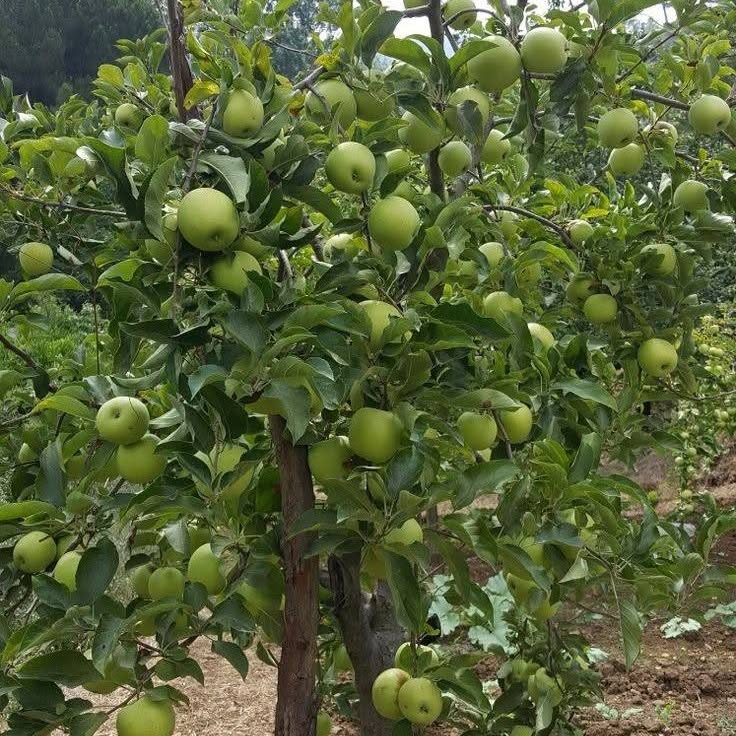
Apples are the most dependable tree fruit in Colorado. They are cold-hardy and bloom later than stone fruits. That gives them a better chance of surviving spring frost.
CSU Extension recommends dwarf apple trees for home gardeners. They produce the best-quality fruit on small trees, since more sunlight reaches the branches. Many Colorado gardeners succeed with Honeygold, Regent, Keepsake, and Golden Delicious.
Apples need cross-pollination, so plant two varieties within about 100 feet. Thin the fruit to six to eight inches apart by mid-June. Watch for fire blight, which is common on the Front Range.
2. European Pear (Pyrus communis)
Pears are generally dependable in Colorado, with one big condition. You must choose fire blight-resistant varieties. This bacterial disease is prevalent along the Front Range because warm, moist spring weather favors infection.
Luscious is one pear that has done well for Colorado gardeners. Look for resistance on the plant label before you buy. I would never plant a pear here without checking.
Most pears need a second variety for good yields. Ornamental pears can also act as pollinators. Prune carefully, and remove blighted twigs promptly.
3. Asian Pear (Pyrus pyrifolia)
Asian pears are crisp, round, and juicy. They ripen on the tree and keep well in cold storage. Gardeners in milder parts of Colorado often find them rewarding.
They bloom early, so frost can be a problem in colder spots. Choose a site with good air drainage. A north or east exposure may delay blooming slightly.
Plant two Asian pear varieties for better fruit set. Fire blight can also affect them. Ask a local nursery which types do best in your area.
4. Quince (Cydonia oblonga)
Quince is an old-fashioned fruit that belongs to the pome family. CSU Extension lists quince among the pome fruits, alongside apples and pears. It has lovely pink spring flowers.
The fruit is hard and tart when raw. Cooked, it turns fragrant, pink, and sweet. It makes outstanding jelly and baked desserts.
Quince is self-fertile, so one tree is enough. It can also suffer from fire blight. Plant it in a sheltered, sunny site to protect the blossoms.
5. Crabapple (Malus)
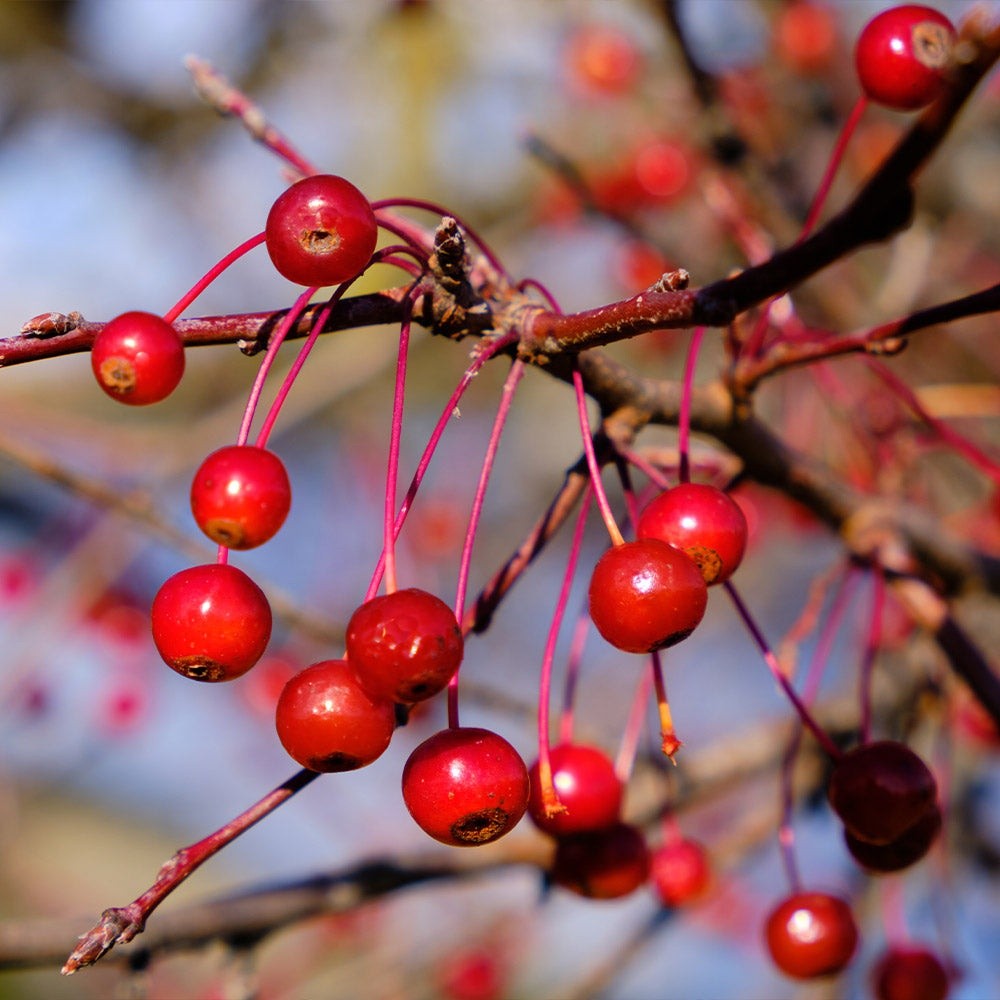
Crabapples are tougher than regular apples. They handle cold, wind, and a range of soils. They also bloom beautifully, which makes them useful in any landscape.
Choose fruiting varieties for jelly, sauces, and cider. The small fruit is tart, but sugar and cooking soften it. I find crabapple jelly a real treat.
They also help pollinate apple trees nearby. Select disease-resistant types to avoid scab and rust. Crabapples need very little care once established.
Stone Fruits (Cherries, Plums, Peaches, and Apricots)
6. Tart Cherry (Prunus cerasus)
Tart cherries are the most dependable cherries for Colorado. Colorado Master Gardeners point to Montmorency, Northstar, and Meteor as reliable choices. They are cold-hardy and self-fertile.
CSU Extension notes that sour cherries are generally self-pollinated. That means you need only one tree. They bloom a little later than apricots, which lowers frost risk.
The fruit is excellent for pies, jam, and juice. Net the tree as fruit ripens, or birds will take it. Dwarf cherries need careful training to be highly productive.
7. Sweet Cherry (Prunus avium)
Sweet cherries are lovely, but they are less dependable in Colorado. They bloom early and often lose blossoms to frost. Rain near harvest can also crack the fruit.
Most sweet cherries need cross-pollination. Plant two varieties, or use a sour cherry as a pollinator. Plan for netting and extra care.
If you want to try one, choose a protected site with good air flow. Treat it as an experiment. I recommend starting with tart cherries first.
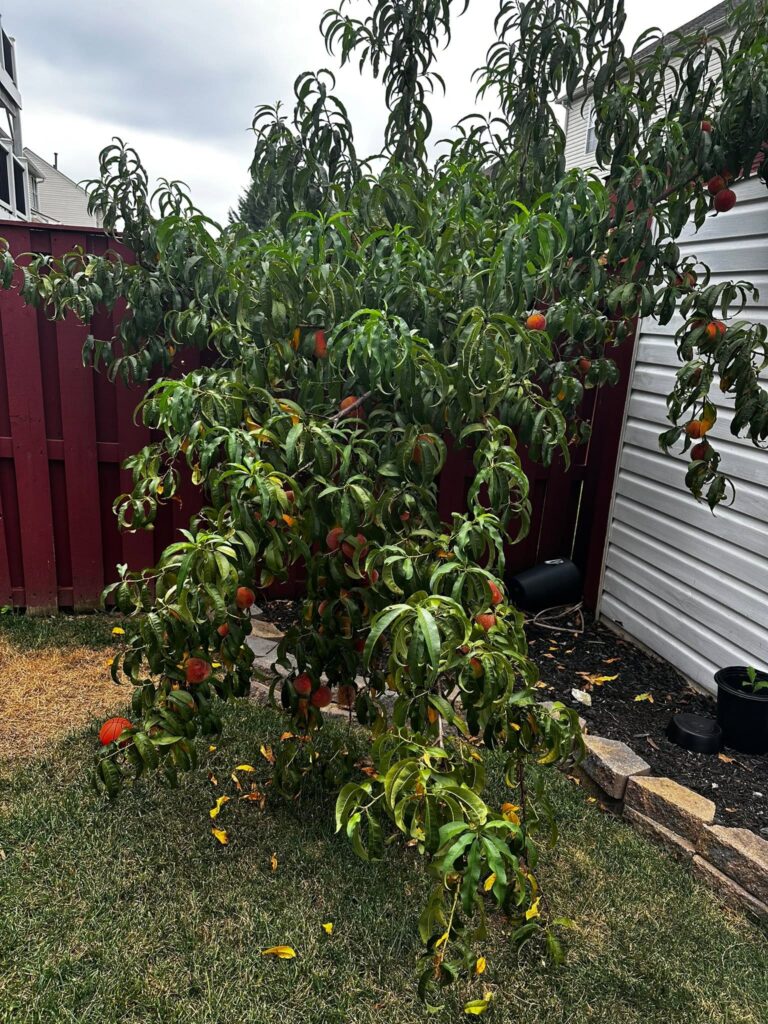
8. Peach (Prunus persica)
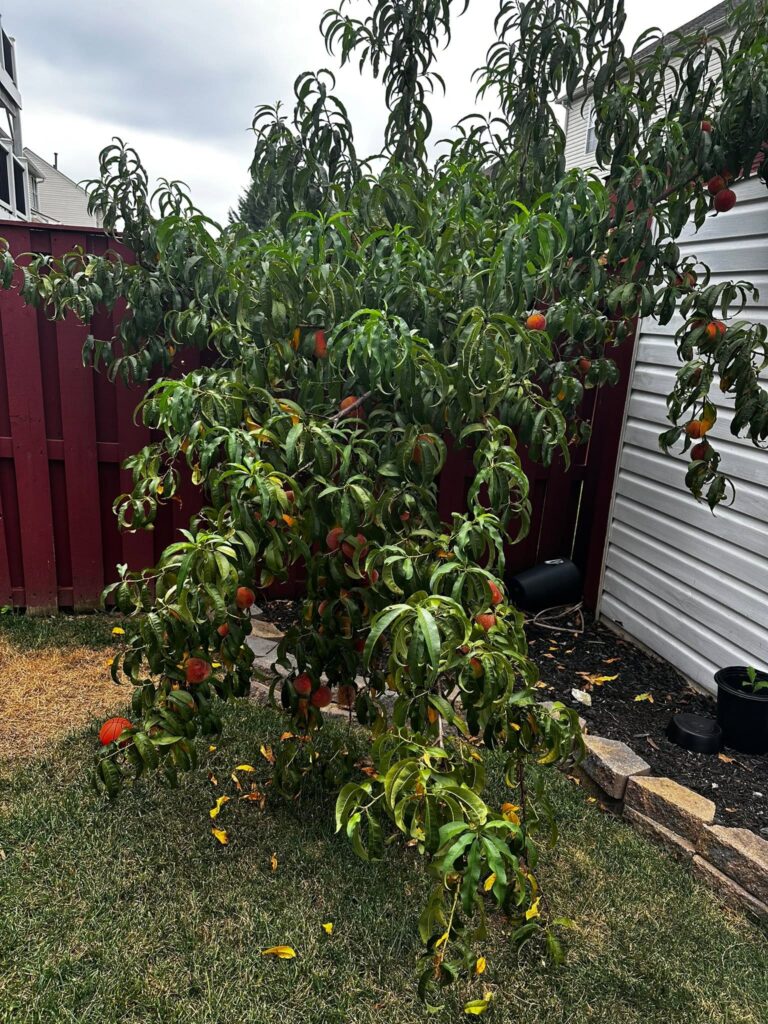
Peaches are Colorado’s signature fruit. CSU Extension notes that they account for about three-quarters of the fruit grown in the state. Palisade peaches are famous across the region.
In a typical year, the Western Slope peach industry produces about 17,000 tons of fruit, worth nearly $40 million, according to the Colorado Department of Agriculture. That area has warmer nights and milder winters than most of the Front Range.
For home gardeners, peaches are a gamble. Winter cold below minus 12°F can damage buds. Plant on a north or east exposure, and choose cold-hardy, later-blooming varieties like Madison or Autumn Star.
9. Nectarine (Prunus persica var. nucipersica)
A nectarine is a smooth-skinned cousin of the peach. It shares the same climate limits. Winter damage begins around minus 12 to minus 14°F.
CSU Extension says nectarines are usually self-pollinated. One tree can produce fruit by itself. That is helpful for small yards.
Choose a sheltered spot with good air drainage. Avoid hot south and west walls that push early bloom. Be ready to protect blossoms on cold nights.
ALSO READ: 25 Colorado Native Trees (With Growing Details)
10. Apricot (Prunus armeniaca)
Apricots are among the hardest fruit trees to bring to harvest in Colorado. They bloom very early, often in March or April. A single hard frost can end the season.
Extension advisers note that most apricots have chilling needs of about 750 hours or less. Varieties like Goldcot and Moongold bloom a bit later, but even they are not fully dependable. Many gardeners enjoy apricots mostly for spring flowers and fall color.
If you try one, plant it on a north or east exposure. That helps delay bloom. Dwarf apricots are not recommended by CSU Extension.
11. European Plum (Prunus domestica)
European plums, often called prunes, are one of the better stone fruits for Colorado. CSU Extension says they are generally self-pollinated. That makes planting simple.
Extension advisers describe them as much more dependable than other stone fruits. The main complaint is aphids, which can be managed with careful monitoring. Fruit is sweet and keeps well when dried.
Toka and Stanley are varieties some Colorado gardeners recommend. Give them full sun and good drainage. Prune lightly to keep the center open.
12. Japanese Plum (Prunus salicina)
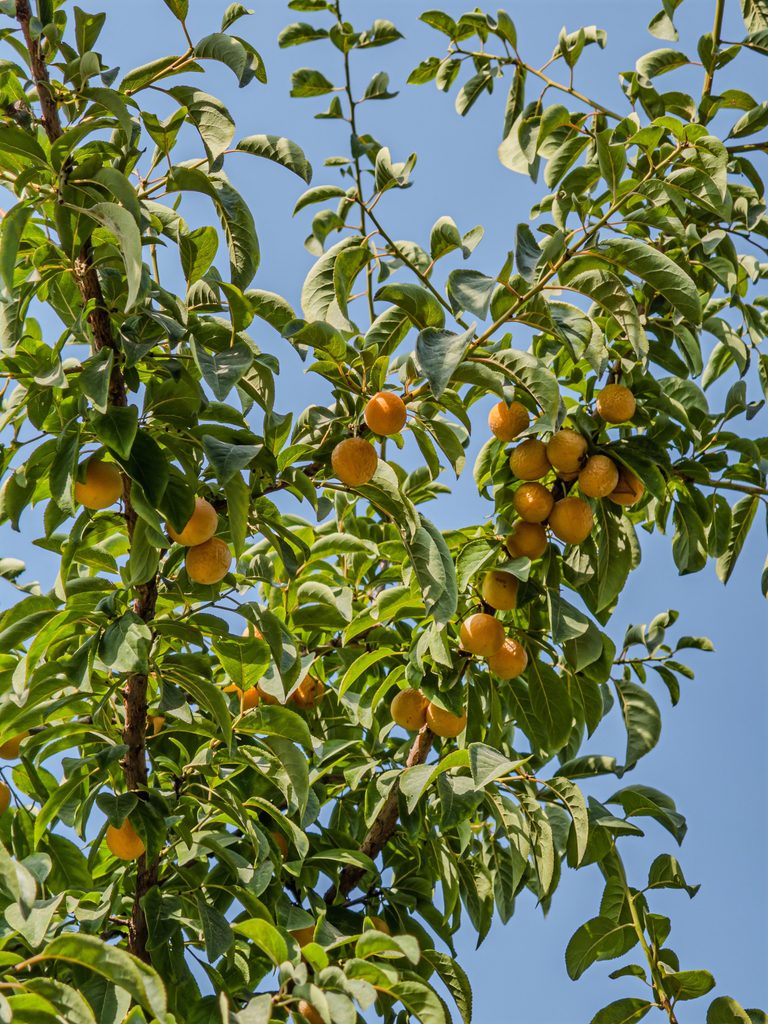
Japanese plums are juicy and large, but they bloom earlier than European types. That makes frost damage more likely. They are best in warmer, protected sites.
CSU Extension says Japanese plums are generally cross-pollinated. You need a second compatible tree. Check bloom times when choosing partners.
Thin the fruit so branches do not break under the weight. Pick plums when they give slightly to gentle pressure. They are lovely fresh from the tree.
13. Pluot (Prunus salicina × armeniaca)
Pluots are hybrids between plums and apricots. They are sweet, colorful, and fun to grow. However, they inherit the early bloom of their apricot parent.
Extension advisers describe pluots as less dependable for fruit in Colorado. They are still worth a try in warm, sheltered spots. Expect some years without a crop.
Plant two varieties for pollination. Choose a north or east exposure to slow early blooming. Have a frost-cover plan ready.
Native and Cold-Hardy Alternatives
14. Serviceberry (Amelanchier)
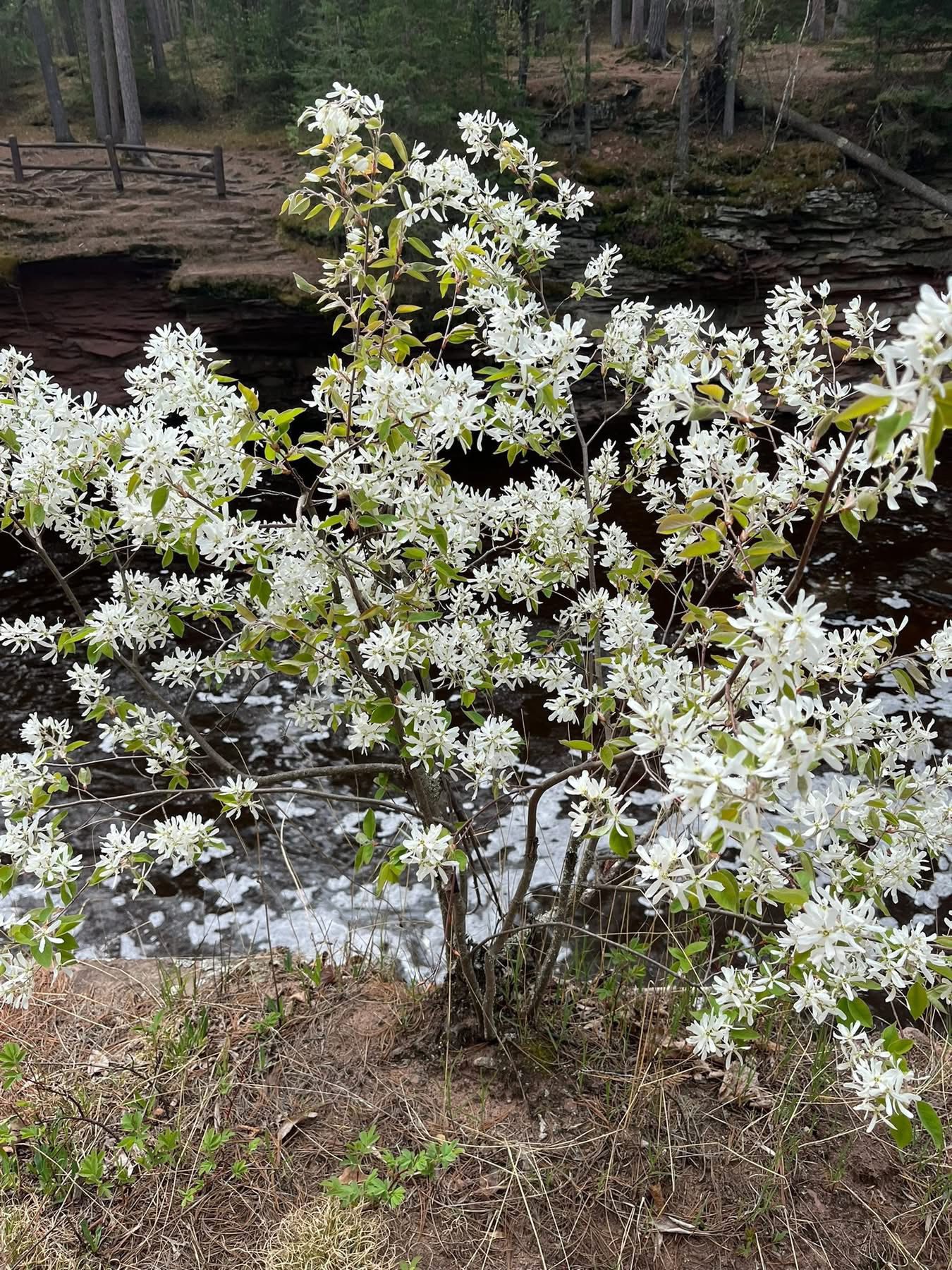
Serviceberry may be the most reliable fruit plant on this list. CSU’s PlantTalk describes it as extremely cold hardy, drought resistant, and tolerant of alkaline soils. That makes it ideal for the Rocky Mountain and High Plains regions.
It grows as a shrub or small tree, usually six to eighteen feet high. The berries look like blueberries, with a slight apple flavor. Saskatoon serviceberry is considered superior for fruit production.
Planting two or more cultivars gives more fruit. Regent is a variety chosen for larger, more abundant fruit. Birds love the berries, so net if you want a share.
15. Chokecherry (Prunus virginiana)
Chokecherry is a hardy native that grows wild in many Colorado foothills. It handles cold, wind, and poor soil. Birds and pollinators benefit too.
The raw fruit is astringent, which explains the name. Cooked with sugar, it makes outstanding jelly and syrup. Many Colorado families still make it each late summer.
Remove the pits before processing, since seeds and leaves contain compounds that can be harmful in quantity. Chokecherry can form thickets, so give it room. It needs little care.
16. American Plum (Prunus americana)
American plum is another tough native plant. It grows in thickets on the plains and along streams. That gives it a natural fit for Colorado’s hard conditions.
The fruit is small, with tangy skin and sweet flesh. It works well in jam and sauce. It also feeds many kinds of wildlife.
Plant more than one for better pollination. It spreads by suckers, so manage new shoots. Choose it if you want a wildlife-friendly, low-effort fruit tree.
17. Cornelian Cherry (Cornus mas)
Cornelian cherry is a small tree from Europe and western Asia. A CSU woody plant evaluation lists it as adaptable to Colorado’s alkaline clay soils. It reaches around 25 feet in height and spread.
It blooms very early, which means frost can reduce fruit. CSU notes that the red fruit appears in August but may be sparse in frost years. Even then, the yellow spring flowers are a cheerful sight.
The fruit is tart and used in jam or syrup. Give it a sheltered spot. I like it as a landscape plant first and a fruit tree second.
18. Hardy Mulberry (Morus)
Mulberries are fast-growing and fruitful in many climates. In Colorado, only hardy types are worth a try. Some gardeners succeed in sheltered Front Range sites with cold-hardy varieties.
The berries are sweet and ripen over several weeks. Birds love them too, so plan to share. Fallen fruit can stain paths, so plant away from walkways.
Choose a named variety bred for cold tolerance. Ask a local nursery which one has survived nearby winters. Protect young trees from deep cold.
ALSO READ: 20 Colorado Native Shrubs (With Growing Details)
How to Choose the Right Fruit Tree for Your Colorado Yard
Start with your local climate. Western Slope gardeners in warm valleys can try peaches and apricots with better odds. Front Range and mountain gardeners should favor apples, tart cherries, pears, and serviceberries.
Next, think about frost. Plant on a gentle slope, where cold air can drain away. Avoid low pockets and the bottoms of hills.
Finally, match the work to your time. CSU Extension reminds gardeners that productive fruit trees need annual pruning and routine care. If you want low effort, start with serviceberry, chokecherry, or crabapple.
Common Mistakes to Avoid
- Planting early bloomers in cold pockets. Apricots and Japanese plums suffer most.
- Ignoring fire blight. Always choose resistant apples and pears.
- Skipping pollination. One apple tree may not be enough.
- Overwatering with lawn irrigation. Fruit trees dislike heavy, frequent water.
- Skipping pruning. Unpruned trees become large, weak, and unproductive.
Frequently Asked Questions
What is the easiest fruit tree to grow in Colorado?
Apples, tart cherries, and serviceberries are the most dependable. They tolerate cold and bloom later than apricots or peaches.
Can you grow peaches on the Front Range?
Yes, but results vary. Late frost and winter lows damage buds, so choose hardy varieties and a sheltered site.
Do I need two trees for fruit?
Apples, pears, sweet cherries, and Japanese plums usually need a second variety. Tart cherries, peaches, nectarines, and European plums are self-fertile.
When should I plant fruit trees in Colorado?
Early spring is the usual choice, once soil can be worked. Plant in a sunny spot with good drainage, and water well in the first year.
Final Thoughts
Colorado may not be easy fruit country, but it is not closed to home growers. With smart choices, you can enjoy apples, cherries, plums, and native berries. Start with reliable trees, then try one or two risky ones for fun.
If I had to pick a starter set, I would choose a disease-resistant dwarf apple, a Montmorency tart cherry, and a serviceberry. They give you strong harvests with fewer worries. Your local CSU Extension office can help you fine-tune the final list.
References
- Colorado State University Extension. “Growing Tree Fruit in Colorado Gardens.” https://extension.colostate.edu/resource/growing-tree-fruit-in-colorado-gardens
- CSU Extension, PlantTalk Colorado. “1217 – Fruit Trees for Colorado.” https://planttalk.colostate.edu/topics/fruits/1217-fruit-trees-colorado/
- CSU Extension, PlantTalk Colorado. “1213 – Serviceberries.” https://planttalk.colostate.edu/topics/fruits/1213-serviceberries
- CSU Extension, Arapahoe County. “Fruit Trees for the Home Garden.” https://arapahoe.extension.colostate.edu/2022/01/07/fruit-trees-for-the-home-garden/
- CSU Extension, Pueblo County. “Fruit Trees for the Home Landscape.” https://pueblo.extension.colostate.edu/fruit-trees-for-the-home-landscape/
- Colorado Department of Agriculture. “Gov. Polis and Commissioner Greenberg Request USDA Disaster Declaration” (April 24, 2020). https://ag.colorado.gov/press-release/gov-polis-and-commissioner-greenberg-request-usda-disaster-declaration
- U.S. Department of Agriculture, Agricultural Research Service. “USDA Plant Hardiness Zone Map.” https://planthardiness.ars.usda.gov

Tim M Dave is a gardening expert with a passion for houseplants, particularly cacti and succulents. With a degree in plant biology from the University of California, Berkeley, he has vast experience in gardening. Over the years, he has cultivated a vast collection of desert plants and learned a great deal about how to grow and care for these unique companions.