20 Colorado Native Shrubs (With Growing Details)
I have spent enough afternoons digging in Front Range clay to know one thing for certain: native shrubs simply work harder for less. They shrug off hail, survive on snowmelt, and still manage to feed the birds outside my window.
Colorado is a big state, and its plant life proves it. According to the Bureau of Land Management, roughly 3,322 plant taxa are currently known from Colorado, with 84 percent of the flora native to the state, spread across elevations from 3,315 feet to 14,431 feet.
That range is exactly why a shrub that thrives in Denver may struggle in Steamboat Springs, and why choosing the right native matters so much.
Below are 20 shrubs native to Colorado, where they grow best, how tall they get, and what makes each one worth planting.
Why Choose Native Shrubs for a Colorado Landscape
Once established, most natives need less water, less fertilizer, and less pruning than imported ornamentals. That matters in a state where, as CSU Extension research notes, landscape irrigation accounts for a large share of municipal water use in the western United States.
There is also a quieter reason to plant native. Local birds, bees, and butterflies co-evolved with these species, and many rely on them for food or shelter that non-native plants simply cannot replace. A single serviceberry bush can feed a dozen bird species in a season.
Now, let’s get into the shrubs themselves.
20 Colorado Native Shrubs for Your Garden
1. Gambel Oak (Quercus gambelii)
Gambel oak is arguably Colorado’s most recognizable native shrub, and it is not shy about taking over a hillside. It commonly grows between 6,000 and 9,000 feet, dominating the band between piñon-juniper woodland and aspen forest, and it can be found as high as 10,500 feet in some pockets.
This oak rarely grows from acorns. Instead, it spreads through an extensive underground root system, forming dense thickets known locally as “oak brush.” That habit makes it remarkably fire-resilient, since new sprouts push up quickly after a burn.
Wildlife loves it. Acorns and foliage feed mule deer, wild turkey, and black bear, and on many summer ranges Gambel oak provides more deer forage than every other plant combined. If you have the space, it doubles as excellent erosion control on slopes.
I find it striking in October, when the leaves turn a deep, rust-orange that few other Colorado shrubs can match.
2. Serviceberry (Amelanchier alnifolia)
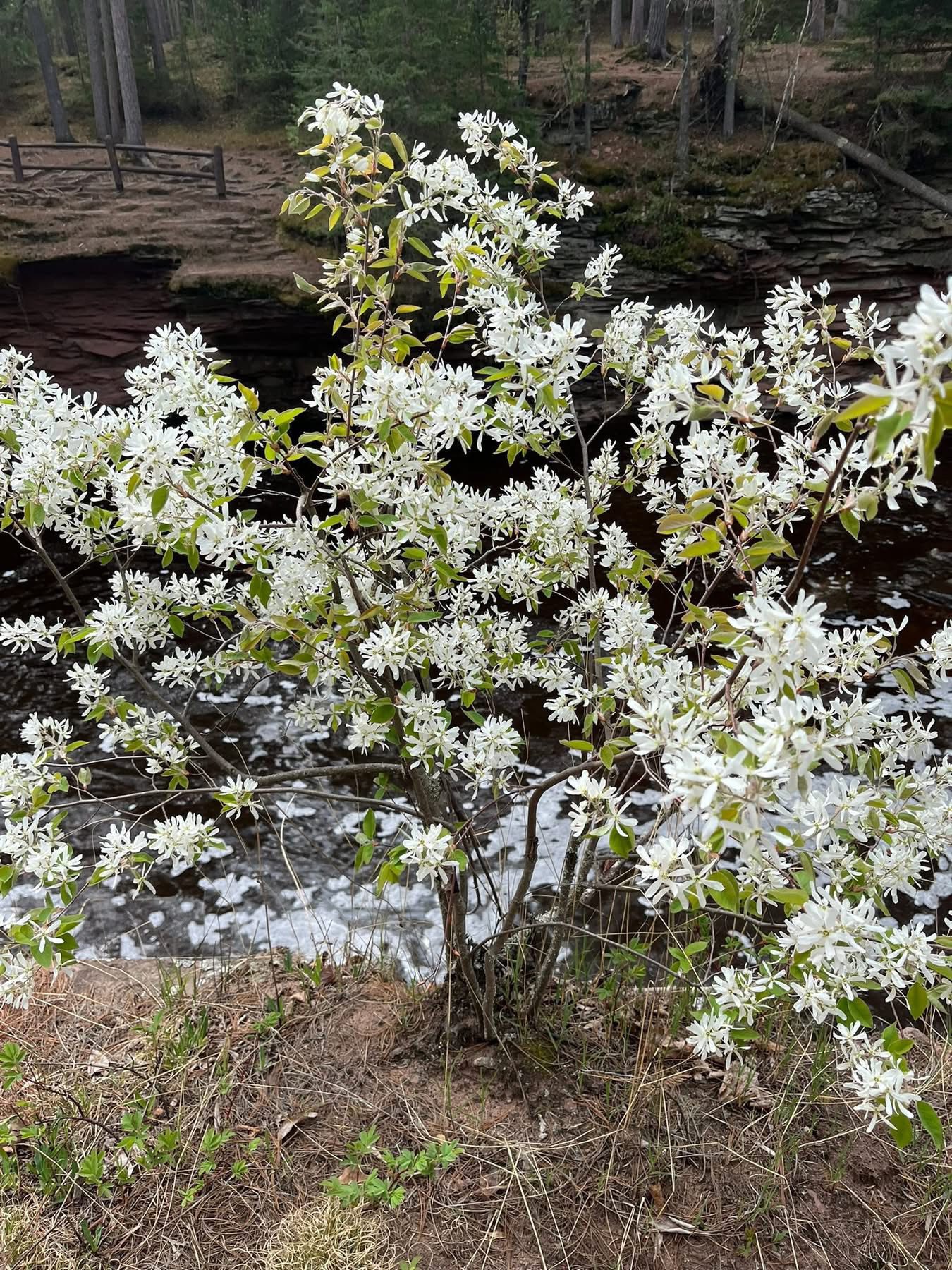
Serviceberry is one of the most versatile shrubs on this list, growing from 5,000 feet all the way up to 10,000 feet. It handles both foothills sun and subalpine cold with ease.
In spring, it produces clusters of small white flowers, followed by blue-black berries that birds and small mammals strip clean almost as soon as they ripen. Humans can eat them too; they taste a bit like a mild blueberry.
Fall color runs from orange to red, and the branching habit ranges from upright to spreading depending on the site. It tolerates low to moderate moisture, which makes it forgiving for beginner native gardeners.
I recommend it as a starter shrub for anyone new to native landscaping. It is nearly impossible to get wrong.
3. Mountain Mahogany (Cercocarpus montanus)
Despite the name, mountain mahogany is not related to true mahogany. It is a deciduous, open-growing shrub found between 4,000 and 8,500 feet, mostly in the Foothills and Montane zones.
Its most distinctive feature is its feathery, twisted seed heads, which catch the light in late summer and give the whole plant a silvery, almost furry appearance from a distance.
Deer and elk browse the leaves heavily in winter, which makes this shrub an important part of the food web on Colorado’s dry slopes. It tolerates low to moderate moisture and does not ask for much once rooted.
A close cousin, curl-leaf mountain mahogany (Cercocarpus ledifolius), is evergreen and holds its dark, drought-curled leaves year-round in the Upper Sonoran zone.
4. Big Sagebrush (Artemisia tridentata)
Nothing smells more like the Colorado high desert after rain than big sagebrush. This silver-colored evergreen shrub grows from 4,500 to 9,500 feet, mostly across the Upper Sonoran zone on the Western Slope.
Its densely hairy, aromatic leaves reduce water loss, which is exactly how it survives on so little rainfall. The peeling, grayish bark adds textural interest even in winter, when most other shrubs go bare.
Big sagebrush is a critical wildlife browse plant, especially for mule deer and the greater sage-grouse, a bird whose population decline is closely tied to sagebrush habitat loss across the West.
One caution: it genuinely does not tolerate high moisture. Plant it where water drains fast, and it will reward you for decades.
5. Rubber Rabbitbrush (Chrysothamnus nauseosus)
Rabbitbrush is the shrub that turns Colorado’s late-summer roadsides into rivers of gold. It grows from 5,000 to 10,000 feet, spanning the Plains, Foothills, and Upper Sonoran zones.
The narrow, aromatic leaves start silvery-gray and green up with new growth. In late summer, clusters of bright yellow flowers appear right when most other natives have finished blooming, giving pollinators a crucial late-season food source.
Butterflies in particular are drawn to it, and I have watched a single bush host a dozen species in one afternoon. It is a low-moisture plant, tough enough for roadside plantings and neglected corners.
One thing to know: it can spread aggressively in the right conditions, so give it room or plan to manage it.
6. Three-Leaf Sumac / Skunkbush (Rhus trilobata)
Three-leaf sumac earns its nickname from the slightly musky scent of its crushed leaves, but do not let that put you off. It is one of the hardiest, most drought-tolerant shrubs on this list, thriving from 3,500 to 9,000 feet.
The glossy, three-parted leaves turn orange to red in fall, rivaling any ornamental burning bush. Small yellow flowers appear before the leaves in spring, followed by reddish, hairy, edible fruit.
Wildlife and people both use the fruit; Indigenous communities historically used it to make a tart, lemonade-like drink. The arching branch structure also makes it useful for erosion control on slopes.
It needs only low moisture, which makes it one of the most forgiving shrubs for a xeriscape.
7. Apache Plume (Fallugia paradoxa)
Apache plume is a plant that seems to bloom twice: once with white, rose-like flowers, and again with fuzzy pink seed heads that persist through the whole summer, giving the shrub a soft, feathery look from a distance.
It grows in the Plains and Upper Sonoran zones from 3,500 to 8,000 feet, and it is native specifically to the San Luis and Arkansas Valleys. This is one of the CSU Plant Select® picks, meaning it has been tested and proven for Colorado gardens.
The whitish, shreddy bark adds four-season interest, and the small grayish-green leaves keep water needs low. It performs equally well as a single specimen or massed as a hedge.
If you want a low-maintenance shrub with a long bloom season, this is one of the best choices on the list.
8. Golden Currant (Ribes aureum)
Golden currant earns its name honestly. In late spring, it produces bright yellow, tubular flowers with a spicy-sweet fragrance that can carry across a whole yard.
It grows well from 4,000 to 10,000 feet across the Plains, Foothills, and Upper Sonoran zones, with an arching growth habit that looks graceful against a fence or wall. The berries that follow ripen from yellow to black and attract a steady stream of songbirds.
Fall color shifts to orange and red, extending its ornamental value well past the growing season. It prefers well-drained sites and low to moderate moisture.
I planted one near a patio specifically for the fragrance, and it has not disappointed a single spring since.
9. Wax Currant (Ribes cereum)
Wax currant is the more compact, low-water cousin of golden currant. It stays under the Foothills zone mostly, and its rounded, leathery leaves lack spines, making it easier to work around than many other currants.
Pink, tubular flowers appear in spring, followed by edible orange-red berries in summer that birds find just as appealing as we do. The plant needs only low moisture once established, which suits Colorado’s dry Foothills climate perfectly.
It works well as a filler shrub in a rock garden or a mixed native border, staying tidy without much pruning.
Its main appeal is reliability. It is not flashy, but it rarely disappoints.
10. Western Chokecherry (Prunus virginiana melanocarpa)
Western chokecherry is one of the most widely distributed native shrubs in the state, ranging from 4,500 to 8,500 feet across the Plains, Montane, and Upper Sonoran zones.
It has an irregular, branching form with shiny, dark green leaves and elongated white flower clusters in spring. The plant suckers readily, forming thickets that provide excellent cover for birds and small mammals.
Dark purple fruit ripens in late summer and is genuinely excellent for jams and preserves, though raw pits and foliage contain compounds that are toxic if consumed in quantity, so use the fruit only, not the plant material.
Fall color runs reddish-orange to yellow, and the shrub tolerates moderate moisture better than many other natives on this list.
11. Wild Plum (Prunus americana)
Wild plum forms dense, thicket-like colonies along canyons and slope bottoms, typically from 4,500 to 8,500 feet in the Plains and Foothills zones. White flowers appear before the leaves in spring, creating a striking cloud effect against bare branches.
The small plums that follow are tart but genuinely useful for preserves, and wildlife, including foxes and birds, rely on them heavily in late summer. Fall foliage turns yellow to red.
This shrub is both cold-hardy and drought-tolerant, a combination that makes it a dependable screen or windbreak plant for rural properties.
Give it room to spread, since thicket-forming shrubs do exactly that over a few seasons.
12. Antelope Bitterbrush (Purshia tridentata)
Antelope bitterbrush, sometimes called antelope-brush, is a critical winter browse plant for wildlife, particularly mule deer and pronghorn, in the Foothills and Montane zones from 5,000 to 9,000 feet.
Its small, oval leaves and pale-yellow flowers appear in early summer on a spreading, low-water shrub. It performs best in dry, coarse soils, which mirrors the rocky slopes where it naturally occurs.
Because of its forage value, wildlife agencies across the West actively restore bitterbrush stands after fire or overgrazing. Planting it in a home landscape supports that same ecological role on a smaller scale.
It is not a showy plant, but its wildlife value is hard to overstate.
13. Woods Rose (Rosa woodsii)
Woods rose, Colorado’s most common wild rose, ranges impressively from 3,500 to 10,500 feet, covering nearly every life zone in the state except true alpine tundra.
The spiny, reddish-brown stems form thickets, and single pink flowers bloom in early summer, giving way to reddish-orange rose hips that persist into winter. Birds and small mammals browse both the hips and the foliage.
It handles low to moderate moisture and asks for very little maintenance beyond an occasional thinning to control spread.
If you want a native alternative to ornamental rose bushes, without the fungal disease problems that plague many hybrids, this is the shrub to plant.
14. Snowberry (Symphoricarpos albus)
Snowberry is a shade-tolerant, thicket-forming shrub found in the Foothills zone from 5,000 to 8,500 feet. Its rounded, blue-green leaves stay attractive through the growing season without much input.
Small, pink, bell-shaped flowers bloom in summer, followed by clusters of large white berries that persist well into winter, feeding birds and small mammals during the leanest months of the year.
Its arching form and low to moderate moisture needs make it a natural choice for a woodland-edge planting, especially under taller trees where sun-loving shrubs would struggle.
I like it specifically for winter interest. Few native shrubs hold visible fruit that late in the season.
15. Kinnikinnik (Arctostaphylos uva-ursi)
Kinnikinnik is one of the few evergreen groundcover shrubs native to Colorado, spreading from 5,000 to 10,000 feet across the Foothills through Subalpine zones. Its mat-forming habit makes it ideal for slopes and rock gardens.
Small, pink urn-shaped flowers appear in spring, followed by red berries that attract birds and small mammals through fall. The leaves stay small, oval, and glossy green year-round.
It requires well-drained, gravelly soil and does best with a bit of light shade, particularly at lower elevations where summer sun is more intense.
Because it hugs the ground, it also works as a living mulch, suppressing weeds while needing very little water once established.
16. Fourwing Saltbush (Atriplex canescens)
Fourwing saltbush earns its name from the distinctive four-winged fruit that forms on female plants, giving the shrub an unusual, papery texture in late summer. It grows from 4,000 to 8,000 feet in the Plains and Upper Sonoran zones.
The light green to gray leaves are small and slow-growing, and the plant genuinely thrives where other shrubs give up, including poor or salty soils that would stunt most ornamentals.
Its low water requirement and salt tolerance make it a smart pick for xeriscapes near roadways or in alkaline soil pockets common across Colorado’s eastern plains.
Wildlife use it for both cover and browse, especially in winter when other forage is scarce.
17. Silver Buffaloberry (Shepherdia argentea)
Silver buffaloberry is a thorny, thicket-forming shrub to small tree, growing from 4,500 to 7,500 feet across the Plains, Foothills, and Upper Sonoran zones. Its silver, rounded leaves make it easy to identify at a glance.
Female plants produce golden to red, edible fruit that is bitter raw but traditionally used for jellies once cooked with sugar. The berries also draw in a wide range of birds through late summer.
Because of its dense, thorny growth, it works well as a natural barrier hedge or wildlife screen along property lines. It tolerates low to moderate moisture and poor soils without complaint.
Note that male and female plants are separate, so you need at least one of each to get fruit.
18. Twinberry Honeysuckle (Lonicera involucrata)
Twinberry is a shade-tolerant, upright shrub found from 5,000 to 11,000 feet in the Montane and Subalpine zones, usually along streams or in moist mountain draws.
Its creamy yellow, trumpet-shaped flowers bloom in pairs, followed by black fruit cradled in a striking red cup, or bract, that gives the plant its common name. The display is genuinely one of the more unusual fruit presentations among Colorado natives.
It needs moderate to high moisture, so it belongs near a downspout, pond edge, or irrigated bed rather than a dry, exposed slope.
Birds are drawn to both the flowers and the fruit, making it a strong choice for a mountain-property wildlife garden.
19. Waxflower (Jamesia americana)
Waxflower is a flat-topped, shade-tolerant shrub native to the Foothills and Montane zones between 5,500 and 10,000 feet. Its heart-shaped leaves are distinctly veined, with white undersides that flash in the wind.
In late spring, waxy white flowers cover the upright branches, and the shreddy, reddish bark provides winter texture once the leaves drop. Fall color turns a rich red.
It requires well-drained soil and moderate moisture, and it performs best tucked into a partially shaded spot, such as the north side of a building or beneath open tree canopy.
This is a lesser-known native, but it deserves more attention from Colorado gardeners who want something a little different.
20. Red-Twig Dogwood (Cornus sericea)
Red-twig dogwood, also called red-osier dogwood, closes this list with one of the boldest winter displays of any Colorado native. Its bright red stems stand out vividly against snow, especially on young growth.
It grows from 4,500 to 10,000 feet, mostly along streams and in other moderate to high moisture sites, making it a natural pick for a rain garden or the low, wet corner of a yard that other shrubs reject.
Flat white flower clusters appear in spring, followed by white to blue fruit that birds actively seek out. Fall color ranges from yellow to red, and the plant tolerates shade well.
Unlike most shrubs on this list, red-twig dogwood needs consistent moisture, so match it to a wet site rather than a xeriscape bed.
Final Thoughts
Choosing native shrubs is less about following a trend and more about working with Colorado’s climate instead of against it. Every plant on this list survived here for centuries before irrigation systems existed.
Match the shrub to its life zone, respect its moisture needs, and resist the urge to over-water once it is established. That single habit is where most new native gardens go wrong.
Start small if you are unsure. Serviceberry, three-leaf sumac, and Apache plume are about as forgiving as native shrubs get, and all three reward you with wildlife activity within the first year or two.
Your garden, and the birds that visit it, will thank you.
References
- Colorado State University Extension. Native Shrubs for Colorado Landscapes. https://extension.colostate.edu/resource/native-shrubs-for-colorado-landscapes/
- Colorado State Forest Service. Native Shrubs for Colorado Landscapes, Fact Sheet 7.422. https://csfs.colostate.edu/wp-content/uploads/2024/01/Native-Shrubs-for-Colorado-Landscapes-Fact-Sheet-7.422.pdf
- Colorado State University Extension. Gambel Oak Management. https://extension.colostate.edu/resource/gambel-oak-management/
- U.S. Bureau of Land Management. Colorado – Native Plants Program. https://www.blm.gov/programs/natural-resources/native-plant-communities/about-native-plants/colorado
- Utah State University Extension. Gambel Oak in the Landscape. https://extension.usu.edu/yardandgarden/research/gambel-oak-in-the-landscape
- Oregon State University. Quercus gambelii, Landscape Plants. https://landscapeplants.oregonstate.edu/plants/quercus-gambelii
- Colorado State University Extension. CMG GardenNotes #582: Native Plant Reference List. https://cmg.extension.colostate.edu/Gardennotes/582.pdf

Tim M Dave is a gardening expert with a passion for houseplants, particularly cacti and succulents. With a degree in plant biology from the University of California, Berkeley, he has vast experience in gardening. Over the years, he has cultivated a vast collection of desert plants and learned a great deal about how to grow and care for these unique companions.