25 Flowers Native to Pennsylvania (With Growing Details)
Meta Description: Discover 25 flowers native to Pennsylvania, from the state flower Mountain Laurel to spring ephemerals and fall bloomers, with growing details.
Pennsylvania holds more than 2,100 native plant species within its borders. That number always surprises people. I grew up thinking wildflowers were just “weeds with pretty faces,” but once I started paying attention, I realized the Keystone State is one of the richest wildflower regions in the eastern United States.
Native plants evolved alongside Pennsylvania’s soil, climate, and wildlife over thousands of years. They ask for less water, less fertilizer, and almost no pesticides once established. Native flowers support local bees, butterflies, and birds far better than imported ornamentals.
Monarch butterflies depend entirely on milkweed species to reproduce. Without it, their caterpillars simply cannot survive. That single fact tells you how tightly native plants and native animals are connected.
Pennsylvania’s Department of Conservation and Natural Resources actively promotes native landscaping across the state. Homeowners, schools, and municipalities are shifting away from turf grass toward native meadows. This list of 25 native flowers should help you join that movement.
Let’s get into it.
1. Mountain Laurel (Kalmia latifolia)
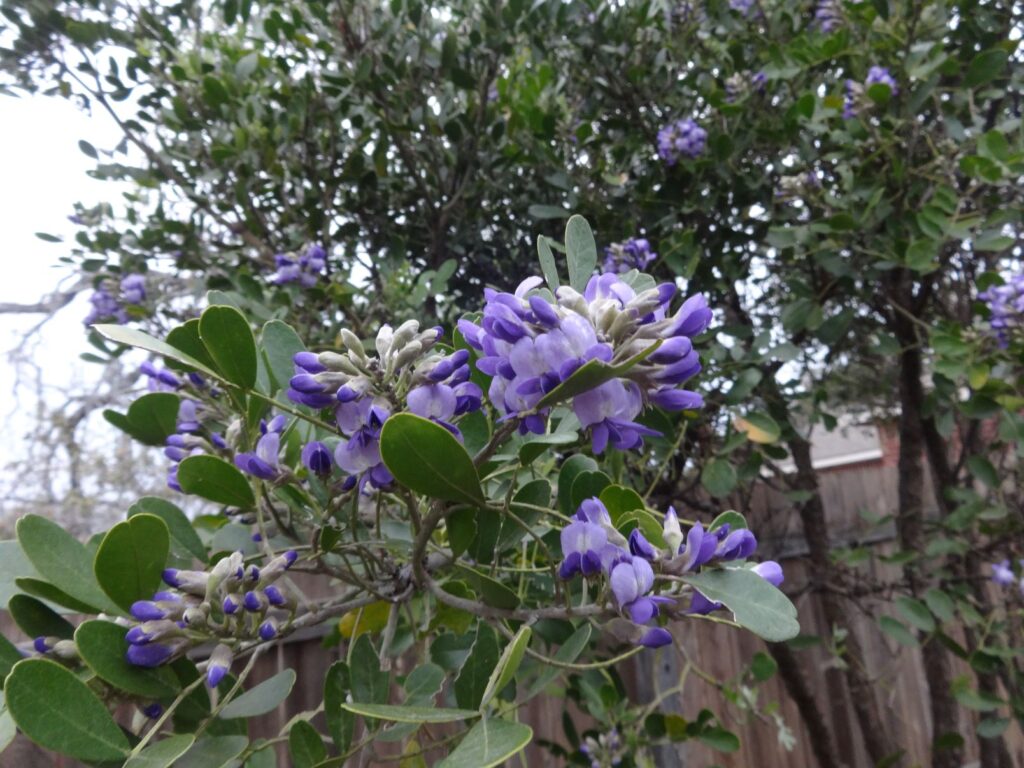
Mountain Laurel became Pennsylvania’s official state flower in 1933. It is technically a shrub, but its flower clusters are so dramatic that most lists of native flowers include it anyway.
The blooms open in late May and June, showing off pink and white cup-shaped petals. Each flower has a spring-loaded pollen mechanism that flicks pollen onto visiting insects. I always find that detail a little funny, like the plant is playing a prank on bees.
You will find it thriving in the Laurel Highlands region, which was actually named after this very plant. It prefers acidic, well-drained soil under partial shade, which describes much of Pennsylvania’s forest understory perfectly.
Every part of Mountain Laurel is toxic to humans and livestock if eaten. Admire it, photograph it, but never bring it into a salad bowl.
2. Wild Columbine (Aquilegia canadensis)
Wild Columbine produces nodding red and yellow flowers shaped almost like little lanterns. They appear from April through June, usually along rocky slopes and open woodlands across the state.
Hummingbirds arrive in Pennsylvania right around the same time Columbine blooms, and that timing is no accident. The long floral spurs hold nectar that only long-tongued pollinators, like hummingbirds and certain moths, can reach.
This plant handles poor, rocky soil better than most garden perennials. It self-seeds readily, so a few plants can turn into a small colony within two or three seasons.
I planted one near my front steps years ago, and it still returns every spring without any help from me.
3. Virginia Bluebells (Mertensia virginica)
Virginia Bluebells are spring ephemerals, meaning they bloom fast, then disappear until next year. Pink buds open into soft blue, bell-shaped flowers, usually in April.
They grow best in moist, rich woodland soil near streams and floodplains. Large colonies can carpet an entire forest floor in blue for just two or three weeks each spring. It is one of those sights worth planning a hike around.
By early summer, the foliage yellows and dies back completely. The plant essentially disappears underground until the following spring, which is why gardeners often pair it with later-blooming perennials to fill the gap.
Bees are the primary pollinators here, particularly bumblebees emerging from winter hibernation.
4. Bloodroot (Sanguinaria canadensis)
Bloodroot is often among the very first native flowers to open in Pennsylvania, sometimes as early as March. Its white, daisy-like petals surround a bright yellow center, wrapped in a single distinctive leaf.
The plant gets its name from the red-orange sap inside its roots. Indigenous communities historically used this sap as a natural dye and in traditional remedies. It is a good reminder that these flowers carried cultural importance long before anyone called them “landscaping.”
Bloodroot flowers only last a few days before petals drop. It prefers rich, well-drained soil in deciduous woodlands, often growing alongside Trillium and Trout Lily.
Ants play a surprising role here too, carrying the seeds to new locations in exchange for a fatty seed coating.
5. Trout Lily (Erythronium americanum)
Trout Lily gets its name from leaves that resemble the speckled pattern on a trout’s back. The nodding yellow flowers appear in April, close to the ground, often in large colonies.
A single Trout Lily colony can take years, sometimes over a decade, to produce its first flower. Most plants you see are actually non-flowering juveniles, quietly building energy underground through a small corm.
They favor moist deciduous forests with dappled sunlight, especially near streams. Once established, colonies can spread across acres of forest floor.
Early native bees rely on Trout Lily as one of the first nectar sources of the season.
ALSO READ: 15 Lucky Flowers to Bring Fortune and Good Luck to Your Garden
6. Spring Beauty (Claytonia virginica)
Spring Beauty produces small, five-petaled flowers striped with pink veins. They open in early spring and close again on cloudy days or at night, which always feels oddly polite to me.
This flower supports a specialist bee called the Spring Beauty Mining Bee, which collects pollen almost exclusively from this species. That kind of specific relationship shows how deeply interconnected native ecosystems really are.
It thrives in woodland edges, lawns, and open meadows across Pennsylvania. The plant is edible too; its small underground corms taste similar to chestnuts, though foraging should always be done responsibly.
Spring Beauty spreads through both seeds and underground corms, forming dense patches over time.
7. Dutchman’s Breeches (Dicentra cucullaria)
Dutchman’s Breeches earns its name honestly. The white flowers really do resemble a pair of pantaloons hanging upside down on a clothesline.
They bloom in April on rich, rocky wooded slopes, often near limestone outcrops. Only bumblebees with long enough tongues can reach the nectar hidden inside, making this one of the more selective pollination relationships among Pennsylvania wildflowers.
This is another spring ephemeral, meaning the entire plant vanishes back underground by early summer. Ants disperse the seeds, drawn to a fatty appendage attached to each one.
Deer generally avoid it, which makes it a reliable choice for shaded native gardens plagued by browsing.
8. Wild Blue Phlox (Phlox divaricata)
Wild Blue Phlox produces loose clusters of fragrant, lavender-blue flowers from April into May. It often grows alongside Virginia Bluebells and Trillium in rich woodland settings.
Its sweet fragrance is strongest in the evening, which helps attract night-flying moths as pollinators alongside daytime butterflies. That dual pollinator strategy is part of why it spreads so successfully in the wild.
Unlike many spring ephemerals, Wild Blue Phlox foliage stays green through summer rather than dying back completely. This makes it a more practical groundcover option for shaded garden beds.
It tolerates a range of soil types but prefers moist, well-drained conditions with partial shade.
9. Great White Trillium (Trillium grandiflorum)
Great White Trillium produces large, three-petaled white flowers that slowly turn pink as they age. Everything about this plant comes in threes: three leaves, three petals, three sepals.
A Trillium plant can take seven years or more to bloom for the first time after germinating from seed. That slow growth is exactly why picking wild Trillium is discouraged, since removing the flower can seriously damage the plant.
It prefers rich, undisturbed deciduous forest soil, often growing in dappled shade beneath maple and beech canopies. Large colonies signal a healthy, mature forest ecosystem.
Deer overpopulation has reduced Trillium numbers in parts of Pennsylvania, since deer find the flowers highly palatable.
ALSO READ: 25 Stunning Fall-Blooming Flowers: Identification and Care Details
10. Wild Geranium (Geranium maculatum)
Wild Geranium produces soft pink to lavender flowers with five rounded petals. Despite the shared name, it has no close relation to the potted geraniums sold at garden centers.
The plant has a clever seed-dispersal mechanism, where its seed capsule splits open explosively and flings seeds several feet away from the parent plant. It is one of nature’s small surprises if you happen to catch it in action.
Wild Geranium grows in woodland edges and partly shaded meadows throughout Pennsylvania. It blooms from April through June and tolerates a wide range of soil conditions.
Bees and butterflies both visit the flowers, though the plant is largely self-pollinating as a backup strategy.
11. Jack-in-the-Pulpit (Arisaema triphyllum)
Jack-in-the-Pulpit gets its odd name from the flower’s shape. A hooded structure, the “pulpit,” curls over a central spike, the “Jack,” standing inside like a tiny preacher.
This plant can actually change its sex from year to year depending on how much energy it has stored. Smaller plants often produce male flowers, while larger, well-established plants switch to female flowers that later produce bright red berries.
It thrives in moist, shaded woodlands and swampy forest edges across the state. Blooms appear from April to June, followed by berry clusters in late summer.
The berries and roots contain calcium oxalate crystals, making them irritating if eaten raw, so this is strictly a look-but-don’t-taste flower.
12. Foamflower (Tiarella cordifolia)
Foamflower sends up delicate spikes of small white flowers with a slightly frothy texture, which explains the common name. It blooms in April and May across shaded, moist woodland areas.
The heart-shaped leaves often stay attractive well into fall, sometimes taking on a reddish tint. This makes Foamflower a practical groundcover option, since it offers visual interest beyond just its bloom period.
It spreads gradually through underground runners, forming dense mats over a few seasons. This makes it excellent for erosion control on shaded slopes.
Bees and small native pollinators visit the flowers regularly, drawn to their subtle fragrance.
13. Jacob’s Ladder (Polemonium reptans)
Jacob’s Ladder produces clusters of soft blue, bell-shaped flowers atop ladder-like arrangements of leaflets. It was even chosen to represent Pennsylvania wildflowers on a 1982 commemorative postage stamp series.
The leaf arrangement gives the plant its biblical name, resembling a ladder climbing toward the sky. It blooms from April through June in moist woodlands and along shaded stream banks.
This flower prefers rich, well-drained soil and partial shade. It pairs beautifully with ferns and other woodland natives in a shade garden setting.
Bumblebees and other native bees are its primary pollinators, drawn by both color and nectar reward.
14. Black-Eyed Susan (Rudbeckia hirta)
Black-Eyed Susan might be the most recognizable native wildflower in Pennsylvania. Its bright yellow petals surround a dark brown, cone-shaped center from June through October.
It is often the first native flower people learn by name, and for good reason. It tolerates poor soil, drought, and neglect while still blooming reliably every summer.
Black-Eyed Susan attracts a wide range of pollinators, including bees, butterflies, and beneficial wasps. Goldfinches feed on its seed heads through fall and winter if you leave the spent flowers standing.
It reseeds generously, so a small patch can naturalize into a full meadow within a few years.
ALSO READ: 15 Vibrant Winter Flowers to Brighten Your Cold-Season Garden
15. Purple Coneflower (Echinacea purpurea)
Purple Coneflower produces striking pink-purple petals drooping around a spiky orange-brown center. It blooms from June through September in sunny meadows and prairie-like settings.
Echinacea has a long history of use in traditional herbal medicine, particularly for supporting immune health, though modern research on its effectiveness remains mixed. Regardless, its ecological value is undisputed.
Butterflies, especially Monarchs and Swallowtails, visit these flowers constantly during summer. Songbirds later feast on the seed heads, so it is worth resisting the urge to deadhead.
It handles drought well once established, making it a low-maintenance choice for sunny gardens.
16. Butterfly Weed (Asclepias tuberosa)
Butterfly Weed produces vivid orange flower clusters from June through August. Unlike other milkweed species, its sap is not milky, which sometimes confuses people trying to identify it.
Monarch caterpillars can only eat milkweed species to survive, and Butterfly Weed serves as one of their preferred host plants. Adult Monarchs also feed on its nectar during their long migration south each fall.
This plant thrives in dry, sandy soil and full sun, tolerating drought better than most milkweed relatives. It has a deep taproot, so it dislikes being transplanted once established.
Its long bloom period makes it a garden favorite for continuous pollinator activity.
17. Common Milkweed (Asclepias syriaca)
Common Milkweed produces round clusters of dusty pink, fragrant flowers from June through August. Its milky sap contains compounds that make both the plant and Monarch caterpillars distasteful to predators.
Monarch butterfly populations have declined significantly over recent decades, and habitat loss, including reduced milkweed availability, is a major contributing factor identified by conservationists. Planting Common Milkweed directly supports their recovery.
It spreads aggressively through underground rhizomes, so it suits meadows or larger garden spaces better than tight flower beds. Seed pods split open in fall, releasing silky-tufted seeds carried by wind.
Bees, wasps, and butterflies all visit the flowers heavily during bloom season.
18. Swamp Milkweed (Asclepias incarnata)
Swamp Milkweed produces clusters of pink to mauve flowers from June through August. As the name suggests, it prefers consistently moist to wet soil, unlike its drought-tolerant cousins.
This species behaves far less aggressively than Common Milkweed, spreading through clumping growth rather than running rhizomes. That makes it a popular choice for rain gardens and pond edges.
It serves the same critical role as host plant for Monarch caterpillars while offering a tidier growth habit for smaller landscapes. Bloom fragrance is notably sweet, similar to vanilla.
Bees, butterflies, and hummingbird moths all visit regularly throughout its long summer bloom period.
19. Wild Bergamot (Monarda fistulosa)
Wild Bergamot produces shaggy, lavender-pink flower heads from July through September. Crushing its leaves releases a strong minty, slightly citrusy aroma, since it belongs to the mint family.
Native Americans traditionally used this plant to treat colds and sore throats, brewing it into teas well before European settlers arrived. That history connects directly to its common name, Bee Balm, referencing its long medicinal use.
It thrives in sunny meadows and dry to medium soil across Pennsylvania. Hummingbirds, bees, and a wide range of butterflies visit the tubular flowers constantly during bloom.
Deadheading spent blooms can encourage a second, smaller flush of flowers later in the season.
20. Cardinal Flower (Lobelia cardinalis)
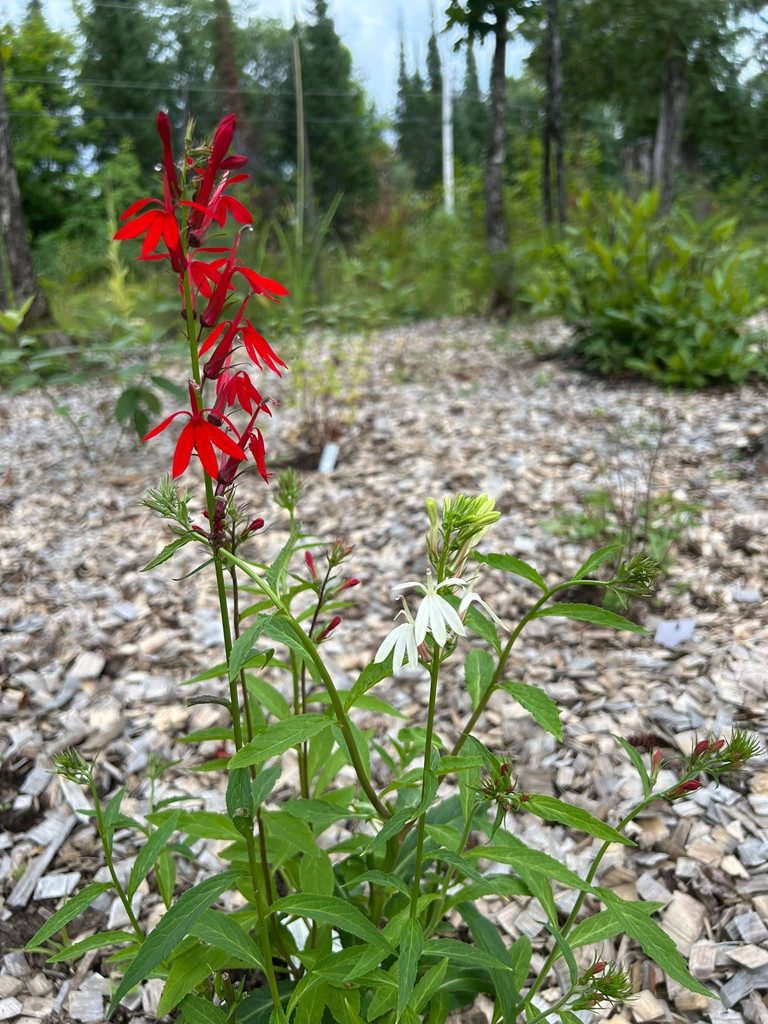
Cardinal Flower produces tall spikes of intensely red, tubular flowers from July through September. The color is so vivid it practically glows against green summer foliage.
Hummingbirds are the primary pollinators of Cardinal Flower, since the flower’s tube shape and color are specifically suited to their feeding behavior. Few other pollinators can access the nectar effectively.
It grows best in consistently moist soil, often found along streambanks, wetland edges, and rain gardens. Full sun to partial shade both work well for this species.
Because it is relatively short-lived as an individual plant, allowing it to self-seed helps maintain a stable population in the garden.
21. Joe-Pye Weed (Eutrochium purpureum)
Joe-Pye Weed can grow up to seven feet tall, topped with large, dusty pink to mauve flower clusters from July through September. Its sheer size makes it a dramatic backdrop plant.
Butterflies, especially Swallowtails, flock to Joe-Pye Weed in large numbers during peak bloom, making it one of the most productive nectar sources in a late-summer pollinator garden.
It prefers moist, rich soil and tolerates both full sun and partial shade. This flexibility makes it suitable for rain gardens, woodland edges, and wet meadow restorations.
The plant’s name reportedly comes from a Native American healer who used it to treat fevers, though the exact historical details vary by region.
22. New England Aster (Symphyotrichum novae-angliae)
New England Aster produces vivid purple, daisy-like flowers with yellow centers from August through October. It is often among the very last native flowers still blooming before frost arrives.
Migrating Monarch butterflies rely heavily on late-season nectar sources like this aster to fuel their journey south. Without plants blooming this late, their migration would face serious energy shortfalls.
It grows well in sunny meadows and moist soil, reaching three to six feet tall depending on conditions. Cutting stems back in early summer encourages bushier, more compact growth.
Bees remain active on this plant even into cooler fall weather, making it a critical late-season food source.
23. Canada Goldenrod (Solidago canadensis)
Canada Goldenrod produces tall, feathery yellow plumes from August through October, often blanketing entire fields in gold. It gets unfairly blamed for hay fever, when ragweed, blooming at the same time, is the real culprit.
Goldenrod pollen is heavy and sticky, designed to cling to insects rather than travel through air, which means it rarely causes allergic reactions the way people assume. It is a genuinely misunderstood plant.
It thrives in poor soil, full sun, and disturbed areas, spreading through rhizomes to form dense colonies. This vigorous growth habit suits meadow restorations better than small formal gardens.
Goldenrod supports an enormous range of pollinators, including bees, beetles, and migrating butterflies preparing for winter.
24. New York Ironweed (Vernonia noveboracensis)
New York Ironweed produces clusters of deep magenta-purple flowers from August through October, standing tall at four to seven feet. Despite its bold color, it often goes overlooked compared to flashier natives.
The name “Ironweed” comes from its notably tough, rigid stems, which resist wind and heavy rain far better than many other tall perennials. That resilience makes it a dependable choice for exposed, wet sites.
It prefers consistently moist to wet soil, thriving near stream banks, ditches, and wet meadows across Pennsylvania. Full sun brings out its best bloom production.
Butterflies, particularly Swallowtails and Monarchs, visit Ironweed heavily during its long late-summer bloom window.
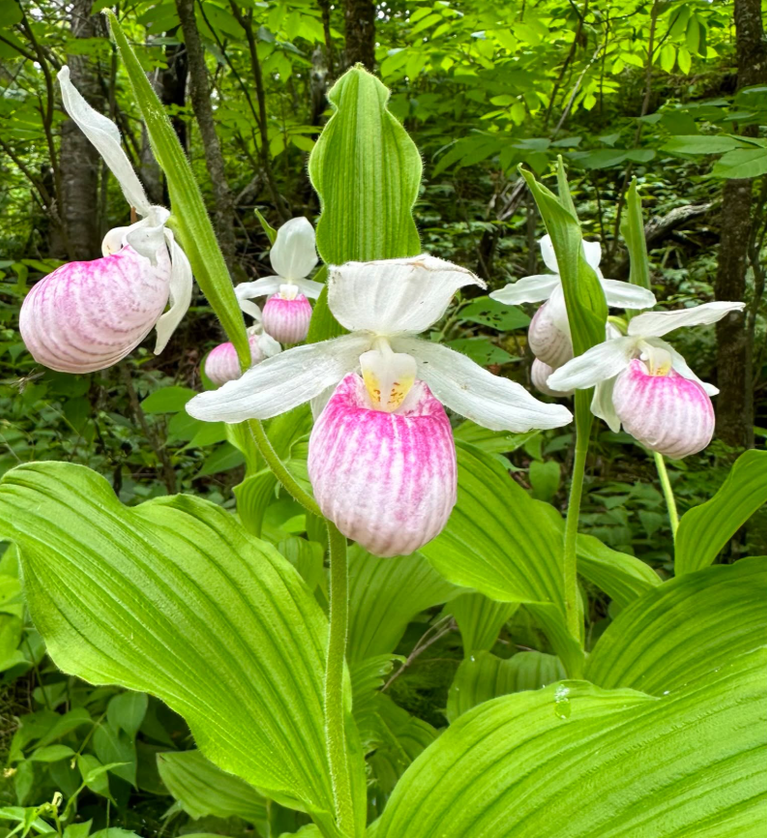
25. Pink Lady’s Slipper (Cypripedium acaule)
Pink Lady’s Slipper is a native orchid with a distinctive pouch-shaped pink flower, blooming from April through June. Finding one in the wild genuinely feels like discovering a small treasure.
This orchid depends on a specific soil fungus to germinate and survive, forming a relationship so specialized that transplanting the flower almost always kills it. This is exactly why it should never be dug up from the wild.
It grows in acidic, well-drained soil under pine or mixed forest canopies, often alongside Mountain Laurel and blueberry shrubs. Populations can take years to establish in a single location.
Bumblebees pollinate the flower, though the process is famously inefficient, which partly explains why this orchid remains relatively rare.
Final Thoughts
Working through this list reminded me how much variety exists just beneath the surface of an ordinary Pennsylvania forest or meadow. Every one of these 25 flowers plays a specific, often irreplaceable role in supporting local bees, butterflies, birds, and soil health.
Starting a native garden does not require ripping out your entire yard at once. Adding even three or four species from this list, chosen for your particular light and soil conditions, makes a measurable difference for local wildlife.
Pennsylvania’s landscape, from the Laurel Highlands to the Piedmont region, has room for all twenty-five of these flowers somewhere within its borders. The next time you walk a trail here, I hope you recognize a few familiar faces among the wildflowers.

Tim M Dave is a gardening expert with a passion for houseplants, particularly cacti and succulents. With a degree in plant biology from the University of California, Berkeley, he has vast experience in gardening. Over the years, he has cultivated a vast collection of desert plants and learned a great deal about how to grow and care for these unique companions.