30 Best Indoor Trees (With Growing Details)
I killed my first fiddle leaf fig within two months. It sat in a dim hallway corner, and I watered it every time I felt guilty rather than when it actually needed it. That plant taught me more about indoor trees than any care tag ever did.
Bringing a tree indoors changes a room completely. It adds height, texture, and a living presence that small potted plants simply cannot match.
This guide covers 30 indoor trees suited to different light levels, room sizes, and experience levels.
Understanding Indoor Light Before You Choose a Tree
Light is the single biggest factor in whether an indoor tree survives. Outdoor sunlight can measure 10,000 to 12,000 foot-candles, according to University of Illinois Extension, while most indoor spaces receive only a small fraction of that.
University of Minnesota Extension defines low-light areas as roughly 50 to 250 foot-candles, suited to north-facing windows or dim corners. High-light areas near south or southwest windows can exceed 1,000 foot-candles, supporting trees that need direct sun exposure.
Before choosing a tree, stand near your intended spot and observe the shadow your hand casts on a sheet of paper. A sharp, well-defined shadow signals bright light, while a faint, barely visible shadow signals low light.
Match the tree to the room, not the room to the tree. A fiddle leaf fig in a dark hallway will struggle no matter how well you water it. Choosing correctly from the start saves both money and disappointment.
30 Best Indoor Trees for Every Home
1. Fiddle Leaf Fig
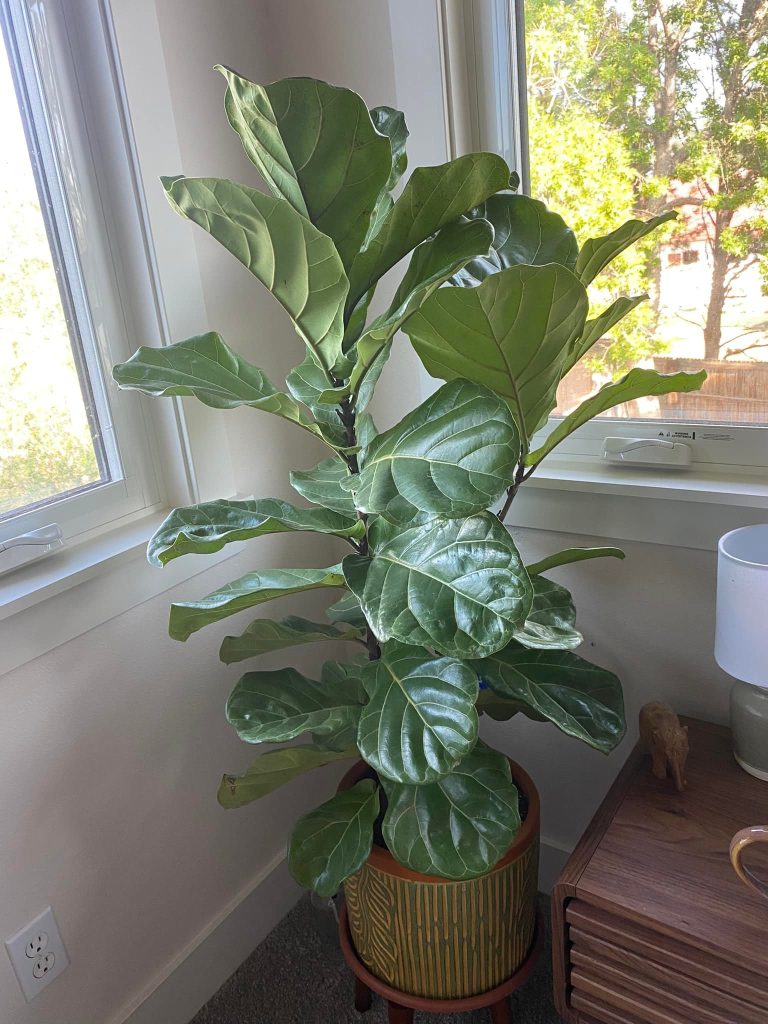
The fiddle leaf fig remains the most searched indoor tree online, and its dramatic, violin-shaped leaves explain why. It makes a bold visual statement in almost any room.
This tree needs bright, indirect light, ideally near a south or east-facing window. Direct afternoon sun scorches its broad leaves, so filtered light works best.
Let the top inch of soil dry between waterings. Overwatering causes root rot far more often than underwatering causes leaf drop, so err on the side of patience.
2. Rubber Plant (Rubber Tree)
Rubber plants offer glossy, leathery leaves and a sturdy trunk that fills vertical space beautifully. They are considerably more forgiving than their fiddle leaf fig cousin.
Bright, indirect light suits this tree best, though it tolerates medium light reasonably well. University of Maryland Extension lists it among the two most popular ficus houseplants grown indoors.
Wipe dust off the broad leaves periodically, since dust buildup blocks light absorption. A steady watering routine, letting soil dry slightly between waterings, keeps this plant healthy for years.
3. Weeping Fig (Ficus Benjamina)
Weeping fig has been a classic indoor tree for decades, prized for its graceful, cascading branches and small, glossy leaves that create a soft, layered canopy.
This tree is sensitive to change. Moving it, drafts, or inconsistent watering often trigger sudden leaf drop, even though the plant usually recovers once conditions stabilize.
Place it in bright, filtered light away from cold drafts or heating vents. Consistency, more than perfection, is what weeping fig genuinely needs to thrive indoors.
4. Ficus Alii
Ficus Alii shares the weeping fig’s toughness but offers a narrower, more elegant silhouette thanks to its long, willow-like leaves. It suits tighter corners nicely.
Like other ficus varieties, it prefers bright, indirect light and dislikes sudden relocation. Established plants tolerate moderate light better than younger specimens still adjusting.
Water when the top inch of soil feels dry. This tree’s narrow profile makes it a smart pick for hallways and narrow spaces beside furniture.
5. Ficus Audrey
Ficus Audrey has become popular recently for its fuzzy, textured leaves and upright growth habit. It is closely related to the banyan fig grown widely across India.
It demands more consistent humidity than other ficus trees, and dry indoor air during winter can cause noticeable leaf browning at the edges.
Provide bright, indirect light and mist occasionally, or use a humidifier nearby. A pebble tray beneath the pot also helps raise local humidity around the foliage.
6. Money Tree

Money tree, with its distinctive braided trunk, is often marketed as a symbol of good fortune. Beyond the symbolism, it is genuinely one of the easier indoor trees to keep alive.
It adapts to a fairly wide range of indoor light conditions, though it grows best in bright, indirect light. Direct sun can scorch its palmate leaves.
Water regularly but allow the soil to dry between sessions. This tree tolerates minor neglect far better than most trees on this list.
7. Dragon Tree (Dracaena Marginata)
Dragon tree brings a sculptural, architectural quality to a room with its thin, arching trunk and spiky, red-edged leaves. It suits modern and minimalist interiors especially well.
This dracaena tolerates lower light better than many trees, though it still performs best in bright, indirect conditions. Growth slows noticeably in dimmer corners.
Keep soil on the dry side, since dracaenas are notably sensitive to overwatering. Brown leaf tips usually signal fluoride sensitivity, so filtered water helps if tap water is an issue.
8. Corn Plant (Dracaena Fragrans)
Corn plant gets its name from its broad, arching leaves that resemble corn stalks. It is one of the most tolerant dracaenas for lower-light rooms and offices.
This tree adapts to medium and even fairly low light without major complaint, making it a dependable choice for interior rooms without much natural window access.
Water moderately and let the soil dry between waterings. Occasional yellowing of older lower leaves is normal and simply part of the plant’s natural growth cycle.
9. Song of India (Dracaena Reflexa)
Song of India stands out among dracaenas for its variegated, cream-and-green striped leaves that add color without needing flowering to do it.
It requires slightly more consistent bright light than corn plant to maintain vivid variegation, though it still tolerates medium light reasonably well over time.
Rotate the plant occasionally so growth stays even on all sides. Consistent watering, avoiding both drought and soggy soil, keeps the foliage vibrant.
10. Norfolk Island Pine
Norfolk Island pine looks like a miniature Christmas tree year-round, and it is commonly sold during the holiday season for exactly that reason. It is not actually a true pine.
In its native South Pacific habitat, this species can reach 200 feet tall. Indoors, it typically stays between 3 and 8 feet, adding a distinct conifer silhouette few tropical trees offer.
It needs more light than most indoor trees and appreciates humidity above 50 percent. Low humidity causes branch drop from the bottom up, and lost branches never regrow.
11. Parlor Palm
Parlor palm has remained a houseplant staple since the Victorian era, valued for its graceful, feathery fronds and genuine tolerance of lower indoor light levels.
This palm suits offices and interior rooms particularly well, since it does not demand direct sunlight to stay healthy and green over the long term.
Keep soil consistently moist but never waterlogged. Its compact size, usually under 4 feet indoors, makes it ideal for desks, shelves, and smaller apartments.
12. Areca Palm
Areca palm produces feathery, arching fronds that create a soft, tropical feel indoors. It is frequently listed among plants studied for indoor air quality benefits.
NASA’s original Clean Air Study, conducted at Stennis Space Center, included several palm varieties among the species tested for removing common indoor air pollutants like formaldehyde.
This palm prefers bright, indirect light and consistent moisture. Brown leaf tips often indicate low humidity or mineral buildup from tap water, so filtered water helps.
13. Kentia Palm
Kentia palm has a refined, upright form that historically made it a favorite in Victorian parlors and, more recently, hotel lobbies and upscale interiors.
It tolerates lower light better than most palms, and its slow growth rate means it stays manageable indoors for years without needing frequent repotting.
Water when the top of the soil feels dry, and avoid direct afternoon sun, which can scorch its elegant, drooping fronds.
14. Bamboo Palm
Bamboo palm gets its name from its slender, cane-like stems, though it is unrelated to true bamboo. It handles shadier rooms notably well compared to other palms.
This palm was specifically included in NASA’s original indoor air research for its ability to help filter common household pollutants from enclosed spaces.
Keep the soil evenly moist and provide moderate humidity when possible. Its clumping growth habit makes it a good natural room divider in open floor plans.
15. Majesty Palm
Majesty palm delivers a lush, full canopy of arching fronds that instantly transforms a plain corner into something resembling a tropical retreat.
Despite its name, this palm is notoriously fussy indoors and needs more consistent moisture and humidity than many gardeners initially expect from a palm.
Provide bright, indirect light and keep soil consistently moist. Allowing it to dry out fully, even once, often triggers noticeable browning across the fronds.
16. Chinese Fan Palm
Chinese fan palm features broad, pleated, fan-shaped leaves that create a distinctly different silhouette compared to feathery palm varieties like areca or kentia.
It adapts reasonably well to indoor conditions, tolerating medium light and average household humidity better than more delicate tropical palm species.
Water moderately, allowing the topsoil to dry slightly between sessions. Its eventual size makes it best suited to rooms with generous ceiling height.
17. Cat Palm
Cat palm stays compact and bushy, making it a practical choice for smaller rooms that still want a genuine tropical, multi-stemmed palm appearance.
This palm prefers consistently moist soil and appreciates higher humidity, which can make it slightly more demanding than other compact indoor palm varieties.
Bright, indirect light keeps growth dense and healthy. Avoid letting the soil dry out completely, since cat palm responds poorly to drought stress.
18. Ponytail Palm
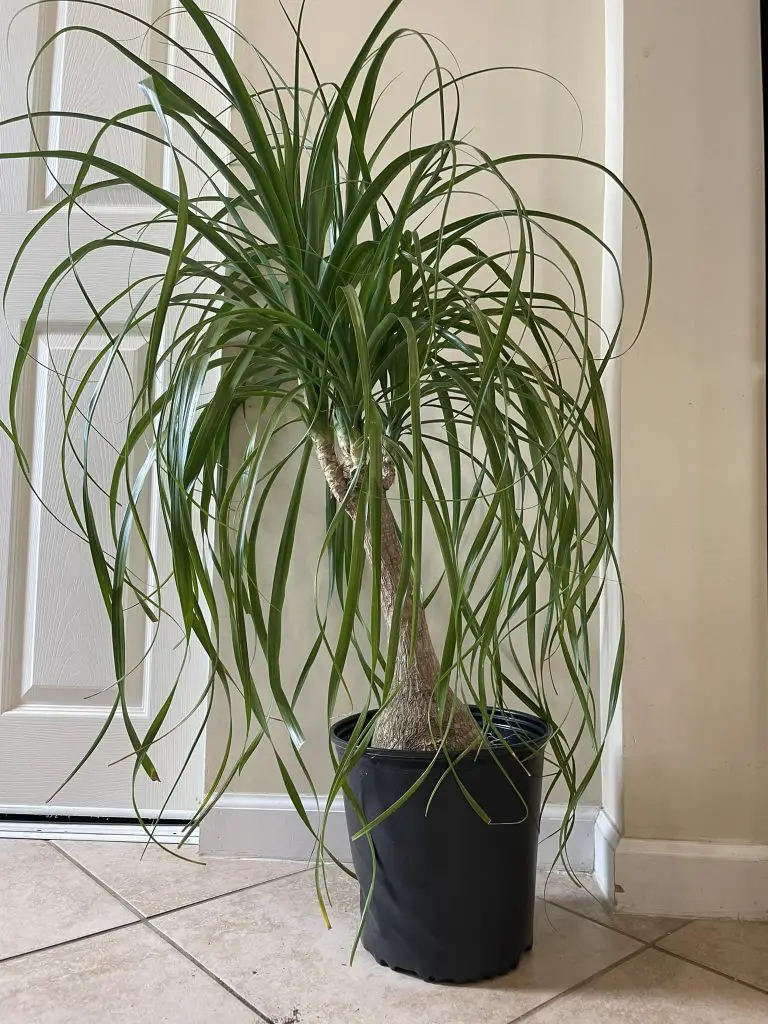
Ponytail palm is not a true palm at all but a succulent tree with a bulbous, water-storing trunk and long, curling leaves that resemble a ponytail.
Its water-storing trunk makes this tree remarkably forgiving for forgetful waterers, since it survives extended dry periods far better than most trees on this list.
Provide bright light and allow soil to dry out completely between waterings. Overwatering is the single most common way this otherwise hardy tree fails.
19. Bird of Paradise
Bird of paradise brings large, banana-like leaves and, in ideal conditions, striking orange flowers reminiscent of a tropical bird in flight.
This tree needs considerably more light than most indoor trees to thrive, ideally several hours of bright, direct or near-direct sunlight from a south-facing window.
Water generously during active growth and reduce watering in winter. Given enough light and space, this tree becomes a genuine architectural centerpiece.
20. Umbrella Tree (Schefflera Actinophylla)
Umbrella tree earns its name from the way its glossy leaflets radiate outward like the ribs of an open umbrella, creating a full, layered canopy.
It grows quickly under good conditions and tolerates a range of indoor light levels, from bright indirect light down to moderate interior brightness.
Water when the topsoil dries out, and rotate occasionally for even growth. Pruning encourages a fuller, bushier shape rather than a single tall stem.
21. Dwarf Umbrella Tree (Schefflera Arboricola)
Dwarf umbrella tree offers the same radiating leaf pattern as its larger relative but in a considerably more compact, manageable form for smaller homes.
This variety tolerates lower light better than the standard umbrella tree, making it a practical option for offices or rooms without strong natural light.
Keep soil evenly moist but not soggy. Its naturally bushy growth habit means it rarely needs staking, even as it matures.
22. Croton
Croton stands out for its bold, multicolored foliage, splashed with red, orange, yellow, and green in patterns that vary widely between cultivars.
Unlike most indoor trees on this list, croton actually needs fairly bright light to maintain its vivid coloring. Low light causes the leaves to fade toward plain green.
Water consistently and maintain higher humidity when possible. This tree rewards attentive care with some of the most vibrant foliage available indoors.
23. Yucca Cane
Yucca cane features stiff, sword-like leaves atop a thick, woody cane, giving it a striking, sculptural silhouette that suits contemporary interior design.
This tree tolerates a genuinely wide range of indoor conditions, including lower humidity and inconsistent watering, better than most trees featured in this guide.
Provide bright light for best results, though it survives in medium light too. Allow soil to dry between waterings, since yucca cane strongly dislikes soggy roots.
24. Meyer Lemon Tree
Meyer lemon brings fragrant blossoms and genuine homegrown fruit indoors, something few other trees on this list can offer alongside their ornamental value.
Extension research consistently notes that citrus trees need a south or west-facing window and several hours of direct sun daily for healthy growth and reliable fruiting.
Water consistently and feed regularly during the growing season. Without adequate light, this tree may survive but rarely produces much fruit indoors.
25. Olive Tree
Olive tree brings a Mediterranean, sculptural quality indoors, with narrow silvery-green leaves and a gnarled trunk that develops character as it matures.
It needs bright, direct light, ideally several hours daily near an unobstructed south-facing window. Insufficient light leads to sparse, leggy growth over time.
Allow soil to dry out somewhat between waterings, since olive trees are naturally drought-tolerant and dislike consistently damp roots.
26. Avocado Tree
Avocado tree, often started from a sprouted pit, grows into an attractive, glossy-leaved houseplant even though indoor conditions rarely produce actual fruit.
This tree needs bright light and consistent warmth to thrive. Cold drafts and low light both cause noticeable leaf drop and stunted, leggy growth.
Water when the topsoil dries out. Many gardeners grow avocado purely for its lush, decorative foliage rather than any realistic hope of homegrown avocados.
27. Coffee Plant
Coffee plant offers dark, glossy leaves and, under the right conditions, small white flowers followed by the green berries that eventually become coffee beans.
It prefers bright, indirect light rather than direct sun, along with consistently moist soil and higher humidity than many other trees on this list.
Keep it away from cold drafts and dry heating vents. This tree rewards patient, attentive care with genuinely attractive, glossy year-round foliage.
28. Japanese Fern Pine (Podocarpus)
Japanese fern pine, or podocarpus, offers a soft, needle-like foliage that brings a calm, evergreen quality distinct from broad-leafed tropical trees.
This tree tolerates pruning exceptionally well, which makes it a popular choice for gardeners who want to shape or maintain a specific compact size indoors.
Provide bright, indirect light and allow soil to dry slightly between waterings. It adapts reasonably well to a range of indoor humidity levels.
29. Ginseng Ficus
Ginseng ficus, often trained as an indoor bonsai, features a distinctive thick, bulbous trunk paired with small, glossy leaves atop a compact canopy.
This tree tolerates lower light better than most ficus varieties, and its slow growth rate makes it manageable for gardeners without much indoor space.
Water when the topsoil dries out, and mist occasionally for humidity. Regular light pruning keeps its bonsai-like shape neat and well-defined.
30. Dwarf Banana Tree
Dwarf banana tree brings large, dramatic, paddle-shaped leaves indoors without needing the towering height of an outdoor banana plant.
It needs bright light and consistently warm, humid conditions to thrive, closely mimicking its natural tropical habitat as much as possible indoors.
Water generously, since banana trees are naturally thirsty plants. A humidifier nearby helps prevent the leaf edges from browning in drier indoor air.
Quick Care Tips for Indoor Trees
Check the light before the plant. Match your tree to the actual foot-candle range of your space rather than assuming any bright-looking corner will work.
Rotate your tree periodically. Indoor trees grow toward their light source, and rotating the pot every few weeks keeps growth even on all sides.
Watch humidity, not just watering. Many indoor trees originate from humid tropical forests, and dry indoor heating during winter is a common, overlooked stress factor.
Repot gradually as the tree grows. Moving a tree into a pot that is only slightly larger prevents waterlogged soil around roots that have not yet filled the space.
Frequently Asked Questions
Do indoor trees really improve air quality? NASA’s original research found that certain houseplants can remove pollutants like formaldehyde and benzene under sealed laboratory conditions. Later independent studies suggest the real-world impact in typical homes is more modest, though the research remains an interesting starting point.
How much light do most indoor trees actually need? Most popular indoor trees perform best in bright, indirect light, generally in the range of 200 to 1,000 foot-candles. A handful, like citrus and olive trees, need direct sun for several hours daily.
Which indoor trees are best for beginners? Money tree, dracaena varieties, ponytail palm, and yucca cane are widely considered among the most forgiving choices for anyone still learning how their home’s light and humidity actually behave.
Final Thoughts
Choosing the right indoor tree comes down to honesty about your space. Thirty different options, from low-light dracaenas to sun-hungry citrus trees, mean there is genuinely something for every room.
I eventually replaced that hallway fiddle leaf fig with a dracaena, and it has thrived for years since. Match the tree to the light you actually have, and your indoor jungle will likely outlast mine.
References
- NASA Spinoff – Plants Clean Air and Water for Indoor Environments https://spinoff.nasa.gov/Spinoff2007/ps_3.html
- University of Minnesota Extension – Lighting for Indoor Plants and Starting Seeds https://extension.umn.edu/planting-and-growing-guides/lighting-indoor-plants
- University of Illinois Extension – Houseplants: Lighting https://extension.illinois.edu/houseplants/lighting
- University of Maryland Extension – Selecting Indoor Plants https://extension.umd.edu/resource/selecting-indoor-plants
- Clemson Cooperative Extension, Home & Garden Information Center – Indoor Plants https://hgic.clemson.edu/category/indoor-plants/
- University of Nebraska–Lincoln Extension Publications – Houseplants: Light, Water, and Care Guide https://extensionpubs.unl.edu/publication/g2205/na/html/view
- University of Arizona Cooperative Extension, Yavapai County – Houseplants Improve Indoor Air Quality https://cales.arizona.edu/yavapai/anr/hort/byg/archive/houseplantsimproveindoorairquality2015.html

Tim M Dave is a gardening expert with a passion for houseplants, particularly cacti and succulents. With a degree in plant biology from the University of California, Berkeley, he has vast experience in gardening. Over the years, he has cultivated a vast collection of desert plants and learned a great deal about how to grow and care for these unique companions.