15 Common Bottlebrush Tree Problems (And How to Fix Them)
Bottlebrush trees, part of the Callistemon (now often Melaleuca) genus, have a reputation for being tough and low-maintenance. That reputation is mostly earned, but it doesn’t mean these trees are problem-free.
A few years back, I watched a client’s bottlebrush go from glossy and covered in red blooms to sad, yellow, and half-bare within a single season. It turned out to be a simple watering mistake. That experience taught me how quickly small issues can snowball if you don’t catch them early.
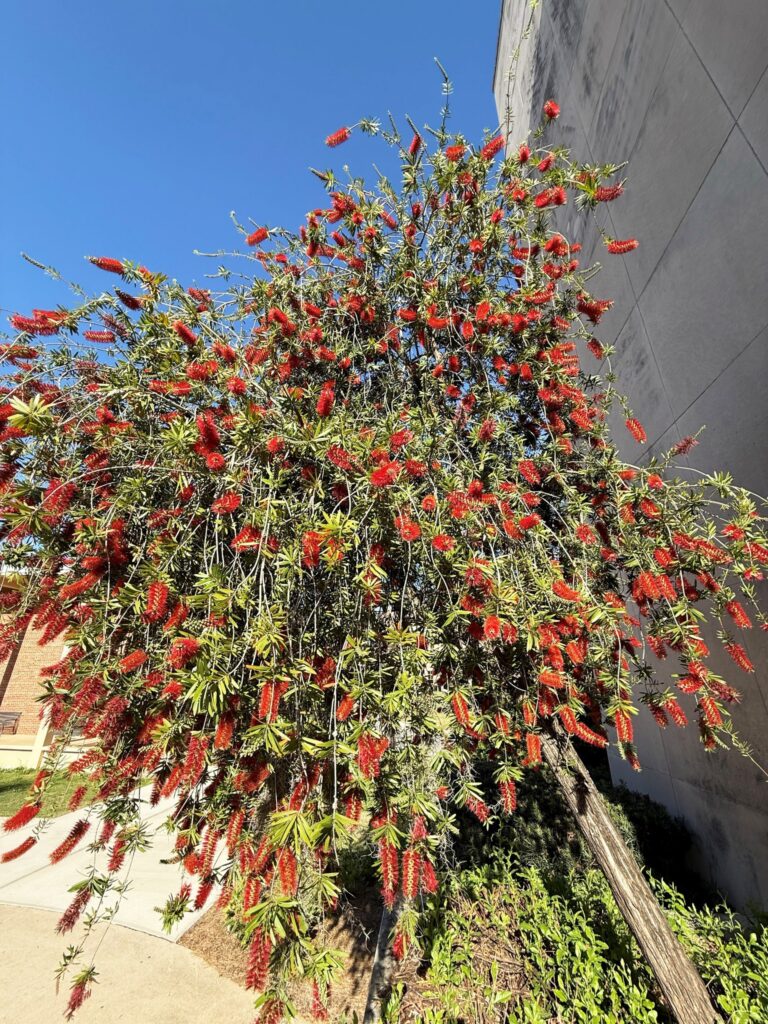
This guide walks through 15 common bottlebrush tree problems, explains what causes each one, and gives you a practical fix. Whether your tree has stopped flowering or you’ve spotted strange black coating on the leaves, you’ll find the answer here.
1. Yellowing Leaves From Iron Chlorosis
This is one of the most frequent complaints among bottlebrush owners, especially in regions with alkaline soil. The leaves turn yellow while the veins stay green, a pattern called interveinal chlorosis.
According to Utah State University Extension, iron chlorosis frequently occurs in soils with a pH above 7.0 that also contain lime. The iron is technically present in the soil, but high pH locks it into a form the roots cannot absorb.
The fix: Test your soil pH first. If it reads above 7.0, apply a chelated iron supplement to the soil or foliage, and consider working in sulfur to gradually lower the pH over time.
University of Illinois Extension notes that iron chlorosis typically starts on the youngest leaves first, which helps distinguish it from manganese or zinc deficiency. That detail matters because the treatment differs slightly for each.
2. Poor or No Flowering
Few things are more frustrating than a healthy-looking bottlebrush that simply refuses to bloom. This problem almost always traces back to one of two causes.
Insufficient sunlight is the most common culprit. Bottlebrush trees need at least six hours of direct sun daily to produce their signature flower spikes.
Excess nitrogen fertilizer is the second cause. Too much nitrogen pushes the plant toward leafy growth and away from flowering.
The fix: Prune back nearby shrubs or trees blocking sunlight, and switch to a low-phosphorus, balanced fertilizer instead of a nitrogen-heavy one. Give the tree a full season to respond before assuming something else is wrong.
3. Root Rot From Overwatering
Root rot is a fungal problem that develops in soil that stays wet for too long. It is, without question, the number one killer of otherwise healthy bottlebrush trees.
Symptoms include wilting despite moist soil, yellowing foliage, and a general decline that seems to have no obvious cause. By the time above-ground symptoms appear, the root damage is often already significant.
The fix: Improve drainage immediately. Raise the planting bed if needed, cut back on watering frequency, and avoid letting the tree sit in standing water after rain.
I always tell people that bottlebrush trees would rather go a little thirsty than sit in soggy soil. That single mindset shift prevents most root rot cases before they start.
4. Twig Gall
Twig gall is a fungal disease that causes new growth to swell and distort. It shows up as bloated, irregular sections along young branches.
This condition develops specifically from excessive watering and overly wet foliage. Moisture sitting on leaves and stems creates the perfect environment for the fungus to establish itself.
The fix: Prune out affected twigs and dispose of them away from the garden. Water at the base of the tree rather than overhead, and space plants to allow good air circulation.
5. Verticillium Wilt
This is a more serious soil-borne fungal disease. It causes yellowing flowers and dying branches, and it can be tricky to diagnose because the symptoms mimic other problems.
One reliable diagnostic trick involves cutting into an affected stem. Dark rings visible in the cross-section are a strong sign of verticillium wilt.
The fix: Unfortunately, the fungus is difficult to remove from soil entirely. Treating the plant with a fungicide can help, but severe cases often require replanting in a different location with fresh soil.
The good news is that verticillium wilt rarely kills the tree outright. It weakens it, but with patience and the right treatment, recovery is possible.
6. Leaf Spot and Leaf Blotch
Circular spots on the leaves, sometimes followed by early leaf drop, point to leaf spot or leaf blotch. These fungal issues spread more easily in soggy or overly humid conditions.
The spots vary in size and color depending on the specific fungus involved. Left untreated, severe cases can cause enough defoliation to weaken the whole tree.
The fix: Remove and destroy fallen, infected leaves rather than composting them. Improve air circulation around the plant, and apply a fungicide labeled for ornamental shrubs if the problem persists.
7. Sooty Mold
If you’ve noticed a black, sticky coating on the leaves and branches, sooty mold is almost certainly the cause. It looks alarming, but the mold itself does not directly damage the plant.
Sooty mold grows on honeydew, a sugary substance excreted by sap-sucking insects like scale and aphids. In other words, sooty mold is usually a symptom of a pest problem, not the root issue itself.
The fix: Treat the underlying insect infestation first. Once the pests are gone, wipe or hose off the mold, and it should not return unless the pests come back.
8. Scale Insects
Scale insects are small, sap-sucking pests with a hard, shell-like covering in brown, black, or gray tones. They are one of the few pests that regularly trouble bottlebrush trees, according to horticultural experts who otherwise describe the plant as pest-resistant.
NC State Extension’s Plant Toolbox lists scale insects among the common problems affecting both crimson and weeping bottlebrush varieties. Left unchecked, scale can cause irregular growth and noticeable defoliation.
The fix: Small infestations can simply be scraped or wiped off by hand. For larger outbreaks, horticultural oil applied according to label directions works well without harming beneficial insects.
Scale tends to thrive in warm, humid regions with mild winters, so gardeners in those climates should inspect their trees more frequently.
9. Sawfly Larvae
Sawfly larvae look similar to caterpillars and feed directly on bottlebrush leaves. Both NC State Extension and independent gardening resources list them among the recurring pests of this plant family.
Damage typically appears as chewed, ragged leaf edges, and larvae are often found in small groups rather than alone. Populations can build quickly if left unmanaged.
The fix: Handpick larvae when populations are small. For larger infestations, an insecticidal soap or a targeted biological treatment works without harsh chemical exposure to surrounding wildlife.
10. Webbing Caterpillars (Web Moth)
This pest wraps leaves and small branches in fine, silky webbing, which can make sections of the tree look messy or neglected. Inside that webbing, the caterpillars feed steadily on foliage.
The damage is mostly cosmetic in mild cases, but heavy infestations can strip enough leaves to stress the tree over time.
The fix: Prune out and destroy webbed sections as soon as you spot them. This physically removes both the pest and its shelter, which usually solves the problem without needing chemical treatment.
11. Powdery Mildew
Powdery mildew shows up as a white or grayish powder coating the leaves and stems. It thrives in conditions with high humidity and limited airflow around the plant.
Affected leaves can become distorted, yellowed, or wilted if the infection is left to spread. It rarely kills a mature bottlebrush, but it does weaken overall vigor.
The fix: Increase spacing between plants to improve air circulation, and avoid overhead watering in the evening. A sulfur-based fungicide can help clear up more stubborn cases.
12. Root-Knot Nematodes
These microscopic roundworms feed on roots and cause a slow, puzzling decline in tree health. Symptoms include swollen roots, wilting, and yellowing leaves, even when soil moisture seems adequate.
One of the trickier aspects of this problem is that the plant often looks dry above ground despite plenty of water below ground, since damaged roots cannot absorb moisture properly.
The fix: There is no full cure once nematodes are established, but a thick layer of mulch helps suppress their population. Avoiding replanting bottlebrush in the exact same spot afterward also reduces reinfection risk.
13. Thrips
Thrips are tiny insects that feed on flowers and foliage, and they appear on the list of common bottlebrush pests according to NC State Extension’s plant records. Their feeding often leaves behind silvery streaks or speckled discoloration on leaves and petals.
Because thrips are so small, they often go unnoticed until flower quality visibly declines. Distorted or discolored blooms are usually the first clear sign.
The fix: Blue or yellow sticky traps help monitor thrips populations early. For active infestations, insecticidal soap applied directly to affected flowers and foliage usually brings numbers back under control.
14. Spider Mites
Spider mites are extremely small pests, but their damage is easy to recognize once you know what to look for. Affected leaves develop a fine, stippled or bronzed appearance, and fine webbing may appear in heavy infestations.
NC State Extension’s plant database lists spider mites among the pest issues associated with crimson bottlebrush specifically. Hot, dry weather tends to accelerate their reproduction rate significantly.
The fix: A strong, direct spray of water on the undersides of leaves knocks down populations effectively. For persistent problems, insecticidal soap or a miticide labeled for ornamental shrubs offers a stronger solution.
15. Frost and Cold Damage
A sudden cold snap can leave bottlebrush leaves looking brown, scorched, and lifeless. This is a common concern for gardeners growing bottlebrush slightly outside its ideal hardiness range.
The encouraging news is that browning alone does not mean the plant has died. As long as the branches underneath remain green and pliable, recovery is likely once warmer weather returns.
The fix: Wrap vulnerable plants in breathable material like burlap during sudden cold snaps, leaving ventilation gaps to prevent trapped moisture. Once the weather warms, prune away any dead or blackened branches to encourage fresh growth.
ALSO READ: 15 Stunning Bottlebrush Tree Types (With Pictures, and Care Tips)
Quick Reference: Problems and Fixes
| Problem | Main Cause | Quick Fix |
| Yellowing leaves | Iron chlorosis, alkaline soil | Chelated iron, lower pH |
| No flowering | Low light, too much nitrogen | More sun, balanced fertilizer |
| Root rot | Overwatering | Improve drainage, water less |
| Twig gall | Excess moisture | Prune, water at base |
| Verticillium wilt | Soil-borne fungus | Fungicide, replant elsewhere |
| Leaf spot/blotch | Fungal, humid conditions | Remove leaves, fungicide |
| Sooty mold | Honeydew from pests | Treat pests, wash mold off |
| Scale insects | Sap-sucking pests | Horticultural oil |
| Sawfly larvae | Leaf-feeding larvae | Handpick, insecticidal soap |
| Webbing caterpillars | Web moth larvae | Prune webbed sections |
| Powdery mildew | High humidity, low airflow | Space plants, sulfur fungicide |
| Root-knot nematodes | Soil roundworms | Mulch, avoid replanting site |
| Thrips | Tiny sap feeders | Sticky traps, insecticidal soap |
| Spider mites | Hot, dry conditions | Water spray, miticide |
| Frost damage | Cold exposure | Wrap plant, prune dead wood |
Preventive Care: Fewer Problems From the Start
- Choose the right planting site. Full sun and well-drained soil prevent the majority of issues on this list before they ever begin.
- Water deeply but infrequently. This encourages strong root growth and avoids the soggy conditions that cause root rot and fungal disease.
- Inspect regularly. A five-minute check every couple of weeks catches pests and early disease signs before they spread across the whole tree.
- Prune after flowering. This keeps airflow strong through the canopy, which reduces the risk of mildew, leaf spot, and sooty mold buildup.
- Test your soil before planting. According to Colorado State University Extension, iron chlorosis is far easier to prevent through smart plant selection than to correct after the fact.
How to Diagnose a Bottlebrush Problem Quickly
Before jumping to treatment, it helps to narrow down what you’re actually dealing with. A few quick checks can save you time and unnecessary chemical treatments.
Check the soil first. Squeeze a handful. If it feels soggy or smells sour, overwatering or root rot is the likely starting point for your investigation.
Look at where the damage begins. Iron chlorosis typically starts on new growth, while pest damage often shows up first on older, lower leaves near the interior of the canopy.
Inspect the undersides of leaves. Many pests, including scale, spider mites, and thrips, hide on the underside where they are easy to miss during a casual glance.
Note the season. Frost damage appears right after a cold snap, while fungal issues like powdery mildew and leaf spot tend to build gradually during humid stretches of the growing season.
Taking five extra minutes to work through these questions often points you straight to the right section of this guide, without wasted trial and error.
Common Questions About Bottlebrush Tree Problems
Why are my bottlebrush leaves turning yellow? The most likely cause is iron chlorosis linked to alkaline soil, though overwatering and root damage can produce similar symptoms. A simple soil pH test helps narrow down the cause quickly.
Is it normal for a bottlebrush to lose some leaves? Light, gradual leaf drop is normal, especially with older interior foliage. Sudden, widespread leaf loss usually signals a watering, pest, or disease problem that needs attention.
Can a bottlebrush tree recover from frost damage? In most cases, yes. As long as the branches remain flexible and green beneath the bark, new growth typically fills in once temperatures rise again in spring.
Do bottlebrush trees need regular pesticide treatment? No. These trees are generally pest-resistant, and routine spraying is unnecessary. Treat only when you identify an actual, active infestation.
How often should I water an established bottlebrush? Established trees are drought-tolerant and need infrequent deep watering. Overwatering causes far more problems for this species than underwatering does.
Final Thoughts
Most bottlebrush tree problems trace back to just a handful of root causes: too much water, too little sun, or an untreated pest that got out of hand. Catching these issues early makes almost every fix on this list straightforward.
I’ve found that a little regular attention goes a long way with this tree. Check it every couple of weeks, correct small issues quickly, and your bottlebrush should reward you with strong color and healthy blooms for years.
References
- NC State Extension Plant Toolbox – Melaleuca citrina (Crimson Bottlebrush): https://plants.ces.ncsu.edu/plants/melaleuca-citrina
- NC State Extension Plant Toolbox – Melaleuca viminalis (Weeping/Prickly Bottlebrush): https://plants.ces.ncsu.edu/plants/melaleuca-viminalis/common-name/prickly-bottlebrush
- University of Florida IFAS Gardening Solutions – Bottlebrush: https://gardeningsolutions.ifas.ufl.edu/plants/trees-and-shrubs/shrubs/bottlebrush/
- Utah State University Extension – What Is Iron Chlorosis and What Causes It: https://extension.usu.edu/forestry/trees-cities-towns/tree-care/causes-iron-chlorosis
- University of Illinois Extension – Chlorosis (Hort Answers): https://web.extension.illinois.edu/hortanswers/detailproblem.cfm?PathogenID=62
- Nebraska Extension, Lancaster County – Managing Chlorosis in Trees: https://lancaster.unl.edu/managing-chlorosis-trees/
- Colorado State University Extension – GardenNotes #223: Iron Chlorosis of Woody Plants: https://cmg.extension.colostate.edu/Gardennotes/223.pdf

Tim M Dave is a gardening expert with a passion for houseplants, particularly cacti and succulents. With a degree in plant biology from the University of California, Berkeley, he has vast experience in gardening. Over the years, he has cultivated a vast collection of desert plants and learned a great deal about how to grow and care for these unique companions.