30 Types of Broccoli (Different Varieties, With Details)
I used to think broccoli was just broccoli. One vegetable, one shape, one shelf at the grocery store.
Then I started digging into seed catalogs and extension research, and the picture changed completely. Broccoli is not one plant. It is a whole family of shapes, colors, and growing habits, all descended from the same wild cabbage plant.
This guide walks through 30 different types of broccoli. Some you have eaten. Others you have probably never seen. All of them belong to the same fascinating species.
What Makes a “Type” of Broccoli?
Every broccoli variety on this list belongs to Brassica oleracea. That is the same species behind cabbage, kale, cauliflower, and Brussels sprouts.
What separates one type from another is selective breeding. Farmers and researchers have spent centuries pushing this one plant toward different traits.
Some varieties were bred for a single tight head. Others were bred for endless side shoots. A few were shaped by nature into spirals that look almost mathematical.
Fast fact: According to Oregon State University’s horticulture program, broccoli is closely related to cauliflower, cabbage, Brussels sprouts, and kohlrabi, and all of these plants can cross-pollinate because they share the same genus and species.
That single fact explains why the broccoli family tree is so tangled, and so interesting.
The Main Categories of Broccoli
Before listing all 30 types, it helps to understand the four broad groups they fall into.
- Calabrese types — the classic single-head broccoli sold in every supermarket.
- Sprouting types — plants that produce many small florets instead of one big head.
- Asian and rabe types — leafy, loose-flowering cousins prized for their tender stems.
- Specialty and hybrid types — unusual shapes, colors, and crosses bred for flavor or looks.
A fifth, smaller category exists too: perennial and unusual botanical crosses, which behave nothing like typical annual broccoli plants. These get their own mention further down the list.
Now let’s go through all 30, one by one.
Calabrese-Type Broccoli Varieties (Classic Heading Broccoli)
Calabrese types are what most shoppers picture when they hear the word broccoli. Breeders have spent decades refining this group for uniform heads, predictable timing, and strong shipping quality.
Commercial growers favor these varieties because a field of Calabrese broccoli ripens on a fairly tight schedule. That consistency matters when a truck is waiting to haul thousands of heads to a distribution center.
1. Calabrese Broccoli
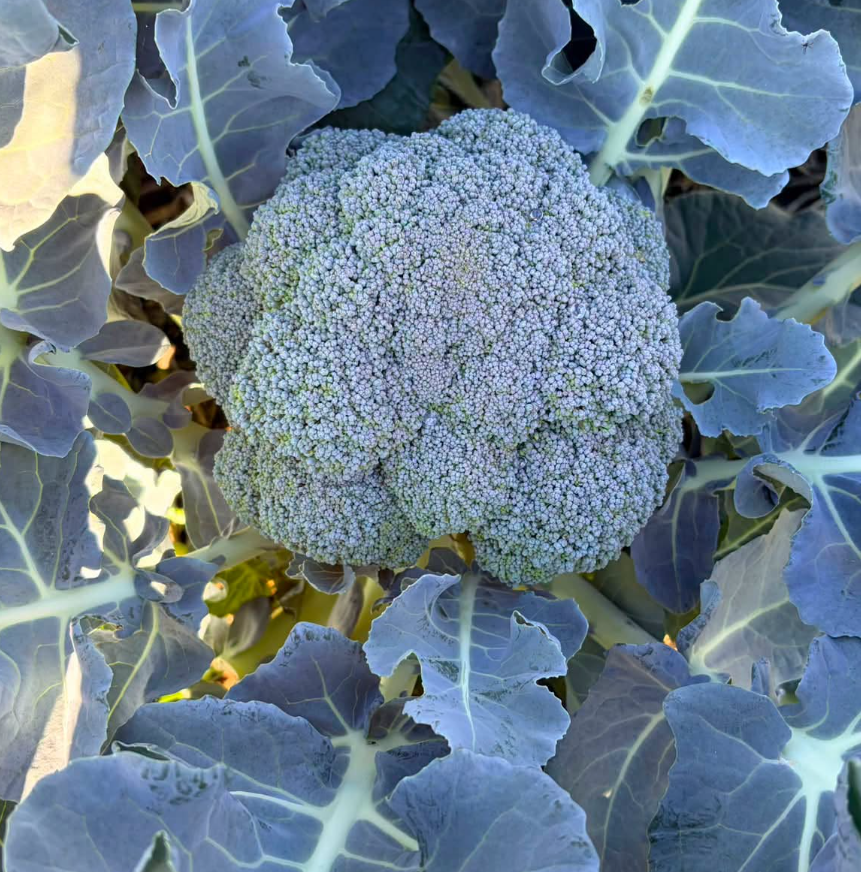
This is the broccoli everyone knows. It forms one dense, domed head on a thick stalk.
Named after Calabria in southern Italy, it typically matures in 50 to 80 days from transplanting. Almost every grocery store head sold in the United States traces back to this type.
I find it genuinely interesting that a vegetable named after one small Italian region ended up defining what an entire nation now pictures when it hears the word “broccoli.”
2. Green Comet
An early-maturing hybrid bred for home gardens. It produces a medium head quickly, which makes it popular with first-time growers.
3. Waltham 29
A cold-hardy heirloom developed for northern climates. Gardeners often plant it as a fall crop because frost improves its flavor.
4. De Cicco
An Italian heirloom and one of the oldest broccoli types still grown today. It produces a small central head followed by many side shoots for weeks.
5. Green Magic
A modern hybrid known for smooth, dark green heads and strong disease tolerance. University of Minnesota Extension trials rated it among the top performers for both yield and resistance to heat stress.
6. Diplomat
Another variety flagged in the same UMN trial as a strong performer against black rot and Alternaria leaf spot, two diseases that can wipe out entire plantings.
7. Eastern Crown
Bred specifically for the humid, disease-prone conditions of the eastern and midwestern United States. Growers rated it highly for consistency.
8. Imperial
A dependable commercial variety with tight, uniform heads. It performs well across different soil types.
9. Gypsy
A fast, adaptable hybrid often chosen for both spring and fall planting because of its flexible maturity window.
10. Marathon
A late-season variety with excellent cold tolerance. It holds its quality well even after light frost.
11. Arcadia
A heat-tolerant hybrid that resists premature flowering, a common problem when broccoli experiences temperature swings.
12. Belstar
An organic-friendly variety popular with small farms for its uniform head size and strong side-shoot production.
13. Express
Developed in the early 1990s by a plant breeder at Oregon State University, this variety crosses Green Comet with Waltham 29. It reaches harvest in about 60 days, which made it popular with growers who needed a fast, dependable crop for short growing windows.
Taken together, these thirteen Calabrese types show how much variation exists even within a single “category” of broccoli. A gardener choosing between Waltham 29 and Arcadia is really choosing between cold tolerance and heat tolerance, not just picking a random seed packet.
Sprouting Broccoli Varieties
Sprouting types skip the single giant head. Instead, they send up dozens of small, tender florets on long stems.
I think this is the most underrated category on the entire list. Sprouting broccoli rewards patience with weeks of harvest, rather than one cutting and done.
Home gardeners often prefer sprouting types because a single plant keeps producing. That means less wasted space and a longer stretch of fresh greens from the same row.
14. Purple Sprouting Broccoli
A British garden favorite. It overwinters in mild climates and produces purple-tinged spears in early spring, right when little else is ready to harvest.
15. White Sprouting Broccoli
The paler cousin of purple sprouting broccoli. It has a milder flavor and is often harvested slightly earlier in the season.
16. Nine Star Perennial Broccoli
A rare type that behaves like a perennial rather than an annual. One plant can keep producing small cauliflower-like heads for several years in the right climate.
17. Santee
A cross between broccoli and kale, bred for gardeners who want continuous small-shoot harvests without replanting each season.
18. Apollo
A newer sprouting hybrid bred for extended harvest windows, giving growers weeks of side shoots instead of one single cutting.
What ties this whole group together is patience. None of these varieties give you a fast, single reward. Instead, they trickle out small harvests over an extended season, which suits home cooks far more than commercial farms.
ALSO READ: 30 Best Companion Plants for Broccoli (And 4 to Avoid)
Asian and Rabe-Type Broccoli Varieties
This group leans leafier and looser than the Calabrese types above. Instead of one tight head, these plants put more energy into stems and greens.
Home cooks in many Asian and Mediterranean kitchens have grown these varieties for generations, long before “broccoli” became a single, standardized supermarket item.
19. Broccoli Rabe (Rapini)
Despite the name, broccoli rabe is technically closer to a turnip than to true broccoli. It has a distinctly bitter, peppery bite that Italian cooking has embraced for generations.
20. Chinese Broccoli (Gai Lan / Kailaan)
Known botanically as Brassica oleracea var. alboglabra. Oregon State University’s horticulture guide lists this as its own type, with common varieties including Green Lance Hybrid and Gai Lohn.
21. Broccolini
A hybrid cross of standard broccoli and Chinese kale. It looks like long, slender broccoli side shoots and has a milder, slightly sweet flavor compared to rabe.
22. Spigariello
An Italian leaf broccoli grown mainly for its greens rather than its florets. Cooks treat it more like a leafy green than a vegetable head.
23. Piracicaba
A Brazilian heirloom that produces small heads followed by continuous side shoots for months. It tolerates heat far better than most Calabrese types.
If you live somewhere with long, hot summers and have struggled to grow standard broccoli, Piracicaba is worth seeking out. It was practically built for the conditions that make Calabrese types bolt and fail.
Specialty and Hybrid Broccoli Varieties
This last group is where breeders got creative. Some of these varieties exist for flavor, some for color, and at least one exists almost purely for its striking appearance.
None of these are common in a typical grocery store. Most show up at specialty markets, seed-saving communities, or small regional farms that grow for flavor rather than shelf life.
24. Romanesco Broccoli
This is the showstopper of the broccoli world. Its spiraled, lime-green head follows a natural fractal pattern that looks almost computer-generated.
It is native to the Mediterranean and grows to roughly two feet tall, producing greenish-white flower clusters if left unharvested.
25. Purple Peacock
A cross between purple sprouting broccoli and Redbor kale. It has ruffled purple leaves along with edible florets, making it as ornamental as it is edible.
26. Burgundy Broccoli
A purple-headed hybrid bred mainly for its striking color, which comes from the same anthocyanin pigments found in red cabbage.
27. Sun King
A rare yellow-flowering broccoli variety, grown more for novelty and seed-saving projects than commercial production.
28. Fiesta
A large, bold-flavored broccoli associated with Spanish and Portuguese cooking traditions. Some plants of this type can grow over six feet tall, with heads weighing up to four pounds.
29. Rio Zephyr
Bred for warm-weather regions with long growing seasons, this variety is not frost-tolerant but produces heavy yields of 3 to 5 pounds per plant in the right climate.
30. Covina
A dependable commercial hybrid grown widely in warmer production regions, valued for uniform head shape and reliable yield under heat stress.
That closes out the full list. Thirty documented types, spanning everything from the plainest supermarket head to a spiraled vegetable that looks like it belongs in a math textbook.
ALSO READ: 15 Easy Vegetables to Plant in Early Spring: Get a Head Start on the Growing Season
Quick Comparison: Which Broccoli Type Should You Grow or Buy?
If you want one big head fast, choose a Calabrese type like Green Magic or Diplomat.
If you want weeks of continuous small harvests, go with a sprouting type like De Cicco or Purple Sprouting.
If you want something to impress dinner guests, nothing beats the spiraled pattern of Romanesco.
If you want a milder, sweeter bite, Broccolini or Chinese broccoli are worth trying before rabe.
If you live somewhere with hot, humid summers, look for disease-resistant hybrids like Green Magic, Diplomat, or Eastern Crown rather than older heirloom seed.
If you have very limited garden space, sprouting types actually make more sense than Calabrese types, since one plant keeps producing instead of finishing after a single head.
Broccoli Color, Shape, and Flavor: What Actually Varies
Beyond category, three practical traits separate one broccoli type from another: color, head shape, and flavor intensity.
Color ranges from the familiar deep green of Calabrese broccoli to the purple of sprouting types and Burgundy broccoli, and even the pale yellow of rare varieties like Sun King.
Purple color in vegetables generally comes from anthocyanins, the same pigment family responsible for the color of red cabbage and blueberries.
Head shape ranges from tight, domed clusters to loose, leafy stems, all the way to the mathematically spiraled cone of Romanesco.
Flavor shifts more than most people expect. Calabrese broccoli is mild and slightly sweet once cooked. Broccoli rabe is notably bitter. Broccolini sits somewhere in between, with a sweeter note than rabe but more character than plain Calabrese.
Frequently Asked Questions
Is Romanesco the same thing as broccoli? Romanesco is classified within the same species as broccoli and cauliflower, though some university extension sources describe it as its own distinct type rather than a true broccoli or true cauliflower.
What is the difference between broccolini and broccoli rabe? Broccolini is a hybrid cross between standard broccoli and Chinese kale, with a mild, slightly sweet flavor. Broccoli rabe is technically closer to a turnip and has a noticeably more bitter, peppery taste.
Which broccoli type is easiest to grow at home? Calabrese varieties like Green Comet or Waltham 29 tend to be the most forgiving for beginners, since they have well-documented growing windows and predictable maturity times.
Does purple broccoli taste different from green broccoli? The flavor difference is generally subtle. Most of the visible difference comes down to pigment, not a dramatically different taste profile, though some purple sprouting types are described as slightly sweeter after a light frost.
Can one broccoli plant keep producing all season? Sprouting types and continuous-shoot varieties like De Cicco or Piracicaba can keep producing small florets for weeks or months, unlike single-head Calabrese types that finish after one harvest.
Final Thoughts
Thirty types of broccoli, and yet every single one starts from the same wild plant.
What changes is intention. Breeders selected for cold tolerance, disease resistance, unusual color, tender leaves, or that strange, beautiful spiral shape.
The next time someone offers you “just broccoli,” you will know there is likely a specific story, and a specific breeder, behind that particular head.
Whether you are shopping at a farmers market or planning next season’s garden rows, this variety is far wider than most people ever realize.
References
- Cornell Cooperative Extension, Cornell Vegetable Program — Broccoli https://cvp.cce.cornell.edu/crop.php?id=6
- Oregon State University, College of Agricultural Sciences — Broccoli https://horticulture.oregonstate.edu/oregon-vegetables/broccoli-1
- University of Minnesota Extension — Broccoli trials test which varieties can stand up to disease and heat stress https://extension.umn.edu/yard-and-garden-news/which-varieties-broccoli-can-stand-disease-and-heat-stress
- University of Minnesota Extension — Growing broccoli in home gardens https://extension.umn.edu/vegetables/growing-broccoli
- North Carolina State University Cooperative Extension (Franklin County Center) — Broccoli Nutrition Facts https://franklin.ces.ncsu.edu/news/broccoli-nutrition-facts/
- National Institutes of Health, Office of Dietary Supplements — Vitamin C: Fact Sheet for Consumers https://ods.od.nih.gov/factsheets/VitaminC-Consumer/
- U.S. Department of Agriculture, MyPlate.gov — Vegetable Group https://www.myplate.gov/web/web/eat-healthy/vegetables

Tim M Dave is a gardening expert with a passion for houseplants, particularly cacti and succulents. With a degree in plant biology from the University of California, Berkeley, he has vast experience in gardening. Over the years, he has cultivated a vast collection of desert plants and learned a great deal about how to grow and care for these unique companions.