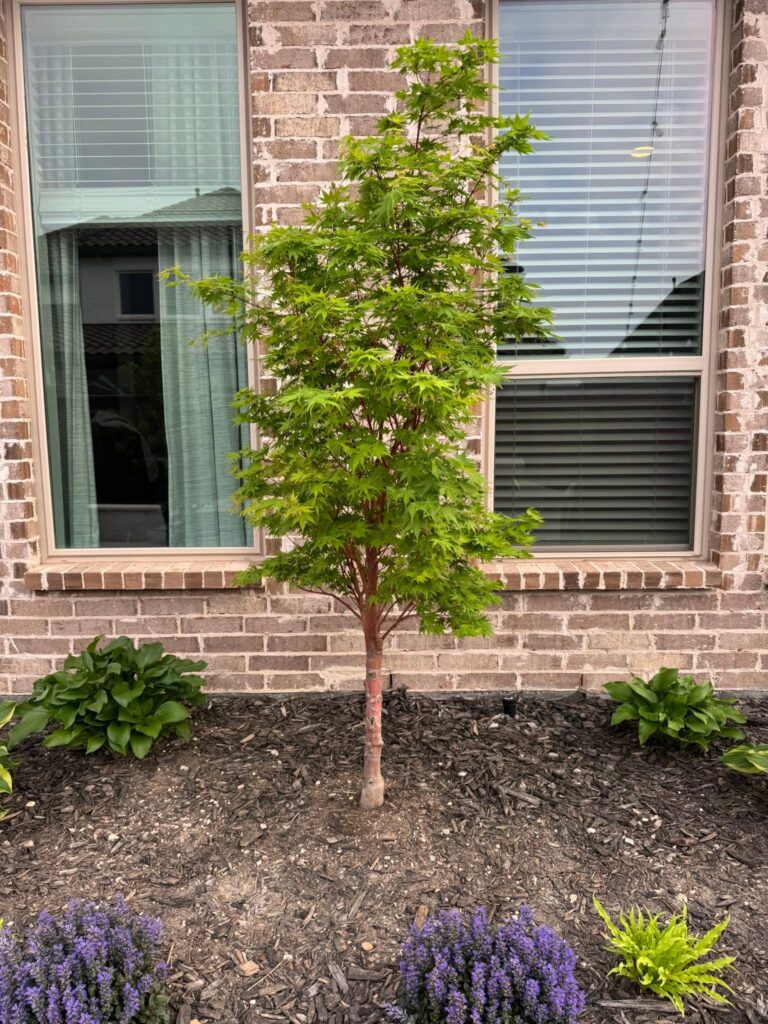
35 Trees That Grow Well in Clay Soil (With Planting Details)
My first tree died within a year, and I blamed everything except the real problem. The soil in my yard was dense, gray clay that turned into a brick when dry and a swamp when wet. The tree I chose simply was not built for that.
Clay soil intimidates a lot of gardeners, and I understand why. It compacts easily, drains slowly, and can suffocate roots that need more oxygen than clay typically allows.
The good news is that plenty of trees actually tolerate, and in some cases prefer, these dense growing conditions. This guide covers 35 trees that grow well in clay soil, along with research-backed planting advice to help your tree actually survive the first few critical years.
Why Clay Soil Challenges Most Trees
Clay particles are extremely fine and stack tightly together, similar to unevenly stacked sheets of paper. According to Clemson Cooperative Extension, this tight structure leaves little room for the air and water that healthy roots need.
NC State Extension explains that compaction pushes air and water out of soil pore spaces entirely. Ideal soil contains roughly 50 percent pore space, but compacted clay often falls well short of that benchmark.
This matters because compacted soil drains slowly, increases runoff, and raises the risk of root disease. Trees with shallow, fibrous root systems often struggle here, while species with adaptable or naturally spreading roots tend to do much better.
The trees on this list were chosen specifically for their documented tolerance of waterlogging, compaction, and poor aeration. Matching your tree to your actual soil, rather than fighting the soil itself, is the real key to long-term success.
35 Trees That Grow Well in Clay Soil
1. River Birch
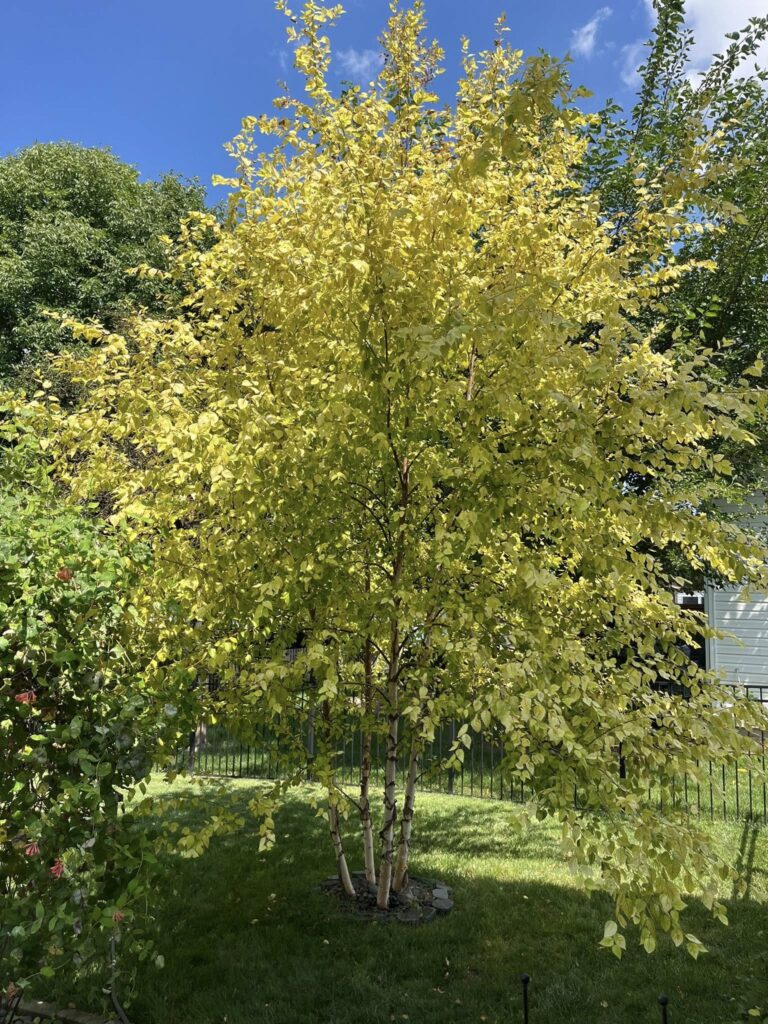
River birch is one of the most frequently recommended trees for clay soils, and Utah State University Extension specifically lists it as tolerant of poor drainage.
Its papery, reddish-brown bark peels back to reveal lighter bark underneath, giving this tree strong visual interest even in winter when most other species look bare.
Plant it in full sun to partial shade, and expect a moderately fast growth rate. River birch handles occasional flooding far better than most ornamental trees.
2. Bald Cypress
Bald cypress is a deciduous conifer that thrives in wet, heavy clay, making it an excellent choice for low spots where water tends to collect after rain.
Its feathery, soft green foliage turns a warm orange-red in fall before dropping, which is unusual for a conifer and adds genuine seasonal interest to the landscape.
This tree develops distinctive “knees” when grown in consistently wet soil. Give it plenty of space, since it eventually becomes a large, impressive specimen tree.
READ MORE: Bald Cypress Tree Pros and Cons: What to Know Before You Plant
3. Swamp White Oak
Swamp white oak handles wetter clay sites better than most oak species, tolerating periodic soil saturation without the stress symptoms common in drier-adapted oaks.
Its dark green leaves have a silvery underside that catches the light attractively, and fall color shifts toward a reddish-bronze that holds well into late autumn.
Plant this tree in full sun for the strongest structure. It grows into a reliable, long-lived shade tree once established in heavy soil.
4. Bur Oak
Bur oak is widely considered one of the toughest native trees for clay soil, tolerating a genuinely wide range of soil types, moisture levels, and urban pollution.
Its dark green, glossy leaves and distinctive ridged twigs give it strong winter interest, while its rugged, rounded crown provides substantial shade at maturity.
Growth is slow to moderate, so patience matters. What you gain in return is a remarkably durable tree built to outlast most others in difficult soil.
5. Pin Oak
Pin oak tolerates heavy, poorly drained clay reasonably well in many regions, though it can develop iron chlorosis in highly alkaline soils, so a soil test helps first.
Its layered branching habit, with lower branches sweeping downward, gives this tree a distinctive silhouette that stands out clearly even from a distance.
Plant it in full sun and acidic to neutral soil where possible. Fall color typically shifts to a deep bronze-red that persists into winter.
READ MORE: 10 Common Pin Oak Tree Problems: Identification, Symptoms, and Proven Solutions
6. English Oak
English oak tolerates heavy clay soils notably well, according to Colorado State University Extension, making it a dependable choice in regions with dense, compacted ground.
Its broad, rounded crown and near-horizontal branching pattern cast dense shade, which makes it a strong candidate for large residential or park settings.
This tree grows at a moderate rate once established. Fall foliage turns a soft yellowish-brown that provides gentle seasonal color rather than a dramatic display.
7. Shumard Oak
Shumard oak belongs to the red oak group and performs well across a variety of moisture conditions, including the heavier clay soils common in much of the Midwest and South.
It grows pyramidal in youth before spreading into a broader canopy with age, offering flexibility for landscapes that need shade without excessive early width.
Plant it in full sun for the best form. This oak adapts to average soil fertility, which makes it forgiving beyond just its clay tolerance.
8. Chinkapin Oak
Chinkapin oak tolerates alkaline, clay-heavy soils better than many other oak species, making it a strong choice in regions where soil pH runs high.
Its serrated, chestnut-like leaves distinguish it from other oaks, and its sweet acorns are a valuable food source for wildlife throughout fall and winter.
This tree grows moderately and develops a rounded, open crown. Give it full sun and enough space to reach its considerable mature width.
9. Red Maple
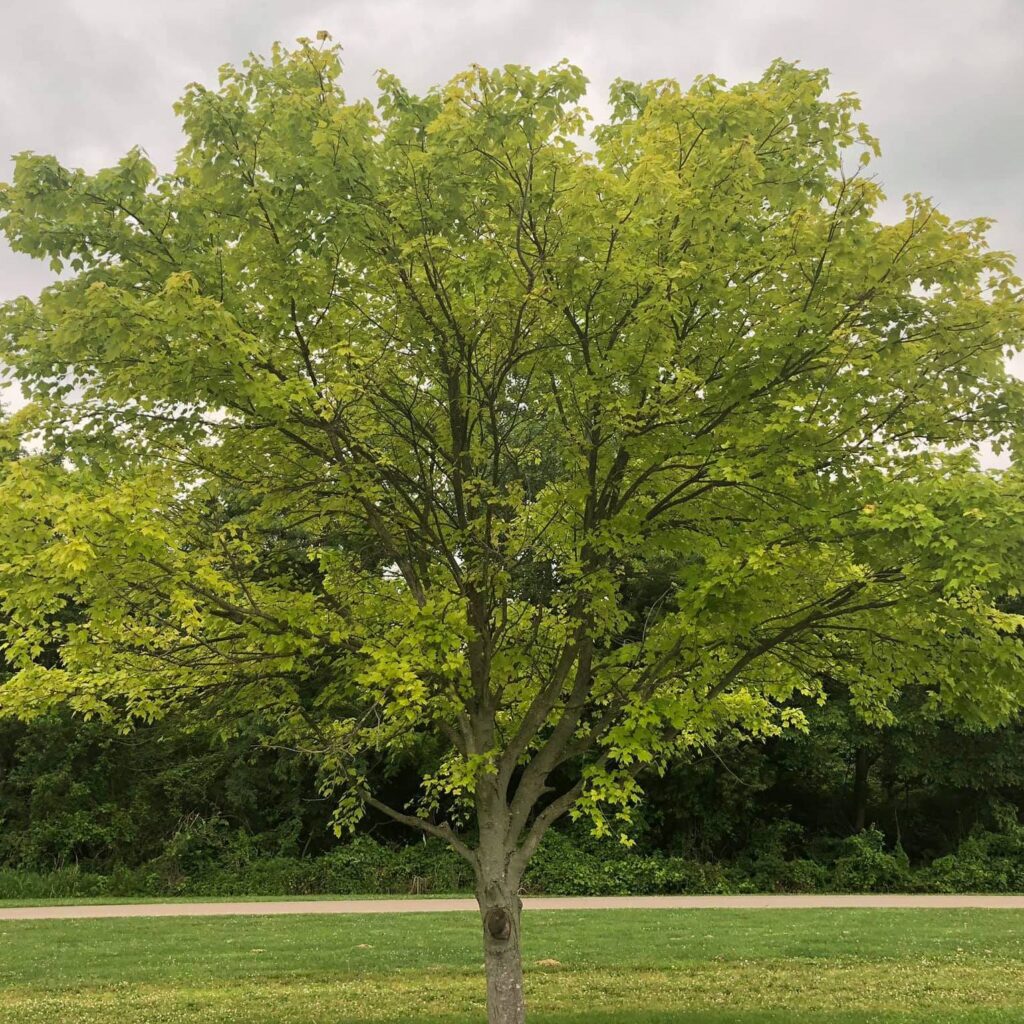
Red maple tolerates a genuinely wide range of soil conditions, including heavy clay, and remains one of the most widely planted native shade trees in North America.
Its brilliant red fall color is well documented, often appearing weeks before other maples begin to change, which makes it a reliable seasonal standout.
Plant it in full sun to partial shade. Red maple grows at a moderate to fast rate and adapts to both wet and moderately dry clay.
10. Silver Maple
Silver maple grows quickly in clay soil, though Colorado State University Extension notes it can struggle with iron chlorosis in heavy, alkaline clay specifically.
Its soft wood makes branches more prone to storm damage than sturdier maple species, so structural pruning while young helps prevent problems later on.
This tree performs best in loamy or slightly acidic clay with consistent moisture. Choose it where fast shade matters more than long-term structural perfection.
11. Amur Maple
Amur maple is a small, hardy tree with considerable tolerance for clay and alkaline soils, according to research published in the Journal of Arboriculture.
Its compact size makes it suitable for smaller yards or as an understory tree, and its fall color often ranges from vivid orange to deep red.
Plant it in full sun for the best color development. This tree tolerates urban conditions and compacted soil notably well for its modest size.
12. Hedge Maple
Hedge maple tolerates clay and alkaline soils with relative ease, making it a dependable small to medium tree for difficult urban or suburban planting sites.
Its dense, rounded canopy provides effective screening and shade, and the tree tolerates pruning well if a more formal shape is desired.
This maple grows slowly but steadily. Give it full sun to partial shade and expect a long-lived, low-maintenance addition to a clay-heavy landscape.
13. Trident Maple
Trident maple is a small, clay-tolerant deciduous tree with classic maple-shaped leaves that turn vibrant red and yellow before dropping in fall.
Its compact size makes it well suited to smaller properties, and it can even be grown in large containers if outdoor space is limited.
Plant it in full sun to partial shade. This tree handles compacted urban soil, including clay, better than many ornamental maple alternatives.
14. Sweetgum
Sweetgum tolerates heavy clay soil reasonably well and rewards patient gardeners with strikingly colorful fall foliage that shifts through purple, red, orange, and yellow.
Its star-shaped leaves and distinctive spiky seed pods make this tree easy to identify, though the seed pods do require some seasonal cleanup underneath.
Plant it in full sun with room to grow, since sweetgum eventually becomes a large shade tree well suited to spacious clay-soil landscapes.
15. Ginkgo
Ginkgo is remarkably tolerant of difficult conditions, including compacted clay soil, urban pollution, and the general stress of street-side planting environments.
Its fan-shaped leaves turn a spectacular bright yellow in fall, often dropping within a short window, which creates a striking golden carpet beneath the tree.
Choose a male cultivar to avoid the notoriously foul-smelling fruit produced by female trees. Ginkgo grows slowly but lives for generations once established.
16. Green Hawthorn
Green hawthorn, particularly the ‘Winter King’ cultivar, tolerates clay soil while offering year-round interest through white spring flowers and persistent red winter fruit.
This cultivar is largely thornless and notably resistant to rust and fireblight, two problems that commonly affect other hawthorn varieties in humid climates.
Plant it in full sun for the best flowering and fruit display. Its manageable size suits urban plantings and residential yards equally well.
17. American Hornbeam
American hornbeam tolerates clay and periodically wet soil well, making it a dependable small to medium tree for shadier, moisture-retentive landscapes.
Its smooth, muscle-like bark gives the trunk a distinctive sculptural quality, and its fall color shifts through soft yellow, orange, and reddish-purple tones.
Plant it in partial shade to full sun. This tree grows slowly but tolerates urban stress and compacted soil better than many native alternatives.
18. Black Tupelo
Black tupelo, or black gum, tolerates poorly drained clay soil and stands out for producing some of the most reliably vivid red fall foliage of any native tree.
Its glossy summer leaves and small blue-black fruit provide valuable food for birds, making it a strong choice for wildlife-friendly landscaping in clay-heavy yards.
Plant it in full sun to partial shade. This tree has a strong taproot, so it establishes best when planted young rather than transplanted later.
19. American Elm
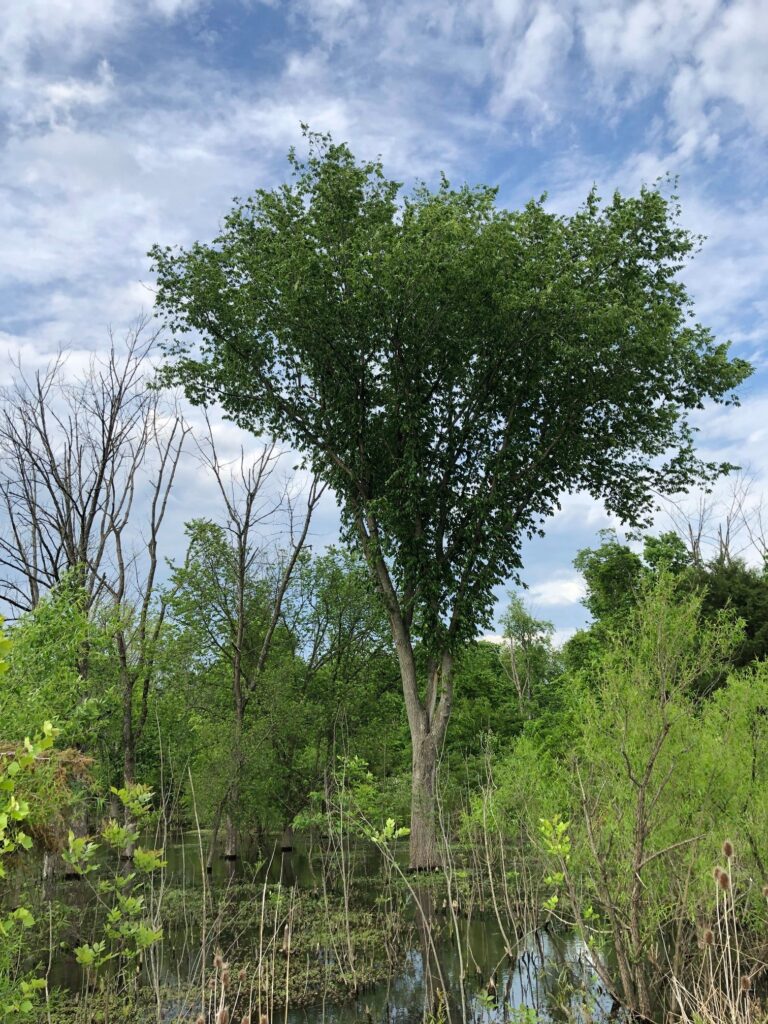
American elm is prized for its adaptability, ease of transplanting, and fast growth, tolerating clay soil considerably better than many other large shade trees.
Its graceful, vase-shaped habit once defined countless American streets before Dutch elm disease reduced numbers, though disease-resistant cultivars are now widely available.
Plant it in full sun with ample room to spread. This tree remains a favorite nesting site for the Baltimore oriole and other native birds.
20. Lacebark Elm
Lacebark elm tolerates clay and alkaline soils with considerable ease, and its exfoliating, mottled bark provides attractive year-round texture even in winter.
This species shows strong resistance to Dutch elm disease, making it a more reliable long-term choice than some traditional elm varieties in clay-heavy regions.
Plant it in full sun for the best canopy development. Lacebark elm grows at a moderate rate and adapts well to challenging urban planting sites.
21. Hackberry
Hackberry tolerates heavy clay, drought, and urban pollution with unusual ease, making it one of the most adaptable native shade trees available for difficult sites.
Its warty, distinctive bark and small, sweet berries provide winter interest and valuable food for birds, particularly during the leaner months of late winter.
Plant it in full sun to partial shade. Hackberry grows moderately fast and tolerates a wider range of soil pH than many alternatives.
22. Sycamore
Sycamore tolerates heavy, even periodically flooded, clay soil exceptionally well, which explains its natural preference for stream banks and low-lying bottomland areas.
Its mottled, exfoliating bark peels away in patches to reveal creamy white or green underneath, creating one of the most recognizable trunks in the landscape.
Plant it in full sun with generous space, since sycamore grows into an especially large tree that needs room for both its canopy and roots.
23. Eastern Cottonwood
Eastern cottonwood tolerates wet, heavy clay soil remarkably well and grows quickly, making it a practical choice for low areas where few other trees establish easily.
Its rustling, triangular leaves create a distinctive sound in the wind, and the tree’s rapid growth makes it useful for fast shade or windbreak purposes.
Plant it in full sun with plenty of space. Cottonwood grows large quickly, so it suits bigger properties rather than compact residential lots.
24. Willow
Willow species tolerate wet, compacted clay soil better than nearly any other tree group, thriving in low spots and along pond or stream edges.
Their graceful, often weeping branches provide a distinctly soft, flowing silhouette that contrasts nicely against sturdier, more upright trees in the same landscape.
Plant willows in full sun near consistent moisture. Fast growth means regular pruning helps maintain a manageable, attractive shape over time.
25. Northern White-Cedar
Northern white-cedar, or arborvitae, tolerates the poorly drained, heavier soils common in wetland-adjacent landscapes, according to Michigan State University Extension research.
Its dense, scale-like evergreen foliage provides reliable year-round screening and privacy, making it a popular choice for hedges and windbreaks in clay-heavy regions.
Plant it in full sun to partial shade. This conifer grows slowly but tolerates consistently moist, compacted soil better than most other evergreens.
26. American Basswood
American basswood, also called American linden, tolerates fertile clay soils and grows into a substantial shade tree valued for its fragrant summer flowers.
Bees are especially drawn to its blossoms, making this tree a strong choice for pollinator-friendly landscaping alongside its practical soil tolerance.
Plant it in full sun to partial shade. Basswood grows at a moderate rate and develops a dense, rounded canopy over time.
27. Serviceberry
Serviceberry tolerates clay soil reasonably well and offers multi-season interest through white spring flowers, summer berries, and vivid orange-red fall foliage.
Its edible berries attract numerous bird species, and the tree’s modest mature size makes it suitable for smaller yards where larger clay-tolerant trees would not fit.
Plant it in full sun to partial shade. This tree adapts to a range of soil conditions beyond just clay, adding to its overall versatility.
28. Sourwood
Sourwood tolerates a range of soil conditions, including clay, and rewards patient gardeners with drooping clusters of white summer flowers followed by brilliant fall color.
Penn State Extension lists this tree among suitable options for sun to part-sun sites with dry to moist soil conditions, including compacted ground.
Plant it in full sun for the best flowering. Sourwood grows slowly, so choose a permanent location since it does not transplant easily later.
29. Sweetbay Magnolia
Sweetbay magnolia tolerates wet, heavy clay soil notably well, and Penn State Extension specifically recommends it for shaded sites with wet to moist conditions.
Its creamy white, lemon-scented flowers bloom through summer, and the semi-evergreen foliage shows a distinctive silvery underside that shimmers in the breeze.
Plant it in partial shade to full sun near consistent moisture. This magnolia handles boggy, low-lying clay areas better than most flowering trees.
30. Eastern Redbud
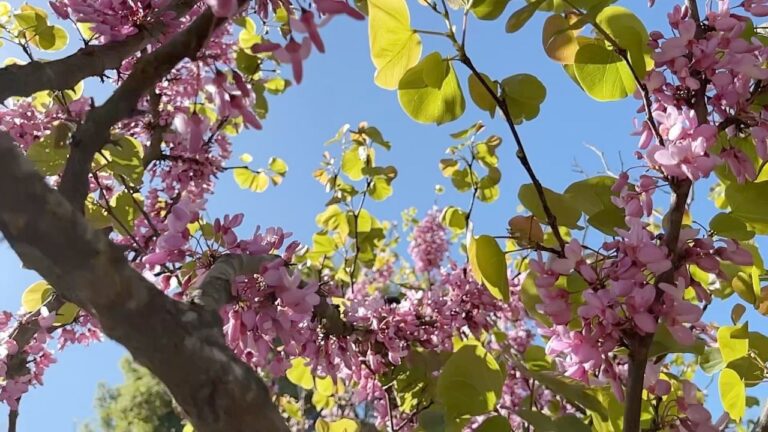
Eastern redbud tolerates clay soil well and produces one of the most recognizable early spring displays, with vivid pink-purple flowers appearing directly on bare branches.
Its heart-shaped leaves emerge shortly after flowering, providing attractive summer shade before turning a soft yellow in fall ahead of leaf drop.
Plant it in full sun to partial shade. This tree stays relatively compact, making it a strong understory or specimen choice for smaller clay-soil landscapes.
31. Blue Ash
Blue ash shows considerable tolerance for clay soils and alkalinity, according to research published in the journal Arboriculture & Urban Forestry, though it remains underused in most landscapes.
Its squared, distinctly angled young twigs give this species a unique identifying feature compared to other ash varieties commonly planted in North America.
Plant it in full sun. This tree adapts well to challenging soil chemistry, making it worth considering where more common trees have historically struggled.
32. Persimmon
American persimmon tolerates clay soil well and rewards patient gardeners with sweet, orange fruit once the tree matures, typically after several growing seasons.
Its deep taproot allows this tree to access moisture and nutrients well below the compacted surface layer, helping it establish successfully in dense soil.
Plant it in full sun to partial shade. Persimmon requires little maintenance once established, making it a practical low-input choice for clay-heavy yards.
33. Pawpaw
Pawpaw, often described as a rediscovered native fruit tree, tolerates clay soil and produces a genuinely unique tropical-tasting fruit unfamiliar to most home gardeners.
Penn State Extension highlights this species for its distinct fruit and adaptability, noting its growing popularity among gardeners interested in native edible landscaping.
Plant it in partial shade, especially while young, since pawpaw naturally grows as an understory tree before tolerating more sun as it matures.
34. Black Walnut
Black walnut tolerates heavy clay soil thanks to its deep, aggressive taproot, which helps it access water and nutrients that shallower-rooted trees cannot reach.
This tree produces juglone, a compound that can suppress the growth of certain nearby plants, so thoughtful placement away from sensitive garden beds matters.
Plant it in full sun with ample space. Black walnut grows into a large, long-lived tree valued for both timber and its edible nuts.
35. Red-Osier Dogwood
Red-osier dogwood is tolerant of soils with poor drainage, according to Utah State University Extension, making it a dependable choice for consistently wet clay areas.
Its bright red winter stems provide vivid seasonal color when most other trees and shrubs look bare, making it a valuable landscape accent in colder months.
Plant it in full sun to partial shade near reliable moisture. This large shrub or small tree spreads readily, making it useful for erosion control too.
Planting Tips for Clay Soil Success
Dig a wide, shallow hole rather than a deep one. Clemson Cooperative Extension recommends notching the sides of the planting hole so roots can more easily penetrate the surrounding clay.
Avoid over-amending the planting hole itself. Backfilling with mostly native soil, rather than rich potting mix, prevents roots from circling inside what essentially becomes an underground pot.
Test your soil before planting. A basic soil test reveals pH and drainage characteristics, helping you confirm whether a species on this list truly matches your specific site.
Water deeply but infrequently after planting. Clay retains moisture longer than sandy soil, so overwatering during establishment is a more common mistake than underwatering.
Frequently Asked Questions
Can any tree truly thrive in clay soil, or just survive it? Several species on this list, including bald cypress, swamp white oak, and river birch, genuinely thrive in clay rather than merely tolerating it, particularly in consistently moist sites.
Does clay soil need to be replaced before planting trees? Not usually. Most extension research recommends working with native clay rather than fully replacing it, since amended pockets can trap water and discourage roots from spreading outward.
How do I know if my soil is truly heavy clay? A simple squeeze test helps. Moist clay soil holds a ribbon-like shape when squeezed between your fingers, while sandier soil crumbles apart easily.
Final Thoughts
Heavy clay soil is a genuine challenge, but it is far from a dead end. These 35 trees, from towering bur oaks to compact serviceberries, prove that clay-heavy yards can still support a thriving, long-lived landscape.
I eventually replaced my first failed tree with a river birch, and it has handled every wet spring since without complaint. Choose a species built for your soil, and the ground stops being your enemy.
References
- Utah State University Extension Forestry – Gardening in Clay Soils https://extension.usu.edu/forestry/publications/utah-forest-facts/027-gardening-in-clay-soils
- Michigan State University Extension – Play in the Dirt! https://www.canr.msu.edu/news/play_in_the_dirt
- NC State Extension Publications – Soils and Plant Nutrients, Extension Gardener Handbook https://content.ces.ncsu.edu/extension-gardener-handbook/1-soils-and-plant-nutrients
- Clemson Cooperative Extension, Home & Garden Information Center – Planting Trees Correctly https://hgic.clemson.edu/factsheet/planting-trees-correctly/
- Penn State Extension – Trees and Shrub Soil Management https://extension.psu.edu/trees-lawns-and-landscaping/trees-and-shrubs/soil-management/shopby/lee-stivers
- Colorado State University Extension, PlantTalk Colorado – Oak Trees https://planttalk.colostate.edu/topics/trees-shrubs-vines/1736-oak-trees/
- Colorado State University Extension, PlantTalk Colorado – Maple Trees https://planttalk.colostate.edu/topics/trees-shrubs-vines/1733-maple-trees/

Tim M Dave is a gardening expert with a passion for houseplants, particularly cacti and succulents. With a degree in plant biology from the University of California, Berkeley, he has vast experience in gardening. Over the years, he has cultivated a vast collection of desert plants and learned a great deal about how to grow and care for these unique companions.