20 Evergreen Trees That Grow in Shade (With Growing Details)
I have walked through more shaded backyards than I can count, and the complaint is always the same: “Nothing grows here.” That is rarely true. It is just that most popular evergreens, like blue spruce or Leyland cypress, demand full sun and sulk in the shadows.
The good news is that nature has an answer for almost every dim corner. Forests themselves are proof of this — understory trees have adapted for thousands of years to live beneath a taller canopy.
In this guide, I have pulled together 20 evergreen trees that genuinely tolerate shade, not just “partial sun.”
Why Shade Tolerance Matters More Than You Think
Not every tree labeled “shade-tolerant” performs the same way. Shade tolerance is a spectrum, ranging from trees that merely survive dim light to species that genuinely flourish there.
According to the U.S. Forest Service’s silvics research, shade tolerance in trees like eastern hemlock has been formally studied and scored using standardized methods developed by American foresters since the 1950s. This is not folklore — it is measurable science.
Picking the right shade-tolerant evergreen protects your investment. A tree planted in the wrong light either grows thin and leggy or dies slowly over several seasons, which is disappointing after months of care.
Quick tip: Before planting, watch your shaded spot for a full day. Areas with 3 to 6 hours of filtered or morning sun are usually classified as part shade, while anything less is considered full or deep shade.
20 Evergreen Trees That Grow in Shade
1. Eastern Hemlock (Tsuga canadensis)
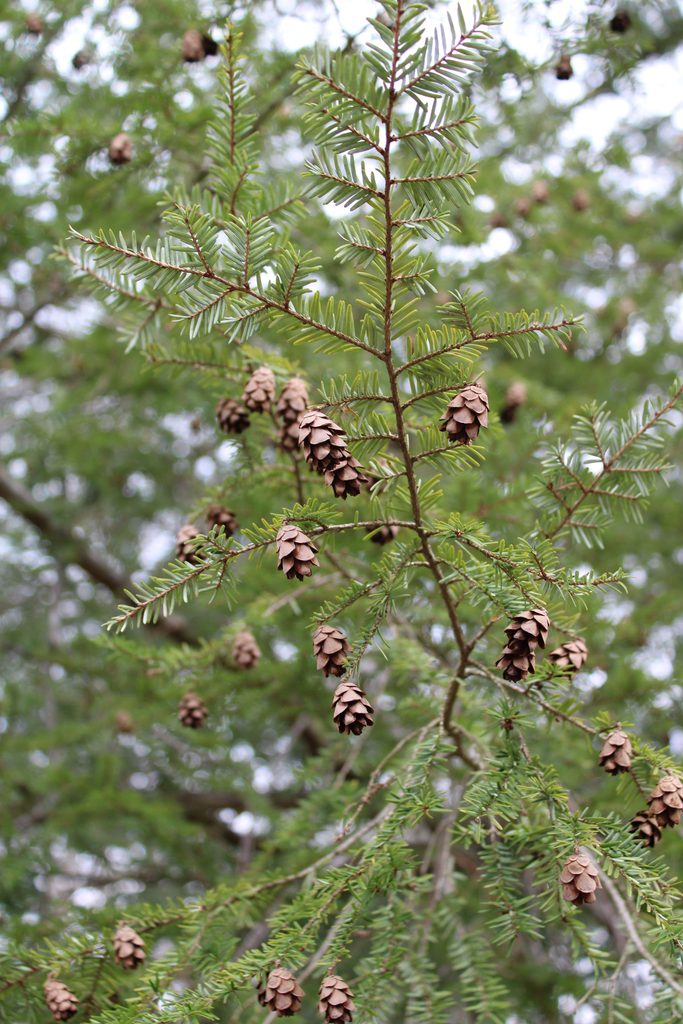
Eastern hemlock is, in my opinion, the gold standard of shade-loving conifers. Its soft, feathery needles and drooping branch tips make it one of the most graceful evergreens in the eastern United States.
This tree is remarkably long-lived. Research from the U.S. Forest Service notes that eastern hemlock is one of the longest-living tree species in the eastern United States, typically reaching maturity between 250 and 300 years, with individual trees surviving up to 800 years.
Growing conditions: Eastern hemlock prefers cool, moist, acidic soil and thrives in dense shade, especially along stream banks and north-facing slopes. It struggles in hot, dry, or polluted urban sites.
One caution: hemlock woolly adelgid, an invasive insect, has damaged hemlock populations across the East Coast. Ask your local extension office about resistant cultivars before planting.
2. Canadian Yew (Taxus canadensis)
Canadian yew is a low, spreading evergreen that behaves more like a shrub than a towering tree, but it earns its spot on this list because of how well it handles the darkest corners of a yard.
It is one of the few conifers that genuinely prefers shade over sun. Direct afternoon light can actually scorch its needles, which tells you everything about where it belongs.
I like recommending this plant for foundation plantings under large deciduous trees, where grass usually gives up. Its dark green needles stay attractive through winter, and deer browsing is a known risk in high-population areas.
Keep soil consistently moist but well-drained. Standing water will kill it faster than drought will.
3. Japanese Yew (Taxus cuspidata)
Japanese yew is the more compact, cold-hardy cousin often used in formal hedging and foundation design. It handles both shade and pruning exceptionally well, which explains its popularity near entryways.
This tree tolerates deep shade better than almost any broadleaf evergreen on this list. It simply grows slower without direct light, which many homeowners actually prefer for tight spaces.
Minnesota’s extension program lists Japanese and Canada yew together as top picks specifically for shaded landscape zones, alongside Canada hemlock, confirming their reputation among cold-climate gardeners.
Avoid wet clay soils. Yews are famously intolerant of soggy roots and will decline within a season or two if drainage is poor.
4. American Holly (Ilex opaca)
American holly brings structure, glossy leaves, and cheerful red winter berries to shaded landscapes. Few evergreens combine ornamental value with genuine shade tolerance this well.
Wikipedia’s compiled list of tree species by shade tolerance, drawn from silvicultural references, classifies American holly among trees that are able to thrive in shade and in the presence of competition from surrounding vegetation.
Female trees need a male pollinator nearby to produce berries, so if berries matter to you, plant more than one holly or confirm a male already exists close by.
This tree adapts to both full sun and partial shade, making it flexible for yards with mixed light throughout the day. Well-drained, slightly acidic soil suits it best.
5. Inkberry Holly (Ilex glabra)
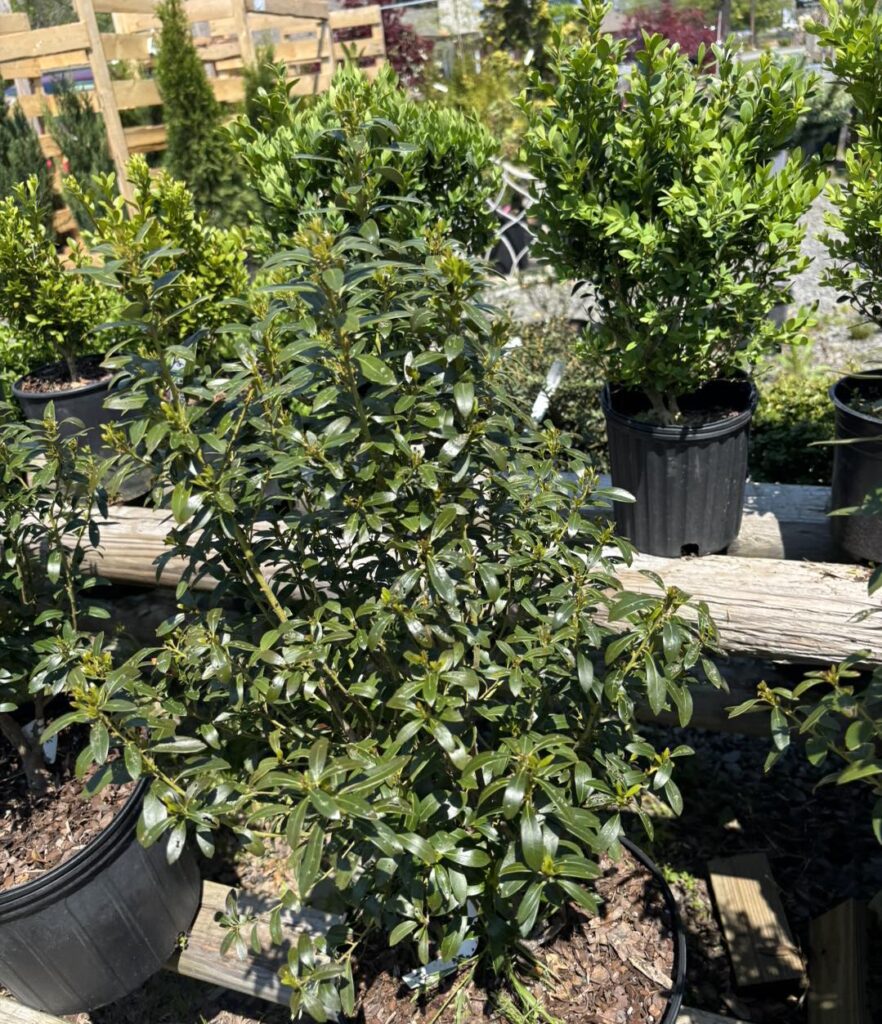
Inkberry is a compact, native alternative to boxwood, and it happens to be far more forgiving of wet, shaded soil. Its small, dark leaves give a tidy, refined look without constant pruning.
Penn State Extension specifically groups inkberry among evergreens suited to shade to part-shade conditions in both wet and moist soils, which makes it unusually versatile for low-lying yards.
I appreciate this shrub for rain gardens tucked beneath tree canopies, where many other evergreens simply rot. It handles occasional flooding far better than most broadleaf evergreens.
Space plants generously; inkberry spreads by suckering and can form a naturalized colony over time if left unchecked.
6. Nellie Stevens Holly (Ilex × ‘Nellie R. Stevens’)
This hybrid holly is a favorite for privacy screening, and it happens to tolerate more shade than many gardeners assume. Its dense, pyramidal form fills in nicely even with limited direct sun.
Nellie Stevens grows fastest in full sun but still performs respectably in partial shade, producing slightly looser foliage rather than failing outright, which makes it a safer bet than sun-only screening shrubs.
It also skips the pollination requirement of true American holly, since it reliably sets berries on its own in most conditions.
Give it well-drained soil and occasional deep watering during the first two establishment years for the strongest long-term results.
7. Boxwood (Buxus sempervirens)
Boxwood is the classic hedge and topiary plant, prized for centuries in formal gardens precisely because it tolerates shade so well. Its small, dense leaves stay green through winter in most climates.
Partial to full shade actually protects boxwood from winter bronzing, a common cosmetic issue caused by cold winds and intense winter sun exposure.
I find boxwood especially useful under high tree canopies where dappled light reaches the ground for only part of the day. It rewards patient, slow growth with decades of structure.
Boxwood blight, a fungal disease, has become a growing concern in humid regions. Good air circulation around plants reduces this risk significantly.
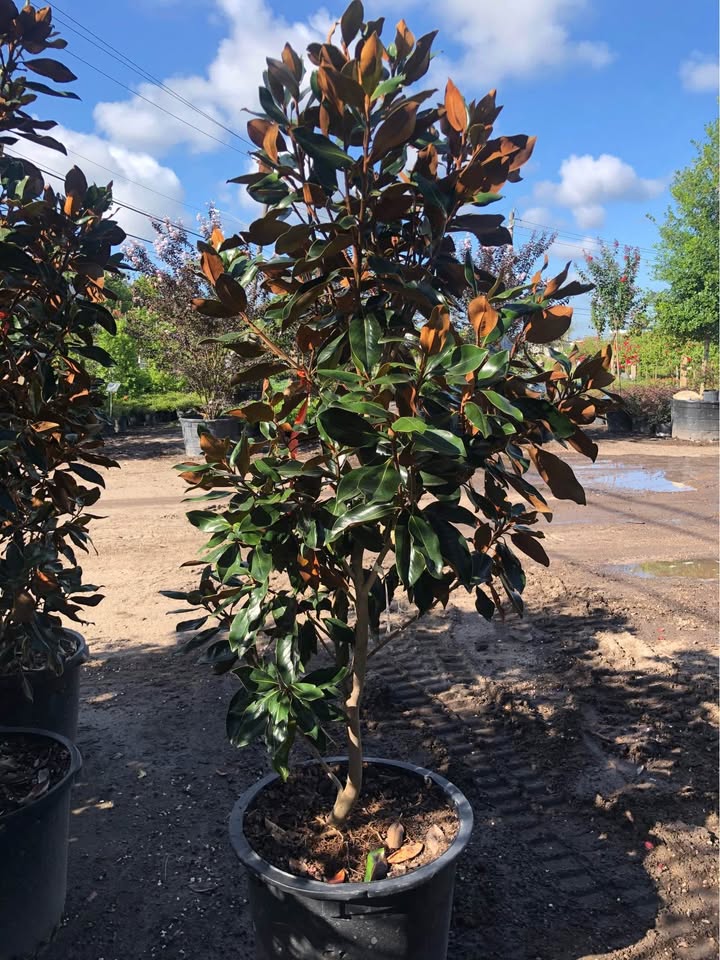
8. Southern Magnolia (Magnolia grandiflora)
Southern magnolia is best known for its massive white summer blooms, but its thick, leathery, evergreen leaves also make it a strong choice for shaded southern landscapes.
Younger magnolias, in particular, benefit from some afternoon shade, especially in the hottest parts of the Southeast. Mature trees develop more sun tolerance once established.
This is one of the few large shade-tolerant evergreens capable of eventually reaching 60 to 80 feet, so reserve it for spacious yards rather than tight urban lots.
Fallen leaves are large, leathery, and slow to decompose, so plan for consistent raking beneath mature specimens.
9. Mountain Laurel (Kalmia latifolia)
Mountain laurel is technically a large shrub, but in older, well-established gardens it takes on a small-tree form with a gnarled, sculptural trunk. Its spring flower clusters are genuinely stunning.
It is naturally an understory plant in Appalachian forests, evolved specifically to grow beneath taller hardwoods and conifers, which is exactly why shade suits it so well.
Acidic, humus-rich, well-drained soil is essential. Mountain laurel struggles badly in alkaline or compacted clay conditions, regardless of how much shade it receives.
Every part of this plant is toxic if ingested, so keep that in mind around pets and small children.
10. Catawba Rhododendron (Rhododendron catawbiense)
Rhododendrons are quintessential shade evergreens, and the Catawba variety is one of the hardiest and most floriferous. Large trusses of purple-pink flowers appear in late spring against deep green foliage.
Dappled or filtered shade produces the healthiest foliage and the most reliable blooming, while full sun often scorches the leaves in warmer climates.
I always recommend mulching heavily around rhododendrons. Their roots are shallow and sensitive to both drought and soil compaction.
Give this plant room to mature; older specimens can reach 6 to 10 feet, forming a substantial woody presence beneath larger trees.
11. American Arborvitae (Thuja occidentalis)
Arborvitae is one of the most widely planted evergreens in North America, valued for fast growth and dense, columnar screening. Minnesota Extension lists it among evergreens suited to partial sun conditions.
It performs best with at least some direct light, but established arborvitae tolerates dappled shade far better than full-sun conifers like spruce or pine.
Deer find arborvitae extremely palatable, so in rural or wooded properties, expect browsing damage unless you use repellents or fencing during winter months.
Soil should stay consistently moist. Arborvitae in dry shade under large trees often develops thin, browning interior foliage over time.
12. Balsam Fir (Abies balsamea)
Balsam fir is the fragrant, classic Christmas tree species, and it happens to be genuinely shade-adapted in its native northern forests. It regenerates naturally beneath dense hardwood and conifer canopies.
Minnesota Extension specifically recommends balsam fir for landscapes with partial sun exposure, alongside douglas fir and arborvitae, reflecting its natural tolerance for filtered light.
Cool summers and consistently moist, acidic soil suit this species best. It struggles in hot, humid, or drought-prone regions outside its native northern range.
Its symmetrical, pyramidal shape makes it a strong ornamental choice for naturalistic, woodland-style landscaping.
13. White Fir / Concolor Fir (Abies concolor)
Concolor fir offers soft, blue-green needles and a graceful pyramidal form, and it is frequently recommended as a shade-tolerant alternative to the more sun-demanding Colorado blue spruce.
Colorado State University Extension lists concolor fir among evergreens suitable for clay soils and notes it as a strong substitute where blue spruce would otherwise struggle.
This tree adapts well to a wider range of soil types than most firs, including moderately heavy clay, provided drainage is adequate and water does not pool at the roots.
It tolerates partial shade well, though growth slows noticeably compared to trees grown in fuller light.
14. Douglas Fir (Pseudotsuga menziesii)
Douglas fir is not usually thought of as a shade plant, but younger trees establish surprisingly well beneath a partial canopy before eventually pushing up toward fuller light as they mature.
Minnesota’s extension guidance groups douglas fir with arborvitae and balsam fir under partial sun recommendations, confirming it as workable for lightly shaded landscape zones.
Mature Douglas fir eventually needs more direct sun to thrive, so this species suits transitional spots, such as the edge of a woodland, rather than deep, permanent shade.
Well-drained, slightly acidic soil and consistent moisture during the establishment period give this tree its best long-term start.
15. Camellia (Camellia japonica)
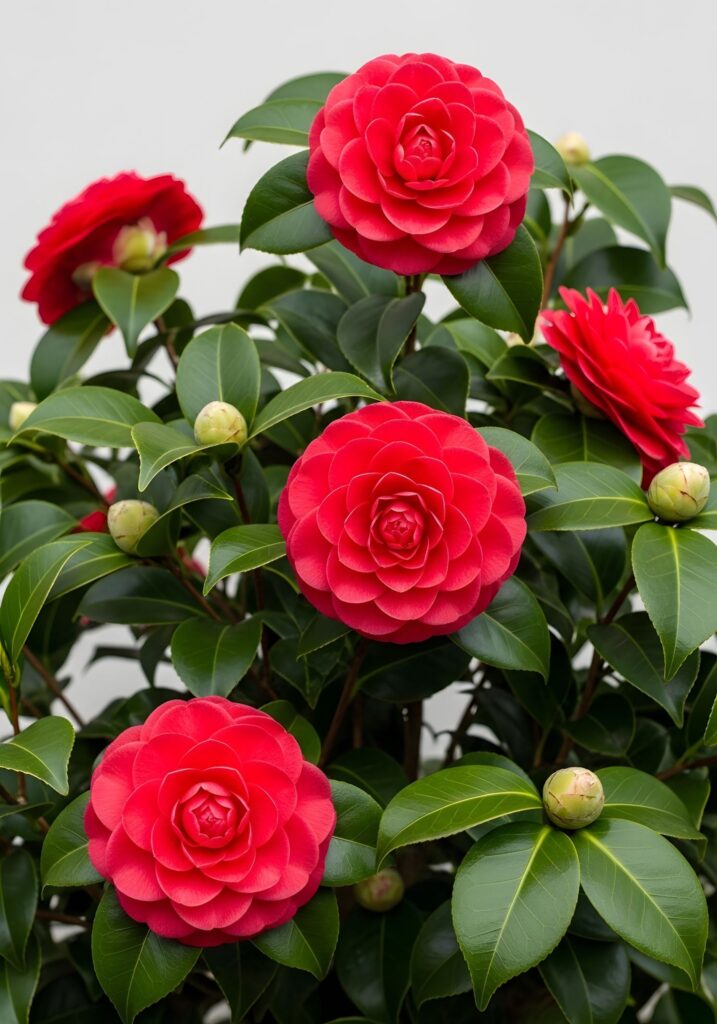
Camellia is a broadleaf evergreen prized for its glossy foliage and elegant winter-to-spring blooms. In its native East Asian forests, it grows naturally under taller tree canopies.
Filtered or morning-only sun produces the healthiest foliage color, while intense afternoon sun frequently scorches camellia leaves, especially in warmer southern climates.
I find camellias particularly rewarding under high pine canopies, where acidic, well-drained soil and dappled light closely mimic their native growing conditions.
Cold hardiness varies by cultivar, so gardeners in northern climates should confirm zone suitability before planting.
16. Japanese Plum Yew (Cephalotaxus harringtonia)
Japanese plum yew looks similar to a true yew but tolerates heat, humidity, and deer browsing far better, making it a smart substitute in warmer, wildlife-heavy regions.
This is genuinely one of the most shade-tolerant conifers available to home gardeners, performing well even in deep shade where most needled evergreens would thin out and decline.
It also resists many common pests and diseases that trouble true yews, adding a practical, low-maintenance advantage.
Slow growth means patience is required, but the payoff is a dense, elegant, deer-resistant evergreen for difficult shaded sites.
17. Cherry Laurel (Prunus laurocerasus)
Cherry laurel is a fast-growing broadleaf evergreen commonly used for hedging and privacy screening. Its glossy leaves and dense habit fill in quickly, even with limited direct sunlight.
It genuinely thrives in shade, often outperforming sun-grown specimens in humid climates where full sun exposure increases stress and disease pressure.
Small white flower spikes appear in spring, followed by cherry-like fruit that birds readily eat, though the seeds and foliage are toxic if consumed by humans or pets.
This species can become invasive in some regions, so check local guidance before planting near natural woodland edges.
18. Leatherleaf Viburnum (Viburnum rhytidophyllum)
Leatherleaf viburnum brings bold, textured, deeply veined evergreen leaves to shaded borders, along with clusters of creamy spring flowers and berries that ripen through fall.
Oregon State University Extension specifically lists viburnums as shade-tolerant evergreen screening options suitable for a wide range of landscape situations.
Its coarse texture pairs beautifully with finer-leaved shade plants, like ferns or hostas, creating visual contrast beneath a tree canopy.
Give it room to spread; mature specimens can reach 10 feet tall and wide, so this is not a plant for tight, narrow spaces.
19. Aucuba (Aucuba japonica)
Aucuba, sometimes called gold dust plant, is one of the few evergreens that genuinely prefers deep shade over sun. Its glossy, often speckled leaves brighten the darkest corners of a garden.
Direct sun actually damages aucuba foliage, causing yellowing and scorch, which makes it uniquely valuable for north-facing walls and dense woodland understories.
Female plants produce bright red berries when a male pollinator grows nearby, adding winter interest to an already striking evergreen.
It tolerates poor soil, air pollution, and root competition from nearby trees better than almost any other plant on this list.
20. Osmanthus / Tea Olive (Osmanthus heterophyllus)
Osmanthus, or tea olive, rounds out this list with holly-like glossy leaves and famously fragrant fall flowers. Many gardeners plant it near windows just to enjoy the scent drifting indoors.
Partial shade is ideal for this species, protecting its dense foliage from leaf scorch while still allowing enough light for reliable autumn flowering.
I recommend it as a refined alternative to holly for gardeners who want fragrance along with year-round structure and screening.
Well-drained, slightly acidic soil and protection from harsh winter winds keep this evergreen looking its best through every season.
How to Successfully Plant Evergreens in Shade
Getting a shade-tolerant evergreen into the ground correctly matters as much as choosing the right species. A few consistent habits make the difference between a struggling tree and a thriving one.
Test your soil drainage first. Colorado State University Extension notes that essentially all landscape evergreens prefer well-drained soil and should be kept out of swales or areas prone to standing water.
Mulch generously, but keep it away from the trunk itself. A two- to three-inch layer conserves moisture and moderates soil temperature without inviting rot.
Water consistently during the first two growing seasons, and continue supplemental watering during winter dry spells, since even established evergreens can suffer from desiccation when soil moisture runs low.
Frequently Asked Questions
Do evergreen trees really grow well in full shade, or just partial shade? Some do. Species like Canadian yew, Japanese plum yew, and aucuba genuinely prefer low light, while others such as arborvitae and Douglas fir do better with at least some filtered sun each day.
How long does it take a shade-grown evergreen to mature? Growth is typically slower in shade than in full sun. Many species on this list take several years longer to reach mature size when planted in low-light conditions, though the trade-off is often denser, more compact foliage.
Can I mix shade-tolerant evergreens with sun-loving perennials? Yes, especially near the dappled edges of a canopy. Just monitor sunlight patterns carefully, since shade shifts throughout the day and across seasons as deciduous trees leaf out or drop foliage.
Final Thoughts
A shaded yard is not a lost cause. It is simply an invitation to plant differently. The 20 trees above prove that dim corners can still hold color, texture, and life throughout the entire year.
Start with your specific light conditions, soil type, and climate zone, then choose two or three species from this list to test. Patience pays off with evergreens, and a well-chosen shade tree rewards you for decades.
References
- Colorado State University Extension — Evergreen Trees, Fact Sheet 7.403 https://extension.colostate.edu/topic-areas/yard-garden/evergreen-trees-7-403/
- University of Minnesota Extension — Gardening in the Shade https://extension.umn.edu/planting-and-growing-guides/gardening-shade
- University of Minnesota Extension — Choosing Evergreens for Your Landscape https://extension.umn.edu/trees-and-shrubs/choosing-evergreens-your-landscape
- Oregon State University Extension Service — Trees and Shrubs by Shade Tolerance https://extension.oregonstate.edu/collection/trees-shrubs-shade-tolerance
- Penn State Extension — Trees and Shrub Soil Management (Evergreen Plant Type) https://extension.psu.edu/trees-lawns-and-landscaping/trees-and-shrubs/soil-management?plant_type=Evergreen
- USDA Forest Service, Research and Development — Eastern Hemlock (Tsuga canadensis), Silvics of North America https://research.fs.usda.gov/silvics/eastern-hemlock
- USDA Forest Service — The Fight to Save Eastern Hemlock https://www.fs.usda.gov/inside-fs/delivering-mission/sustain/fight-save-eastern-hemlock

Tim M Dave is a gardening expert with a passion for houseplants, particularly cacti and succulents. With a degree in plant biology from the University of California, Berkeley, he has vast experience in gardening. Over the years, he has cultivated a vast collection of desert plants and learned a great deal about how to grow and care for these unique companions.