20 Trees Native to West Virginia (With Growing Details)
West Virginia’s forests support far more than scenery. The state holds nearly 12 million acres of forest land, based on U.S. Forest Service inventory data, with an average of 507 trees per acre across that land.
Native species dominate this landscape almost entirely. Oak and hickory forests alone account for 73 percent of West Virginia’s total forested area, a figure that reflects just how central hardwoods are to the state’s identity.
Planting native trees also means better resilience against pests and disease. These species evolved alongside the region’s steep slopes, harsh winters, and shifting rainfall, giving them a survival edge that imported trees rarely match.
Native forests also protect the state’s water supply. Steep Appalachian terrain erodes quickly once tree cover disappears, so healthy root systems play a direct role in keeping mountain streams clean and trout populations stable.
Now, let’s explore the list of trees native to West Virginia.
20 Trees Native to West Virginia
1. Sugar Maple (Acer saccharum)
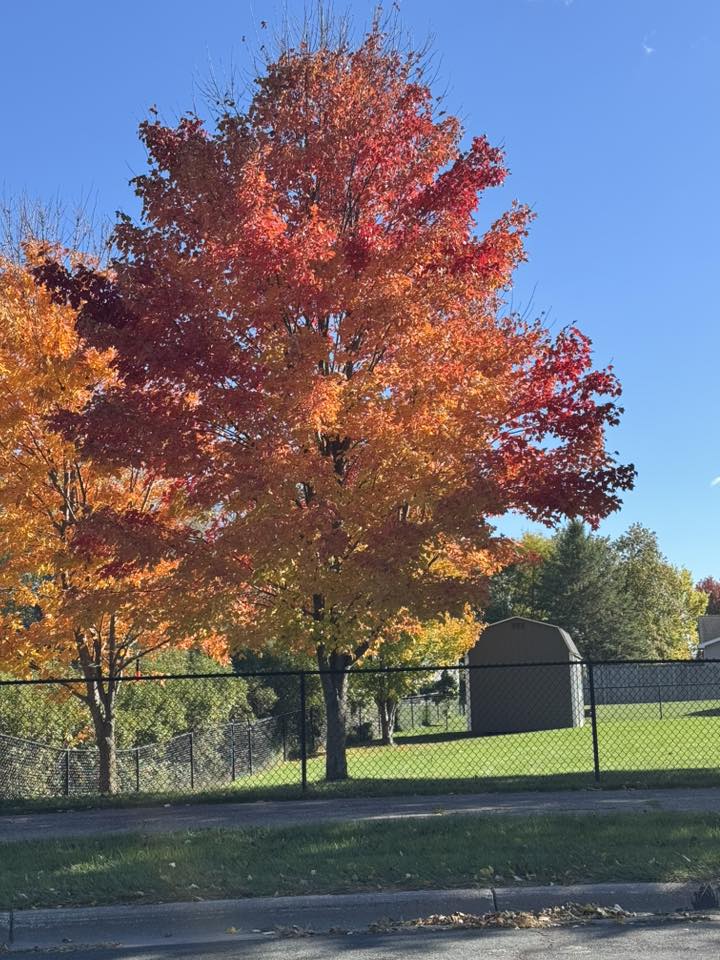
Sugar maple is West Virginia’s official state tree, chosen for good reason. Its brilliant orange and red fall color draws leaf-peepers to the mountains every October.
This tree also produces the sap used for maple syrup, a small but growing industry in the state’s higher elevations. Sugar maple prefers rich, well-drained soils and can live for well over 200 years.
Its dense, strong wood is prized for flooring, furniture, and bowling pins. Few native trees combine practical value and autumn beauty quite as well as this one.
Standing beneath a mature sugar maple in mid-October, with the canopy glowing orange overhead, is one of the simplest pleasures West Virginia’s mountains offer. It is a moment worth planning a trip around.
2. American Beech (Fagus grandifolia)
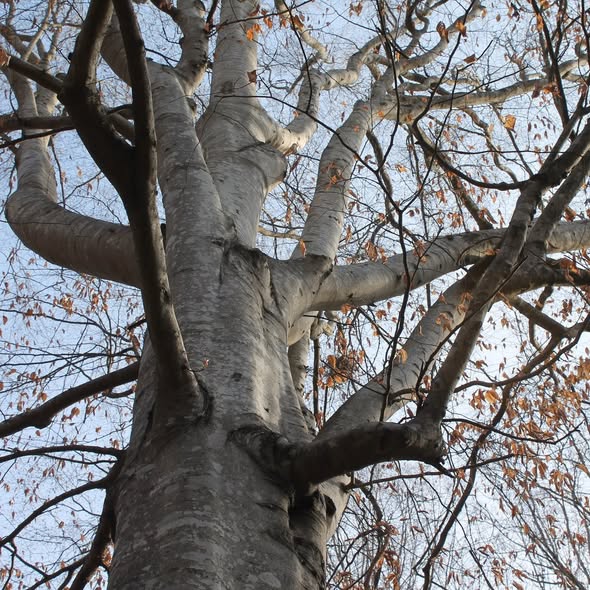
American beech is easy to spot thanks to its smooth, silvery-gray bark that stays unbroken even as the tree ages. That smooth surface has made it a popular target for carved initials over generations.
Its leaves turn a papery golden-bronze in fall and often cling to young trees well into winter, a trait called marcescence. Beechnuts inside spiny husks feed black bears, turkeys, and squirrels throughout the fall.
Beech bark disease has damaged populations across parts of Appalachia in recent decades. Even so, healthy beech stands remain common across West Virginia’s cove forests and moist hillsides.
3. Eastern Hemlock (Tsuga canadensis)
Eastern hemlock is West Virginia’s most common native conifer, according to state forestry records. It grows in dense, shaded stands along stream banks and steep ravines, creating a cool, dark understory unlike any hardwood forest.
Its short, flat needles and small, delicate cones distinguish it from pines and spruces. Hemlock groves regulate stream temperature, which makes them critical habitat for native trout.
The invasive hemlock woolly adelgid now threatens hemlock stands in all 55 of West Virginia’s counties. Foresters continue treating high-value trees to slow the pest’s spread and preserve these irreplaceable groves.
Losing hemlock would reshape entire stream ecosystems, since few other native trees provide the same year-round shade that keeps mountain trout streams cool enough to support fish.
4. Red Spruce (Picea rubens)
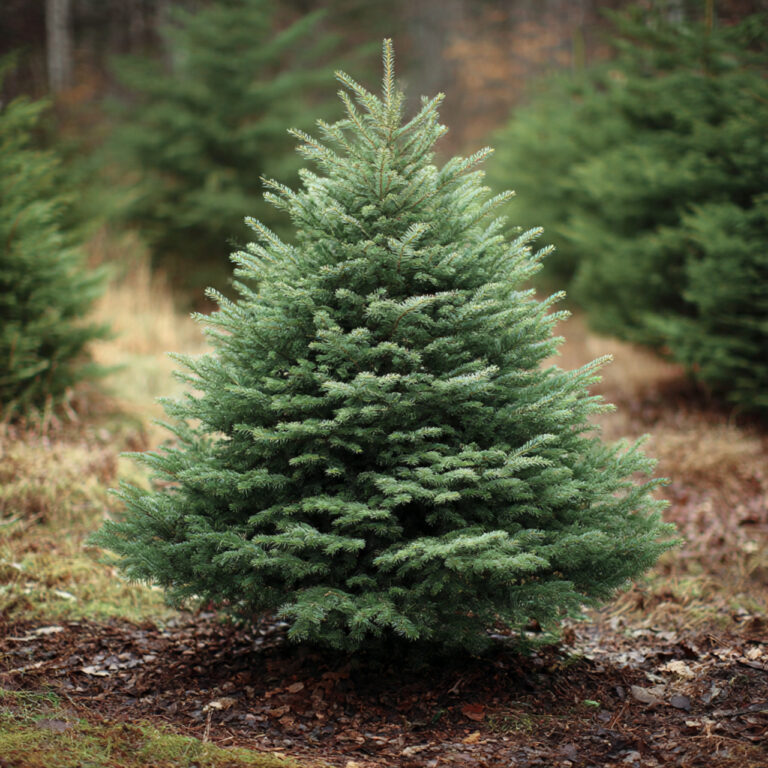
Red spruce once covered nearly 469,000 acres of West Virginia’s high Allegheny Mountains, forming the state’s signature “spruce forest” ecosystem. Logging and fire reduced that footprint dramatically over the past century.
This conifer thrives above 3,000 feet, where cooler temperatures mimic conditions found much farther north. Its short, sharp needles and reddish-brown bark set it apart from other native evergreens.
Red spruce restoration has become a major conservation priority in places like the Monongahela National Forest. Rebuilding this rare high-elevation habitat benefits the endangered West Virginia northern flying squirrel and other specialized wildlife.
Volunteers and agency crews have planted hundreds of thousands of red spruce seedlings across the Highlands region in recent decades, aiming to reconnect fragmented remnants of this once-vast ecosystem. It remains one of the most ambitious native reforestation efforts underway in the eastern United States.
5. Tulip Poplar (Liriodendron tulipifera)
Tulip poplar, also called yellow poplar, ranks among the tallest native hardwoods in eastern North America. Straight, branchless trunks can climb well over 100 feet before the crown even begins.
Its distinctive leaves have a flat top and pointed lobes, resembling a tulip’s silhouette. Greenish-yellow flowers with orange centers bloom high in the canopy each spring, often unnoticed from the ground.
This fast-growing tree produces some of the most commercially valuable lumber harvested in West Virginia. Its light, easily worked wood shows up in furniture, cabinetry, and musical instruments statewide.
Early settlers often used tulip poplar logs to build cabins, since the straight trunks required little shaping to form usable walls.
6. White Oak (Quercus alba)
White oak grows slowly but rewards patience with dense, durable wood that has shaped American furniture and barrels for centuries. Its rounded leaf lobes distinguish it from the sharper-pointed red oak group.
This tree favors well-drained ridges and upland slopes throughout West Virginia’s hardwood forests. Acorns mature in a single season and provide essential fall food for deer, turkey, and black bears.
WVU Extension specialists have highlighted white oak sustainability as a growing concern, since regeneration has slowed across parts of Appalachia. Foresters now actively study how to encourage healthier white oak seedling growth.
7. Northern Red Oak (Quercus rubra)
Northern red oak grows faster than white oak, making it a reliable choice for reforestation across disturbed sites. Its leaves have sharply pointed lobes tipped with small bristles.
Smooth, shiny bark ridges running vertically up the trunk make this species easier to identify in winter than most other oaks. Acorns take two full growing seasons to mature.
Red oak wood is widely used for flooring, furniture, and veneer throughout the region’s timber industry. It remains one of the most economically important hardwoods harvested in West Virginia today.
8. Black Cherry (Prunus serotina)
Black cherry produces some of the most valuable hardwood lumber in the eastern United States, prized for its rich reddish-brown color. West Virginia’s cool mountain climate produces particularly high-quality black cherry timber.
Its bark looks like burnt potato chips on older trees, dark and scaly in irregular plates. Small, dark fruit ripens in late summer, feeding dozens of bird species before dropping to the forest floor.
This tree grows fast in a wide range of soils, from rich coves to rocky hillsides. Furniture makers across Appalachia have relied on black cherry for generations.
The state’s cooler, high-elevation climate slows growth just enough to produce tighter grain patterns, which is part of why buyers often pay a premium for West Virginia black cherry over lumber from warmer regions.
9. Yellow Birch (Betula alleghaniensis)
Yellow birch thrives in West Virginia’s cooler, higher-elevation forests, often growing alongside red spruce and hemlock. Its peeling, golden-bronze bark curls away in thin, papery strips.
Seedlings frequently sprout on top of moss-covered logs and stumps, eventually sending roots down around the decaying wood. That habit gives mature trees an unusual, stilted root structure once the old log rots away.
Yellow birch can live for well over 150 years in undisturbed forest. Its wood is valued for furniture, flooring, and veneer throughout the northern hardwood industry.
The tree’s twigs and inner bark carry a faint wintergreen scent when scratched, a small but reliable identification trick that hikers in the higher elevations often learn quickly.
10. American Sycamore (Platanus occidentalis)
American sycamore grows along West Virginia’s rivers and stream bottoms, often reaching massive size in undisturbed floodplains. Its mottled bark peels away to reveal patches of white, gray, and tan underneath.
The state’s own history includes the Webster Sycamore, once considered the largest American sycamore in West Virginia before it was felled in 2010. That tree was estimated to be several centuries old.
Sycamore’s large, maple-like leaves provide dense summer shade along riverbanks. Hollow, aging trunks frequently become nesting sites for owls and other cavity-dependent wildlife.
11. Black Walnut (Juglans nigra)
Black walnut produces some of the most valuable timber in North America, especially prized for gunstocks, veneer, and fine furniture. Its dark, richly grained wood commands premium prices at auction.
The tree releases a chemical called juglone that suppresses many nearby plants, a detail gardeners in West Virginia often discover the hard way. Round, green-husked nuts drop heavily each autumn.
Black walnut favors deep, fertile soils found in valley bottoms and lower hillsides across the state. Squirrels cache its nuts widely, helping the species spread naturally.
Well-formed, mature walnut trees occasionally sell for thousands of dollars to specialty timber buyers, making it one of the most financially rewarding trees a West Virginia landowner can grow.
12. Shagbark Hickory (Carya ovata)
Shagbark hickory earns its name from bark that peels away in long, curling strips as the tree matures. Few native trees have such a distinctive, unmistakable trunk.
Its sweet nuts are favored by squirrels, foxes, and black bears throughout fall. Historically, people gathered shagbark nuts too, since they taste noticeably better than most other native hickories.
The wood is exceptionally strong and dense, long used for tool handles and smoking meat. Shagbark hickory grows on dry ridges and upland woods throughout West Virginia’s hill country.
13. Eastern White Pine (Pinus strobus)
Eastern white pine once grew in nearly pure stands across roughly 300,000 acres of West Virginia before extensive logging reduced its range. It remains one of six native pine species found scattered through the state today.
Soft, blue-green needles grow in bundles of five, a helpful trait for distinguishing it from other native pines. Mature trees can reach well over 100 feet in favorable conditions.
White pine’s straight, lightweight wood was historically prized for ship masts and construction lumber. Restoration plantings continue in parts of the state where the species once dominated.
14. American Basswood (Tilia americana)
American basswood grows fast, often reaching 80 feet with a broad, rounded crown. Its heart-shaped leaves and fragrant summer flowers make it a favorite among pollinators.
Beekeepers prize basswood honey for its light color and distinct floral flavor, and the tree’s June bloom often hums audibly with bee activity. The soft, light wood carves easily, a trait woodworkers have valued for generations.
Basswood favors moist, rich soils on slopes and in coves throughout West Virginia’s hardwood forests. It tolerates shade well, allowing it to persist for years beneath a taller canopy.
15. Eastern Redbud (Cercis canadensis)
Eastern redbud announces spring across West Virginia’s lower elevations with clusters of pink-purple flowers blooming directly on bare branches. Few native trees offer such an early, vivid burst of color.
Heart-shaped leaves follow the blooms, turning bright yellow by autumn. This tree typically stays under 30 feet, making it a popular understory and ornamental choice in yards and parks.
Redbud favors wooded slopes, forest edges, and stream banks throughout the state’s warmer valleys. Its early blooms also provide crucial nectar for native bees emerging from winter dormancy.
16. Flowering Dogwood (Cornus florida)
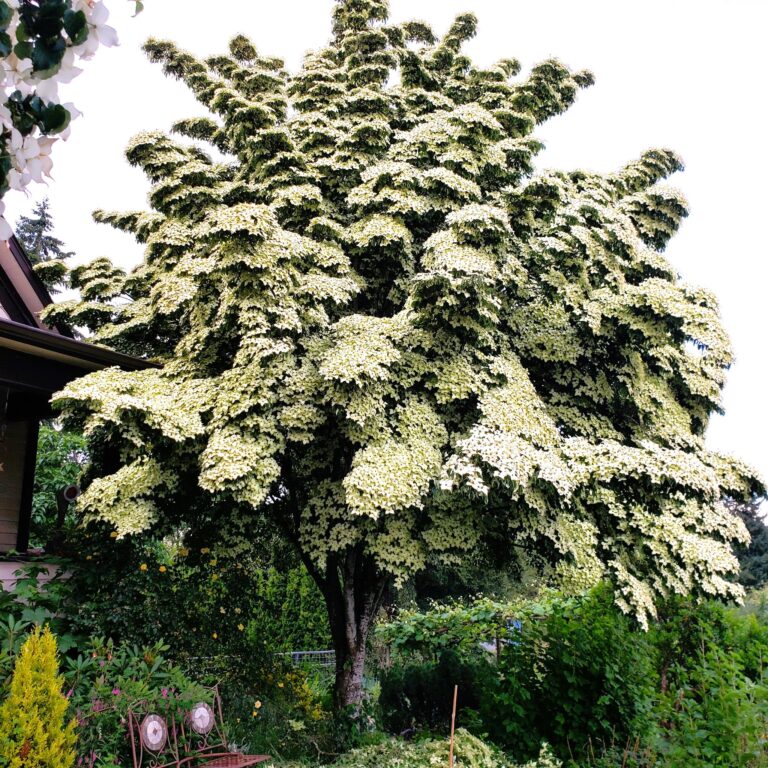
Flowering dogwood produces some of the most recognizable spring blooms in Appalachian forests, with white or pink bracts surrounding tiny true flowers at the center. It typically grows as a small understory tree beneath taller hardwoods.
Bright red berries ripen in fall, providing critical food for migrating songbirds preparing for their journey south. Dogwood anthracnose, a fungal disease, has significantly reduced populations across parts of its range since the 1970s.
Despite these challenges, healthy dogwoods remain a common and cherished sight throughout West Virginia’s forest edges. Its distinctive four-petaled blooms mark one of the surest signs of spring in the mountains.
Dogwood also plays a quiet role in forest ecology, since its calcium-rich leaf litter improves soil quality for the plants growing around it, a benefit easy to overlook beneath its more obvious spring display.
17. Black Locust (Robinia pseudoacacia)
Black locust grows fast and produces extremely rot-resistant wood, historically favored for fence posts and railroad ties. Its deeply furrowed bark and thorny young branches make it easy to identify.
Fragrant white flower clusters bloom in late spring, drawing bees and producing a distinctive, sought-after honey. This tree fixes nitrogen in the soil, improving conditions for other plants growing nearby.
Black locust colonizes disturbed sites quickly, often appearing on old mining land and abandoned fields throughout the state. Its durability and rapid growth continue to make it valuable for reclamation projects.
18. Sassafras (Sassafras albidum)
Sassafras stands out with three distinct leaf shapes appearing on the same tree, sometimes oval, sometimes mitten-shaped, sometimes three-lobed. That variability alone makes it one of the easiest native trees to identify.
Its aromatic roots were historically used to flavor root beer and traditional teas, though commercial production has since shifted to artificial flavoring. Fall color turns a striking mix of orange, red, and yellow.
Sassafras spreads readily through root suckers, often forming dense colonies at forest edges and old fields. Birds rely heavily on its dark blue fruit during fall migration.
19. Serviceberry (Amelanchier arborea)
Serviceberry blooms among the earliest native trees each spring, often flowering before the surrounding forest fully leafs out. Delicate white flower clusters appear on bare branches in a brief, striking display.
Its small, blueberry-like fruit ripens in early summer, attracting a wide range of songbirds and small mammals before most other native fruits mature. Smooth, gray bark with subtle vertical striping helps identify the tree in winter.
Serviceberry typically grows as a small understory tree in West Virginia’s mixed hardwood forests. Its modest size and early blooms make it a popular native choice for home landscaping too.
20. Eastern Redcedar (Juniperus virginiana)
Eastern redcedar is technically a juniper rather than a true cedar, though the common name has stuck for centuries. It grows in a dense, pyramidal shape and tolerates poor, rocky soils better than most native conifers.
Its reddish-brown bark peels into thin, fibrous strips, while blue-gray, berry-like cones provide critical winter food for cedar waxwings and other songbirds. This tree often colonizes abandoned fields and disturbed pastures first.
Farmers across West Virginia have long used eastern redcedar for windbreaks and fence posts, thanks to its naturally rot-resistant wood. Left unmanaged, it can also spread aggressively into open grassland areas.
Final Thoughts
Twenty trees only begin to capture what makes West Virginia’s forests so remarkable. With around 90 native tree species recorded across the state, from lowland river bottoms to windswept mountain ridges, this list covers the ones you are most likely to meet.
If you are planting a native tree, match the species to your elevation and soil conditions first. Cooler, higher ground favors red spruce or yellow birch. Warmer valley bottoms suit tulip poplar or black walnut far better.
Getting that match right from the start saves years of frustration, since a tree planted at the wrong elevation rarely thrives no matter how much care it receives.
West Virginia’s forests have survived logging booms, disease outbreaks, and a changing climate, yet they remain some of the most biologically diverse woodlands in the eastern United States. Next time you drive through a mountain hollow or hike beneath a hemlock canopy, you will know exactly what kind of forest is surrounding you.
References
- West Virginia Department of Commerce – Division of Forestry: https://commerce.wv.gov/agencies/division-of-forestry/
- USDA Forest Service – Forests of West Virginia, 2017 (PDF): https://www.fs.usda.gov/nrs/pubs/ru/ru_fs174.pdf
- USDA Forest Service – West Virginia Forest Inventory Resource Bulletin (PDF): https://www.fs.usda.gov/nrs/pubs/rb/rb_nrs133.pdf
- West Virginia University Extension – Forestry: https://extension.wvu.edu/natural-resources/forestry
- West Virginia University Extension – Tree Identification 4-H Project: https://extension.wvu.edu/youth-family/4h/projects/4h-environmental-education-earth-science-projects/4h-tree-identification-projects
- USDA Forest Service – Monongahela National Forest: https://www.fs.usda.gov/mnf
- West Virginia Division of Natural Resources – National Forest Service Information: https://wvdnr.gov/lands-waters/national-forest-service-information/

Tim M Dave is a gardening expert with a passion for houseplants, particularly cacti and succulents. With a degree in plant biology from the University of California, Berkeley, he has vast experience in gardening. Over the years, he has cultivated a vast collection of desert plants and learned a great deal about how to grow and care for these unique companions.