25 Trees Native to Virginia (With Growing Tips)
Virginia is, in the truest sense, a forest state. Drive from the Atlantic dunes to the Allegheny ridgeline and you will pass through more forest types than most countries can claim.
Forests cover about 62 percent of Virginia, roughly 15.7 million acres, according to USDA Forest Service data cited by the Virginia Department of Forestry. That is an enormous green footprint for a state this historically developed.
What strikes me most is the sheer range packed into that footprint. Tidal swamp cypress in the east. Loblolly pine across the Piedmont. Red spruce clinging to the cool Allegheny Highlands in the west.
This guide covers 25 trees native to Virginia, chosen to represent every region of the Commonwealth. Whether you are landscaping a Northern Virginia yard, studying for a botany class, or hiking Skyline Drive and wondering what you just walked past, this list has you covered.
Let’s start exploring.
Why Virginia’s Native Trees Deserve Attention
A short note before the list begins.
Virginia sits at a genuine ecological crossroads. The Flora of Virginia documents nearly 3,200 native and naturalized plant species statewide, and the Commonwealth is home to roughly 235 native tree species alone. Few states offer that kind of botanical overlap between northern and southern forest types.
Planting native trees also makes practical sense for homeowners. These species already tolerate Virginia’s humid summers, clay soils, and occasional ice storms, which usually means less watering, less spraying, and fewer surprises.
Now, the trees themselves.
25 Trees Native to Virginia
1. Flowering Dogwood (Cornus florida)
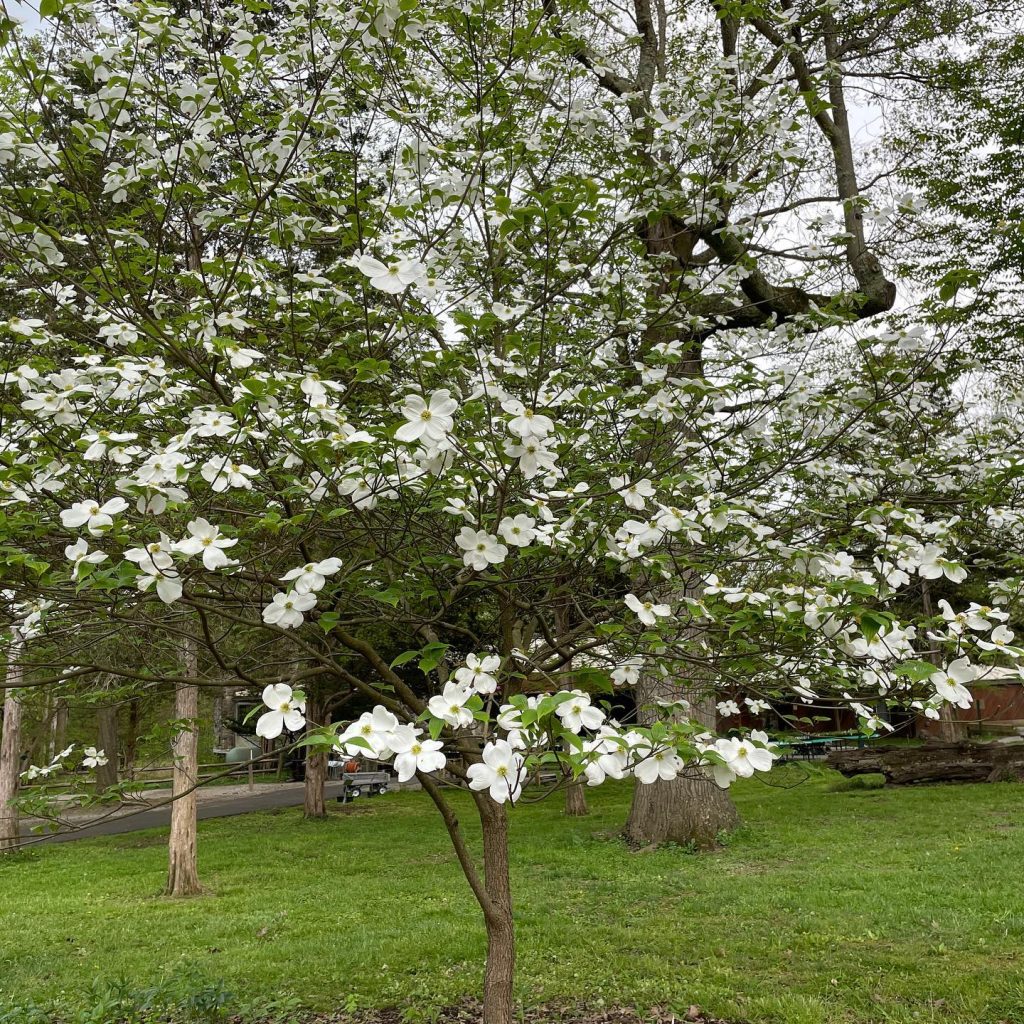
Flowering dogwood is Virginia’s official state tree, a title it has held since 1956, and remarkably, it is also the state flower. Virginia is one of only two states, alongside Mississippi, to give the same plant both honors.
Each April, its white or pink bracts appear across roadsides and forest edges throughout the Commonwealth. Shenandoah National Park’s Skyline Drive is considered one of the finest places in the Appalachians to see this spring display.
The tree’s bright red autumn berries feed migrating songbirds, including the wood thrush, Virginia’s state bird, which depends heavily on dogwood fruit during fall migration.
Unfortunately, dogwood anthracnose fungus threatens the species in the cool, moist conditions of the Blue Ridge, so gardeners should watch for leaf spotting and dieback.
2. Eastern White Pine (Pinus strobus)
Eastern white pine grows throughout Virginia’s mountains and upper Piedmont, easily recognized by its soft blue-green needles bundled in groups of five, unlike the coarser needles of southern yellow pines.
This conifer can exceed 100 feet in height on good sites, making it one of the tallest native trees in the eastern half of the country. Its straight, clear trunk made it historically valuable for ship masts and building timber.
White pine grows fast compared to most conifers, which is why it remains popular for windbreaks, screening, and quick reforestation projects across the state.
It prefers well-drained soil and full sun, and tolerates a wide temperature range, from the humid Piedmont to the cooler mountain counties.
3. Loblolly Pine (Pinus taeda)
Loblolly pine dominates Virginia’s Coastal Plain and southern Piedmont, and it forms roughly 20 percent of the state’s forest type by acreage, according to Forest Service health surveys.
This fast-growing pine has long, slender needles in bundles of three and reddish-brown, plated bark on mature trunks. It is the backbone of Virginia’s commercial timber industry.
Loblolly regenerates aggressively after logging or fire, often forming dense, even-aged stands across former farmland throughout the southeastern part of the state.
Because of its rapid growth, loblolly pine is planted extensively for pulpwood and lumber, supporting thousands of forestry jobs across rural Virginia.
4. Virginia Pine (Pinus virginiana)
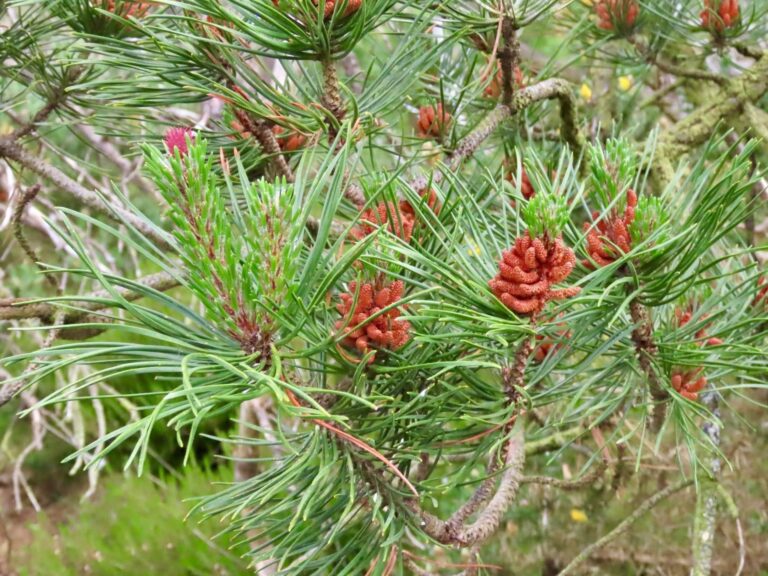
Virginia pine, sometimes called scrub pine, thrives in poor, eroded soils where few other trees survive, making it one of the toughest native conifers in the Commonwealth.
Its short, twisted needles and irregular, scrubby form set it apart from the straighter loblolly and white pine. As it matures, lower branches die back, leaving visible stubs along the trunk.
This species is considered an early successional tree, meaning it quickly colonizes abandoned fields and disturbed land before larger hardwoods eventually take over.
Because of its resilience on marginal sites, Virginia pine is often used in reclamation projects on old mine land and heavily eroded slopes.
5. Shortleaf Pine (Pinus echinata)
Shortleaf pine grows across Virginia’s southern and central regions, distinguished by short needles in bundles of two or three and small, prickly cones that persist on the branches.
This species tolerates fire remarkably well. Its thick bark protects the trunk, and it can resprout from the base after a burn, a survival trait few other pines share.
Historically, shortleaf pine covered vast stretches of the Southeast before decades of fire suppression and land-use change reduced its range considerably.
Conservation groups in Virginia have taken renewed interest in shortleaf pine restoration, recognizing its role in supporting fire-adapted wildlife communities.
6. Pitch Pine (Pinus rigida)
Pitch pine is a rugged, irregularly shaped conifer found mostly in Virginia’s mountain regions, often clinging to rocky outcrops and dry ridgelines where soil is thin.
Its dark, deeply furrowed bark and stiff, twisted needles in bundles of three give it a weathered, almost sculptural appearance compared to Virginia’s other native pines.
Like shortleaf pine, it survives fire well and can sprout new growth directly from its trunk and branches after burning, an unusual trait among conifers.
You will often spot pitch pine along Appalachian ridgelines and balds, where its tolerance for poor soil and exposure gives it a competitive edge.
7. White Oak (Quercus alba)
White oak forms the backbone of Virginia’s oak-hickory forests, which cover roughly 61 percent of the state’s woodland acreage, the largest single forest type in the Commonwealth.
Its rounded leaf lobes and pale gray, scaly bark distinguish it from red oaks at a glance. Mature trees regularly live several hundred years, with some documented specimens far older.
White oak acorns are sweeter than those of red oaks, making them a preferred food source for deer, turkey, and squirrels throughout Virginia’s forests.
The wood remains highly valued for flooring, barrels, and furniture, and white oak continues to anchor sustainable forestry programs across the Piedmont and mountains.
8. Southern Red Oak (Quercus falcata)
Southern red oak thrives on Virginia’s dry uplands and sandy soils, particularly across the Coastal Plain and southern Piedmont, where it often reaches impressive size.
One of the tallest documented trees in the state is a southern red oak in James City County, illustrating just how large this species can grow under favorable conditions.
Its deeply lobed leaves, often with a distinctive bell-shaped base, help separate it from other red oak species found across Virginia’s forests.
This tree tolerates drought and poor soil better than many oaks, which explains its dominance on Virginia’s drier ridges and sandy coastal terraces.
9. Northern Red Oak (Quercus rubra)
Northern red oak grows across Virginia’s mountains and northern Piedmont, favoring cooler, richer soils than its southern red oak relative. Its pointed, bristle-tipped leaves make identification straightforward.
This species grows faster than white oak and produces strong, straight timber that is widely harvested for flooring, furniture, and cabinetry throughout the state.
Fall color runs from deep red to russet, and the tree’s acorns, while bitter, remain an important winter food source for deer and small mammals.
Northern red oak transplants more easily than many oaks, which makes it a common choice for street tree and park plantings across Virginia’s cities.
10. Willow Oak (Quercus phellos)
Willow oak stands apart from other Virginia oaks with its narrow, willow-like leaves that lack the typical lobed shape most people associate with the oak family.
It thrives in the moist bottomlands and floodplains of the Coastal Plain and Piedmont, often planted as a shade tree in cities because of its fast growth and tidy, oval crown.
Richmond and other Virginia cities have long favored willow oak for street plantings, since its shallow, fibrous roots cause less sidewalk damage than many large shade trees.
Its small, abundant acorns feed wood ducks, turkey, and songbirds, making it a valuable wildlife tree despite its smaller nut size compared to white oak.
READ MORE: 30 Popular Types of Oak Trees (Different Varieties, With Pictures)
11. American Beech (Fagus grandifolia)
American beech is easy to spot thanks to its smooth, silver-gray bark, a surface that unfortunately tempts too many visitors to carve initials into it.
Found throughout Virginia’s mountain coves and rich hardwood forests, beech often holds onto its pale, papery leaves through winter, a trait known as marcescence.
Beechnuts provide critical fall nutrition for black bears, deer, and wild turkey, and beech forests once supported the now-extinct passenger pigeon in massive numbers.
Beech bark disease and beech leaf disease have begun appearing in parts of the state, so anyone planting this species should monitor nearby stands for early symptoms.
12. Tulip Poplar (Liriodendron tulipifera)
Tulip poplar, Virginia’s tallest native hardwood, dominates the mountain coves of the Blue Ridge and Appalachian region, often towering well above the surrounding canopy.
Its distinctive four-lobed leaves and greenish-yellow, tulip-shaped spring flowers make it one of the more elegant native species, even though the blooms sit too high to notice easily.
This tree grows remarkably fast, often adding several feet of height per year while young, which explains its popularity for reforestation and fast shade in new plantings.
Tulip poplar prefers deep, moist, well-drained soil, and given the space, a mature tree can exceed 150 feet in Virginia’s richest cove forests.
13. American Sycamore (Platanus occidentalis)
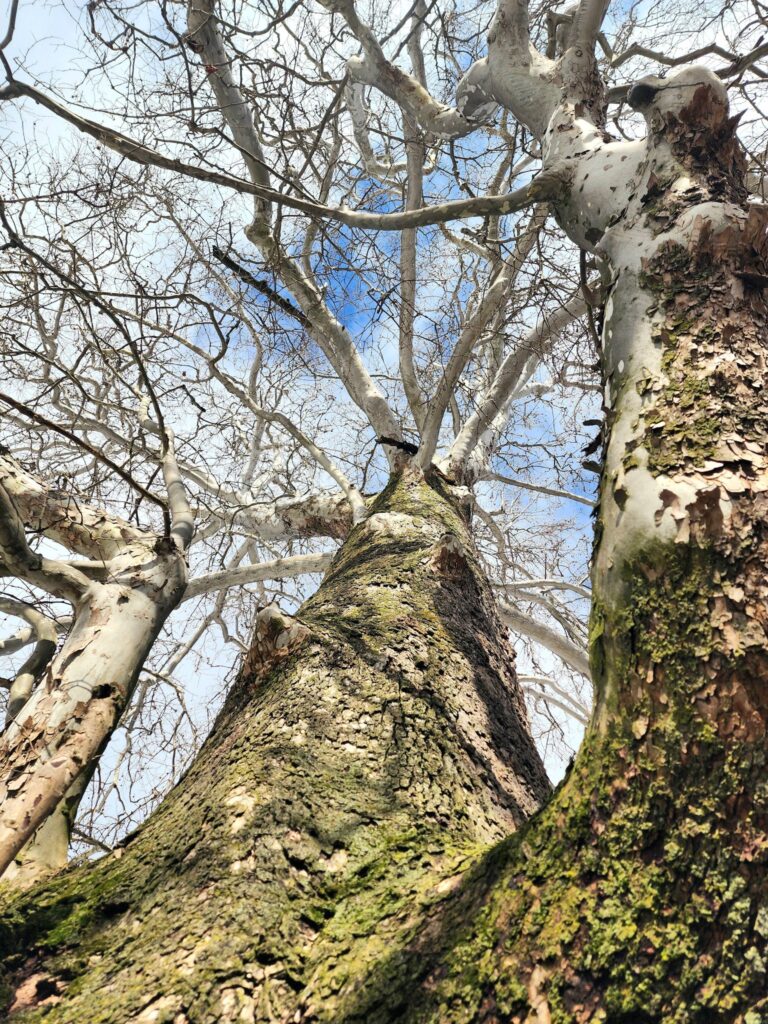
American sycamore lines Virginia’s rivers and floodplains, instantly recognizable by bark that peels away in patches, revealing a mottled white, gray, and tan pattern beneath.
This tree grows to an enormous trunk diameter, often larger than any other native hardwood in the state, and old specimens along rivers can exceed 100 feet in height.
Its extensive root system helps stabilize eroding riverbanks, which makes sycamore a natural fit for stream buffer and floodplain restoration projects across Virginia.
Because of its size, sycamore suits parks and large properties better than small residential lots, where it can quickly outgrow the available space.
14. Black Walnut (Juglans nigra)
Black walnut grows across Virginia’s Piedmont and mountain valleys, prized by furniture makers for its rich, dark heartwood and by foragers for its edible, if labor-intensive, nuts.
The tree releases a chemical compound called juglone into the soil, which suppresses growth in many nearby plants, including tomatoes and certain fruit trees.
Its thick, deeply furrowed bark and large compound leaves make identification straightforward, especially once the round, green-husked nuts begin dropping in autumn.
High-quality black walnut logs remain some of the most valuable timber harvested in Virginia, sometimes fetching premium prices at specialty auctions.
15. Shagbark Hickory (Carya ovata)
Shagbark hickory gets its name from bark that peels away from the trunk in long, curling strips, a feature that makes mature trees easy to identify even from a moving car.
This species grows slowly across Virginia’s mountains and upland forests, often living well past 200 years once established in undisturbed woodland settings.
Its sweet, edible nuts have fed wildlife and people alike for centuries, and the tree remains a favorite for smoking meat thanks to its distinctive, rich flavor.
A red hickory specimen in Caroline County ranks among the tallest documented trees of its kind in Virginia, a testament to how large this species can grow.
16. Eastern Redbud (Cercis canadensis)
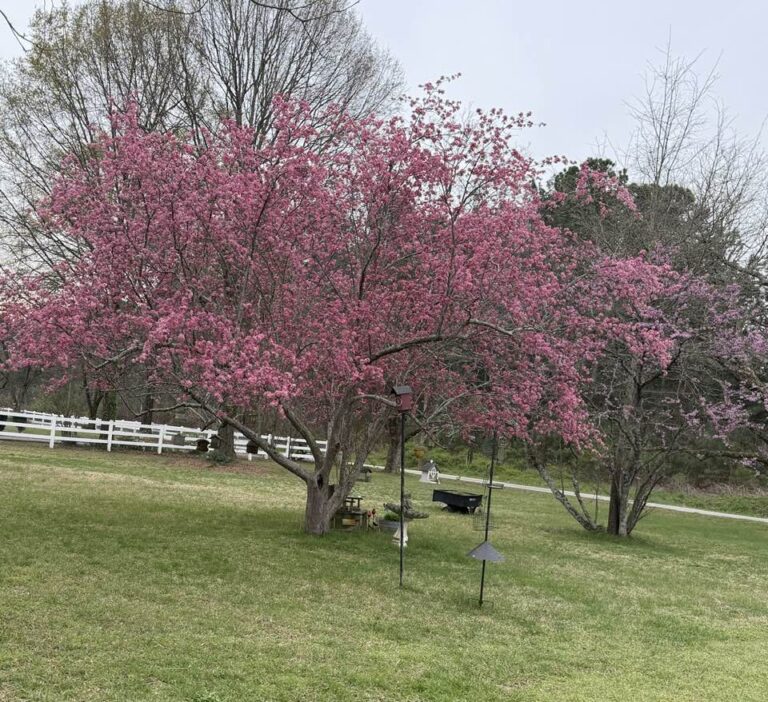
Eastern redbud announces spring across Virginia weeks before most other trees stir, covering bare branches in vivid magenta-pink blooms that seem to appear overnight.
Found throughout the Piedmont and lower mountain regions, redbud serves as an early nectar source for emerging bumblebee queens and a host plant for several butterfly species.
Its heart-shaped leaves and graceful, vase-shaped form make it a favorite ornamental choice for smaller Virginia yards that still want reliable spring color.
Redbud develops a deep taproot early in life, so it is best planted while young rather than transplanted once the root system has fully established.
17. Sweetbay Magnolia (Magnolia virginiana)
Sweetbay magnolia grows naturally in Virginia’s wetter Coastal Plain habitats, favoring swamps, bogs, and low-lying woods where its roots can access consistent moisture.
Its creamy white, lemon-scented flowers bloom through much of the summer, offering a longer bloom period than most native flowering trees found in the state.
Semi-evergreen in Virginia’s milder coastal climate, sweetbay retains some foliage through winter, giving it more year-round structure than fully deciduous magnolias.
This compact, fragrant tree fits well into smaller landscapes, particularly in low or poorly drained spots where other ornamental species tend to struggle.
18. Bald Cypress (Taxodium distichum)
Bald cypress defines Virginia’s tidal swamps, standing in standing water with distinctive “knees” that rise from the roots, structures still debated among botanists for their exact purpose.
Despite being a conifer, bald cypress drops its needle-like foliage every autumn, an unusual trait that gives the species its common name.
One of the oldest documented trees in Virginia, a water tupelo growing alongside bald cypress in Greenville County’s swamps, hints at just how ancient these wetland forests can be.
Bald cypress wood resists rot remarkably well, which historically made it valuable for boat building, shingles, and other applications exposed to constant moisture.
ALSO READ: Bald Cypress Tree Pros and Cons: What to Know Before You Plant
19. Red Maple (Acer rubrum)
Red maple grows in nearly every habitat Virginia offers, from mountain coves to coastal swamps, which is why foresters often call it the most adaptable native tree in the eastern United States.
Its red flowers appear in late winter, well before the leaves, followed by brilliant scarlet fall foliage that rivals sugar maple in parts of the state.
This tree tolerates wet soil exceptionally well, making it a smart choice for low, poorly drained yard sections where other species tend to struggle.
Its shallow, spreading root system can eventually lift sidewalks and driveways, so plant it with some distance from paved surfaces.
20. Sugar Maple (Acer saccharum)
Sugar maple grows best in Virginia’s cooler mountain counties, since the state sits near the southern edge of its natural range and can struggle in the hotter Piedmont and coastal areas.
Its brilliant orange and gold fall color remains a major draw for leaf-watchers heading to the Blue Ridge Parkway and Shenandoah National Park each October.
This species grows slowly but can live for centuries, developing the dense, strong wood historically used for flooring, furniture, and maple syrup production farther north.
If you are planting sugar maple in warmer parts of Virginia, choose a site with afternoon shade and consistent moisture to help it handle summer heat.
21. American Elm (Ulmus americana)
American elm once shaded streets across Virginia’s cities and towns with its graceful, vase-shaped canopy, before Dutch elm disease devastated mature populations statewide in the twentieth century.
Its saw-toothed, lopsided leaves and arching branch pattern remain recognizable wherever surviving trees still grow, often in older rural cemeteries and historic farmsteads.
Disease-resistant cultivars, developed through decades of breeding research, have slowly reintroduced this species to public plantings in parts of the Commonwealth.
Anyone planting elm today should choose a certified resistant variety and monitor it closely during humid summer months, when the disease spreads most aggressively.
22. Black Cherry (Prunus serotina)
Black cherry ranks among Virginia’s most valuable native hardwoods, harvested extensively for furniture and cabinetry thanks to its rich, reddish-brown grain.
In spring, drooping white flower clusters cover the branches, followed by small, dark fruit that black bears, foxes, and songbirds consume heavily by late summer.
Mature bark breaks into small, curling dark plates, often compared to burnt potato chips, a helpful identification clue on older trees found throughout the Piedmont and mountains.
Wilted leaves contain compounds toxic to livestock, so property owners with grazing animals should keep fallen branches and storm debris cleared promptly.
23. Eastern Hemlock (Tsuga canadensis)
Eastern hemlock grows in Virginia’s cool mountain ravines and along shaded stream banks, often forming dense, quiet groves unlike any other forest type in the state.
Its short, flat needles and small drooping cones distinguish it from Virginia’s pines, and older trees can live for centuries in undisturbed conditions.
The invasive hemlock woolly adelgid has devastated hemlock populations across the Appalachians, including significant losses within Shenandoah National Park’s remaining old-growth groves.
Conservationists continue targeted treatment programs to protect Virginia’s remaining hemlock stands, recognizing their importance for stream shading and cold-water fish habitat.
24. Red Spruce (Picea rubens)
Red spruce survives only in Virginia’s highest, coolest elevations, particularly the Allegheny Highlands, where it forms rare, isolated stands more typical of forests much farther north.
Its short, stiff needles and reddish-brown bark set it apart from the state’s more common pines, and it favors the misty, high-altitude conditions found on select mountain summits.
These relict spruce forests are considered ecologically significant, since they represent leftover fragments of cooler climate forests that retreated northward after the last ice age.
Because of its narrow habitat requirements, red spruce is not a practical choice for typical home landscapes outside Virginia’s highest mountain counties.
25. Common Persimmon (Diospyros virginiana)
Common persimmon grows across Virginia’s fields, forest edges, and old homesteads, known for its sweet, orange fruit that ripens after the first hard frost of autumn.
Unripe persimmons are famously astringent, a lesson many first-time foragers learn the hard way before waiting for full ripeness later in the season.
Its blocky, alligator-like bark pattern makes persimmon easy to identify in winter, long after the leaves have dropped and the fruit has disappeared.
Wildlife, including deer, raccoons, and opossums, rely heavily on persimmon fruit each fall, making it a valuable addition to naturalized wildlife plantings.
Quick Tips for Planting Native Virginia Trees
A few practical notes before you head to the nursery.
Match the tree to your region. Coastal species like bald cypress and sweetbay magnolia struggle in the mountains, while red spruce and sugar maple prefer cooler elevations.
Check with the Virginia Department of Forestry. Its identification guides and county-level advice help ensure you choose species suited to your specific soil and climate.
Watch for invasive pests. Hemlock woolly adelgid and Dutch elm disease have already reshaped Virginia’s forests, so inspect new plantings regularly.
Final Thoughts
Twenty-five trees can only offer a glimpse of what grows across Virginia’s 15.7 million forested acres. But this list covers the species you are most likely to encounter on a hike, plant in your yard, or simply want to name correctly.
I hope it deepens your appreciation for the Commonwealth’s forests, and perhaps inspires you to plant one of these natives at home this season.
References
- Virginia Department of Forestry — Tree Identification: https://www.dof.virginia.gov/education-and-recreation/learn-about-education-recreation/tree-identification/
- Virginia Department of Forestry — Common Native Trees of Virginia (Identification Guide PDF): https://dof.virginia.gov/wp-content/uploads/Common-Native-Trees-ID_pub.pdf
- USDA Forest Service — Virginia Forest Health Highlights: https://www.fs.usda.gov/foresthealth/docs/fhh/VA_FHH_2005.pdf
- Virginia Tech Dendrology — Tree Identification Factsheets: https://dendro.cnre.vt.edu/dendrology/factsheets.cfm
- Virginia Tech Dendrology — White Oak Fact Sheet: https://dendro.cnre.vt.edu/dendrology/syllabus/factsheet.cfm?ID=35
- Virginia Tech Dendrology — Red Maple Fact Sheet: https://dendro.cnre.vt.edu/dendrology/syllabus/factsheet.cfm?ID=1
- Virginia Department of Forestry — How Do Trees Survive the Winter?: https://dof.virginia.gov/how-do-trees-survive-the-winter/

Tim M Dave is a gardening expert with a passion for houseplants, particularly cacti and succulents. With a degree in plant biology from the University of California, Berkeley, he has vast experience in gardening. Over the years, he has cultivated a vast collection of desert plants and learned a great deal about how to grow and care for these unique companions.