25 Native Utah Trees (With Growing Details)
Utah’s landscape is far more varied than most people expect. I have driven through the state and watched desert scrub turn into pine forest within a single hour, and that shift is largely thanks to its native trees.
This guide covers 25 native Utah trees, chosen to reflect the state’s real ecological range: high alpine peaks, red rock canyons, riverbanks, and dry foothills.
Why Native Trees Matter in Utah
Native trees are adapted to Utah’s alkaline soils, cold winters, and low rainfall. That adaptation makes them naturally drought-resistant and far less demanding than imported ornamentals.
According to Utah State University Extension, native species also support local pollinators and wildlife in ways that non-native trees simply cannot match. Planting them is one of the easiest ways to build a sustainable yard.
Now, here are the 25 species that define Utah’s forests, canyons, and neighborhoods.
1. Quaking Aspen (Populus tremuloides)
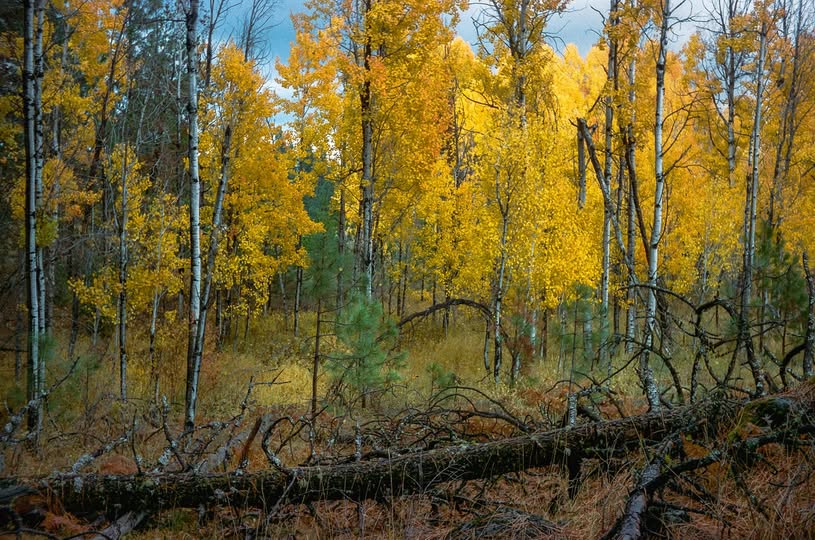
The quaking aspen is Utah’s official state tree, a title it earned in 2014 after a group of fourth-graders petitioned the governor to replace the blue spruce. Its leaves tremble in the lightest breeze, which is exactly how it got its name.
This species makes up about 10 percent of Utah’s total forest cover and grows in all 29 counties. That range is remarkable for a single tree species in one state.
Aspens spread through underground root systems rather than seed alone, so an entire hillside of “individual” trees can actually be one genetic organism. Utah is home to Pando, the most famous example of this anywhere on Earth.
I find something oddly moving about a forest that is technically one living being. It puts Utah’s aspen groves in a completely different light.
2. Blue Spruce (Picea pungens)
Before the aspen took over, the blue spruce was Utah’s original state tree, chosen in 1933. It still grows widely in the Wasatch and Uinta mountains, usually between 6,000 and 11,000 feet elevation.
Its silvery-blue needles make it instantly recognizable, and it tolerates extreme temperature swings better than most conifers. That toughness explains why it is still a favorite ornamental tree today.
Blue spruce currently accounts for roughly 1 percent of Utah’s forest cover, far less than the aspen. It remains an iconic mountain species nonetheless.
3. Gambel Oak (Quercus gambelii)
Also called scrub oak or Utah white oak, Gambel oak dominates the foothills along the Wasatch Front. It grows as a dense, shrubby thicket rather than a tall single-trunk tree in most locations.
This oak is native across Colorado, Utah, New Mexico, Wyoming, and Arizona. Its acorns are an important food source for deer, turkeys, and black bears heading into winter.
In fall, Gambel oak turns a deep russet-red that blankets entire canyon slopes. It is one of the easiest native trees to spot from a moving car.
4. Utah Juniper (Juniperus osteosperma)
Utah juniper is the tree that gives the “pinyon-juniper woodland” its second name, and it dominates dry, rocky slopes across the state. It tolerates drought better than almost any other native conifer.
Its bluish, berry-like cones were historically boiled, dried, or ground into meal by Native American communities. According to USU Extension research, juniper preparations were also used for a long list of traditional remedies.
This tree can live for many centuries in harsh, low-water conditions. Twisted, weathered Utah junipers are a familiar sight in the state’s canyon country.
5. Rocky Mountain Juniper (Juniperus scopulorum)
Rocky Mountain juniper is the taller, more upright cousin of Utah juniper, and the two are often found growing side by side. It favors slightly higher elevations and rockier terrain.
Its wood is naturally rot-resistant, which made it valuable historically for fence posts and small building projects. The tree’s dense, scale-like foliage provides year-round cover for birds.
Both juniper species share overlapping traditional uses, and early accounts often did not distinguish between them. That overlap makes them a linked pair in Utah’s ecological story.
6. Colorado Pinyon Pine (Pinus edulis)
Colorado pinyon is one of two pinyon pines native to Utah, and it is prized above all for its edible seeds. These seeds, known as pine nuts, have been a food staple for centuries.
The tree grows slowly and rarely exceeds 20 feet, but it can live for hundreds of years in poor, rocky soil. Its short, dense canopy provides shelter for small mammals and birds.
Pinyon pitch was traditionally used to treat cuts, skin problems, and infections. That practical value made the tree a cornerstone species for indigenous communities in the region.
7. Singleleaf Pinyon Pine (Pinus monophylla)
Singleleaf pinyon is the second native pinyon species and is easy to identify by its single needle per fascicle, unlike most pines that bundle needles in twos or threes. It grows mainly in western and southwestern Utah.
Like its Colorado cousin, it produces edible pine nuts and was used in similar medicinal preparations historically. The two pinyon species are often grouped together in Utah forestry literature for this reason.
This tree thrives in the driest, rockiest parts of the Great Basin. Its presence usually signals a landscape that receives very little annual precipitation.
8. Great Basin Bristlecone Pine (Pinus longaeva)
Bristlecone pine is arguably Utah’s most extraordinary tree, capable of living for thousands of years. Individuals in the Great Basin region have been documented at ages exceeding 4,000 years.
It grows at high, exposed elevations where almost nothing else can survive, often twisted into dramatic, gnarled shapes by wind and cold. Slow growth in harsh conditions is exactly what gives it such longevity.
Utah shares this species with neighboring Nevada, where the famous Methuselah tree grows. Seeing one in person feels like standing next to a living fossil.
9. Ponderosa Pine (Pinus ponderosa)
Ponderosa pine is a tall, straight conifer known for its distinctive puzzle-piece bark and vanilla-like scent up close. It grows in Utah’s mid-elevation forests, often mixed with Douglas-fir.
Mature bark develops a warm orange-red color that contrasts sharply with younger, darker trees. This color shift is one of the easiest ways to age a ponderosa from a distance.
The species is a major component of southern Utah’s higher plateaus, including areas around Cedar Breaks and Bryce Canyon. It also provides valuable timber across the western United States.
10. Engelmann Spruce (Picea engelmannii)
Engelmann spruce grows at high elevations in Utah’s mountain ranges, often forming dense subalpine forests alongside subalpine fir. It prefers cool, moist conditions rarely found lower down.
Its needles are sharp but slightly softer than blue spruce, and its bark is thinner and more scaly. These are useful clues when telling the two spruces apart in the field.
This tree is a critical part of watershed protection in Utah’s high country. Its root systems help stabilize soil on steep mountain slopes.
11. Subalpine Fir (Abies lasiocarpa)
Subalpine fir grows near the treeline in Utah’s highest mountains, often twisted into a narrow, spire-like shape by wind exposure. Its flattened needles curve slightly upward along the branch.
This fir tolerates extreme cold and heavy snow loads better than almost any other Utah conifer. That resilience allows it to survive at elevations where growing seasons are extremely short.
Subalpine fir is a common companion to Engelmann spruce throughout the Uinta and Wasatch high country. Together they define Utah’s alpine forest zone.
12. White Fir (Abies concolor)
White fir grows at somewhat lower elevations than subalpine fir, typically mixed with ponderosa pine and Douglas-fir. Its flattened blue-green needles give the tree a soft, silvery appearance.
This species is popular as an ornamental and Christmas tree because of its symmetrical shape and pleasant scent. It is one of the more shade-tolerant conifers native to Utah.
White fir forests provide important cover for elk and mule deer during Utah’s colder months. Its dense canopy also moderates snowmelt timing on forested slopes.
13. Douglas-fir (Pseudotsuga menziesii)
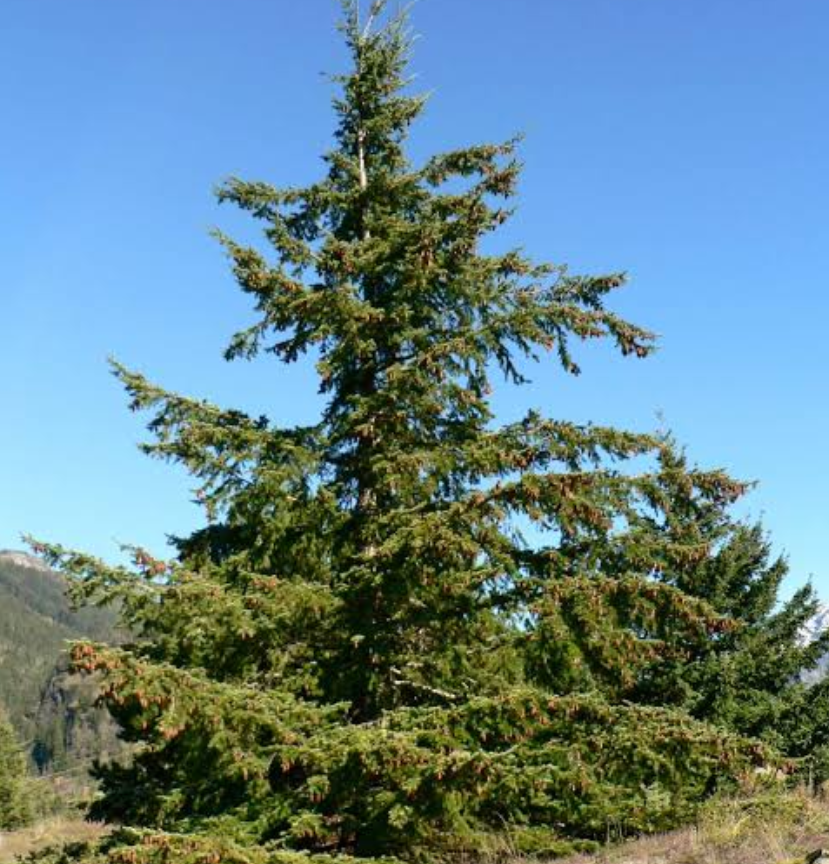
Despite its name, Douglas fir is not a true fir, and its distinctive hanging cones with three-pointed bracts make it easy to identify. It grows widely across Utah’s mountain forests.
This tree can reach impressive heights and ages, occasionally surpassing several centuries in undisturbed stands. Its thick, corky bark helps it survive occasional wildfire.
Douglas-fir is one of the most commercially important timber species in North America. In Utah, it also plays a major ecological role in mixed-conifer forest communities.
14. Limber Pine (Pinus flexilis)
Limber pine earns its name from branches flexible enough to bend without snapping in heavy wind and snow. It grows at high, exposed elevations similar to bristlecone pine.
This species can also live for well over a thousand years under the right conditions. Its seeds are an important food source for Clark’s nutcracker, a bird that helps disperse the tree naturally.
Limber pine often grows in isolated, wind-battered clusters near ridgelines. Its resilience makes it a survivor species in Utah’s toughest mountain environments.
15. Narrowleaf Cottonwood (Populus angustifolia)
Narrowleaf cottonwood lines Utah’s mountain streams and riverbanks, forming important riparian corridors. Its narrow, willow-like leaves distinguish it from other cottonwood species.
According to USU’s Swaner Preserve conservation program, this species is regularly planted along waterways to restore water and habitat quality. Its root systems help prevent streambank erosion.
This tree grows quickly and provides shade that keeps stream temperatures cooler for fish and other aquatic life. It is a foundational species for riparian ecosystem health.
16. Fremont Cottonwood (Populus fremontii)
Fremont cottonwood grows at lower elevations than its narrowleaf cousin, often along desert washes and canyon bottoms in southern Utah. Its broad, heart-shaped leaves flutter dramatically in wind.
This species can grow quite large in favorable riparian conditions, providing rare shade in otherwise exposed desert terrain. Historic settlements and Native American communities often centered around its groves.
Fremont cottonwoods remain an important indicator of reliable water sources across southern Utah. Where you find a mature grove, you can usually count on nearby groundwater.
17. Box Elder (Acer negundo)
Box elder is a member of the maple family, though its compound leaves look more like ash than typical maple. It grows in canyon bottoms and along streams throughout Utah.
This tree tolerates poor soil, flooding, and drought better than most native maples. It is fast-growing but generally shorter-lived than many other trees on this list.
Box elder bugs, the small red-and-black insects often seen clustering on walls in fall, are named directly after this tree. It is a familiar, if sometimes unwelcome, part of Utah’s suburban landscape.
18. Rocky Mountain Maple (Acer glabrum)
Rocky Mountain maple grows as a large shrub or small multi-stemmed tree, usually found in canyon understories and along mountain streams. Its leaves turn brilliant red and orange in autumn.
This species prefers partial shade and moist soil, making it common beneath taller conifers. Its size and shape make it a popular native alternative to ornamental Japanese maples.
Wildlife browse its leaves and twigs throughout the growing season. It is a quiet but important part of Utah’s mixed mountain forest understory.
19. Water Birch (Betula occidentalis)
Water birch, sometimes called river birch, grows along Utah’s streams and wetland edges. Its reddish-brown bark and slender, drooping branches make it easy to identify near water.
This species belongs to the birch family and prefers consistently moist soil, unlike most drought-tolerant Utah natives. It rarely strays far from a reliable water source.
Water birch provides valuable streamside shade and erosion control. It is frequently included in Utah riparian restoration projects for these exact reasons.
20. Thinleaf Alder (Alnus incana)
Thinleaf alder grows in dense thickets along Utah’s mountain streams, often forming an almost continuous green corridor. Its serrated, oval leaves and small cone-like fruit are distinctive.
This species fixes nitrogen in the soil through a special root relationship with bacteria. That process enriches streambank soil for other plants growing nearby.
Alder thickets also slow floodwater and trap sediment during spring runoff. This makes the species genuinely important for watershed health across Utah’s mountain ranges.
21. Curl-leaf Mountain Mahogany (Cercocarpus ledifolius)
Curl-leaf mountain mahogany is an evergreen shrub or small tree found on dry, rocky slopes throughout Utah. Its small, curled leaves and twisted, weathered trunk give it a distinctive rugged look.
This species is remarkably long-lived, with some individuals reaching many centuries in age on harsh, exposed sites. It is also a preferred winter browse for mule deer and other big game.
Its wood is extremely dense and burns exceptionally hot, which made it valuable historically for fuel. Curl-leaf mountain mahogany remains a defining plant of Utah’s dry foothill ecosystems.
22. Netleaf Hackberry (Celtis reticulata)
Netleaf hackberry grows in rocky canyons and along desert washes across southern and central Utah. Its bark often develops distinctive warty ridges as the tree matures.
This species tolerates extremely dry, rocky conditions better than most broadleaf trees native to the state. Its small orange berries are an important late-season food source for birds.
Netleaf hackberry rarely grows tall, but it forms an important shade component in otherwise sparse canyon vegetation. It is a reliable, if understated, native species.
23. Utah Serviceberry (Amelanchier utahensis)
Utah serviceberry is a large shrub or small tree found across foothills and canyon slopes statewide. It produces clusters of white flowers in spring, followed by small, dark, edible berries.
According to USU’s Swaner Preserve, this species is regularly used in native revegetation projects throughout the state. Its berries have long been gathered by both wildlife and people.
This plant handles drought and rocky soil with ease, making it a popular choice for water-wise landscaping. Its spring bloom is genuinely one of the prettier native flowering displays in Utah.
24. Peachleaf Willow (Salix amygdaloides)
Peachleaf willow grows along Utah’s rivers and streams, recognizable by its narrow, glossy leaves that resemble peach foliage. It is one of the taller native willow species in the state.
This tree stabilizes streambanks with an extensive, fibrous root system. It also provides critical habitat and food for beavers, which rely heavily on willow bark and stems.
Peachleaf willow tends to grow quickly but has a shorter overall lifespan than many upland trees. Its real value lies in the riparian stability it provides year after year.
25. Chokecherry (Prunus virginiana)
Chokecherry rounds out this list as a widespread native shrub or small tree found in canyons, foothills, and along streams throughout Utah. Its fragrant white flower clusters bloom in late spring.
The tart, dark fruit is edible once processed and has long been used in jams, syrups, and traditional preparations. Raw pits and leaves, however, contain compounds that are toxic if consumed in quantity.
Chokecherry thickets provide dense cover and food for birds and small mammals. It is one of the most recognizable native fruiting trees across the entire state.
Final Thoughts
Utah’s native trees tell a story that spans desert basins to alpine ridgelines. From the ancient bristlecone pine to the fast-growing cottonwood, each species has adapted to a very specific slice of this state’s demanding climate.
I hope this list gives you a clearer picture of what grows around you, whether you’re hiking a canyon trail or picking a tree for your own yard. Native species, in almost every case, remain the smartest and most sustainable choice.
References
- Utah State University Extension – TreeBrowser Database: https://extension.usu.edu/treebrowser/
- Utah State University Extension – Native American Uses of Utah Forest Trees: https://extension.usu.edu/forestry/publications/utah-forest-facts/018-native-american-uses-of-utah-forest-trees
- Utah’s Online Public Library (Utah.gov) – State Symbol: Tree: https://onlinelibrary.utah.gov/state-symbol/tree/
- USDA Forest Service – Fishlake National Forest Pando Clone: https://www.fs.usda.gov/r04/fishlake/multimedia/videos/fishlake-national-forest-pando-clone
- Natural History Museum of Utah (University of Utah) – What Is the Oldest Tree in the World: https://nhmu.utah.edu/articles/what-oldest-tree-world
- Utah State University Extension – Trees and Shrubs Gardening Guide: https://extension.usu.edu/yardandgarden/trees-shrubs
- Utah Division of State History (Utah.gov) – The Diminishing Pando Clone: History and Forest Management: https://history.utah.gov/blog/the-diminishing-pando-clone-history-and-forest-management/

Tim M Dave is a gardening expert with a passion for houseplants, particularly cacti and succulents. With a degree in plant biology from the University of California, Berkeley, he has vast experience in gardening. Over the years, he has cultivated a vast collection of desert plants and learned a great deal about how to grow and care for these unique companions.