25 Montana Native Flowers (With Growing Details)
I remember standing on a gravel bar near the Bitterroot River, convinced nothing could grow in that dry soil. Then I saw a single pink flower pushing straight out of the rock.
That was my introduction to bitterroot, and to Montana’s stubborn, beautiful flora. This state does not do things halfway.
The scale here is genuinely large. Montana’s flora includes more than 2,500 documented vascular plant species, according to the Manual of Montana Vascular Plants. Roughly 2,100 of those are native to the state.
Elevation plays a huge role in that diversity. Montana ranges from Great Plains prairie to alpine tundra above 12,000 feet, crossing three major floristic provinces along the way. That mix is unusual for a northern, landlocked state.
One detail surprised me. Montana harbors over 100 arctic-alpine plant species, nearly 5% of its native flora, left behind from the last ice age. These plants share close relatives with vegetation found near the Arctic Circle.
This guide covers 25 native flowers found across Montana’s prairies, forests, and alpine zones.
25 Montana Native Flowers
Here are 25 native flowers worth learning if you spend any time in Montana.
1. Bitterroot (Lewisia rediviva)
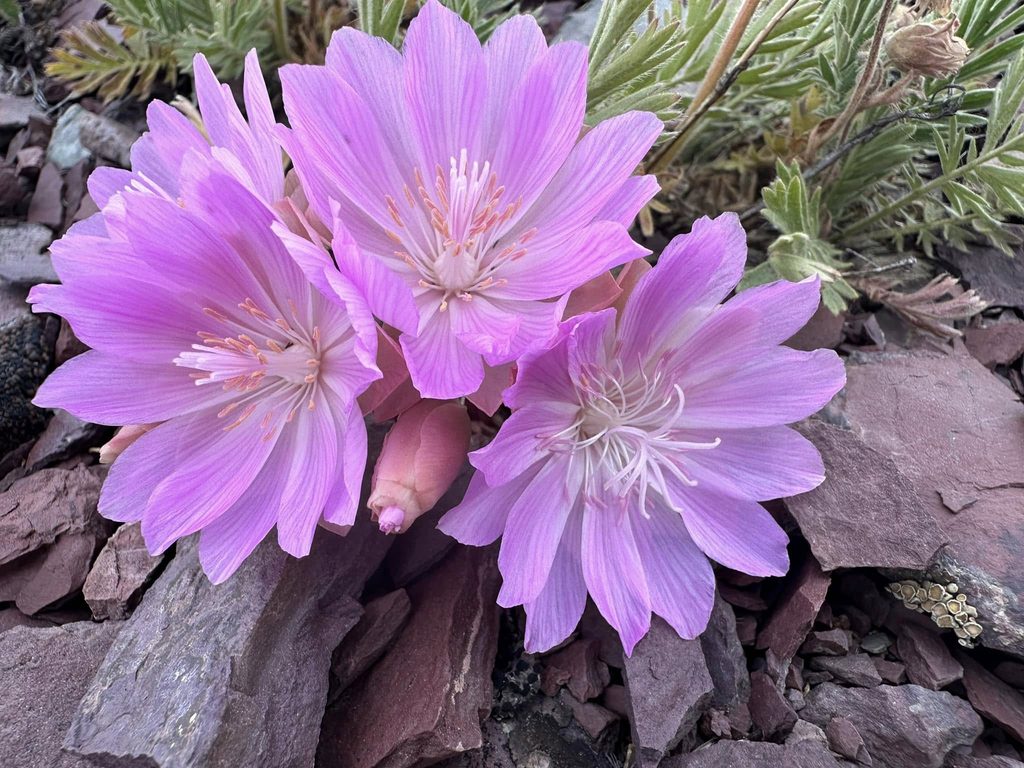
Bitterroot is Montana’s official state flower, chosen in 1895 after a public newspaper vote. It received 3,621 of nearly 5,900 ballots cast, beating out evening primrose and wild rose.
The flower itself grows low to gravelly ground, producing a single pink-to-white bloom per stem. Meriwether Lewis documented the plant in 1806, and it later lent its name to a river, valley, and mountain range.
Salish, Kootenai, and other tribes relied on its starchy root as a vital food source. I find it remarkable that a plant this delicate can survive years without water and still sprout when moisture returns.
2. Indian Paintbrush (Castilleja spp.)
Indian paintbrush shows up across nearly every habitat in Montana, from prairie edges to subalpine meadows. Its bright red, orange, or yellow bracts do the visual work, not the actual flower.
This plant is hemiparasitic. It draws extra nutrients from the roots of neighboring grasses and shrubs, which helps explain its intense coloring even in poor soil.
You will see it blooming from late May through August, depending on elevation. It remains one of the most photographed wildflowers in the entire Rocky Mountain region.
3. Arrowleaf Balsamroot (Balsamorhiza sagittata)
Arrowleaf balsamroot turns entire Montana hillsides yellow each spring. Its large, sunflower-like blooms sit above broad, arrow-shaped leaves that can grow a foot long.
I have driven through southwestern Montana in May and watched whole slopes glow gold with this plant. It thrives on dry, open hillsides across much of the state.
Indigenous communities used nearly every part of this plant, from the roots to the seeds, as food and medicine. Bloom season runs from April through June.
4. Lupine (Lupinus sericeus and related species)
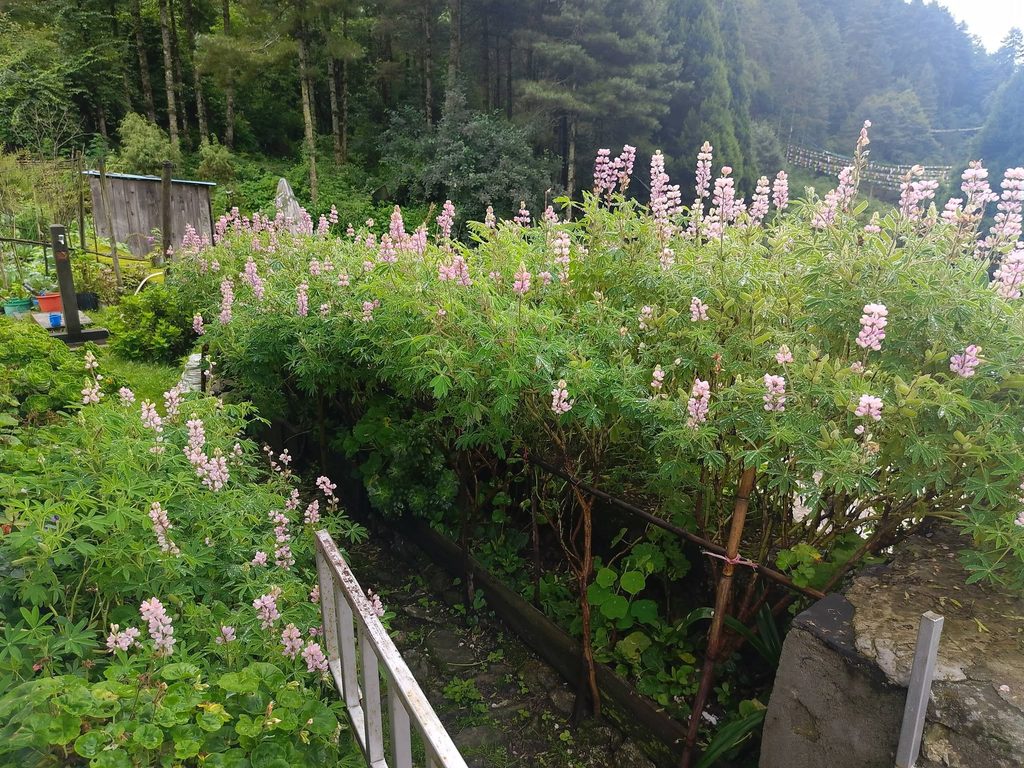
Lupine produces tall spikes of blue, purple, or occasionally pink flowers, often carpeting roadsides and open meadows in dense stands. Silky lupine is one of the most common species statewide.
Like other legumes, lupine roots host nitrogen-fixing bacteria that improve surrounding soil quality. Ironically, the plant itself is toxic to livestock if eaten in quantity.
You will find lupine blooming from June through August across a huge elevation range. It pairs beautifully with paintbrush in mixed mountain meadows.
5. Showy Fleabane (Erigeron speciosus)
Showy fleabane produces daisy-like flowers with narrow lavender-blue petals surrounding a bright yellow center. It grows in clumps in moist meadows and along streambanks.
This flower thrives particularly well in southwestern Montana’s forested valleys. It tends to bloom later in summer than many other native daisies.
Fleabane’s name comes from old folklore claiming dried bunches could repel fleas indoors. Modern science has not confirmed this, but the name stuck regardless.
ALSO READ: 25 Native Montana Trees (With Growing Details)
6. Prairie Smoke (Geum triflorum)
Prairie smoke is a plant of two acts. First come nodding, dusky-pink flowers in late spring, low to the ground on hairy stems.
Then, after pollination, feathery seed plumes emerge that catch the light and drift like smoke across the prairie. This second phase gives the plant its name, and it is arguably more striking than the flower itself.
You will find it across Montana’s grasslands and open slopes, blooming from April through June. It handles drought and grazing pressure remarkably well.
7. Beargrass (Xerophyllum tenax)
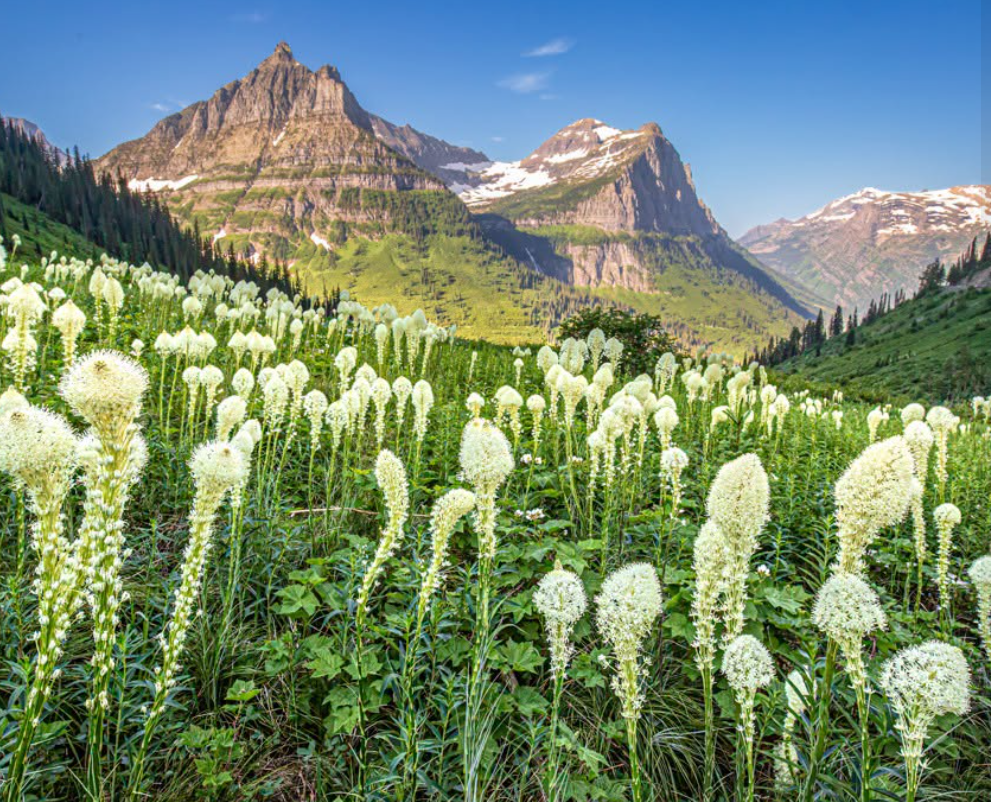
Beargrass produces a tall, dense cluster of small white flowers atop a thick stalk, often reaching three to five feet. It is not a true grass, despite the name and appearance of its leaves.
I have seen beargrass fields near Glacier National Park that looked like fields of white torches from a distance. It typically blooms only every few years per individual plant.
This irregular blooming cycle can create spectacular mass flowering events across entire hillsides. When it happens, it draws hikers from across the region.
8. Mountain Hollyhock (Iliamna rivularis)
Mountain hollyhock produces pink, cup-shaped flowers along a tall stalk, often reaching four to six feet in ideal conditions. It resembles its cultivated hollyhock cousins closely.
This plant favors disturbed soil, often appearing in abundance after wildfires clear competing vegetation. Fire actually benefits this species by opening space and triggering seed germination.
You will find it along streambanks and forest edges in western Montana. Bloom time typically runs from June through August.
9. Alpine Forget-Me-Not (Myosotis alpestris)
Alpine forget-me-not produces small, vivid blue flowers with yellow centers, growing in low mats close to rocky alpine ground. It thrives at high elevations where few other flowers survive.
This is one of the signature flowers of Glacier National Park’s high country. I have found it clinging to scree slopes where almost nothing else had taken root.
Its intense blue color seems disproportionate to its tiny size. Bloom season is brief, usually peaking in July at elevations above 7,000 feet.
ALSO READ: 25 Best Perennial Flowers for Zone 3 (With Details)
10. Sky Pilot (Polemonium viscosum)
Sky pilot grows at extreme elevations, often near mountain summits above 9,000 feet. Its violet-blue flowers cluster tightly together close to the ground.
The plant carries a strong, musky scent that some hikers describe as skunky. That smell is functional, attracting specific high-altitude bumblebees that pollinate it.
Reaching a blooming sky pilot usually means a serious climb. It blooms from July into August, right at the edge of what most plants can tolerate.
11. Glacier Lily (Erythronium grandiflorum)
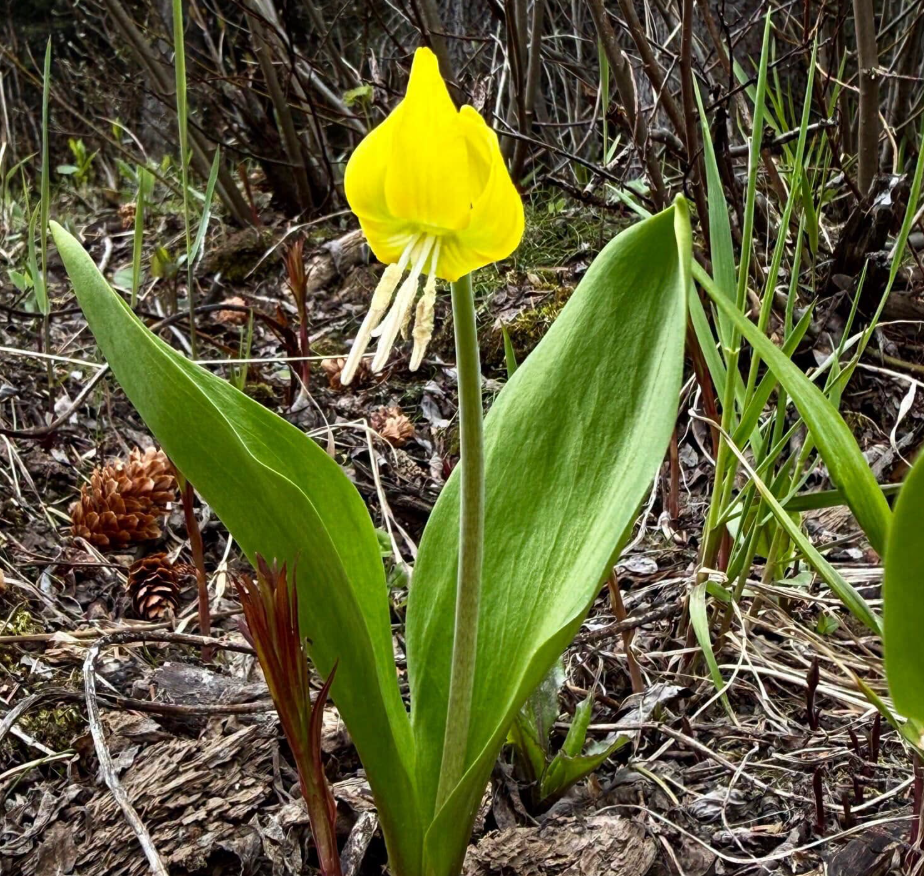
Glacier lily blooms right at the edge of melting snowbanks, sometimes pushing up through the last patches of ice. Its bright yellow flowers curve backward in a distinctive nodding shape.
Grizzly bears actively dig up and eat glacier lily bulbs in spring, making this plant an important early-season food source for wildlife. That relationship fascinates me every time I see one.
You will find dense glacier lily patches across Glacier National Park’s meadows in June. The bloom window is short, tied tightly to snowmelt timing.
12. Shooting Star (Dodecatheon pulchellum)
Shooting star produces backward-swept pink or magenta petals with a pointed yellow beak-like center. The overall shape genuinely resembles a small comet streaking downward.
This plant favors moist meadows and streamside soil across much of Montana. It is one of the earliest wildflowers to appear each spring, often blooming in April and May.
I always find shooting star has largely faded by the time other summer wildflowers reach their peak. Catching it in bloom requires reasonably good timing.
ALSO READ: 35 Cold Hardy Perennial Flowers (With Growing Details)
13. Camas (Camassia quamash)
Camas produces striking blue-purple, star-shaped flowers on tall stalks, often blooming in dense meadow patches. It thrives in moist prairie soil that stays wet into early summer.
Historically, camas bulbs served as a critical food staple for many Native American tribes across the Northwest, including groups in western Montana. Communities gathered and traded the bulbs extensively.
Careful identification matters here, since camas closely resembles the toxic death camas plant when not in bloom. Bloom time runs from May through June.
14. White Mountain Avens (Dryas octopetala)
White mountain avens appeared on a U.S. postage stamp in 1992 as Montana’s featured state wildflower. Its eight-petaled white flowers sit low against mats of small, leathery leaves.
This plant favors alpine and subalpine rocky slopes, often growing in harsh, wind-exposed conditions. It handles cold and poor soil better than most flowering plants.
After blooming, it develops feathery seed heads similar to prairie smoke, adding a second season of visual interest. Look for it in Glacier National Park’s higher elevations.
15. Western Coneflower (Rudbeckia occidentalis)
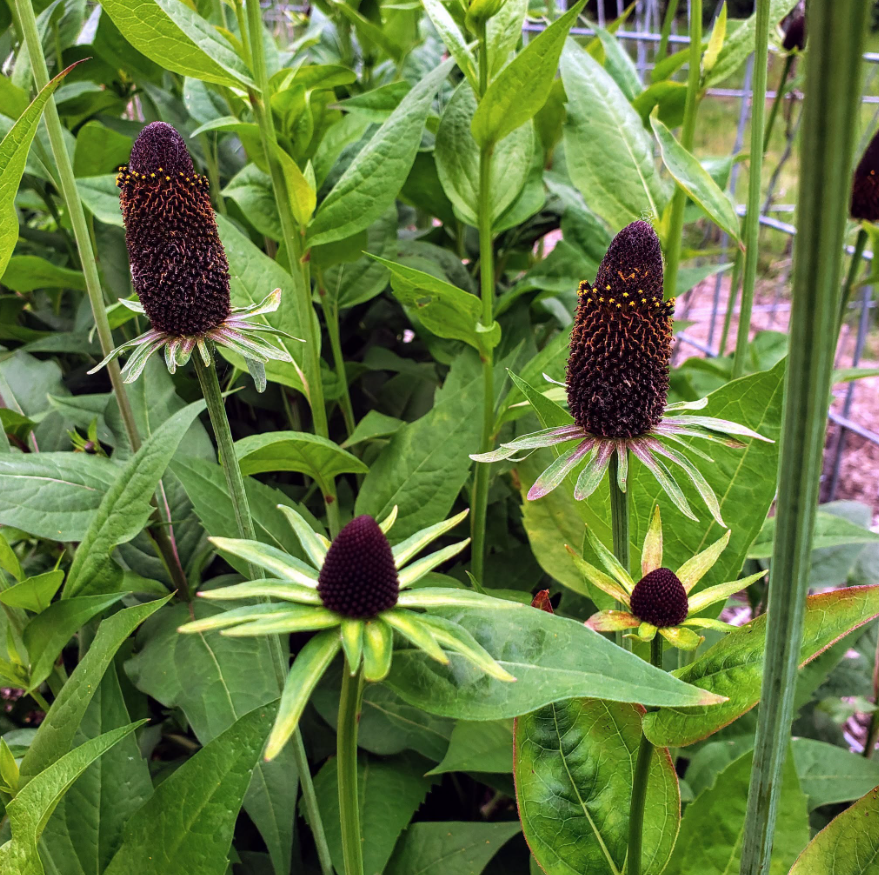
Western coneflower looks unusual compared to most daisy relatives. It produces a tall, dark brown or black cone-shaped center with minimal, often absent, petal rays.
This distinctive appearance makes it easy to identify even from a distance. It grows in moist mountain meadows and along stream corridors across western Montana.
Pollinators still visit readily despite the lack of showy petals, drawn to the dense cluster of tiny flowers packed into the cone. Bloom season runs July through August.
16. Yellow Bell (Fritillaria pudica)
Yellow bell produces small, nodding, bell-shaped yellow flowers that often turn orange-bronze with age. It is one of Montana’s earliest spring wildflowers, sometimes blooming while snow still lingers nearby.
I have found this flower easy to miss simply because it grows low and blooms so early, before most people start looking for wildflowers at all.
Its bulb was historically eaten by several Native American communities in the region. Look for it in grasslands and open forest from March through May.
17. Wood’s Rose (Rosa woodsii)
Wood’s rose is Montana’s most widespread native rose species, producing pink, five-petaled flowers with a strong, sweet fragrance. It grows as a shrub, often reaching three to six feet tall.
This plant thrives across nearly every habitat type in the state, from prairie draws to mountain forest edges. Its rose hips remain on the plant through winter, providing crucial food for birds and small mammals.
Bloom time runs from May through July. I have always appreciated how this shrub softens even the driest, scrubbiest corners of eastern Montana.
18. Blanketflower (Gaillardia aristata)
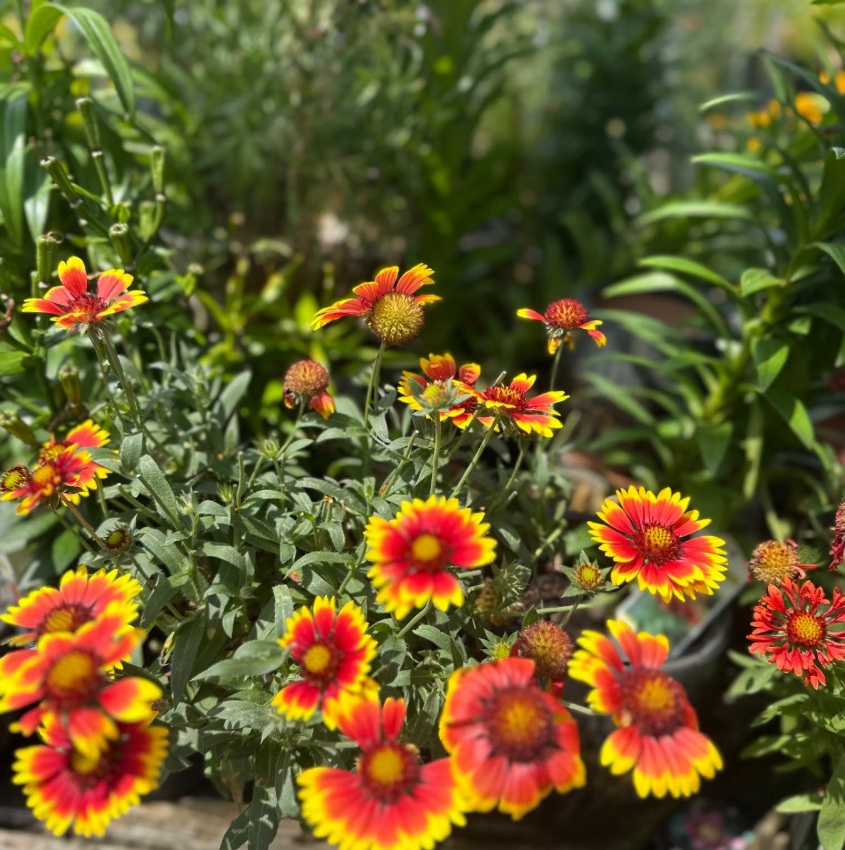
Blanketflower produces bold red-orange centers fading to yellow petal tips, resembling a woven blanket pattern. It tolerates poor soil, drought, and neglect better than almost any cultivated flower.
This species grows across Montana’s grasslands and roadsides, often blooming from June clear through September. That long bloom window makes it a favorite among pollinators late into the season.
Gardeners increasingly choose blanketflower for xeriscaping projects. It requires little maintenance once established in well-drained soil.
19. Silky Phacelia (Phacelia sericea)
Silky phacelia produces dense, cylindrical clusters of deep purple flowers with prominent golden stamens extending outward. The overall effect looks almost bottle-brush shaped.
This plant favors rocky alpine and subalpine slopes, often growing in scree fields where few competitors survive. Fine silvery hairs across the leaves help it retain moisture at high, windy elevations.
Its stamens extend well beyond the petals, an adaptation that makes pollen more accessible to visiting insects. Bloom time runs from June through August.
ALSO READ: 35 Shade Hardy Perennials (With Growing Details)
20. Wild Bergamot (Monarda fistulosa)
Wild bergamot produces shaggy, lavender-pink flower clusters that resemble small fireworks bursts. Crushed leaves release a strong, minty fragrance similar to oregano.
This plant grows across Montana’s prairies and open woodlands, often forming sizable colonies over time. Traditional medicine has used it for generations to treat respiratory ailments.
Bees and butterflies visit wild bergamot heavily throughout its bloom period. Expect flowering from July through September in most parts of the state.
21. Elephanthead Lousewort (Pedicularis groenlandica)
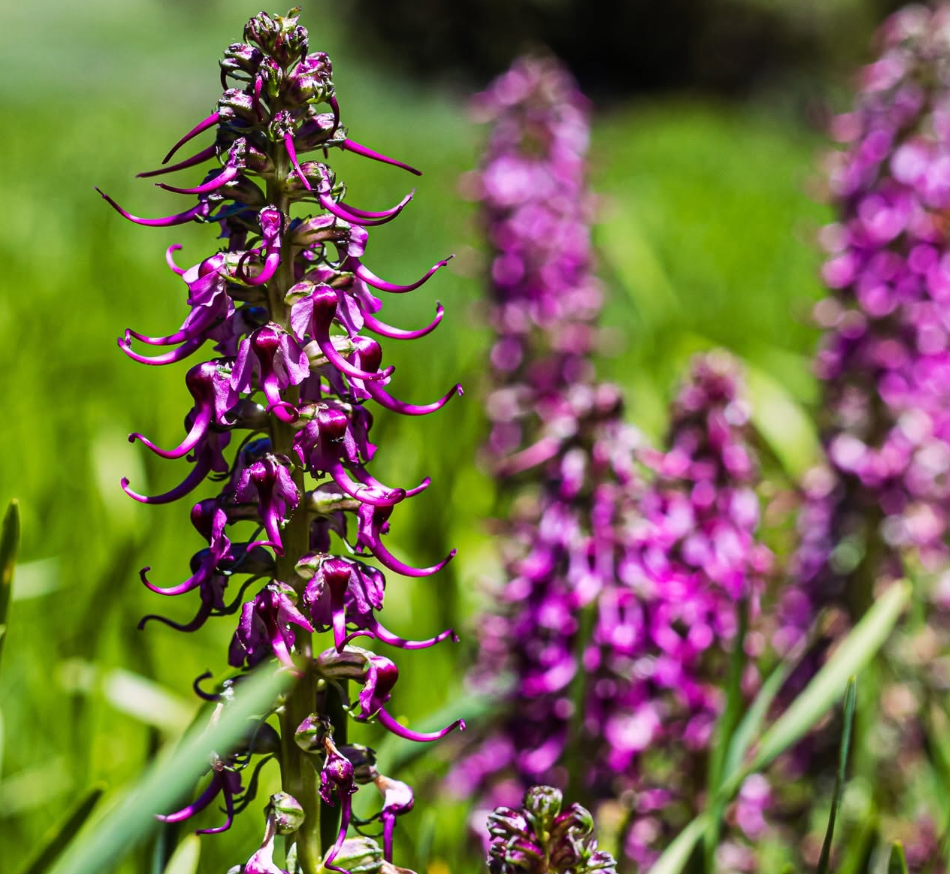
Elephanthead lousewort delights nearly everyone who spots it up close. Each tiny pink-purple flower genuinely resembles a miniature elephant’s head, trunk and all.
This plant favors wet mountain meadows and boggy soil near streams. It grows abundantly in Glacier National Park’s subalpine wetlands during peak summer.
I did not believe the elephant resemblance until I saw one myself on a trail near Logan Pass. Bloom season runs from July through August.
22. Mountain Bluebells (Mertensia ciliata)
Mountain bluebells produce clusters of nodding, bell-shaped blue flowers along arching stems. They favor moist hillsides, streambanks, and areas near lingering snowmelt.
This species carpets large stretches of Montana’s high country during peak bloom. The flowers often start out pink before shifting to their signature blue color as they mature.
You will find the best displays in July, right as high-elevation snow finishes melting across the Rockies. Pollinators, especially bumblebees, favor this plant strongly.
23. Silvery Lupine (Lupinus argenteus)

Silvery lupine is a close relative of the more common silky lupine, distinguished by its silvery-toned foliage. It produces blue-to-purple flower spikes across mountain shrub and aspen communities.
This species grows across an enormous elevation range, from foothills up into subalpine zones. It thrives especially well following disturbances like fire or logging.
Its nitrogen-fixing roots help restore soil fertility in disturbed areas over time. Look for blooms from June through August.
24. Scarlet Gilia (Ipomopsis aggregata)
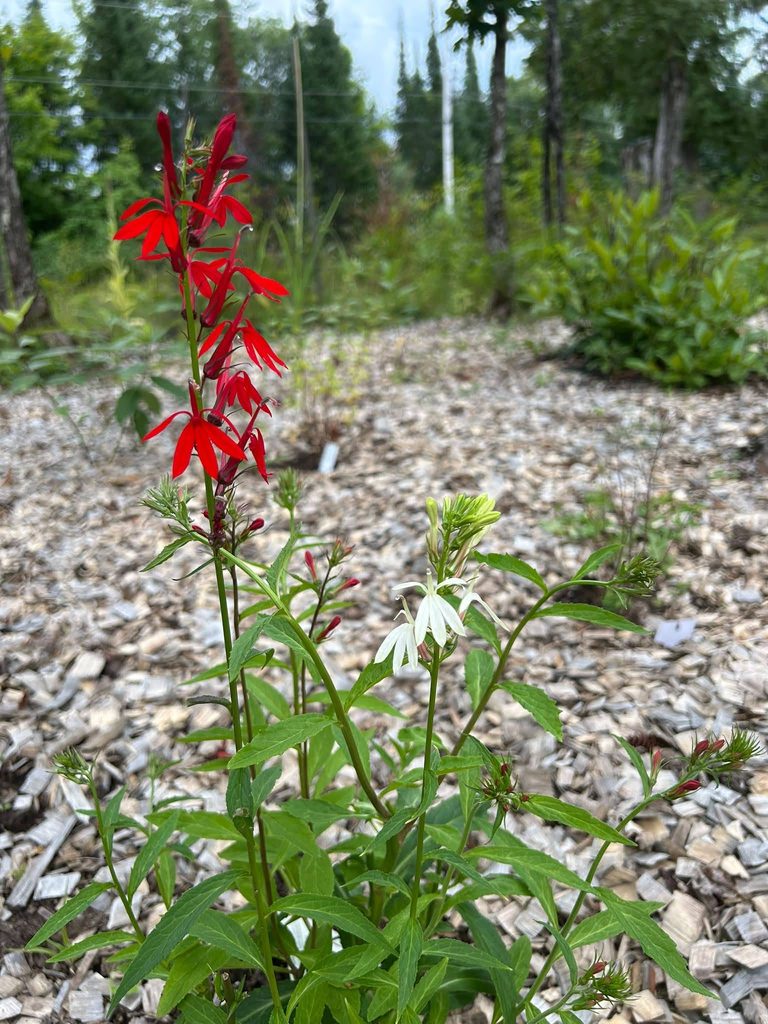
Scarlet gilia produces trumpet-shaped red flowers along a tall, slender stalk, sometimes reaching three feet in height. Hummingbirds are its primary pollinator, drawn by the tubular shape and vivid color.
This plant seems to favor disturbed soil along trailsides and roadcuts throughout western Montana. I have noticed it appearing readily in areas recovering from recent construction or fire.
Some populations shift their flower color from red to pale pink or white later in the season, once hummingbird migration tapers off in favor of moth pollinators.
25. Harebell (Campanula rotundifolia)
Harebell produces delicate, nodding, bell-shaped blue-violet flowers on thin, wiry stems. Despite its fragile appearance, it grows across an enormous range of Montana habitats.
You will find harebell from prairie grasslands up into alpine rock crevices, an adaptability few native flowers match. It tends to bloom later in summer, often persisting into September.
I have always liked how harebell seems to grow from bare rock with almost no visible soil. It is a quiet, understated flower that rewards a closer look.
Why Montana’s Native Flowers Matter
Montana is the fourth-largest state in the country, and its terrain reflects that size. Great Plains grassland, sagebrush steppe, boreal forest, and alpine tundra all exist within its borders.
That range of habitat is why a wildflower walk near Billings looks nothing like one near Glacier National Park. Different plant communities have adapted to wildly different rainfall and temperature patterns.
Native flowers also carry practical value. They typically need less water than imported ornamentals, and many support pollinators that regional wildlife depends on. In a state where average rainfall runs just 10 to 20 inches a year in many areas, that efficiency matters.
Where to See the Best Wildflower Displays in Montana
A handful of locations consistently deliver the best shows. Glacier National Park stands above the rest, hosting glacier lilies, beargrass, and alpine forget-me-nots across its high meadows from late June through early August.
The Bitterroot Valley, especially around gravel bars and open hillsides, offers reliable bitterroot and shooting star displays each May. This is the historic heartland tied directly to the state flower.
For prairie color, southwestern Montana’s grassland hillsides turn gold with arrowleaf balsamroot each spring, typically peaking between late April and early June depending on elevation.
Frequently Asked Questions
What is Montana’s official state flower? The bitterroot (Lewisia rediviva) has held this title since 1895, chosen through a public newspaper vote that drew nearly 5,900 ballots.
How many native plant species does Montana have? Montana’s documented flora includes more than 2,500 vascular plant species, with roughly 2,100 of these considered native to the state.
When is the best time to see Montana wildflowers? Peak bloom generally runs from mid-June through late July, though prairie species bloom earlier in spring and true alpine flowers can persist into September.
Are Montana native flowers suitable for home gardens? Yes. Species like blanketflower, prairie smoke, and wild bergamot need far less water than non-native ornamentals and support local pollinators effectively.
Final Thoughts
Twenty-five flowers only begin to cover what Montana offers. With over 2,100 native species spread across prairie, forest, and alpine zones, there is always something new to find.
What stands out most to me is the resilience. A flower can push through gravel, survive drought, or bloom beside a melting snowbank, and somehow still look this delicate.
Next time you’re on a Montana trail, take a moment to look closer. There is likely a flower nearby with a history far older than the trail itself.

Tim M Dave is a gardening expert with a passion for houseplants, particularly cacti and succulents. With a degree in plant biology from the University of California, Berkeley, he has vast experience in gardening. Over the years, he has cultivated a vast collection of desert plants and learned a great deal about how to grow and care for these unique companions.