15 Trees That Bend (Instead of Breaking)
I once watched a sabal palm outside my window fold nearly sideways during a tropical storm, then spring back upright the next morning as if nothing happened. Meanwhile, a neighbor’s rigid ornamental pear snapped clean in half. That contrast is the whole story behind this list.
Some trees survive high wind by standing firm. Others survive by giving in, just enough. Flexible wood absorbs the kinetic energy of wind, while stiff wood resists it until it snaps, according to storm-resilience research from Mississippi State University Extension.
That single trait, flexibility, separates the trees that shrug off a storm from the ones that end up on your roof. Below are 15 species known for bending under pressure and springing back, along with what makes each one built that way.
What Actually Makes a Tree Bend Without Breaking
Three things matter most: wood elasticity, root structure, and canopy shape. A tree with elastic wood fiber flexes instead of fracturing, while a wide, deep root system keeps it anchored while the trunk sways.
Canopy shape plays a role too. Trees with looser, more open canopies let wind pass through rather than catching it like a sail, reducing the total force on the trunk.
University of Florida IFAS researchers, after studying tree damage from ten separate hurricanes, found that healthy, well-pruned trees with strong root systems consistently outperformed stressed or poorly maintained ones, regardless of species. Genetics matter, but care matters just as much.
1. Sabal Palm (Cabbage Palm)
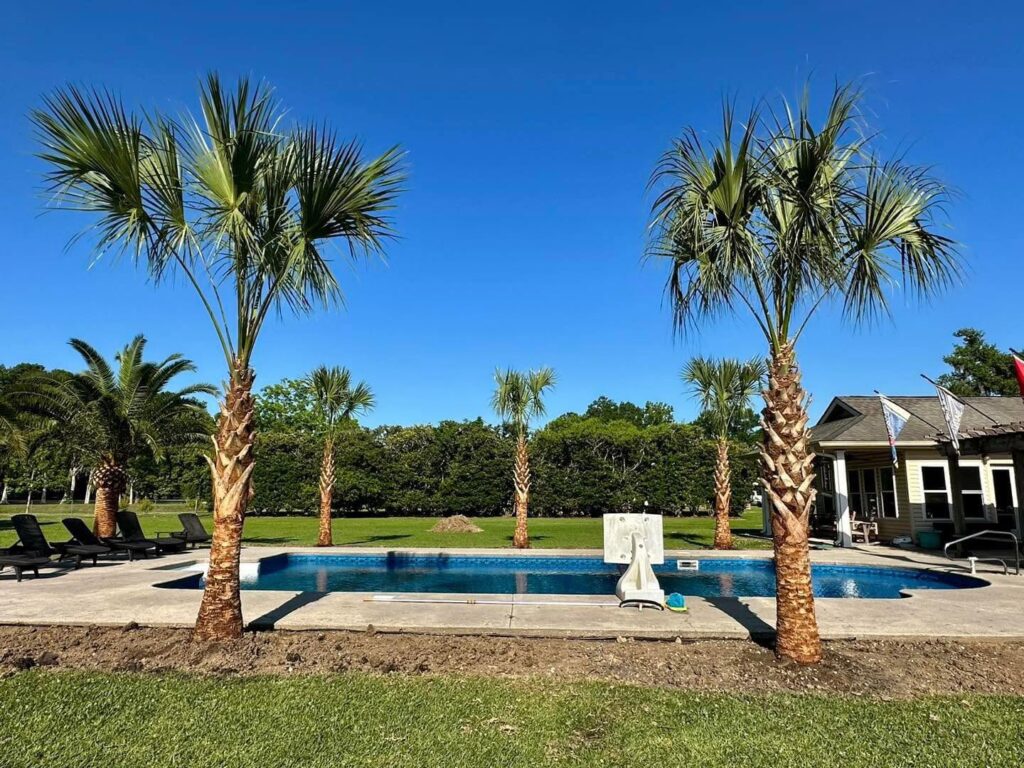
The sabal palm is the poster child for bending under pressure. Unlike true trees, its trunk has no growth rings and no secondary wood tissue, which gives it a spongy, fibrous structure instead of rigid timber.
Research on palm resilience shows that some sabal palms can bend 40 to 50 degrees before their trunks tear, and the species has survived winds estimated near 145 miles per hour. That is deep into Category 4 hurricane territory.
Its fronds add another layer of protection. Gaps between the leaflets let wind pass through rather than catching it, which reduces the strain transferred down to the trunk.
I find it fitting that this is the official state tree of both Florida and South Carolina, two states that know hurricane winds intimately.
2. Canary Island Date Palm
The Canary Island date palm carries a thick, pineapple-patterned trunk that looks solid but behaves more like rubber under load. Its flexible internal structure lets it bend dramatically rather than crack, according to landscaping research on wind-resistant species.
This palm thrives across the Southwest and Gulf Coast, where it is a common choice specifically because storm cleanup costs far less than with brittle ornamental trees.
Its large fronds do fold slightly under wind pressure, which further reduces the surface area catching the gusts. It is not cold-hardy, though, so it stays limited to warm, frost-free regions.
3. Windmill Palm
Windmill palm is one of the most cold-hardy palms available, tolerating temperatures well below what most palms survive. Like other palms, its fibrous, non-woody trunk flexes under wind load instead of resisting it rigidly.
This makes it a popular choice for gardeners in temperate zones who still want the flexibility benefits of palm anatomy without a strictly tropical climate.
Its fan-shaped fronds are smaller and stiffer than a sabal palm’s, but the trunk’s core flexibility does most of the storm-survival work.
4. Southern Live Oak
Live oak breaks the mold slightly. Its wood is dense, not spongy, yet the tree remains one of the most storm-resistant hardwoods in North America. The North Carolina Extension Gardener Plant Toolbox lists it as wind tolerant and storm-damage resistant among coastal species.
Its secret is a combination of traits rather than one single one: dense, elastic wood fiber, a low center of gravity, and a wide, spreading canopy that lets wind flow over and through it.
Mississippi State University Extension research specifically names live oak among the species with high wood elasticity, which helps limbs bend under load rather than shear off.
Live oaks can live for centuries, and many famous specimens across the American South have survived dozens of hurricanes over their lifetimes.
5. Bald Cypress
Bald cypress grows in flooded swamps where wind and water both test a tree’s stability constantly. According to the USDA Forest Service Silvics Manual, this deciduous conifer develops a buttressed, flared trunk base that widens dramatically near the soil line.
That flared base acts almost like a tripod, spreading the tree’s load over a wider footprint and reducing the leverage that wind can exert against it.
Its feathery, needle-like foliage also sheds in fall, meaning the tree faces winter storms with a nearly bare canopy and dramatically less wind resistance.
Bald cypress wood itself has moderate flexibility, and its distinctive knees may further help stabilize it in soft, waterlogged ground.
6. Southern Magnolia
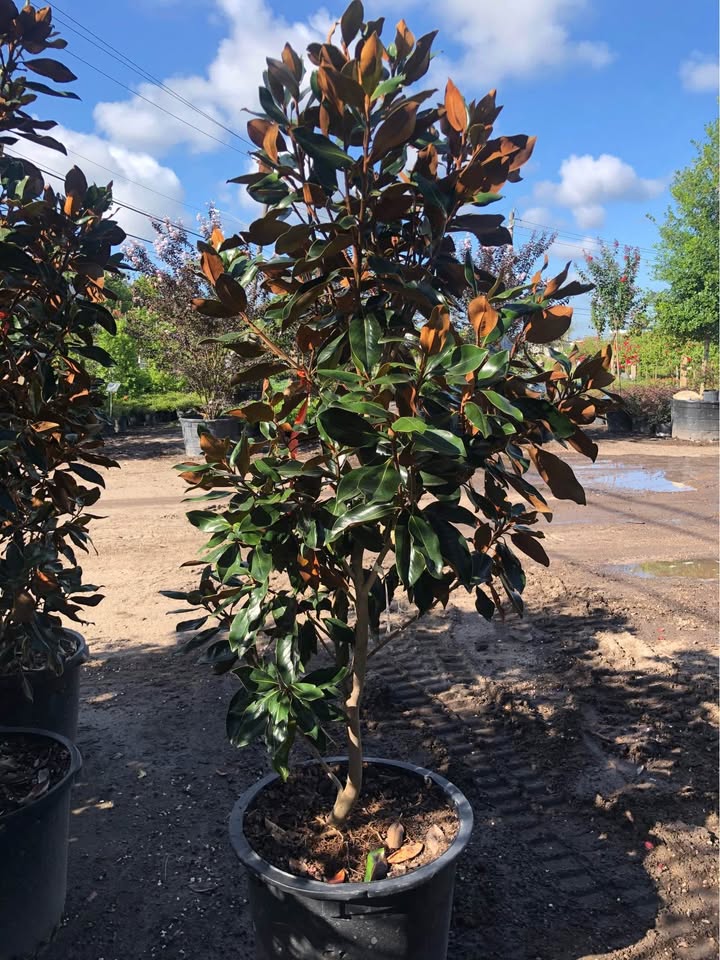
Southern magnolia is often praised for storm resilience despite its large, glossy leaves and dense canopy. Field observations after multiple hurricanes found that magnolias with a single, well-developed central trunk handled wind loads better than multi-trunked specimens.
Its wood has moderate flexibility, and the tree’s naturally pyramidal shape helps distribute wind pressure evenly rather than concentrating it at weak branch unions.
Magnolias do best in storm-prone areas when planted with room for their root system to spread wide, since a cramped root zone undermines the tree’s natural stability advantages.
7. Crape Myrtle
Crape myrtle is a favorite in hurricane-prone landscaping partly because of its small size and flexible, multi-stemmed structure. According to Mississippi State University Extension, it is specifically recommended for storm-resistant Southern landscapes.
Its slender trunks bend readily in wind rather than resisting rigidly, and because the tree rarely grows tall enough to threaten rooftops, storm damage tends to be minor even in severe weather.
Clemson Cooperative Extension notes that crape myrtles benefit from avoiding severe pruning, since a natural branching structure supports better wind flow through the canopy than a heavily topped one.
8. River Birch
River birch is known for fast growth and flexible, willowy branches that sway dramatically in wind without snapping. Its peeling, papery bark hints at the loosely layered wood structure underneath, which contributes to overall flexibility.
The tree naturally grows along riverbanks and floodplains, environments that regularly expose it to both flooding and wind, so its flexibility likely evolved alongside those pressures.
River birch does best with regular watering, since drought stress can make its wood more brittle and less able to flex safely under storm-force gusts.
9. Weeping Willow
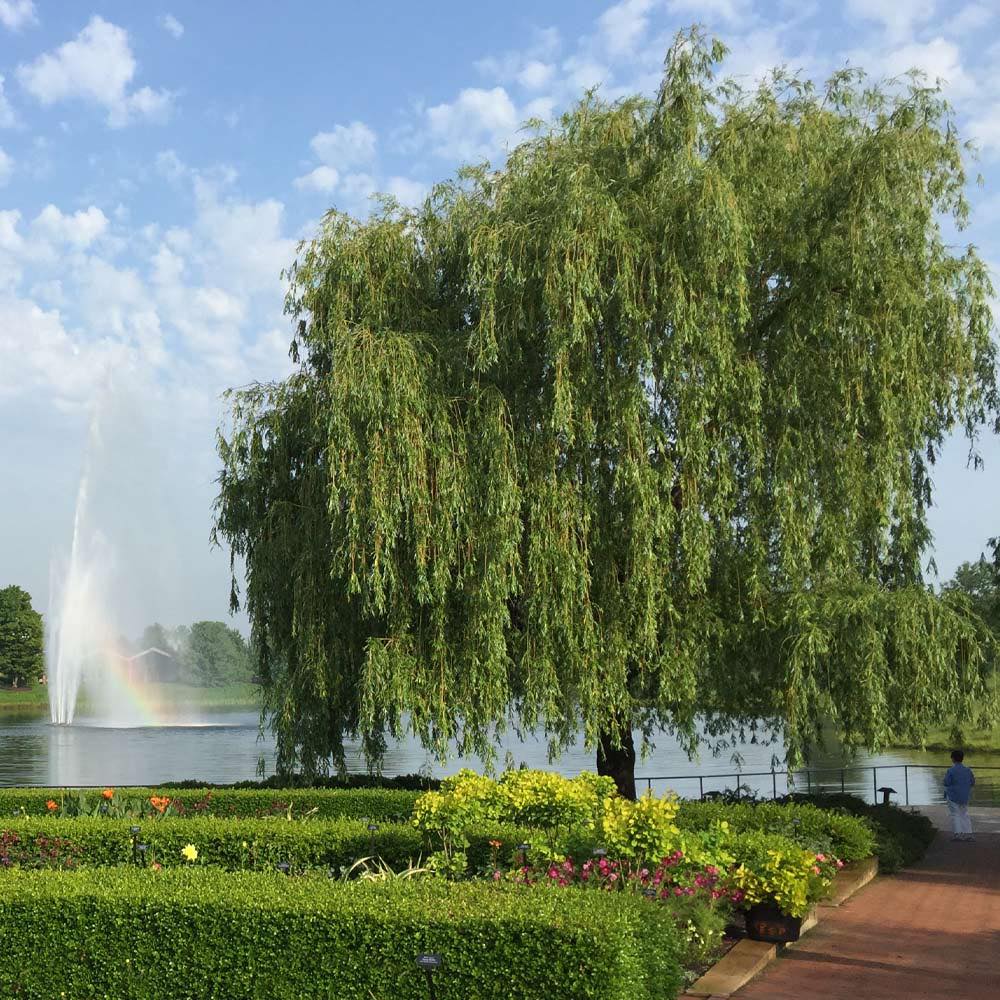
Weeping willow is perhaps the most visually obvious “bending” tree on this list, with long, drooping branches that sway and ripple in even a light breeze. That constant motion is not a weakness; it is the tree dispersing wind energy across dozens of thin, flexible branches instead of one rigid trunk.
Willow wood has long been prized for basketry and bentwood crafts specifically because of how readily it flexes without cracking, a property that carries directly into the living tree’s storm behavior.
Weeping willows do best near consistent moisture, since their fast growth and soft wood benefit from steady water availability rather than drought stress.
10. Norway Spruce
Norway spruce might seem like an unlikely candidate among mostly Southern, wind-tested species, but it earns its place through genuinely elastic branch structure. Its downward-drooping branches flex readily under snow and wind load, shedding weight rather than holding it rigidly.
This conifer is widely used as a windbreak tree in colder climates, planted in rows to buffer buildings and crops from prevailing winds.
Its dense, evergreen structure does mean it catches more wind than a bare deciduous tree in winter, so spacing and root establishment matter more here than with some other species on this list.
11. Chinese Juniper
Chinese juniper forms a dense, conical shape with flexible, scale-like foliage that bends under wind pressure without offering much rigid resistance. Because it keeps its foliage year-round, it works well as a living windbreak or privacy screen.
Some cultivars grow as low shrubs while others reach 60 feet as full trees, giving landscapers flexibility in how they use the species for wind protection.
Its dense branching does mean regular pruning helps maintain airflow through the canopy, which further reduces the total wind load the plant has to absorb.
12. Yaupon Holly
Yaupon holly is a compact, evergreen native to the Southeastern coastal plain, well known for tolerating salt spray, wind, and poor soil simultaneously. Its small leaves and dense, twiggy branching let wind slip through the canopy rather than catching against it.
This tree rarely grows tall enough to pose a serious storm hazard, which is part of why it appears so often in hurricane-prone coastal landscaping plans.
Yaupon holly also tolerates heavy pruning well, making it easy to maintain an open, wind-permeable shape over time.
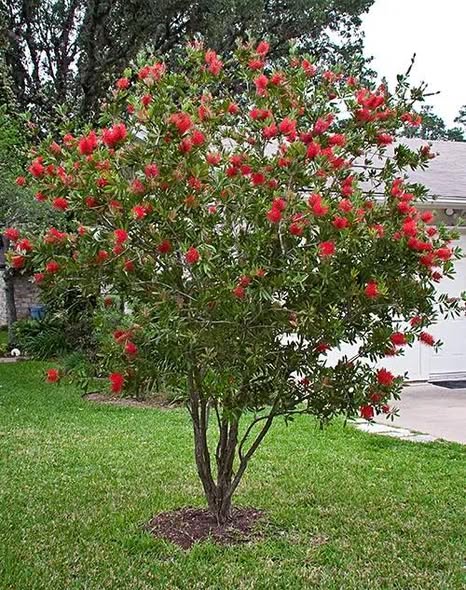
13. Bottlebrush (Callistemon)
Bottlebrush trees carry slender, weeping branches lined with narrow, needle-like leaves, a structure that behaves similarly to willow in strong wind. The branches flex and sway rather than holding a rigid position, reducing strain at the trunk.
Its relatively small mature size, typically under 25 feet, also limits the total leverage wind can exert on the tree compared to larger canopy species.
Bottlebrush is popular in warm coastal climates partly because of this wind tolerance and partly because its bright red flowers attract pollinators throughout the growing season.
14. Ginkgo Biloba
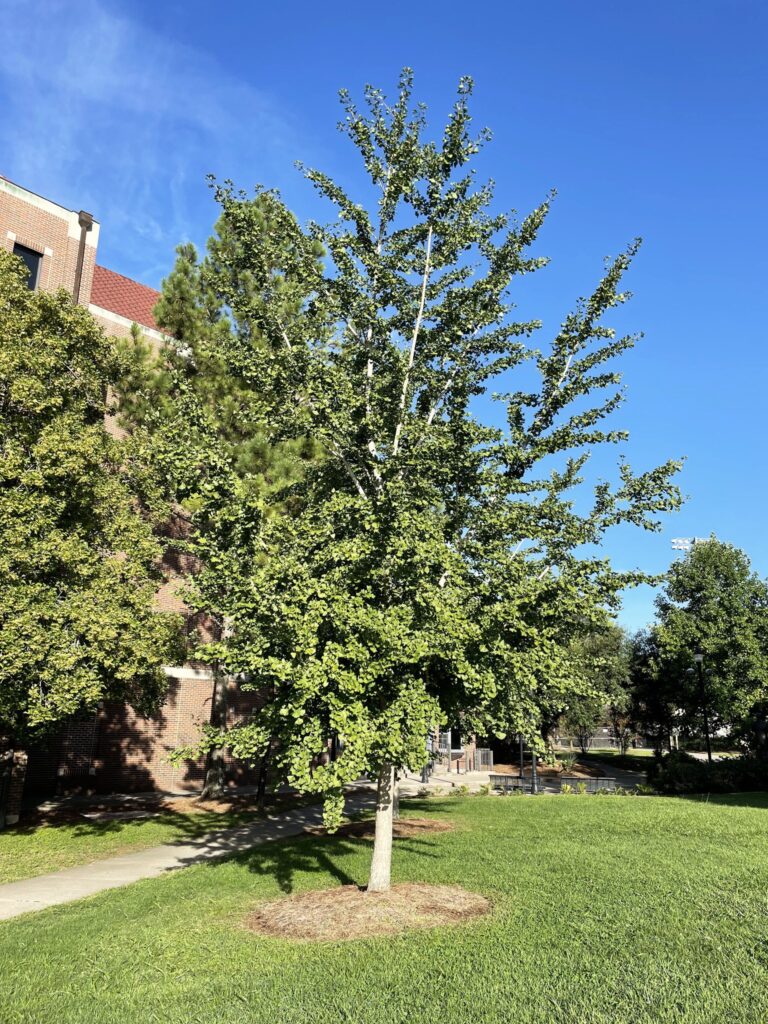
Ginkgo is an ancient species, essentially unchanged for over 200 million years according to paleobotanical research, and it has proven remarkably resilient to modern urban stresses including wind. Its fan-shaped leaves and open branching structure allow airflow through the canopy rather than trapping it.
Storm-resistant tree research from landscaping and urban forestry sources lists ginkgo among species suited for high-wind commercial plantings, particularly because of its deep root system.
Ginkgo grows slowly but lives extraordinarily long, with some specimens in China documented at well over 1,000 years old, a testament to sustained storm survival over centuries.
15. Black Gum (Black Tupelo)
Black gum, also called black tupelo, grows naturally in wetland and floodplain forests where wind and flooding both test tree stability regularly. Clemson Cooperative Extension’s black gum factsheet notes its strong branch structure and adaptability to a range of soil moisture conditions.
Its wood has moderate flexibility, and the tree’s naturally pyramidal young form gradually opens into a rounder, wind-permeable canopy as it matures.
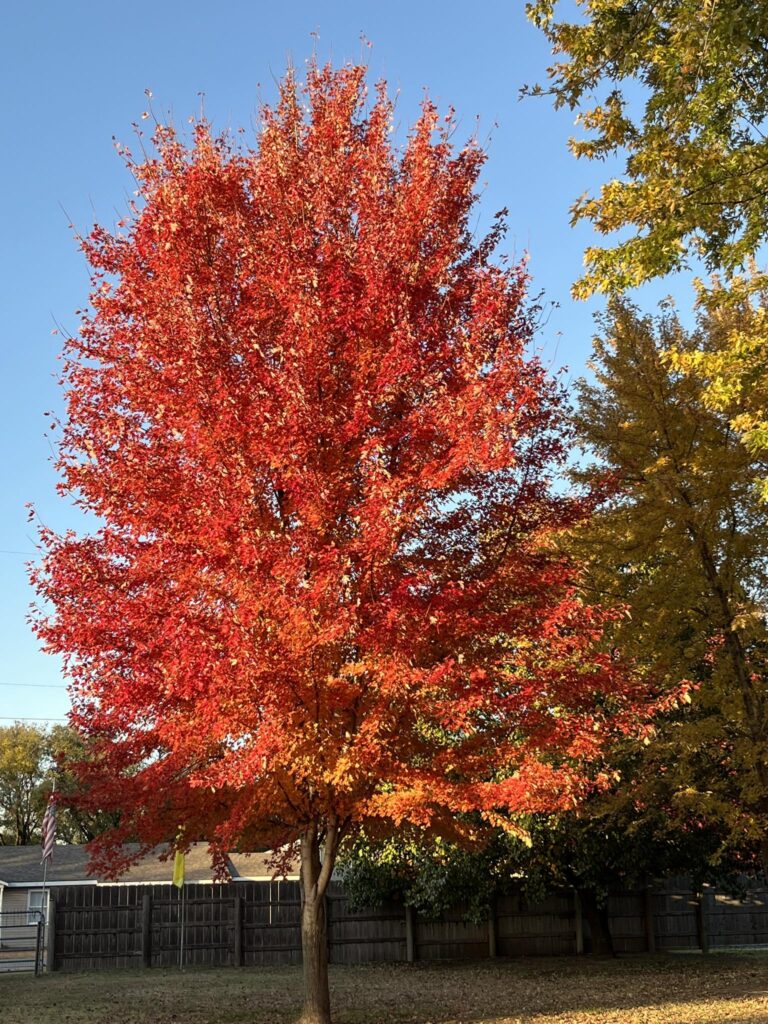
Black gum is also prized for brilliant, early red fall color, giving it ornamental value alongside its practical storm resilience.
Why This Matters More Than Ever
Storm intensity has been trending upward in many coastal regions, and landscaping decisions made today often outlive the person who made them. A tree planted this year could face a dozen or more major wind events across its lifetime.
Choosing flexible, well-adapted species upfront saves money too. Post-storm cleanup, emergency tree removal, and property damage from falling limbs consistently rank among the costliest line items after major wind events, according to municipal storm-recovery reports.
I think of it less as a landscaping choice and more as a long-term insurance policy, one written in root depth and wood elasticity rather than paperwork.
Native Versus Non-Native: Does It Matter for Wind Resistance?
Research from the University of Florida hurricane studies found that native species generally outperform non-native ones in wind survival, likely because they evolved alongside the region’s storm patterns over thousands of years.
That does not mean non-native trees are automatically unsafe. Species like the Canary Island date palm and Chinese juniper, both non-native to North America, still perform well specifically because their home climates involve comparable wind stress.
The safest approach combines both principles: favor natives where possible, and when choosing a non-native species, check whether its origin climate involved similar wind exposure to your own.
Root Systems: The Hidden Half of Wind Resistance
A tree’s canopy gets most of the visual attention, but roots do most of the actual work during a storm. Wide, spreading lateral roots anchor a tree far more effectively than a single deep taproot alone, since lateral roots interlock with surrounding soil and even neighboring trees.
Compacted urban soil, common near sidewalks, driveways, and parking lots, restricts root spread and is one of the most consistent predictors of storm failure in city trees, according to arborist field studies following major hurricanes.
This is part of why mature trees in natural, undisturbed soil so often outperform young or urban-planted trees of the same species during identical storm events. Root space, not just species choice, determines outcomes.
Trees to Avoid in High-Wind Landscapes
Not every tree deserves a spot in a storm-prone yard. Species with brittle wood, shallow roots, or weak branch unions consistently perform poorly in hurricane damage surveys, regardless of how attractive they look.
Water oak is a documented example. NC State Extension notes that its limbs are notoriously weak and prone to breakage in high wind, ice, or heavy snow, making red oak or swamp white oak better alternatives in storm-exposed sites.
Fast-growing, softwood species like Bradford pear and silver maple also show up repeatedly in post-storm damage reports, largely because rapid growth often comes at the cost of dense, wind-resistant wood fiber.
Planting Tips for Wind-Resilient Landscapes
Species selection is only half the equation. Deep, consistent watering during a tree’s first two years encourages roots to grow downward rather than staying shallow, which directly affects storm stability years later.
Grouping trees, rather than planting single specimens in isolation, also improves survival odds. University of Florida IFAS research found that trees in groups divert and buffer wind for each other, reducing the load any single tree absorbs.
Avoid over-staking young trees, since light staking helps roots anchor naturally while heavy staking can actually weaken trunk development over time.
Quick Answers to Common Questions
Are palm trees actually stronger than hardwood trees in hurricanes? Not stronger in the traditional sense, but more flexible. Their non-woody, fibrous trunk structure allows extreme bending that would snap most hardwood species, which is why survival rates for native palms often exceed those of many hardwoods in hurricane surveys.
Can pruning make a tree more wind-resistant? Yes. Removing weak, crossing, or co-dominant branches early in a tree’s life encourages a stronger structure, and thinning a dense canopy allows wind to pass through rather than push against it.
Do flexible trees still get damaged in severe storms? Often, yes, just less catastrophically. Flexible species are more likely to lose leaves, fronds, or small branches while the main trunk and root system survive, compared to rigid species that tend to fail completely.
Seasonal Timing and Wind Vulnerability
A tree’s wind resistance is not fixed year-round. Deciduous species like river birch and bald cypress face far less risk in winter, once their leaves have dropped and canopy resistance drops dramatically.
Evergreen species, including Southern magnolia and Chinese juniper, carry that same wind resistance through every season, which is one reason thinning and pruning matter more for evergreens in storm-prone climates.
Newly planted trees of any species are also disproportionately vulnerable during their first two hurricane seasons, before root systems have had time to establish a wide, anchoring spread. Timing new plantings for the calmer months, when possible, gives roots a head start before storm season arrives.
A Quick Word on Bonsai and Trained Bending
Not every tree on this list bends purely for survival. Species like weeping willow, ginkgo, and juniper are also favorites in ornamental training, where growers deliberately encourage trunk and branch curves through wiring, staking, or espalier techniques.
This trained flexibility is a different skill from storm resistance, but it draws on the same underlying wood property: young growth in these species remains pliable long enough to be gently reshaped without cracking, unlike naturally stiff-wooded trees such as oak saplings.
If you are drawn to a tree partly for its bending habit, whether for storm resilience or for shaping into a living sculpture, these flexible-wood species tend to reward that interest either way.
Final Thoughts
The best storm-survival strategy in nature is rarely brute strength. It is give, recovery, and repeat, season after season, storm after storm.
Whether it is a sabal palm bending to the ground and springing back, or a live oak’s dense wood flexing just enough to hold its massive limbs together, these 15 species prove that resilience often looks like bending, not standing rigid against the wind.
References
- University of Florida, Institute of Food and Agricultural Sciences (UF/IFAS) — Wind and Trees: Lessons Learned from Hurricanes: https://edis.ifas.ufl.edu/fr173
- University of Florida, IFAS — Trees and Hurricanes: Wind & Trees: https://hort.ifas.ufl.edu/treesandhurricanes/wind_and_trees.shtml
- Mississippi State University Extension Service — Storm-Resistant Trees for Mississippi Landscapes: https://extension.msstate.edu/publications/storm-resistant-trees-for-mississippi-landscapes
- North Carolina State University Extension Gardener Plant Toolbox — Quercus virginiana (Live Oak): https://plants.ces.ncsu.edu/plants/quercus-virginiana/
- United States Department of Agriculture, Natural Resources Conservation Service — Live Oak Plant Guide: https://plants.sc.egov.usda.gov/DocumentLibrary/plantguide/pdf/pg_quvi.pdf
- United States Department of Agriculture, Forest Service — Baldcypress, Silvics of North America: https://research.fs.usda.gov/silvics/baldcypress
- Clemson Cooperative Extension, Home & Garden Information Center — Crape Myrtle: https://hgic.clemson.edu/factsheet/crape-myrtle/

Tim M Dave is a gardening expert with a passion for houseplants, particularly cacti and succulents. With a degree in plant biology from the University of California, Berkeley, he has vast experience in gardening. Over the years, he has cultivated a vast collection of desert plants and learned a great deal about how to grow and care for these unique companions.