25 Trees and Shrubs That Bloom in Winter (With Pictures)
I once walked past a bare, seemingly lifeless garden in January and caught a sudden, unexpected wave of fragrance. It turned out to be a single witch hazel, quietly blooming while everything around it looked completely dormant.
That moment stuck with me. Winter gardens are not actually empty. They simply reward the people willing to plant for the season rather than against it. A well-chosen tree or shrub can turn the bleakest months into some of the most rewarding ones.
According to the USDA Agricultural Research Service, North America spans 13 distinct plant hardiness zones, each defined by roughly 10 degrees Fahrenheit of average winter minimum temperature. That range explains why some winter bloomers thrive in the Pacific Northwest while others need the milder conditions of the Southeast.
Below, I have gathered 25 trees and shrubs that reliably flower during the coldest stretch of the calendar. Each one earns its place through genuine cold tolerance, not just a brief, fragile bloom before the first hard frost.
The Complete List: 25 Winter-Blooming Trees and Shrubs
1. Witch Hazel
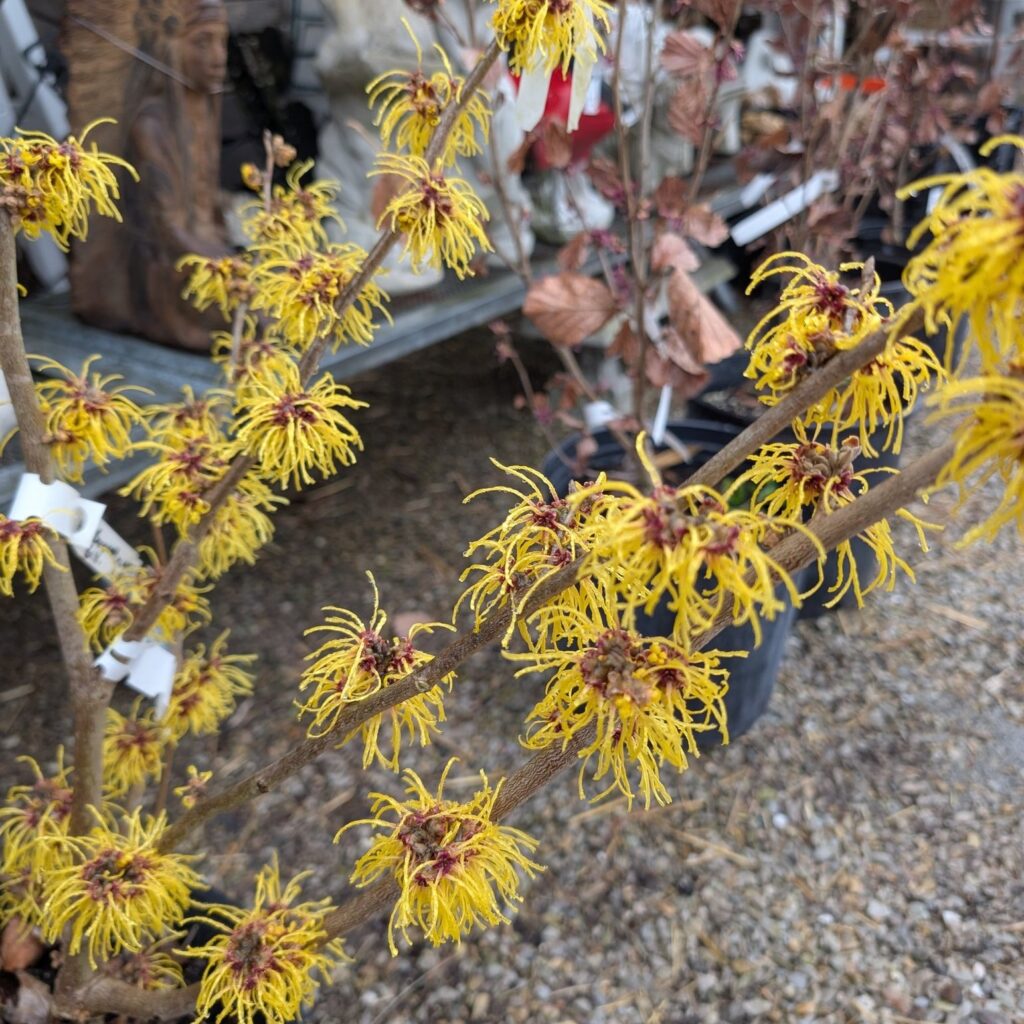
Witch hazel produces spidery, ribbon-like flowers in yellow, orange, or red, unfurling directly along bare branches during the coldest weeks of the year when almost nothing else is blooming.
Different species stagger their timing nicely. Hamamelis virginiana blooms in late fall to early winter, while H. vernalis and H. x intermedia hybrids typically flower in January and February.
Hardy across USDA zones 3 through 9, witch hazel tolerates both full and partial sun. Its rich, spicy fragrance carries remarkably far on cold, still winter air, which makes placement near a path especially rewarding.
2. Camellia japonica
Camellia japonica brings glossy, evergreen foliage and rose-like blooms in white, pink, and deep red to southern gardens, often described as the true showstopper of the winter landscape.
Depending on the specific cultivar chosen, bloom times can stretch from early winter well into early spring, giving gardeners weeks of continuous, dependable color from a single established shrub.
This camellia performs best in USDA zones 7 through 9, preferring morning sun and afternoon shade. Mature specimens can reach 7 to 12 feet, making an excellent flowering hedge or privacy screen.
3. Camellia sasanqua
Camellia sasanqua blooms earlier than its more famous cousin, often beginning as early as September and continuing steadily into December depending on climate and specific cultivar selection.
Its flowers tend to be smaller and slightly more delicate in appearance, though no less colorful, ranging from pure white through soft pink to a rich, deep rose red across countless cultivars.
Gardeners across the American South often refer to camellias collectively as “the winter rose,” a nickname that reflects just how much color they contribute when true roses have long since finished.

4. Wintersweet
Wintersweet produces small, waxy, pale yellow flowers with a deep purple center, opening directly on bare branches, sometimes as early as December in the mildest winter climates.
Its fragrance is genuinely exceptional. Many experienced gardeners rank wintersweet among the most powerfully scented winter shrubs available, capable of perfuming an entire garden corner from one mature plant.
This deciduous shrub prefers full sun to partial shade and well-drained soil, generally thriving in USDA zones 7 through 9, where winter temperatures stay moderate enough to protect the delicate blooms.
5. Winter Daphne
Winter daphne is a slow-growing, evergreen shrub prized above nearly everything else for its intensely fragrant flowers, which appear in small, clustered spheres of white to pale pink during the coldest weeks.
According to University of Georgia Extension horticulturists, this compact shrub typically reaches just three to four feet in height, making it manageable even for gardeners working with limited space.
Its powerful scent has made winter daphne a favorite for planting near entryways and windows, where fragrance can be enjoyed on cold mornings without needing to venture far into the yard.
6. Paperbush
Paperbush produces silvery-white flower buds that form in late summer and burst into fragrant, tubular, orange-yellow blooms between February and April, depending on regional climate conditions.
According to Clemson Cooperative Extension horticulturists, this deciduous shrub prefers shade to part shade in humus-rich, moist but well-drained soil, reaching four to six feet in both height and width.
Its clustered, highly fragrant flowers attract many of the earliest pollinating insects of the season, making paperbush a genuinely valuable addition for gardeners hoping to support pollinators through winter.
7. Winter Jasmine
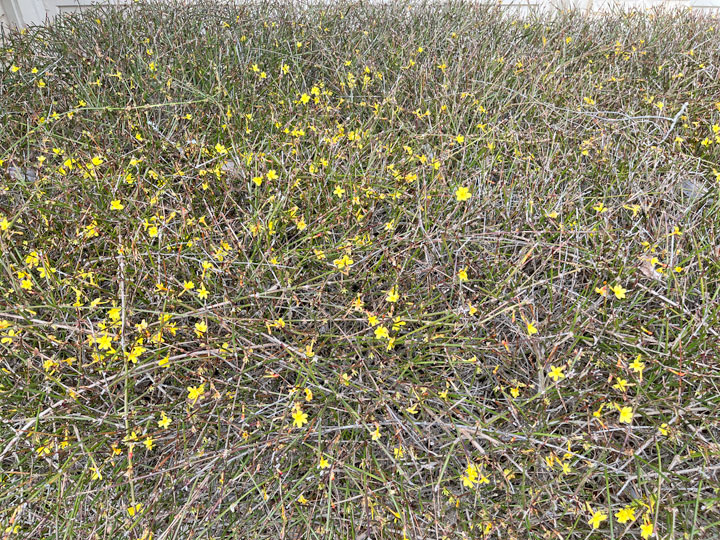
Winter jasmine produces an abundance of cheerful, star-shaped yellow flowers along arching, trailing stems, frequently blooming before the plant’s own leaves have fully emerged for the season.
Unlike many fragrant summer-blooming jasmine relatives, this particular species carries little to no scent. What it lacks in fragrance, it more than compensates for in sheer volume of color.
This deciduous shrub is hardy in USDA zones 6 through 10 and can be trained to climb walls or trail attractively across banks, containers, and low garden walls throughout the winter months.
8. Mahonia
Mahonia produces striking, upright clusters of bright yellow flowers held above spiny, holly-like evergreen foliage, generally blooming from late autumn through winter depending on species and climate.
According to Washington State University Extension horticulturists, popular hybrid varieties like Mahonia x media ‘Charity’ can reach 10 feet or more, with flowers that attract overwintering hummingbirds regularly.
Waxy black berries follow the blooms and are favored by robins and other birds later in the season, extending mahonia’s ecological value well beyond its initial winter flowering display alone.
9. Bodnant Viburnum
Bodnant viburnum, known botanically as Viburnum x bodnantense, produces clusters of small, intensely fragrant pink flowers directly on bare stems, often blooming throughout the entire winter season.
This particular hybrid was created around 1935 by the head gardener at Bodnant Garden in Wales, crossing two other viburnum species to produce one of the most fragrant winter shrubs available today.
Hardy in USDA zones 5 through 8, Bodnant viburnum grows in a rather open, coarse habit reaching 10 feet or more. Its ‘Dawn’ cultivar remains the most widely available and popular selection.
10. Koreanspice Viburnum
Koreanspice viburnum produces small, snowball-shaped clusters of pink buds that mature into white blossoms carrying an unmistakable, sweet vanilla-spice fragrance beloved by generations of gardeners.
Its foliage adds a second season of interest, turning a rich burgundy-red each autumn before the plant settles into dormancy ahead of its late-winter to early-spring flowering display.
This viburnum is low-maintenance and tolerant of average soil conditions, often performing reliably even in less-than-ideal growing sites where more particular shrubs might genuinely struggle to establish.
11. Star Magnolia
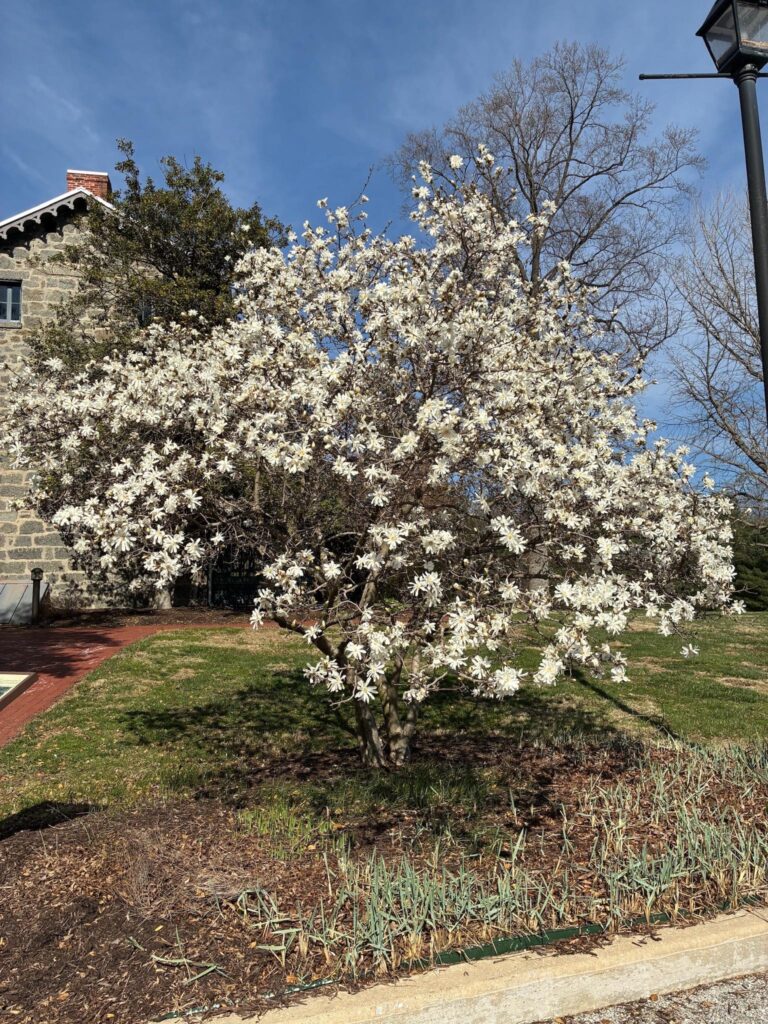
Star magnolia ranks among the earliest flowering trees of the entire year, producing strappy, white, starburst-shaped petals that open on silvery bare branches before any foliage appears.
Each individual flower can carry between 25 and 35 narrow petals, and a mature, well-established tree can produce literally hundreds of blooms across a single, spectacular flowering display.
According to the Old Farmer’s Almanac and multiple university extension sources, star magnolia is hardy in USDA zones 4 through 9, making it one of the more cold-tolerant magnolia species available.
12. Flowering Apricot
Flowering apricot, also known botanically as Prunus mume or Japanese apricot, produces vibrant blossoms ranging from white to deep pink during the late winter to early spring transition period.
Beyond its ornamental value, this small tree offers genuinely fragrant flowers and, later in the season, edible fruit traditionally used across various Asian cuisines and herbal medicine practices.
Flowering apricot attracts some of the very first pollinators active each year, making it a valuable early-season resource for bees and other beneficial insects emerging from winter dormancy.
13. Winter-Flowering Cherry
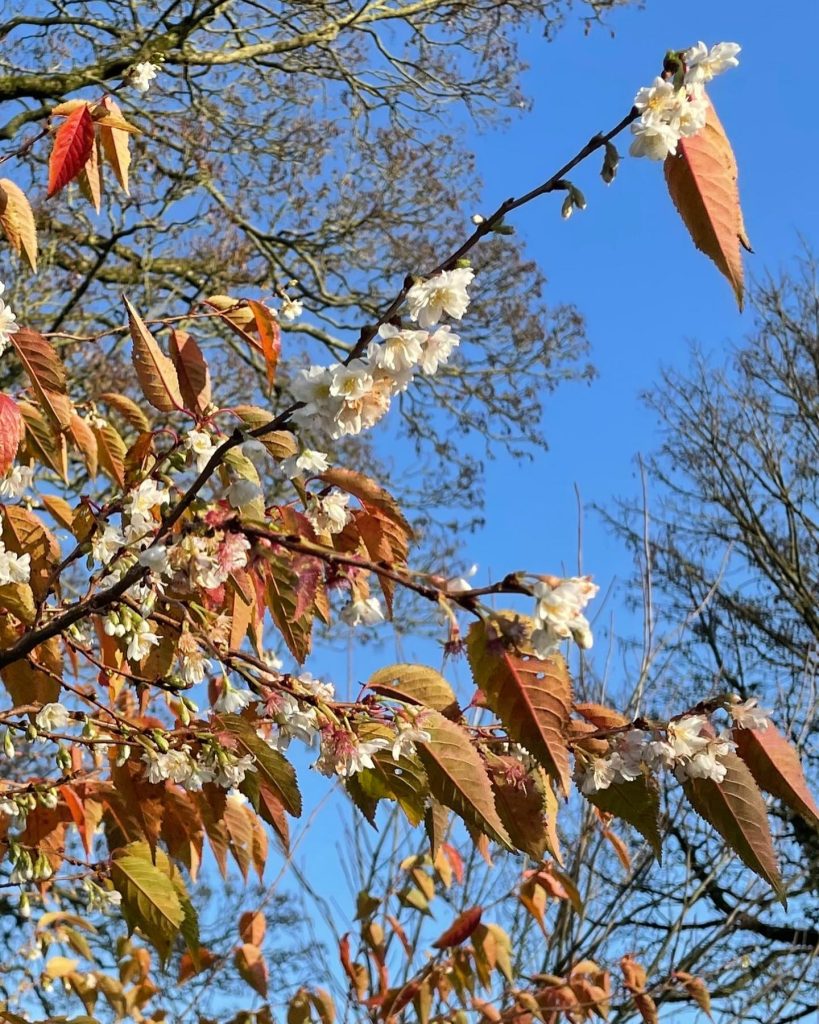
Winter-flowering cherry, or Prunus subhirtella, produces delicate pale pink blossoms sporadically throughout mild winter spells, sometimes flowering intermittently from November all the way through March.
This hardy ornamental cherry tree tends to bloom in flushes, responding to brief warm spells with a fresh round of flowers before pausing again once temperatures drop back down.
Its graceful, spreading branches make winter-flowering cherry a popular specimen tree for smaller gardens, offering a genuinely unexpected splash of soft color during otherwise gray winter months.
14. Cornelian Cherry Dogwood
Cornelian cherry dogwood produces small, bright yellow flower clusters along its bare branches in late winter, appearing well before the familiar white and pink dogwood blooms of true spring.
This small, multi-stemmed tree offers understated but genuinely welcome color at a point in the season when most other flowering trees remain firmly and visibly dormant.
Later in the year, the tree produces edible, cherry-like red fruit, extending its ornamental interest considerably beyond its comparatively brief but cheerful winter flowering period alone.
15. Flowering Quince
Flowering quince, a deciduous shrub in the rose family, ranks among the very first shrubs to bloom in late winter to early spring, according to North Carolina State Extension horticulturists.
Its showy flowers appear in shades of pink, red, and white, typically opening directly on bare, occasionally thorny branches before the plant’s own foliage has fully emerged for the season.
Since blooming occurs on old growth, pruning should be done sparingly and only immediately after flowering finishes. Established plants tolerate drought well and perform best in full sun to partial shade.
16. Sweet Box
Sweet box is a low-growing, evergreen shrub prized for its small, easily overlooked white flowers, which pack an outsized, intensely sweet fragrance capable of perfuming an entire garden path.
Because the individual flowers are quite small, many gardeners first notice sweet box by scent alone, often before spotting the actual blooms tucked discreetly beneath its glossy evergreen leaves.
This shrub thrives in shade, making it a genuinely valuable choice for winter interest in spots too dark for most other flowering plants, particularly beneath large evergreen trees or north-facing walls.
17. Winter Honeysuckle
Winter honeysuckle produces small, creamy white flowers with an intensely sweet fragrance, blooming on bare branches during the coldest stretches of winter well before its leaves fully emerge.
Its scent is frequently compared to jasmine or citrus blossom, and a single well-placed shrub can noticeably perfume an entire garden corner on still, cold winter days when fragrance travels particularly far.
This deciduous shrub tolerates a wide range of soil conditions and performs best in full sun to partial shade, generally thriving across a broad span of temperate USDA hardiness zones.
18. Coast Silk Tassel
Coast silk tassel produces long, dangling, silvery-gray catkins during the winter months, creating a genuinely unusual textural effect that stands apart from more conventional winter flowering shrubs.
According to Washington State University Extension horticulturists, this evergreen shrub performs particularly well in maritime climates, thriving in the cool, temperate conditions found throughout the Pacific Northwest region.
Its unusual, tassel-like blooms make coast silk tassel a favorite among gardeners specifically seeking unconventional winter texture rather than traditional, brightly colored petals on their landscape.
19. Leatherleaf Mahonia
Leatherleaf mahonia flowers reliably from February through April, according to horticultural research, performing best across USDA zones 6 through 9 with fragrant, golden-yellow blooms that draw in bees and birds.
Its bold, spiky evergreen foliage provides genuine year-round structure, giving this shrub value well beyond its comparatively brief, though visually striking, winter and early spring flowering window.
Gardeners in the southeastern United States should note that leatherleaf mahonia is considered invasive in some regions, so checking with a local extension office before planting is genuinely worthwhile.
20. Harry Lauder’s Walking Stick
Harry Lauder’s walking stick produces interesting, greenish-yellow catkins along its distinctively twisted, contorted branches, making this shrub a genuine standout feature throughout the winter months.
According to Clemson Cooperative Extension horticulturists, this plant performs best in full sun to part shade and needs considerable room, growing 8 to 10 feet tall and equally wide at maturity.
Its dramatically twisted branches are frequently harvested for use in floral arranging, adding sculptural winter interest to indoor arrangements long after the catkins themselves have finished blooming outdoors.
21. Winter Clematis
Winter clematis, sometimes called Clematis cirrhosa, produces nodding, bell-shaped cream flowers, often speckled with maroon spots, climbing vigorously across trellises and fences during the coldest months.
Its evergreen foliage provides year-round structure, while the winter blooms offer an unexpected burst of interest at a time when most other climbing vines have long since gone fully dormant.
This vigorous climber prefers full sun to partial shade and well-drained soil, generally thriving in the milder winter climates found throughout much of the southern and coastal United States.
22. Fothergilla
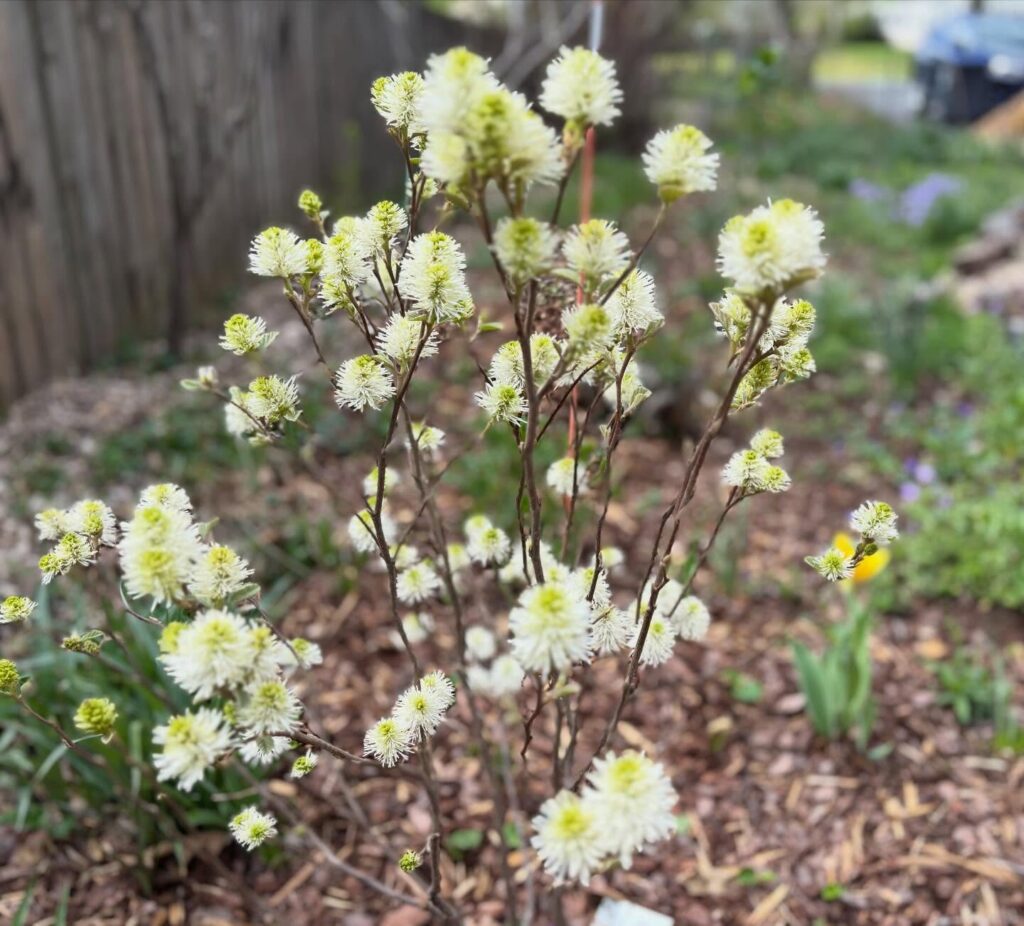
Fothergilla produces distinctive, bottlebrush-shaped white flower spikes in early spring, though in the mildest climates, blooming can begin as early as the final weeks of winter itself.
This native North American shrub also offers exceptional fall foliage color, turning brilliant shades of orange, red, and yellow, giving it genuine multi-season appeal well beyond its winter and spring blooms.
Fothergilla prefers full sun to partial shade with acidic, well-drained soil, and it performs particularly well as an understory planting alongside other woodland-edge shrubs like witch hazel and mountain laurel.
23. Skimmia
Skimmia produces small, fragrant clusters of white or pink flower buds through winter, eventually opening into delicate blooms just as the coldest stretch of the season begins to ease.
This compact, evergreen shrub also produces bright red berries on female plants, provided a male pollinator variety grows nearby, extending its visual interest well beyond the flowering period alone.
Skimmia performs best in partial to full shade with consistently moist, well-drained, slightly acidic soil, making it an excellent choice for shaded winter borders and woodland-style garden plantings.
24. Distylium
Distylium is a relatively newer landscape introduction that produces small, inconspicuous but genuinely reliable red flowers in January, according to Clemson Cooperative Extension garden observations.
Its evergreen foliage and naturally dense, mounding growth habit make distylium an increasingly popular low-maintenance substitute for traditional boxwood in many modern landscape designs.
This tough, adaptable shrub tolerates both wet and dry soil conditions reasonably well, and its winter blooms, while subtle, add one more layer of quiet interest to an otherwise dormant garden bed.
25. Kobushi Magnolia
Kobushi magnolia, particularly the popular ‘Leonard Messel’ cultivar of Magnolia x loebneri, produces fragrant, star-shaped pink and white flowers on bare branches during the tail end of winter.
Its blooms open slightly later than true star magnolia in most climates, offering gardeners a valuable extension of the magnolia flowering season into the very last cold weeks before spring fully arrives.
This graceful, small to medium tree performs well in full sun to partial shade, generally thriving in the same broad hardiness range as other closely related magnolia species and hybrids.
Why Woody Plants Are the Backbone of a Winter Garden
Perennials and bulbs contribute plenty of winter color, but trees and shrubs offer something different. Their structure holds a garden together even when nothing is in bloom.
Bare branches, layered bark, and evergreen foliage all provide visual interest before a single flower opens. When that structure is combined with a genuine winter bloom, the payoff is significant.
Woody plants also tend to be longer-lived than perennials, meaning a single well-placed shrub can anchor a winter garden’s display for decades with relatively little ongoing maintenance.
The Numbers Behind Winter-Blooming Woody Plants
Understanding exactly where these trees and shrubs will thrive comes down largely to one essential resource. The USDA Plant Hardiness Zone Map divides North America into 13 distinct zones, based on average annual extreme minimum winter temperature.
Each zone represents roughly a 10-degree Fahrenheit difference from its neighbor, which means a shrub rated for zones 7 through 9, such as camellia or wintersweet, will likely struggle if planted several zones colder.
This distinction matters enormously for winter bloomers specifically, since their entire flowering display depends on genuinely surviving cold conditions rather than merely tolerating them for a few passing weeks.
Before planting any tree or shrub from this list, checking your specific USDA hardiness zone against its recommended range remains the single most reliable way to guarantee a successful winter display.
How to Design a Winter-Blooming Landscape
Layering bloom times matters just as much as choosing the right individual plants. Pairing early performers like witch hazel with later bloomers like flowering quince extends color across the entire cold season.
Fragrance deserves special consideration too. Positioning scented shrubs like winter daphne, wintersweet, or sweet box near a frequently used path or entryway ensures their perfume is actually noticed and enjoyed.
Most woody winter bloomers should be planted in early fall or, depending on your climate, early spring, allowing roots several full seasons to establish before facing their first serious cold test.
Finally, contacting your local university extension office for region-specific recommendations remains one of the most reliable ways to select cultivars genuinely suited to your particular climate and soil.
Frequently Asked Questions
What is the most fragrant winter-blooming shrub? Wintersweet and winter daphne are frequently cited by horticulturists as among the most intensely fragrant options, both capable of perfuming an entire garden area from a single mature, well-placed plant.
Can winter-blooming trees and shrubs survive freezing temperatures? Yes. Most plants on this list are specifically selected for their cold tolerance, with flowers adapted to withstand frost and, in several cases, light snow without significant visible damage.
When is the best time to plant winter-blooming shrubs? Early fall is generally ideal, giving roots several weeks to establish before the ground fully freezes. Some regions also support successful spring planting, depending on local climate conditions.
Final Thoughts
Putting this list together reminded me just how much structure and color quietly exists in gardens most people assume are completely asleep during winter. The season simply asks for a bit more intention.
A handful of well-chosen trees and shrubs can transform a bare, gray winter landscape into something genuinely worth stepping outside for, even on the coldest, grayest mornings of the year.
Start with one or two selections that fit your climate and available space. Once you experience how much life they bring to a quiet winter garden, expanding the collection becomes an easy, rewarding habit.
References
- United States Department of Agriculture, Agricultural Research Service — USDA Plant Hardiness Zone Map. https://planthardiness.ars.usda.gov/pages/view-maps
- University of Georgia Extension, Forsyth County — Flowering Plants That Brighten Winter Landscapes. https://site.extension.uga.edu/forsyth/flowering-plants-that-brighten-winter-landscapes/
- Washington State University Extension, King County — Choosing Winter Flowering Shrubs, Tip Sheet #10. https://extension.wsu.edu/king/mg-home/gardening-resources/tip-sheets/tip-sheet-10
- Clemson Cooperative Extension, Home & Garden Information Center — Winter Interest in the Landscape. https://hgic.clemson.edu/hot-topic/winter-interest-in-the-landscape/
- Clemson Cooperative Extension, Home & Garden Information Center — Viburnum. https://hgic.clemson.edu/factsheet/viburnum/
- North Carolina State Extension, Wayne County — What’s Blooming in February. https://wayne.ces.ncsu.edu/2022/02/whats-blooming-in-february
- Iowa State University Extension and Outreach — Perennials with Winter Interest. Yard and Garden. https://yardandgarden.extension.iastate.edu/how-to/perennials-winter-interest

Tim M Dave is a gardening expert with a passion for houseplants, particularly cacti and succulents. With a degree in plant biology from the University of California, Berkeley, he has vast experience in gardening. Over the years, he has cultivated a vast collection of desert plants and learned a great deal about how to grow and care for these unique companions.