25 Trees Native to Virginia (With Growing Details)
Virginia is a tree lover’s state. Forests blanket about 62 percent of its land, roughly 15.7 million acres, according to USDA Forest Service data cited by the Virginia Department of Forestry. Few states pack this much botanical variety into one border.
I have walked trails from the Dismal Swamp to the Blue Ridge, and the shift in tree life along the way still surprises me. Bald cypress knees rise from tidewater swamps in the east. Loblolly pine stretches across the Piedmont. Red spruce clings to cool ridgelines in the far west.
The Flora of Virginia project documents nearly 3,200 native and naturalized plant species statewide. Roughly 235 of those are native tree species, spread across three very different physiographic regions: the Coastal Plain, the Piedmont, and the Appalachian Mountains.
Why Virginia’s Native Trees Matter
Native trees are not just scenery. They anchor entire food webs. Songbirds, black bears, white-tailed deer, and pollinators all depend on species that evolved alongside them for thousands of years.
Planting or protecting native trees also supports water quality. Their root systems stabilize soil along the Chesapeake Bay watershed, which drains more than 64,000 square miles across six states.
With that context in mind, here are 25 Virginia native species worth knowing.
25 Trees Native to Virginia
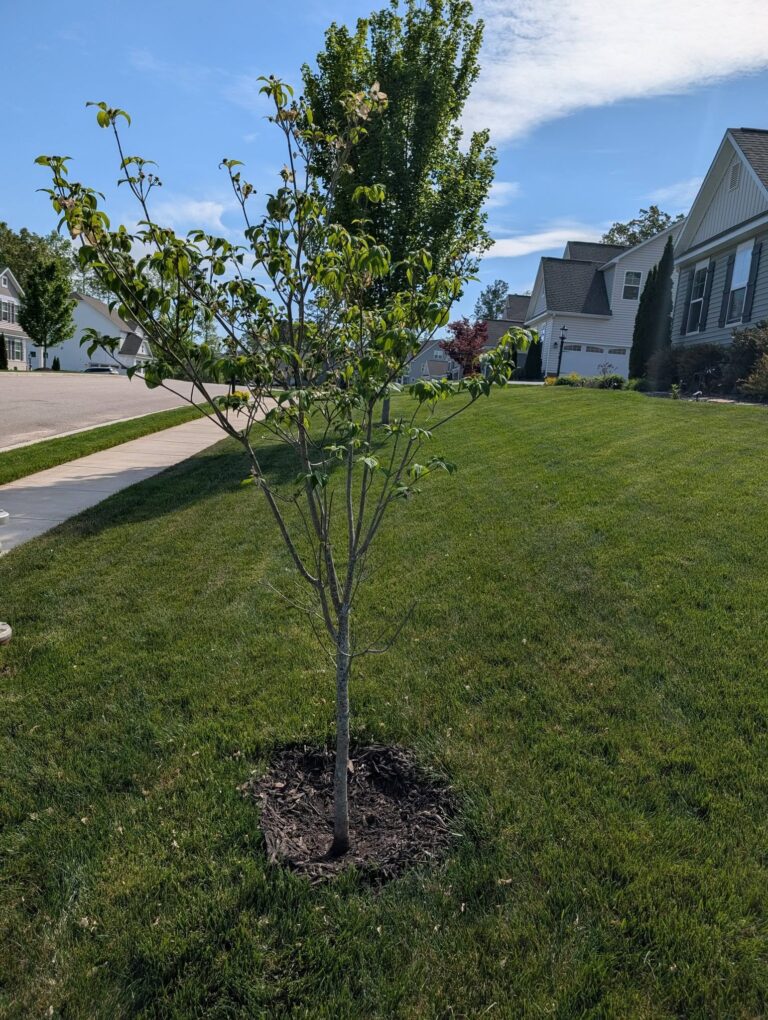
1. Flowering Dogwood (Cornus florida)
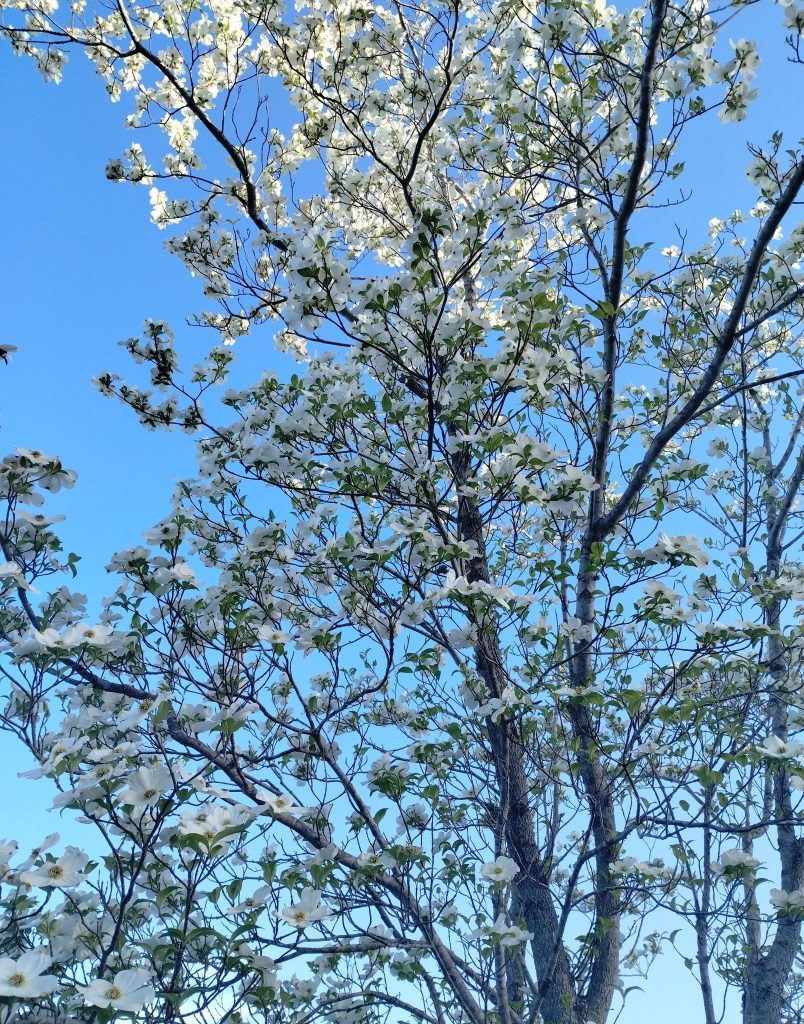
Flowering dogwood is Virginia’s official state tree, a title it has held since 1956. It also doubles as the state flower, a rare honor adopted back in 1918.
This small, understory tree usually reaches 15 to 30 feet in Virginia forests. Its white or pink spring bracts are actually modified leaves, not true petals, surrounding a cluster of tiny true flowers.
I think it earns the title fairly. Few native trees give you spring blooms, red fall foliage, and winter berries that feed songbirds and wild turkey in one package.
You will find dogwood statewide, from coastal plains to mountain understories, tucked beneath taller oaks and pines.
2. Eastern Redbud (Cercis canadensis)
Eastern redbud is one of the first native trees to flower each spring, often before its heart-shaped leaves emerge. Clusters of pink-purple blossoms cover bare branches in March and April.
This small tree rarely exceeds 30 feet and often grows with multiple trunks. It thrives along Virginia’s woodland edges, fence rows, and stream banks.
Redbud flowers are edible and were historically used by Indigenous communities and early settlers in salads and fritters. Bees rely on it heavily as an early nectar source.
3. Tulip Poplar (Liriodendron tulipifera)
Also called yellow poplar, this is Virginia’s tallest native hardwood. Mature trees regularly top 100 feet, with the largest recorded specimens exceeding 150 feet in the Appalachians.
Its tulip-shaped, orange-and-green flowers bloom high in the canopy each May, often unnoticed from the ground. The leaves have a distinctive four-lobed, squared-off shape.
Tulip poplar grows fast, sometimes over two feet a year when young. That made it a favorite for Colonial-era canoes and cabin logs, since a single trunk yielded enormous straight lumber.
It grows best in the rich, moist soils of the Piedmont and mountain coves.
4. White Oak (Quercus alba)
White oak is arguably Virginia’s most valuable timber and wildlife tree. It can live for 300 years or more, with some documented individuals surviving past 450 years.
The rounded, finger-like lobes on its leaves distinguish it from red oaks, which have pointed, bristle-tipped lobes. Bark is light ash-gray and flaky.
Acorns from white oak mature in a single season and taste less bitter than red oak acorns, making them a preferred food for deer, turkey, and squirrels.
This species grows across nearly every county in Virginia, from dry ridges to fertile bottomlands.
5. Northern Red Oak (Quercus rubra)
Northern red oak is a fast-growing, high-value hardwood common throughout Virginia’s mountains and Piedmont. It can reach 90 feet with a broad, rounded crown.
Its leaves have seven to eleven pointed lobes, each tipped with a small bristle. Bark on mature trees shows distinctive shiny, vertical stripes running down the ridges.
Unlike white oak, its acorns take two growing seasons to mature and carry a noticeably bitter, tannin-heavy flavor.
Red oak lumber is prized for flooring and furniture because of its attractive open grain.
6. Southern Red Oak (Quercus falcata)
Southern red oak favors Virginia’s drier, sandier soils, particularly across the Coastal Plain and southern Piedmont. It often grows alongside loblolly and shortleaf pine.
Leaves are deeply lobed and asymmetrical, sometimes shaped like a bell or a boot, a helpful identification clue in the field.
This tree tolerates poor, acidic soil better than most oaks, which explains its dominance on upland sites that other hardwoods avoid.
Wildlife, especially deer and small mammals, rely on its small, bitter acorns through fall and winter.
7. Willow Oak (Quercus phellos)
Willow oak stands out immediately because its narrow, willow-like leaves look nothing like a typical oak leaf. No lobes, no teeth, just a smooth, slender blade.
It grows naturally in wet bottomlands across eastern and southern Virginia, often near rivers and floodplains where standing water is common.
Because it grows quickly and tolerates urban conditions well, willow oak has become one of the most widely planted street trees in Virginia cities like Richmond and Norfolk.
Its small acorns are an important food source for waterfowl and wading birds near wetland habitats.
8. American Beech (Fagus grandifolia)
American beech is instantly recognizable by its smooth, light-gray bark, which stays unbroken even on very old trees. That smoothness, unfortunately, also attracts carved initials.
Its leaves are elliptical with sharply toothed edges, and many hold onto pale, papery dead leaves through winter, a trait called marcescence.
Beech trees can live for 300 to 400 years and form dense, shade-tolerant stands in Virginia’s mountain coves and rich Piedmont forests.
Beechnuts feed black bear, wild turkey, and a wide range of songbirds through autumn.
9. Sugar Maple (Acer saccharum)
Sugar maple is best known for brilliant orange-to-red fall color and as the source of maple syrup, though Virginia’s sap season is shorter than New England’s.
It grows mainly in the mountains and northern Piedmont, favoring cool, moist, well-drained soils on north-facing slopes.
Leaves have five lobes with smooth, U-shaped notches between them, distinguishing them from the more common red maple.
Mature trees can reach 80 feet and live well over 200 years, forming the backbone of many Appalachian hardwood forests.
10. Red Maple (Acer rubrum)
Red maple may be Virginia’s most adaptable native tree. It grows in swamps, dry ridges, suburban yards, and everywhere in between, from the coast to 4,000-foot elevations.
Red twigs, red buds, red flowers in late winter, and red fall foliage give the species its name at nearly every stage of the year.
Virginia Tech Dendrology notes this species can reach up to 90 feet, though most landscape and forest specimens stay smaller.
Because of its wide tolerance and fast growth, red maple has actually increased in dominance across eastern forests over the past century.
11. American Sycamore (Platanus occidentalis)
American sycamore is easy to spot along Virginia’s rivers thanks to its mottled, peeling bark that reveals patches of white, gray, and green underneath.
It is one of the largest native trees by trunk diameter in the eastern United States, with some old floodplain specimens exceeding six feet across.
Sycamores favor stream banks, floodplains, and bottomlands, where their wide root systems help stabilize eroding soil along Virginia’s waterways.
Large hollow trunks in old sycamores often become dens for raccoons, owls, and other wildlife.
12. Black Walnut (Juglans nigra)
Black walnut is prized for two things: dark, richly grained timber and edible nuts encased in a tough green husk that stains hands and driveways alike.
This tree releases a chemical called juglone from its roots, which suppresses the growth of many nearby plants, including tomatoes and some ornamentals.
It grows best in Virginia’s deep, fertile bottomland soils, particularly across the Piedmont and Shenandoah Valley.
Black walnut lumber remains one of the most valuable hardwoods harvested in the state.
13. Shagbark Hickory (Carya ovata)
Shagbark hickory gets its name from loose, curling bark plates that peel away from the trunk in long strips, giving mature trees a shaggy, unmistakable look.
It produces sweet, edible nuts inside a thick husk that splits into four sections when ripe, a favorite food for squirrels and wild turkey.
This species grows slowly but can live for 200 years or more, typically found on rich upland slopes across the Piedmont and mountains.
Its dense, tough wood was historically used for tool handles and is still favored for smoking meat today.
14. Loblolly Pine (Pinus taeda)
Loblolly pine dominates Virginia’s Coastal Plain and southern Piedmont, and it is the single most commercially important timber species in the southeastern United States.
Long needles, grouped in bundles of three, and reddish-brown, scaly bark make it easy to identify. Mature trees regularly reach 90 to 100 feet.
Fast growth rates, often three feet a year on good sites, made loblolly the backbone of Virginia’s pulp and lumber industry for decades.
It naturally colonizes abandoned farmland, which is why so many loblolly stands across the state are actually secondary growth.
15. Virginia Pine (Pinus virginiana)
Virginia pine, sometimes called scrub pine, is a tough, drought-tolerant species that thrives on poor, eroded soils where few other trees survive.
It rarely grows taller than 70 feet and often has an irregular, scraggly crown, quite different from the straight form of loblolly or white pine.
Short, twisted needles in bundles of two and small, prickly cones help distinguish it in the field.
This pioneer species is often the first tree to reclaim cleared land across the Piedmont, paving the way for hardwoods that follow decades later.
16. Eastern White Pine (Pinus strobus)
Eastern white pine is Virginia’s tallest native conifer, capable of exceeding 150 feet in ideal mountain conditions, though most trees today reach 80 to 100 feet.
Soft, blue-green needles grow in bundles of five, a helpful trick for identification since most other Virginia pines carry two or three needles per bundle.
Colonial-era loggers prized this species for ship masts because of its long, straight, lightweight trunks, and old-growth stands were heavily depleted by the 1800s.
It grows best in the cooler mountains and northern Piedmont, often forming mixed stands with hemlock.
17. Eastern Hemlock (Tsuga canadensis)
Eastern hemlock is a shade-loving conifer found along cool mountain streams and steep ravines in western Virginia, where it creates dense, dark canopies.
Short, flat needles with two white stripes underneath and small, delicate cones distinguish it from pines and spruces.
Unfortunately, the invasive hemlock woolly adelgid has devastated Virginia’s hemlock populations since the 1950s, killing mature trees across much of their Appalachian range.
Conservation groups and the U.S. Forest Service continue treatment programs to protect remaining old-growth hemlock stands in places like Shenandoah National Park.
18. Eastern Redcedar (Juniperus virginiana)
Eastern redcedar is actually a juniper, not a true cedar, but the name has stuck since Colonial times. It grows in nearly every soil type across Virginia.
Its scaly, aromatic foliage and columnar shape make it a familiar sight along fence rows, old fields, and roadsides throughout the Commonwealth.
The reddish, fragrant wood resists decay and insects, which is why it has long been used for cedar chests, closet linings, and fence posts.
Female trees produce small, waxy blue berries that cedar waxwings and other birds rely on heavily through winter.
19. Bald Cypress (Taxodium distichum)
Bald cypress is a striking coastal wetland tree, native to the swamps and floodplains of southeastern Virginia, including the Great Dismal Swamp.
Unusual knobby root structures called “knees” rise above the water or soggy soil around the base of mature trees, likely aiding oxygen exchange in flooded conditions.
According to the Virginia Department of Forestry, bald cypress can exceed 120 feet in height and live for over 1,000 years, making it one of the longest-lived trees in the eastern United States.
Despite being a conifer, its soft needles turn rust-orange and drop each fall, an unusual trait that gives the tree its “bald” name.
20. Black Gum (Nyssa sylvatica)
Black gum, also called blackgum or tupelo, is often overlooked but delivers some of the earliest and most vivid red fall color in Virginia forests.
Glossy, oval leaves and horizontal branching give the tree a distinctive tiered silhouette, especially visible in open-grown specimens.
It grows across nearly the entire state, from swampy lowlands to dry ridgetops, and can live for several centuries in undisturbed forests.
Small, dark blue fruits ripen in early fall and are a critical food source for migrating birds building fat reserves before winter.
21. Sweetgum (Liquidambar styraciflua)
Sweetgum is easy to identify by its star-shaped, five-pointed leaves and spiky, round seed pods that litter sidewalks and lawns every fall.
This fast-growing tree is common across the Coastal Plain and Piedmont, often colonizing old fields and disturbed ground alongside loblolly pine.
Fall color ranges wildly on a single tree, sometimes showing purple, red, orange, and yellow leaves all at once.
Its seed pods, while a nuisance underfoot, provide food for goldfinches, chickadees, and small mammals through winter.
22. American Holly (Ilex opaca)
American holly is one of Virginia’s few native broadleaf evergreens, keeping its spiny, glossy leaves year-round even through cold mountain winters.
Female trees produce the familiar bright red berries associated with holiday decorations, but only when a male tree grows nearby for pollination.
It grows as an understory tree across much of the state, tolerating shade far better than most hardwoods, and can slowly reach 40 to 50 feet.
Berries persist into late winter, offering an important late-season food source for robins, cedar waxwings, and other birds.
23. Sourwood (Oxydendrum arboreum)
Sourwood is a small understory tree named for its sour-tasting leaves, historically chewed to relieve thirst on long hikes through the Appalachians.
Drooping clusters of small, bell-shaped white flowers bloom in mid-summer, making sourwood a valuable source of nectar for a regionally famous honey variety.
Fall color is exceptional, often turning a deep crimson-red weeks before most other hardwoods change.
This species grows mainly in Virginia’s mountains and southern Piedmont, favoring acidic, well-drained soils on ridges and slopes.
24. Red Spruce (Picea rubens)
Red spruce is a high-elevation conifer, restricted in Virginia to the cool, moist peaks of the Allegheny Highlands and a handful of Blue Ridge summits above 3,000 feet.
Short, stiff, dark green needles and reddish-brown bark distinguish it from the pines and hemlocks found at lower elevations nearby.
These relict spruce-fir forests are considered globally rare, remnants of a colder climate that retreated northward thousands of years ago, leaving isolated island populations on Virginia’s highest peaks.
Conservation groups continue active restoration work to expand these fragile high-elevation stands.
25. American Chestnut (Castanea dentata)
American chestnut once dominated Appalachian forests, but an introduced fungal blight, first detected in the United States in 1904, killed an estimated three to four billion trees within about 40 years.
By 1950, nearly every mature chestnut across its native range had died, according to accounts documented through the Virginia Department of Forestry and USDA Forest Service research.
Sprouts still rise from centuries-old root systems across Virginia’s mountains today, usually succumbing to the blight again before reaching seed-bearing age.
Groups like the American Chestnut Foundation continue breeding blight-resistant hybrids, working alongside Virginia’s state forests to one day restore this lost giant to the landscape.
Final Thoughts
Twenty-five trees barely scratch the surface of Virginia’s native plant diversity, but this list covers the species you are most likely to encounter, plant, or study across the Commonwealth.
From dogwood in a suburban yard to red spruce on a windswept summit, each tree tells part of Virginia’s ecological story. Some, like American chestnut, remind us how fragile that story can be.
Native species also tend to need less water, fewer pesticides, and less fertilizer once established, since they are already matched to Virginia’s climate and soil. That makes them a practical choice, not just a sentimental one, for home landscaping.
Next time you are out on a trail or planning a garden, I hope this guide helps you put a name to what you are seeing.
References
- Virginia Department of Forestry — Common Native Trees of Virginia (Tree Identification Guide, PDF): https://www.dof.virginia.gov/wp-content/uploads/Common-Native-Trees-ID_pub.pdf
- Virginia Department of Forestry — Tree Identification: https://www.dof.virginia.gov/education-and-recreation/learn-about-education-recreation/tree-identification/
- Virginia Department of Forestry — A Prickly Problem (American Chestnut Restoration): https://dof.virginia.gov/a-prickly-problem/
- Virginia Tech Dendrology — Fact Sheets and Identification Resources: https://dendro.cnre.vt.edu/dendrology/
- Virginia Cooperative Extension — Characteristics of Common Virginia Trees: https://www.pubs.ext.vt.edu/content/pubs_ext_vt_edu/en/420/420-351/420-351.html
- Virginia Cooperative Extension — Virginia Big Tree Program: https://ext.vt.edu/natural-resources/big-tree.html
- USDA Forest Service — George Washington and Jefferson National Forests, About the Area: https://www.fs.usda.gov/r08/gwj/about-area

Tim M Dave is a gardening expert with a passion for houseplants, particularly cacti and succulents. With a degree in plant biology from the University of California, Berkeley, he has vast experience in gardening. Over the years, he has cultivated a vast collection of desert plants and learned a great deal about how to grow and care for these unique companions.