25 New York Native Trees (With Growing Details)
I still remember my first real fall in the Catskills, standing in a sugar maple grove that looked like it had caught fire. No filter, no editing, just the tree doing what it does every October. New York earns its reputation for foliage honestly.
Forests cover roughly 63 percent of New York State, totaling about 18.6 million acres. That makes the Empire State one of the most heavily forested states in the entire Northeast.
New York’s native tree diversity is genuinely impressive. The state supports approximately 150 native tree species, ranging from boreal forest species in the Adirondacks to oak-dominated coastal woodlands on Long Island.
This guide covers 25 native New York trees, grouped by region and habitat, so you can identify what you are looking at on a hike or choose the right species for your own yard.
Why New York’s Native Trees Matter
New York’s forests are not just scenery. They anchor an industry, protect water supplies, and support wildlife across wildly different landscapes within a single state.
The maple, beech, and birch forest type covers 55.1 percent of New York’s forest land, making it the single most common forest type statewide, according to the state’s Department of Environmental Conservation.
Private landowners receive more than $300 million annually tied to forest management and conservation programs. That figure reflects how seriously the state treats its tree cover as an economic and ecological asset.
With that context established, here are 25 native New York trees worth knowing.
The State Tree and Its Maple Relatives
1. Sugar Maple (Acer saccharum)
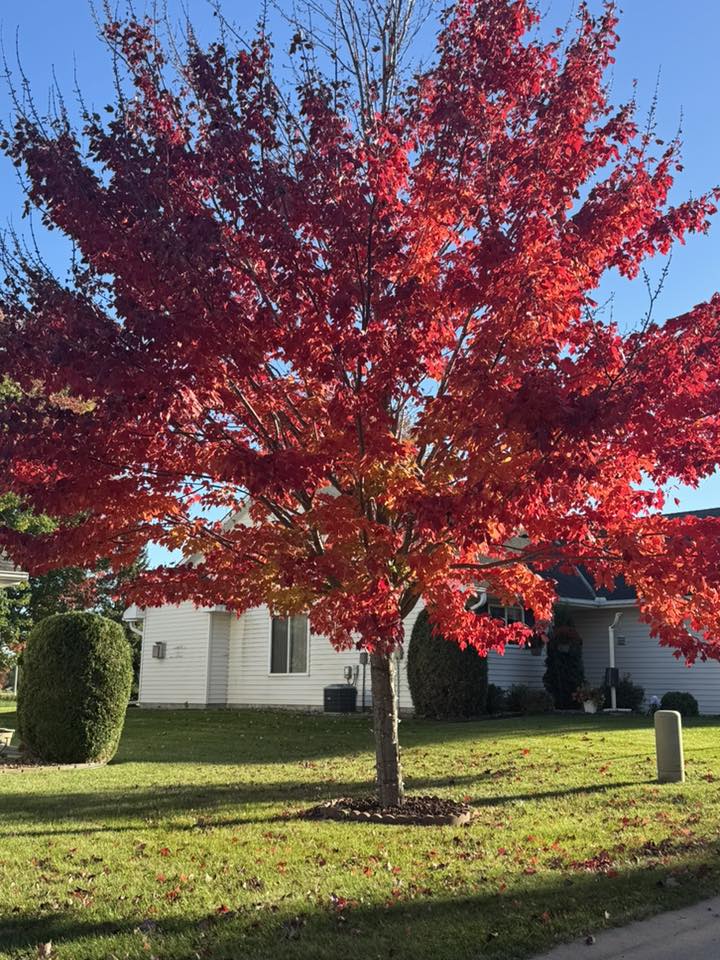
Sugar maple is New York’s official state tree, chosen by schoolchildren on Arbor Day back in 1889 and formally designated in 1956. Few trees define the state’s identity as clearly.
Fall color runs through brilliant reds, oranges, and golds, the exact display that draws leaf-peeping tourists to the Adirondacks and Catskills every autumn.
New York ranks as the second-largest maple syrup producer in the United States, behind only Vermont, and sugar maple sap is the source of nearly all of it.
Trees rarely flower before age 22, but they can live 300 to 400 years. Planting one truly is a gift to future generations.
2. Red Maple (Acer rubrum)
Red maple might be the most adaptable native tree in New York. It grows in swamps, on dry ridges, and everywhere between, which explains its abundance statewide.
Reddish flowers appear in late winter, often before any other tree shows signs of life. That early bloom makes it valuable for early-season pollinators.
Fall color ranges from yellow to brilliant scarlet, depending on the individual tree and its specific growing conditions.
It tolerates wet, poorly drained soil far better than sugar maple, making it a common sight in New York’s lowland forests and wetland edges.
3. Silver Maple (Acer saccharinum)
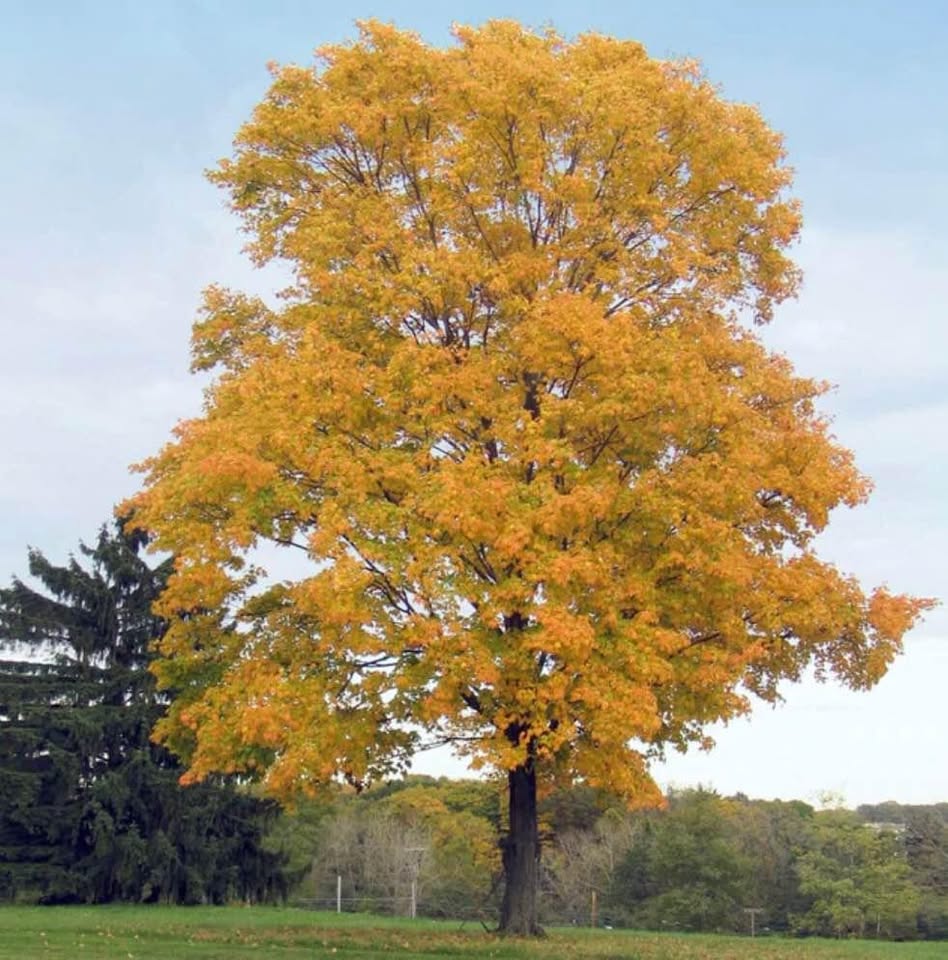
Silver maple grows fast, often faster than any other native maple in New York, and naturally colonizes riverbanks and floodplains across the state.
Its leaves flash a silvery underside in the wind, which is exactly where the tree gets its common name from.
Brittle branches make this species prone to storm damage, a real trade-off for its rapid growth that homeowners should weigh before planting near a house.
It tolerates flooding and poor drainage exceptionally well, making it useful for stabilizing eroding stream banks.
4. Striped Maple (Acer pensylvanicum)
Striped maple earns its name from green bark marked with vertical white stripes, a trait that makes winter identification unusually easy.
This species stays small, rarely exceeding 30 feet, and thrives as an understory tree in cool, shaded Adirondack and Catskill forests.
Large, goose-foot-shaped leaves turn a soft yellow in fall, a quieter show than sugar maple’s, but distinctive once you know to look for it.
Deer browse its bark and twigs heavily, which has earned it the nickname “moosewood” in parts of the state.
Oaks and Hickories of the Lowlands
5. White Oak (Quercus alba)
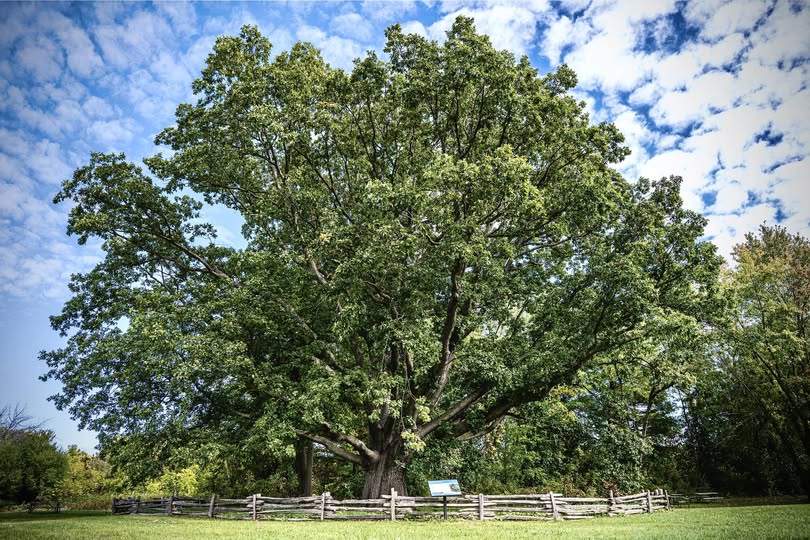
White oak can live for centuries, and mature trees in undisturbed New York forests have been documented reaching close to 300 years old.
Rounded leaf lobes and pale, flaky bark distinguish it from red oak at a glance, even from a moving car.
Acorns feed deer, turkeys, and squirrels heavily through fall and winter, making white oak one of the most wildlife-valuable trees in the state.
It grows most abundantly outside Long Island, where sandier, more acidic soils favor other oak species instead.
6. Northern Red Oak (Quercus rubra)
Northern red oak grows faster than white oak, which makes it a common choice for landowners wanting a mature canopy sooner rather than later.
Pointed, bristle-tipped leaf lobes set it apart from white oak’s rounded shape, a quick and reliable way to tell the two apart.
This species tolerates a wide range of soils, from rocky uplands to richer valley bottoms, and it thrives across most of upstate New York.
Red oak is also New York’s official state tree of some counties and a commercially important hardwood species statewide.
7. Pin Oak (Quercus palustris)
Pin oak tolerates wet, poorly drained soil better than most oaks, which makes it useful in low-lying areas where other species struggle to establish.
Its lower branches droop distinctly downward, a helpful identification trait even in winter, when leaves are gone.
Small, bitter acorns feed ducks and songbirds through the colder months, especially when other food sources have already run out.
This species is commonly planted along streets and in parks because of its tidy, pyramidal form when young.
ALSO READ: 10 Common Pin Oak Tree Problems: Identification, Symptoms, and Proven Solutions
8. Shagbark Hickory (Carya ovata)
Shagbark hickory is unmistakable once mature, with bark that peels away in long, curling strips that give the trunk a genuinely shaggy look.
Its nuts are sweet and edible, historically valuable to both wildlife and Indigenous communities across the Northeast.
Growth is slow, but shagbark hickory can live for well over 200 years, making it a true legacy tree for anyone planting one today.
The dense wood remains prized for tool handles and smoking meat, valued for its strength and clean-burning smoke.
Northern Hardwoods and Boreal Species
9. American Beech (Fagus grandifolia)
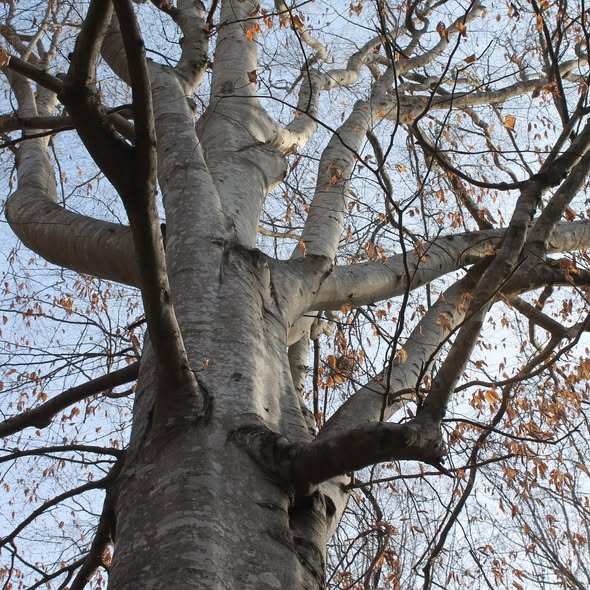
American beech tolerates shade better than almost any other native tree in New York, letting it thrive as a mid-story species beneath taller canopy trees.
Smooth, gray bark makes it instantly recognizable, and its beechnuts feed songbirds, squirrels, and even black bears in some parts of the state.
Beech bark disease and beech leaf disease are both currently affecting populations across New York, threatening a species that anchors much of the state’s northern hardwood forest.
Despite that pressure, healthy beech stands remain a defining feature of old-growth forest in the Catskills and Adirondacks.
10. Yellow Birch (Betula alleghaniensis)
Yellow birch produces distinctive, peeling, golden-bronze bark that curls in thin, papery strips, giving it strong visual appeal even in winter.
It thrives in cool, moist northern hardwood forests, often growing alongside sugar maple and American beech across the Adirondacks and Catskills.
This species can live for 300 years or more, and older specimens develop a rugged, deeply furrowed bark that looks nothing like younger trees.
Crushed twigs release a faint wintergreen scent, a quick and enjoyable way to confirm identification in the field.
11. Paper Birch (Betula papyrifera)
Paper birch is instantly recognizable by its bright white, peeling bark, historically used by Indigenous peoples for canoes, containers, and writing material.
It grows fastest in cool northern climates, making the Adirondacks its stronghold within New York State.
This species is relatively short-lived compared to other native hardwoods, typically surviving 80 to 100 years before decline sets in.
Paper birch pioneers disturbed ground quickly after fire or logging, playing an important early role in forest regeneration.
12. Eastern Hemlock (Tsuga canadensis)
Eastern hemlock thrives in cool, shaded ravines and along stream banks, often forming dense, shadowy groves across the Adirondacks and Catskills.
Short, flat needles and small, delicate cones distinguish it from New York’s pines, along with its gracefully drooping branch tips.
The hemlock woolly adelgid, an invasive insect, has spread through parts of New York and threatens hemlock stands statewide. Monitoring and treatment programs are ongoing.
Where healthy stands remain, hemlock groves create some of the coolest, most distinctive microhabitats found anywhere in New York’s forests.
13. Eastern White Pine (Pinus strobus)
Eastern white pine is New York’s tallest native conifer, historically capable of reaching over 200 feet before extensive logging removed most of the largest specimens.
Soft, blue-green needles bundled in groups of five make it easy to distinguish from the state’s other native pines.
It dominates large sections of the Adirondacks and the St. Lawrence lowlands, forming extensive stands that once defined the region’s timber economy.
Dense evergreen branches provide year-round shelter for birds and small mammals, especially valuable during harsh upstate winters.
Riverside and Wetland Natives
14. American Sycamore (Platanus occidentalis)
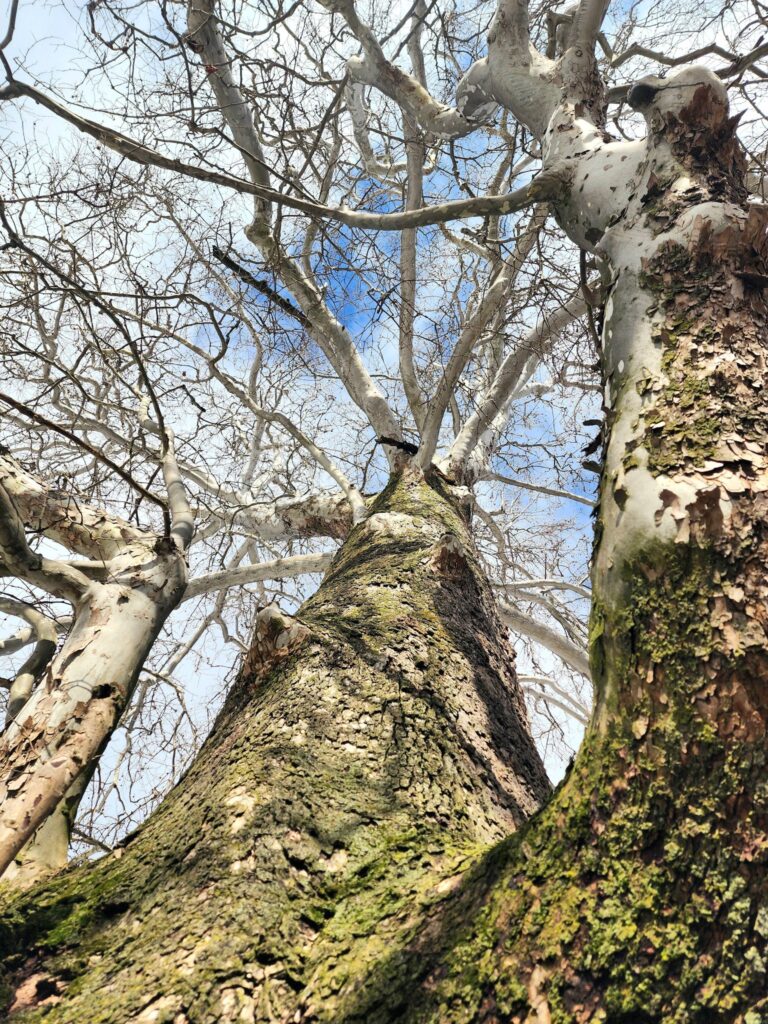
Sycamore bark peels away in mottled patches of white, gray, and green, making it one of the most visually distinct trees found anywhere in New York.
This species thrives along riverbanks and floodplains across the southern half of the state, particularly the Hudson Valley and Long Island.
Sycamores grow large fast, with trunks that can exceed six feet in diameter, and hollow older trunks provide den space for owls and raccoons.
Leaves resemble maple leaves but grow much larger, sometimes reaching ten inches across at maturity.
15. River Birch (Betula nigra)
River birch handles warm, humid conditions better than most other native birches, with peeling, salmon-pink bark that adds real ornamental appeal.
It grows naturally along riverbanks and floodplains, tolerating occasional flooding without stress, which makes it useful for wet yard areas.
Growth is fast, often adding several feet per year, and the species resists the bronze birch borer that damages other native birches.
Multi-trunk specimens are popular in landscaping for the layered bark texture visible from every angle.
16. Black Willow (Salix nigra)
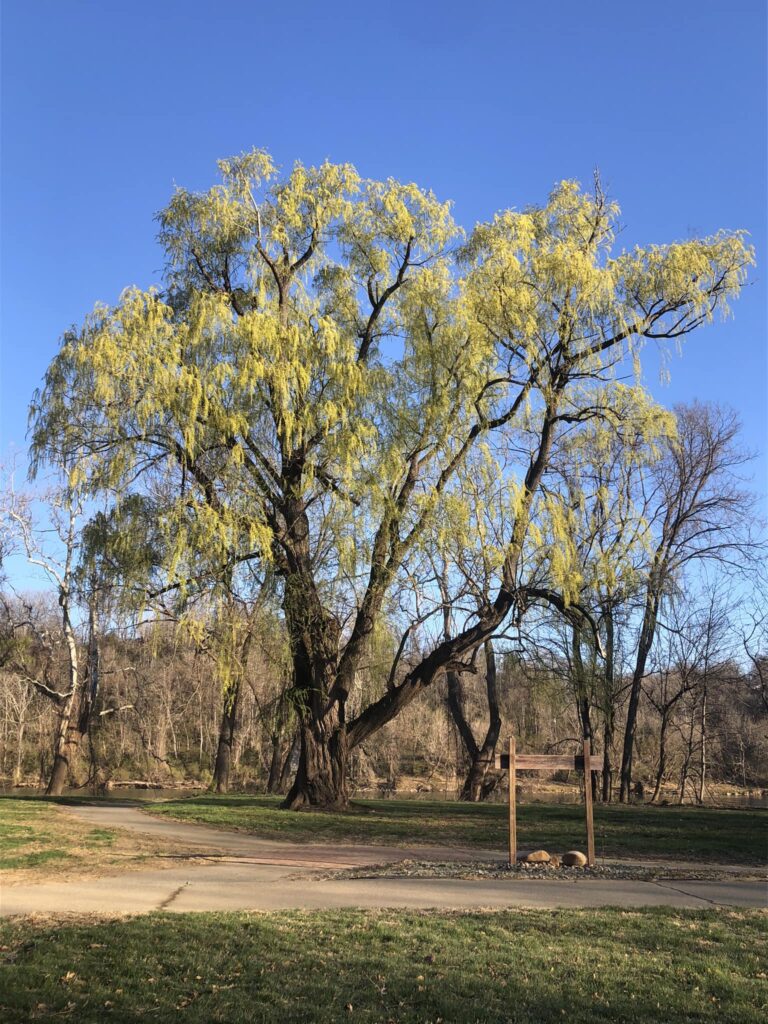
Black willow is one of the largest native willows in eastern North America, often growing along New York’s rivers, streams, and pond edges.
Its extensive root system helps stabilize eroding banks, making it genuinely valuable for stream restoration and flood control projects statewide.
Narrow, lance-shaped leaves and dark, deeply furrowed bark distinguish mature specimens from other willow species found in the region.
This tree grows fast but has a relatively short lifespan, typically under 100 years, compared to many other native hardwoods.
17. Black Ash (Fraxinus nigra)
Black ash grows in the coldest, wettest swamps and bogs across New York, tolerating standing water that few other trees can survive in.
Its wood has long been used by Indigenous artisans for basket weaving, since the growth rings separate easily into thin, flexible strips.
Emerald ash borer has devastated ash populations across New York since its detection in the state in 2009, killing the vast majority of untreated trees.
Surviving black ash stands are now considered critically important for both ecological and cultural preservation efforts statewide.
Ornamental and Understory Trees
18. Flowering Dogwood (Cornus florida)
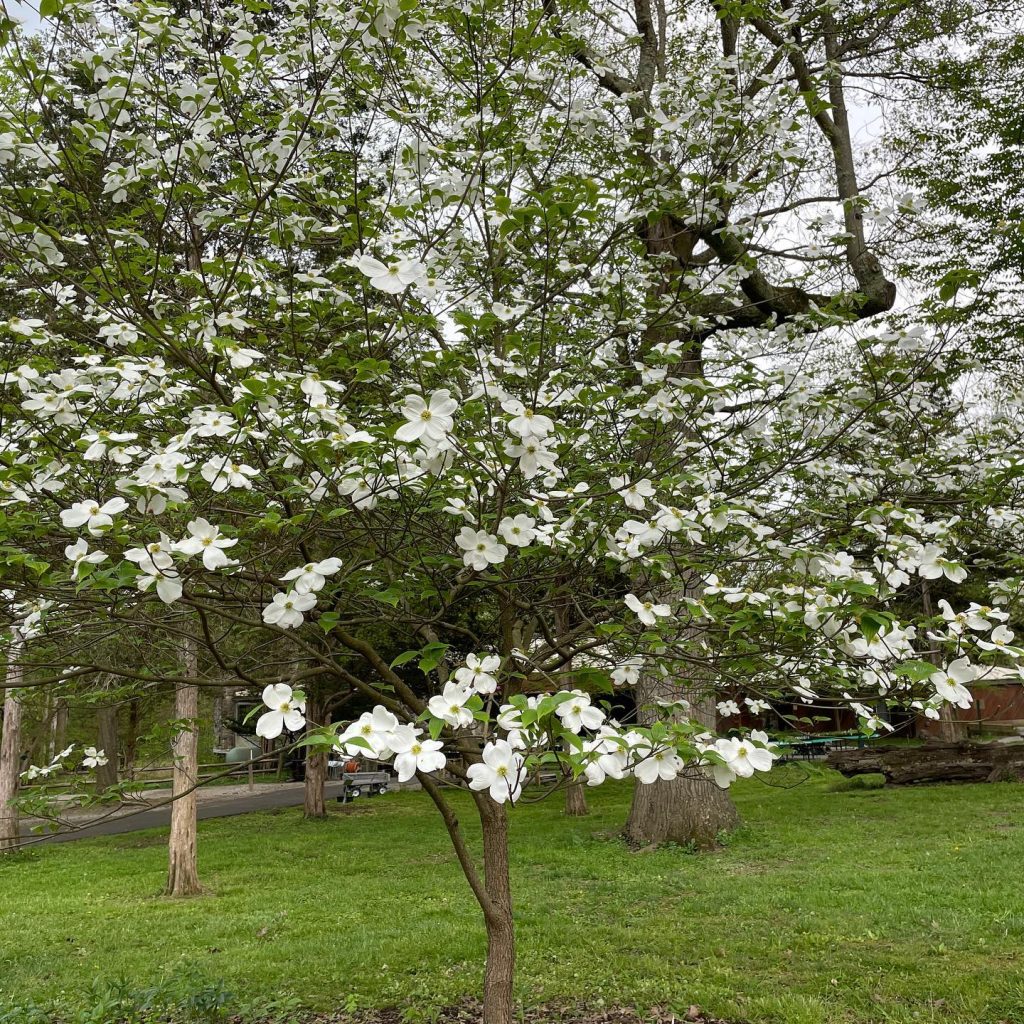
Flowering dogwood produces showy white or pink bracts in spring, one of the most photographed native blooms found anywhere in the eastern United States.
Red berries follow in fall, providing critical fat reserves for migrating songbirds during a demanding stretch of the year.
Dogwood anthracnose, a fungal disease, has reduced wild populations in parts of New York, particularly in the state’s cooler, moister regions.
Choosing disease-resistant nursery stock helps protect new plantings from this ongoing threat to the species.
19. Eastern Redbud (Cercis canadensis)
Redbud announces spring before almost anything else in New York’s landscape, with clusters of pink-purple flowers appearing directly on bare branches.
It stays small, usually under 30 feet, which makes it a good fit for smaller yards or as an understory tree beneath taller species.
The species reaches close to its northern range limit in New York, so it performs best in the state’s warmer southern and coastal counties.
Bees and other early pollinators depend heavily on redbud’s nectar, making it a genuinely useful early-season planting.
20. Serviceberry (Amelanchier arborea)
Serviceberry produces delicate white flowers in early spring, often among the very first native trees to bloom after a long New York winter.
Small, sweet berries follow in early summer, prized by birds and, increasingly, by home gardeners who beat the birds to the harvest.
This small understory tree can grow 20 feet or higher, making it a manageable choice for tighter residential spaces.
Fall color turns a soft orange-red, adding a final round of interest before the tree drops its leaves for winter.
21. American Hornbeam (Carpinus caroliniana)
American hornbeam, sometimes called musclewood for its rippled, muscle-like bark, tolerates deep shade better than almost any other New York native.
It rarely grows taller than 30 feet and works well near streams, rain gardens, or low spots that stay damp after storms.
Small nutlets feed turkeys, squirrels, and grouse, adding steady wildlife value without demanding much from the gardener.
Smooth gray bark stays visually interesting through every season, even in the dead of winter.
22. Tulip Poplar (Liriodendron tulipifera)
Tulip poplar is one of the tallest native hardwoods in the eastern United States, and New York’s Hudson Valley sits near this species’ northern range limit.
Tulip-shaped leaves and greenish-yellow, tulip-like flowers make it easy to identify in late spring, when hummingbirds visit the blooms for nectar.
Growth is fast, sometimes exceeding three feet per year in young trees, which explains its popularity for reforestation projects.
The famously straight trunk made it a favorite of colonial shipbuilders searching for strong, lightweight mast timber.
Wildlife-Valuable and Historic Species
23. American Elm (Ulmus americana)
American elm once formed the iconic, vase-shaped canopy that lined city streets across New York, before Dutch elm disease devastated the species starting in the 1930s.
Disease-resistant cultivars developed in recent decades have allowed limited replanting, and scattered mature survivors still exist in isolated locations statewide.
Its graceful, arching form remains genuinely unmatched among native shade trees, which is part of why so much effort has gone into disease resistance research.
Where healthy trees survive, they support a wide range of native insects and birds that depend on elm specifically.
24. Black Walnut (Juglans nigra)
Black walnut produces one of the most valuable native hardwoods in North America, prized for furniture, gunstocks, and fine veneer work.
It releases a chemical called juglone into surrounding soil, which suppresses many other plants nearby. Companion planting requires some planning.
Large, round nuts feed squirrels and other wildlife, though the thick husks make them harder to process than acorns or hickory nuts.
Black walnut prefers deep, fertile soil and performs especially well across New York’s Hudson Valley and western regions.
25. Eastern Hemlock’s Cousin: Balsam Fir (Abies balsamea)
Balsam fir rounds out this list as one of New York’s true boreal species, concentrated heavily in the coldest parts of the Adirondacks.
Its fragrant needles and classic Christmas-tree shape have made it a popular choice for holiday trees harvested from managed plantations statewide.
This species tolerates cold and short growing seasons better than almost any other native New York conifer, thriving where few hardwoods can compete.
Dense branching provides excellent winter cover for birds and small mammals, especially valuable during the harshest Adirondack storms.
Final Thoughts
Twenty-five trees barely scratch the surface of a state supporting roughly 150 native species, but this list covers the ones you are most likely to encounter or plant.
Match the tree to your region and site conditions, not the other way around. New York’s climate varies enormously between Long Island and the high Adirondacks.
The state’s Department of Environmental Conservation and Cornell Cooperative Extension both offer planting guidance and, in some cases, low-cost seedlings for landowners.
Every native tree planted adds a small piece back to a forest system that has shaped New York’s economy, wildlife, and identity for centuries.
References
- New York State Department of Environmental Conservation – Forests and Trees: https://dec.ny.gov/nature/forests-trees
- New York State Department of Environmental Conservation – New York’s Forest Preserve: https://dec.ny.gov/nature/forests-trees/forest-preserve
- New York State Department of Environmental Conservation – Forest Data and Industry Reports: https://dec.ny.gov/nature/forests-trees/forest-products-utilization/forest-data-and-industry-reports
- Cornell University Library – The Trees of Cornell, Sugar Maple: https://exhibits.library.cornell.edu/cornell-trees/feature/sugar-maple
- Cornell Cooperative Extension – Tree Identification (4-H Bulletin #85): http://www2.dnr.cornell.edu/ext/info/pubs/misc/tree_identification_4H.htm
- Cornell Botanic Gardens – Native Maple Collection: https://cornellbotanicgardens.org/location/native-maple-collection
- New York State Department of Environmental Conservation – Presenting the New York State Tree, the Sugar Maple: https://extapps.dec.ny.gov/docs/administration_pdf/2008jrnat1.pdf

Tim M Dave is a gardening expert with a passion for houseplants, particularly cacti and succulents. With a degree in plant biology from the University of California, Berkeley, he has vast experience in gardening. Over the years, he has cultivated a vast collection of desert plants and learned a great deal about how to grow and care for these unique companions.