20 Native Shrubs of New York (With Growing Details)
I have spent years walking New York’s woodlands, dunes, and roadside edges, and one thing keeps standing out. The best-looking, toughest, and most wildlife-friendly shrubs in this state were never imported from a catalog. They grew here first.
Native shrubs are woody plants that evolved naturally within New York’s ecosystems, long before nursery hybrids arrived. They already know how to handle our frozen winters, humid summers, and unpredictable rainfall.
That matters more than most gardeners realize. New York State has set a goal to plant 25 million trees by 2033, and native shrubs are a central part of that reforestation push, according to the state’s Department of Environmental Conservation.
Native shrubs also feed the wildlife that keeps our ecosystems running. In New York City alone, researchers have documented more than 200 species of native bees, many of which depend on native flowering shrubs for pollen and nectar.
This guide covers 20 native shrubs of New York, picked for garden use, habitat restoration, and pure curb appeal. For each one, I have included light needs, soil type, mature size, and hardiness zone, so you can match the right shrub to the right spot.
20 Native Shrubs New York
1. Highbush Blueberry (Vaccinium corymbosum)
Highbush blueberry is one of the most rewarding native shrubs you can plant in New York. It produces bell-shaped white flowers in spring, followed by clusters of sweet, edible blue berries in summer.
Fall brings a striking range of red foliage, and even winter has appeal. Older stems develop peeling, multicolored bark that adds texture to a bare landscape.
This shrub tolerates both dry and wet soil, but it needs acidic conditions to thrive. It grows to about 10 feet tall with an 8-foot spread and suits hardiness zones 3 through 7.
If you love birds, plant more than one. Highbush blueberry is a magnet for songbirds during the summer fruiting season.
2. Winterberry (Ilex verticillata)
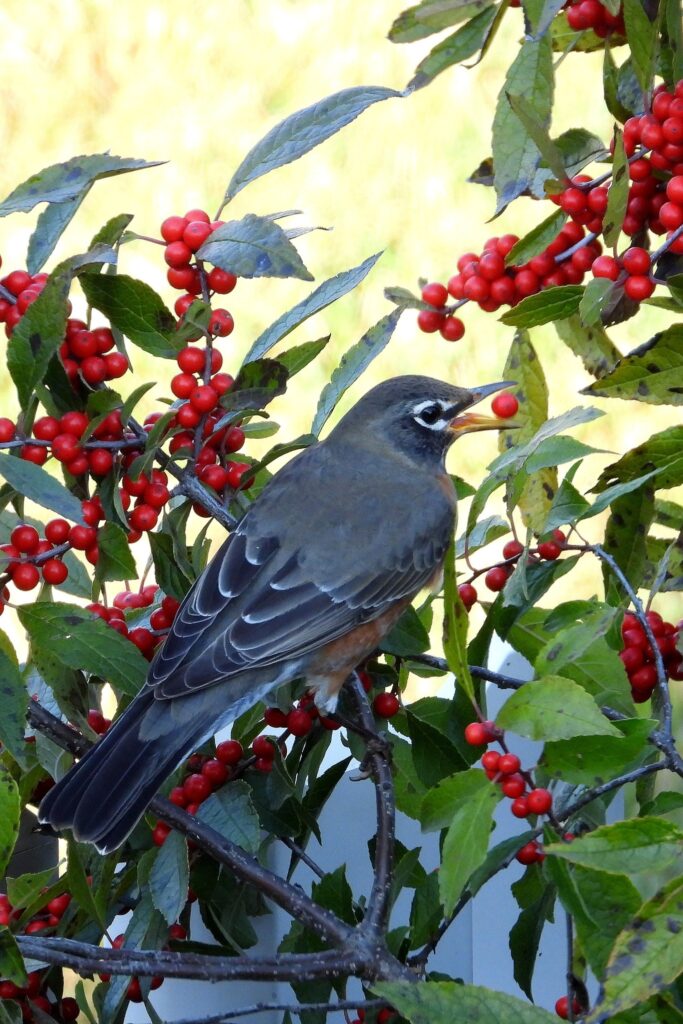
Winterberry is a deciduous holly, which surprises people who expect all hollies to stay green year-round. Its real show happens after the leaves drop, when bright red berries cover the bare branches.
Those berries can hang on well into winter, giving birds a critical food source when little else is available. That is why gardeners near wetlands, ponds, and rain gardens love this shrub so much.
Here is the catch: winterberry is dioecious, meaning individual plants are either male or female. You need one male shrub nearby for the females to produce berries at all.
According to Cornell University’s Woody Plants Database, winterberry reaches roughly 6 to 8 feet tall and tolerates acidic to neutral soil down to hardiness zone 4a.
3. Red-Osier Dogwood (Cornus sericea)
Red-osier dogwood earns its keep in winter, when its smooth stems glow a deep crimson red against the snow. Few native shrubs offer this much cold-season color.
In spring, flat clusters of small white flowers appear, followed by white berries that birds eat quickly. The foliage turns a soft reddish-purple in autumn.
This shrub loves moist to wet soil and handles occasional flooding without complaint. It works beautifully along stream banks, pond edges, or low spots that stay damp after rain.
Red-osier dogwood spreads by suckering, so give it room. Many landscapers use it in mass plantings for erosion control on slopes.
4. Spicebush (Lindera benzoin)
Spicebush is an understory shrub that lights up the early spring forest floor with small yellow flowers, often appearing before the leaves. Crush a leaf and you will notice its distinct spicy fragrance.
Female plants produce glossy red berries in fall that migrating birds rely on heavily. It is also the primary host plant for the spicebush swallowtail butterfly caterpillar.
This shrub thrives in partial to full shade and prefers moist, well-drained soil. It fits naturally under mature trees where other flowering shrubs struggle.
I like spicebush for shaded yards that feel a little empty. It brings movement, fragrance, and life without needing full sun.
5. Sweet Pepperbush (Clethra alnifolia)
Also called summersweet, this shrub produces upright spikes of fragrant white or pink flowers in mid to late summer. The scent alone draws bees and butterflies from across the garden.
Sweet pepperbush blooms later than most native shrubs, which makes it valuable for extending the pollinator season into August. Few native woody plants flower this reliably in peak summer heat.
It tolerates wet soil exceptionally well, making it a strong choice for rain gardens or low-lying coastal properties. It also handles some salt spray, which suits Long Island gardens near the shore.
Expect a rounded shrub reaching 3 to 8 feet tall, depending on the cultivar and growing conditions.
6. Arrowwood Viburnum (Viburnum dentatum)
Arrowwood viburnum is a dependable, adaptable shrub that works as a specimen plant or a dense privacy hedge. Flat-topped clusters of small white flowers appear in late spring.
By fall, those flowers turn into blue-black berries that birds strip quickly. The dark green summer foliage shifts to shades of yellow, orange, and reddish-purple before dropping.
This shrub adjusts to a wide range of soil conditions, from dry to consistently moist. It also handles both full sun and partial shade without much fuss.
Arrowwood viburnum’s dense branching makes it a useful screening plant, and it rarely needs pest treatment once established.
7. American Elderberry (Sambucus canadensis)
American elderberry grows fast and produces large, plate-sized clusters of small white flowers in early summer. Those flowers eventually give way to clusters of small purple berries.
Cooked elderberries are traditionally used in preserves, pies, and homemade wine, though raw berries and other plant parts should never be eaten. Birds, on the other hand, eat the ripe fruit readily.
This shrub prefers moist, well-drained soil and full sun to light shade. It reaches roughly 8 feet tall with an equal spread, suited to zones 4 through 9.
Elderberry works well at the back of a mixed border, where its size and fast growth fill space quickly.
8. Virginia Rose (Rosa virginiana)
Virginia rose is a tough, versatile native rose with glossy leaves and large, single pink flowers. Unlike many ornamental roses, it needs almost no pampering.
Fall brings some of the best color of any native shrub on this list, with foliage shifting to deep reds and oranges. The rose hips that follow the flowers persist into winter and feed wildlife.
This shrub tolerates salt spray and drought, which makes it a natural choice for sandy coastal gardens or roadside plantings. It reaches about 5 feet tall and spreads to 10 feet over time.
If deer pressure is a concern in your area, Virginia rose’s thorny stems offer some natural protection.
9. Buttonbush (Cephalanthus occidentalis)
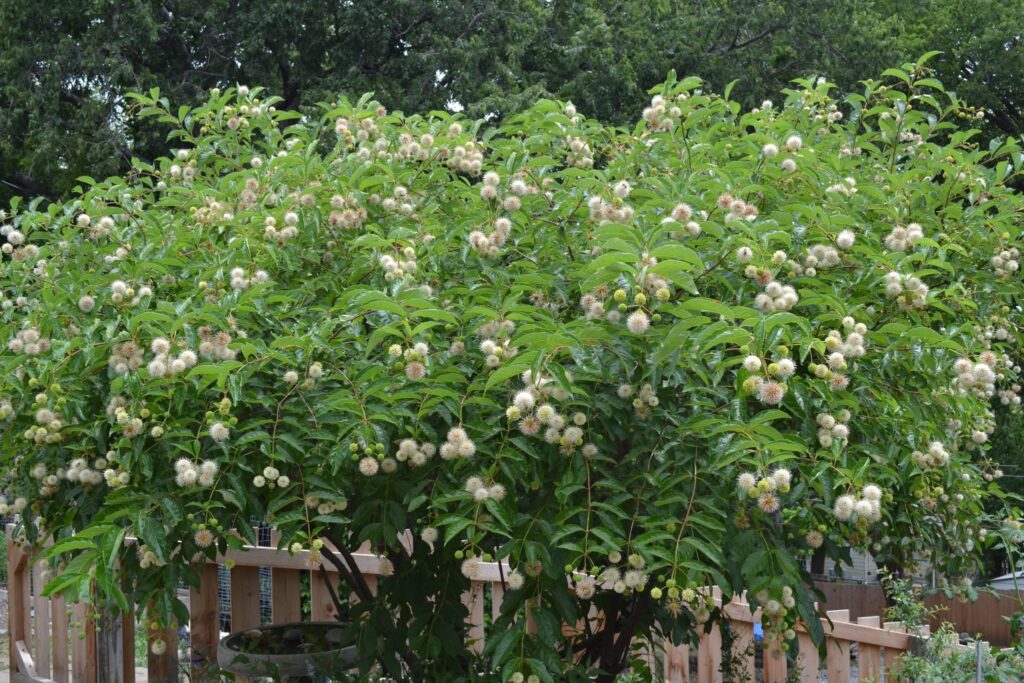
Buttonbush produces one of the most unusual flowers among New York’s native shrubs: a perfectly spherical, fragrant white bloom that looks almost artificial up close.
Those flower balls draw butterflies, hummingbirds, and native bees in large numbers throughout the summer. According to the USDA PLANTS Database, this shrub is native across a wide swath of eastern and central North America, including New York State.
Buttonbush needs consistently moist to wet soil and full sun to perform its best. It is one of the top choices for rain gardens, pond margins, and wetland restoration projects.
Expect a rounded shape reaching about 8 feet tall and wide, hardy through zones 5 to 11.
10. Maple-Leaved Viburnum (Viburnum acerifolium)
Maple-leaved viburnum earns its name from soft, maple-shaped leaves that set it apart from other viburnum species. It stays smaller and more delicate looking than arrowwood viburnum.
Small clusters of white flowers appear in late spring, followed by dark-blue berries that ripen through fall. The foliage then turns an unusual pale, bluish-pink shade before dropping.
This is a true understory shrub, thriving in partial to full shade with dry to moist, well-drained soil. It rarely exceeds 5 feet in height or spread.
I recommend it for shaded woodland gardens where taller viburnums would overwhelm the space.
11. American Hazelnut (Corylus americana)
American hazelnut forms dense, vase-shaped clumps of stems topped with large, rough-textured leaves. It produces genuinely edible nuts, a rare trait among ornamental native shrubs.
Wildlife notices those nuts too. Ruffed grouse rely on hazelnut as an important food source, alongside squirrels and other small mammals.
This shrub adapts to nearly any light condition, from full sun to full shade, and tolerates both dry and wet soil. It reaches around 10 feet tall with an equal spread.
Fall color runs through shades of orange, gold, and red, giving this shrub multi-season interest beyond its nuts.
12. Nannyberry (Viburnum lentago)
Nannyberry is a large, multi-stemmed shrub that can be trained into a small single-trunked tree if you prefer that shape. Its glossy foliage looks healthy through most of the growing season.
Clusters of small white flowers in spring lead to dark-blue berries that persist into winter, feeding birds during lean months. Notably, nannyberry resists the viburnum leaf beetle, a pest that damages many other viburnum species.
It grows in full sun to light shade with moist to wet soil, reaching an impressive 25 feet tall with a 15-foot spread. That size makes it more of a small tree than a typical shrub.
Use nannyberry where you need height and screening without waiting decades for a full-sized tree.
13. Northern Bush-Honeysuckle (Diervilla lonicera)
Despite the name, northern bush-honeysuckle is not a true honeysuckle at all. It carries slender stems, finely toothed glossy leaves, and yellow flowers that bloom through summer.
New growth often emerges with a reddish-bronze tint before shifting to green, and fall brings orange, gold, and red tones. This shrub spreads readily, making it a useful low groundcover for slopes.
It tolerates dry soil and drought conditions well, needing very little supplemental water once established. Expect a compact size around 3 feet tall and wide.
This is a practical pick for difficult, dry spots where other flowering shrubs tend to struggle.
14. Bayberry (Morella pensylvanica)
Bayberry is built for coastal conditions. Sandy soil, salt spray, and occasional flooding barely slow it down, which explains its popularity in seaside and urban landscapes across New York.
Its glossy, aromatic, semi-evergreen leaves stay attractive well into winter in milder years. The shrub also resists most common insect and disease problems, reducing maintenance further.
Bayberry tolerates pruning well, so it works as a shaped hedge or an informal, natural-looking screen. It reaches roughly 10 feet tall and wide at maturity.
If you garden on Long Island or anywhere near salted winter roads, bayberry deserves serious consideration.
15. Black Chokeberry (Aronia melanocarpa)
Black chokeberry, often labeled simply as Aronia, produces white spring flowers followed by clusters of black berries. Those berries are notably high in antioxidants, which has driven renewed interest in the plant for small-scale fruit production.
Fall foliage turns a rich red, adding another season of visual interest beyond the fruit and flowers. Birds also eat the berries, though many wait until after the first hard frost softens them.
This shrub adjusts to both wet and dry soil, and it tolerates a range of light conditions from full sun to partial shade. It typically stays under 10 feet tall.
Black chokeberry suits rain gardens, mixed borders, and edible landscaping projects equally well.
16. Ninebark (Physocarpus opulifolius)
Ninebark gets its name from bark that peels away in multiple thin layers, revealing different shades underneath. That texture makes it a standout even in winter, when the leaves are gone.
Clusters of small white or pink flowers appear in late spring, drawing pollinators before most summer bloomers get started. Reddish seed capsules follow and add extra color through late summer.
This shrub handles poor soil, drought, and periodic wet spells with equal ease, which is why it shows up so often in erosion-control plantings. It grows quickly, often reaching 5 to 10 feet tall.
Several ornamental cultivars with dark purple or gold foliage exist, though the straight native species remains the best choice for wildlife value.
17. Witch Hazel (Hamamelis virginiana)
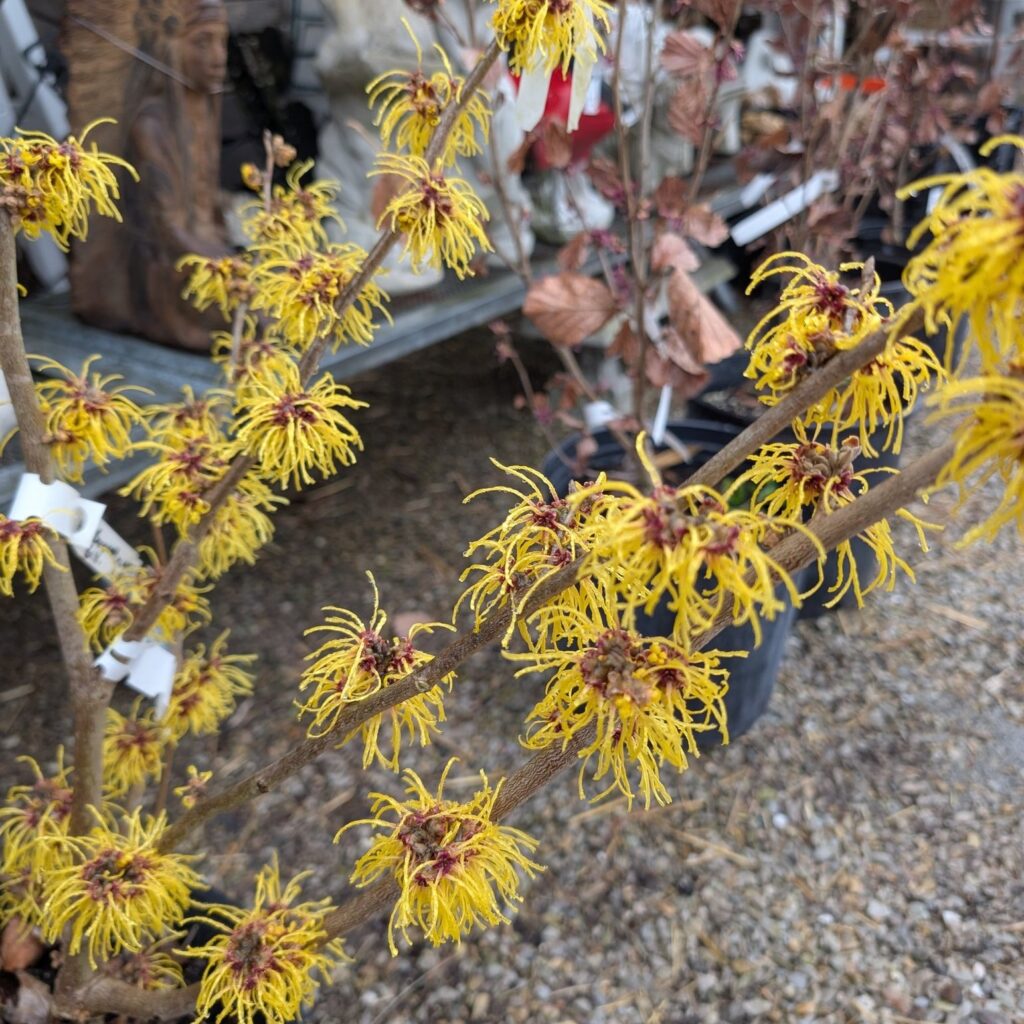
Witch hazel does something almost no other New York native shrub can manage: it blooms in late fall and early winter, when everything else has gone dormant. Its thin, spidery yellow petals unfurl even after frost.
This unusual bloom time makes witch hazel a critical late-season nectar source for a handful of cold-tolerant insects still active in November. It is also the source of the astringent extract sold commercially under the same name.
It grows best in partial shade with moist, well-drained soil, mimicking its natural home along woodland edges. Mature shrubs can reach 20 feet tall, though many stay smaller in garden settings.
Plant witch hazel where you will walk past it in late autumn. The surprise of yellow flowers against bare branches is genuinely memorable.
18. Mountain Laurel (Kalmia latifolia)
Mountain laurel brings broadleaf evergreen structure to New York gardens, a trait few native shrubs on this list share. Its cup-shaped pink to white flowers bloom in dense clusters during late spring.
This shrub prefers acidic, well-drained soil and dappled woodland shade, closely matching the conditions found in its native forest understory habitat. It struggles in heavy clay or compacted soil.
Growth is slow but steady, eventually reaching 7 to 15 feet tall in ideal conditions. Established plants can live for decades with minimal care.
One important note: all parts of mountain laurel are toxic if ingested, so keep that in mind around grazing livestock or curious pets.
19. Sweetfern (Comptonia peregrina)
Despite its name and fern-like foliage, sweetfern is a true flowering shrub, not a fern at all. Crushing a leaf releases a sweet, resinous fragrance that gives the plant its common name.
This shrub is remarkably tough. It thrives in poor, dry, sandy soil where few other native shrubs would survive, including exposed slopes and barren restoration sites.
Sweetfern also fixes nitrogen in the soil through a relationship with beneficial bacteria in its roots, gradually improving fertility over time. That makes it a favorite for reclaiming disturbed land.
Expect a low, spreading form around 2 to 4 feet tall, ideal for erosion control on dry, exposed banks.
20. Inkberry (Ilex glabra)
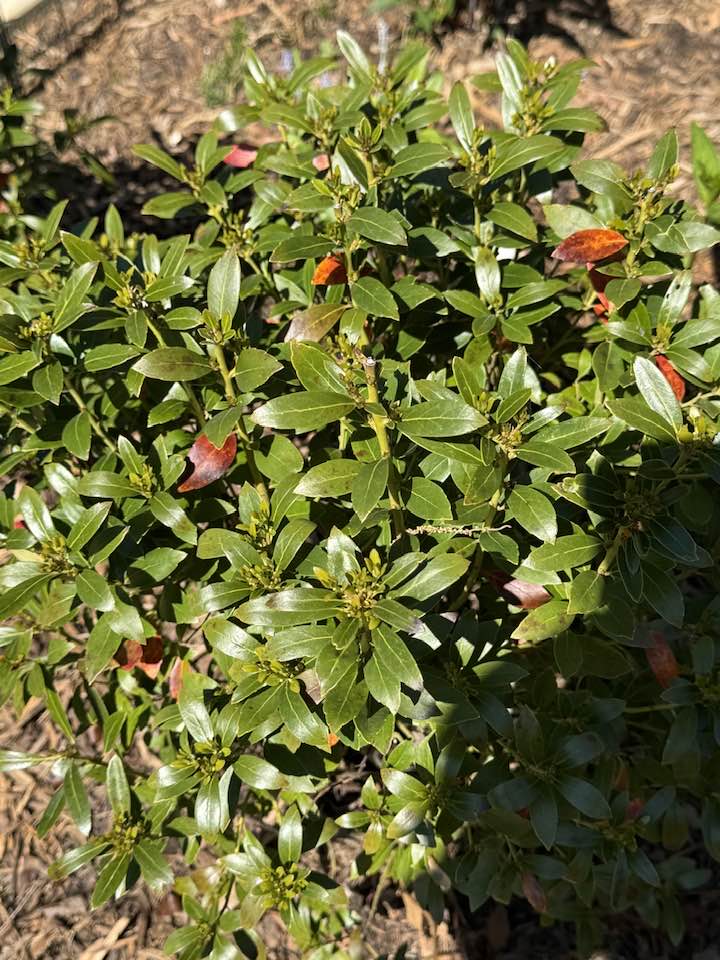
Inkberry is an evergreen holly that offers a native alternative to non-native boxwood, minus the disease issues boxwood often faces. Its small, glossy leaves stay green through winter.
Female plants produce small black berries that persist into the colder months, offering food for birds when options are limited. Inkberry needs a nearby male plant to set fruit reliably.
This shrub tolerates wet soil exceptionally well and adapts to both full sun and partial shade. It typically reaches 5 to 8 feet tall, though compact cultivars stay smaller.
Use inkberry for foundation plantings, low hedges, or anywhere you want year-round structure without sacrificing native plant value.
Why Native Shrubs Matters
Native shrubs solve problems non-native plants create. They need less water, resist local pests better, and rarely become invasive threats to surrounding wild areas.
They also close a gap that ornamental plants leave open. Many introduced shrubs offer little to no food value for native insects, which means the birds that depend on those insects go hungry too.
New York’s climate is not gentle. Harsh winters, humid summers, and increasingly unpredictable rainfall test every plant in a landscape.
Native shrubs have already passed that test, over thousands of years, which is exactly why they keep showing up on official state and conservation planting lists.
Final Thoughts
Twenty shrubs is a lot to take in, so start small. Pick two or three species that match your soil, sunlight, and space, then expand from there once you see how they perform.
I always tell people to plant for the seasons they forget about. A shrub like witch hazel or winterberry earns its spot by looking good in November and December, when most gardens go quiet.
Whatever you choose, you will be planting something that already belongs here. That is a quiet kind of satisfaction that no imported ornamental can quite match.
References
- New York State Department of Environmental Conservation, “Native Flowers, Grasses, Shrubs, Trees, and Vines” — https://extapps.dec.ny.gov/docs/lands_forests_pdf/factnatives.pdf
- New York State Department of Environmental Conservation, “Native Plant Priority List” — https://dec.ny.gov/nature/animals-fish-plants/plants/native-plant-priority-list
- Cornell University, Woody Plants Database, “Ilex verticillata” — https://woodyplants.cals.cornell.edu/plant/119
- USDA PLANTS Database, “Cephalanthus occidentalis” — https://plants.usda.gov/plant-profile/ceoc2
- U.S. Fish & Wildlife Service, “How We Help Pollinators” — https://www.fws.gov/initiative/pollinators/how-fws-helps
- New York City Department of Parks & Recreation, “Native Plants of New York City” — https://www.nycgovparks.org/learn/trees-and-plants/native-plants-of-new-york-city
- New York Flora Atlas, University of South Florida, “Ilex verticillata” — https://newyork.plantatlas.usf.edu/plant.aspx?id=125

Tim M Dave is a gardening expert with a passion for houseplants, particularly cacti and succulents. With a degree in plant biology from the University of California, Berkeley, he has vast experience in gardening. Over the years, he has cultivated a vast collection of desert plants and learned a great deal about how to grow and care for these unique companions.