20 Montana Native Trees (With Growing Details)
Montana’s forests support a working timber economy, recreation industry, and wildlife habitat all at once. Public agencies manage about 71% of the state’s forestland, while roughly 24% remains in private hands, spread across more than 83,000 nonindustrial landowners.
These forests also face real pressure. Wildfire, drought, and insect outbreaks like mountain pine beetle have reshaped entire mountainsides over the past two decades. Knowing which species are native — rather than planted ornamentals — helps landowners and hikers alike understand what belongs on the land and what does not.
I have spent enough time hiking western Montana to know that the trees change almost as fast as the terrain does. Cross the Continental Divide and the whole forest character shifts within a few miles. That variety is exactly why a solid identification guide matters here more than in most states.
Let’s get into the 20 Montana native species.
Native Conifers of Montana
1. Ponderosa Pine
Ponderosa pine is Montana’s official state tree, a title made official in 1949 after Helena schoolchildren first voted for it back in 1908. It beat out Douglas fir, western larch, and cottonwood for the honor, and it remains the tree most people picture when they think of Montana’s dry, open forests.
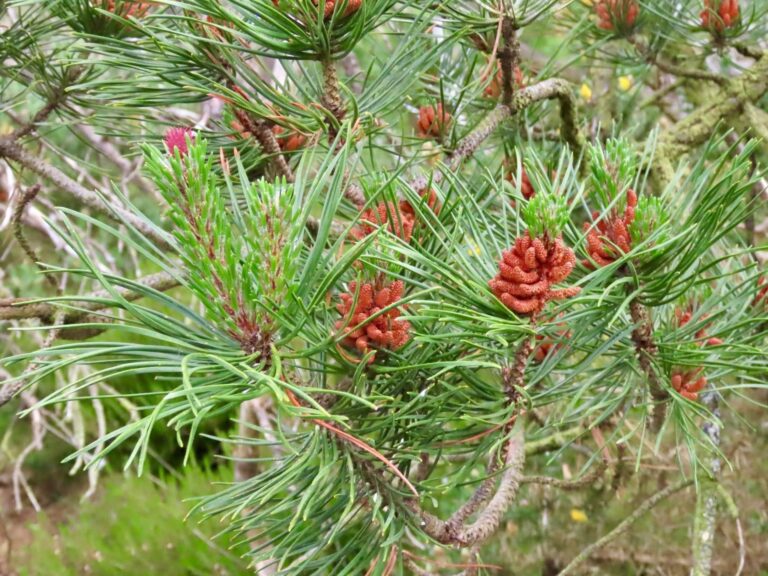
You can identify it by its long needles, usually five to ten inches, bundled in twos or threes, and its thick, puzzle-piece bark. Older bark turns a warm orange-brown and smells faintly of vanilla or butterscotch if you lean in close.
Mature trees typically reach 60 to 100 feet, though exceptional specimens have topped 150 feet. Ponderosa pine tolerates fire well thanks to its thick bark, and historic low-intensity fires once kept these forests open and park-like.
This species remains Montana’s most commercially important timber tree, built into railroad ties, mine bracing, and homes across the state for well over a century.
2. Douglas-Fir
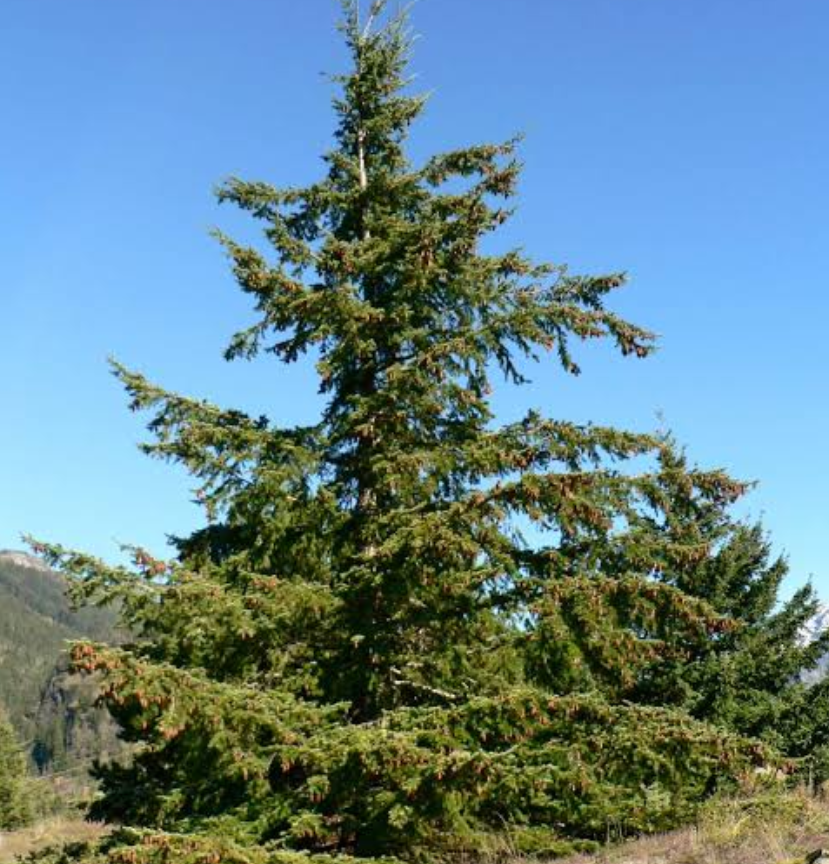
Douglas fir is one of Montana’s three most common forest types, alongside lodgepole and ponderosa pine, and it covers roughly 31% of the state’s forested acreage. Despite its common name, it is not a true fir at all.
The needles are soft, flat, and grow individually around the twig rather than in bundles. Cones are the easiest identification trick: look for distinctive three-pointed bracts sticking out between the scales, often described as looking like tiny mouse tails and hind legs.
Douglas-fir grows across a wide elevation range in western Montana, from moist valley bottoms to drier mid-elevation slopes, and it is prized commercially for its strong, versatile lumber.
3. Western Larch (Tamarack)
Western larch is one of the most striking trees in Montana each autumn. Like Maine’s tamarack, it is a conifer that sheds its needles every fall, but not before turning a brilliant gold that lights up entire mountainsides in October.
Needles grow in soft clusters on short spur shoots and are noticeably longer than tamarack needles found farther east. The bark is thick, deeply furrowed, and reddish-brown, giving mature trees excellent fire resistance.
Western larch was actually a finalist for Montana’s state tree back in 1908, losing narrowly to ponderosa pine. It remains one of the tallest conifers in the Northern Rockies, with old-growth specimens exceeding 150 feet.
4. Lodgepole Pine
Lodgepole pine makes up about 17% of Montana’s forest cover and is famous for its dense, uniform stands that regenerate rapidly after fire. Its cones are actually serotinous in many populations, meaning they stay sealed shut with resin until intense heat melts the seal and releases the seeds.
Needles grow in bundles of two, are twisted, and rarely exceed three inches long. The bark is thin, gray, and scaly, offering little fire protection compared to ponderosa pine.
Historically, Native American tribes used the tree’s straight, slender trunks to build lodges, which is exactly where the common name comes from. Lodgepole remains a major pulpwood and construction species today.
5. Engelmann Spruce
Engelmann spruce thrives at higher elevations in Montana, often forming subalpine forests alongside subalpine fir near the treeline. Its needles are sharp, four-sided, and blue-green, radiating around the twig in every direction.
You can roll a needle between your fingers to check its shape — spruce needles are angular, while fir needles are flat. This simple trick separates Engelmann spruce from its high-elevation neighbors quickly.
The bark is thin, grayish-brown, and flakes off in small, loose scales. Engelmann spruce wood is valued for its resonant qualities, occasionally used in musical instrument production, much like its eastern cousin, red spruce.
6. Subalpine Fir
Subalpine fir grows at Montana’s highest forested elevations, often forming the last line of trees before alpine tundra takes over. Its narrow, spire-like crown helps it shed heavy mountain snowloads without breaking.
Needles are flat, soft, and slightly upturned, with two pale stripes on the underside. Unlike spruce, fir needles do not roll easily between your fingers, since they lack that angular cross-section.
At extreme elevations, subalpine fir sometimes grows in a stunted, twisted form called krummholz, shaped entirely by relentless wind exposure near the treeline.
7. Grand Fir
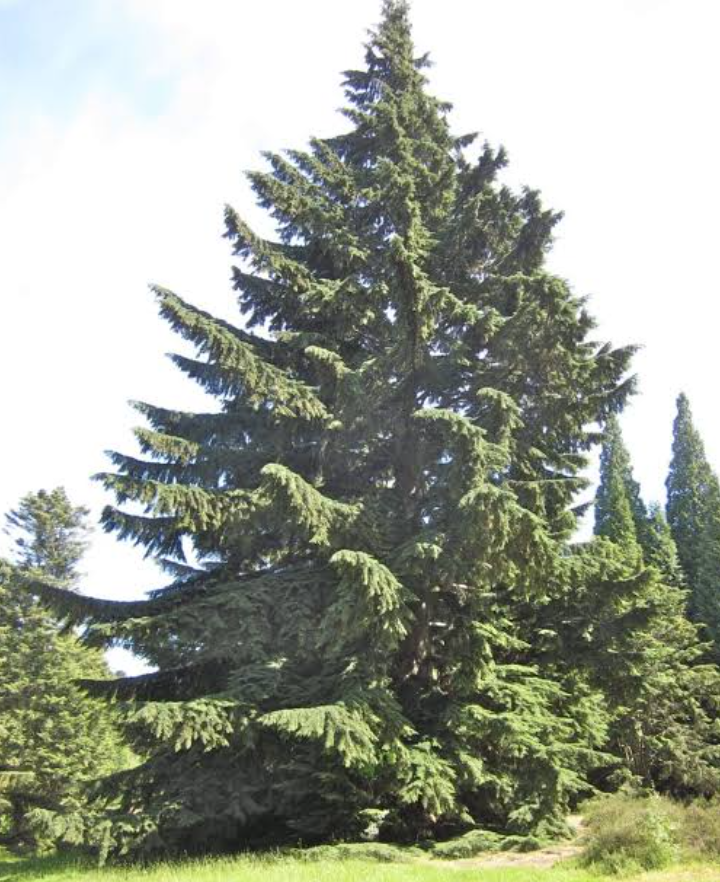
Grand fir is found mainly in Montana’s moist northwestern forests, where Pacific air masses bring enough precipitation to support lusher, more diverse tree communities. It is one of the largest true firs in the Rocky Mountain region.
Needles are flat and glossy dark green on top, arranged in a distinctive flat spray along the branch, similar in overall look to hemlock foliage. Crushed needles give off a citrusy, almost orange-peel scent.
Grand fir can reach impressive heights in favorable sites, occasionally exceeding 200 feet in the wettest parts of its Montana range near the Idaho border.
8. Western Hemlock
Western hemlock reaches into Montana’s northwestern corner, where moist, shaded valleys mimic conditions found farther west in Idaho and the Pacific Northwest. It is one of the more shade-tolerant conifers in the state.
The needles are short, flat, and unevenly arranged, giving the branch a slightly ragged, feathery appearance. Like eastern hemlock, the growing tip of each branch droops gracefully downward.
This tree favors cool, humid microclimates and rarely appears far from Montana’s wettest forest pockets, making it something of a specialty find for tree-spotters exploring the state’s northwest corner.
9. Western Redcedar
Western redcedar grows in the same moist northwestern Montana forests as western hemlock and grand fir, often forming impressive old-growth groves. Its flattened, scale-like foliage grows in fan-shaped sprays with a pleasant, spicy fragrance.
The bark is stringy, reddish-brown, and peels in long vertical strips, historically used by Indigenous peoples for rope, baskets, and clothing. This is one of the most rot-resistant native woods anywhere in North America.
Some western redcedar groves in Montana’s Ross Creek area contain trees over 500 years old, with trunks exceeding eight feet in diameter, offering a rare glimpse of true old-growth forest structure.
10. Whitebark Pine
Whitebark pine grows at Montana’s highest, harshest elevations, often near mountain summits where few other trees survive. It plays an outsized ecological role, since its large seeds are a critical food source for grizzly bears and Clark’s nutcrackers.
Needles grow in bundles of five, similar to eastern white pine, and cones are purplish and stay closed, relying on birds and animals to break them open and disperse seeds.
Unfortunately, whitebark pine is now federally listed as threatened due to white pine blister rust, mountain pine beetle outbreaks, and climate-driven habitat shifts, making conservation of remaining stands a genuine priority for state and federal agencies.
11. Limber Pine
Limber pine grows on Montana’s dry, windswept ridgelines, often twisted into dramatic shapes by decades of exposure. Its name comes from its unusually flexible young branches, which can bend without snapping.
Needles also grow in bundles of five, making it easy to confuse with whitebark pine at first glance. The best distinction is cone shape: limber pine cones open normally and often show a sticky, resinous coating.
This tough, slow-growing species can live for over 1,000 years in the harshest sites, making some limber pines among the oldest living organisms in Montana.
12. Rocky Mountain Juniper
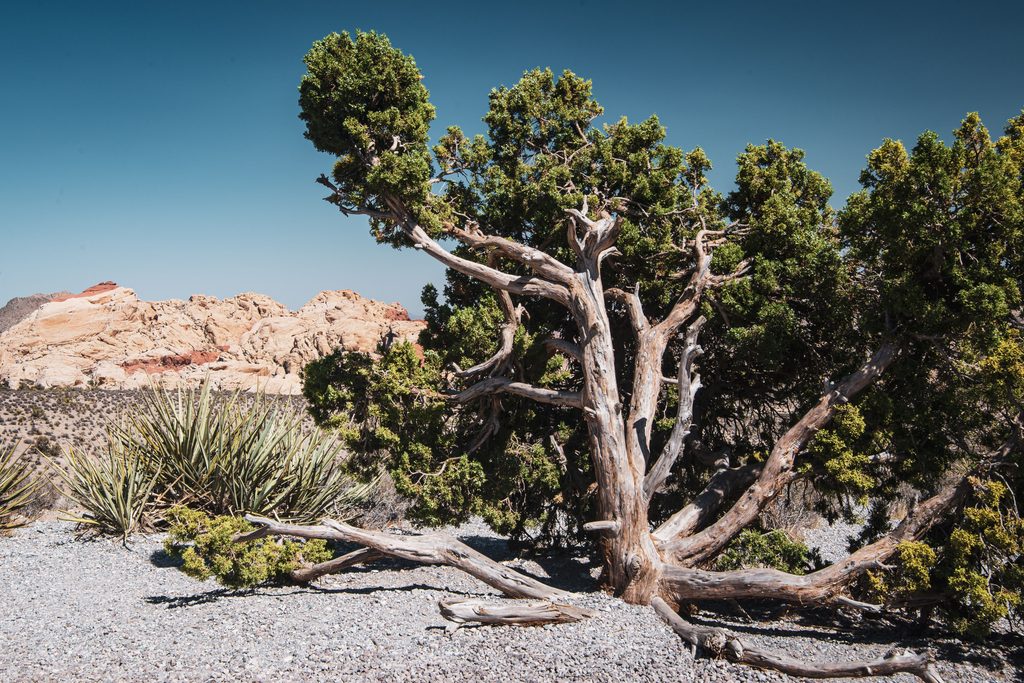
Rocky Mountain juniper is a small, tough conifer common on dry hillsides and rocky outcrops across Montana’s plains and foothills. Its scale-like, blue-green foliage and shredding, reddish bark make it easy to spot even from a distance.
Female trees produce small, waxy, blue-colored cones that look like berries, often used historically for flavoring and medicinal purposes by regional tribes.
This species tolerates extreme drought and poor soil better than almost any other Montana native conifer, thriving in badlands terrain where few other trees can survive at all.
Native Hardwoods of Montana
13. Quaking Aspen
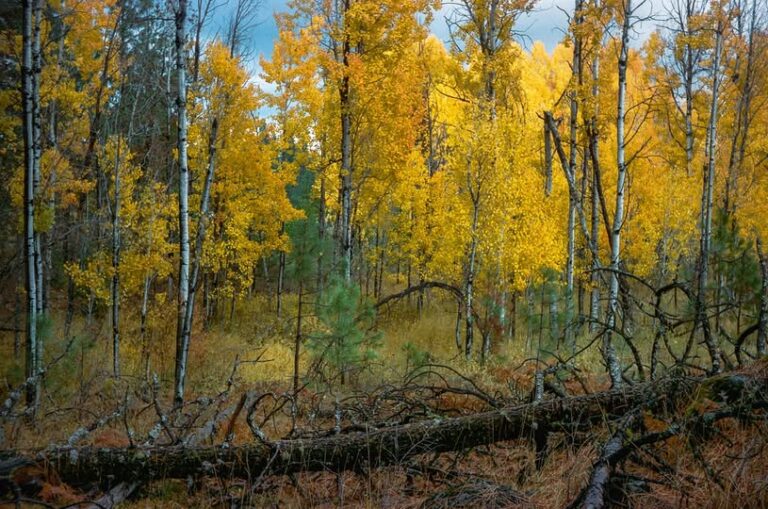
Quaking aspen is Montana’s most widespread native hardwood, instantly recognizable by its smooth, pale bark and leaves that tremble in the lightest breeze. Its flattened leaf stems allow that constant fluttering motion.
Aspen often grows in large clonal groves connected by a single shared root system, meaning an entire hillside of “individual” trees may genetically be one single organism. Some Rocky Mountain aspen clones are estimated to be thousands of years old.
Fall color runs bright gold, drawing photographers and leaf-peepers to Montana’s mountain valleys every September. Aspen groves also provide critical habitat for elk, deer, and a wide range of bird species.
14. Black Cottonwood
Black cottonwood grows along Montana’s rivers and stream bottoms, often reaching the largest size of any native hardwood in the state. Mature trees can exceed 100 feet, with broad, spreading crowns that provide welcome shade in riparian zones.
The leaves are heart-shaped to triangular, dark green above and paler below, turning yellow in autumn. In early summer, cottonwoods release clouds of cottony seed fluff that drift for miles, giving the tree its common name.
Cottonwood stands stabilize riverbanks and support beaver, songbird, and fish habitat, making them one of the most ecologically important native trees along Montana’s waterways.
15. Narrowleaf Cottonwood
Narrowleaf cottonwood is a close relative of black cottonwood, but as the name suggests, its leaves are notably narrower and more willow-like. It favors higher-elevation stream corridors than its broader-leafed cousin.
Bark on younger trees is smooth and greenish-gray, developing furrows with age. This species frequently hybridizes with black cottonwood where their ranges overlap, occasionally making precise identification tricky in the field.
Like black cottonwood, it plays a key role in stabilizing mountain stream banks and supporting riparian wildlife corridors throughout western and central Montana.
16. Water Birch
Water birch grows along Montana’s streams and moist drainages, typically as a multi-stemmed shrub or small tree rather than a tall, single-trunk specimen. Its bark is dark, reddish-brown, and shiny, marked with pale horizontal lenticels.
Leaves are small, oval, and sharply toothed, turning yellow in fall. Unlike paper birch, water birch bark does not peel in large white sheets, which is the quickest way to tell the two species apart in the field.
This hardy native tolerates Montana’s cold winters and fluctuating stream levels well, often forming dense thickets that stabilize eroding creek banks.
17. Paper Birch
Paper birch reaches into parts of northwestern Montana, sharing the same bright white, peeling bark that makes it so recognizable across the northern United States. Indigenous peoples throughout its range historically used the bark for canoes, containers, and shelter coverings.
The leaves are oval with a pointed tip and doubly toothed edges, turning golden yellow in autumn. This species prefers cooler, moister sites than most of Montana can offer, which limits its range mainly to the state’s northwestern corner.
Paper birch is relatively short-lived, but it regenerates quickly after fire or logging, making it a valuable early successional species in disturbed forest areas.
18. Bigtooth Maple
Bigtooth maple, sometimes called canyon maple, grows in scattered pockets across southern and central Montana, often in sheltered canyons and draws. It is one of the few native maples truly established in the state.
Its leaves resemble a smaller version of sugar maple foliage, with three to five lobes and irregular, large teeth along the edges — hence the common name. Fall color ranges from yellow to a vivid orange-red.
Because it typically grows as a large shrub or small tree rather than a towering hardwood, bigtooth maple is easy to overlook, but its autumn display in places like the Pryor Mountains is genuinely worth seeking out.
19. Green Ash
Green ash grows naturally along Montana’s eastern river valleys and floodplains, particularly near the Yellowstone and Missouri Rivers. It is one of the few native ash species adapted to the state’s drier, more continental eastern climate.
Its compound leaves consist of seven to nine leaflets arranged opposite one another, turning a soft yellow in autumn. The bark is gray-brown with a distinct diamond-shaped furrow pattern.
Emerald ash borer, an invasive beetle already devastating ash trees farther east, has not yet been confirmed in Montana, and state agencies actively monitor for its arrival to protect remaining native stands.
20. Chokecherry
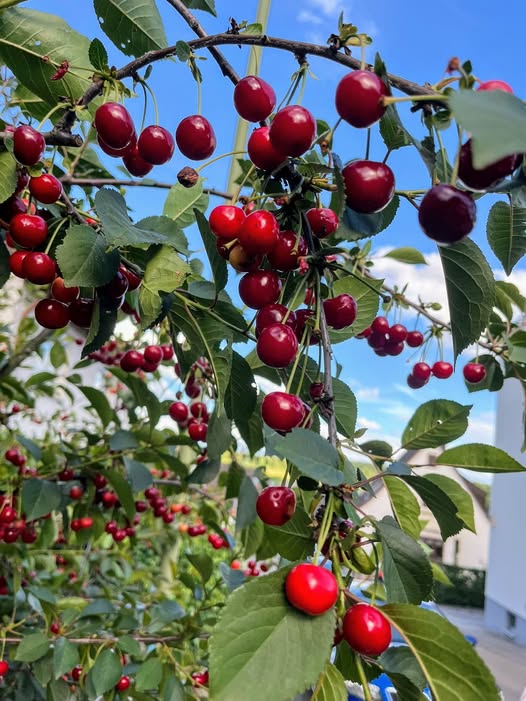
Chokecherry rounds out this list as one of Montana’s most culturally significant native trees, historically used by Indigenous communities to make pemmican and other traditional foods. It typically grows as a large shrub or small tree along fence lines, draws, and forest edges statewide.
White flower clusters bloom in spring, followed by small, dark red-to-black cherries in late summer that are tart and astringent when raw but commonly used in jams, syrups, and wine once cooked.
Wildlife rely heavily on chokecherry fruit, including black bear, deer, and dozens of native bird species, making this modest tree a surprisingly important food source across Montana’s rangelands and forest margins.
Where to See Montana’s Native Trees in Person
Glacier National Park offers an excellent cross-section of high-elevation species like whitebark pine, subalpine fir, and Engelmann spruce. The Ross Creek Cedars in the Kootenai National Forest showcase genuine old-growth western redcedar, some of the most impressive trees in the entire state.
For drier-climate species like ponderosa pine and Rocky Mountain juniper, the foothills around Helena and the Bitterroot Valley provide easy, accessible viewing without a long backcountry hike.
Final Thoughts
Learning these 20 Montana native trees changed how I experience every drive across the state. What once looked like a uniform wall of green now reads as a map of elevation, moisture, and fire history — larch marking cool north slopes, ponderosa signaling dry south-facing ground, cottonwood tracing every river line from a distance.
Montana’s forests continue to face pressure from wildfire, drought, and invasive pests. Getting to know these native species now is a small but genuine way to notice how the landscape keeps changing.
References
- Montana Department of Natural Resources and Conservation — Forestry Landowner Resources: https://dnrc.mt.gov/forestry/Resources/
- Montana State University Extension Forestry — Forest Owners in Montana: https://www.montana.edu/extension/forestry/forestproducts/forest_owners.html
- USDA Forest Service — State and Private Forestry Fact Sheet, Montana 2026: https://apps.fs.usda.gov/nicportal/temppdf/sfs/naweb/MT_std.pdf
- Montana Natural Heritage Program — Montana Field Guide: https://fieldguide.mt.gov/
- National Park Service — Ponderosa Pine Species Profile: https://nps.gov/articles/000/ponderosa-pine.htm
- Montana Fish, Wildlife & Parks — Montana Outdoors: State Symbols: https://fwp.mt.gov/binaries/content/assets/fwp/montana-outdoors/2011/statesymbols.pdf
- Montana State University Extension Forestry — Publications: https://www.montana.edu/extension/forestry/publications/index.html

Tim M Dave is a gardening expert with a passion for houseplants, particularly cacti and succulents. With a degree in plant biology from the University of California, Berkeley, he has vast experience in gardening. Over the years, he has cultivated a vast collection of desert plants and learned a great deal about how to grow and care for these unique companions.