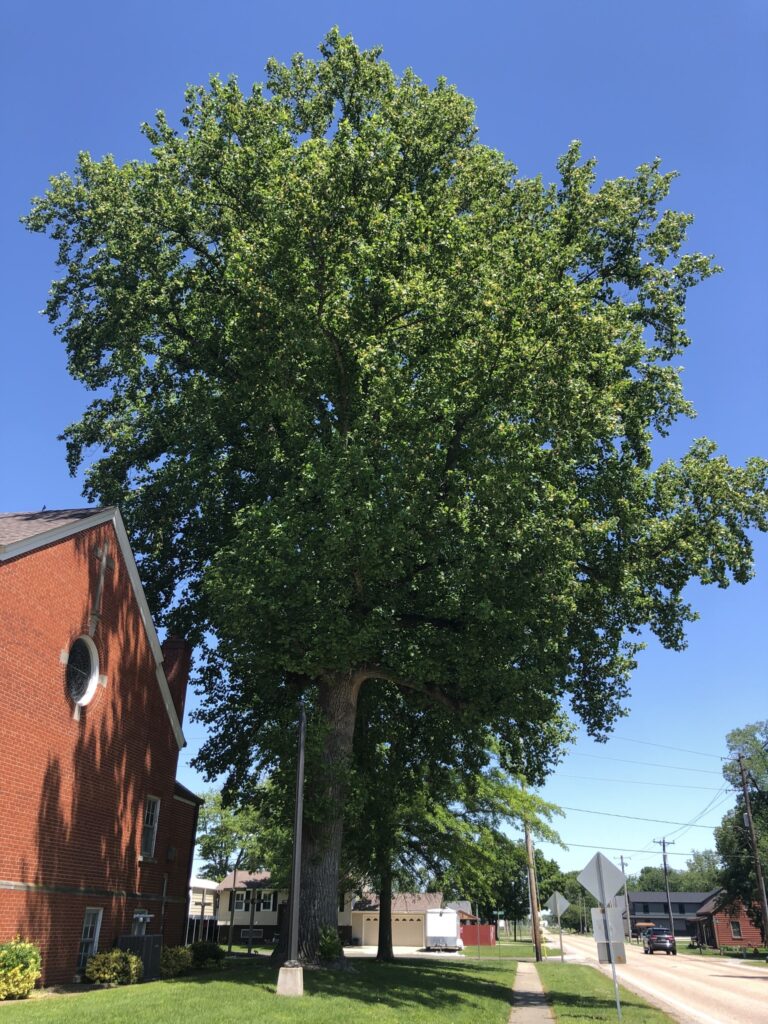
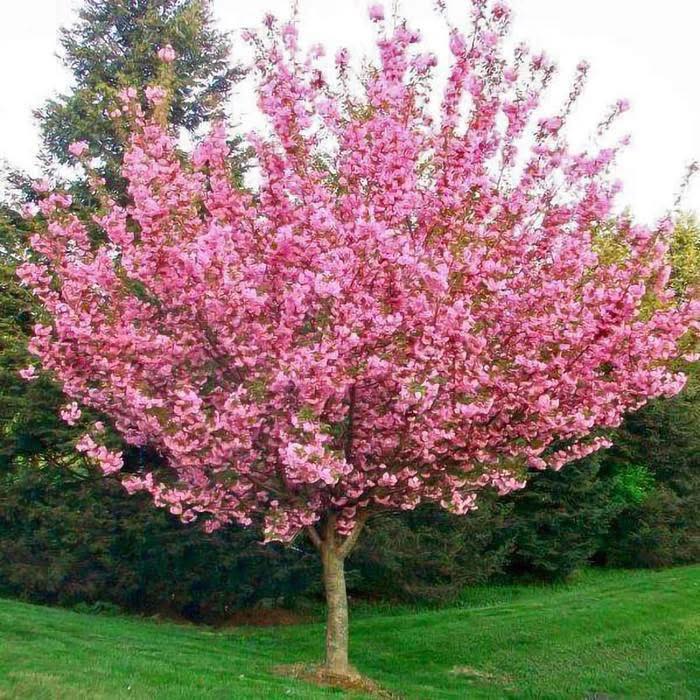
25 Maryland Native Trees (With Growing Details)
Maryland packs an unusual amount of variety into a small state. Mountains in the west, rolling Piedmont through the middle, and flat coastal plain running down to the Chesapeake Bay. Few states this size cover that much ecological ground.
That variety shows up in the trees. What grows easily in Garrett County often struggles on the Eastern Shore, and vice versa. I learned this planting a red spruce too far east and watching it sulk for three straight summers.
The Commercial Maryland Native Plant List, maintained by the University of Maryland Extension and the Department of Natural Resources, currently includes about 675 native species across the state’s three main ecoregions.
This guide covers 25 Maryland native trees, organized by growing condition, so you can pick species suited to your actual property instead of your neighbor’s.
Why Native Trees Matter in Maryland
Native trees evolved alongside Maryland’s soil, rainfall, and temperature swings, which is exactly why they need less babying than imported ornamentals once established.
They also protect the Chesapeake Bay. According to University of Maryland Extension research, trees planted along waterways filter runoff and reduce the nutrient pollution that drives algae blooms and dead zones in the Bay.
Wildlife depends on them too. Native trees support far more caterpillar and insect species than non-native ornamentals, which cascades directly into stronger populations of songbirds that rely on those insects to feed their young.
With that context set, here are the 25 trees worth planting first.
Native Shade Trees for Maryland Yards
1. White Oak (Quercus alba)
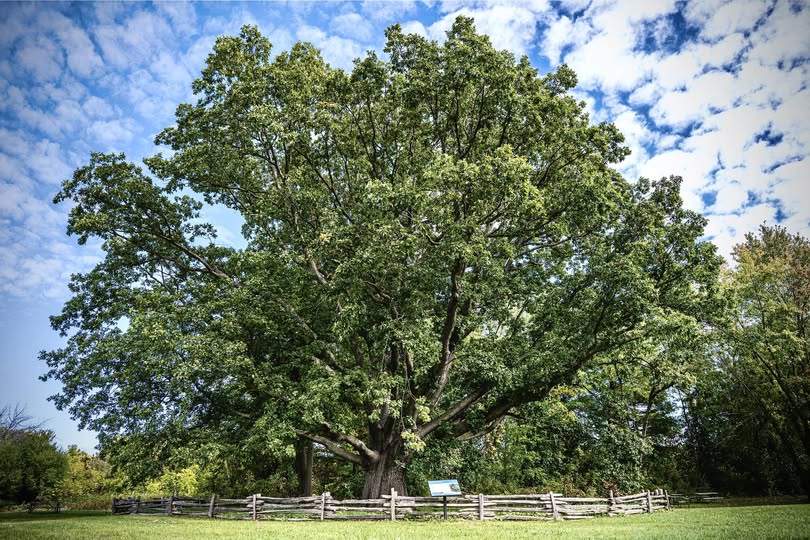
White oak is Maryland’s official state tree, and it earns that title honestly. Few native species match its combined value for wildlife, longevity, and sheer physical presence in a landscape.
It grows slowly but steadily, often living well past 300 years, reaching 80 to 100 feet with a broad, spreading crown. Give it room, because a mature white oak needs serious space.
Wildlife value is exceptional. Acorns feed deer, squirrels, turkeys, and dozens of bird species, and the tree itself hosts hundreds of caterpillar species that songbirds depend on through nesting season.
Fall color runs toward a deep burgundy-red, though it’s subtler than some maples. What white oak lacks in flash, it makes up for in permanence.
READ MORE: White Oak vs Red Oak Tree: Comparison + Which One To Choose
2. Red Maple (Acer rubrum)
Red maple adapts to nearly any soil condition Maryland can offer, from swampy bottomland to dry upland slopes. That flexibility explains why it’s one of the most widespread native trees across the entire state.
Spring brings clusters of small red flowers before the leaves even emerge, an early color signal that winter is finally ending. Fall color follows through, with brilliant red to orange foliage.
Growth is fast for a shade tree, often 2 feet per year in good conditions, reaching 40 to 60 feet at maturity. That speed makes it popular for homeowners who don’t want to wait decades for shade.
One caution: red maple is commonly confused with the non-native, invasive Norway maple at nurseries. Check the leaf and sap carefully before buying.
3. American Beech (Fagus grandifolia)
American beech carries smooth, silver-gray bark that stays striking through every season, unlike most trees whose bark roughens with age. Many people recognize it before they know its name.
It grows slowly, eventually reaching 50 to 70 feet, with a dense canopy that casts deep shade beneath it. Few plants thrive directly under a mature beech, which shapes how you plan the space around it.
Beechnuts feed a wide range of wildlife, including black bears, turkeys, and squirrels, making this tree valuable in larger wooded properties and forest restoration plantings.
Beech leaf disease, a relatively recent threat spreading through the northeastern United States, is worth researching before planting, according to University of Maryland Extension pest alerts.
4. Tulip Poplar (Liriodendron tulipifera)
Tulip poplar is Maryland’s tallest native hardwood, often exceeding 100 feet at maturity, with a straight trunk that made it a favorite for colonial-era ship masts and canoes.
Distinctive tulip-shaped flowers appear in late spring, greenish-yellow with an orange band, though they often go unnoticed high in the canopy. Bees produce a distinctly flavored honey from the nectar.
Growth is fast, sometimes 3 feet a year when young, which makes it an excellent choice for anyone wanting shade sooner rather than later.
It needs deep, moist, well-drained soil to perform well. Compacted or consistently dry sites will hold this tree back significantly.
5. Shagbark Hickory (Carya ovata)
Shagbark hickory gets its name from bark that peels away in long, curling strips, giving mature trees a shaggy, weathered look that’s hard to mistake for anything else.
It grows slowly, often taking 40 years before producing significant nuts, but those nuts are genuinely edible and prized by squirrels, chipmunks, and human foragers alike.
Mature height reaches 60 to 80 feet with a tall, straight form well suited to larger properties rather than small residential lots.
This is a patient person’s tree. It won’t reward you quickly, but a mature shagbark hickory becomes a defining feature of any landscape it occupies.
6. Black Gum (Nyssa sylvatica)
Black gum, sometimes called tupelo, produces some of the earliest and most reliable fall color of any native Maryland tree, often turning brilliant scarlet weeks before maples follow suit.
It adapts to both wet, poorly drained soil and drier upland sites, a flexibility that makes it useful across nearly every part of the state.
Small blue-black fruit follows inconspicuous spring flowers, and birds, particularly migrating songbirds, strip it quickly each fall.
Mature height reaches 30 to 50 feet with a straight trunk and horizontal branching pattern that gives it strong winter structure once leaves drop.
Native Understory and Ornamental Trees
7. Eastern Redbud (Cercis canadensis)

Eastern redbud announces spring with clusters of pink-purple flowers that appear directly on bare branches before the leaves emerge. It’s one of the most photographed native trees in Maryland each April.
It stays compact, typically 20 to 30 feet, making it a practical choice for smaller yards where a full-size shade tree won’t fit.
Heart-shaped leaves follow the bloom, turning yellow in fall, though the spring flower display remains the tree’s primary appeal for most homeowners.
It tolerates part shade well, often thriving as an understory tree beneath taller natives like white oak or tulip poplar.
8. Flowering Dogwood (Cornus florida)
Flowering dogwood produces showy white or pink bracts each spring, technically not petals but modified leaves surrounding the true flower cluster at the center.
It grows slowly to about 20 to 30 feet, doing best in part shade with consistently moist, well-drained soil similar to its native forest-edge habitat.
Red berries follow the bloom in fall, feeding more than 35 bird species, according to wildlife research from regional extension programs, making it one of the more valuable ornamental natives for birds.
Dogwood anthracnose, a fungal disease, has affected populations in cooler, wetter regions. Choosing a sunny, well-ventilated planting site reduces that risk considerably.
9. Serviceberry (Amelanchier canadensis)
Serviceberry produces delicate white flowers in early spring, often among the very first native blooms to open, followed by small berries that taste something like a mild blueberry.
It stays small, typically 15 to 25 feet, functioning as either a large shrub or a small tree depending on how it’s pruned and trained over time.
Birds compete seriously for the ripening fruit each June, and depending on how fast they clear it, you may or may not get a taste yourself.
Fall color runs toward orange and red, adding a second season of interest beyond the spring bloom and early summer fruit.
10. American Hornbeam (Carpinus caroliniana)
American hornbeam, sometimes called musclewood for its smooth, sinewy bark, thrives as an understory tree in shaded, moist conditions across Maryland’s forests and stream corridors.
It stays compact, usually 20 to 30 feet, with dense foliage that turns orange-red in fall, offering solid seasonal color in a shade-tolerant package.
Extremely hard wood gave this tree its “ironwood” nickname among early settlers, though the wood was too small in diameter for most commercial lumber uses.
It tolerates wet soil and occasional flooding well, making it a strong choice near streams, low spots, or rain garden edges.
11. Pawpaw (Asimina triloba)
Pawpaw produces the largest edible fruit native to North America, with a custard-like texture and tropical flavor that surprises most people who try it for the first time.
It grows in the understory of moist woodlands, tolerating shade better than most fruiting trees, typically reaching 15 to 20 feet at maturity.
This is the sole host plant for the zebra swallowtail butterfly, meaning a pawpaw planting directly supports that species’ entire life cycle in your area.
Fruit ripens in early fall, and you’ll need at least two genetically distinct trees nearby for reliable pollination and fruit production.
Native Evergreen and Conifer Trees
12. Eastern White Pine (Pinus strobus)
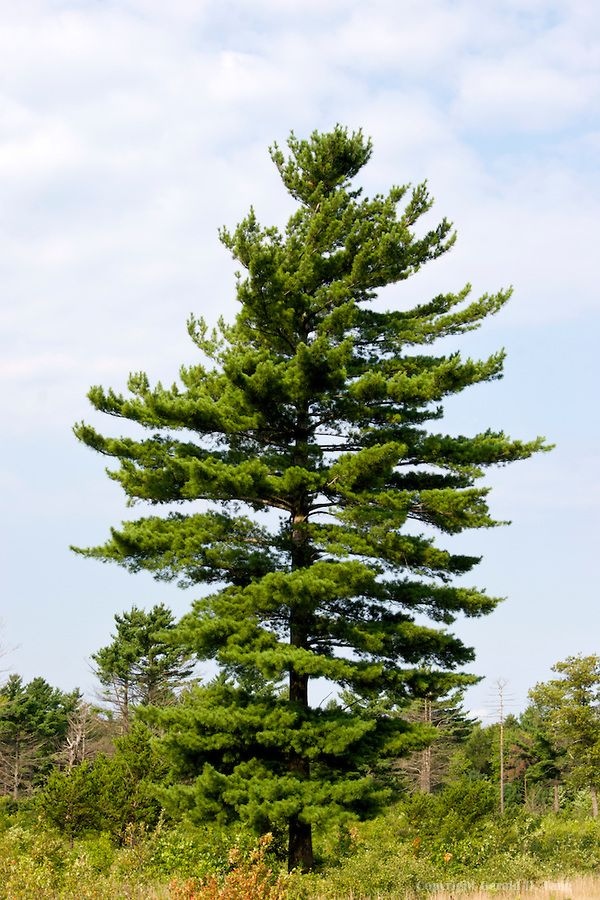
Eastern white pine grows faster than nearly any other native conifer in Maryland, often adding 2 to 3 feet per year in favorable conditions, reaching heights of 80 feet or more at maturity.
Soft, blue-green needles in bundles of five give it a texture noticeably different from harsher native pines, making it a popular ornamental choice for screening and windbreaks.
It prefers moist, well-drained soil and struggles in compacted urban conditions or heavy clay, so site selection matters more with this species than with tougher natives.
Owls and other raptors favor mature white pines for nesting, and the dense evergreen cover provides valuable winter shelter for songbirds statewide.
13. Eastern Red Cedar (Juniperus virginiana)
Eastern red cedar tolerates poor, dry, rocky soil better than almost any other native evergreen in Maryland, often the first tree to colonize abandoned fields and disturbed ground.
It grows into a dense, conical form reaching 30 to 40 feet, providing year-round privacy screening and windbreak value that few deciduous trees can match.
Female trees produce small blue, berry-like cones that feed cedar waxwings, robins, and other birds heavily through fall and winter months.
It does host cedar-apple rust, a fungal disease that also affects apple trees, so avoid planting it near orchards or apple trees if that’s a concern.
14. Atlantic White Cedar (Chamaecyparis thyoides)
Atlantic white cedar grows in the swampy, acidic wetlands of Maryland’s coastal plain, forming dense stands historically prized for rot-resistant lumber used in boat building.
It reaches 40 to 60 feet with a narrow, columnar form and soft, scale-like foliage that stays green year-round, distinct from the coarser eastern red cedar.
This species has declined significantly across its historic range due to wetland drainage and logging, making restoration plantings particularly valuable in appropriate coastal sites.
It requires consistently wet, acidic soil to thrive, so this is a specialist tree suited to specific coastal plain conditions rather than typical home landscapes.
15. Table Mountain Pine (Pinus pungens)
Table Mountain pine grows almost exclusively on exposed, rocky ridgelines in western Maryland’s mountain region, adapted to thin soil and harsh wind that would stunt most other trees.
It stays relatively short, typically 20 to 40 feet, with a gnarled, irregular form shaped directly by the difficult conditions it grows in.
Fire plays a role in this species’ natural life cycle, with cones that can remain closed for years until heat triggers seed release, an adaptation to historic mountain wildfire patterns.
This is a specialty tree for western Maryland properties with rocky, exposed sites. It won’t perform the same way in Piedmont or coastal plain gardens.
Native Trees for Wet Soil and Stream Buffers
16. River Birch (Betula nigra)
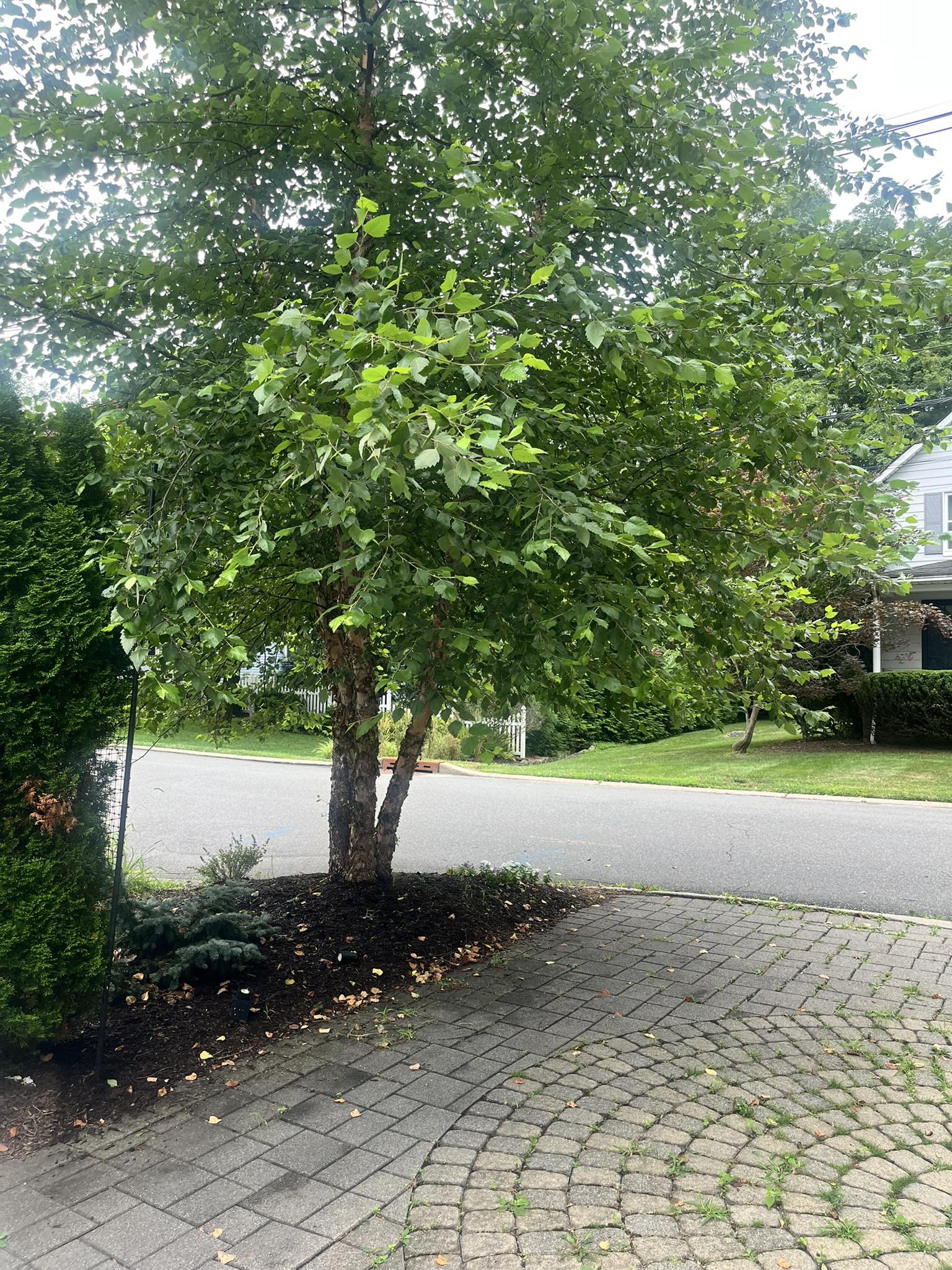
River birch peels curling, salmon-pink to reddish-brown bark that stands out dramatically through every season, arguably the most ornamental bark of any tree on this list.
It tolerates wet, poorly drained soil and occasional flooding better than any other native birch, making it a top choice for stream buffers and low, soggy yard sections.
Growth is fast, often reaching 40 to 70 feet at maturity, and it resists the bronze birch borer that devastates non-native birch species planted in similar conditions.
Multi-trunk forms are common in nurseries and work particularly well as a specimen planting near a pond or rain garden edge.
17. Sycamore (Platanus occidentalis)
American sycamore grows into one of the largest native trees in Maryland, with mature specimens along rivers sometimes exceeding 100 feet with massive trunk diameters.
Distinctive mottled bark peels away in patches, revealing creamy white new bark underneath, a pattern that makes sycamores identifiable from a considerable distance.
It thrives along riverbanks and floodplains, tolerating both flooding and periods of drought once its extensive root system establishes fully.
This tree needs serious space. It’s a poor fit for small residential lots but an excellent choice for large properties, parks, and stream restoration projects.
18. Green Ash (Fraxinus pennsylvanica)
Green ash historically thrived in Maryland’s wet bottomlands and floodplains, tolerating standing water and heavy clay soil better than most native shade trees.
The emerald ash borer has devastated this species across Maryland and much of the eastern United States, according to Maryland DNR pest monitoring, and planting new ash trees currently carries significant risk without protective treatment.
Where mature, healthy specimens still exist, they reach 50 to 60 feet with compound leaves that turn yellow to purple in fall.
Check with local extension offices before planting green ash today. In most cases, alternative wetland-tolerant natives are the safer, more sustainable choice right now.
19. Black Willow (Salix nigra)
Black willow grows directly along stream banks and pond edges throughout Maryland, with an extensive root system that stabilizes soil and prevents erosion better than almost any other native tree.
It grows fast, often reaching 30 to 60 feet within a couple of decades, though the wood is relatively soft and prone to storm damage in older specimens.
Early spring catkins provide one of the first nectar sources of the season for native bees emerging from winter dormancy.
This tree is a workhorse for stream restoration and Chesapeake Bay buffer projects rather than a typical ornamental yard tree.
20. Swamp White Oak (Quercus bicolor)
Swamp white oak tolerates wet, poorly drained soil far better than most other oak species, while still providing the same exceptional wildlife value oaks are known for.
It grows to 50 to 60 feet with a broad, rounded crown and distinctive two-toned leaves, dark green on top and pale, silvery underneath.
Acorns feed the same range of wildlife as white oak, including deer, turkeys, and squirrels, making it a strong substitute where soil moisture rules out the classic white oak.
This is an excellent choice for low-lying yard sections, rain gardens, and Chesapeake Bay buffer plantings that need real shade tree stature.
Fast-Growing and Wildlife Native Trees
21. Black Cherry (Prunus serotina)
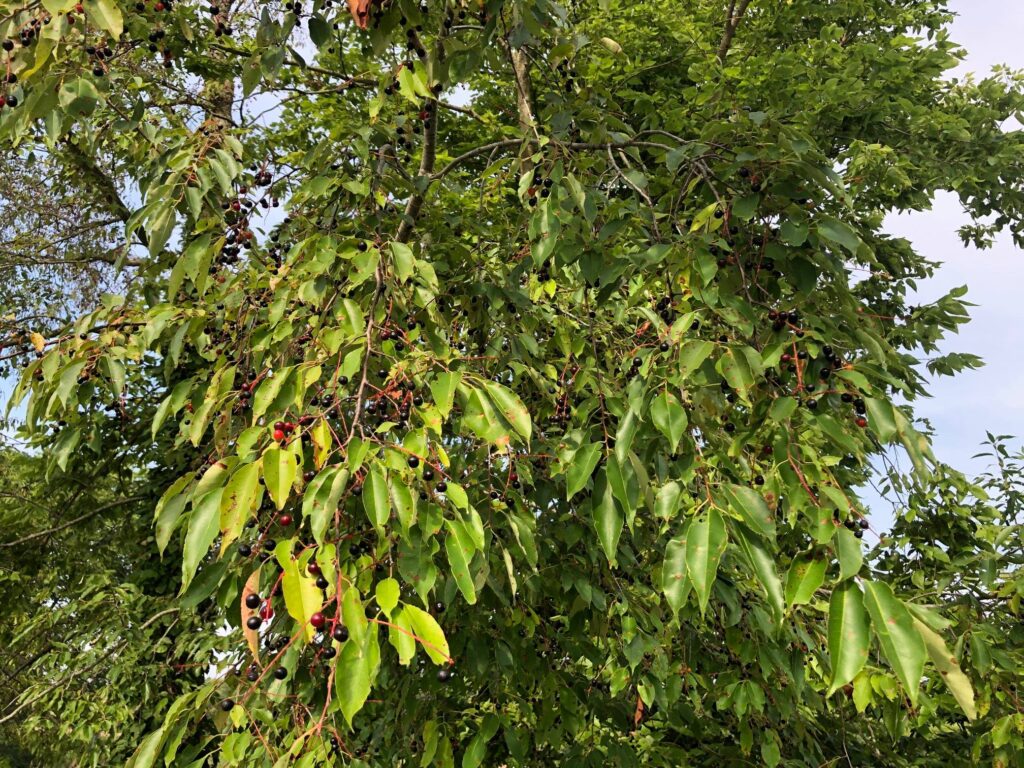
Black cherry hosts more caterpillar species than almost any other native tree in Maryland, a statistic drawn from entomological research on native plant-insect relationships, making it a genuine wildlife powerhouse.
It grows moderately fast, reaching 50 to 80 feet, with small white flower clusters in spring followed by dark cherries that birds strip quickly each summer.
Reddish-brown bark develops a rough, scaly texture with age, often compared to burnt potato chips by foresters trying to describe the distinctive pattern.
Leaves and seeds contain compounds toxic to livestock if consumed in quantity, worth noting on properties bordering pasture or grazing land.
22. Sassafras (Sassafras albidum)
Sassafras produces three distinct leaf shapes on the same tree, sometimes described as a mitten, a football, and a three-lobed shape, a genuinely unusual trait among native species.
It spreads by root suckers, often forming small colonies over time, reaching 30 to 60 feet at maturity with brilliant orange and red fall color.
This tree is the host plant for spicebush and tiger swallowtail butterflies, and its roots were historically used to flavor root beer before safety concerns ended that practice commercially.
It adapts to a range of soil types and tolerates part shade, making it a flexible choice for naturalized woodland edges.
23. Sweetgum (Liquidambar styraciflua)
Sweetgum produces star-shaped leaves that turn a striking mix of purple, red, orange, and yellow in fall, often all on the same tree simultaneously.
It grows fast, reaching 60 to 75 feet, and adapts to both wet and moderately dry soil across most of Maryland’s Piedmont and coastal plain regions.
Spiky seed pods, often called gumballs, drop heavily in fall and can be a genuine nuisance on lawns and walkways, worth considering before planting near high-traffic areas.
Despite the litter concern, sweetgum provides significant food for goldfinches and other seed-eating birds through winter months.
24. Persimmon (Diospyros virginiana)
American persimmon produces sweet, orange fruit that ripens after the first frost, turning from astringent and inedible to genuinely delicious almost overnight in late fall.
It tolerates poor, dry soil and considerable urban stress, reaching 35 to 60 feet with distinctive blocky, alligator-like bark that develops with age.
Wildlife, including deer, raccoons, and opossums, competes heavily for the fruit each fall, making it a strong addition to wildlife-focused property plantings.
Male and female flowers typically grow on separate trees, so fruit production requires at least one of each nearby.
25. Black Walnut (Juglans nigra)
Black walnut grows into one of Maryland’s most valuable native timber trees, with dark, richly grained wood historically prized for furniture and gunstocks.
It reaches 50 to 75 feet at maturity, producing large, edible nuts encased in a tough green husk that stains hands and driveways alike come fall.
This tree releases juglone, a natural chemical that suppresses growth in many other plants nearby, so site it carefully away from vegetable gardens and sensitive ornamentals.
Squirrels bury far more nuts than they retrieve, which explains why black walnut seedlings often pop up unexpectedly across a property years later.
How to Choose the Right Tree for Your Property
Match the species to your actual site conditions, not the tree you saw in a magazine. A swamp white oak planted on a dry ridge will struggle exactly as much as a Table Mountain pine planted in wet clay.
Consider these questions before choosing:
- Is the site consistently wet, average, or dry?
- How much mature space can you realistically offer?
- Do you want fast shade or long-term permanence?
Match your answers against the growing notes above, and you’ll avoid the most common mistakes homeowners make with new tree plantings.
Planting and Care Tips for Maryland Native Trees
Plant during the dormant season, from late fall through early spring, when trees can establish roots without fighting summer heat stress at the same time.
Water deeply during the first two growing seasons. Newly planted trees need consistent moisture until their root systems expand enough to access water independently.
Avoid excessive fertilizer, especially with slower-growing natives like white oak and shagbark hickory. Most Maryland natives evolved in average to poor soil and don’t need rich feeding to thrive.
Mulch in a wide, shallow ring around the base, keeping it a few inches clear of the trunk itself. This conserves moisture and protects roots without inviting rot at the trunk flare.
Final Thoughts
Twenty-five trees is a solid starting list, but Maryland’s native flora runs deeper than any single article can cover. What’s included here spans the conditions most properties actually face: shade, wet ground, dry ridges, and small ornamental spaces.
Pick two or three that genuinely fit your site. Give them a few seasons to settle in, and you’ll likely find they need far less from you than whatever they’re replacing.
References
- University of Maryland Extension – Native Trees: https://extension.umd.edu/resources/yard-garden/native-plants/native-trees
- University of Maryland Extension – Native Trees and Shrubs: https://extension.umd.edu/resources/plant-agriculture/trees-and-shrubs/native-trees-and-shrubs
- University of Maryland Extension – Commercial Maryland Native Plant List: https://extension.umd.edu/programs/environment-natural-resources/program-areas/maryland-native-plants-program/commercial-maryland-native-plant-list
- University of Maryland Extension – Maryland Native Plant Guides: https://extension.umd.edu/resource/maryland-native-plant-guides
- Maryland Department of Natural Resources – Native Plants: https://dnr.maryland.gov/wildlife/Pages/plants_wildlife/Native-Plants.aspx
- University of Maryland Extension – Search Tool and Plant Guides: https://extension.umd.edu/programs/environment-natural-resources/program-areas/maryland-native-plants-program/commercial-native-plant-list
- University of Maryland Extension – FAQs: Plant and Insect Identification: https://extension.umd.edu/resource/faqs-plant-and-insect-identification

Tim M Dave is a gardening expert with a passion for houseplants, particularly cacti and succulents. With a degree in plant biology from the University of California, Berkeley, he has vast experience in gardening. Over the years, he has cultivated a vast collection of desert plants and learned a great deal about how to grow and care for these unique companions.