25 Maryland Native Shrubs (With Growing Details)
I planted my first native shrub almost by accident. A spicebush seedling showed up near my fence line. I let it grow instead of pulling it.
Two years later, it was covered in spring pollinators and fall berries. That one decision changed how I think about landscaping.
Shrubs are the layer most home gardens skip. A typical forest has three layers: canopy trees, an understory of shrubs, and ground-level plants. Most yards only have the first and third.
That gap matters. Native shrubs provide nesting cover, nectar, and berries that ornamentals rarely match. This guide covers 25 shrubs native to Maryland, grouped by growing conditions and wildlife role.
Why the Shrub Layer Deserves More Attention
Shrubs fill the space between tall trees and low ground cover. Wildlife depends on that middle layer constantly.
Flowering shrubs feed bees, butterflies, and hummingbirds. Berry-producing species support songbirds and small mammals through fall and winter. Few yards offer both.
Non-native shrubs like burning bush and Japanese barberry have escaped cultivation across Maryland. They crowd out native plants in forests and wetlands. Choosing natives avoids feeding that spread.
Native shrubs also tend to be easier to maintain. They evolved with Maryland’s climate and soil, so they need less water and less fuss once established.
Shade-Loving Understory Shrubs
1. Spicebush (Lindera benzoin)
Spicebush is one of the most useful shrubs for a shaded Maryland yard. It grows 6 to 12 feet tall, with a loose, multi-stemmed form. Crushed leaves smell spicy and citrusy.
Small yellow flowers bloom in March and April, before the leaves appear. They offer early nectar to bees and flies when little else is blooming.
It works as a native alternative to forsythia, with better wildlife value and less upkeep. Female plants grow red berries that migrating birds eat heavily each fall.
Spicebush also hosts the spicebush swallowtail butterfly. Planting it supports the whole life cycle, not just the adult insect.
2. American Hornbeam (Carpinus caroliniana)
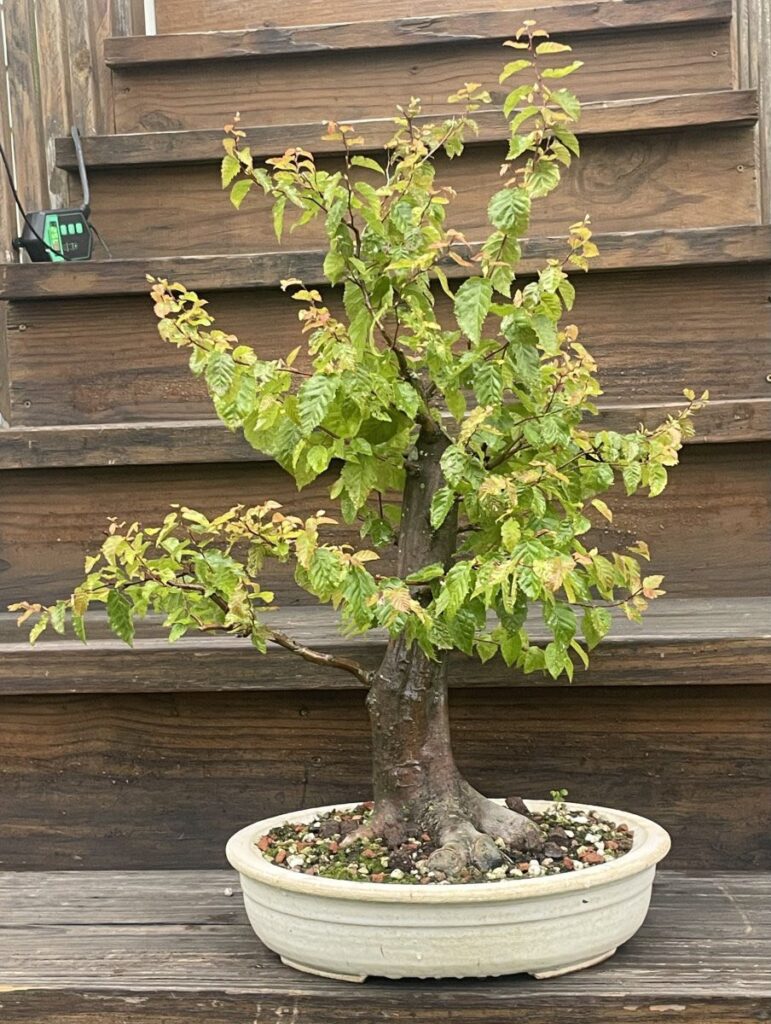
American hornbeam handles deep shade better than almost any other native shrub in Maryland. It can grow as a large shrub or a small tree.
Its bark is smooth, gray, and rippled like muscle. That texture gives winter interest long after the leaves and flowers are gone.
This species also tolerates occasional flooding. It works well near streams, rain gardens, or low spots that stay damp after storms.
Small nutlets feed turkeys, squirrels, and grouse. It adds steady wildlife value without asking much from the gardener.
3. Witch Hazel (Hamamelis virginiana)
Witch hazel does something few other native plants do. It blooms in late fall or early winter, after its leaves have already dropped.
The spidery yellow flowers tolerate shade well. That makes this shrub a natural fit beneath taller trees or along a woodland edge.
Bark extracts have long been used in skincare, a practice that predates commercial witch hazel astringent by generations among Indigenous communities in the region.
I planted mine for that odd bloom timing alone. Few shrubs give a garden something to look at in December.
4. Fetterbush (Leucothoe racemosa)
Fetterbush, also called swamp doghobble, thrives in wet, acidic soil. It is common along Maryland’s Coastal Plain wetlands and stream edges.
It rarely grows past 13 feet. Glossy, dark green leaves stay attractive through most of the growing season.
White or pinkish flowers appear in loose clusters during May and June. Gardeners often grow this shrub for its foliage as much as its bloom.
Fetterbush pairs naturally with other wetland natives, like winterberry holly and Virginia sweetspire.
5. Oakleaf Hydrangea (Hydrangea quercifolia)
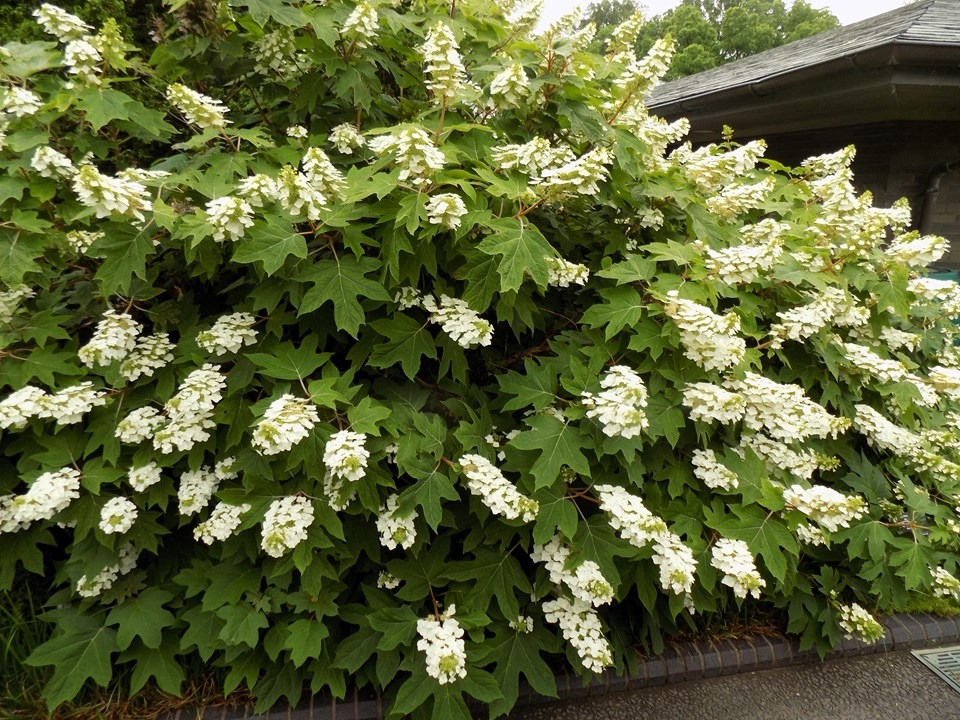
Oakleaf hydrangea gets its name from large, oak-shaped leaves. They turn deep burgundy in fall, a color show that rivals many native trees.
This shrub offers four seasons of interest. Peeling bark stands out in winter. Minty-green leaves unfurl in spring. Cone-shaped white flowers arrive in summer.
It tolerates part sun to part shade and adapts to most soil types. That flexibility explains its popularity in both formal and natural gardens.
Mature plants can reach 6 to 8 feet. Give it room, rather than crowding it against a foundation wall.
Sun-Loving Berry and Nectar Shrubs
6. Winterberry Holly (Ilex verticillata)
Winterberry holly is a deciduous holly, which surprises people expecting evergreen leaves. It drops its foliage in fall, leaving branches full of bright red berries.
Only female plants produce berries. A nearby male plant is required for pollination, so plan for at least one of each.
Those berries stay through winter and become critical food for robins and mockingbirds once other options are buried or already eaten.
This shrub also handles wet soil well. It is a strong pick for low, poorly drained parts of a yard.
7. Virginia Sweetspire (Itea virginica)
Virginia sweetspire produces drooping white flower clusters in late spring. Fall foliage follows with deep red and purple color.
It grows 3 to 10 feet tall. It tolerates both wet soil and average garden conditions, which gives it real flexibility.
Bees and other pollinators visit the flowers heavily. The arching branches add movement to a mixed border.
This shrub spreads gradually by suckering. That habit makes it useful as a natural groundcover on slopes or stream banks.
8. Summersweet (Clethra alnifolia)
Summersweet lives up to its name. Fragrant white or pink flower spikes bloom in mid to late summer, when few other native shrubs are still flowering.
It thrives in moist soil and tolerates both full sun and part shade. That adaptability makes it useful across different yard conditions.
Bees and butterflies are drawn to the fragrance from a distance. It works well planted near patios or walkways.
Mature height usually stays under 8 feet. It fits comfortably into smaller garden beds.
9. Northern Bayberry (Morella pensylvanica)
Northern bayberry is known for its dense form and aromatic, gray-blue berries. Colonists once boiled these berries down to make bayberry candles.
It tolerates wet, salty, and nutrient-poor soil better than almost any other native shrub. That toughness explains its long history along Maryland’s coastal dunes.
Like related species, bayberry can fix nitrogen in the soil. That trait helps it establish in sandy, low-fertility ground.
Full sun and well-drained soil bring out its best form, though it handles a wide range of conditions once established.
10. Beach Plum (Prunus maritima)
Beach plum is a coastal specialist. It is adapted to dry, sandy sites and salt exposure along Maryland’s shoreline.
Restoration projects often use it to stabilize dunes. Its root system helps hold sandy soil in place.
Fragrant spring flowers provide early nectar for pollinators. The small purple fruit that follows feeds birds, mammals, and historically, people too.
This shrub stays compact and dense. That makes it useful for erosion control on exposed, wind-prone sites.
Fall Color and Multi-Season Interest Shrubs
11. Black Chokeberry (Aronia melanocarpa)
Black chokeberry produces white spring flowers. Dark, astringent fruit follows, now popular commercially for its high antioxidant content.
Fall foliage turns deep red to purple. That color makes this shrub genuinely useful in rain gardens or mass plantings.
Wildlife eats the fruit once it softens after frost. The taste is too tart for most people to enjoy fresh off the branch.
It tolerates wet soil well, making it a strong choice for rain garden edges or low-lying yard sections.
12. Red Chokeberry (Aronia arbutifolia)
Red chokeberry is a close relative of black chokeberry. Its fruit is brighter red, and its growth habit is slightly taller and more upright.
White spring flowers give way to berries. They persist on the branch well into winter, feeding birds when little else remains.
Fall foliage often turns a striking scarlet. That color holds for several weeks, longer than many native shrubs manage.
This species tolerates wet soil and handles part shade reasonably well too.
13. Dwarf Fothergilla (Fothergilla gardenii)
Dwarf fothergilla produces unusual, bottlebrush-shaped white flowers. They appear in mid-spring, before the leaves fully unfurl.
Fall color runs through fiery orange and red, often on the same branch. That gives this compact shrub outsized impact for its size.
It adapts to full sun or part shade. It also tolerates most soil types, which makes it forgiving for beginner gardeners.
Its small, four-foot mature size fits naturally into foundation plantings or the front of a native border.
14. Red-Twig Dogwood (Cornus sericea)
Red-twig dogwood earns its keep in winter. Bare stems turn a striking crimson red, standing out sharply against snow or bare ground.
White flower clusters bloom in late spring. White or bluish berries follow, feeding birds through summer and early fall.
This shrub tolerates wet soil exceptionally well. It shows up often in rain gardens and stream buffer plantings across Maryland.
Cutting back older stems encourages fresh growth. The most vivid winter color appears on younger wood.
15. Possumhaw Viburnum (Viburnum nudum)
Possumhaw viburnum produces flat white flower clusters in late spring. Berries follow, shifting from pink to blue to black as they ripen.
Glossy, dark green leaves turn burgundy in fall. That adds another layer of interest beyond the unusual fruit display.
Viburnum berries are popular with birds but generally avoided by deer. That makes this genus dependable in yards with heavy browsing pressure.
It tolerates wet soil and part shade. It fits naturally into woodland edges or rain garden margins.
Wetland and Streamside Specialists
16. Buttonbush (Cephalanthus occidentalis)
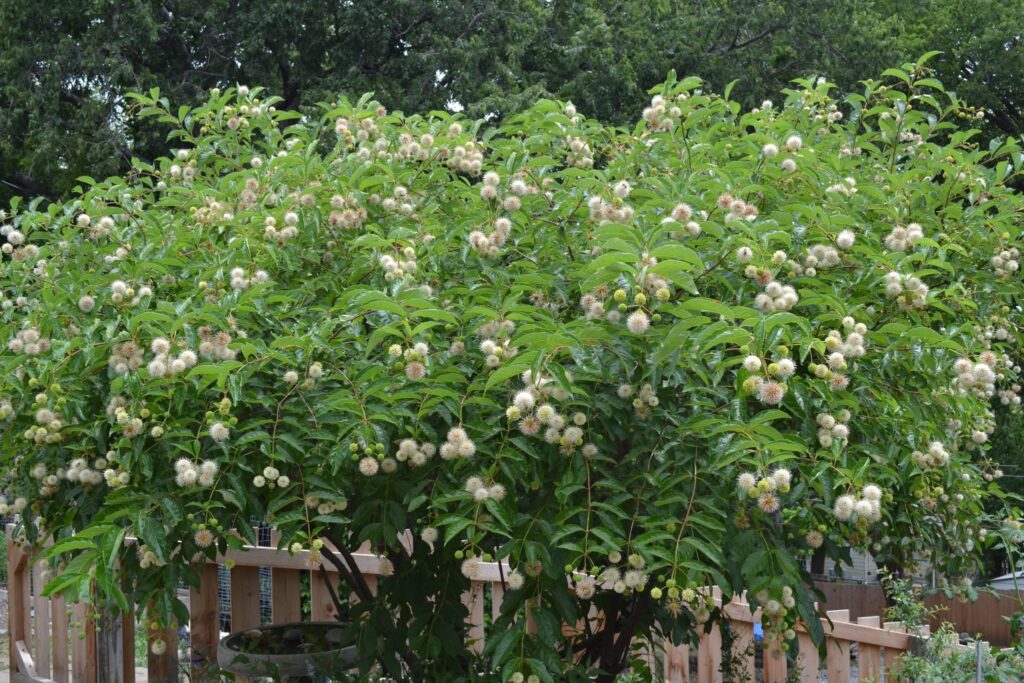
Buttonbush produces perfectly spherical white flower clusters in summer. Few other native shrubs in Maryland have that shape.
Bees and butterflies visit constantly while it blooms. This species tolerates standing water better than most shrubs.
That trait makes it a natural choice for pond edges, wetland restoration, or consistently soggy yard sections.
Ducks and other waterfowl eat the seed clusters that follow. Mature height can reach 6 to 12 feet.
17. Swamp Azalea (Rhododendron viscosum)
Swamp azalea produces intensely fragrant white flowers in early summer. Many gardeners consider it one of the best-smelling native shrubs.
As the name suggests, it tolerates consistently wet, acidic soil. It thrives in bogs and low woodland areas across the Coastal Plain.
Its sticky flower parts give the plant its species name, viscosum. That trait helps distinguish it from other native azaleas.
This shrub pairs naturally with ferns in a shaded, woodland-style garden.
18. Silky Dogwood (Cornus amomum)
Silky dogwood is closely related to red-twig dogwood. It grows taller, often 6 to 10 feet, with reddish-brown younger stems.
White flower clusters bloom in late spring. Blue berries follow, and migrating birds eat them heavily in late summer.
This shrub works well for stream bank stabilization. Its spreading roots help hold soil in place along eroding waterways.
It tolerates wet soil and periodic flooding, making it useful for rain garden and buffer plantings.
19. Sweet Pepperbush (Clethra alnifolia var. tomentosa)
This fuzzy-leaved variety of summersweet shares the same fragrant, late-summer flower spikes as its relative. Its foliage is slightly denser and hairier.
It grows well in consistently moist soil. You will often find it naturally along stream edges and Coastal Plain wetlands.
Native bees visit the blooms heavily, especially late in the season when many other flowering shrubs have already finished.
Left unpruned, it spreads through root suckering. That habit makes it useful for naturalizing a damp corner of the yard.
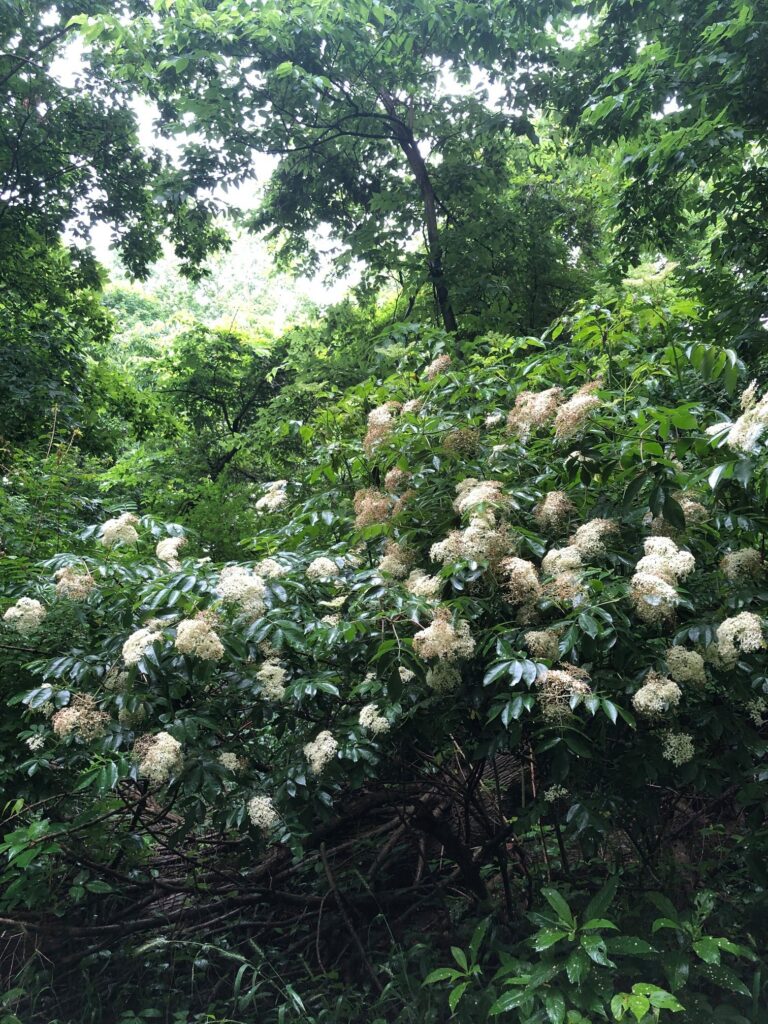
20. Elderberry (Sambucus canadensis)
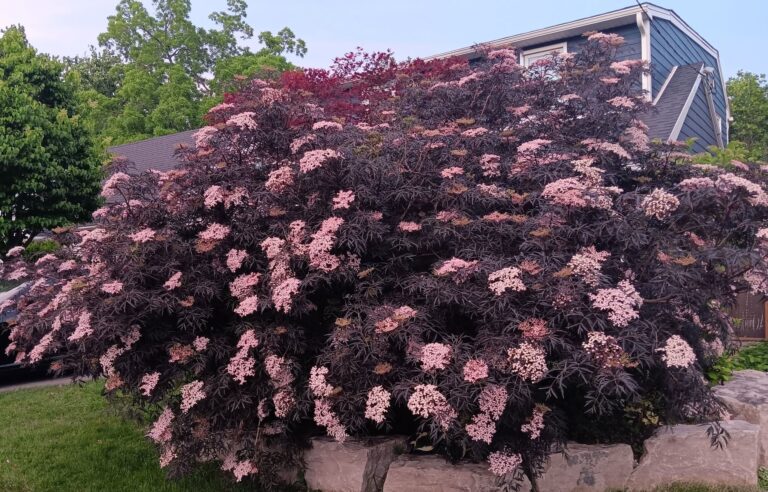
Elderberry grows fast and large, often reaching 5 to 12 feet in a single season. Flat white flower clusters bloom in early summer.
Dark purple berries follow in late summer. Wildlife and people both prize them for syrups, jams, and traditional remedies.
Raw, unripe berries and other plant parts are toxic if eaten in quantity. Proper preparation matters before harvesting fruit yourself.
This shrub tolerates wet soil and part shade. It spreads readily, so give it room to form a natural colony.
Evergreen and Structural Native Shrubs
21. Mountain Laurel (Kalmia latifolia)
Mountain laurel produces clusters of pink and white cup-shaped flowers in late spring. Many consider it one of the finest native blooms in the eastern United States.
This evergreen shrub prefers acidic, well-drained soil and partial shade. It fits naturally beneath oak and pine canopy.
Growth is slow, but mature plants can reach 10 to 15 feet. They develop a dense, structural form valued in woodland gardens.
All parts of the plant are toxic if ingested. Keep that in mind near grazing livestock or curious pets.
22. Southern Wax Myrtle (Myrica cerifera)
Southern wax myrtle is an evergreen shrub native to Maryland’s Coastal Plain. It tolerates wet, salty, and nutrient-poor conditions.
Its aromatic, blue-gray berries persist through winter. They feed songbirds, including the yellow-rumped warbler, during colder months.
Like bayberry, this species fixes nitrogen in the soil. That helps it establish in sandy or disturbed ground where other shrubs struggle.
Dense evergreen foliage also makes it a useful privacy screen near the coast.
23. Inkberry Holly (Ilex glabra)
Inkberry holly is one of Maryland’s few native broadleaf evergreens. It offers year-round structure without the sharp spines of American holly.
Small black berries form on female plants in fall. They feed birds through winter, when little else is available.
It tolerates wet soil and part shade. Its naturally rounded form makes it a strong native substitute for non-native boxwood hedging.
Light, regular pruning keeps growth dense, though it also holds up well left in a more natural, unclipped form.
24. Sweetbay Magnolia (Magnolia virginiana)
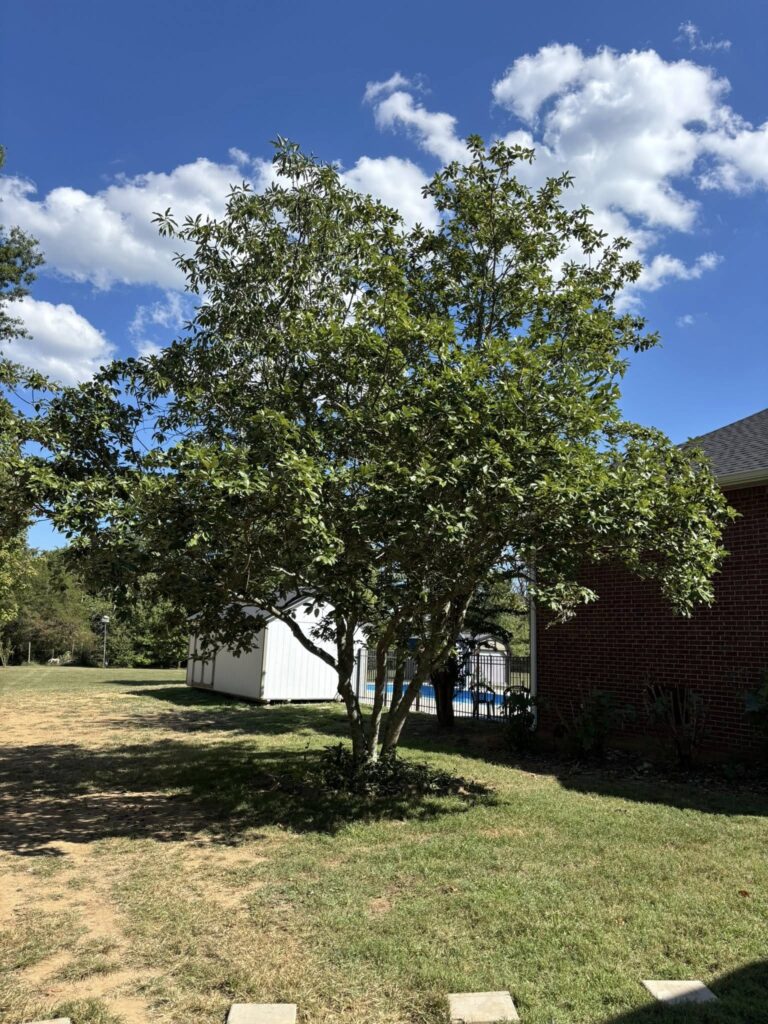
Sweetbay magnolia can grow as a large shrub or a small tree. It stays semi-evergreen in Maryland’s milder coastal counties and deciduous farther inland.
Creamy white, lemon-scented flowers bloom through summer. That is a longer bloom window than most other native flowering shrubs offer.
This species thrives in wet, swampy soil. It helps define Maryland’s Coastal Plain wetlands, alongside red maple and sweetgum.
Red seed clusters follow the flowers. They attract songbirds through late summer and early fall.
25. Eastern Sweetshrub (Calycanthus floridus)
Eastern sweetshrub, also called Carolina allspice, produces unusual, star-shaped reddish-brown flowers in late spring. They carry a fruity, spicy fragrance.
It grows into a dense, rounded form, typically 6 to 8 feet tall and wide. It adapts well to both sun and shade.
The shrub tolerates a wide range of soil types. It thrives in moist, loamy ground but handles drier conditions once established.
Foliage turns a soft, pale yellow-green in fall. It is a quieter finish than some brighter species on this list, but still worthwhile.
Quick Tips for Planting Native Shrubs Successfully
Start with your soil, not the shrub you like best. A quick soil test tells you whether your yard runs wet, dry, acidic, or alkaline, and that answer narrows your options fast.
Fall planting often works better than spring in Maryland. Cooler air and warmer soil let roots establish before summer heat arrives.
Water new shrubs deeply during the first year, even if they are drought-tolerant once mature. Establishment takes real time, usually one full growing season at minimum.
Avoid heavy pruning in the first two years. Native shrubs need that early growth to build strong roots and a natural, healthy shape.
Group shrubs by moisture needs rather than mixing wet-soil and dry-soil species together. This small planning step saves a lot of frustration later.
Final Thoughts
Twenty-five shrubs cannot cover every native species in Maryland. This list represents the ones most likely to succeed in an ordinary yard, rain garden, or restoration project.
Match the shrub to your site, not the other way around. Wet, dry, shaded, or sunny, there is a native option here for nearly every condition.
Local native plant sales, Maryland DNR nursery programs, and county extension offices are strong starting points for sourcing healthy stock.
Every shrub added to a yard rebuilds part of the middle layer Maryland’s wildlife has always depended on, the layer most modern landscapes still leave empty. Start small, watch what shows up, and let the yard grow from there.
References
- Maryland Department of Natural Resources – Planting Shrubs for Wildlife: https://dnr.maryland.gov/wildlife/pages/habitat/washrubs4wild.aspx
- University of Maryland Extension – Native Shrubs: https://extension.umd.edu/resources/yard-garden/native-plants/native-shrubs
- University of Maryland Extension – Spicebush Plant Profile: https://extension.umd.edu/resource/spicebush
- University of Maryland Extension – Recommended Native Plants for Maryland: https://extension.umd.edu/resource/recommended-native-plants-maryland
- Maryland Department of Natural Resources – Native Plants of Maryland (Home and Garden Mimeo HG#120): https://dnr.maryland.gov/wildlife/Documents/HG120_NativePlantsofMD.pdf
- Maryland Department of Natural Resources – Create Your Own State Park Native Shrub List: https://dnr.maryland.gov/publiclands/documents/nativeshrubslist.pdf
- Maryland Department of Natural Resources Nursery – Deciduous Shrubs: https://nursery.dnr.maryland.gov/category-s/1829.htm

Tim M Dave is a gardening expert with a passion for houseplants, particularly cacti and succulents. With a degree in plant biology from the University of California, Berkeley, he has vast experience in gardening. Over the years, he has cultivated a vast collection of desert plants and learned a great deal about how to grow and care for these unique companions.