25 Winter Hardy Roses (Varieties That Survive Freezing Cold)
I have seen gardeners give up on roses after one brutal winter. It is a painful loss. You spend months nurturing a plant, and frost wipes it out in a week.
The good news is that roses do not have to be fragile. Many varieties handle deep freezes with little help from you.
This guide covers 25 proven winter hardy roses. You will find their hardiness zones, colors, care, and best uses.
Quick Answer: What Are the Hardiest Roses?
The hardiest roses are rugosa roses, Canadian Explorer roses, Parkland roses, and native wild roses. Most grow well in USDA zones 2 to 4. Many survive without winter covering.
Hybrid teas are the weak point. In cold regions, they need heavy protection. Iowa State University Extension advises that most modern roses need protection, while shrub, species, and old garden roses are reliably hardy.
Why Hardiness Zones Matter
A hardiness zone tells you how cold your area gets in winter. The USDA Plant Hardiness Zone Map is the standard tool. It uses the average annual extreme minimum winter temperature, shown in 10°F zones and 5°F half zones.
A rose rated for zone 3 should survive a typical zone 3 winter. Always compare that number to your own zone. You can enter your zip code on the USDA site to find it.
A small warning: zone ratings differ slightly between sources. Treat them as a strong guide, not a guarantee. A windy, exposed site is colder than the map suggests.
What “Winter Hardy” Really Means
Hardy does not always mean “no damage.” Many hardy roses die back to the snow line each winter. Then they regrow from the base and bloom on new wood.
These are called crown hardy roses. They are still excellent plants. You simply prune the dead canes in spring.
Some roses, such as pure rugosas, show almost no cane injury. They are the toughest group of all.
Rugosa Roses: The Toughest of All
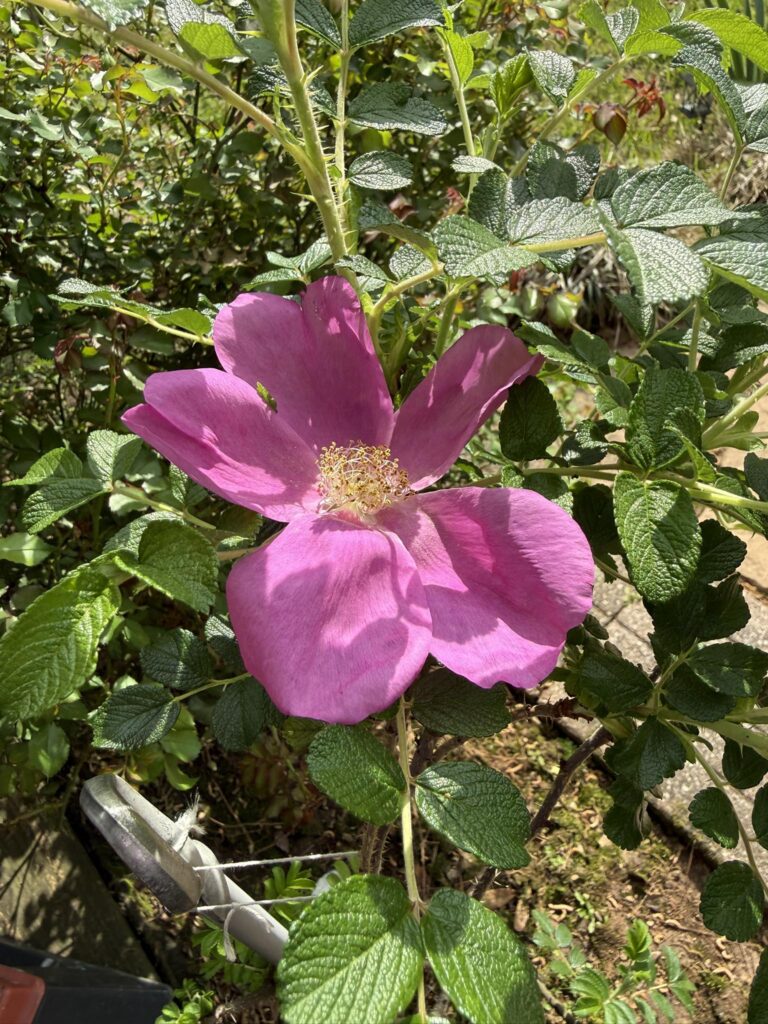
Rugosa roses come from northeast Asia. They are known for wrinkled leaves, strong scent, and big orange-red hips. NDSU Extension rates the species hardy to zone 2, growing 4 to 7 feet tall, and tolerant of salt.
1. Hansa Rugosa Rose
Hansa is a classic. Its double, magenta-purple blooms smell rich and spicy. I find the fragrance stronger than many roses twice its price.
It is hardy to about zone 2 or 3. It grows 4 to 5 feet tall and wide. The plant is dense and thorny, so it makes a good hedge.
Hansa blooms heavily in early summer, then repeats lightly. In autumn, it gives large red hips. Birds enjoy them, and so do people who make rose hip tea.
2. Thérèse Bugnet Rose
Thérèse Bugnet was bred in Alberta, Canada, by Georges Bugnet. He used wild roses and stock from Russia’s Kamchatka region. The result is one of the hardiest garden roses in existence.
It is rated for roughly zone 2b to 3. The shrub reaches 5 to 6 feet. Its canes are reddish and have fewer thorns than most rugosas.
Flowers are large, double, and soft pink. They open in flushes through summer. The scent is sweet, though not as strong as Hansa’s.
3. Blanc Double de Coubert Rose
This is a pure white, double-flowered rugosa from 1892. The blooms look delicate, but the plant is not. It is hardy to about zone 3.
University of Minnesota Extension has listed it among excellent hardy shrub roses. Gardeners praise it for strong fragrance and good disease resistance.
Plant it where the white petals can stand out. A dark background, such as evergreen shrubs, works well. Expect a rounded shrub about 4 to 5 feet tall.
4. F.J. Grootendorst Rose
Grootendorst stands apart from other rugosas. Its small, crimson flowers have fringed petals, like carnations. The clusters are neat and cheerful.
It is hardy to about zone 3. The shrub grows 4 to 5 feet tall. It blooms repeatedly from early summer until frost.
One trade-off is scent. It is light compared with other rugosas. Still, the nonstop color and tough nature make it a smart low-maintenance choice.
5. Jens Munk Rose
Jens Munk is a rugosa hybrid from the Explorer series. It is among the hardiest of the group, at about zone 2 to 3. It forms a dense shrub of 4 to 5 feet.
The semi-double flowers are medium pink with yellow stamens. They carry a pleasant, spicy scent. Flowering is steady through summer.
Jens Munk handles poor soil and cold wind well. I would recommend it to any beginner in a harsh climate. Few roses forgive mistakes this easily.
6. Rosa rugosa ‘Alba’
This is the white form of the species. Its single, five-petaled flowers are simple and clean. They look best in naturalized plantings.
It is hardy to zone 3 or colder. The plant spreads by suckers, so give it room. It is useful for slopes, roadsides, and coastal gardens.
Large hips follow the blooms. They turn bright red in autumn and stay into winter. This rose supports wildlife by feeding birds when food is scarce.
ALSO READ: 25 Stunning Types of Roses (Bushes Identification, With Pictures)
Canadian Explorer Roses: Bred for Extreme Cold
The Explorer series came from Agriculture and Agri-Food Canada. The roses are named after Canadian explorers. According to the Canadian government, these roses survive to -35°C with only snow as protection, resist disease, and bloom repeatedly.
That is about -31°F. The same publication describes 25 Explorer roses and 12 Parkland roses. These are the varieties many northern nurseries sell.
7. William Baffin Rose
William Baffin is one of the hardiest climbing roses available. It is rated for zone 2. It can reach 8 to 10 feet, so give it a fence or trellis.
Its semi-double flowers are deep pink with a pale center. They appear in large clusters in early summer. A lighter second flush often follows.
The foliage is glossy and highly disease resistant. This is the climber I suggest first for cold regions. It shrugs off winters that kill most climbers.
8. John Cabot Rose
John Cabot is a vigorous Explorer with magenta-pink flowers. Its double blooms have a mild, sweet fragrance. It is hardy to about zone 3.
You can train it as a climber or let it sprawl as a large shrub. Canes grow 8 to 10 feet long. Tie them horizontally to get more blooms.
University of Minnesota educators mention John Cabot as a dependable cold-climate pick. It gives a big show in June and repeats lightly after that.
9. Henry Kelsey Rose
Henry Kelsey is a climbing Explorer with bright red, double flowers. The blooms are cupped, with gold stamens in the center. They have a spicy scent.
It is hardy to zone 3. Canes reach about 6 to 8 feet. It needs a support, but it is easy to train.
The rose blooms from midsummer until frost. This long season is a real advantage. Few red climbers perform so well in cold places.
10. John Davis Rose
John Davis has a trailing habit. Its arching canes can reach 6 feet. You can grow it on a low fence, a bank, or a trellis.
It is hardy to about zone 3. The double flowers are soft pink and fragrant. They fade slowly to a paler shade.
This rose is an excellent choice for slopes. The canes cascade and cover soil. It blooms in waves through summer and needs little pruning.
11. Champlain Rose
Champlain is a compact Explorer with dark red, double blooms. It stays about 3 feet tall and wide. This makes it easy to fit into small gardens.
It is hardy to zone 3. It starts blooming early and keeps going until fall. The flowers carry a light, fruity scent.
The plant is neat and bushy. It also grows well in large containers in mild-winter areas. In cold zones, I prefer to plant it in the ground.
12. Alexander MacKenzie Rose
Alexander MacKenzie is a tall, upright shrub of 5 to 6 feet. Its flowers are deep magenta-red, double, and slightly fragrant. It is rated for zone 3.
It makes a fine informal hedge. The canes are strong and rarely need support. Plants bloom heavily in June and repeat in summer.
It can die back in very hard winters. It then regrows from the base. Prune out the dead wood in spring, and it will recover.
ALSO READ: 15 Common Rose Bush Problems (With Symptoms and Fixes)
Parkland Roses: Prairie Toughness
Parkland roses were bred at the Morden Research Station in Manitoba. They suit the dry, windy prairie climate. The University of Alaska Extension notes that these are hybrids of native prairie roses, hardy to zone 3, and often dying back but flowering on new growth.
13. Morden Centennial Rose
Morden Centennial was introduced to mark Manitoba’s 100th anniversary. UAF Extension calls it perhaps the most common and hardy of the Morden roses.
It is hardy to zone 3. The shrub grows 3 to 4 feet tall. Its double flowers are clear, medium pink and slightly fragrant.
Expect some dieback in cold winters. It recovers well and blooms from June to frost. It is a reliable choice for borders.
14. Winnipeg Parks Rose
Winnipeg Parks has bright cherry-red flowers and bronze-tinted leaves. The foliage looks a lot like hybrid tea leaves. It stays compact, at 2 to 3 feet.
It is hardy to zone 3. Like many hardy roses, it dies back to the snow line, then regrows. Blooms arrive by early summer.
Plant it in full sun and rich soil. The color is strong enough to stand out from across the yard. It is a good rose for small spaces and front beds.
15. Morden Blush Rose
Morden Blush has pale ivory-pink, double flowers. They look like old-fashioned garden roses. The color deepens a little in cool weather.
It is hardy to zone 3. Plants reach 2 to 3 feet. They are small, tidy, and good for the front of a border.
The scent is light and sweet. It blooms continuously through the season. I like it with lavender or catmint for a soft, cottage look.
16. Morden Sunrise Rose
Morden Sunrise is the only yellow rose in the Morden series. Its blooms are soft yellow with peach tones. They are semi-double and mildly fragrant.
It is hardy to about zone 3. The plant grows 3 feet tall. It flowers nonstop from early summer to frost.
Yellow roses are often fussy in the cold. This one is an exception. It brings a sunny color to northern gardens that rarely have it.
17. Adelaide Hoodless Rose
Adelaide Hoodless carries large clusters of ruby-red, semi-double flowers. The plant reaches 2 to 4 feet. It is a Parkland rose, rated for zone 3.
It blooms repeatedly through summer. The foliage is dark green and fairly healthy. The clusters make a strong show from a distance.
UAF Extension notes that vigor can vary in some conditions. Give it full sun and good drainage. In return, it gives bold color.
18. Hope for Humanity Rose
Hope for Humanity is one of the newer Morden roses. It has deep, blood-red flowers with a velvet look. The blooms are double and arranged in clusters.
University of Idaho Extension describes it as a repeat bloomer that is fully hardy in very harsh climates. It is rated for about zone 3. The shrub stays 3 to 4 feet tall.
I like this rose for its clean, formal flower shape. It looks more like a hybrid tea than most hardy roses. Yet it takes the cold well.
Old Garden and Species Roses
Old roses and wild species are often tougher than modern hybrids. They have grown for centuries without help. Many are still hardy and healthy today.
19. Rosa glauca (Redleaf Rose)
Rosa glauca is grown mainly for its foliage. The leaves are smoky purple-gray with a reddish tint. The effect is striking all season.
It is very hardy, around zone 2 or 3. The shrub grows 6 to 7 feet tall. Its flowers are small, single, and pink.
Autumn brings round, red-brown hips. The rose needs little care. Use it as a back-of-border plant, where its leaf color contrasts with green shrubs.
20. Harison’s Yellow Rose
Harison’s Yellow is a historic rose from the 1830s. It is said to have traveled west with American pioneers. Many old plants still survive at abandoned homesteads.
It is hardy to about zone 3. The shrub grows 5 to 6 feet tall. Semi-double, bright yellow flowers cover it in late spring.
It blooms only once a year. But the show is spectacular. Prune after flowering, since it blooms on old wood.
ALSO READ: Those Dark Spots on Your Rose Leaves Are Telling You Something — Here Is How to Listen
Native Wild Roses for Cold Climates
Native roses are low-maintenance and support local wildlife. They are also resilient. These five suit gardeners who like a natural look.
21. Prairie Rose (Rosa setigera)
Prairie rose is a native climbing species. It is the only North American rose with a true climbing habit. The USDA Forest Service says the flowers are about 6 to 8 cm across, with five light pink petals and a yellow center.
It is hardy to about zone 4. Canes may reach 10 feet when supported. It blooms in late June or July, later than most roses.
Because it flowers late, it extends the rose season. Pollinators love the open blooms. Autumn brings small red hips.
22. Smooth Rose (Rosa blanda)
Smooth rose is also called early wild rose. It is nearly thornless on its upper stems. That is rare among roses and makes it pleasant to handle.
It is hardy to about zone 3 or colder. The shrub grows 3 to 5 feet tall. Single, pink flowers bloom in late spring.
It tolerates poor soil and cold wind. It is a good choice for naturalized areas. Its red hips feed birds into winter.
23. Virginia Rose (Rosa virginiana)
Virginia rose is a tough native from eastern North America. It is hardy to zone 3. The shrub is 4 to 6 feet tall and spreads by suckers.
It has glossy, dark green leaves that turn red and orange in autumn. The pink flowers are single and fragrant. Red hips remain through winter.
It tolerates salt, wind, and wet or dry soil. This is a fine pick for coastal and roadside sites. It also works well as a native hedge.
24. Prairie Rose (Rosa arkansana)
This low-growing native is also called the sunshine rose. It reaches only 1 to 3 feet. It is hardy to about zone 3 and handles prairie winters well.
Its pink flowers bloom from early summer and sometimes repeat. It often dies back but flowers on new growth. Hybrids of this species gave rise to the Parkland series.
Use it on dry slopes, in meadow plantings, and in sunny borders. It does not like wet, humid sites. In those spots, it can develop fungus.
25. Carolina Rose (Rosa carolina)
Carolina rose is a low, suckering native shrub. It stays 1 to 3 feet tall. It is hardy to about zone 4.
NC State Extension notes it is resistant to rose rosette virus. That is a major benefit, since this disease kills many garden roses. The pink flowers also attract bees and butterflies.
It spreads by suckers, so give it room. It suits meadows and native gardens. Red hips add autumn interest and feed birds.
ALSO READ: 15 Flowers That Look Like Roses: Identification and Pictures
How to Choose the Right Hardy Rose
Start with your zone. Pick roses rated at least one zone colder than yours. That gives you a safety margin in a harsh winter.
Then think about size and purpose. A tall rugosa suits a hedge. A compact Parkland rose suits a border. A climber like William Baffin needs a trellis.
Finally, think about scent and bloom time. Rugosas give the strongest fragrance. Explorer and Parkland roses bloom longest. Native species flower once but feed wildlife.
Buying Tips: Own-Root Roses Are Best
Many roses are grafted onto another rootstock. If the top dies in winter, the rootstock can take over. You may then get a different, unwanted rose.
Own-root roses grow from cuttings on their own roots. If they die back, they regrow true to type. The WSU Extension demonstration garden notes that own-root roses survive colder temperatures better than grafted ones.
Most of the roses in this list are sold own-root. Check the plant tag or ask the nursery. It is a small question that can save you years of effort.
Planting Winter Hardy Roses
Choose a spot with at least six hours of direct sun. Good air flow helps prevent disease. Avoid low areas where cold air collects.
Prepare the soil with compost. Roses like well-drained, rich ground. Dig the hole about twice as wide as the root ball.
Plant in spring, or in early autumn at least six weeks before the ground freezes. Water deeply after planting. Add a 2- to 3-inch layer of mulch.
Winter Care for Hardy Roses
Even tough roses benefit from a little preparation. Here is a short list that works well for most gardeners:
- Stop fertilizing in late summer. New growth late in the season is easily killed by frost.
- Keep watering until the ground freezes. Dry roots suffer more in winter.
- Mulch the base after the ground freezes. Use wood chips, shredded leaves, or straw.
- Protect the graft union on any grafted roses. Iowa State Extension stresses this point.
- Wait until spring to prune. Remove dead canes once new buds swell.
The aim is to keep plants frozen and steady. Repeated freezing and thawing does more harm than steady cold. That is why mulch should go on only after the ground is frozen.
Common Mistakes to Avoid
The first mistake is planting by looks alone. A beautiful hybrid tea may not survive your winter. Always check the zone first.
The second is pruning too early in autumn. This can trigger new growth that frost will kill. Light tidying is fine, but save the major work for spring.
The third is overwatering and overfeeding. Hardy roses need less care than gardeners expect. A simple routine usually beats constant fussing.
Frequently Asked Questions
What is the most winter hardy rose?
Rugosa roses and William Baffin are among the hardiest. Rosa rugosa is rated for zone 2, and William Baffin also reaches zone 2. Several native roses and Thérèse Bugnet are close behind.
Do hardy roses need winter protection?
Many need none. Pure rugosas and native species usually manage alone. Explorer and Parkland roses may die back but regrow. A layer of mulch adds extra safety.
Can roses grow in zone 3?
Yes. Many roses thrive in zone 3, including Hansa, John Cabot, Morden Centennial, and Virginia rose. Choose own-root plants for the best results.
When should I plant winter hardy roses?
Spring is the safest time in cold regions. Early autumn planting also works if roots have six weeks to settle. Avoid planting just before a hard freeze.
Are winter hardy roses fragrant?
Many are. Rugosas such as Hansa and Blanc Double de Coubert have strong scent. Some Explorer roses are lightly fragrant. Hardiness breeding did cost some perfume in certain series.
Final Thoughts
Cold winters need not end your rose dreams. With the right variety, roses can thrive even in zone 2. I have seen rugosas flower beautifully after winters that killed everything around them.
Start with two or three roses from this list. Pick ones that suit your zone and space. Then watch how they perform before expanding.
Autumn is a good time to plan. Order your plants now and prepare the beds. By next summer, you may have the best roses on your street.
References
- USDA Agricultural Research Service. 2023 USDA Plant Hardiness Zone Map. https://planthardiness.ars.usda.gov/
- Iowa State University Extension and Outreach. How to Overwinter Roses. https://yardandgarden.extension.iastate.edu/how-to/how-overwinter-roses
- North Dakota State University. Rugosa Rose (F2191). https://www.ndsu.edu/agriculture/node/10956
- University of Alaska Fairbanks Cooperative Extension. Parkland Rose (Prairie Rose), Rosa arkansana. https://uaf.edu/ces/garden/landscape-plants/profile.php?id=p306
- USDA Forest Service. Plant of the Week: Prairie Rose (Rosa setigera). https://www.fs.usda.gov/wildflowers/plant-of-the-week/rosa_setigera.shtml
- NC State Extension. Rosa carolina, Carolina Rose. https://plants.ces.ncsu.edu/plants/native-plants/rosa-carolina
- Agriculture and Agri-Food Canada (Government of Canada). Winter-hardy roses: Explorer and Parkland series. https://publications.gc.ca/site/eng/9.647549/publication.html

Tim M Dave is a gardening expert with a passion for houseplants, particularly cacti and succulents. With a degree in plant biology from the University of California, Berkeley, he has vast experience in gardening. Over the years, he has cultivated a vast collection of desert plants and learned a great deal about how to grow and care for these unique companions.