15 Common Rose Bush Problems (With Symptoms and Fixes)
Roses are rewarding, but they are not carefree plants. I have watched a healthy-looking bush turn yellow and drop half its leaves within two weeks, and it caught me completely off guard.
If your rose bush looks off in some way, you are probably searching for a straight answer. This guide gives you one.
Why Roses Face So Many Problems
Rose problems are more common than most gardeners expect. Oklahoma State University Extension notes that black spot and powdery mildew are the two most prevalent fungal diseases affecting roses nationwide, and no cultivar is fully resistant to every disease. That single fact explains why even experienced growers run into trouble.
North Carolina State Extension also points out that roses are handled by nurseries in massive volume each year, and the challenge of keeping a rosebush looking good has been fairly described as “interesting.” That word choice says a lot.
Roses are more heavily managed than most landscape plants. The University of California Statewide IPM Program notes that roses rank among the most intensively managed plants in home gardens, parks, and public landscapes.
That level of attention exists for a reason. Roses have thin leaves, soft new growth, and dense flower clusters, all of which attract fungi, insects, and mites.
Three factors drive most rose bush problems:
- Moisture and humidity, which fuel fungal disease
- Pest pressure from insects and mites drawn to soft new growth
- Soil, nutrition, and weather stress that weaken the plant overall
Once you know which category your problem falls into, diagnosis becomes much easier.
Common Rose Bush Problems
The 15 most common rose bush problems fall into four groups — fungal diseases, viral and bacterial diseases, insect and mite pests, and environmental or cultural issues. Below, each problem is explained with its symptoms, its cause, and how to fix it.
Fungal Diseases (5 Problems)
Fungal issues are, by far, the most common reason a rose bush looks unhealthy. Most spread through moisture, so watering habits matter more than people expect.
1. Black Spot
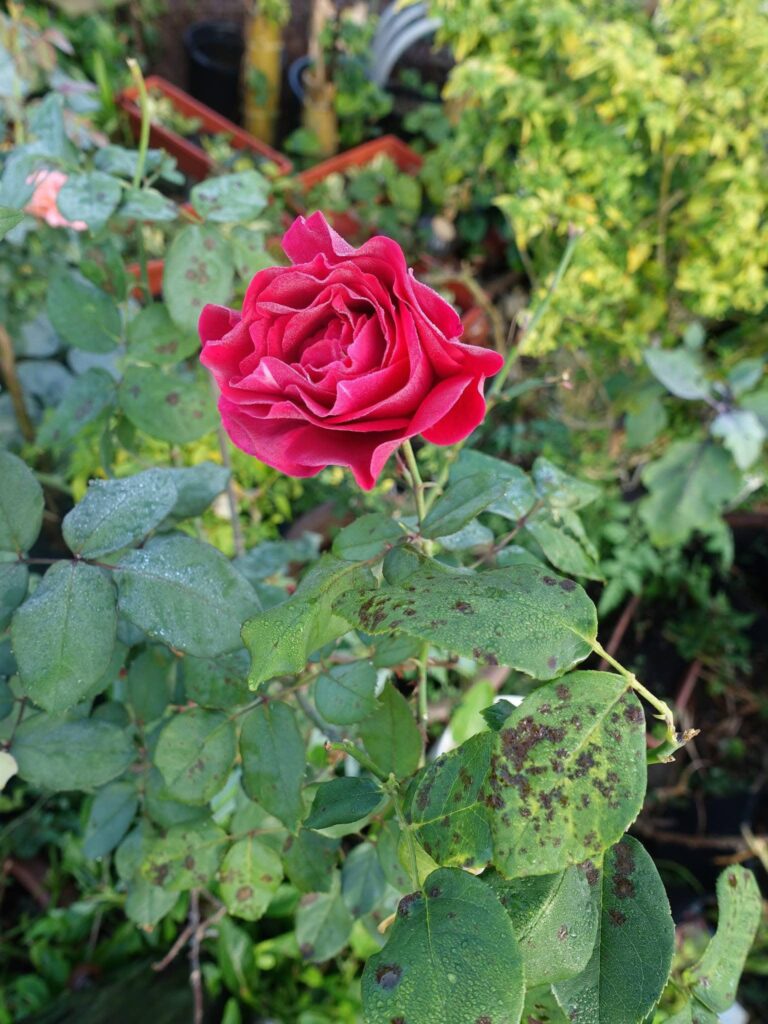
Black spot shows up as circular black spots with feathery edges on the upper leaf surface. It usually starts on the lower leaves first and works its way up the plant.
Clemson’s Home & Garden Information Center describes it as one of the most serious rose diseases, often reaching epidemic levels in a single season. Infected leaves turn yellow and drop early, which can weaken the entire bush.
The fungus, Diplocarpon rosae, spreads through splashing water and needs several hours of leaf wetness to infect a plant. Watering at the soil line instead of overhead helps a great deal.
Removing fallen leaves each fall also matters, since the fungus overwinters in leaf litter and stem cankers, ready to reinfect the plant come spring.
READ MORE ON: Black Spots on Roses: What’s Really Causing Them
2. Powdery Mildew
Powdery mildew coats young leaves, shoots, and buds with a grayish-white, powdery film. Infected leaves often curl, twist, and take on a slightly purple tint before the mildew becomes obvious.
University of Maryland Extension explains that this fungus prefers warm days paired with cool, humid nights. That combination is common in both spring and fall, which is why mildew tends to appear twice a season.
Unlike black spot, powdery mildew is actually discouraged by water sitting on the leaves. Ironically, this means good air circulation matters more than dry foliage here.
Pruning to open up the plant’s center and spacing bushes further apart both reduce the humid microclimate that mildew depends on.
3. Rust
Rose rust produces small orange to reddish-brown pustules on the undersides of leaves, with matching yellow spots visible from above. Iowa State University Extension notes that the disease favors cooler, wetter conditions common in spring and fall.
As rust progresses, affected leaves typically drop early, leaving the plant thinner than normal. Repeated infections over several seasons can noticeably weaken a bush’s vigor.
The fungus overwinters on fallen leaves and stems, much like black spot. Cleaning up debris at the base of the plant each fall reduces the following year’s infection pressure significantly.
Good airflow and morning watering, so foliage dries quickly, both help keep rust in check without heavy fungicide use.
4. Botrytis Blight (Gray Mold)
Botrytis blight targets flower buds and petals rather than leaves. Buds often turn brown, fail to open properly, or develop a fuzzy gray mold coating during damp weather.
This disease thrives in cool, wet conditions, particularly during rainy spring weeks when buds stay damp for long stretches. Tightly petaled varieties are especially prone to trapping moisture inside the bloom.
Removing spent or infected blooms promptly limits the fungus’s ability to spread to healthy buds nearby.
Improving airflow around the plant, much like with powdery mildew, reduces the humid conditions this fungus needs to take hold.
ALSO READ: Rose Bush Summer Pruning: Tips for More Blooms All Season
5. Stem Canker and Dieback
Stem canker appears as purplish, reddish, or pale-yellow spots on canes that gradually enlarge and turn brown or grayish-white. University of Maryland Extension notes that severe cankers can fully encircle a stem, killing everything above that point.
Several different fungal pathogens cause canker, but they are all managed the same way. Pruning out infected canes well below the visible damage is the standard fix.
Cankers often enter through pruning wounds or winter injury, so clean, sharp pruning cuts made at the right time of year reduce the risk considerably.
A weakened, stressed rose is far more vulnerable to canker, which makes overall plant health your best long-term defense.
Viral and Bacterial Diseases (2 Problems)
These two diseases are less common than fungal issues, but they carry far more serious consequences. Neither has a reliable cure once established.
6. Rose Rosette Disease
Rose rosette disease causes a distinctive “witches’ broom” of clustered, thin stems, along with excessive thorniness and reddened new growth. University of Maryland Extension lists distorted flower buds and stunted growth as additional warning signs.
The disease is a virus spread by microscopic eriophyid mites, too small to see without strong magnification. Once a plant is infected, there is no treatment that reverses the damage.
The American Rose Society notes that this disease has become devastating across the eastern two-thirds of the United States as rose plantings have expanded.
Because there is no cure, infected plants, including their roots, should be removed and disposed of promptly to protect nearby healthy roses.
7. Crown Gall
Crown gall causes rough, swollen, tumor-like growths near the base of the plant or along the roots. These galls interfere with the plant’s ability to move water and nutrients properly.
Oklahoma State University Extension lists crown gall among the major disease problems affecting roses, alongside black spot and powdery mildew. It is caused by a soil-borne bacterium that enters through wounds in the roots or stem.
Once galls form, there is no chemical cure. Badly affected plants usually need to be removed rather than treated.
Avoiding unnecessary wounds during planting and transplanting, along with buying certified disease-free stock, helps prevent this problem from the start.
ALSO READ: Why Are the Leaves on My Rose Bush Turning Yellow? (Causes and Solutions)
Insect and Mite Pests (6 Problems)
Insects and mites cause a different kind of damage than fungal disease, often showing up as chewed leaves, distorted buds, or stippled foliage.
8. Aphids
Aphids are small, soft-bodied insects, typically pink or green, that cluster on tender new shoots and flower buds. NC State Extension describes them as ranging from roughly 0.5 to 3 millimeters in size.
They feed by sucking sap from young growth, which causes distorted, curled shoots and weaker blooms when populations get high. Left unchecked, a heavy infestation can noticeably reduce flower quality.
The good news is that natural predators, including lady beetles, lacewings, and parasitic wasps, often keep aphid populations in check on their own.
A strong spray of water aimed at the undersides of leaves also knocks aphids off effectively without any chemical treatment needed.
9. Spider Mites
Spider mites are tiny arachnids, not insects, that feed on the underside of rose leaves. NC State Extension notes that heavy infestations cause small chlorotic spots on leaves, which eventually drop prematurely.
Because they are so small, mites are often first noticed through their damage rather than the pests themselves. Fine webbing on stems and leaf undersides is usually the clearest sign.
Hosing down the plant regularly, especially the leaf undersides, disrupts mite colonies and reduces their numbers significantly.
Mites tend to thrive during hot, dry spells, so consistent watering during summer heat waves helps keep populations from exploding.
10. Japanese Beetles
Japanese beetles are metallic green insects with copper-brown wing covers, and they feed in large groups. Illinois Extension notes they prefer flowers and buds but will also attack foliage when numbers are high.
A heavy infestation can skeletonize leaves and destroy blooms within days, especially during their peak activity in early summer.
Handpicking beetles into soapy water is tedious but effective for smaller gardens without heavy infestations.
Treating lawn grubs earlier in the season also reduces next year’s adult beetle population, since grubs develop into these adults.
11. Thrips
Thrips are tiny, slender, yellowish insects that hide inside flower buds and petals. NC State Extension notes that their feeding distorts and spots petals, often preventing buds from opening fully.
Because thrips are so small, they are easy to overlook until the damage becomes visible on open blooms. Light-colored roses tend to show thrips damage more clearly than darker varieties.
Removing and destroying affected buds helps reduce the local population before it spreads further.
Thrips populations often spike during hot, dry weather, so keeping plants properly watered can reduce plant stress that attracts them.
12. Rose Slugs (Sawfly Larvae)
Rose slugs are not true slugs, but the larvae of sawflies, small wasp-like insects. Mississippi State University Extension lists them among the pests effectively controlled with neem oil and other targeted insecticides.
These larvae feed on leaf tissue between the veins, leaving a distinctive skeletonized, lace-like pattern behind. Heavy feeding can leave leaves looking almost transparent.
Because they feed on the leaf surface rather than hiding inside tissue, rose slugs are relatively easy to control with contact insecticides or insecticidal soap.
Checking leaf undersides regularly in late spring helps catch an infestation before it spreads across the entire bush.
13. Cane Borers
Cane borers are the larvae of various wasps and beetles that tunnel into rose canes to lay their eggs. Damage typically appears as brown, dried-out canes with a small hole visible at the point of entry.
These pests aren’t usually fatal on their own, but a tunnel that reaches all the way to the crown can cause serious, sometimes fatal, damage to the plant.
Cutting back damaged canes a few inches at a time until you reach solid, white, healthy tissue is the standard fix.
Sealing large pruning cuts with glue or wax in areas where borers are active helps prevent new eggs from being laid in fresh wounds.
Environmental and Cultural Problems (2 Problems)
Not every rose problem comes from a pest or pathogen. Soil conditions, weather, and basic care routines cause a real share of the complaints gardeners bring to extension offices.
14. Iron Chlorosis (Yellowing Leaves)
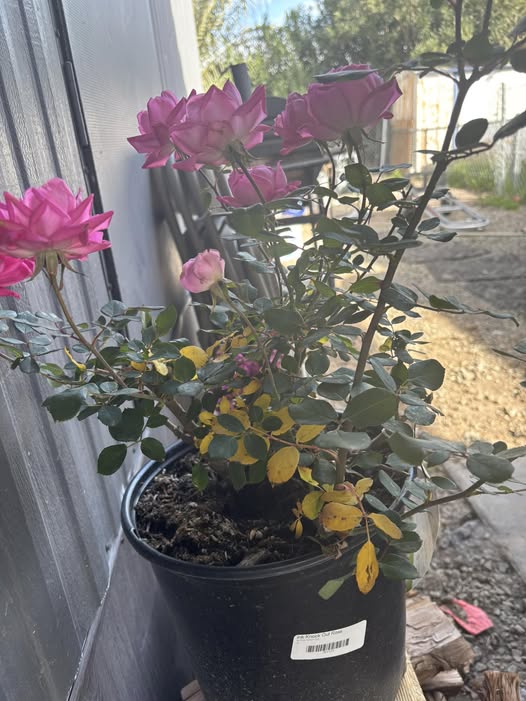
Iron chlorosis shows up as yellow leaves with dark green veins still clearly visible, usually starting on the youngest growth first. University of Maryland Extension confirms this pattern as the classic symptom of the condition.
In most cases, the problem is not an actual shortage of iron in the soil. Utah State University Extension explains that high soil pH, usually above 7.0, is the most common underlying cause, locking iron in a form roots cannot absorb.
Overwatering and poor soil drainage can make the problem worse, since saturated soil further limits nutrient uptake at the root level.
A soil test is the most reliable way to confirm chlorosis, and chelated iron treatments can offer a temporary fix while the underlying pH issue gets addressed.
15. Poor Flowering and Winter Dieback
Sometimes a rose bush survives just fine but simply refuses to bloom well, or dies back after a hard winter. University of Maryland Extension lists environmental stress, excessive shade, too much fertilizer, improper pruning, and winter-kill as common causes.
Winter dieback tends to show up as blackened, dead canes each spring, particularly on varieties not suited to a region’s cold. Pruning back to live, green tissue each spring is the standard recovery step.
Poor flowering, separately, often traces back to too much nitrogen fertilizer, which pushes leafy growth at the expense of blooms.
Deadheading spent flowers regularly also encourages fresh blooms, since a rose left to form seed pods puts its energy there instead of into new flowers.
Rose Bush Problem Facts Worth Knowing
A few figures help put these 15 problems into perspective.
- Black spot and powdery mildew are the two most prevalent fungal diseases of roses nationwide, according to Oklahoma State University Extension.
- Black spot can cause almost complete defoliation of an untreated bush by early fall, per University of Illinois Extension.
- Black spot spores require at least six hours of continuous leaf wetness to germinate, according to University of Tennessee Extension research.
- Rose rosette disease has spread across the eastern two-thirds of the United States, according to the American Rose Society.
- Roses are considered among the most intensively managed plants in home gardens and public landscapes, according to the University of California Statewide IPM Program.
These numbers explain why a proactive routine, rather than reactive treatment, makes the biggest difference for rose health.
How to Prevent Most Rose Bush Problems
With 15 possible issues to watch for, prevention is far easier than treatment. Here is how I would prioritize it.
- Water at the soil line, not overhead. This single habit change reduces black spot, rust, and botrytis blight risk significantly.
- Clean up fallen leaves and debris every fall. Most fungal spores overwinter in leaf litter, so removing it breaks the disease cycle.
- Prune for airflow, not just shape. An open center reduces the humid conditions that powdery mildew and botrytis both depend on.
- Inspect leaf undersides regularly. Aphids, spider mites, and thrips are often spotted there long before damage becomes obvious from a distance.
- Test your soil before assuming a nutrient problem. Iron chlorosis is frequently a pH issue, not a true soil deficiency, so guessing at fertilizer rarely helps.
- Choose disease-resistant cultivars where possible. Both Oklahoma State and Clemson Extension note that some rose varieties resist black spot and powdery mildew far better than others.
Common Questions About Rose Bush Problems
What is the most common rose bush problem? Black spot is widely considered the most common and serious rose disease, capable of causing significant leaf drop and weakening a plant within a single season.
Can a rose bush recover from rose rosette disease? No. There is currently no treatment or cure for rose rosette disease. Infected plants should be removed entirely, including the root system, to protect nearby healthy roses.
Why are my rose leaves turning yellow but veins staying green? This pattern almost always points to iron chlorosis, usually caused by high soil pH rather than an actual lack of iron in the ground.
Do all rose varieties get the same problems? No. Some cultivars, particularly certain shrub roses, resist black spot and powdery mildew far better than hybrid tea roses, which often need a consistent spray program.
Is it normal for a rose bush to die back in winter? Some dieback is normal, especially in colder climates. Pruning back to healthy, green wood each spring is the standard way to manage it.
Final Thoughts
Rose bushes ask for more attention than many landscape plants, but the payoff is worth it. Once you can recognize these 15 problems, most of them become manageable rather than mysterious.
I would encourage any rose grower to walk the garden weekly, checking leaf undersides and new growth closely. Catching black spot, aphids, or early chlorosis in their first week is far easier than fighting a full-blown infestation later.
Prevention, more than any spray or treatment, is what keeps a rose bush thriving year after year.
References
- University of Maryland Extension – Rose: Identify and Manage Problems https://extension.umd.edu/resource/rose-identify-and-manage-problems
- Oklahoma State University Extension – Diseases of Roses https://extension.okstate.edu/fact-sheets/diseases-of-roses
- Oklahoma State University Extension – Rose Rosette Disease https://extension.okstate.edu/fact-sheets/rose-rosette-disease
- University of Illinois Extension – Managing Diseases and Pests (Roses) https://extension.illinois.edu/roses/managing-diseases-and-pests
- North Carolina State University Extension Publications – Pests of Rose https://content.ces.ncsu.edu/insect-and-related-pests-of-shrubs/pests-of-rose
- Clemson Cooperative Extension, Home & Garden Information Center – Rose Diseases https://hgic.clemson.edu/factsheet/rose-diseases/
- Iowa State University Extension and Outreach – Pests and Diseases of Roses https://yardandgarden.extension.iastate.edu/how-to/pests-and-disease-roses
- University of California Statewide IPM Program (UC ANR) – Roses: Insects and Mites https://ipm.ucanr.edu/home-and-landscape/roses-insects-and-mites/
- Utah State University Extension – Preventing and Treating Iron Chlorosis in Trees and Shrubs https://extension.usu.edu/forestry/trees-cities-towns/tree-care/preventing-iron-chlorosis

Tim M Dave is a gardening expert with a passion for houseplants, particularly cacti and succulents. With a degree in plant biology from the University of California, Berkeley, he has vast experience in gardening. Over the years, he has cultivated a vast collection of desert plants and learned a great deal about how to grow and care for these unique companions.