45 Types of Peonies (Variety, Color, and Bloom Explained)
Peonies belong to the genus Paeonia, the only genus in the family Paeoniaceae. This genus is native to Asia, Europe, and small pockets of western North America.
Breeders have spent centuries crossing wild species with cultivated ones. The result is an enormous range of colors, shapes, and growth habits.
Penn State Extension explains that peonies are cold-hardy, deciduous perennial shrubs that thrive in USDA hardiness zones 3 through 8. That wide range is one reason peonies have spread into so many gardens across the world.
The 4 Main Peony Categories
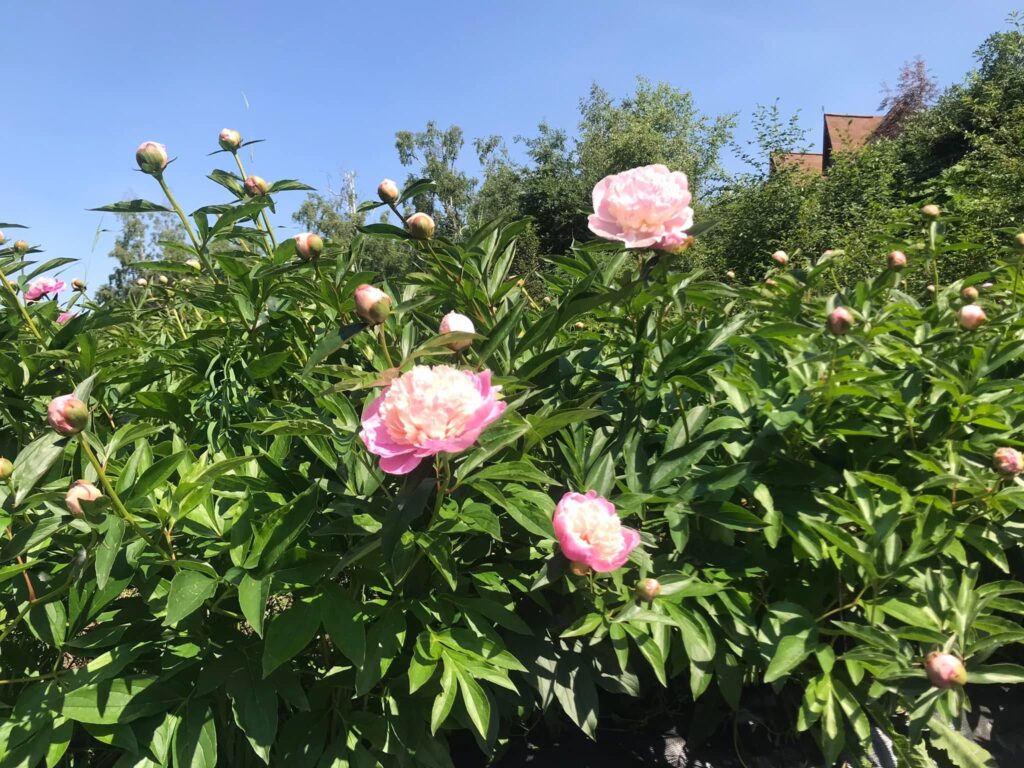
Before diving into individual types, it helps to understand the umbrella categories. Every peony variety on this list fits into one of these.
1. Herbaceous Peonies
These are the classic garden peonies most people picture. They die back to the ground every winter and regrow from underground buds each spring.
Herbaceous peonies typically bloom for 7 to 10 days, depending on the cultivar, according to Garden Design’s horticultural resources. Most are derived from Paeonia lactiflora.
2. Tree Peonies
Despite the name, tree peonies are woody shrubs, not trees. Iowa State University Extension notes they reach roughly 3 to 5 feet in height and produce flowers 6 to 9 inches across, often the largest blooms of any peony type.
Their woody stems survive winter above ground, unlike herbaceous types. Tree peonies also tend to bloom earlier in the season.
3. Intersectional (Itoh) Peonies
Itoh peonies are hybrids between herbaceous and tree peonies. They were first successfully bred by Japanese horticulturist Toichi Itoh in the 1940s.
These hybrids combine the best of both worlds. Garden Design reports that Itoh peonies can produce 30 to 50 blossoms per plant and bloom for 3 to 4 weeks, longer than most other types.
4. Species (Wild) Peonies
These are the original, un-hybridized peonies found growing naturally in the wild. They tend to bloom earliest in the season and often have simpler, more delicate flowers.
The University of Connecticut Home & Garden Education Center notes that woodland species peonies typically open first in late spring, followed by tree peonies, then herbaceous types, and finally intersectional hybrids.
Peony Flower Forms Explained
Before listing all 45 types, it is worth understanding flower form. This is how experts classify peonies beyond just species and hybrid group.
North Carolina State Extension’s Plant Toolbox and other university sources describe five recognized forms:
- Single – A single ring of petals with visible pollen-bearing stamens in the center.
- Semi-double – Extra petals with some stamens still visible.
- Double – Dense, full petals with few or no visible stamens.
- Anemone form – A ring of guard petals surrounding narrow, petal-like staminodes.
- Japanese form – Similar to anemone, but the center staminodes do not produce pollen.
- Bomb form – A rounded, ball-like center of petals sitting atop broader guard petals.
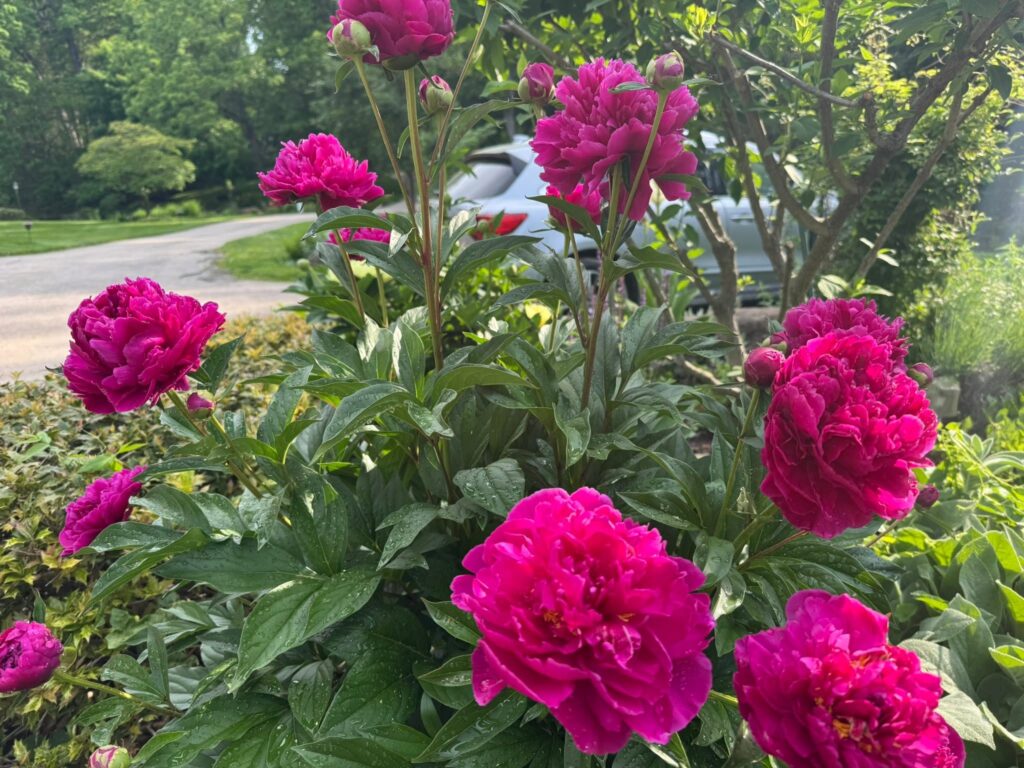
Knowing these forms will help you understand why two peonies in the same species can look completely different.
Now, let’s get into the full list.
Classic Herbaceous Garden Peonies (18 Types)
These are the peonies you will find at most nurseries. They die back in winter and are prized for cut flowers and border planting. Most reach 24 to 32 inches tall and settle into a garden bed for good, so it helps to know exactly what you are choosing before you dig that hole.
1. Sarah Bernhardt
This is the double, rose-pink bloom that most people picture when they hear the word peony. It carries a soft, sweet fragrance and opens into a large, ruffled flower on strong stems.
Nurseries across North America sell it more than almost any other cultivar. If you only plant one peony in your life, gardeners often say this should be it.
2. Festiva Maxima
A fragrant, double white bloom flecked with small streaks of red near the center. The contrast is subtle rather than showy, which gives the flower an elegant, almost antique look.
Clemson’s Home & Garden Information Center lists it as a low-chill-hour option, meaning it can perform even in milder Southern winters where other cultivars struggle to bloom well.
3. Duchesse de Nemours
A creamy white, double bloom with a light lemon scent and a tidy, rounded shape. Florists favor it heavily because the buds hold up well after cutting.
It is also one of the older heirloom varieties still widely sold today, which says something about how well it has stood the test of time.
4. Karl Rosenfield
A rich, dark red double peony that keeps its deep color even as summer heat sets in. Many red cultivars fade quickly in the sun, but this one resists that fading better than most.
Its sturdy stems also mean less staking, which is a relief if you have ever watched a heavy bloom flop face-down into the mud after rain.
5. Felix Crousse
Brilliant pink, fully double flowers with a slightly deeper pink center. NC State Extension notes it as another low chill-hour cultivar, making it a smart pick for warmer regions.
The fragrance is noticeable but not overwhelming, so it works well planted close to a patio or walkway where you will pass it often.
6. Bowl of Beauty
A striking anemone-form peony with broad pink guard petals surrounding a dense pincushion of pale-yellow staminodes. The two-tone effect makes it look almost artificial up close.
It is a conversation starter in any border, especially planted where afternoon light can catch the contrast between the pink and yellow.
7. Raspberry Sundae
A bomb-form peony with dense, wavy petals that can reach up to 18 centimeters across. The bloom opens pink on the outside with a creamy, sherbet-colored center.
The name fits the flower well, and it is a popular choice among gardeners who want something a little more playful than a plain single color.
8. Do Tell
A Japanese-form bloom with soft pink guard petals wrapped around a rose-and-cream center of narrow staminodes. It has a more relaxed, natural shape than fully double types.
Bees and other pollinators tend to visit Japanese-form peonies more readily, since the center still resembles functional stamens even though it no longer produces much pollen.
9. Krinkled White
A single-form peony with crinkled, tissue-paper-like white petals and bright golden stamens at the center. It looks almost like a giant poppy at first glance.
Because it only has one ring of petals, the bloom is lighter and less prone to flopping over than the double types on this list.
10. Miss America
A large semi-double white bloom with a soft yellow center and broad, slightly ruffled petals. The flower size alone makes it a standout in any spring border.
It blooms a little earlier than many other whites, which makes it useful for extending the start of your peony season.
11. Shirley Temple
Opens a delicate pale pink and gradually fades to a soft creamy white as the bloom matures. Watching that color shift over a week is part of the charm.
It is a fully double form with a light, pleasant fragrance, and it tends to hold its shape well even in light rain.
12. Coral Charm
A semi-double peony known for its unusual coral-orange color, a shade you rarely see elsewhere in the peony world. The color softens to a warm pink as the flower ages.
It has earned awards from peony societies for exactly this reason. If you want something that breaks away from the usual pink-white-red palette, this is a strong option.
13. Coral Sunset
Similar coral tones to Coral Charm, but with a slightly deeper, peachier hue and a semi-double form. The two look striking planted side by side.
It blooms a touch earlier in the season, so pairing both coral varieties can stretch that unusual color display over several extra days.
14. Paula Fay
An early-blooming semi-double peony in bright, clear pink. Because it opens ahead of most other herbaceous types, it is often used to kick off the peony season in a mixed border.
Its foliage also holds up well through summer, giving the plant ornamental value long after the flowers are gone.
15. Buckeye Belle
A deep red, semi-double bloom with a velvety petal texture that catches light beautifully. The red here leans darker and richer than typical bright reds.
It is a compact grower, which makes it a good fit for smaller garden beds where space is limited but you still want a bold red statement.
16. Kansas
A vivid, saturated red double peony bred in the United States and known for exceptionally strong stems. It rarely needs staking, even with a full, heavy bloom.
Its reliability and bright color have kept it a garden favorite for decades, particularly among growers who cut peonies for indoor arrangements.
17. Red Charm
A rich, dark red bomb-form peony that is typically one of the earliest reds to open each season. The dense, rounded bloom holds its shape well from bud to full flower.
It also tends to be a strong, vigorous grower, so it establishes itself in the garden a little faster than some of the more finicky heirloom types.
18. Cora Stubbs
A Japanese-form bloom with deep pink outer guard petals surrounding a mix of cream and light pink centers, as noted by NC State Extension. The layered coloring gives it real depth.
It is a favorite among collectors who want a peony that photographs well, since the color gradient shows up beautifully in both sun and shade.
ALSO READ: 25 Reblooming Perennial Flowers (Varieties Identification, With Pictures)
Tree Peony Cultivars (10 Types)
Tree peonies bring larger blooms and a wider color range, including yellows and near-blacks rarely seen in herbaceous types. Because their woody stems stay in place year-round, they also add structure to a garden in winter, when herbaceous peonies have already died back.
19. Age of Gold
Creamy lemon, semi-double flowers with red flares near the base of each petal. The color combination gives the bloom a warm, glowing look in morning light.
It is one of the more compact tree peonies, which makes it manageable for gardeners who want that woody-shrub structure without a plant taking over the bed.
20. Alice Harding
An heirloom tree peony with double, lemon-yellow blooms and a long garden history. What sets it apart is that it is not grafted, so it can be propagated by division rather than grafting.
That detail matters more than it sounds. Grafted tree peonies can struggle if the rootstock and scion fail to unite well, so a non-grafted heirloom like this tends to be more forgiving long term.
21. High Noon
A semi-double yellow tree peony with a naturally compact habit compared to other tree types. The blooms are large but the plant itself stays tidy and manageable.
It is a good choice for gardeners who want a true yellow tree peony but do not have space for a sprawling five-foot shrub.
22. Black Pirate
Deep maroon-red petals that read almost black, especially in low or filtered light. It is one of the darkest colors available in the entire peony world.
Planted next to lighter pastels, it creates a dramatic contrast that many garden designers use deliberately to anchor a bed visually.
23. Shima Nishiki
A Japanese tree peony variety with striking bi-color petals, showing streaks of red and white on the very same bloom. No two flowers look quite identical.
This unpredictability is actually part of its appeal for collectors, since every season can reveal a slightly different pattern on the same plant.
24. Hana Kisoi
A vivid pink, semi-double Japanese tree peony recognized for strong, reliable garden performance. It tends to bloom generously once established.
Because it holds up well in a range of conditions, it is often recommended to gardeners trying tree peonies for the first time.
25. Renkaku
A pure white, semi-double Japanese tree peony with a delicate, almost silky petal texture. The petals catch light in a way that makes the flower glow rather than look flat.
It pairs beautifully with darker tree peonies like Black Pirate, giving a garden bed a striking light-and-dark contrast during peak bloom.
26. Kamata Fuji
A lavender-purple, double Japanese tree peony with a rich, saturated color rarely found in herbaceous varieties. The double form gives it real visual weight on the branch.
Purple tones like this tend to draw attention precisely because they are uncommon, making this a strong choice for a standout specimen plant.
27. Godaishu
A pure white, double tree peony with a compact, tidy growth habit that fits neatly into smaller garden spaces. The blooms are full without becoming top-heavy.
Its clean white color also makes it a versatile companion for almost any other peony color in a mixed planting.
28. Rock’s Peony (Paeonia rockii)
A wild-origin tree peony species with white petals and dramatic dark maroon flares radiating from the base. It is heavily prized by serious collectors.
It is slower to establish than hybrid tree peonies, but the payoff is a flower with a genuinely wild, untamed character that hybrids rarely replicate.
ALSO READ: The Tree Peony Shrub: History, Care and Common Problems
Intersectional (Itoh) Hybrid Peonies (8 Types)
Itoh peonies combine tree peony flower size with herbaceous peony hardiness. They are increasingly popular for their long bloom time and strong stems that hold blooms upright instead of flopping over after rain.
29. Bartzella
A bright yellow, fully double Itoh peony and one of the most award-winning hybrids in the entire category. True yellow is rare in peonies, which makes this cultivar especially sought after.
It also has a light, pleasant fragrance and blooms prolifically once the plant matures, often producing dozens of flowers in a single season.
30. Garden Treasure
A golden-yellow, semi-double Itoh with a red flare at the center of each bloom. The red-and-yellow combination gives it a warm, sunset-like appearance.
It was one of the earlier Itoh introductions and remains a benchmark cultivar that newer yellow varieties are still compared against.
31. Julia Rose
Opens a warm coral-red and gradually shifts through soft peach tones before settling into pale yellow as the bloom matures. Few peonies change color this dramatically over their bloom cycle.
Because of that shift, a single plant can display three distinct color phases within the same week, which is unusual even among Itoh hybrids.
32. Cora Louise
A white, semi-double Itoh peony with delicate lavender-pink flares at the base of each petal. The effect is soft rather than bold, almost watercolor-like.
It is a strong, reliable bloomer and tends to hold its form well, even through light spring rain that can flatten more delicate blooms.
33. Lois’ Choice
A creamy white, semi-double Itoh cultivar known for exceptional fragrance, stronger than many other Itoh varieties. It is often chosen specifically for cut-flower arrangements because of this scent.
Its clean, soft coloring also makes it easy to pair with almost any other peony in the garden without clashing.
34. First Arrival
A lavender-pink, semi-double Itoh peony that blooms earlier than most others in its category. As the name suggests, it tends to open first among Itoh hybrids each spring.
That early timing makes it useful for gardeners trying to bridge the gap between tree peony season and the main herbaceous bloom period.
35. Old Faithful
A rich, dark red, semi-double Itoh cultivar with notably sturdy stems that rarely need staking. The deep red color holds well without fading quickly in the sun.
Reliability is really the theme here. Growers often point to this variety as one that performs consistently year after year with minimal fuss.
36. Callie’s Memory
A soft yellow Itoh hybrid with a gentle pink blush near the petal edges. The pastel combination gives it a slightly different feel than the bolder yellows like Bartzella.
It works particularly well in cottage-style gardens where softer, blended colors fit the overall look better than high-contrast blooms.
ALSO READ: 15 Flowers That Look Like Roses: Identification and Pictures
Species (Wild) Peonies (9 Types)
These are the ancestral peonies behind nearly every hybrid on this list. Growing a species peony connects your garden to the plant’s natural origins, long before breeders began crossing and refining them into today’s cultivars.
37. Paeonia lactiflora
The common garden peony and the direct ancestor of most herbaceous hybrids sold today, including nearly every cultivar listed in section A. It is native to Siberia and China.
Peer-reviewed research on PubMed Central notes that this species is now cultivated commercially in more than 50 countries, which gives some sense of just how far it has traveled from its wild origins.
38. Paeonia officinalis
A southern European species and, alongside P. lactiflora, one of the two founding species behind most modern peony hybrids, according to the University of Arkansas Cooperative Extension Service. Its wild form tends toward simple, single red or pink blooms.
Older European garden varieties often trace back to this species specifically, giving it a somewhat different genetic character than the Asian-derived hybrids more common in the United States.
39. Paeonia suffruticosa
The primary tree peony species, native to China, from which most tree peony cultivars ultimately descend. In the wild, it produces large, simple flowers in white or soft pink.
Centuries of selective breeding in China and Japan transformed this single wild species into the huge range of tree peony colors and forms available today.
40. Paeonia tenuifolia
Known as the fernleaf peony, prized as much for its finely divided, feathery foliage as for its flowers. The deep red single blooms open early, often before most herbaceous types even bud.
Iowa State University Extension notes that it can be a bit tricky to establish compared to standard herbaceous hybrids, so patience is genuinely required with this one.
41. Paeonia mlokosewitschii
Nicknamed “Molly the Witch,” this species produces soft, pale yellow single flowers and is native to the Caucasus region. The color is unusual enough that it draws attention even in a garden full of showier hybrids.
It blooms early and briefly, so many gardeners treat it as a special spring event rather than a long-lasting border plant.
42. Paeonia japonica
A woodland peony species that blooms earliest of all peony types, producing delicate white flowers, as described by UConn’s Home & Garden Education Center. It prefers a bit more shade than most other peonies.
Because it opens before tree peonies and herbaceous types even begin to bud, it effectively marks the true start of the peony season each year.
43. Paeonia veitchii
A compact species peony from western China with magenta-pink single blooms held on relatively short stems. Its smaller size makes it well suited to rock gardens or tight border spaces.
It is less commonly available than the more popular hybrid cultivars, so tracking one down often means buying from a specialty peony nursery.
44. Paeonia obovata
A woodland species with soft white to pink single flowers, followed by attractive blue-black seed pods once the bloom fades. Those seed pods add ornamental interest well past the flowering period.
Gardeners who enjoy a plant with more than one season of visual appeal tend to appreciate this dual-purpose quality.
45. Paeonia brownii
Known as Brown’s peony, this is one of the few peony species native to North America, found growing wild in the northwestern United States, as noted by Penn State Extension. Its flowers are smaller and more subdued, typically maroon or bronze.
It is rarely cultivated commercially, but it holds real significance as proof that peonies are not purely an Old World plant family.
Peony Facts Worth Knowing
A few numbers help put peony popularity into perspective.
- Peonies grow well across USDA hardiness zones 3 to 8, according to Penn State Extension and the University of Illinois Extension.
- Paeonia lactiflora is cultivated commercially in more than 50 countries, including the United States, China, New Zealand, and Turkey, according to peer-reviewed research published on PubMed Central.
- Herbaceous peonies bloom for roughly 7 to 10 days per cultivar, while Itoh hybrids can extend flowering to 3 to 4 weeks.
- Some documented peony plantings in the United States have lived and bloomed for more than 100 years, per University of Illinois Extension.
- Peonies have been cultivated in Asia for over 2,000 years, making them one of the longest continuously grown ornamental plants in history.
These numbers explain why peonies remain a staple in perennial gardens rather than a fleeting trend.
How to Choose the Right Peony Type for Your Garden
With 45 types to consider, picking the right one can feel overwhelming. Here is how I would narrow it down.
- If you want low maintenance: Choose herbaceous cultivars like Karl Rosenfield or Duchesse de Nemours. They are forgiving and widely available.
- If you want the biggest blooms: Tree peonies like Shima Nishiki or Hana Kisoi offer flowers up to 9 inches across.
- If you want a longer bloom season: Itoh hybrids such as Bartzella or Garden Treasure bloom longer than almost any other type.
- If you live in a warmer climate: Look for low-chill cultivars specifically noted by Clemson Extension, such as Festiva Maxima or Felix Crousse.
- If you want something rare and collectible: Species peonies like Paeonia mlokosewitschii or Paeonia rockii are excellent conversation pieces.
Whatever you choose, remember that peonies reward patience. Most take two to three years after planting before they bloom at full potential.
Common Questions About Peony Types
How many types of peonies are there in total? There are only a few dozen true wild species, but thousands of registered cultivars exist across herbaceous, tree, and Itoh categories. This guide focuses on 45 of the most notable and widely available types.
Which peony type blooms first? Woodland species peonies, such as Paeonia japonica, typically bloom first, followed by tree peonies, then herbaceous types, and finally Itoh hybrids.
Are tree peonies actually trees? No. Despite the name, tree peonies are woody shrubs, not trees. They simply retain woody stems above ground through winter, unlike herbaceous peonies.
What is the rarest peony type? Species peonies like Paeonia rockii and Paeonia mlokosewitschii are considered rare and are mostly sought after by collectors rather than casual gardeners.
Do all peony types need cold winters? Not entirely. Some herbaceous cultivars, such as Festiva Maxima and Felix Crousse, have low chill-hour requirements and can perform in warmer Southern climates, according to Clemson Extension.
Final Thoughts
Peonies are more than a pretty spring flower. They represent centuries of careful breeding, regional adaptation, and horticultural patience.
Whether you choose a fragrant herbaceous classic like Sarah Bernhardt, a bold tree peony like Black Pirate, or a rare species like Paeonia mlokosewitschii, you are planting a piece of history that will likely outlive the garden bed itself.
I would encourage any gardener, new or experienced, to plant at least two or three different peony types. Staggering bloom times across herbaceous, tree, and Itoh varieties can stretch your peony season from late spring well into early summer.
References
- Iowa State University Extension and Outreach – Peony Types and Cultivars for Iowa https://yardandgarden.extension.iastate.edu/how-to/peony-types-and-cultivars-iowa
- Iowa State University Extension and Outreach – Peony (Paeonia sp.) https://yardandgarden.extension.iastate.edu/encyclopedia/peony-paeonia-sp
- Penn State Extension – The Beloved Peony https://extension.psu.edu/the-beloved-peony
- North Carolina State University Extension, Plant Toolbox – Paeonia (Garden Peony, Herbaceous Peony, Hybrid Peony, Peony) https://plants.ces.ncsu.edu/plants/paeonia/
- North Carolina State University Extension, Plant Toolbox – Peony – Paeonia, Herbaceous Types https://plants.ces.ncsu.edu/plants/paeonia-herbaceous-types/common-name/peony/
- University of Connecticut, Home & Garden Education Center – Peony Factsheet https://homegarden.cahnr.uconn.edu/factsheets/peonies/
- Clemson Cooperative Extension, Home & Garden Information Center – How to Grow Peonies in South Carolina https://hgic.clemson.edu/factsheet/peonies/
- University of Illinois Extension – It’s Peony Time! Good Growing Blog https://extension.illinois.edu/blogs/good-growing/2019-04-30-its-peony-time
- University of Arkansas Cooperative Extension Service – Peony https://www.uaex.uada.edu/yard-garden/resource-library/plant-week/peony.aspx

Tim M Dave is a gardening expert with a passion for houseplants, particularly cacti and succulents. With a degree in plant biology from the University of California, Berkeley, he has vast experience in gardening. Over the years, he has cultivated a vast collection of desert plants and learned a great deal about how to grow and care for these unique companions.