10 Winter Hardy Crape Myrtles (Varieties That Survive Freezing Cold)
I still remember the first crape myrtle I lost to winter. It looked perfect in September and was a bare, brown stick by March. That experience taught me an important lesson: not every crape myrtle can handle the cold.
Many gardeners love these plants for their long summer bloom. Yet most are sold for warm southern gardens. If you live in a cooler area, the variety you choose matters a great deal.
This guide covers 10 winter hardy crape myrtles that give the best chance of survival. You will also learn how to plant and protect them. Autumn is a good time to start planning for next summer.
Quick Answer: Which Crape Myrtles Are the Most Cold Hardy?
The hardiest crape myrtles are mostly hybrids of Lagerstroemia indica and Lagerstroemia fauriei. Popular examples include ‘Natchez’, ‘Muskogee’, ‘Townhouse’, and ‘Fantasy’. Most grow reliably in USDA zone 6 and warmer.
Virginia Tech Extension lists the species as hardy in zones 6b to 9, with zone 6a as a borderline case. That is the realistic limit for most gardeners. Colder than zone 6, you should expect heavy winter damage.
Understanding Hardiness Zones
A hardiness zone shows how cold your area gets in winter. The USDA Plant Hardiness Zone Map is the standard guide. It uses average annual extreme minimum winter temperatures, in 10°F zones and 5°F half zones.
Zone 6 means winter lows of about -10°F to 0°F. Zone 7 means 0°F to 10°F. A plant rated for zone 6 can survive those lows in an average winter.
You can find your zone by entering your zip code on the USDA website. Do this before buying any plant. It takes less than one minute.
What “Winter Hardy” Means for Crape Myrtles
Let me be honest here. Crape myrtles are warm-climate plants. Cornell University notes that most cultivars are not cold hardy above zones 7 or 8. So “hardy” in this article means “better than average.”
In zone 6, a hardy crape myrtle may still lose its top growth in a bad winter. The roots often survive and send up new shoots. The plant then blooms later in the summer.
This works because crape myrtles flower on new wood. Even a plant cut to the ground by frost can bloom the same year. That is a real advantage over many other shrubs.
10 Winter Hardy Crape Myrtles
1. ‘Natchez’ Crape Myrtle
‘Natchez’ is the best-known hardy crape myrtle. The U.S. National Arboretum calls it the queen of crapemyrtles. It has pure white flowers, cinnamon bark, and strong resistance to powdery mildew.
According to NC State Extension, it is hardy in zones 6 to 9. It grows as a large shrub or small tree. Height ranges from 4 to 30 feet, depending on how you manage it.
The flowers appear from midsummer into fall. The panicles are 6 to 12 inches long. NC State notes the plant was officially named in 1978 after development at the National Arboretum.
Best for: large gardens and street planting. Choose a protected spot in cold zones. Give it full sun and moist, well-drained soil.
2. ‘Muskogee’ Crape Myrtle
‘Muskogee’ was developed at the same program as ‘Natchez’. It has soft, light lavender-pink flowers. The blooms form large clusters and last for weeks.
Oregon State University lists it as hardy to zone 7, with zone 6 as a possible limit. It reaches about 15 to 20 feet tall and 15 feet wide. The shape is round and full.
The leaves turn red in autumn. The bark is gray to tan and peels with age. University of Florida Extension also rates it as resistant to mildew.
Best for: gardeners who want color without white flowers. Plant it with some wind protection in zone 6. Mulch the base well in the first two winters.
3. ‘Townhouse’ Crape Myrtle
‘Townhouse’ is a selection of Lagerstroemia fauriei, the Japanese crape myrtle. This species is known for extra cold tolerance. Virginia Tech notes that it is claimed to be more cold hardy than L. indica and resists powdery mildew.
It has white flowers and a stunning cinnamon-red trunk. NC State’s JC Raulston Arboretum features it in its collection. I think the bark alone is worth the price of the plant.
Expect a tall tree, often 20 to 30 feet. It grows well in zone 6. In very cold winters, it may still need mulch.
Best for: a focal point where bark can be admired in winter. Allow plenty of room, because it grows large over time.
4. ‘Fantasy’ Crape Myrtle
‘Fantasy’ is another L. fauriei selection. It is popular for strong disease resistance and handsome peeling bark. NC State recommends it, together with ‘Townhouse’, for cooler areas.
NC State Extension advises that cooler, zone 6 regions do better with hybrids that include the more cold-hardy L. fauriei. That is exactly what ‘Fantasy’ offers.
The flowers are white and appear in large clusters from midsummer. The tree is tall and graceful. Fall color is yellow to orange-red.
Best for: larger yards in zone 6. It pairs well with evergreens, which show off the winter bark.
5. ‘Sarah’s Favorite’ Crape Myrtle
Cornell University names ‘Sarah’s Favorite’ as one of the two most cold hardy varieties known to date. That is a strong endorsement from a northern university. It has white flowers on a medium-sized plant.
Cornell grows it at zone 6 and 7 collection sites. This shows it can handle cooler climates than most. Even so, choose a sunny, sheltered spot.
The plant is multi-stemmed and vase-shaped. Choose mildew-resistant cultivars, as Cornell advises. This variety fits that rule well.
Best for: gardeners in the northern limit of crape myrtle range. It is a cautious, sensible choice.
6. ‘Pink Velour’ Crape Myrtle
‘Pink Velour’ is the second cold hardy variety named by Cornell University. It has bright pink flowers. The new leaves emerge in a dark reddish-purple shade.
The color contrast is lovely. I find the foliage almost as appealing as the blooms. It stays a manageable size, usually under 15 feet.
Treat it as zone 6 hardy, and protect it well in the first two winters. Mulch heavily around the base. Water deeply before the ground freezes.
Best for: small to medium gardens. It also works in large containers if you can shelter them in winter.
7. Razzle Dazzle® Series
The Razzle Dazzle® series is a group of dwarf crape myrtles. Virginia Tech describes them as a relatively new dwarf group with a mounded habit and zone 6 hardiness. They come in white, pink, red, and lavender.
They are bred to stay small, often 3 to 5 feet tall. That makes them ideal for borders and foundation beds. No heavy pruning is needed.
A small plant is easier to protect in winter. You can cover it with mulch or burlap. I like this series for gardeners who worry about cold.
Best for: small yards, patios, and mixed borders. Look for named types such as ‘Diamond Dazzle’ or ‘Raspberry Dazzle’.
8. ‘Hopi’ Crape Myrtle
‘Hopi’ is a compact pink-flowered hybrid from the National Arboretum program. It stays about 8 to 10 feet tall. The flowers are a clean medium pink.
It is generally recommended for zone 6 or 7. In zone 6, use a sheltered site. Plant it near a south-facing wall for extra warmth.
Fall color is a blend of orange and red. The bark is light brown and peels attractively. It is resistant to powdery mildew.
Best for: gardeners who want a medium-sized tree or shrub. Its size makes winter protection easy.
9. ‘Red Rocket’ Crape Myrtle
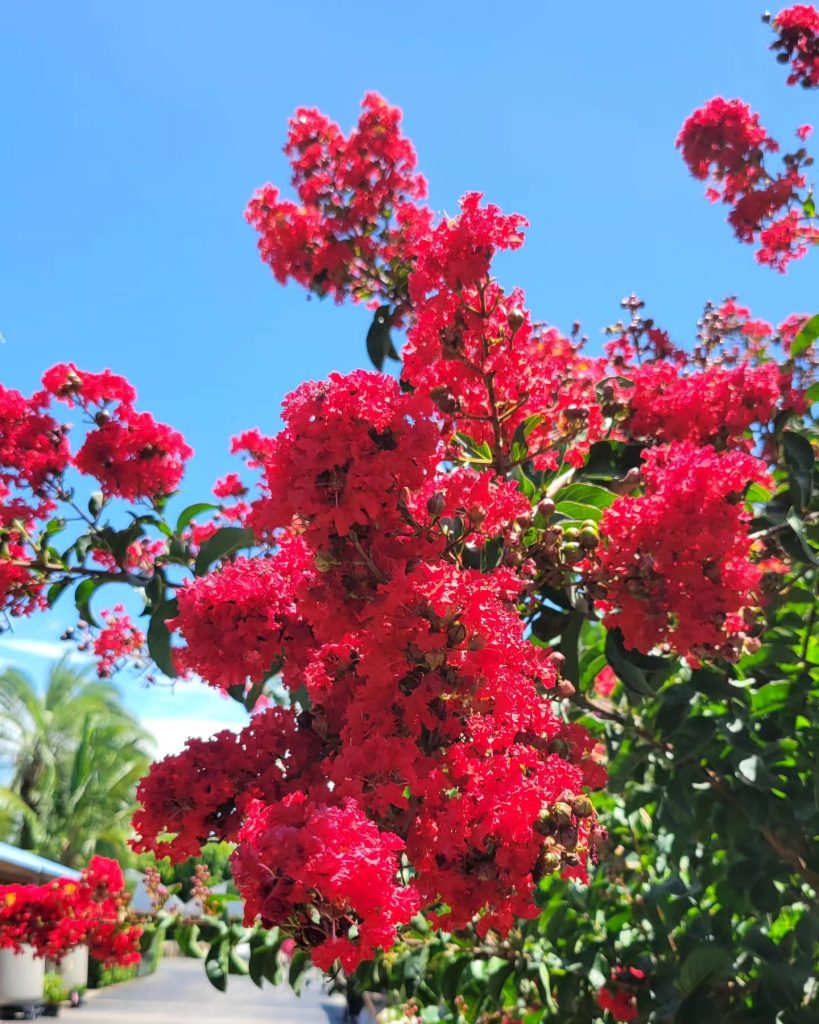
Red crape myrtles can be tricky in cold areas. ‘Red Rocket’ is one of the better options. It has rich, cherry-red flowers on an upright plant.
It is often listed as hardy to zone 6. It grows 10 to 15 feet tall, with a narrow shape. That makes it useful where space is limited.
The color is bold and lasts from midsummer to early fall. Foliage turns bronze-red in autumn. Plant it where it gets full sun all day.
Best for: narrow spaces and focal planting. Mulch well in cold zones, and expect some dieback in harsh winters.
10. ‘Dynamite’ Crape Myrtle
‘Dynamite’ is a red-flowered variety sold as especially cold tolerant. Many nurseries rate it zone 5 or 6. I would treat the zone 5 claim with caution.
In zone 5, think of it as a perennial. Expect it to die back each winter and regrow from the roots. Bloom will come later in the season.
It grows 15 to 20 feet tall in warmer places. In cold areas, it will stay much smaller. Heavy mulch is essential.
Best for: adventurous gardeners in colder zones. It is a good test plant before you invest in several.
ALSO READ: 11 Common Crepe Myrtle Problems: Identifying and Fixing Them
Hardy Crape Myrtle Comparison at a Glance
| Variety | Flower Color | Approx. Zone | Size |
| ‘Natchez’ | White | 6–9 | Large |
| ‘Muskogee’ | Lavender-pink | 6/7–9 | Medium-large |
| ‘Townhouse’ | White | 6–9 | Large |
| ‘Fantasy’ | White | 6–9 | Large |
| ‘Sarah’s Favorite’ | White | 6–9 | Medium |
| ‘Pink Velour’ | Pink | 6–9 | Small-medium |
| Razzle Dazzle® | Various | 6–9 | Dwarf |
| ‘Hopi’ | Pink | 6/7–9 | Small-medium |
| ‘Red Rocket’ | Red | 6–9 | Medium |
| ‘Dynamite’ | Red | 5/6–9 | Medium |
Zones are approximate and differ by source. Always confirm with your local nursery or extension office.
How to Choose the Right Variety
Start with your zone. If you live in zone 7 or warmer, almost any hybrid on this list will do well. In zone 6, choose the fauriei hybrids first.
Then think about size. A 30-foot tree needs space. A dwarf variety fits a small garden. Pick a plant that matches the room you have, so you never need heavy pruning.
Finally, think about color. White and pink are the most reliable in cold areas. Red types tend to be slightly less hardy, so give them extra care.
Where and How to Plant
Choose a spot with at least six hours of full sun. Crape myrtles bloom poorly in shade. They also get more mildew when leaves stay damp.
Look for a sheltered location. A south or west wall helps. Avoid low spots where cold air settles in winter.
Plant in spring. This gives roots a full season to settle before winter. Fall planting in cold zones is risky.
Soil should drain well. These plants tolerate clay but not standing water. Mix in compost if your soil is poor.
Winter Care That Makes a Difference
A few simple steps can protect your plant:
- Mulch deeply. Spread 3 to 4 inches of shredded bark or leaves around the base after the first hard frost.
- Water before the freeze. Moist soil holds heat better than dry soil.
- Stop fertilizing in midsummer. Late growth is soft and easily killed by frost.
- Wrap young plants. Burlap or frost cloth can shield stems in the first two winters.
- Be patient in spring. Crape myrtles wake up very late.
That last point is important. Many gardeners give up too early. In spring, leaves may not appear until late May. Wait until then before cutting anything.
Pruning Hardy Crape Myrtles the Right Way
Prune in late winter or very early spring, before new growth starts. NC State Extension says to prune before new growth begins in spring, since flower buds form on new growth.
Avoid pruning in fall. Cutting then can trigger tender growth that frost will kill. Wait until the worst cold has passed.
Do not top the tree. This practice is often called “crape murder.” University of Georgia Extension warns that severe pruning leads to weak shoots that cannot support blooms well.
Instead, remove dead wood, crossing branches, and suckers. Light shaping is enough. Your plant will look more natural and bloom better.
Common Mistakes to Avoid
The first mistake is buying by flower color alone. A pretty plant that dies in winter is a poor bargain. Always check hardiness first.
The second is overprotecting. Piling mulch against the trunk can cause rot. Keep it a few inches away from the stem.
The third is planting in too much shade. This weakens the plant and invites powdery mildew. Full sun is the best protection against disease.
Frequently Asked Questions
What is the most cold hardy crape myrtle?
‘Sarah’s Favorite’ and ‘Pink Velour’ are named by Cornell University as the most cold hardy varieties known to them. The fauriei hybrids, such as ‘Townhouse’ and ‘Fantasy’, are also strong choices.
Can crape myrtles grow in zone 5?
It is difficult. A few varieties, such as ‘Dynamite’, are sold for zone 5. But they usually die back each winter. Treat them as perennials, and mulch heavily.
Will a crape myrtle come back after freezing to the ground?
Often, yes. Crape myrtles bloom on new wood, so they can regrow and still flower. Wait until late spring before deciding a plant is dead.
When should I plant a crape myrtle in a cold climate?
Spring is best. This gives the roots time to establish. Planting in autumn increases the risk of winter loss.
How long do crape myrtles bloom?
Louisiana State University notes that blooms can last 60 to 100 days in summer. Hardy varieties in cold zones may bloom for a shorter time, because growth starts later.
Final Thoughts
Crape myrtles in cold climates are never a sure thing. But with the right variety and good care, they can be a rewarding challenge. I have seen zone 6 gardens full of summer color from these tough hybrids.
Start with one plant, such as ‘Natchez’ or ‘Townhouse’. Plant it in a sunny, protected spot. Mulch it well, and give it time.
Autumn is a good moment to research and order. Next spring, you can plant with confidence. By next summer, you may be enjoying weeks of bloom.
References
- Virginia Cooperative Extension, Virginia Tech. Crapemyrtle (Lagerstroemia indica). https://pubs.ext.vt.edu/2901/2901-1040/2901-1040.html
- Cornell University, Woody Plants Database. Lagerstroemia indica. https://woodyplants.cals.cornell.edu/plant/412
- NC State Extension. Lagerstroemia ‘Natchez’. https://plants.ces.ncsu.edu/plants/lagerstroemia-x-natchez/
- Oregon State University, Landscape Plants. Lagerstroemia ‘Muskogee’. https://landscapeplants.oregonstate.edu/plants/lagerstromia-muskogee
- USDA Agricultural Research Service. 2023 USDA Plant Hardiness Zone Map. https://planthardiness.ars.usda.gov/
- U.S. National Arboretum, USDA. Lagerstroemia Checklist: Cultivar Names of Lagerstroemia (Crapemyrtle). https://usna.usda.gov/science/icra/lagerstroemia/a/
- NC State Extension, Wayne County. Pruning Crape Myrtles the Correct Way. https://wayne.ces.ncsu.edu/2025/02/pruning-crape-myrtles-the-correct-way/

Tim M Dave is a gardening expert with a passion for houseplants, particularly cacti and succulents. With a degree in plant biology from the University of California, Berkeley, he has vast experience in gardening. Over the years, he has cultivated a vast collection of desert plants and learned a great deal about how to grow and care for these unique companions.