30 Trees That Don’t Lose Their Leaves (With Pictures)
Winter strips most trees bare, but not all of them. Some hold onto their green color through frost, snow, and scorching summers alike. These are the evergreens — trees that shed old leaves gradually rather than all at once, so they always look full and alive.
I’ve always found something comforting about evergreens. While everything else in the garden goes quiet in December, they keep standing tall, green, and unbothered. That resilience is exactly why so many homeowners, landscapers, and foresters rely on them.
This guide walks through 30 trees that don’t lose their leaves, covering conifers, broadleaf evergreens, and a few unusual picks from around the world.
Let’s get into the list.
1. Eastern White Pine (Pinus strobus)
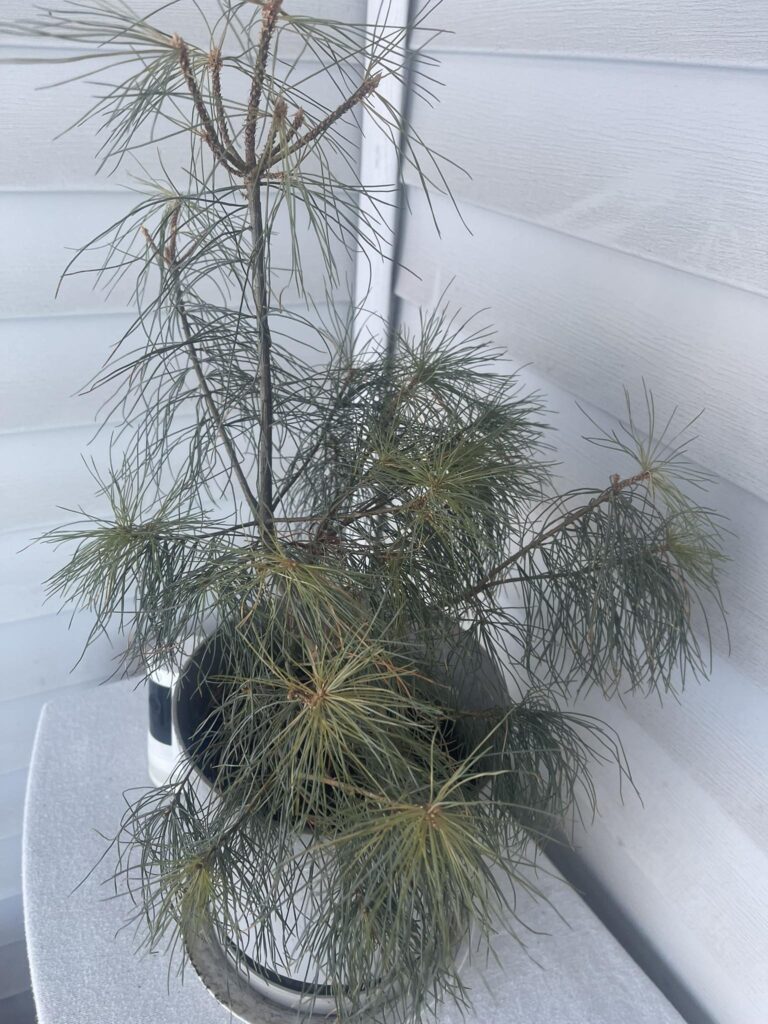
The Eastern White Pine is one of the tallest native conifers in eastern North America. It can reach 80 to 100 feet, with soft, blue-green needles that grow in clusters of five. Its silhouette is airy rather than dense, giving it a graceful, almost feathery look.
This tree grows fast, often adding 2 to 3 feet per year in good soil. It prefers full sun and well-drained, slightly acidic ground. Because of its size, it needs plenty of open space away from power lines and structures.
Historically, this pine was prized by colonial shipbuilders for its tall, straight trunks used as ship masts. Today, it’s a popular windbreak and privacy screen. I like recommending it to anyone with a large rural lot who wants shade without decades of waiting.
2. Blue Spruce (Picea pungens)
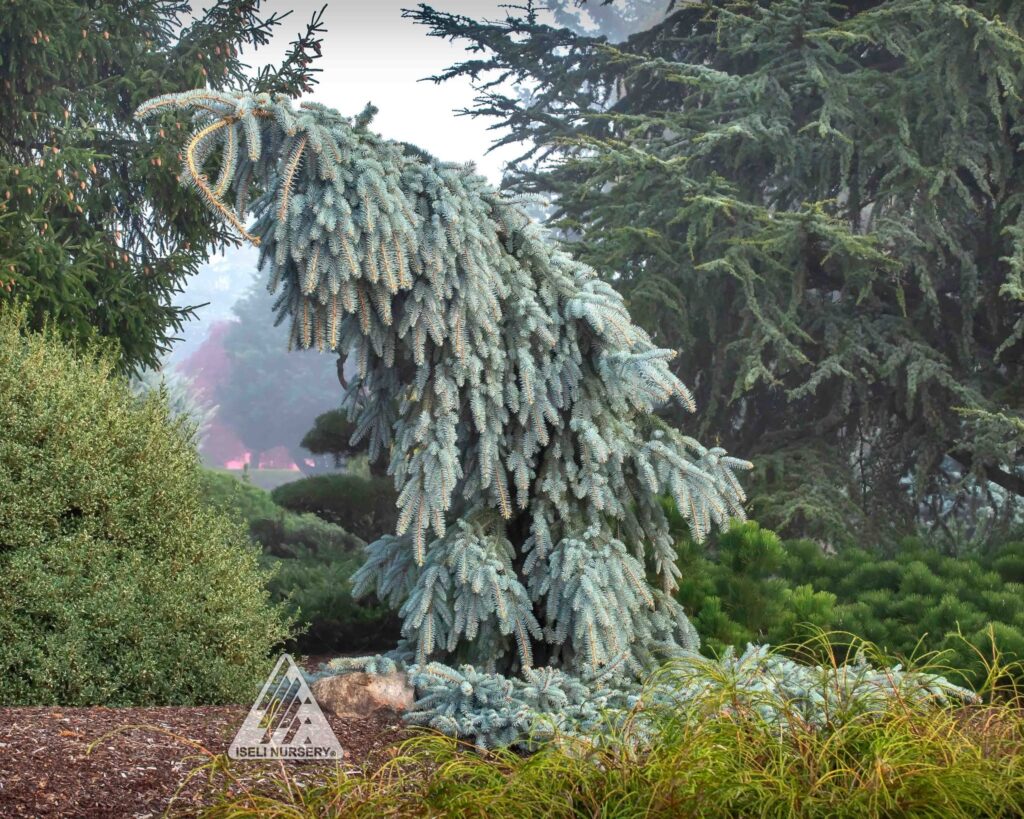
Also called Colorado Spruce, this tree is instantly recognizable by its striking silvery-blue needles. It grows in a neat, symmetrical pyramid shape, which makes it a favorite for formal landscaping and holiday displays.
Blue Spruce is slow to moderate in growth, reaching 50 to 75 feet at maturity over many decades. It handles cold winters exceptionally well, since it’s native to the Rocky Mountains. Full sun and good air circulation keep it healthiest.
One thing to watch for is needle cast disease, which affects spruces planted outside their ideal climate. In hot, humid regions, this tree often struggles. Still, in the right zone, it’s one of the most photographed evergreens in North America.
3. Douglas Fir (Pseudotsuga menziesii)
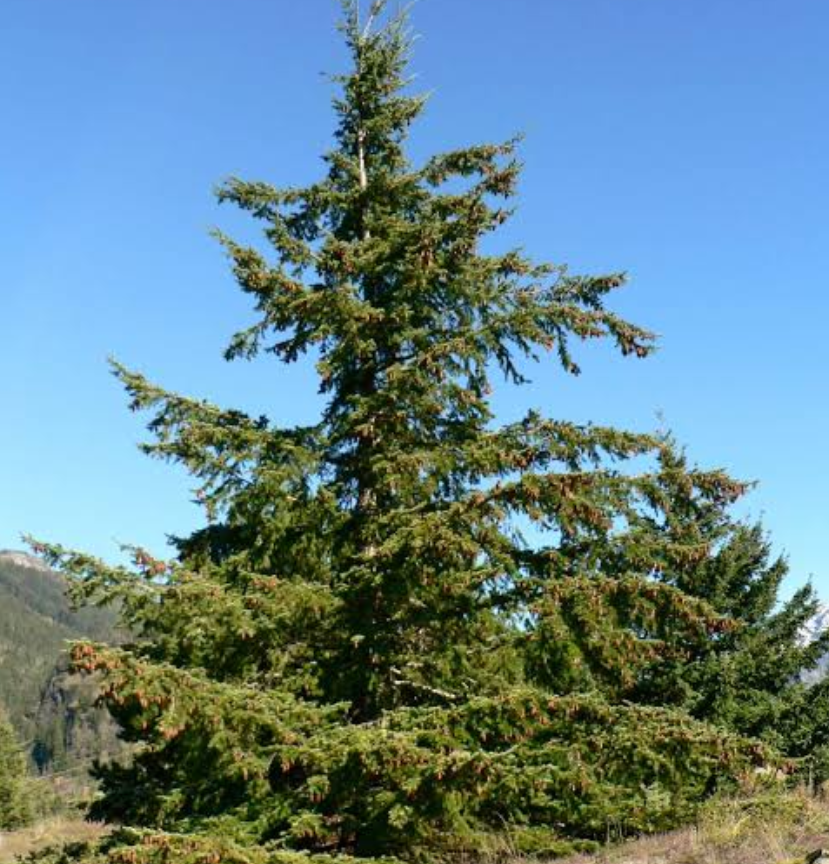
Douglas Fir is a giant of the Pacific Northwest, commonly reaching 200 feet or more in old-growth forests. Its soft, flat needles and drooping cones with distinctive three-pronged bracts make it easy to identify.
This tree is the backbone of the American timber industry. It supplies a huge share of construction lumber because of its strength-to-weight ratio. Millions of these trees are also grown specifically as Christmas trees each December.
Douglas Fir prefers cool, moist climates and does not tolerate drought well. It’s not the best choice for small yards, given its eventual size. But as a forestry or large-property tree, few conifers match its economic and ecological value.
4. Eastern Red Cedar (Juniperus virginiana)
Despite the name, this tree is actually a juniper, not a true cedar. It has scale-like, aromatic foliage that ranges from deep green to slightly bluish, and it often turns a bronze tone in winter.
Eastern Red Cedar is remarkably tough. It tolerates poor soil, drought, wind, and pollution better than almost any other native evergreen. That toughness is why you’ll see it growing along highways, fence lines, and abandoned fields.
Its wood is naturally resistant to rot and insects, which is why it’s a traditional choice for closets and chests. Birds also love its berry-like cones for winter food. I find it one of the most underrated trees for low-maintenance landscaping.
5. Norway Spruce (Picea abies)
Norway Spruce is known for its long, drooping branches and dark green needles that give it a slightly weeping, dramatic appearance. It’s one of the fastest-growing spruces, often gaining more than a foot a year when young.
This species originally comes from Europe but has become widely planted across North America. It can reach 40 to 60 feet, sometimes taller, and produces the longest cones of any spruce, up to 6 inches.
Norway Spruce works well as a windbreak or privacy screen because of its dense branching. It does need room to spread, though, since lower limbs can extend quite far. Regular spacing prevents overcrowding as the tree matures.
6. Southern Magnolia (Magnolia grandiflora)
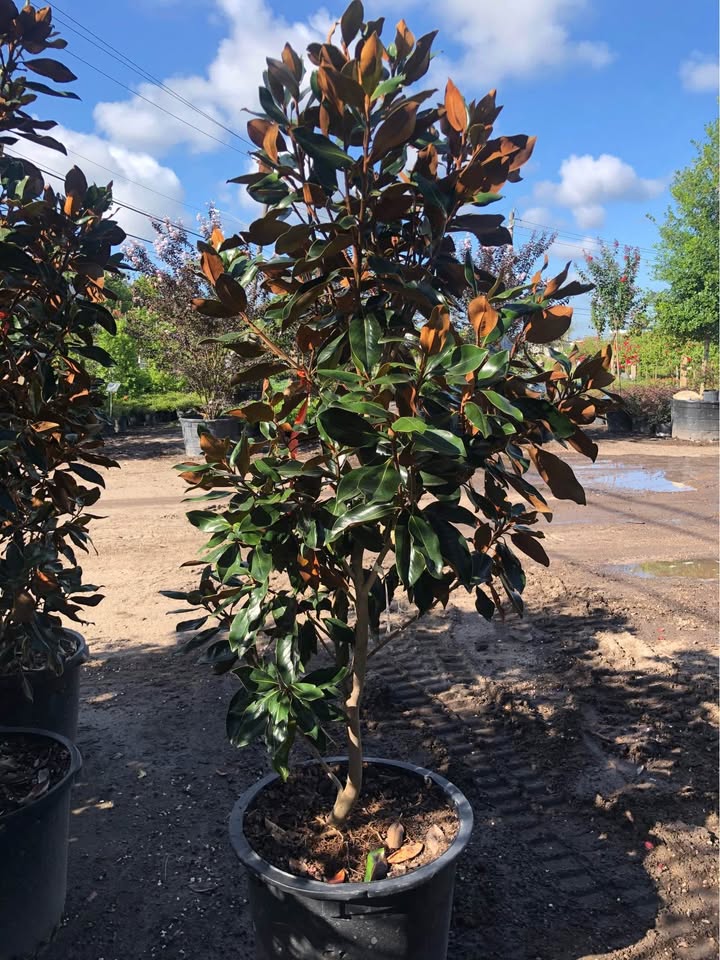
This tree is a broadleaf evergreen, meaning it has wide, glossy leaves instead of needles, yet still keeps them year-round. The leaves are thick, dark green on top, and often rusty-brown underneath, giving a two-toned effect.
Southern Magnolia is famous for its enormous, fragrant white flowers that bloom in late spring and summer. Each flower can measure up to 12 inches across, making it one of the showiest native trees in the southeastern United States.
It grows best in warm, humid climates and struggles in harsh winters below its hardiness zone. Mature trees can reach 60 to 80 feet. I always think of this tree as the signature plant of southern courtyards and old estate gardens.
7. American Holly (Ilex opaca)
American Holly is instantly recognizable thanks to its spiny, dark green leaves and bright red berries, both staples of winter holiday decorating. It typically grows as a small to medium tree, reaching 15 to 50 feet depending on conditions.
This species is dioecious, meaning individual trees are either male or female. Only female trees produce the red berries, and they need a male tree nearby for pollination. Birds rely heavily on those berries during lean winter months.
American Holly tolerates shade better than most evergreens, which makes it useful under taller canopy trees. It grows slowly, so patience is required. Once established, though, it’s a hardy, low-fuss addition to almost any eastern landscape.
8. Southern Live Oak (Quercus virginiana)
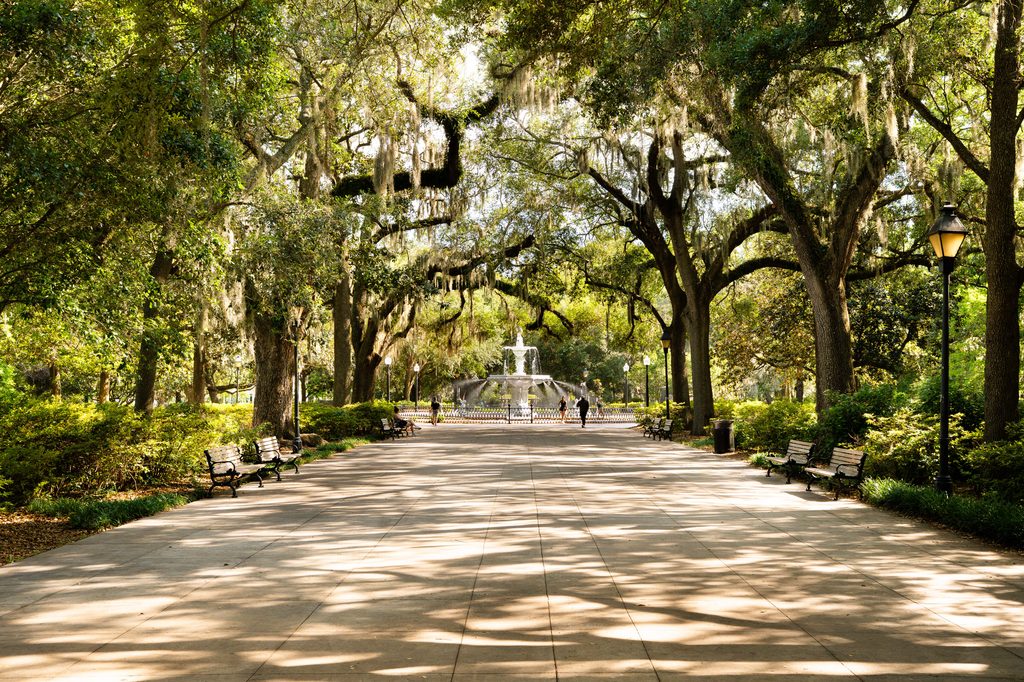
Live Oak earns its name because it stays green through winter, unlike most oaks that drop their leaves. Its leaves are small, leathery, and oval-shaped, replaced gradually rather than all at once each spring.
This tree is famous for its massive, sprawling canopy, sometimes spreading wider than the tree is tall. Draped in Spanish moss, it’s an iconic image of the American South, especially in Louisiana, Georgia, and coastal Carolina.
Live Oaks are incredibly long-lived, with some specimens estimated to be over 500 years old. They need considerable space to spread and are best suited to large properties, parks, or wide boulevards rather than small residential lots.
9. Loblolly Pine (Pinus taeda)
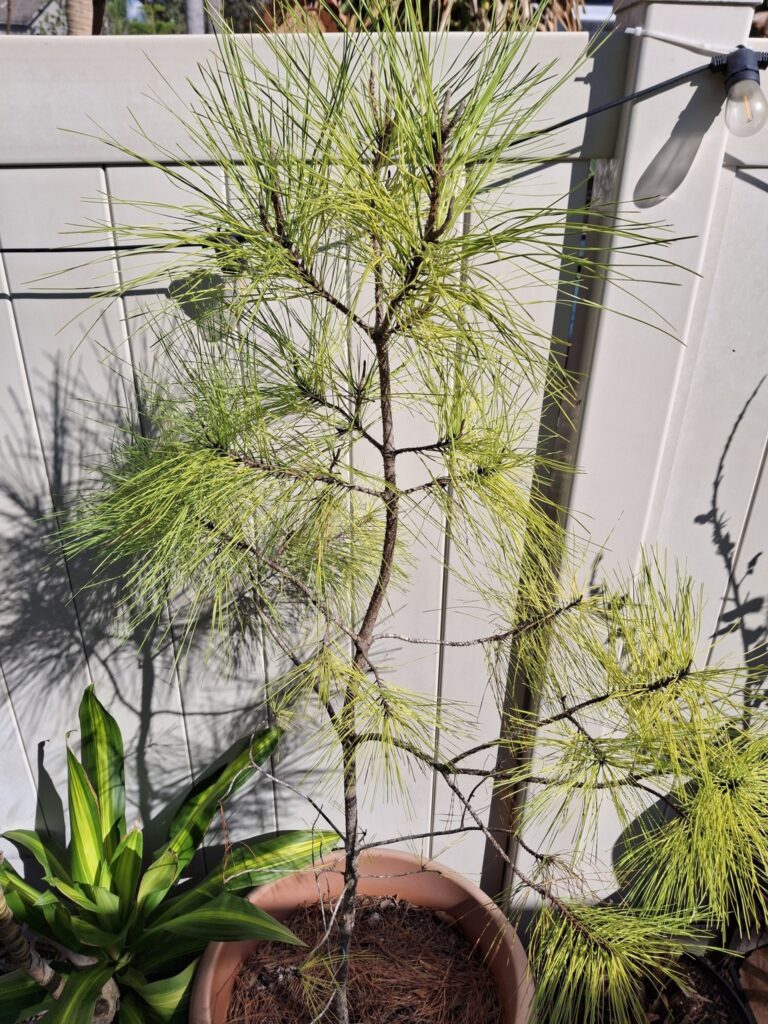
Loblolly Pine is the second most common tree species in the United States by volume, according to USDA Forest Service inventory data. It grows quickly, often reaching 60 to 90 feet within a few decades.
Its long, slender needles grow in bundles of three and give the canopy a soft, feathery texture. This pine is a major source of pulpwood and lumber across the southeastern states, supporting a large part of the regional timber economy.
Loblolly Pine prefers moist, acidic soils and full sun. It doesn’t handle prolonged drought well, so it thrives best in humid climates. For fast-growing shade or a commercial timber stand, it remains one of the most planted trees in the South.
10. Ponderosa Pine (Pinus ponderosa)
Ponderosa Pine is a western giant, often reaching 100 to 160 feet in mature forests across the Rocky Mountains and Pacific states. Its bark develops a distinctive puzzle-piece pattern with an orange-brown hue as the tree ages.
One charming detail: the bark of older Ponderosa Pines often smells like vanilla or butterscotch when you press your nose close to a warm trunk. It’s a small detail, but one that surprises almost everyone the first time they notice it.
This tree tolerates drought and poor soil far better than most large conifers. It’s a keystone species in western fire ecology, with thick bark that helps it survive low-intensity wildfires that would kill less-adapted trees.
11. Balsam Fir (Abies balsamea)
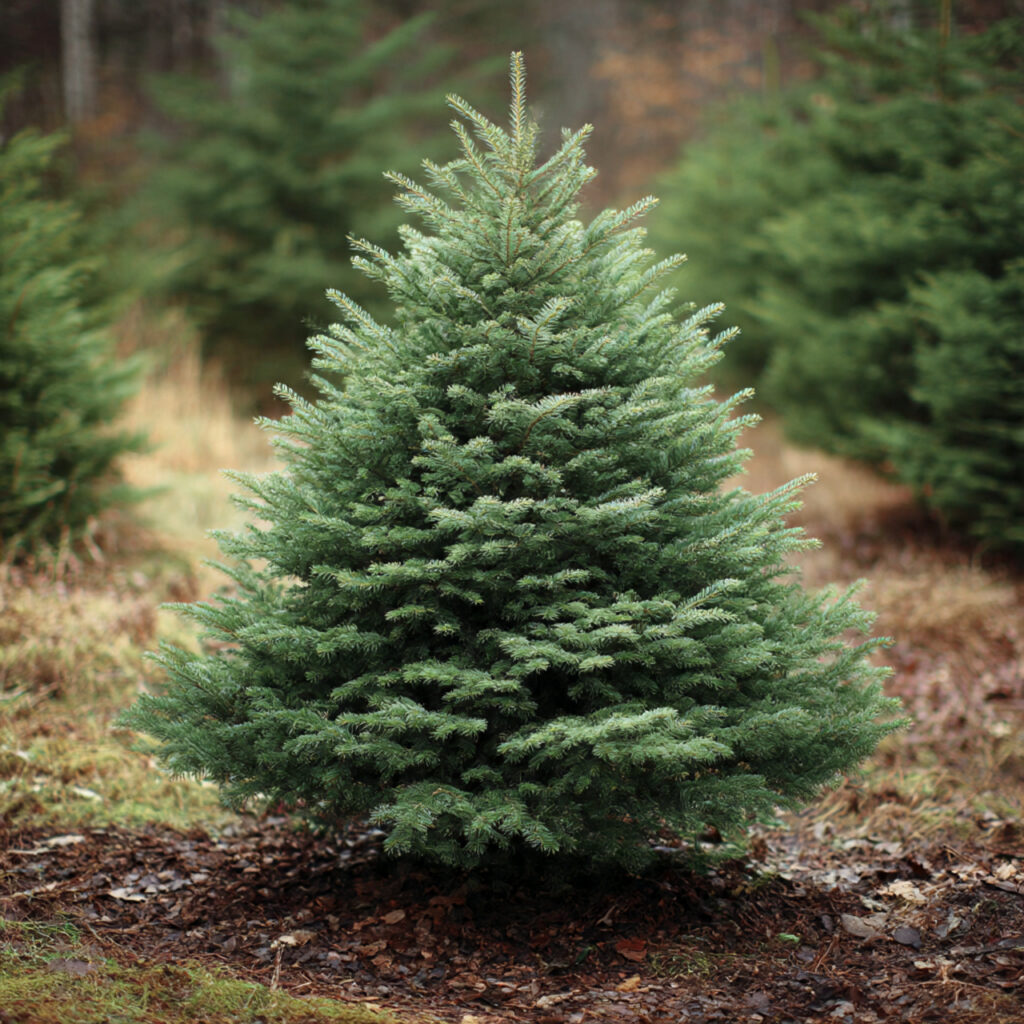
Balsam Fir is the classic Christmas tree shape, with dense, symmetrical branches and soft, flat needles that don’t prick your hands. Its dark green foliage releases a strong, pleasant fragrance when crushed or cut.
This tree is native to northeastern North America and thrives in cold, moist climates. It typically reaches 40 to 60 feet in the wild, though cultivated Christmas tree farms harvest them much younger and smaller.
Balsam Fir doesn’t handle heat or drought well, so it’s not suited to southern gardens. In the right northern climate, though, it’s a reliable, fast-maturing evergreen that also provides excellent cover and food for wildlife through winter.
12. Western Red Cedar (Thuja plicata)
Western Red Cedar is a coastal Pacific Northwest native known for its soft, scale-like foliage arranged in flat, drooping sprays. It can grow to enormous heights, sometimes exceeding 200 feet in old-growth conditions.
Indigenous peoples of the Pacific Northwest have used this tree for centuries to build canoes, totem poles, and longhouses, thanks to its lightweight, rot-resistant wood. It remains a culturally significant species across the region.
This tree needs consistent moisture and does poorly in dry climates. As a hedge or privacy screen, smaller cultivars are popular, but the true species is best reserved for large, damp properties with room to grow undisturbed.
13. Giant Sequoia (Sequoiadendron giganteum)
Giant Sequoia is the largest tree species on Earth by volume, native to a narrow band of the Sierra Nevada in California. Some individuals, like the famous General Sherman tree, exceed 36 feet in trunk diameter.
Its foliage consists of small, scale-like, blue-green needles that spiral tightly around each branch. These trees can live for over 3,000 years, protected in part by thick, fire-resistant bark that can be over a foot deep in mature specimens.
Giant Sequoias are not practical for home gardens due to their eventual size, but smaller specimens are sometimes planted as ornamental curiosities. They need deep soil, ample water, and a mild climate to establish properly outside their native range.
14. Coast Redwood (Sequoia sempervirens)
Coast Redwood holds the title of the tallest tree species in the world, with some specimens along the Northern California coast surpassing 379 feet. Its foliage is flat and needle-like, softer than most other large conifers.
These trees depend heavily on coastal fog for moisture during dry summer months, since fog drip can supply a significant portion of their water needs. This makes them highly specific to their native foggy coastal belt.
Coast Redwoods grow remarkably fast for their size, sometimes several feet per year when young. Outside their native fog zone, they need consistent irrigation. As a specimen tree in the right climate, nothing matches their sheer vertical presence.
15. American Arborvitae (Thuja occidentalis)
Arborvitae is one of the most widely planted hedge and privacy trees in North America. Its soft, flat, scale-like foliage grows in fan-shaped sprays, and the tree naturally forms a narrow, upright column.
It grows at a moderate pace, typically adding 12 to 24 inches per year, and many cultivars stay compact enough for smaller yards. Popular varieties like ‘Emerald Green’ and ‘Green Giant’ are staples of suburban landscaping.
Arborvitae prefers full sun and moist, well-drained soil. Deer find it quite tasty, unfortunately, so protection may be needed in areas with heavy deer traffic. As a living privacy fence, though, few trees are planted more often.
16. Leyland Cypress (x Hesperotropsis leylandii)
Leyland Cypress is a hybrid conifer bred specifically for fast growth and dense screening. It can gain up to 3 feet per year, making it one of the quickest ways to establish a tall privacy hedge.
Its soft, feathery, gray-green foliage forms a dense, pyramidal shape that requires little pruning to look tidy. Mature trees can reach 60 to 70 feet if left unchecked, so regular trimming keeps it manageable in residential settings.
This tree is prone to certain fungal diseases, particularly in crowded or poorly drained plantings. Good spacing and airflow reduce that risk considerably. Despite the maintenance, its speed and density make it a go-to choice for instant privacy.
17. Scots Pine (Pinus sylvestris)
Scots Pine is easily identified by its orange-tinted upper bark, which peels in thin, papery flakes as the tree matures. Its blue-green needles grow in twisted pairs, giving the foliage a slightly shaggy texture.
Native to Europe and parts of Asia, this pine has naturalized widely across North America. It tolerates poor, sandy soil and cold climates exceptionally well, which is why it’s often used in reforestation and windbreak projects.
Scots Pine is also a popular Christmas tree species due to its sturdy branches and good needle retention. It typically reaches 50 to 60 feet at maturity, with an irregular, picturesque form as it ages.
18. Concolor Fir (Abies concolor)
Also called White Fir, this tree has soft, blue-green to silvery needles that curve slightly upward from the branch. Its symmetrical, pyramidal shape makes it a popular ornamental and Christmas tree choice.
Concolor Fir is more heat and drought tolerant than many other firs, which allows it to grow successfully across a wider range of climates. Extension experts often recommend it as an alternative to Colorado Blue Spruce in drier regions.
Crushed needles release a pleasant citrus-like scent, a detail that surprises many first-time growers. This tree typically reaches 30 to 50 feet in landscape settings, staying manageable enough for medium to large residential properties.
19. Eastern Hemlock (Tsuga canadensis)
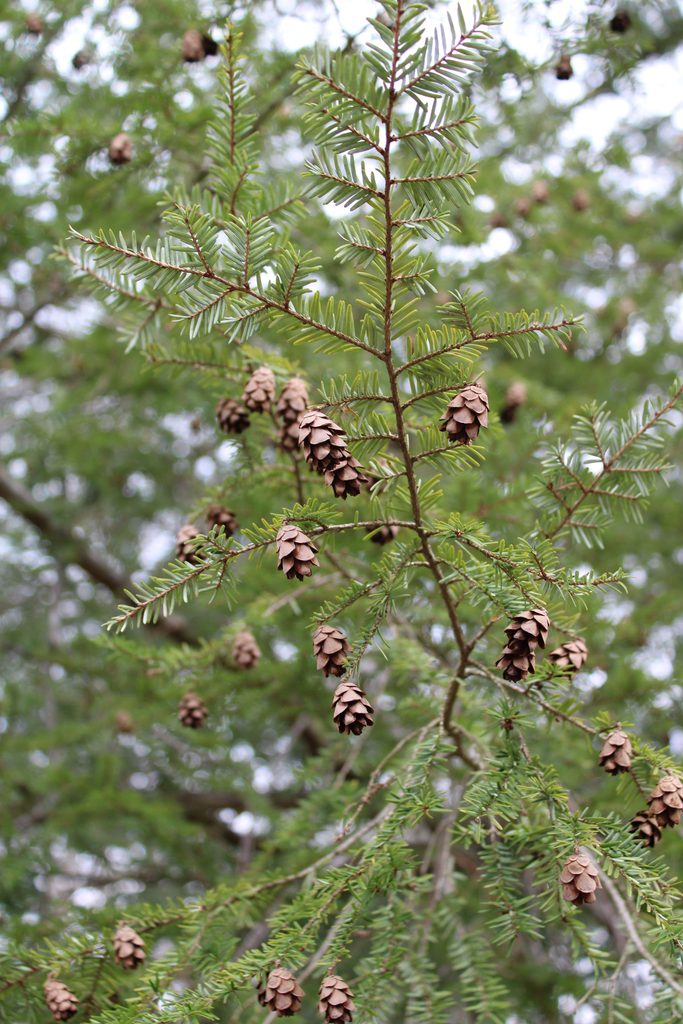
Eastern Hemlock has short, flat, dark green needles arranged in flattened sprays, with a soft, almost delicate texture unlike stiffer pines and spruces. It grows in a graceful, drooping form, especially at the branch tips.
This tree thrives in cool, shaded, moist environments, often found along stream banks and ravines in the Appalachian region. It can live for hundreds of years, with some old-growth specimens exceeding 500 years of age.
Unfortunately, the invasive hemlock woolly adelgid has devastated many hemlock populations across the eastern United States. Forestry agencies continue monitoring and treatment programs to protect remaining stands. Where healthy, this tree remains a shade-loving woodland treasure.
20. Japanese Cedar (Cryptomeria japonica)
Japanese Cedar, known as Sugi in its native Japan, features soft, awl-shaped needles spiraling around each branch, giving it a slightly shaggy, textured look. It’s actually Japan’s national tree and widely used in forestry there.
This species grows quickly, often more than 2 feet per year, and can reach 50 to 70 feet in cultivation. Some cultivars turn a bronze or purplish tint in cold weather, adding seasonal interest beyond simple green.
Japanese Cedar prefers humid climates with consistent moisture and struggles in dry, windy conditions. As an ornamental specimen or screening tree, it offers a distinctive texture that stands out from more common pines and spruces.
21. Monterey Pine (Pinus radiata)
Monterey Pine is native to a small stretch of the California coast, yet it has become one of the most widely planted commercial timber trees globally, especially in New Zealand, Chile, and Australia.
Its needles grow in bundles of three, dark green and fairly stiff, covering an irregular, wind-shaped canopy near the coast. In cultivation, it grows remarkably fast, sometimes reaching 80 feet within just a few decades.
This tree prefers mild, coastal climates and doesn’t tolerate hard freezes well. In its native range, wild populations are actually considered vulnerable, which makes the scale of its global plantation use a striking contrast.
22. Italian Cypress (Cupressus sempervirens)
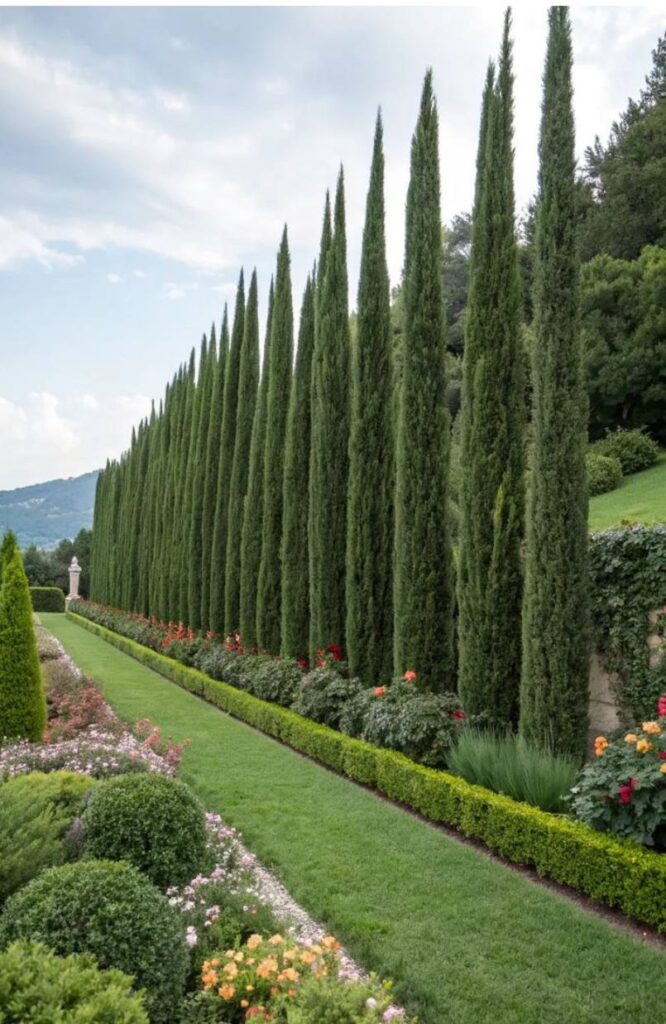
Italian Cypress is instantly recognizable by its tall, narrow, column-like shape, often used to line driveways and formal gardens across the Mediterranean. Its dense, dark green foliage stays tightly packed along the trunk.
This tree can reach 40 to 70 feet while staying remarkably slender, sometimes only 3 to 5 feet wide. That vertical drama is exactly why landscape designers use it to frame entrances or create a formal, architectural rhythm.
Italian Cypress needs full sun, good drainage, and a warm climate to thrive. It struggles in wet, heavy soils and cold winters. Where the climate suits it, few trees create the same striking, classical silhouette.
23. Deodar Cedar (Cedrus deodara)
Deodar Cedar is a true cedar native to the western Himalayas, featuring long, soft, blue-green needles and gracefully drooping branch tips. Its overall form is looser and more relaxed than stiffer conifers like spruce.
This tree grows moderately fast, often reaching 40 to 70 feet in cultivation, with an elegant, pyramidal silhouette when young that becomes broader and more irregular with age. It’s a favorite for large lawns and parks.
Deodar Cedar prefers well-drained soil and moderate climates, tolerating heat better than many other true cedars. It’s sensitive to extreme cold, though, limiting its range mostly to warmer temperate zones and mild coastal regions.
24. Great Basin Bristlecone Pine (Pinus longaeva)
This species holds one of nature’s most remarkable records: individual bristlecone pines in California’s White Mountains have been documented at over 4,800 years old, making them among the oldest known living organisms on Earth.
Its short, densely packed needles cling to branches for decades, sometimes up to 40 years, an unusually long retention period compared to most conifers. This slow needle turnover reflects the tree’s extremely slow overall growth rate.
Bristlecone Pine grows in harsh, high-altitude, rocky environments where few other trees survive. It’s rarely planted ornamentally because of its glacial growth speed, but its resilience makes it a scientific and symbolic marvel of longevity.
25. Rocky Mountain Juniper (Juniperus scopulorum)
Rocky Mountain Juniper is a hardy, drought-tolerant conifer with scale-like, blue-green foliage that often takes on a silvery or purplish hue in winter. It grows in an upright, sometimes irregular form.
This tree is extremely adaptable, thriving in rocky, alkaline, or poor soils where many other evergreens fail. It’s commonly used in xeriscaping and dry western landscapes where water conservation matters most.
Female trees produce small, blue, berry-like cones that provide food for birds through harsh winters. Growth is slow to moderate, and mature height typically ranges from 20 to 40 feet, making it manageable for most yards.
26. Southern Wax Myrtle (Morella cerifera)
Wax Myrtle is a broadleaf evergreen shrub or small tree, often reaching 15 to 25 feet, with narrow, aromatic, olive-green leaves that release a pleasant scent when crushed. It grows quickly and fills in dense screens.
This species is native to coastal areas of the southeastern United States and tolerates salt spray, wind, and poor sandy soil remarkably well. That toughness makes it a staple for beachside and coastal landscaping projects.
Its waxy, gray berries were historically used to make bayberry candles, a colonial tradition still practiced today. Birds also rely on those berries as a winter food source, adding ecological value beyond its ornamental appeal.
27. Cherry Laurel (Prunus laurocerasus)
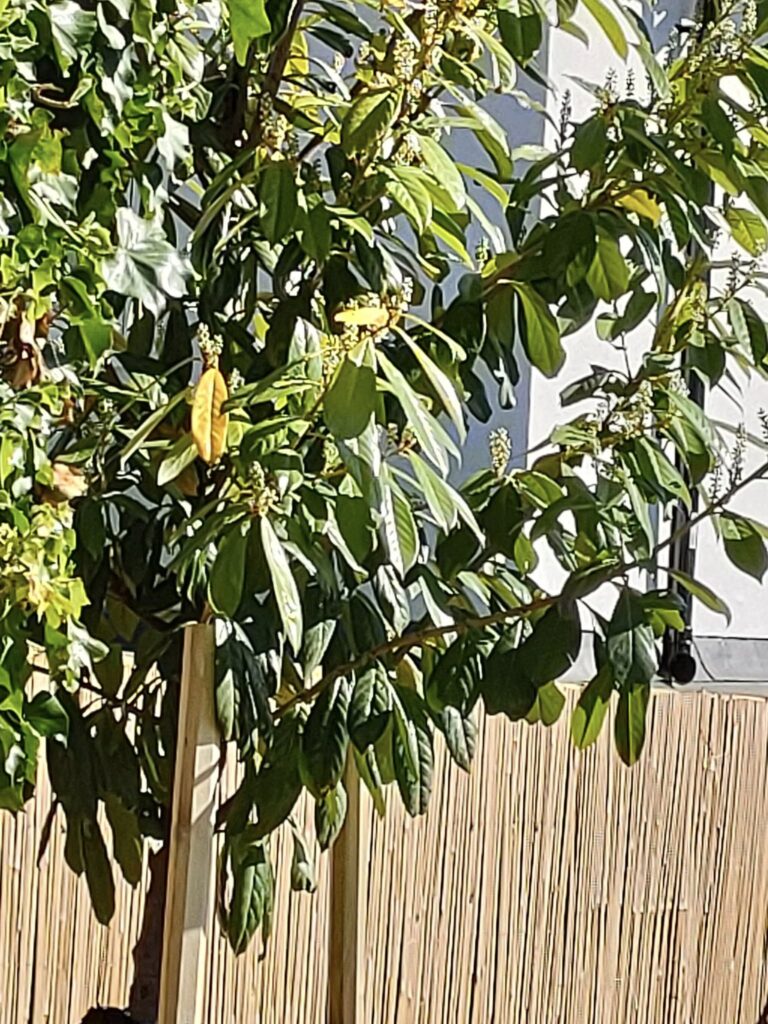
Cherry Laurel is a broadleaf evergreen with glossy, dark green leaves and small white flower spikes in spring, followed by dark, cherry-like fruit. It’s commonly grown as a hedge or privacy screen in temperate climates.
This species grows fast and tolerates shade better than most evergreens, making it useful under larger trees or on the north side of buildings. Regular trimming keeps its dense form tidy in formal garden settings.
It’s worth noting that the leaves, seeds, and fruit pits of Cherry Laurel contain compounds that are toxic if ingested in quantity. Careful placement away from curious pets or children is a sensible precaution.
28. Holm Oak (Quercus ilex)
Also called Holly Oak, this Mediterranean species has small, leathery, holly-like leaves that stay green year-round, unlike most oaks. Its dense, rounded canopy provides deep, cooling shade in hot summer climates.
Holm Oak is remarkably drought tolerant once established, thriving in the dry, rocky soils typical of Mediterranean landscapes. It can reach 40 to 70 feet, with a broad, sturdy trunk that develops over many decades.
This tree has long been valued for its acorns, historically used as livestock feed, and its dense wood, prized for charcoal and firewood. As an ornamental shade tree in warm climates, it remains a reliable, long-lived choice.
29. Norfolk Island Pine (Araucaria heterophylla)
Despite its name and Christmas-tree appearance, Norfolk Island Pine isn’t a true pine at all. It’s native to a tiny island in the South Pacific and features symmetrical, tiered branches with soft, curved needles.
In its native tropical and subtropical climate, this tree can grow well over 100 feet tall. In colder regions, it’s commonly kept as a potted houseplant, where it stays much smaller and is often sold seasonally as a festive decoration.
Norfolk Island Pine needs bright light and consistent moisture to thrive indoors. Outdoors, it only survives in frost-free zones. Its unusual origin and elegant symmetry make it a distinctive choice among evergreen conifers.
30. Canary Island Pine (Pinus canariensis)
Canary Island Pine is native to the volcanic slopes of the Canary Islands and stands out for its long, drooping needles, sometimes reaching a foot in length, that give the canopy a soft, weeping texture.
This tree is remarkably fire-adapted, capable of resprouting new growth from its trunk after wildfire damage, a rare trait among conifers. It also tolerates drought and poor volcanic soils exceptionally well.
Canary Island Pine can reach 60 to 80 feet in cultivation and is increasingly planted in Mediterranean-climate regions like California and southern Europe. Its combination of resilience and graceful form makes it a striking specimen tree.
Why Evergreens Matter Beyond Looks
Evergreens aren’t just decorative. They provide year-round habitat and food for birds and wildlife when deciduous trees stand bare. Many species, like holly and wax myrtle, produce berries that sustain birds through the leanest winter months.
They also work harder for the climate than most people realize. Research published through the University of Wisconsin Extension notes that forests across the continental United States offset roughly 13 percent of national greenhouse gas emissions annually.
Because evergreens photosynthesize during mild winter days when deciduous trees are dormant, they contribute to air and carbon benefits every month of the year, not just during a single growing season. That’s a meaningful difference at scale.
Choosing the Right Evergreen for Your Space
Before planting, think about mature size first. A Giant Sequoia and a compact Arborvitae serve very different purposes, and getting this wrong is the most common landscaping regret I hear about.
Consider your climate zone carefully too. A Southern Magnolia will struggle in a harsh northern winter, just as a Balsam Fir will suffer through a humid southern summer. Matching the tree to your hardiness zone matters more than almost anything else.
Finally, think about purpose: privacy screening, ornamental beauty, shade, or wildlife support all point toward different species. A little planning upfront saves years of frustration and replanting down the road.
Final Thoughts
Trees that keep their leaves year-round bring something deciduous trees simply can’t: constant presence. They anchor a landscape through every season, offering color, shelter, and structure when everything else looks stark.
Whether you’re drawn to the record-breaking height of a Coast Redwood or the tidy privacy of an Arborvitae hedge, there’s an evergreen suited to nearly every climate and purpose on this list. I hope it helps you find the right one for your own space.
References
- USDA — The Wonders of a Tree’s Anatomy and Oxygen Production
- USDA Forest Service — Forest Carbon & Climate Change Fact Sheet
- University of Wisconsin–Madison Extension — 10 Ways Trees Fight Climate Change
- University of Minnesota Extension — Choosing Evergreens for Your Landscape
- Purdue University Extension — Identifying and Choosing Evergreen Trees
- Oklahoma State University Extension — Selecting Evergreen Trees
- Colorado State University Extension (PlantTalk Colorado) — Evergreen Trees for Colorado Landscapes

Tim M Dave is a gardening expert with a passion for houseplants, particularly cacti and succulents. With a degree in plant biology from the University of California, Berkeley, he has vast experience in gardening. Over the years, he has cultivated a vast collection of desert plants and learned a great deal about how to grow and care for these unique companions.