Indoor Olive Tree: Care and Growing Details
There is something quietly satisfying about having an olive tree in your living room. Its silvery leaves catch the light in a way few houseplants can match. I have watched people walk into a room and go straight for it, almost without noticing they did.
An indoor olive tree (Olea europaea) brings that same Mediterranean charm without needing an orchard, a warm climate, or years of gardening experience. It is forgiving, long-lived, and genuinely easy once you understand its basic rhythm.
This guide walks through everything you need: light, water, soil, feeding, pruning, common problems, and the best varieties for container life.
What Exactly Is an Indoor Olive Tree
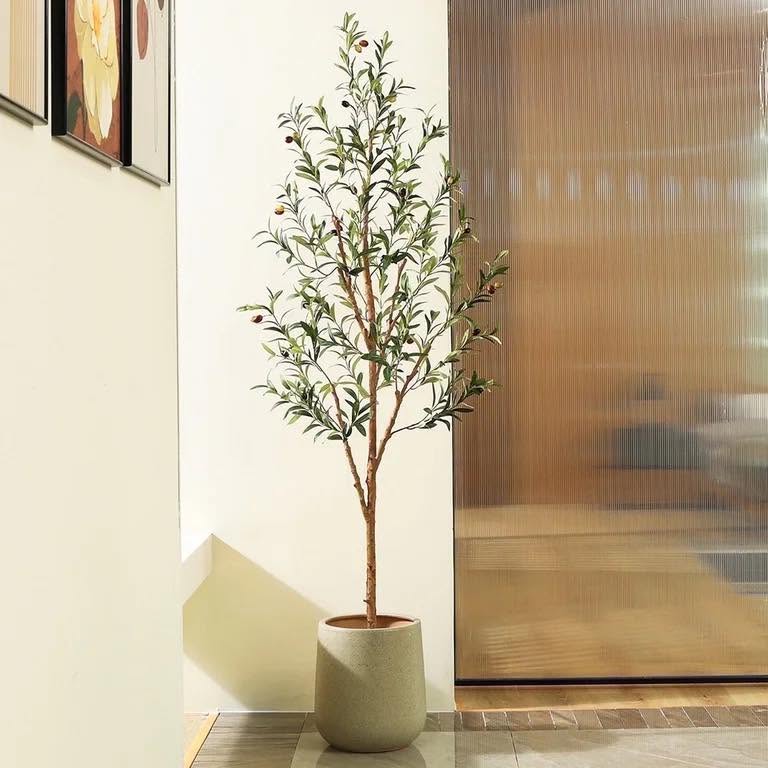
The indoor olive tree is simply the same species grown outdoors for oil and fruit, just kept in a container and brought inside for protection. Botanically, it is still Olea europaea, a slow-growing evergreen native to the Mediterranean basin, Asia Minor, and parts of Africa.
Outdoors, olive trees can reach heights of 10 to 40 feet over decades. Indoors, in a pot, growth stays far more manageable, and many indoor specimens are trained as small trees or even bonsai shapes.
What makes it work as a houseplant is its natural toughness. Olive trees evolved in dry, sun-baked regions, so they tolerate the inconsistent humidity and occasional neglect that trip up more delicate indoor plants.
Why Bring an Olive Tree Indoors
Olive trees have been cultivated by people for roughly 6,000 years, according to research summarized by the University of California’s Fruit and Nut Research Information Center. That kind of history says a lot about how adaptable this plant really is.
Indoors, an olive tree offers year-round structure and texture that few other plants provide. The narrow, grey-green leaves stay put through every season, so your space never looks bare in winter the way it might with deciduous plants.
There is also a symbolic side to it. The olive branch has represented peace since antiquity, and in many cultures it stands for wisdom, longevity, and friendship, which is part of why it is such a popular gift plant.
Practically speaking, an indoor olive tree in a container can live for around a decade or more with proper care, based on observations from University of California Cooperative Extension master gardeners. Some outdoor specimens live for centuries, so the ceiling on lifespan is genuinely high.
Best Indoor Olive Tree Varieties
Not every olive cultivar suits container life equally well. Some are naturally compact, some tolerate lower light better, and some are simply easier to shape indoors. Below are the varieties worth considering first.
Arbequina
Arbequina is probably the single most recommended variety for indoor growing, and for good reason. It is naturally compact, self-fertile, and produces attractive small fruit without needing a second tree nearby for pollination.
I find this variety forgiving for beginners because it tolerates a wider range of light conditions than most olive cultivars. It still wants direct sun, but it sulks less than others when a window is only partially ideal.
Arbequina also responds well to pruning, which makes it a favorite for anyone who wants to keep their tree at a tidy tabletop or floor size rather than letting it sprawl toward the ceiling.
Mission
Mission olives have deep roots in American horticultural history, having been introduced by Franciscan missionaries centuries ago and later spread throughout California orchards. That long track record means a lot is known about how the variety behaves.
This cultivar tends to grow a bit more vigorously than Arbequina, so it suits people who want a larger statement tree rather than a small tabletop specimen. It handles pruning well, which keeps its size in check indoors.
Mission trees are valued for both their ornamental leaves and their fruit quality, so if you eventually want to try curing your own olives, this is a solid variety to start with.
Manzanillo
Manzanillo is one of the most widely grown table olive varieties, and its structure tends to be a little more spreading than upright. Indoors, this can actually work in its favor if you want a fuller, bushier silhouette rather than a narrow column shape.
It is a reliable grower and adapts reasonably well to container life, provided the pot allows enough root space. Like most olive cultivars, it prefers as much direct light as your home can offer.
Because Manzanillo is a popular commercial variety, young trees are often easy to source from nurseries, which makes it a practical starting point for first-time indoor olive growers.
Little Ollie (Dwarf Olive)
Little Ollie is technically a fruitless dwarf cultivar, bred specifically for landscaping and container use rather than olive production. Its smaller, denser growth habit makes it especially well suited to indoor pots and smaller rooms.
Because it does not fruit, there is no mess from dropped olives indoors, which some people genuinely prefer for a low-maintenance houseplant experience. The trade-off is that you lose the option of ever harvesting fruit from it.
This variety is often shaped into bonsai-style forms or kept as a neat, rounded shrub, and it tends to be more forgiving of the lower light levels typical of average homes.
ALSO READ: 25 Types of Olive Trees (With Pictures, Uses, and Flavor Profiles)
Light Requirements for an Indoor Olive Tree
Light is, without question, the single biggest factor in whether an indoor olive tree thrives or slowly declines. These trees evolved under intense Mediterranean sun, and that need does not change once you bring one indoors.
Most horticultural sources agree your tree needs at least six hours of direct sunlight daily, ideally closer to six to eight hours. A south-facing or west-facing window is usually the best option in most homes.
If your home genuinely cannot offer that much direct light, a supplemental grow light is worth considering. Extension specialists responding to home gardener questions have recommended grow lights specifically for olive trees struggling through darker winter months.
One small but important detail: keep the leaves from pressing directly against window glass. Glass heats up in direct sun and can scorch foliage that touches it, even though the tree overall wants as much light as possible.
Watering Guidelines That Actually Work
Overwatering is the fastest way to kill an indoor olive tree, and it happens more often than underwatering does. These trees are naturally drought-tolerant, and their roots resent sitting in constantly wet soil.
The general rule recommended across care guides is to water only when the top two inches of soil are dry, then water thoroughly until it drains from the bottom of the pot. Never let the pot sit in standing water afterward.
This usually works out to watering roughly every one to two weeks, though the exact timing depends on your home’s temperature, humidity, and how much light the tree is getting. Faster growth in summer means more frequent watering.
In winter, when the tree slows down and semi-dormates, cut back significantly. Water only when the soil is dry several inches down, and expect that to mean much longer stretches between waterings than in summer.
Soil and Potting Essentials
Drainage is everything with olive trees. Their roots evolved in loose, sandy, well-drained Mediterranean soils, and heavy, water-retentive potting mixes are one of the most common reasons indoor specimens struggle.
A cactus or citrus potting mix is usually recommended, sometimes with a bit of extra perlite or coarse sand mixed in to improve drainage further. Standard all-purpose potting soil often holds too much moisture on its own.
Choose a container with drainage holes, without exception. Extension horticulturists have noted that a layer of gravel at the pot’s base is not strictly necessary if the pot itself drains well, but it does not hurt if you prefer that method.
Size the pot slightly larger than the current root ball rather than oversized. A container that is too large holds excess soil moisture for far longer, which increases the risk of root rot in a plant that specifically dislikes wet feet.
Temperature and Humidity Preferences
Indoor olive trees are genuinely comfortable in typical household conditions, which is part of their appeal. Average room temperatures between roughly 65 and 75 degrees Fahrenheit suit them well during their active growing months.
Cold tolerance is better than many people expect for a Mediterranean plant. Mature olive trees can survive temperatures down to around 20 degrees Fahrenheit outdoors, though younger container specimens should be protected from any hard freeze.
Humidity is rarely a problem, since these trees actually prefer things on the drier side. Just keep your tree away from cold drafts, heating vents, and radiators, since sudden temperature swings stress the plant more than steady conditions ever would.
Fertilizing Your Indoor Olive Tree
Olive trees are not heavy feeders, and in fact excess fertilizer, especially nitrogen, can cause weak, leggy growth rather than the strong structure you want. Restraint tends to serve this plant better than generosity.
During spring and summer, when the tree is actively growing, a monthly application of a balanced liquid fertilizer is generally sufficient. This supports healthy foliage color and steady root development without overwhelming the plant.
Once autumn arrives, stop feeding entirely and do not resume until the following spring. Fertilizing during the tree’s dormant winter period offers no benefit and can actually interfere with its natural seasonal rhythm.
Pruning and Shaping Tips
Pruning is where an indoor olive tree really becomes a design object rather than just a plant. Because olive wood responds well to shaping, many owners train their trees into single-trunk standards, multi-stem forms, or even bonsai silhouettes.
Most guidance suggests waiting until a tree’s second year before any significant pruning, giving young roots and branches time to establish first. After that, light shaping can be done as needed to control size and maintain form.
Late winter through early spring is generally the best pruning window, since this is just before the tree’s main growth push. Focus on removing crossing branches, suckers from the base, and any dead or crowded interior growth to improve light penetration.
ALSO READ: 30 Best Indoor Trees (With Growing Details)
Common Indoor Olive Tree Problems
Even a tough plant like this runs into occasional trouble, especially indoors where light and airflow are naturally more limited than outdoors. Knowing what to watch for makes these issues far easier to catch early.
Leaf Drop
Leaf drop is the most common complaint from indoor olive tree owners, and it is almost always tied to a change in conditions. Moving a tree from a bright nursery greenhouse into an average home is often enough to trigger it on its own.
Insufficient light is the leading cause, particularly during winter months when day length shortens naturally. A tree that is not getting close to its six hours of direct sun daily will often begin shedding older leaves as a stress response.
The fix is usually straightforward: increase light exposure, whether by relocating the tree to a brighter window or adding a grow light. Most trees recover their fullness once light levels improve, though it can take a few weeks to see new growth.
Root Rot
Root rot develops when soil stays consistently wet, cutting off oxygen to the roots and allowing fungal pathogens to take hold. It is one of the more serious problems an indoor olive tree can face, since damaged roots are hard to reverse.
Signs include yellowing leaves, a mushy or dark trunk base, and a persistently soggy smell from the soil. By the time visible symptoms appear above ground, root damage below the surface has often already progressed significantly.
Prevention beats treatment here. Well-draining soil, a pot with proper drainage holes, and watering only when the top two inches of soil are dry will prevent the vast majority of root rot cases before they ever start.
Pest Infestations
Both indoor and outdoor olive trees are susceptible to certain insect pests, with scale insects and spider mites among the most frequently reported indoors. These pests tend to appear more often on stressed or underwatered trees.
Scale insects show up as small, waxy bumps along stems and leaf undersides, while spider mites tend to cause fine speckling and faint webbing, especially in dry indoor air during winter heating season.
Regular inspection catches both early, when they are far easier to manage with insecticidal soap or horticultural oil. Wiping leaves periodically and improving air circulation around the tree also reduces the odds of an infestation taking hold.
Poor Growth or Yellowing Leaves
Slow, weak growth combined with pale or yellowing leaves usually points to a nutrient issue, most often nitrogen deficiency. This tends to show up as light green foliage paired with visibly reduced shoot development.
It can also result from a pot that has become root-bound, where roots have filled all available soil and can no longer take up nutrients or water efficiently, regardless of how well you are feeding the tree.
Checking the root system during a routine repot usually reveals which cause is at play. A balanced feeding schedule during the growing season, combined with repotting every few years, resolves most cases of this kind.
ALSO READ: 20 Evergreen Trees That Grow in Shade (With Growing Details)
Repotting an Indoor Olive Tree
Olive trees are slow growers, so they do not need frequent repotting the way many faster-growing houseplants do. Every two to three years is typically enough, and doing it too often can actually disturb the roots unnecessarily.
Spring is the best time to repot, right as the tree is entering its active growth phase and can recover quickly from any root disturbance. Choose a new pot only slightly larger than the current one, rather than jumping several sizes up.
While repotting, it is worth gently inspecting the roots for any soft, dark, or foul-smelling sections, which would indicate rot. Trim away any damaged roots with clean tools before settling the tree into fresh, well-draining potting mix.
Can an Indoor Olive Tree Actually Produce Fruit
This is one of the most common questions, and the honest answer is: sometimes, but rarely under typical home conditions. Olive trees generally need a period of winter chill and pollination assistance to set fruit reliably.
Some varieties require a cool dormancy period of around two months at temperatures between roughly 40 and 50 degrees Fahrenheit to trigger flowering, a process horticulturists call vernalization. Few homes maintain that kind of cold spell indoors.
Because olive trees are wind-pollinated, indoor specimens that do flower often need manual help. Gently shaking the trunk or brushing a small paintbrush between flowers can encourage pollen transfer and improve the odds of fruit set.
Even without fruit, though, most people grow indoor olive trees purely for their ornamental value, and honestly, that is reason enough. The silvery foliage alone earns its spot in a bright room.
Frequently Asked Questions
How long do indoor olive trees live? In containers, an indoor olive tree can live for roughly a decade or longer with consistent care, according to observations from University of California master gardener programs. Outdoors, in the ground, the species is famous for living for centuries.
Do indoor olive trees need direct sunlight? Yes, and this is non-negotiable. Olive trees need at least six hours of direct sun daily to stay healthy, ideally near a south-facing window, and they will decline steadily in low-light spots.
Why is my indoor olive tree dropping leaves? Leaf drop most often follows a change in light or temperature, particularly a move from a bright nursery to a dimmer home. Increasing sunlight exposure, including with a grow light in winter, usually resolves it within a few weeks.
Can I move my indoor olive tree outside in summer? Yes, and many owners do exactly this. Just acclimate the tree gradually to full outdoor sun over a week or two, rather than moving it abruptly, to avoid leaf scorch or shock.
What size pot does an indoor olive tree need? Choose a pot only slightly larger than the current root ball, with drainage holes as a strict requirement. Oversized pots hold excess moisture and increase the risk of root rot in this drought-adapted species.
Final Thoughts
An indoor olive tree rewards patience more than effort. Once you settle into its rhythm, bright light, sparing water, and minimal fuss, it becomes one of the lowest-maintenance statement plants you can own.
I think that is really the appeal. It does not ask for much, yet it delivers a genuinely striking presence that few houseplants can rival, season after season, year after year.
Give it sun, respect its dry preferences, and check on it now and then. In return, you get a small piece of the Mediterranean that will likely outlast most of the furniture around it.
References
- University of Florida IFAS Gardening Solutions — Olives: https://gardeningsolutions.ifas.ufl.edu/plants/edibles/fruits/olives/
- University of California, Fruit & Nut Research Information Center — Olive Fact Sheet: https://ucanr.edu/site/fruit-nut-research-information-center/olive-fact-sheet
- Texas A&M AgriLife Extension Service — Texas Fruit and Nut Production: Olives: https://agrilifeextension.tamu.edu/asset-external/texas-fruit-and-nut-production-olives/
- University of Florida IFAS EDIS — Develop Your Own Florida Olive IPM Plan: https://edis.ifas.ufl.edu/publication/IN1251
- Oregon State University, Landscape Plants — Olea europaea: https://landscapeplants.oregonstate.edu/plants/olea-europaea
- USDA PLANTS Database — Olea europaea L.: https://plants.sc.egov.usda.gov/plant-profile/OLEU
- USDA Forest Service — Woody Plant Seed Manual: Olea europaea: https://www.fs.usda.gov/nsl/Wpsm/Olea.pdf

Tim M Dave is a gardening expert with a passion for houseplants, particularly cacti and succulents. With a degree in plant biology from the University of California, Berkeley, he has vast experience in gardening. Over the years, he has cultivated a vast collection of desert plants and learned a great deal about how to grow and care for these unique companions.