35 Popular Types of Echeveria Succulents (With Pictures, and Care Tips)
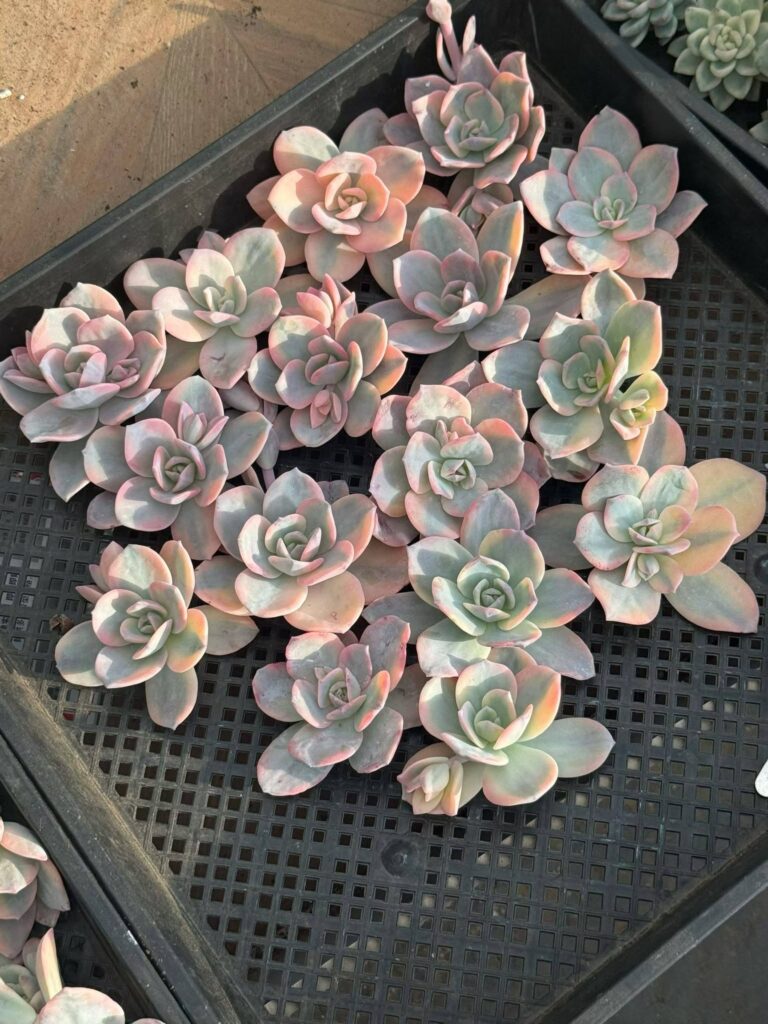
Echeveria might be the most photogenic succulent genus out there. Perfect rosettes, pastel colors, that faint powdery bloom on the leaves. The genus includes roughly 150 to 200 recognized species, according to North Carolina State University Extension.
This guide covers 35 popular types of echeveria, organized into practical groups: classic beginner species, colorful hybrid cultivars, textured fuzzy-leaved types, and rarer collector varieties. Verified university sources sit at the end.
A Few Quick Facts Before We Start
Echeveria belongs to the Crassulaceae family, the same plant family that includes jade plants, sedums, and kalanchoe.
The genus is named after Atanasio Echeverría y Godoy, an 18th-century Mexican botanical illustrator whose detailed plates helped document Mexico’s native flora, according to North Carolina State University Extension records.
Most species are native to a range stretching from southwest Texas down through Mexico and into northern South America, typically growing on rocky slopes and cliff faces.
Most echeveria plants stay between 2 and 24 inches wide, though a handful of larger species and hybrids can grow considerably bigger, based on general genus sizing referenced across university extension plant guides.
Group 1: Classic and Beginner-Friendly Species
These ten species anchor the genus. If you have ever bought an echeveria at a grocery store or garden center, there is a good chance it belonged to this group.
1. Echeveria elegans (Mexican Snowball)
This is arguably the most recognized echeveria in cultivation, sometimes called Mexican Gem or White Mexican Rose.
Its tightly closed rosette of pale, silvery-green leaves genuinely does resemble a snowball, especially before the plant matures and the outer leaves begin to open outward.
North Carolina State University Extension notes this species can attract bumblebees and hummingbirds once its coral-pink flower stalks rise above the foliage.
I find this one nearly impossible to kill, which probably explains why it shows up in so many beginner succulent kits.
2. Echeveria agavoides (Lipstick Echeveria)
Nicknamed the lipstick or molded wax echeveria, this species has sharply pointed, triangular leaves that genuinely resemble a small agave, despite belonging to an entirely different genus.
The name comes from the Latin term meaning “resembling an agave,” a nod purely to its leaf shape rather than any close botanical relationship.
Leaf color runs from light green through red-blushed edges, with the intensity of that red blush increasing under stronger sunlight exposure.
This species also readily produces offsets, or “pups,” at its base, making it one of the easier echeverias to propagate for new growers.
READ MORE: Beginners Guide: How to Care for Echeveria Lipstick in Your Home
3. Echeveria secunda (Blue Echeveria)
Also called Painted Lady or Copper Rose in some regions, this species forms a tight rosette of blue-green leaves reaching up to 6 inches across, according to North Carolina State University Extension.
Its color stays fairly consistent regardless of light intensity, which makes it a dependable, low-drama choice for gardeners who want reliable blue-gray tones.
Small yellow, bell-shaped flowers typically appear in summer, rising on slender stems above the rosette.
This species readily produces offsets as well, gradually forming a spreading clump if left undisturbed in the right conditions.
4. Echeveria derenbergii (Painted Lady)
This compact species forms neat, triangular blue-gray leaves edged in red, especially when grown under strong, direct sunlight.
It tends to stay small, rarely exceeding a few inches across, which makes it a favorite for dish gardens and small container arrangements.
Orange-red flowers with yellow tips typically bloom in late winter or early spring, adding welcome color during a season when many other plants stay dormant.
Because of its compact habit, this species is frequently used as one parent in hybrid breeding programs aimed at producing smaller, more manageable cultivars.
5. Echeveria pulvinata (Plush Plant)
Also called the Chenille Plant, this species stands apart from the typical flat rosette shape, growing instead as a small shrub with branching, upright stems.
Its leaves are covered in fine, soft hairs, giving the whole plant a velvety, almost furry texture that invites touching, though handling should stay gentle to avoid bruising.
Leaf tips redden dramatically under bright light and cooler temperatures, creating a striking two-tone effect against the green-and-white fuzzy base color.
Red, bell-shaped flowers typically appear in late winter, adding another layer of seasonal color to an already eye-catching plant.
6. Echeveria setosa (Mexican Firecracker)
This species is instantly recognizable by its dense covering of white hairs across every leaf surface, giving the whole rosette a frosted, almost fuzzy-white appearance.
Unlike many echeverias, this one forms a compact, clumping habit rather than a single dominant rosette, gradually spreading into a low mat over time.
Its common name comes from the bright red-and-yellow flowers that shoot upward on tall stems, resembling small firecrackers against the muted foliage below.
This species tends to be somewhat more cold-tolerant than many of its relatives, a trait sometimes attributed to its higher-elevation native habitat in Mexico.
7. Echeveria cante (White Echeveria)
This species produces some of the most dramatically pale foliage in the entire genus, with leaves coated in a thick, chalky white powder called farina.
Rosettes can grow surprisingly large for the genus, sometimes reaching close to a foot across under ideal growing conditions.
That farina coating serves a real biological purpose. It reflects intense sunlight and reduces water loss, an adaptation suited to the plant’s native rocky, sun-exposed habitat.
Because handling easily rubs off this powdery coating, collectors typically avoid touching the leaves directly, preferring to water from below and reposition the pot by its base.
8. Echeveria gibbiflora
This is widely cited as the largest species in the entire genus, capable of reaching roughly 3 feet tall and wide under favorable growing conditions.
Rather than staying low and compact, this species develops a visible woody stem over time, giving mature specimens an almost tree-like or shrub-like silhouette.
Its large, paddle-shaped leaves can take on dramatic bronze, purple, or reddish tones, especially in cultivars selected specifically for enhanced coloring.
Several popular hybrid echeverias trace part of their genetic background to this species, borrowing its larger leaf size and bold coloring potential.
9. Echeveria minima
True to its name, this is one of the smallest species commonly grown, forming tight little rosettes that rarely spread beyond a couple of inches across.
Its blue-green leaves often carry reddish tips, particularly when the plant receives strong, consistent light exposure throughout the growing season.
Native to northeastern Mexico, this species has become a popular parent plant in breeding programs aimed at producing compact, collector-friendly hybrids.
Because of its small size, this species suits crowded shelf displays and miniature succulent arrangements particularly well.
10. Echeveria lilacina (Ghost Echeveria)
This species produces silvery-gray, spoon-shaped leaves that genuinely earn the “ghost” nickname, especially in low light where the pale color seems to glow.
Mature rosettes typically reach 5 to 10 inches across, arranged in a remarkably symmetrical, almost geometric pattern.
Pale pink or coral flowers emerge on short, arching, reddish stems, creating a soft contrast against the muted gray foliage.
This is also a notably slow-growing and drought-tolerant species, well suited to gardeners who prefer a low-maintenance plant that still delivers striking visual impact.
Group 2: Colorful Hybrid Cultivars
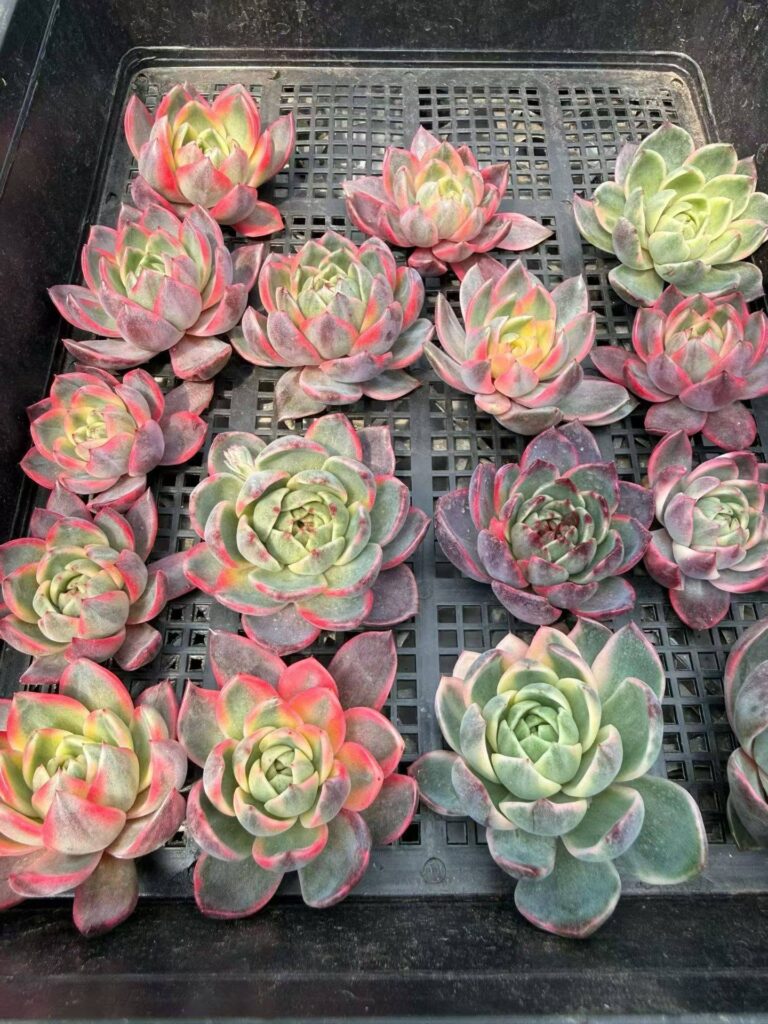
Hybridizers have spent decades crossing echeveria species to intensify color, refine rosette shape, and create entirely new visual effects. These ten cultivars represent some of the results.
11. Echeveria ‘Perle von Nürnberg’
This classic hybrid produces a striking purple-pink rosette with a distinctive powdery, pearlescent sheen coating each leaf.
Its name translates to “Pearl of Nuremberg,” a fitting description for the plant’s lustrous, almost metallic coloring under the right light.
Color intensity shifts noticeably with light exposure, deepening toward richer purple tones during cooler months and brighter sun conditions.
This cultivar remains one of the most widely available and consistently popular hybrids, largely because its coloring holds up reliably across a range of growing environments.
12. Echeveria ‘Black Prince’
As the name suggests, this hybrid produces unusually dark, near-black leaves, among the deepest coloring found anywhere in the genus.
That dramatic dark color intensifies with cold exposure and strong sunlight, while plants kept in lower light tend to revert toward a more muted green-brown shade.
Its compact rosette shape and bold color make it a popular contrast plant, often paired deliberately alongside pale or brightly colored echeveria varieties in mixed containers.
Because dark pigmentation can sometimes indicate stress in other plants, it is worth noting that for this cultivar, the darkening is simply its normal, healthy coloring response to light and temperature.
13. Echeveria ‘Blue Bird’
This hybrid forms a tidy rosette of powdery blue-gray leaves, tipped subtly in pink or coral under bright growing conditions.
Its coloring stays fairly stable across seasons compared to some more dramatic hybrids, making it a reliable choice for gardeners who prefer consistency over unpredictability.
The plant maintains a relatively compact size, rarely growing large enough to overwhelm a mixed succulent arrangement or crowded windowsill display.
Its calm, cool coloring pairs especially well alongside warmer-toned echeveria cultivars, creating visual contrast in group plantings.
14. Echeveria ‘Doris Taylor’ (Woolly Rose)
Also called Woolly Rose, this hybrid combines the fuzzy leaf texture of E. setosa with a fuller, rosier rosette shape inherited from other parent species.
Its densely hairy, pale green leaves carry a soft, almost cotton-like texture, distinct from the smoother, waxier surface typical of most echeveria varieties.
Bright orange-red, bell-shaped flowers appear on tall stems, creating vivid contrast against the muted, fuzzy foliage below.
Because of its dense hair covering, this cultivar tends to be somewhat more sensitive to overhead watering than smooth-leaved varieties, since trapped moisture can encourage rot.
15. Echeveria ‘Topsy Turvy’
This distinctive cultivar, bred from E. runyonii, produces leaves that curl backward toward the stem rather than lying flat in a typical rosette pattern.
That unusual, almost folded leaf shape gives the plant an architectural, sculptural quality that stands apart clearly from more conventional echeveria forms.
Its silvery-blue coloring pairs well with the unusual leaf shape, creating a plant that reads as almost otherworldly in a mixed succulent display.
This cultivar has become a genuine favorite among succulent photographers and collectors specifically because of how differently it reads compared to typical rosette-forming types.
16. Echeveria ‘Lola’
A hybrid cross between E. lilacina and E. elegans ‘Potosina,’ this cultivar combines soft lavender-pink coloring with a neat, symmetrical rosette shape.
Its pastel color palette has made it one of the most Instagram-photographed echeveria hybrids in recent years, prized for its delicate, almost porcelain-like appearance.
Leaves carry a light dusting of farina, the same powdery coating found on several of its parent species, which helps protect against intense sun exposure.
Despite its delicate appearance, this cultivar handles typical echeveria care requirements well, making it more forgiving than its fragile looks might suggest.
ALSO READ: 7 Simple Ways to Get Echeveria Lola to Bloom
17. Echeveria ‘Chroma’
This hybrid produces rosettes displaying multiple colors within a single plant, ranging through yellow, orange, pink, and green tones that shift depending on the season and light exposure.
Growers often describe the coloring as resembling a sunset captured within a single rosette, a description that genuinely fits once the plant reaches full color intensity.
Because color expression depends heavily on light and temperature stress, this cultivar can look dramatically different from one growing season to the next.
Collectors specifically seeking unpredictable, ever-changing color often gravitate toward this cultivar over more visually stable options.
18. Echeveria ‘Violet Queen’
This hybrid produces a rosette of soft violet-purple leaves, with color intensity that deepens noticeably under strong, direct sunlight.
Its relatively compact size makes it a practical choice for smaller containers, while its unusual purple base color adds real variety to a mixed succulent collection.
Like many purple-toned echeveria hybrids, this cultivar tends to lose some color saturation when grown in lower light, shifting toward a more muted green-purple shade indoors.
Regular rotation toward a bright light source helps maintain even coloring across the entire rosette rather than just the sun-facing side.
19. Echeveria ‘Blue Curls’
This cultivar produces wavy, ruffled blue-green leaves with edges that curl and twist rather than lying flat, creating a distinctly textured rosette.
The ruffled leaf margins catch light differently than smooth-leaved varieties, adding visual depth and shadow across the plant’s surface throughout the day.
Its blue-gray base color provides a cool, calming presence that pairs well alongside more vividly colored echeveria cultivars in group displays.
This texture-forward hybrid tends to appeal most to collectors already familiar with the genus, looking for something beyond standard rosette shapes.
ALSO READ: How to Propagate Echeveria – Growing and Care Guide
20. Echeveria ‘Ramillette’
This hybrid produces a tight, compact rosette with leaves that shift color across the seasons, typically ranging from green through pink and orange tones.
Its relatively small mature size makes it well suited to tightly packed succulent arrangements or smaller decorative containers.
Color intensity responds strongly to temperature swings, with cooler autumn and winter conditions typically producing the most vivid pink and orange tones.
Growers chasing seasonal color variation within a single, manageable-sized plant often find this cultivar particularly rewarding to track through the year.
Group 3: Textured and Fuzzy-Leaved Types
Not every echeveria has smooth, waxy leaves. This group covers varieties defined by hair, bumps, ridges, or other tactile surface features.
21. Echeveria harmsii (Red-Tip Plush Plant)
This species produces fuzzy, elongated green leaves tipped in vivid red, particularly under strong light and cooler seasonal temperatures.
Rather than forming a flat rosette, it grows as a small, branching shrub, similar in habit to its close relative E. pulvinata.
Bright red-orange, bell-shaped flowers typically bloom in late winter or early spring, adding seasonal color when many succulents remain relatively dormant.
Because of its shrubby growth habit, this species benefits from occasional pruning to maintain a fuller, more compact shape over time.
22. Echeveria nodulosa (Painted Echeveria)
This species stands out for its dramatic reddish-brown streaking against green leaves, a naturally occurring pattern rather than a stress response or disease symptom.
The streaking pattern varies noticeably from plant to plant, meaning no two specimens look entirely identical, even when grown from the same parent stock.
Its leaves also carry a slightly ridged, textured surface, adding subtle dimension beyond the bold color pattern alone.
This species tends to hold its distinctive markings consistently across seasons, unlike some color-shifting hybrids that fade significantly in lower light.
23. Echeveria purpusorum
This slow-growing species produces pointed leaves similar in shape to E. agavoides, but colored in darker red, green, and brown tones depending on sun exposure.
According to succulent care sources, this species genuinely thrives on neglect, making it a particularly forgiving choice for beginners despite its slower growth rate.
Its leaf surface carries fine, dark speckling, adding textural interest beyond the base coloring alone.
Because it grows slowly, this species rewards patient collectors more than those looking for quick, dramatic size increases.
24. Echeveria affinis (Black Echeveria)
This species produces notably dark, near-black-green leaves, among the deepest natural coloring found within the wild species rather than through hybrid breeding.
Its rosette stays relatively compact, with pointed leaves that taper to a sharp tip, giving the plant a slightly more aggressive, angular silhouette than rounder varieties.
Coral-red flowers provide vivid seasonal contrast against the otherwise dark, moody foliage.
This species has also contributed its dark coloring genetics to several popular hybrid breeding programs seeking deeper, more dramatic leaf tones.
25. Echeveria multicaulis (Copper Rose)
This species produces rounded, spoon-shaped leaves in coppery green tones, with red-tinged edges that intensify under bright, direct sunlight.
Rather than forming one dominant rosette, it tends to branch and clump over time, gradually spreading into a fuller, bushier arrangement.
Yellow-orange, bell-shaped flowers typically bloom on reddish stems during the warmer growing months.
This species handles part-shade conditions somewhat better than many other echeveria types, making it a slightly more flexible option for less intensely sunny locations.
26. Echeveria shaviana (Mexican Hens)
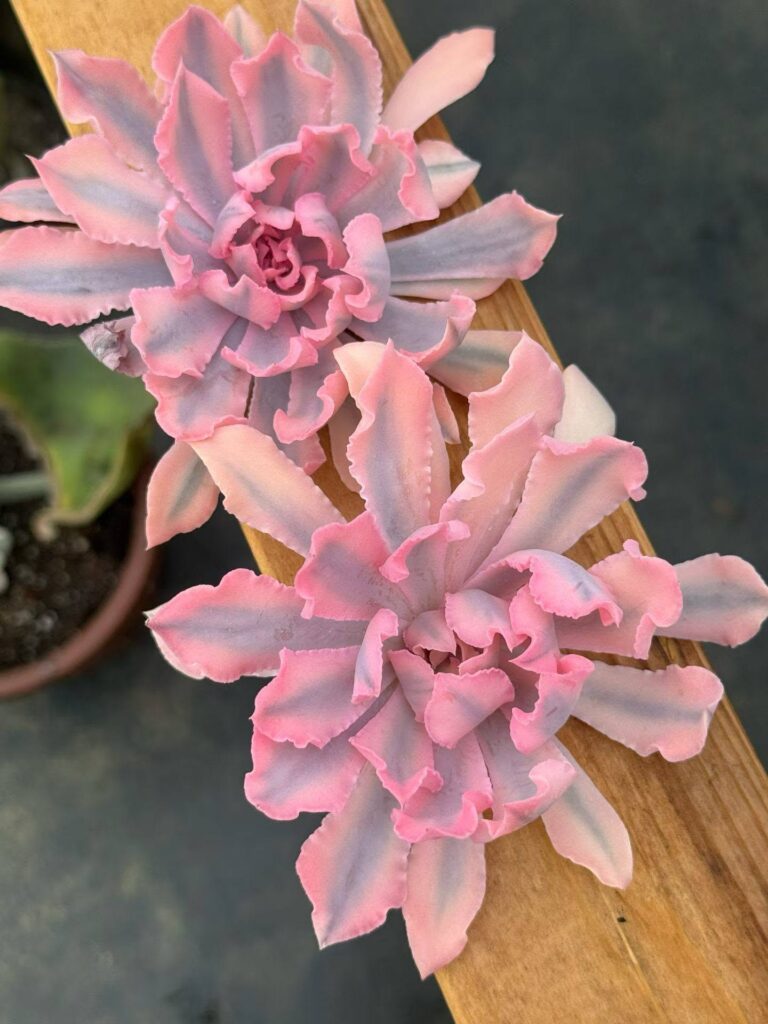
This species is known for its distinctly ruffled, wavy leaf margins, creating a frilled, almost flower-like rosette shape unlike the smoother forms typical of the genus.
Leaf color ranges through soft pink, lavender, and blue-gray tones, often shifting depending on light intensity and seasonal temperature changes.
Its ruffled texture has made it a popular parent species in hybrid breeding programs specifically targeting frilled, textured leaf margins.
Because the wavy leaf edges can trap moisture more easily than flat leaves, careful watering technique matters more with this species than with smoother-leaved relatives.
ALSO READ: Echeveria Winter Care: Secrets to Stunning Colors in Cold Weather
27. Echeveria colorata
This species produces thick, pale green to white leaves with a chalky farina coating, similar in overall effect to E. cante but generally smaller in mature size.
Its leaf tips often show reddish-brown coloring, particularly under strong sun exposure and cooler seasonal conditions.
The species name itself, meaning “colored,” reflects the notable contrast between its pale base coloring and darker leaf-tip markings.
This species remains popular among collectors specifically for its dependable, dramatic two-tone coloring across a relatively compact growth habit.
28. Echeveria amoena
This is a naturally small species, forming compact rosettes that readily produce numerous short offsets, quickly forming a spreading, colony-like clump.
Its blue-green leaves stay fairly modest in size, rarely competing visually with larger, more dramatic species on this list.
Because of its clumping habit, this species works particularly well as a groundcover option in rock gardens located within suitable climate zones.
Its reliable offset production also makes it one of the easier species for beginners to propagate successfully into new plants.
Group 4: Rare and Collector’s Types
These seven varieties tend to command higher prices and more dedicated searching, whether due to slow growth, difficult propagation, or genuine rarity in cultivation.
29. Echeveria laui
Widely considered one of the most beautiful species in the entire genus, this plant produces thick, plump, powder-blue leaves coated in an unusually heavy farina layer.
This species is genuinely slow-growing and notoriously difficult to propagate, since it rarely produces offshoots and does not reliably root from leaf or stem cuttings.
Its rarity in cultivation, combined with that propagation difficulty, keeps prices noticeably higher than more common echeveria species.
Collectors specifically seeking this species usually need to source seeds or established transplants rather than attempting cuttings at home.
30. Echeveria peacockii (Peacock Echeveria)
This species produces striking silvery-blue leaves with subtle pink edges, forming a rosette that lives up to its elegant common name.
Its farina coating gives the foliage a frosted, almost metallic sheen that shifts subtly depending on the viewing angle and available light.
Coral-orange, bell-shaped flowers typically bloom on reddish stems, providing warm seasonal contrast against the cool-toned foliage.
This species tolerates a bit more cold than many of its relatives, extending its practical growing range slightly further than some more tender types.
31. Echeveria pulidonis
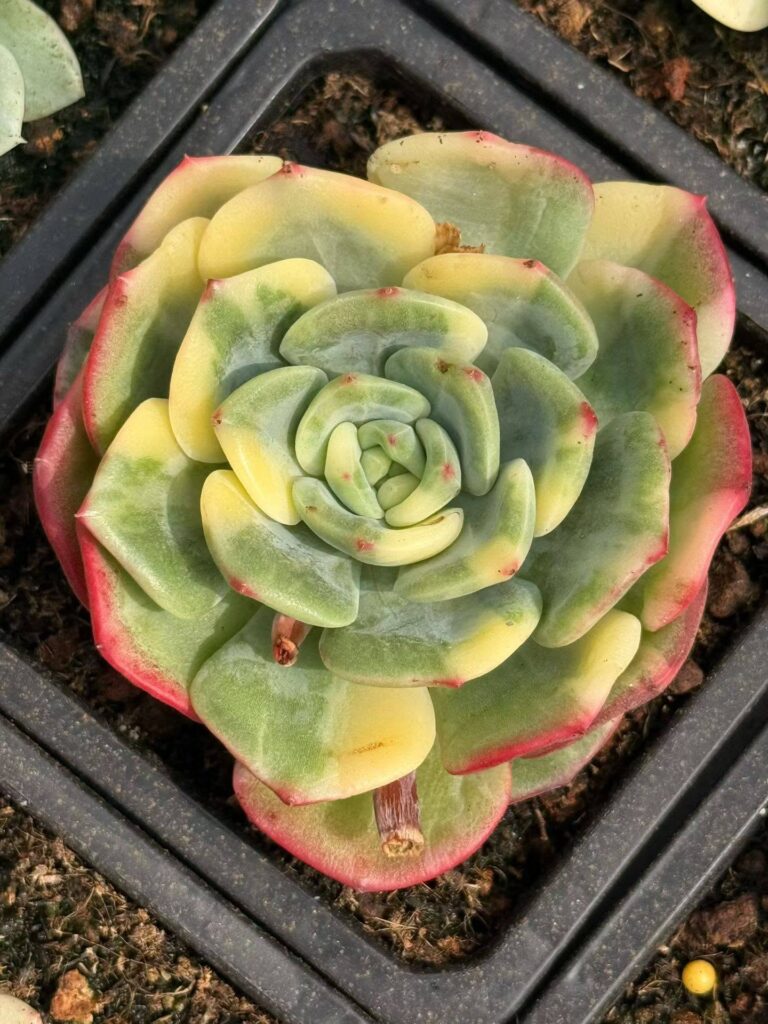
This compact species produces tight rosettes of pale blue-green leaves, each edged in a thin, vivid red-orange margin.
That crisp color contrast between the pale leaf body and bright edge coloring has made this species a popular choice for hybrid breeding programs seeking similarly bold margin effects.
Mature rosettes typically stay relatively small, well suited to container groupings alongside other compact echeveria types.
Bright yellow flowers, tipped in red, bloom on short stems, adding another layer of contrast to an already visually striking plant.
32. Echeveria pallida
This species produces large, pale green rosettes, among the bigger examples within the genus outside of E. gibbiflora itself.
Its leaves can develop a subtle pink blush along the edges under strong light, though the overall coloring stays notably paler than many other echeveria types.
Because of its larger mature size, this species requires more container space than compact varieties, making it better suited to dedicated pots rather than crowded mixed arrangements.
Its relatively understated coloring appeals to collectors who prefer subtlety over the bolder, more dramatic hues found elsewhere in the genus.
33. Echeveria imbricata
Though technically a hybrid rather than a true species, this classic cross between E. secunda and E. gibbiflora ‘Metallica’ has been cultivated for so long that many growers treat it as a standard variety in its own right.
It produces the archetypal blue-green “hens and chicks” rosette that many people picture when they first hear the word echeveria.
This hybrid readily produces offsets, spreading into a dense clump over time, which explains its long-standing popularity as a reliable groundcover option.
Its adaptability and easy propagation have kept this older hybrid in continuous cultivation for generations, even as flashier newer cultivars have entered the market.
34. Echeveria ‘Fabiola’
This compact hybrid produces thick, fleshy, pale sea-green leaves with a thin red line tracing each leaf tip.
Rosettes typically reach around 4 inches in diameter, slowly producing offsets near the base as the plant matures over time.
Its bell-shaped flowers show a distinctive two-tone effect, pinkish-red on the outer surface and salmon-orange within, blooming on reddish stems roughly 6 inches tall.
This cultivar’s compact size and subtle coloring make it a favorite for collectors who prefer refined, understated beauty over bolder statement plants.
35. Echeveria ‘Tippy’
This cultivar earns its name from the distinctive dark red or maroon tips capping each pale, blue-green leaf.
That sharp tip coloring intensifies considerably under bright, direct sunlight and cooler seasonal temperatures, creating strong visual contrast against the cooler base tone.
Its compact rosette size makes it a practical addition to mixed succulent bowls, where its tipped coloring reads clearly even alongside more dominant plant varieties.
Like many tipped-leaf cultivars, consistent light exposure helps maintain even coloring across the entire rosette rather than concentrating color on just one side.
Echeveria Facts Worth Knowing
A few verified figures help put this genus into perspective.
North Carolina State University Extension documents nearly 200 species within the Echeveria genus, alongside countless additional hybrid cultivars developed through decades of breeding work.
Most echeveria species are native to a range spanning southwest Texas through Mexico and into northwestern South America, according to North Carolina State University Extension plant records.
Ideal light exposure runs around six hours of direct sunlight daily, based on general succulent care guidance referenced across university extension sources, with inadequate light causing plants to stretch or “etiolate” toward the nearest light source.
According to West Virginia University Extension, succulents including echeveria require good drainage and should only be watered once the soil has fully dried, since overwatering remains the most common cause of failure in this genus.
Texas A&M AgriLife Extension horticulture specialists recommend checking soil moisture by feel, watering only once the soil feels dry rather than following a fixed schedule.
How to Choose the Right Echeveria for You
If you are just starting out, Group 1 species like E. elegans, E. secunda, and E. agavoides offer the most forgiving, widely available starting points.
Gardeners chasing bold, ever-changing color should look toward Group 2 hybrids, particularly ‘Chroma’ and ‘Perle von Nürnberg,’ both known for dramatic seasonal shifts.
If tactile texture matters more than color to you, Group 3 species like E. setosa and E. shaviana deliver fuzzy or ruffled surfaces unlike anything in the smoother-leaved groups.
Serious collectors eventually gravitate toward Group 4 rarities, especially E. laui, though its slow growth and propagation difficulty mean patience matters as much as budget here.
Basic Care Tips Across All Types
Regardless of which type you choose, a handful of care principles apply broadly across the genus.
Bright, direct light is essential. Most echeveria types need several hours of strong sun daily to maintain compact growth and vivid coloring; insufficient light causes stretching and pale, washed-out color.
Water only once the soil has completely dried, then water thoroughly until it drains from the pot’s bottom. Frequent light watering encourages shallow roots and increases rot risk.
An unglazed terra-cotta pot with drainage holes helps excess moisture evaporate, working alongside a fast-draining succulent or cactus soil mix.
Watch for mealybugs and spider mites, the most commonly reported pests across university extension sources, and treat early infestations with isolated alcohol swabbing before they spread.
Frequently Asked Questions
How many types of echeveria exist in total? The genus includes somewhere between 150 and nearly 200 recognized species, according to university extension sources, plus thousands of additional named hybrid cultivars.
Which echeveria type is easiest for beginners? Echeveria elegans, commonly called Mexican Snowball, is widely considered one of the most forgiving and widely available species for new growers.
Why do some echeveria leaves turn red or purple? Color intensification typically results from strong direct sunlight and cooler temperatures, a natural stress response that many collectors deliberately encourage for more dramatic coloring.
Can echeveria survive outdoors year-round? Most types tolerate only mild frost at best and generally need to be brought indoors or protected during freezing temperatures, since the genus has limited natural cold hardiness.
Final Thoughts
Thirty-five types barely scratches the surface of a genus this large, yet this list covers the species and cultivars most likely to show up in nurseries, online shops, and fellow collectors’ shelves.
Whether you are drawn to the reliable simplicity of Echeveria elegans or the challenge of coaxing a healthy Echeveria laui along, understanding these groupings makes it far easier to build a collection that actually thrives.
Once you can recognize which group a new plant belongs to, choosing the right care approach stops being a guessing game.
References
- North Carolina State University Extension, Gardener Plant Toolbox — Echeveria genus profile. https://plants.ces.ncsu.edu/plants/echeveria/
- North Carolina State University Extension, Gardener Plant Toolbox — Echeveria secunda (Blue Echeveria) profile. https://plants.ces.ncsu.edu/plants/echeveria-secunda/
- West Virginia University Extension — Succulents 101. https://extension.wvu.edu/lawn-gardening-pests/indoor-plants/succulents-101
- University of Minnesota Extension — Cacti and Succulents. https://extension.umn.edu/houseplants/cacti-and-succulents
- University of Illinois Extension — Millennials & Succulents: What Is All the Hype Behind These Plump Plants? https://extension.illinois.edu/blogs/good-growing/2019-06-19-millennials-succulents-what-all-hype-behind-these-plump-plants
- Montana State University Extension — Growing Succulents. https://www.montana.edu/extension/lila_extn/lila_winter_23/GrowingSucculents.html
- Texas A&M University, Texas A&M Stories — How to Care for Succulents. https://stories.tamu.edu/news/2020/06/01/how-to-care-for-succulents/

Tim M Dave is a gardening expert with a passion for houseplants, particularly cacti and succulents. With a degree in plant biology from the University of California, Berkeley, he has vast experience in gardening. Over the years, he has cultivated a vast collection of desert plants and learned a great deal about how to grow and care for these unique companions.