25 Types of Aloe Plants: Identification and Growing Guide
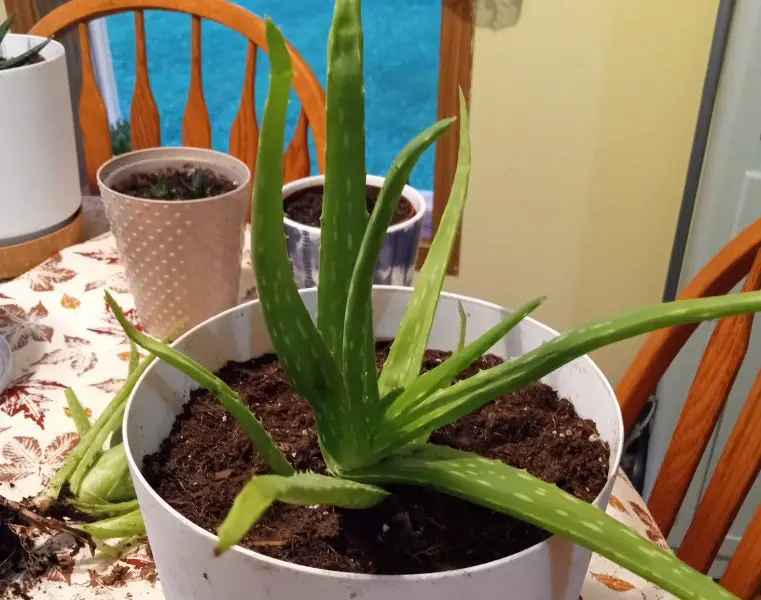
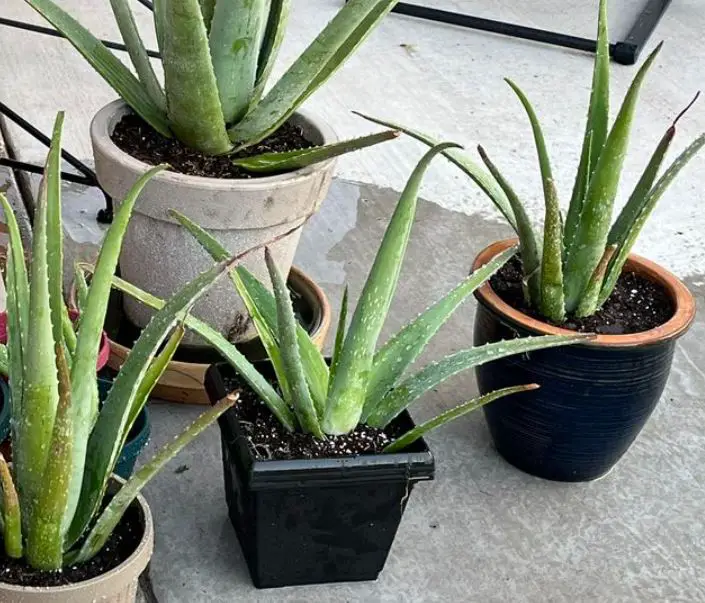
Aloe plants are among the most recognizable succulents in the world. Most people know aloe vera — the one sitting on a kitchen windowsill, ready for a minor burn or sunburn emergency. But here is what surprises many gardeners: there are over 500 known species of aloe, and a large number of them are worth growing.
From towering tree aloes to tiny rosette-forming dwarf species, the aloe genus offers extraordinary variety. Some produce spectacular orange flower spikes. Some have spotted, zebra-striped, or spiraling leaves. Some thrive in pots indoors; others belong in a bold outdoor landscape.
This guide introduces 25 types of aloe plants — what they look like, where they come from, and how to grow them well.
A Brief Overview of the Aloe Genus
Aloe is a genus of succulent flowering plants native primarily to Africa, Madagascar, and the Arabian Peninsula. Most species belong to the family Asphodelaceae. They are drought-tolerant, store water in their fleshy leaves, and generally prefer warm, sunny, well-drained conditions.
Not all aloes are medicinal, and not all are created equal in terms of size, tolerance, or ornamental appeal. Knowing your specific species makes a real difference in how you care for it.
1. Aloe Vera (Aloe barbadensis miller)
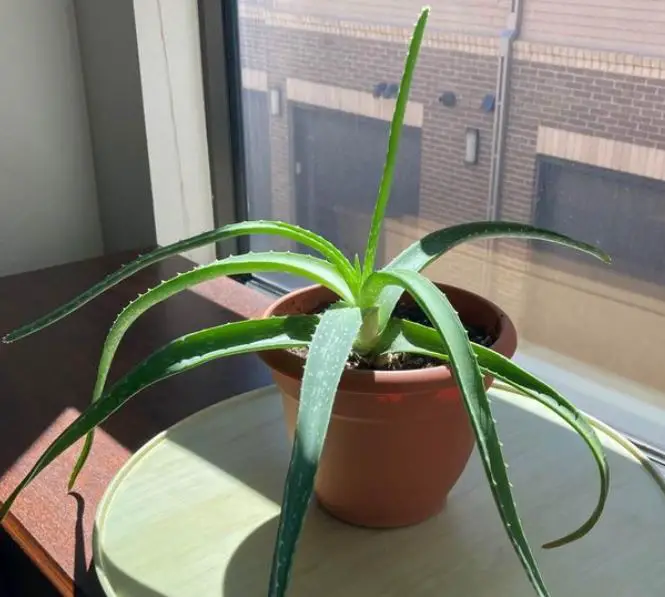
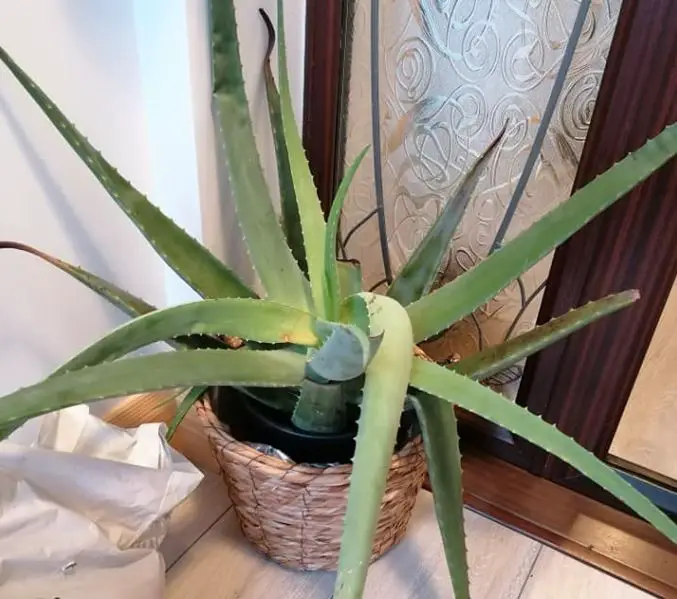
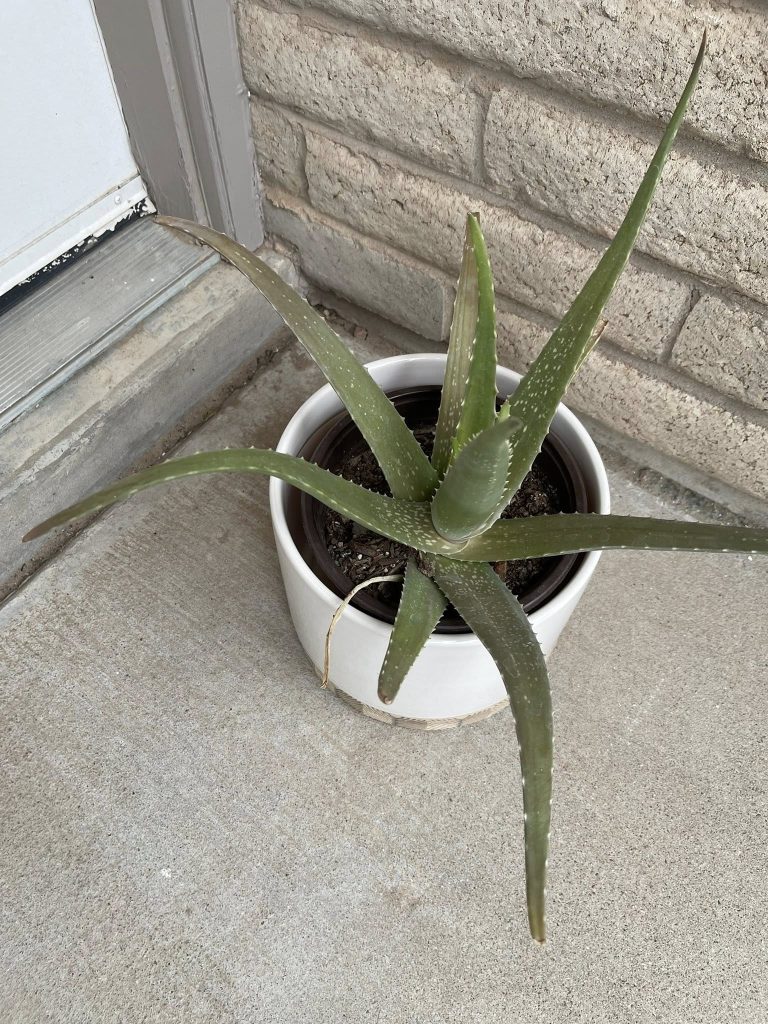
This is the aloe most people know. Aloe vera is the most widely cultivated aloe species in the world, grown commercially for its gel, which has well-documented skin-soothing and wound-healing properties.
It forms thick, fleshy green leaves with serrated edges, grows 1 to 3 feet tall, and produces yellow tubular flowers on tall spikes. It thrives in pots or garden beds in USDA Zones 9 to 11 and is nearly impossible to kill with neglect — overwatering is the main danger.
2. Tiger Aloe (Aloe variegata)
Also called the partridge breast aloe, this compact species is one of the most attractive small aloes available. Its dark green leaves are banded with irregular white spots and lines, creating a striking striped appearance.
It grows only 6 to 12 inches tall, making it ideal for windowsills and small containers. It produces coral-pink flowers and tolerates partial shade better than many other aloes. Native to South Africa, it is classified as a vulnerable species in the wild — another reason to appreciate it in cultivation.
3. Tree Aloe (Aloe bainesii / Aloe barberae)
If you want drama in your landscape, the tree aloe delivers it. This is the largest aloe species in the world, capable of reaching 30 to 60 feet in height in the right conditions.
It forms a thick trunk with branching canopy-like growth topped with rosettes of grey-green leaves. In winter, it produces pink to rose-colored flowers. It is slow-growing but extremely long-lived. Best suited for warm, dry climates (Zones 9 to 11), it works beautifully as a bold focal point in xeriscape gardens.
4. Cape Aloe (Aloe ferox)
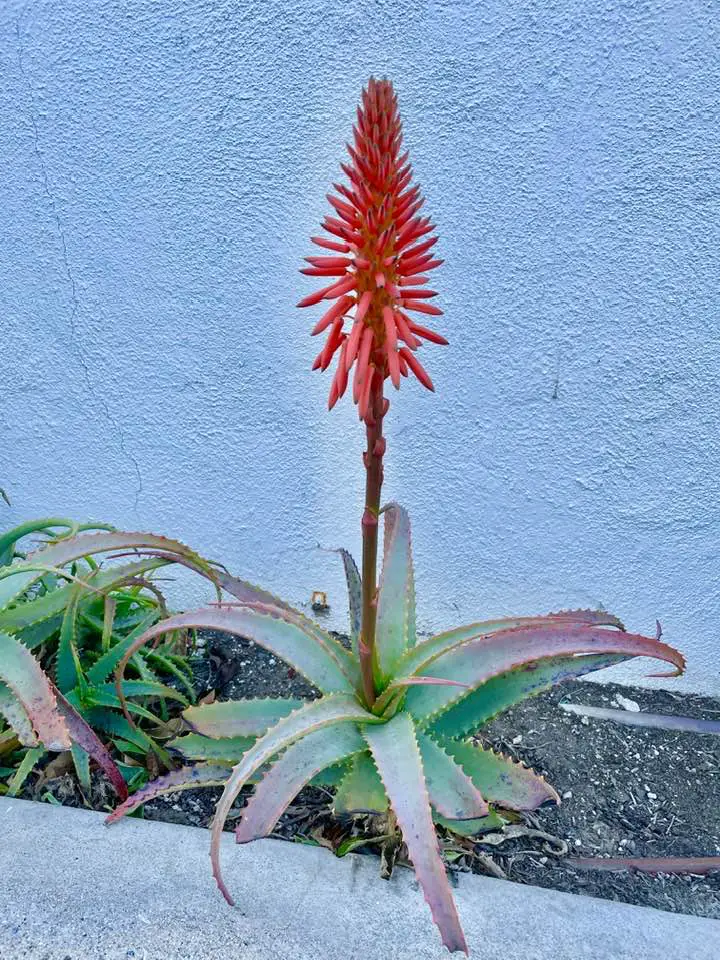
Known in South Africa as the “bitter aloe,” Aloe ferox is one of the most commercially important aloe species after aloe vera. Its bitter sap is used in herbal medicine and cosmetics.
The plant itself is visually impressive — a single-stemmed aloe with a trunk that can reach 10 feet tall, topped by a rosette of broad, blue-green leaves covered in reddish-brown teeth. Its flower spikes are dramatic, branching, and bright orange-red. It is drought-tolerant, cold-hardy to about 25°F, and suits bold landscape designs.
5. Soap Aloe (Aloe maculata)
Soap aloe gets its common name from the fact that its sap lathers in water — something many people find genuinely surprising the first time they try it.
It forms a low, spreading rosette of broad green leaves with white spots and spiny edges. It is one of the most cold-hardy aloes, surviving temperatures down to about 20°F (Zone 8). It spreads by offsets and forms attractive clumps, making it excellent as ground cover in warm climates. Flower spikes are orange to red.
6. Fan Aloe (Aloe plicatilis)
Fan aloe is immediately recognizable — and unlike most other aloes. Its strap-like leaves are arranged in two flat, fan-shaped rows rather than in the typical spiral rosette. This unusual growth habit makes it one of the most architecturally striking aloes in cultivation.
Native to the Fynbos region of South Africa’s Western Cape, it grows as a shrub or small tree reaching up to 8 feet. It produces tubular red flowers and prefers cool, Mediterranean-type climates. It is somewhat more cold-tolerant than many aloes and does well in containers.
7. Lace Aloe (Aloe aristata)
Lace aloe is a compact, stemless species that looks almost like a haworthia at first glance. Its dark green leaves are covered in white bumps and tiny white teeth, giving it a textured, intricate appearance that earns its common name.
It stays small — typically under 8 inches wide — making it one of the best aloes for indoor growing and container gardens. It tolerates shade better than most aloes and produces bright orange flowers in autumn. It is also more cold-hardy, surviving brief frosts.
8. Candelabra Aloe (Aloe arborescens)
Candelabra aloe is both beautiful and remarkably useful. It is used extensively in traditional medicine across Africa and Japan, particularly in research related to cancer support therapies. In Japan, it is known as Kidachi Aloe.
The plant grows 6 to 10 feet tall, branching into multiple stems each topped with a rosette of blue-green, serrated leaves. Its flower spikes are vivid orange-red. It spreads quickly and is often used as a hedge or windbreak in warm coastal gardens. It is one of the most cold-tolerant aloe species.
9. Short-Leaved Aloe (Aloe brevifolia)
As the name suggests, Aloe brevifolia has notably short, broad leaves compared to other aloes. The leaves are a blue-grey-green color, tightly packed into a dense rosette, with small white teeth along the edges.
It is a dwarf species, rarely growing more than 5 inches tall, though it spreads by producing many offsets. This clustering habit makes it wonderful for rock gardens, container groupings, and succulent arrangements. Flowers are orange-red and appear in late spring or early summer.
10. Climbing Aloe (Aloe ciliaris)
Climbing aloe is a genuinely unusual member of the aloe family. Unlike most aloes, it produces long, slender, vine-like stems that can climb or scramble through shrubs and fences, reaching up to 15 to 20 feet in length.
It grows fast — one of the fastest-growing aloes known — and produces bright red tubular flowers almost year-round in warm climates. It is a valuable nectar source for hummingbirds and sunbirds. It works well as a sprawling ground cover or trained against a wall or trellis.
11. Blue Aloe (Aloe glauca)
Blue aloe is celebrated for its striking leaf color. The leaves are a distinctive silvery-blue, narrow, upright, and lined with pale teeth along the edges. The blue color intensifies in full sun and dry conditions.
It grows to about 3 feet tall and wide, forming an elegant rosette. Flowers are pink to red and appear in winter or spring. It is an excellent ornamental plant for dry gardens, Mediterranean landscapes, and container arrangements where a cool-toned foliage accent is desired.
12. Sunset Aloe (Aloe dorotheae)
Sunset aloe earns its name from what happens when you give it plenty of sunlight and a little stress — the leaves turn a spectacular gradient of yellow, orange, and red, resembling a sunset. In shade, the same plant stays plain green.
Native to Tanzania, it grows to about 2 feet tall and is considered rare in cultivation. Its vivid color display makes it one of the most visually dramatic small aloes. Flowers are bright red. It does well in containers and makes an outstanding specimen plant.
13. Spiral Aloe (Aloe polyphylla)
The spiral aloe is perhaps the most mathematically fascinating plant in the entire succulent world. Its leaves grow in a perfect Fibonacci spiral, either clockwise or counterclockwise, creating a mesmerizing geometric pattern.
It is native only to the high mountain grasslands of Lesotho in southern Africa and is a protected species there. It is notoriously difficult to grow outside its native conditions, requiring cool temperatures, perfect drainage, and careful management. Growing it successfully is considered something of an achievement among succulent enthusiasts.
14. Red Aloe (Aloe cameronii)
Red aloe from Malawi and Zimbabwe is one of the most colorful aloes in existence. In strong sunlight and dry conditions, the foliage turns a vivid, coppery red — a color display that few succulents can match.
It grows to about 2 to 3 feet tall, forming clusters of rosettes over time. Flower spikes are bright orange-red and appear in autumn and winter. It performs exceptionally well in containers, where stress-inducing conditions are easy to create through controlled watering. It is a favorite among collectors.
15. Gasteraloe (× Gasteraloe)
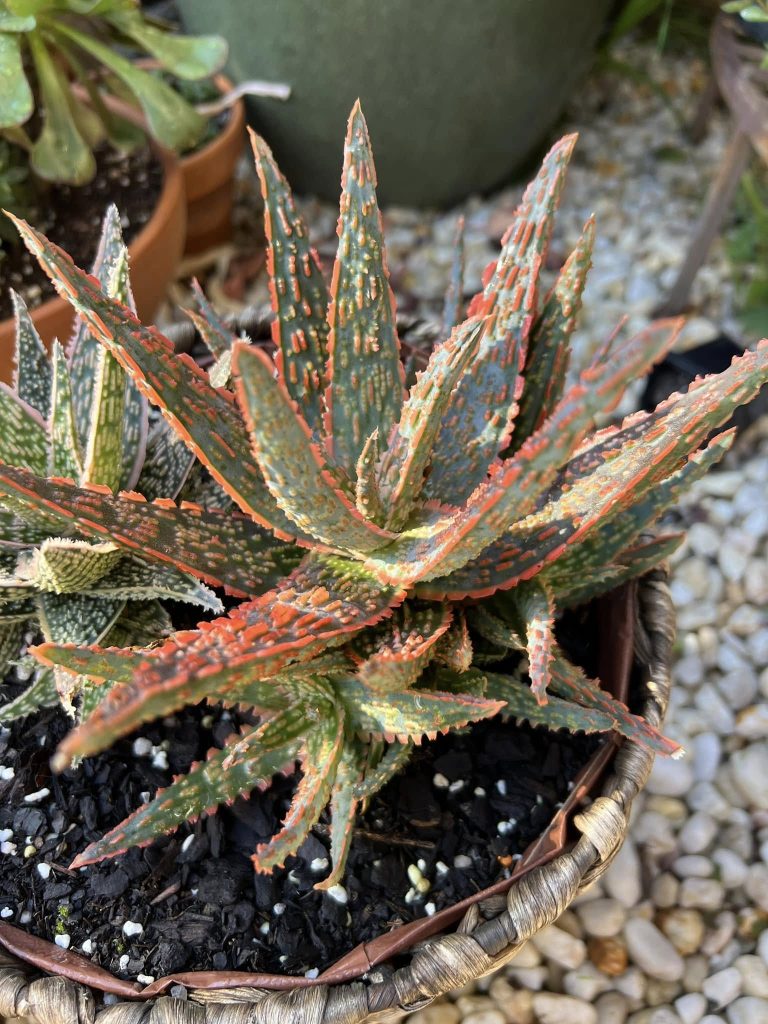
Gasteraloe is not a pure aloe species — it is a hybrid between aloe and gasteria, combining the features of both genera. The resulting plants often have beautifully patterned leaves with white spots or bands, a compact rosette form, and greater shade tolerance than most true aloes.
Several named cultivars exist, including Gasteraloe ‘Green Ice’, which has particularly attractive white-spotted foliage. These hybrids are excellent houseplants, tolerant of lower light and irregular watering. They are widely available in nurseries and well worth growing.
16. Krantz Aloe (Aloe arborescens var. — also see Aloe mutabilis)
While Aloe arborescens appears earlier, it is worth noting the related Krantz aloe group, which includes shrubby, multi-branched forms common along South African cliff faces and rocky slopes. The name “krantz” is an Afrikaans word for cliff or rocky outcrop.
These forms are robust, fast-growing, and among the most widely grown landscape aloes in South Africa. They are exceptionally salt-tolerant, making them excellent choices for coastal gardens. The vivid red flower spikes in winter are a key food source for nectarivorous birds.
17. Jewel Aloe (Aloe squarrosa)
Jewel aloe is a striking dwarf species from the island of Socotra in Yemen. It is known for its recurved, almost spiral-looking leaves, which are bright green with white tubercles and teeth.
It stays quite small — 6 to 12 inches — and works beautifully in containers or rock gardens. Its unusual leaf shape gives it an exotic, gem-like appearance. Flowers are red and tubular. It is somewhat more sensitive to cold and overwatering than other aloes and needs careful attention to drainage.
18. Torch Aloe (Aloe castanea / Aloe thraskii)
Torch aloe (Aloe thraskii) is a tall, single-stemmed coastal species from KwaZulu-Natal, South Africa. It produces some of the most dramatically arching leaves of any aloe, drooping gracefully downward in a fountain-like form and giving the plant an almost tropical appearance.
It grows 6 to 10 feet tall and produces dense, branching orange flower spikes in winter. It thrives in full sun and well-drained soil and is an excellent landscape plant in mild coastal climates.
19. Aloe Vera ‘Variegata’ (Variegated Aloe Vera)
This is a cultivated variety of standard aloe vera with one key distinction — its leaves are marked with irregular creamy-white or pale yellow streaks and patches across the green surface.
It behaves in the same way as regular aloe vera: same care requirements, same gel properties, same resilience. The variegated coloring is purely ornamental, making it popular among succulent collectors who want all the practicality of aloe vera with an added visual twist.
20. Aloe Maculata ‘Spineless’ (Spineless Soap Aloe)
A selected variety of soap aloe, this cultivar has been bred to minimize or eliminate the leaf-edge teeth, making it a more user-friendly option for gardens where children or pets are present. The broad, spotted leaves and low spreading habit remain the same as the species.
It is equally cold-hardy and adaptable as its parent species and is particularly popular in low-maintenance urban landscaping.
21. Aloe Descoingsii
This is the smallest known aloe species in existence. Native to Madagascar, it forms a tiny rosette rarely more than 2 inches in diameter, with dark green, white-spotted leaves and proportionally small red-orange flower spikes.
Despite its miniature size, it is a proper, independent species — not a juvenile plant. It is a collector’s favorite and works well in miniature succulent arrangements, fairy gardens, and small container compositions.
22. Quiver Tree (Aloe dichotoma)
The quiver tree is an iconic species of the Namib Desert and Karoo of southern Africa. It is not technically a tree — it is an aloe — but it grows a thick, woody, forking trunk that can reach 15 to 30 feet tall. The name comes from the San people of the Kalahari, who historically hollowed out branches to make quivers for their arrows.
The quiver tree grows very slowly and is vulnerable to climate change in its native range. It produces bright yellow flowers in winter and is one of the most photographed plants in the world.
23. Coral Aloe (Aloe striata)
Coral aloe is a smooth-leaved, nearly spineless aloe — a quality that immediately sets it apart from most of its relatives. The broad, flat, grey-green leaves have pink to coral-colored margins, giving the plant a subtle but beautiful color accent year-round.
It grows to about 2 feet tall and produces bright coral-orange flowers on branched spikes in spring. It is one of the most adaptable aloes for garden use, tolerating more shade and poorer drainage than many species. It is widely recommended for beginner aloe growers.
24. Aloe Pluridens (French Aloe)
French aloe is a tall, elegant, single-stemmed species from South Africa’s Eastern Cape. It grows 8 to 12 feet tall, with a persistent skirt of dried leaves on the stem — a character that gives mature specimens a shaggy, architectural appearance.
The leaves are narrow, blue-green, and finely toothed. Flower spikes are tall and branching with pink to red flowers in autumn to winter. It is particularly suited to coastal and Mediterranean gardens and is one of the more underused landscape aloes.
25. Aloe Ferox × Arborescens (Hybrid Cape-Candelabra Aloe)
Rounding out this list is a naturally occurring hybrid between Aloe ferox and Aloe arborescens, which combines the bold form of the cape aloe with the multi-branching habit of the candelabra aloe. Hybrid aloes often display increased vigor and adaptability, a phenomenon known as hybrid vigor or heterosis.
This particular hybrid is sometimes encountered in South African gardens and collections. It is a robust, ornamental plant with vivid orange-red flowers and makes an excellent large landscape specimen.
General Care Tips for Aloe Plants
Whatever species you grow, the following principles apply almost universally:
- Sunlight: Most aloes need at least 6 hours of bright light daily. Indoors, a south-facing window is ideal.
- Watering: Water deeply but infrequently. Allow the soil to dry out completely between waterings. Overwatering is the number one cause of aloe death.
- Soil: Use a well-draining succulent or cactus mix. Never use standard potting soil alone.
- Fertilizing: A diluted balanced fertilizer once in spring is usually sufficient. Avoid over-feeding.
- Temperature: Most aloes prefer temperatures above 50°F. Some tolerate light frost; very few tolerate hard freezes.
- Repotting: Repot when the plant becomes root-bound or the offset clusters overflow the container.
Suggested For You:
How to Treat a Sunburnt Aloe Vera Plant
How to Repot Aloe Vera Plant – Ultimate Care Guide
How to Propagate Aloe Vera (The Easiest Way)
Aloe Vera Roots Broke Off? What to Do Next
Closing Thoughts
I find aloe plants genuinely rewarding to collect and grow — not just for their practical value, but for the sheer diversity of form, color, and character they bring to a space. Whether you are working with a tiny windowsill, a large desert garden, or something in between, there is an aloe species that fits perfectly.
Start with the easier species — aloe vera, coral aloe, or lace aloe — and build your collection from there. The more you grow, the more you will appreciate just how varied and remarkable this single genus truly is.
Educational References
- University of California Agriculture and Natural Resources – Aloe Species for California Gardens https://ucanr.edu/sites/scmg/files/30917.pdf
- North Carolina State University Extension – Aloe vera (Aloe) https://plants.ces.ncsu.edu/plants/aloe-vera/
- University of Florida IFAS Extension – Aloe barbadensis: Aloe Vera https://edis.ifas.ufl.edu/publication/FP009
- Kew Royal Botanic Gardens (Kew Science) – Aloe Genus Overview https://www.kew.org/plants/aloe
- Arizona State University – Desert Plants: Aloe Species in Arid Environments https://cals.arizona.edu/pubs/garden/mg/botany/succulents.html

Tim M Dave is a gardening expert with a passion for houseplants, particularly cacti and succulents. With a degree in plant biology from the University of California, Berkeley, he has vast experience in gardening. Over the years, he has cultivated a vast collection of desert plants and learned a great deal about how to grow and care for these unique companions.