25 Trees Native to Connecticut (With Growing Details)
Connecticut is one of the most densely forested states in the country, and that fact still surprises most people. Despite ranking as the fourth most densely populated state, close to 60% of its land remains covered in forest.
I remember driving up I-91 for the first time and expecting strip malls the whole way. Instead, I hit mile after mile of unbroken canopy, which felt completely at odds with everything I’d assumed about a small, crowded New England state.
That contradiction is exactly what makes Connecticut’s trees worth learning. The state hosts over 58 identified tree species, and understanding even 25 of them will let you read the landscape like a local.
This guide covers the native trees you’re most likely to encounter, whether you’re hiking the Blue-Blazed trails, landscaping a yard in Hartford, or exploring the shoreline forests near Long Island Sound.
Why Native Trees Matter in Connecticut
Native trees are built for Connecticut’s specific climate, from humid summers to harsh coastal winters, in ways that imported ornamentals rarely match. They tolerate the state’s rocky, acidic soils without the constant care non-native species often demand.
Connecticut’s forests lean heavily hardwood, with the oak-hickory forest type covering roughly 51% of the state. Northern hardwoods, dominated by maple, birch, and beech, make up another significant share of the landscape.
Planting native also directly benefits local wildlife. Birds, deer, and pollinators throughout Connecticut evolved alongside these exact species, depending on their seeds, nuts, and foliage in ways non-native trees simply can’t replace.
With that context in place, here are the 25 native trees that define Connecticut’s forests.
1. White Oak (Quercus alba)
White oak anchors much of Connecticut’s oak-hickory forest type, the single largest forest category in the state. This tree can live for several centuries, often reaching 80 to 100 feet with a broad, sturdy crown.
Its rounded, finger-like leaf lobes set it apart immediately from the sharper, bristle-tipped lobes of red oak. Bark is pale gray and scaly, and its acorns mature within a single growing season, making them sweeter and more palatable to wildlife than most other oak species.
White oak wood has long been prized for shipbuilding, barrel-making, and furniture across New England. Connecticut’s most famous tree, the legendary Charter Oak that once hid the colonial charter from British authorities in 1687, was itself a massive white oak.
2. Northern Red Oak (Quercus rubra)

Northern red oak grows faster than white oak and produces valuable, straight-grained lumber prized throughout Connecticut’s timber industry. Its leaves feature sharp, pointed lobes tipped with small bristles, a reliable way to distinguish it from the rounded white oak family.
Bark develops smooth, shiny vertical stripes as the tree matures, almost resembling ski tracks running down the trunk. Red oak acorns take two full years to mature and carry a distinctly bitter taste, though wildlife still rely heavily on this crop each fall.
This species is one of Connecticut’s most numerous large trees, forming a major component of the oak-hickory forests that blanket the state’s hillsides. Deer, turkey, and squirrels across Connecticut depend on red oak’s acorn crop to survive lean winter months.
3. Red Maple (Acer rubrum)
Red maple holds the title of Connecticut’s single most numerous tree species, outpacing every other native by total stem count. It thrives across an unusually wide range of conditions, from swampy lowlands to dry, rocky ridges.
This tree produces small red flowers in early spring, often before any leaves emerge, followed by the classic winged seed pairs known as samaras. Its leaves turn brilliant scarlet each October, contributing heavily to Connecticut’s famous fall color displays.
Red maple grows quickly and adapts easily to disturbed soils, which partly explains its dominance across the state’s forests. Its wood, while softer than sugar maple’s, still sees use in flooring, furniture, and firewood throughout New England.
4. Sugar Maple (Acer saccharum)
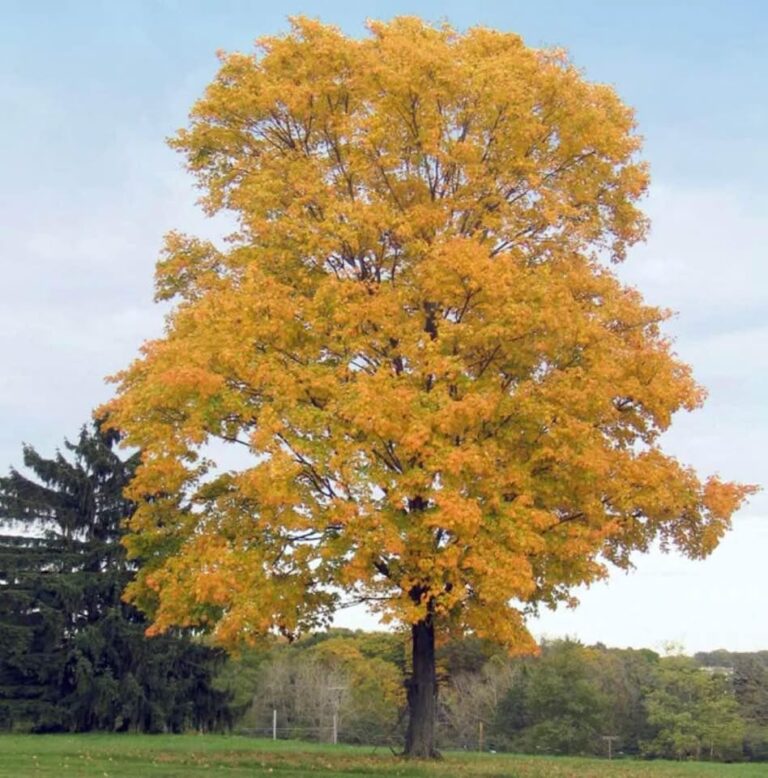
Sugar maple provides some of Connecticut’s most spectacular fall color, turning brilliant orange and gold each autumn across the state’s northern hardwood forests. It thrives in the rich, well-drained soils found throughout Litchfield County and the state’s higher elevations.
This species can be tapped for syrup, and Connecticut maintains a small but genuine maple sugaring tradition, particularly in its northwestern hills. Its classic five-lobed leaf and opposite branching pattern make it one of the easiest native trees for beginners to identify.
Sugar maple grows slowly but can live for over 300 years, developing a dense, rounded canopy that provides deep summer shade. Along with beech and yellow birch, it anchors Connecticut’s northern hardwood forest type.
5. Eastern Hemlock (Tsuga canadensis)
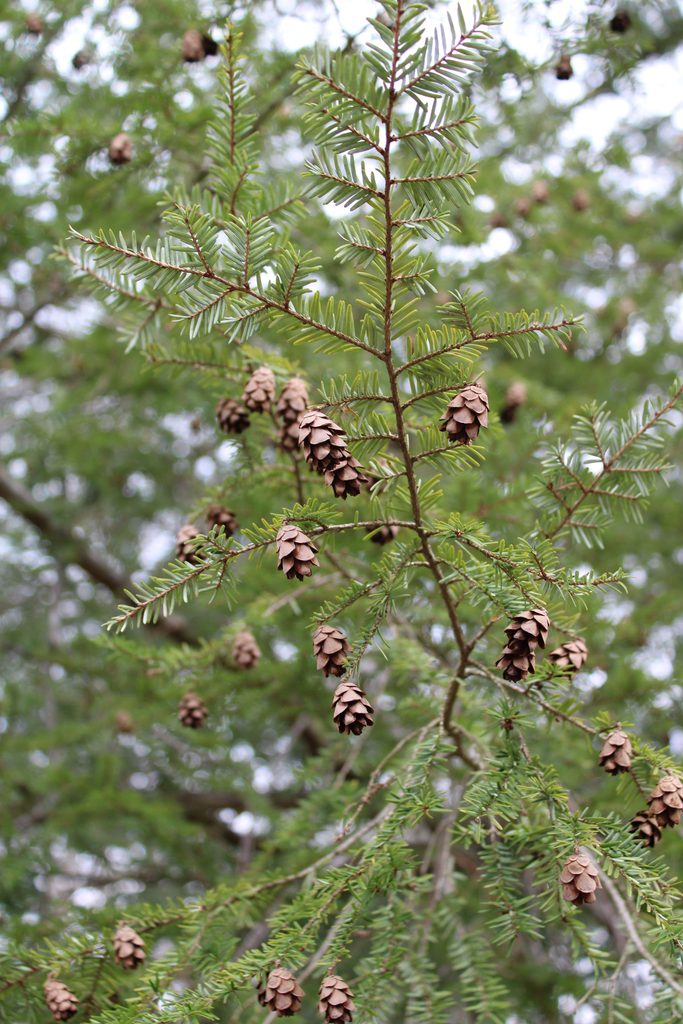
Eastern hemlock is Connecticut’s most significant native conifer, forming dense, shaded groves along ravines and cool, moist stream corridors statewide. Its short, flat needles and small, delicate cones make it easy to distinguish from the state’s pine species.
This tree provides critical winter shelter for deer and songbirds, since its dense evergreen canopy blocks wind and retains heat far better than deciduous trees. Hemlock groves also cool nearby streams, creating essential habitat for native brook trout.
Unfortunately, the invasive hemlock woolly adelgid has devastated hemlock populations across Connecticut since arriving in the state decades ago. Forest managers now consider healthy, adelgid-free hemlock stands increasingly rare and ecologically valuable.
6. Eastern White Pine (Pinus strobus)
Eastern white pine is the tallest native conifer in Connecticut, capable of exceeding 100 feet in favorable conditions. Its soft, blue-green needles grow in distinctive bundles of five, a simple and reliable identification trait.
This tree was historically prized by colonial shipbuilders for ship masts, since its straight, tall trunks provided exactly the timber the British Royal Navy needed. Some of the oldest surviving white pines in New England still stand in protected Connecticut forest reserves.
White pine grows relatively quickly and often colonizes abandoned farmland, which is why many of Connecticut’s forests regenerated with dense white pine stands throughout the 20th century. Its soft wood remains popular for construction and furniture across the region.
7. Sweet Birch (Betula lenta)
Sweet birch, sometimes called black birch, ranks among Connecticut’s most common trees alongside red maple. Its dark, cherry-like bark and aromatic twigs make it easy to identify, especially since crushed twigs release a distinct wintergreen scent.
This species historically supplied the flavoring for birch beer, a regional soft drink once popular throughout New England. The tradition has faded, but foragers still occasionally tap sweet birch for its fragrant, flavorful sap.
Sweet birch grows well in Connecticut’s rocky, acidic soils, often appearing alongside oak and hickory in mixed hardwood stands. Its wood is dense and strong, historically used for furniture and tool handles throughout the state.
8. Yellow Birch (Betula alleghaniensis)
Yellow birch grows primarily in Connecticut’s cooler, higher-elevation forests, particularly across the northwestern hills. Its peeling, golden-bronze bark curls away in thin, papery strips, giving mature trees a shaggy, textured appearance.
This tree can live for well over 150 years, often germinating on fallen logs and rotting stumps in a strategy called nurse-log regeneration. That habit sometimes produces trees with distinctive, arching roots once the original nurse log fully decomposes.
Yellow birch forms a defining component of Connecticut’s northern hardwood forest type, growing alongside sugar maple and American beech. Its strong, fine-grained wood has long been valued for flooring and furniture throughout the Northeast.
9. American Beech (Fagus grandifolia)
American beech forms dense, shade-tolerant stands throughout Connecticut’s mature forests, often growing beside sugar maple and yellow birch. Its smooth, gray bark remains remarkably unmarked for decades, quite different from the rougher bark of most hardwoods.
This tree holds onto its papery, tan leaves well into winter, a trait called marcescence that makes beech easy to spot even in the coldest months. Its small, triangular nuts, called beechnuts, provide critical food for squirrels, deer, and numerous bird species.
Beech bark disease has affected populations throughout Connecticut and the wider Northeast, making healthy, disease-resistant beech stands increasingly valuable to foresters and ecologists alike. Mature trees can still live for centuries where conditions remain favorable.
10. Shagbark Hickory (Carya ovata)
Shagbark hickory earns its name from long strips of gray bark that peel dramatically away from the trunk. Mature specimens develop such a shaggy, unkempt look that identification becomes almost effortless once you know what to look for.
This tree produces some of the sweetest, most edible nuts among native hickories, and Connecticut foragers compete with squirrels every autumn for the harvest. Shagbark hickory grows slowly, often taking decades before producing a reliable nut crop.
Its wood is famously used for smoking meat, a tradition that carries through New England barbecue and outdoor cooking circles today. Shagbark hickory can live well past 200 years, standing as one of the longest-lived trees in Connecticut’s oak-hickory forests.
11. American Elm (Ulmus americana)
American elm once formed graceful, vase-shaped canopies over countless Connecticut town greens and streets before Dutch elm disease devastated the species throughout the 20th century. Disease-resistant cultivars have since renewed interest in planting it again across the state.
The tree’s leaves are asymmetrical at the base, a small but reliable identification detail botanists rely on. Elm wood resists splitting, which historically made it valuable for furniture, tool handles, and shipbuilding components throughout coastal New England.
Surviving mature elms are treasured landmarks in many Connecticut towns today, sometimes protected specifically because of their rarity. Ongoing breeding programs continue developing resistant strains, hoping to restore this once-dominant shade tree to New England streetscapes.
12. Black Cherry (Prunus serotina)
Black cherry produces fragrant white flower clusters each spring, followed by small dark fruits that birds strip from branches within days of ripening. This tree grows throughout Connecticut, from forest edges to mature woodland understories statewide.
Its wood is highly valued for furniture making, prized for a warm reddish tone that deepens beautifully with age. Mature bark develops a rough, scaly texture often compared to burnt potato chips, a useful identification clue during winter months.
Black cherry fruit, while tart when eaten raw, has long been used in jellies, wines, and traditional remedies throughout New England. The tree’s leaves and bark contain compounds that are toxic to livestock, a detail Connecticut farmers have learned to watch for carefully.
13. Flowering Dogwood (Cornus florida)
Flowering dogwood lights up Connecticut’s understory each May with clusters of white, occasionally pink, bracts that glow against the still-developing spring canopy. This small tree rarely exceeds 25 to 30 feet, fitting comfortably into most home landscapes.
Its bark develops a distinctive blocky, alligator-hide texture as it ages, a helpful winter identification clue when flowers and leaves are absent. In fall, dogwood produces clusters of red berries that songbirds and small mammals depend on heavily.
Connecticut forests have faced pressure from dogwood anthracnose, a fungal disease that’s reduced populations throughout the eastern United States. Healthy, disease-free specimens remain treasured for their reliable spring display and rich burgundy fall foliage.
14. Eastern Redbud (Cercis canadensis)
Eastern redbud signals spring’s arrival across southern Connecticut, often blooming before most other trees have even leafed out. Its magenta-pink flowers cluster directly on bare branches and even along the trunk itself, a trait called cauliflory.
This small understory tree rarely exceeds 30 feet, making it a manageable and popular choice for home landscaping throughout the state. Heart-shaped leaves follow the spring blooms, creating a soft, rounded canopy through the summer months.
Redbud tolerates partial shade well, which is why it thrives naturally at woodland edges rather than in fully open sun. Its relatively short lifespan of 50 to 75 years still anchors a landscape for an entire generation of Connecticut homeowners.
15. Black Walnut (Juglans nigra)
Black walnut ranks among Connecticut’s most valuable timber species, prized worldwide for its rich, dark heartwood used in furniture, veneer, and gunstocks. Though less abundant than oak or maple, mature specimens command premium prices from regional lumber buyers.
This tree releases juglone from its roots, a natural chemical that suppresses nearby plant growth, including tomatoes and other garden vegetables. Connecticut gardeners often learn this lesson the hard way after planting too close to a mature walnut.
Black walnut leaves are compound, sometimes carrying over 20 leaflets per stem, and they release a sharp, spicy scent when crushed. Its hard-shelled nuts stain hands and driveways a stubborn brown across the state each fall.
16. Shadbush (Amelanchier canadensis)
Shadbush, also called serviceberry or juneberry, produces delicate white flowers each April, often timed with the historic shad fish runs up Connecticut’s rivers, which is exactly where the common name comes from. This small tree rarely exceeds 25 feet in height.
Its early spring blooms make shadbush one of the first native trees to flower each year, providing a critical early nectar source for emerging pollinators. Sweet, blueberry-like fruit ripens in early summer, attracting birds before most other native fruits are even available.
Shadbush thrives at forest edges and in partial shade, often found growing along Connecticut’s stone walls and old field boundaries. Its smooth, gray bark and multi-stemmed form make it a popular native choice for smaller residential landscapes.
17. American Sycamore (Platanus occidentalis)
American sycamore is one of the largest native trees found in Connecticut, with river-bottom trunks sometimes exceeding four feet in diameter. Its mottled, peeling bark reveals a striking patchwork of white, tan, and gray beneath the outer layer.
This species thrives in wet soils and commonly lines Connecticut’s rivers, particularly along the Connecticut and Housatonic corridors. Hollow sycamore trunks historically offered shelter to wildlife throughout the state’s floodplain forests.
Sycamore leaves are broad and maple-like but noticeably larger, sometimes stretching close to a foot across. Ball-shaped seed clusters hang from bare branches through winter, giving the tree its old nickname, buttonwood.
18. Tulip Tree (Liriodendron tulipifera)
Tulip tree is one of the tallest native hardwoods found in Connecticut, with mature specimens regularly exceeding 90 feet in the state’s southern forests. Its distinctive leaves have four lobes and a flat or notched tip, unlike any other native species.
Greenish-yellow, tulip-shaped flowers bloom high in the canopy each May, often going unnoticed simply because they’re so far overhead. This tree grows remarkably fast for a hardwood, sometimes adding two feet of height annually during its early decades.
Tulip tree favors Connecticut’s warmer, more sheltered valleys, making it more common in the southern half of the state than in its cooler northern hills. Its soft, straight-grained wood has historically been used for cabinetry and interior trim.
19. American Basswood (Tilia americana)
American basswood, also called linden, produces small, fragrant yellow flowers each June that attract enormous numbers of bees. The resulting honey carries a distinct, delicate flavor prized by beekeepers throughout Connecticut.
Its large, heart-shaped leaves create dense summer shade, and the soft, light wood remains a favorite among woodcarvers for its fine, even grain. Basswood grows best in Connecticut’s rich, moist forest soils, particularly in northern hardwood stands.
This tree often sprouts multiple trunks from a single root system, forming small clumps rather than a single straight stem. It grows most commonly across the state’s inland forests, less frequently near the immediate coastline.
20. Pitch Pine (Pinus rigida)
Pitch pine grows in Connecticut’s driest, sandiest soils, particularly along the shoreline and in the state’s fire-adapted pine barrens. Its irregular, twisted branches and thick, dark bark give it a rugged appearance quite different from the state’s taller white pine.
This species is remarkably fire-adapted, capable of resprouting directly from its trunk after burns that would kill most other conifers. Cones can remain sealed shut for years, opening only when triggered by fire’s intense heat.
Pitch pine populations have declined across Connecticut as decades of fire suppression allowed other species to outcompete it in its historic sandy habitats. Remaining stands, found in places like the state’s coastal barrens, represent an increasingly rare ecosystem type.
21. Black Birch’s Northern Cousin, Paper Birch (Betula papyrifera)
Paper birch reaches the southern edge of its natural range in Connecticut’s cooler, higher-elevation northern hills. Its brilliant white, papery bark peels away in thin curls, making it one of the most visually distinctive trees in the entire state.
This species tolerates cold winters exceptionally well, a trait that limits its range mostly to Connecticut’s Litchfield Hills and similar elevated terrain. Native peoples throughout the Northeast historically used its bark for canoes, containers, and shelter coverings.
Paper birch grows relatively quickly but has a shorter lifespan than many other Connecticut hardwoods, often living only 60 to 80 years. Its striking white trunk makes it a popular ornamental choice wherever the climate suits it.
22. Pin Cherry (Prunus pensylvanica)
Pin cherry, sometimes called fire cherry, is one of the first trees to colonize disturbed or burned areas across Connecticut’s forests. Its small, bright red fruit ripens in mid-summer, providing an important early food source for birds and small mammals.
This species grows quickly but rarely lives past 30 to 40 years, functioning as a classic pioneer species that prepares disturbed ground for longer-lived hardwoods. Its smooth, reddish-brown bark features distinctive horizontal lenticels, small pore-like markings useful for identification.
Pin cherry rarely exceeds 30 feet in height, staying notably smaller than its relative, black cherry. You’ll most often spot it along forest edges, recently logged areas, and abandoned Connecticut farmland.
23. Gray Birch (Betula populifolia)
Gray birch thrives on Connecticut’s poorest, most disturbed soils, often the first tree to colonize abandoned fields and roadside embankments. Its chalky white bark, unlike paper birch, doesn’t peel and stays tightly attached to the trunk.
This species rarely lives past 50 years, growing quickly into a slender, often multi-trunked form rarely exceeding 30 feet. Triangular leaves with long, tapered tips distinguish gray birch from Connecticut’s other native birch species.
Gray birch plays an important ecological role as an early successional species, stabilizing disturbed soil while providing shelter for slower-growing hardwoods to establish beneath its canopy. It remains common across the state’s reclaimed farmland and forest edges.
24. Eastern Hop Hornbeam (Ostrya virginiana)
Eastern hop hornbeam, sometimes called ironwood, grows as a small understory tree throughout Connecticut’s mature hardwood forests. Its shaggy, vertically shredding bark makes it easy to distinguish from surrounding oak and maple trunks.
This species produces distinctive papery seed clusters resembling hops, which is exactly where its common name comes from. Its wood is extraordinarily dense and hard, historically prized for tool handles and other applications requiring exceptional durability.
Hop hornbeam grows slowly and rarely exceeds 40 feet, remaining a subtle but consistent presence beneath Connecticut’s taller canopy trees. Its tolerance for shade allows it to persist in mature forests where less patient species would struggle.
25. American Hornbeam (Carpinus caroliniana)
American hornbeam, sometimes called musclewood or blue-beech, grows in Connecticut’s moist, shaded lowlands, often along streams and wetland edges. Its smooth, gray bark ripples in a distinctive muscular pattern, immediately explaining its common nickname.
This small understory tree rarely exceeds 30 feet, thriving in the dappled shade beneath taller hardwoods like oak and maple. Its extremely dense, hard wood historically served for tool handles, wedges, and other applications demanding real durability.
American hornbeam tolerates wet soils better than most Connecticut natives, making it a common sight along the edges of the state’s swamps and slow-moving streams. Fall color turns a warm orange-red, adding late-season interest to its otherwise understated appearance.
Final Thoughts
Connecticut’s 25 native trees range from towering canopy giants like tulip tree and white pine to small understory specialists like shadbush and American hornbeam. Red maple stands as the state’s single most numerous tree, while oak-hickory forest covers about 51% of Connecticut’s total land area.
Learning these 25 trees changes how you see Connecticut’s landscape entirely. Once you can name what’s growing along a trail or standing in your own backyard, the state starts to feel more familiar, almost personal.
Start with the trees closest to home, then work your way toward the cooler northern hills where yellow birch and paper birch take over. Before long, you’ll be spotting shagbark hickory bark and sycamore’s peeling trunk without even slowing your pace.
References
- Connecticut Department of Energy and Environmental Protection, Forests — https://portal.ct.gov/CEQ/AR-19-Gold/2019-CEQ-Annual-Report-eBook/Land-Preserved_Land/Forests
- Connecticut Council on Environmental Quality, 2022 Annual Report: Forests — https://portal.ct.gov/ceq/ar-22-gold/2022-ceq-annual-report-ebook/land—preserved-land/forests
- USDA Forest Service, Forests of Connecticut, 2020 — https://www.fs.usda.gov/nrs/pubs/ru/ru_fs334.pdf
- USDA Forest Service, 2016 Connecticut Forest Health Highlights — https://www.fs.usda.gov/foresthealth/docs/fhh/CT_FHH_2016.pdf
- University of Connecticut, Center for Land Use Education and Research (CLEAR), CT Land Cover Numbers and Charts — https://clear.uconn.edu/projects/landscape/ct-stats/
- Connecticut Department of Energy and Environmental Protection, 2020 Connecticut Forest Action Plan — https://portal.ct.gov/deep/forestry/ct-forest-action-plan
- USDA Forest Service, Treesearch Publication Database — https://www.fs.usda.gov/treesearch/

Tim M Dave is a gardening expert with a passion for houseplants, particularly cacti and succulents. With a degree in plant biology from the University of California, Berkeley, he has vast experience in gardening. Over the years, he has cultivated a vast collection of desert plants and learned a great deal about how to grow and care for these unique companions.