20 Maryland Native Shrubs (With Growing Details)
Native shrubs evolved alongside Maryland’s soils, rainfall patterns, and local wildlife. That long relationship means less watering, less fertilizing, and far fewer pest problems once a shrub is established in the right spot.
There is also a food-web argument that is easy to overlook. Non-native ornamentals, however pretty, often provide little to no nutrition for local caterpillars, and caterpillars are what baby birds actually eat.
Native shrubs also support Maryland’s larger conservation picture. The state currently tracks 741 native plants considered rare, threatened, or endangered, a reminder that habitat loss is a real and ongoing pressure here, not an abstract concern.
Planting natives, even in a small yard, genuinely helps offset that loss.
20 Maryland Native Shrubs to Plant
1. Spicebush (Lindera benzoin)
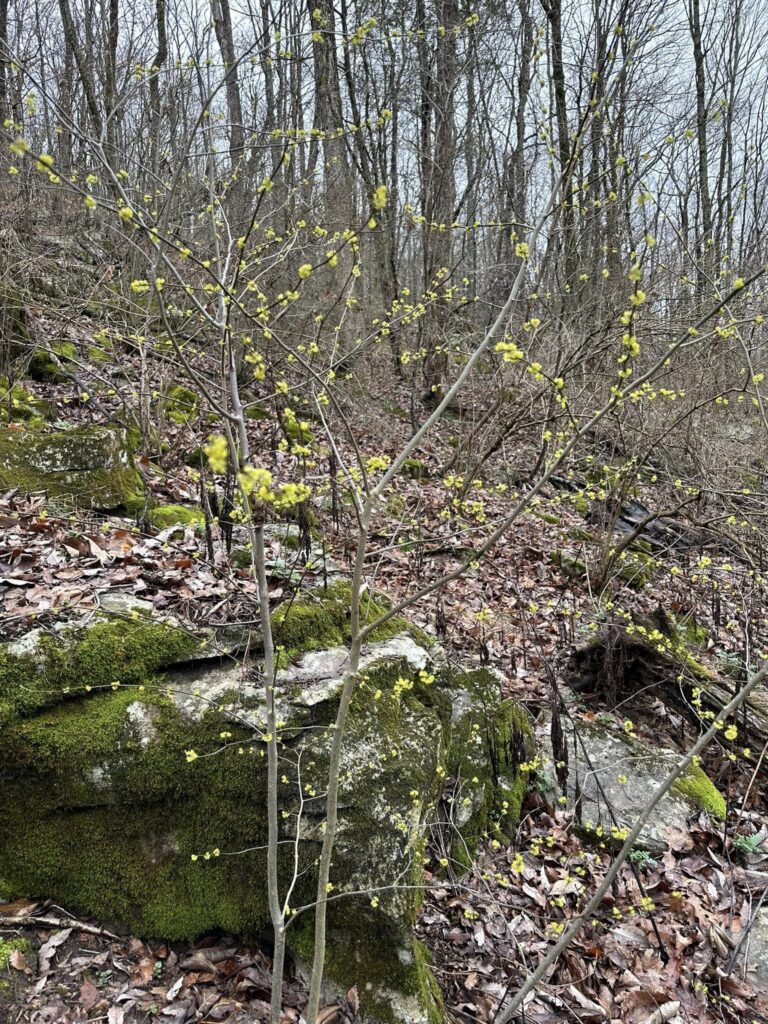
Spicebush is one of the first shrubs to bloom in a Maryland forest, putting out small yellow flowers in early spring, well before the leaves emerge. Crush a leaf and you get a spicy, citrus-like scent that gives the plant its name.
It is the host plant for the spicebush swallowtail butterfly, and its red fall berries are high in fat, making them a favorite fuel source for migrating songbirds. Few Maryland natives pull double duty this well.
Spicebush prefers moist, shaded soil and grows naturally as an understory shrub, so it fits nicely under mature trees where grass struggles anyway.
I planted mine specifically for the swallowtails, and they found it within the first season.
2. Winterberry Holly (Ilex verticillata)
Winterberry holly is a deciduous holly, which surprises a lot of first-time gardeners since they expect hollies to keep their leaves. This one drops its foliage in fall, revealing branches loaded with bright red berries that last well into winter.
Those berries are a genuine lifeline for birds during the coldest months, when other food sources have already disappeared. Robins, bluebirds, and cedar waxwings all rely on them.
You need both a male and a female plant nearby for the female to fruit, since winterberry is dioecious. Garden centers usually sell them paired for this reason.
It tolerates wet soil exceptionally well, making it a strong choice for a low, poorly drained corner of the yard.
3. Black Chokeberry (Aronia melanocarpa)
Black chokeberry earns a spot on almost every Maryland native plant list, and for good reason. It produces white spring flowers, blackish-purple fruit, and striking fall color, all from one adaptable shrub.
According to UMD Extension, it works especially well in a rain garden or mass planting, since it tolerates both average and consistently moist soil without complaint.
The fruit is edible, though tart enough that most people process it into jams or juice rather than eating it fresh. Birds, on the other hand, eat it straight off the branch.
It is a dependable, low-fuss shrub, which makes it a smart starting point for new native gardeners.
4. Red Chokeberry (Aronia arbutifolia)
Red chokeberry is a close relative of black chokeberry, but it brings its own distinct look, with bright red fruit that persists through winter and fiery red fall foliage that rivals any ornamental tree.
UMD Extension describes it as ideal for forest edges, bird gardens, or rain gardens, since it handles both sun and light shade and tolerates damp soil.
Its upright, somewhat suckering form makes it useful as a natural hedge or screen, and its multi-season interest means it rarely looks bare or dull.
Birds strip the fruit gradually through winter, so the display often lasts longer than you would expect.
5. Virginia Sweetspire (Itea virginica)
Virginia sweetspire is prized for its drooping, fragrant white flower spikes in early summer, followed by burgundy-red fall color that can hold on for weeks.
UMD Extension notes it is particularly well adapted to the Maryland Coastal Plain, though it performs well statewide in average to moist soil.
It spreads slowly by suckers, forming a loose colony over time, which makes it excellent for stabilizing a slope or filling a naturalized border.
Pollinators are drawn heavily to the flower spikes, and the arching branch structure gives it a graceful, almost weeping shape.
6. Summersweet (Clethra alnifolia)
Summersweet, also called sweet pepperbush, is grown almost entirely for its fragrance. The upright flower spikes bloom in mid to late summer and perfume the whole garden with a sweet, spicy scent.
UMD Extension recommends it for pollinator gardens and rain gardens alike, since it tolerates wet soil and still flowers reliably in partial shade.
Bees and butterflies crowd the blooms in July and August, a period when many other native shrubs have already finished flowering, which makes it valuable for extending pollinator support through summer.
It is native to the Coastal Plain but adapts well to gardens across the state.
7. Common Witchhazel (Hamamelis virginiana)
Common witchhazel is Maryland’s latest-blooming native shrub, producing thin, spidery yellow flowers in October and November, often after the leaves have already dropped.
UMD Extension confirms it is native throughout Maryland, and its tolerance for both sun and shade makes it flexible for almost any yard.
The unusual bloom timing means it is one of the last nectar sources available to late-season pollinators, right before winter sets in.
It can grow into a large shrub or small understory tree, so give it room, particularly if planting near a walkway or foundation.
8. Mapleleaf Viburnum (Viburnum acerifolium)
Mapleleaf viburnum earns its name from leaves that closely resemble maple foliage, though the plant itself is a native understory shrub, not a tree.
Flat clusters of small white flowers bloom in late spring, followed by dark blue-black fruit that birds favor through fall. UMD Extension lists it as native throughout the state.
It handles shade better than most flowering shrubs, which makes it a strong pick for a woodland garden beneath mature oaks or maples.
Fall color runs from soft pink to deep burgundy, giving it real presence even after the flowers and fruit are gone.
9. Smooth Hydrangea (Hydrangea arborescens)
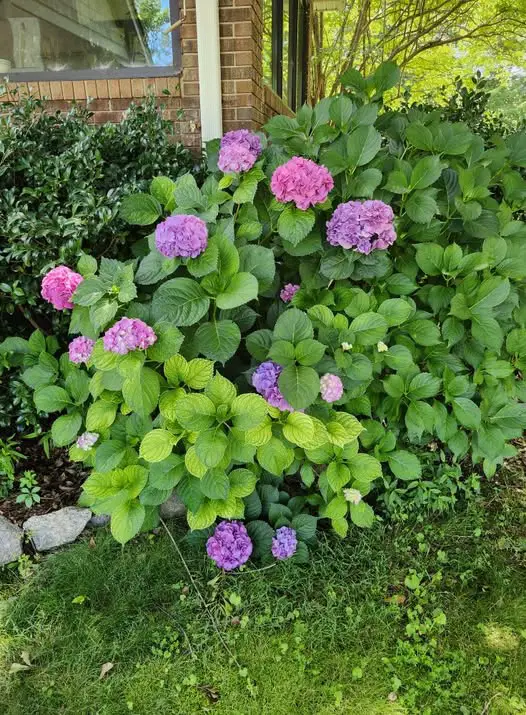
Smooth hydrangea, sometimes called wild hydrangea, produces large, rounded flower clusters in early summer that start green, turn white, then fade to a papery tan by fall.
UMD Extension recommends it specifically for part-shady conditions, where it holds up better than many sun-loving flowering shrubs.
Unlike the mophead hydrangeas from garden centers, this native version blooms reliably every year regardless of pruning timing or winter temperatures, since it flowers on new wood.
It also tolerates a wider range of soil conditions than its Asian cousins, making it a lower-maintenance substitute with a similar visual payoff.
10. Northern Bayberry (Morella pensylvanica)
Northern bayberry is a tough, semi-evergreen shrub adapted to Maryland’s Coastal Plain, including sandy, salty conditions near the Chesapeake Bay and Atlantic coast.
Female plants produce small, waxy gray berries in fall that persist through winter, feeding birds like yellow-rumped warblers when little else is available.
UMD Extension notes its strong adaptation to coastal growing conditions, and its aromatic leaves have historically been used to scent candles, which is where the common name comes from.
It fixes nitrogen in the soil through root nodules, so it actually improves poor, sandy ground over time rather than depleting it.
11. Inkberry Holly (Ilex glabra)
Inkberry holly is an evergreen shrub native to Maryland’s Coastal Plain, offering the dense, dark green look of boxwood without the disease problems that increasingly plague that non-native species.
Small black berries form on female plants in fall, providing food for birds through the leaner months, while the glossy foliage holds year-round structure in the landscape.
UMD Extension lists it among recommended native shrubs for foundation plantings and hedges, since it tolerates shearing and stays relatively compact.
It prefers moist, acidic soil, which mirrors the boggy coastal conditions where it grows naturally in the wild.
12. Hillside Blueberry (Vaccinium pallidum)
Hillside blueberry is a low-growing native blueberry, typically reaching only about two feet in height, according to UMD Extension. It spreads slowly to form patches rather than a single upright shrub.
Small, bell-shaped white to pink flowers appear in spring, followed by sweet blue fruit in summer that both people and wildlife enjoy.
Fall color is a standout feature, turning a deep, brilliant red that rivals any burning bush, all without the invasive tendencies that plant carries.
It prefers well-drained, acidic soil, often found naturally on dry, sandy slopes and open woodland edges across the state.
13. Black Huckleberry (Gaylussacia baccata)
Black huckleberry is a relative of the blueberry, producing small, dark, seedy fruit that is edible but firmer and slightly less sweet than true blueberries.
UMD Extension classifies it as a native shrub well suited to pollinator gardens, with small bell-shaped flowers that draw native bees in spring.
It thrives in dry, acidic, sandy soils, often growing alongside blueberries and mountain laurel in Maryland’s oak-dominated woodlands and barrens.
Fall foliage turns a rich reddish bronze, adding another season of interest beyond its spring flowers and summer fruit.
14. Mountain Laurel (Kalmia latifolia)
Mountain laurel is arguably Maryland’s most beloved native shrub, chosen as the state flower for its stunning clusters of pink and white cup-shaped blooms in late spring.
It grows as a dense, evergreen understory shrub in Maryland’s forests, particularly across the Piedmont and mountain regions, where it often blankets entire hillsides in bloom.
The glossy, leathery leaves stay attractive year-round, and the plant tolerates significant shade, which makes it ideal beneath established trees where few flowering shrubs perform well.
Note that all parts of the plant are toxic if ingested, so keep that in mind around pets and small children.
15. Sweetshrub (Calycanthus floridus)
Sweetshrub, also called Carolina allspice, produces unusual maroon, strap-petaled flowers in late spring with a fruity fragrance often compared to strawberries or old-fashioned bubblegum.
It is native to Maryland’s Piedmont and Coastal Plain regions and grows into a rounded, multi-stemmed shrub with clean, deep green foliage through summer.
Fall color shifts to a warm golden yellow, and the plant tolerates both sun and partial shade, adapting well to typical garden soil without much intervention.
I have never met anyone who smelled this flower for the first time without leaning in for a second sniff.
16. Buttonbush (Cephalanthus occidentalis)
Buttonbush is built for wet ground, thriving in pond edges, rain gardens, and low spots that stay soggy after storms, conditions that would rot the roots of most other shrubs.
Its flowers are genuinely unusual: round, spiky white globes that resemble pincushions, blooming through mid-summer and drawing a heavy crowd of bees, butterflies, and hummingbirds.
Ducks and other waterfowl eat the seed heads that follow, making this shrub a strong choice for anyone managing a pond edge or wetland-adjacent property in Maryland.
It can handle standing water for short periods, a trait very few landscape shrubs, native or otherwise, can match.
17. American Elderberry (Sambucus canadensis)
American elderberry grows fast and produces two showy displays each year: broad, flat clusters of white flowers in early summer, followed by heavy bunches of dark purple berries by late summer.
The berries are a well-known food and traditional remedy source, though they must be cooked before eating, since raw elderberries and the plant’s other parts contain compounds that can cause stomach upset.
Birds eat the ripe fruit enthusiastically, often stripping a shrub within days once the berries darken. The plant tolerates wet soil and part shade equally well.
It grows quickly and can sucker into a colony, so give it space or plan on some management if you want a tidier shape.
18. Highbush Blueberry (Vaccinium corymbosum)
Highbush blueberry is the taller, more upright cousin of hillside blueberry, commonly reaching six to twelve feet at maturity in good conditions.
Small, bell-shaped white flowers appear in spring, and the sweet summer fruit is a favorite of both gardeners and a wide range of songbirds, who often win the race to harvest first.
Fall color turns a deep red to burgundy, and the plant requires acidic, well-drained soil, similar to azaleas and rhododendrons, to perform its best.
It works well as an informal hedge, an edible landscape feature, or a naturalized planting near a woodland edge.
19. Arrowwood Viburnum (Viburnum dentatum)
Arrowwood viburnum is a dependable, medium-sized native shrub with flat clusters of white flowers in late spring and blue-black fruit that ripens by early fall.
Its straight, strong young stems were historically used by Indigenous peoples for arrow shafts, which is where the common name comes from.
The shrub tolerates a wide range of soil and light conditions, from full sun to partial shade, and adapts equally well to dry or moist ground, which makes it one of the more forgiving choices on this list.
Fall color runs from yellow to reddish-purple, and the dense branching habit makes it useful as a natural privacy screen.
20. Fragrant Sumac (Rhus aromatica)
Fragrant sumac is a low, spreading native shrub, often used as a groundcover on slopes where mowing is impractical or erosion is a concern.
Small yellow flowers appear in early spring before the leaves, followed by red, fuzzy fruit clusters that birds readily eat through summer and fall.
The three-lobed leaves release a citrusy scent when crushed, and fall color turns a vivid orange-red, closing out the growing season with real visual punch.
It tolerates poor, dry soil far better than most flowering shrubs, making it a smart pick for a difficult slope or a low-water area of the yard.
Final Thoughts
Building a native shrub garden in Maryland is really about matching the right plant to the right spot. A shrub built for the wet Coastal Plain will not thrive on a dry Piedmont slope, and the reverse is just as true.
Start by noting your yard’s sun exposure and soil moisture before choosing plants. That single step prevents most of the struggles new native gardeners run into.
If you want an easy entry point, spicebush, black chokeberry, and arrowwood viburnum are about as forgiving as Maryland natives get, and all three deliver visible wildlife activity within a season or two.
Your local birds and pollinators are already looking for these plants. Give them a reason to stay.
One last practical note: buy from nurseries that clearly label plants as straight species or true native cultivars, not just “native-adjacent” hybrids. Some cultivars are bred for flower size or color and lose part of their wildlife value in the process.
When in doubt, the Maryland Native Plant Finder and your local UMD Extension office can confirm whether a specific variety still functions the way the wild species does. A little research before you buy goes a long way toward a garden that looks good and actually pulls its ecological weight.
References
- University of Maryland Extension. Native Shrubs. https://extension.umd.edu/resources/yard-garden/native-plants/native-shrubs
- University of Maryland Extension. Native Plants (Charles County). https://extension.umd.edu/locations/charles-county/master-gardener/native-plants
- University of Maryland Extension. Search Tool & Plant Guides, Maryland Native Plants Program. https://extension.umd.edu/programs/environment-natural-resources/program-areas/maryland-native-plants-program/commercial-native-plant-list
- University of Maryland Extension. Recommended Native Plants for Maryland. https://extension.umd.edu/resource/recommended-native-plants-maryland
- Maryland Department of Natural Resources. Native Plants. https://dnr.maryland.gov/wildlife/Pages/plants_wildlife/Native-Plants.aspx
- Maryland Department of Natural Resources. Rare, Threatened, and Endangered Plants of Maryland. https://dnr.maryland.gov/wildlife/Documents/rte_Plant_List_expanded.pdf
- Maryland Department of Natural Resources. Native Plants of Maryland, Home and Garden Mimeo HG#120. https://dnr.maryland.gov/wildlife/Documents/HG120_NativePlantsofMD.pdf

Tim M Dave is a gardening expert with a passion for houseplants, particularly cacti and succulents. With a degree in plant biology from the University of California, Berkeley, he has vast experience in gardening. Over the years, he has cultivated a vast collection of desert plants and learned a great deal about how to grow and care for these unique companions.