15 Best Plant Identification Apps in 2026: Tested, Ranked, and Explained by a Plant Lover
I still remember the first time an app told me the “mystery weed” in my backyard was actually poison hemlock. That one photo probably saved my dog from a bad afternoon. It also turned me into someone who now has five plant apps on my home screen, for better or worse.
I did not just rely on marketing pages. I cross-checked app performance against independent testing, including a multi-year evaluation run by Michigan State University’s Plant & Pest Diagnostics program, which has tested plant ID technology since 2018 using student groups and real campus plants.
I also leaned on peer-reviewed research, including a 2025 study published in Applications in Plant Sciences through Taylor & Francis, which compared app accuracy across three years of testing.
Here is what I weighed for each app:
- Identification accuracy, especially for tricky or rare species
- Database size and scientific backing
- Extra features, such as care reminders or toxicity warnings
- Offline capability, since signal is rarely guaranteed on a trail
- Price and how aggressively it pushes subscriptions
With that out of the way, here is the full list.
1. PlantNet (Pl@ntNet)
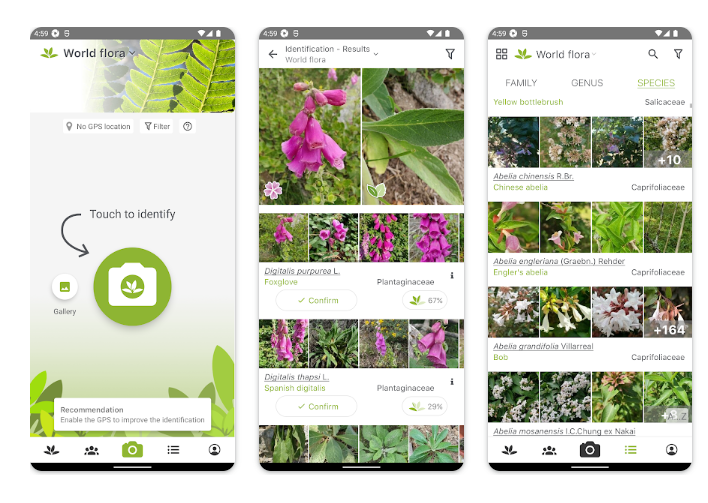
Best for: wild plants, foragers, and anyone who wants their photos to matter for science.
PlantNet is built by a consortium of French research institutions, including CIRAD, INRAE, IRD, and the French National Museum of Natural History. It is not a side project. It is one of the largest biodiversity observatories in the world.
What makes it stand apart is the multi-organ identification method. You choose whether you are photographing a leaf, flower, bark, or fruit, and the app narrows its search accordingly. This gives it a real edge on unusual or native species that trip up single-photo apps.
Independent testing backs this up. A peer-reviewed comparison published through Taylor & Francis found that PlantNet and Flora Incognita were the top performers among tested apps, correctly identifying 80% to 90% of species across a wide range of plant types.
The app is completely free, and every submission you make helps train the AI and feeds into global databases like GBIF. The tradeoff is a fairly plain interface. It is not built for houseplant owners who want watering reminders, but for identification purists, it is hard to beat.
2. iNaturalist
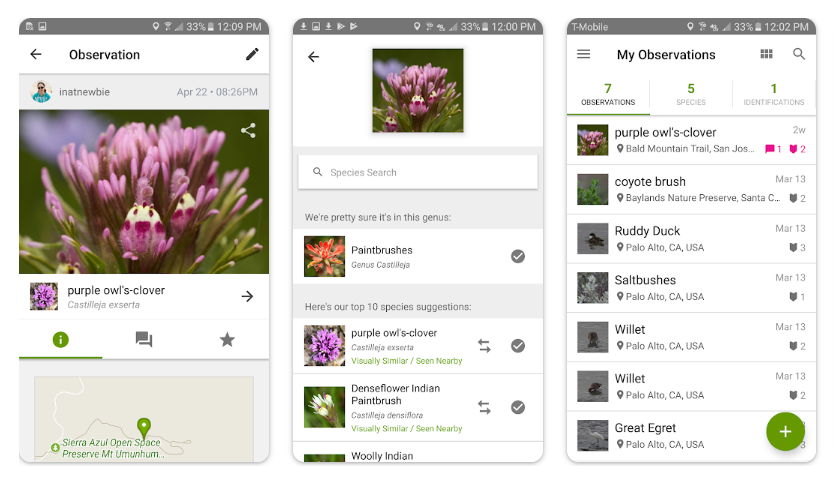
Best for: scientists and anyone curious about all of nature, not just plants.
iNaturalist goes beyond plants and covers insects, birds, fungi, and more, with identification confirmed by a community of experts rather than AI alone. The platform passed 150 million total observations according to its own project milestones, a scale few competitors can match.
What I appreciate here is the human layer. An algorithm gives you a starting suggestion, but real people, including working botanists, weigh in to confirm or correct it. I have had my own identifications corrected within hours by someone clearly more knowledgeable than me, which feels oddly reassuring.
The catch is patience. Unlike instant-ID apps, iNaturalist can take time to get a confirmed answer, since it depends on community review rather than a same-second AI verdict.
3. Seek by iNaturalist
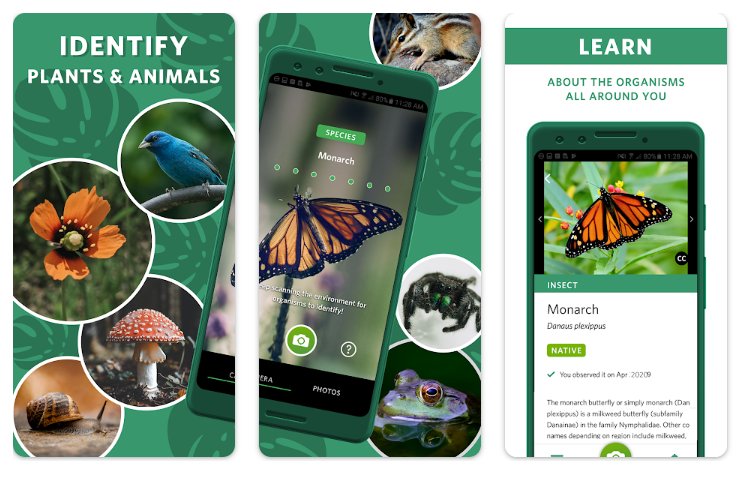
Best for: families, kids, and privacy-conscious users.
Seek strips away the social and research layers of iNaturalist and keeps things simple, private, and instant. It does not require an account, which matters if you are handing your phone to a curious child on a nature walk.
It covers all of nature, not just plants, and works well as a gamified way to keep kids engaged outdoors. If your main goal is teaching a five-year-old the difference between a dandelion and a daisy, this is genuinely one of the best free options out there.
4. PictureThis
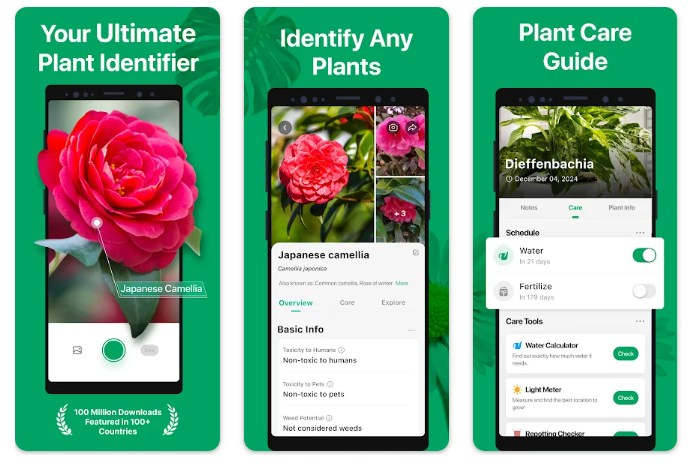
Best for: houseplant owners and gardeners who want polish.
PictureThis is arguably the most commercially successful plant app on the market, and the polish shows immediately. The interface feels premium, and the identification speed for houseplants and garden ornamentals is consistently strong.
Independent testing from GrowIt BuildIt found PictureThis correctly identified 78% of tested plants, and a separate study using California native plants ranked it among the top three performers alongside iNaturalist and PlantNet.
Beyond ID, PictureThis adds AI-powered disease diagnosis, so you can photograph a sick leaf and get a probable cause. It also builds custom watering and care schedules. The downside is cost. Full features sit behind a subscription priced around $30 per year, and free users get limited daily identifications.
5. Flora Incognita
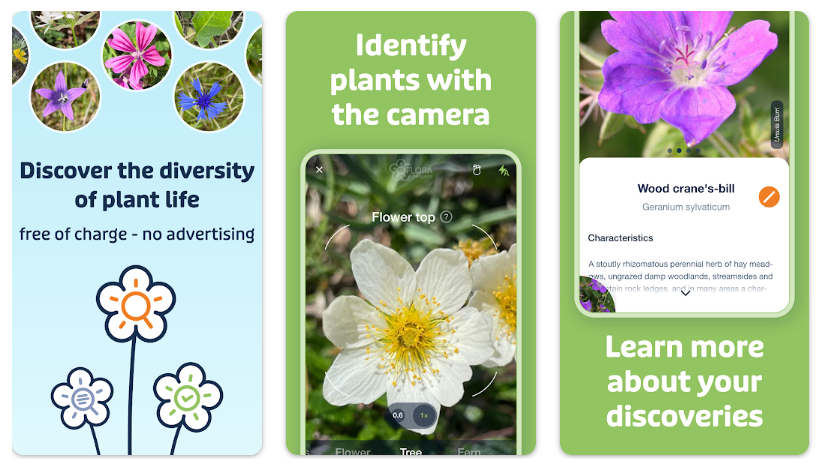
Best for: European flora and anyone who wants government-backed scientific rigor.
Flora Incognita is developed by researchers at the Technical University of Ilmenau and the Max Planck Institute for Biogeochemistry in Jena, with funding from the German Federal Ministry of Education and Research. This is about as academically credible as a plant app gets.
The numbers are genuinely impressive. The app can now identify around 16,000 to 32,000 plant species, depending on the update version, and a 2024 accuracy study reported the app reaching 98.8% identification accuracy in controlled testing.
Peer-reviewed research published in Methods in Ecology and Evolution also confirmed strong real-world performance, with expert botanists confirming 93% of a thousand random user observations as correctly identified.
It is completely free, ad-free, and works offline for plants you have already downloaded. Data collected through the app has even been used to study climate change effects on flowering times, in partnership with Germany’s national weather service. If you care about accuracy over aesthetics, this app deserves serious consideration.
6. LeafSnap
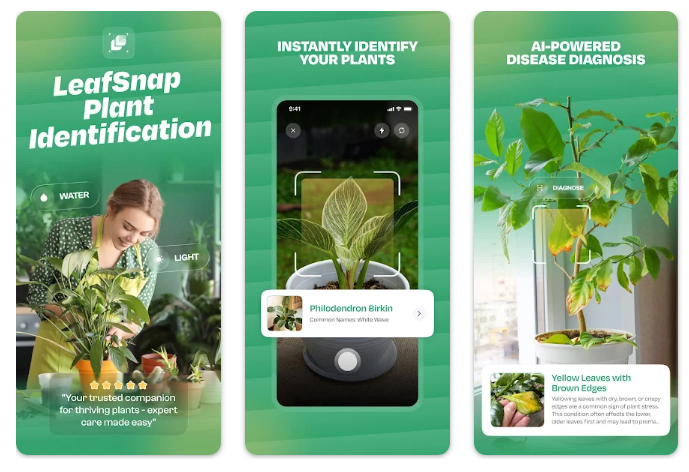
Best for: tree and leaf identification in North America.
LeafSnap grew out of a computer vision research project involving Columbia University, the University of Maryland, and the Smithsonian Institution. Its original academic paper on automatic plant species identification, published through Springer’s ECCV proceedings, helped shape how modern plant ID apps approach leaf-shape recognition.
The app remains one of the most consistent performers in independent testing, missing only one or two species out of ten in one hands-on comparison. It works best for trees and leaf-based identification specifically, so it is less useful for flowers or houseplants.
7. PlantIn
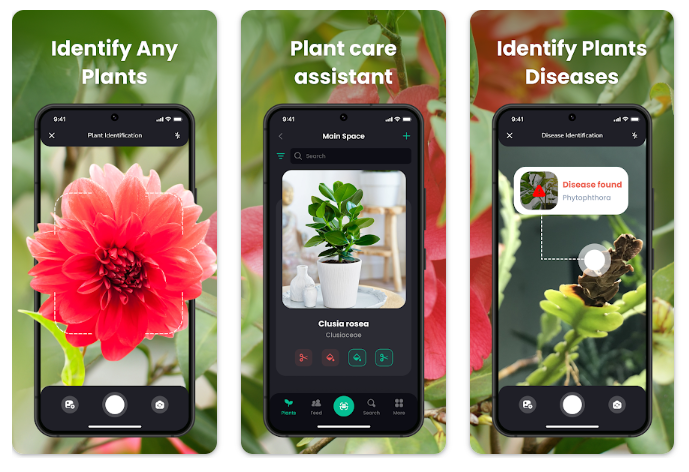
Best for: fast, everyday identification with care tips baked in.
PlantIn scored a perfect 10 out of 10 in both bright light and low light conditions during one independent hands-on test, and it delivered results in about two seconds. That combination of speed and accuracy is genuinely rare among the apps I have tried.
It is freemium, meaning basic identification is free but deeper care features require a subscription. A nice touch is that PlantIn’s website mirrors the app’s tools exactly, so you are not locked into your phone to use it.
8. Planta
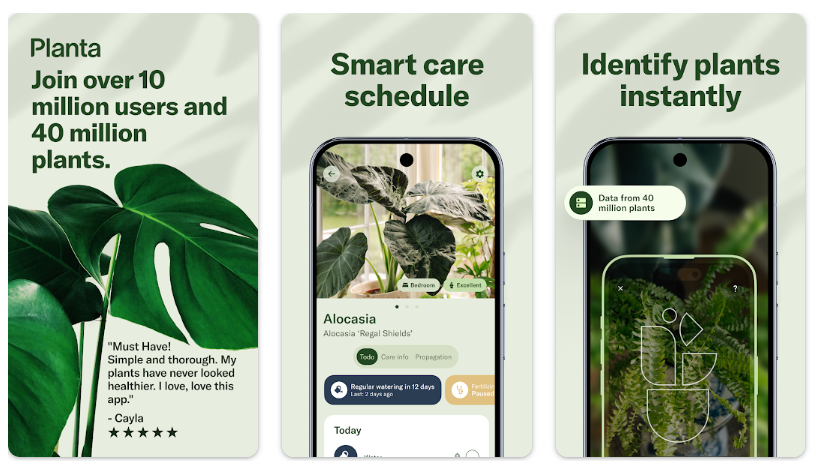
Best for: keeping houseplants alive, not just naming them.
Planta leans heavily into plant care rather than pure identification. Once your plant is identified, it builds a personalized watering and light schedule based on your location and home conditions.
I would not pick this app if identification accuracy is your main priority. But if you already know roughly what you own and just need reminders so it does not die, Planta earns its spot.
9. Greg
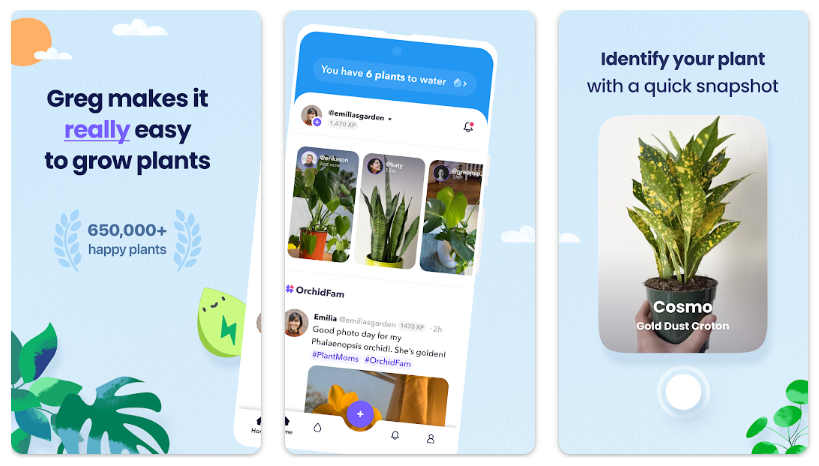
Best for: houseplant watering reminders on a tight budget.
Greg is frequently mentioned by long-time gardeners as one of the better free options for tracking houseplant watering needs specifically. It is not the strongest pure identification tool on this list, but paired with a dedicated ID app, it fills a genuine gap.
10. PlantSnap
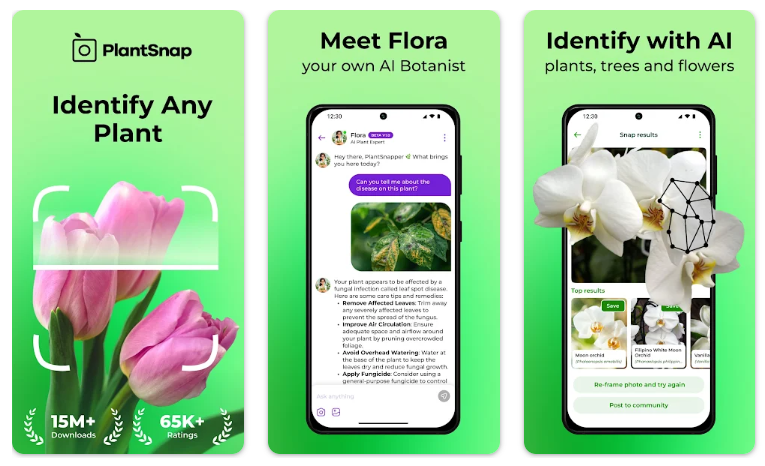
Best for: casual users who want a simple, no-frills scanner.
PlantSnap has been around for years and remains a familiar name, though independent reviewers have noted it performs less consistently than newer competitors like PlantIn or PlantNet. It still works well enough for common garden and houseplant species, and it recognizes some mushrooms too.
11. Blossom
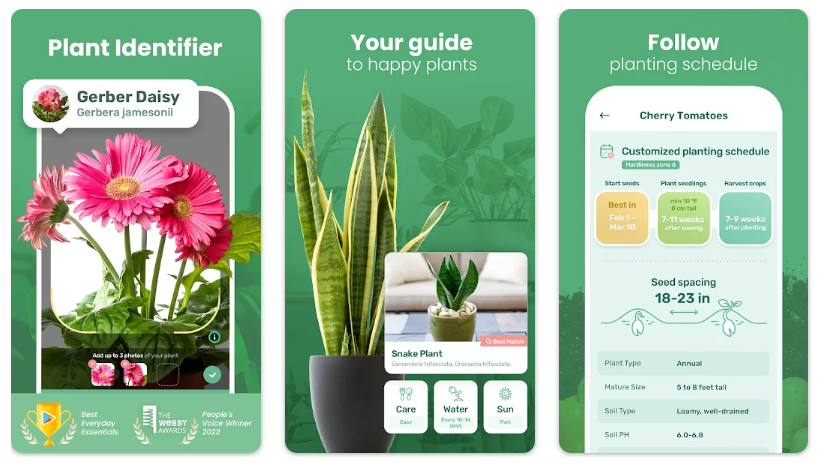
Best for: plant parents who want a friendly, guided experience.
Blossom combines identification with a straightforward plant care library. It will not out-identify PlantNet or Flora Incognita on rare wild species, but for common houseplants it does a reasonably solid job while keeping the app approachable for beginners.
12. Plant Parent
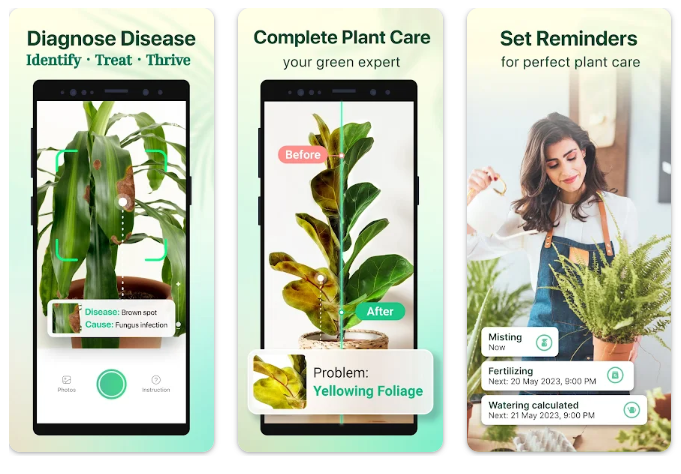
Best for: organizing a growing houseplant collection.
Plant Parent focuses on helping you manage multiple houseplants at once, tracking watering, fertilizing, and repotting schedules per plant. Identification is a secondary feature here rather than the core selling point.
13. PlantApp
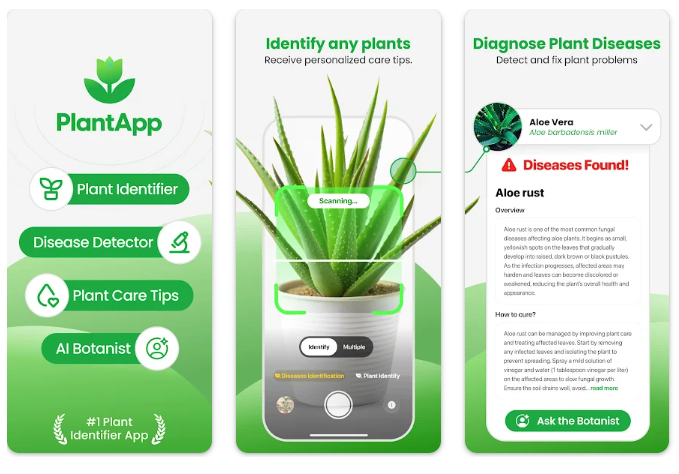
Best for: an all-in-one plant care assistant with ID support.
PlantApp bundles identification with disease diagnosis and toxicity alerts, similar in spirit to PictureThis but with a slightly different feature mix. It fits users who want one subscription to cover identification, diagnosis, and reminders together.
14. Google Lens
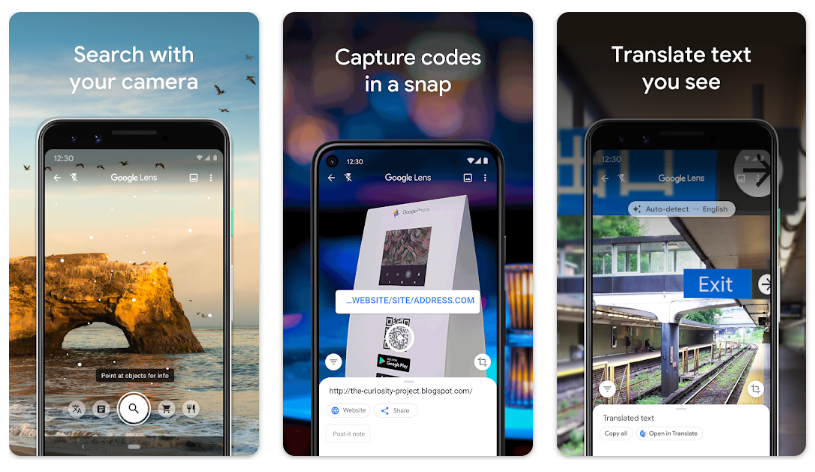
Best for: quick, free identification when you do not want another app.
Google Lens is already built into most Android phones and the Google app on iPhone, so there is nothing new to download. It handles common plants reasonably well, though it requires an internet connection and lacks the specialized botanical database that dedicated apps rely on.
It will not replace PlantNet for wild or rare species, but for a quick check of a garden center label or a common houseplant, it gets the job done at zero cost.
15. Fieldbook
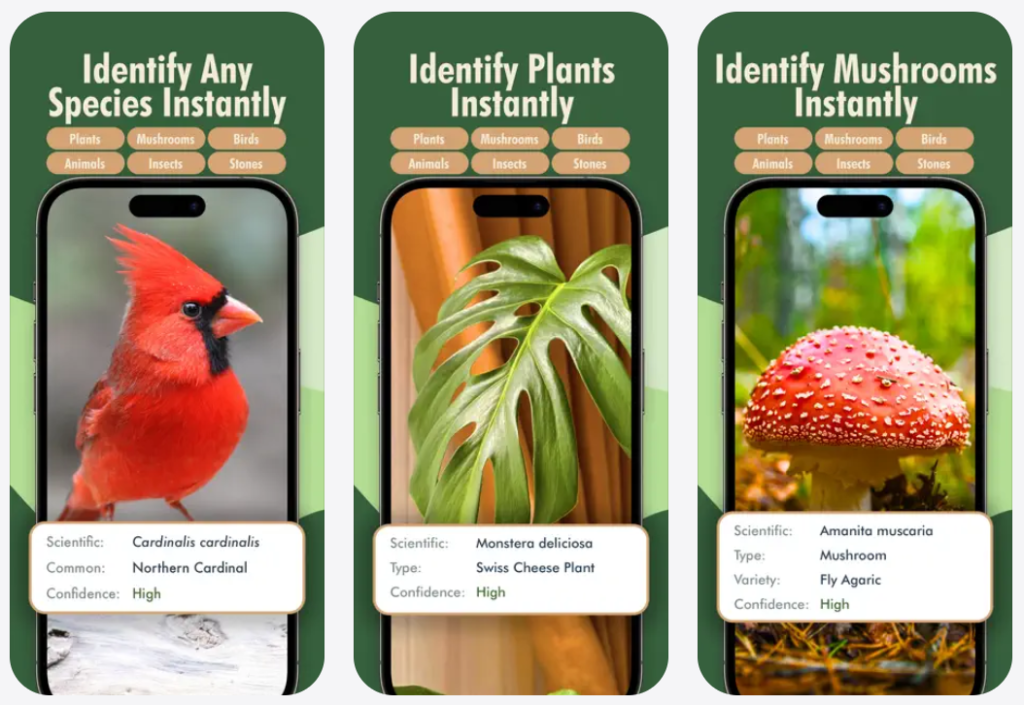
Best for: nature journaling that goes beyond plants.
Fieldbook covers 19 categories beyond plants alone, including mushrooms, berries, insects, birds, and reptiles, and it saves every identification as a journal entry complete with photos, GPS coordinates, weather, and personal notes. It also works offline, which matters if you are hiking somewhere with no signal.
This is less a pure identification tool and more a nature diary with identification built in. If you like documenting your outdoor finds over time rather than just naming them once, this is worth trying.
Quick Comparison Table
| App | Best For | Offline Support | Price |
| PlantNet | Wild plants, science | Partial | Free |
| iNaturalist | Citizen science | No | Free |
| Seek | Families, kids | Partial | Free |
| PictureThis | Houseplant care | No | Freemium (~$30/yr) |
| Flora Incognita | European flora, accuracy | Yes | Free |
| LeafSnap | Trees and leaves | No | Free/Freemium |
| PlantIn | Speed and accuracy | No | Freemium |
| Planta | Care schedules | No | Freemium |
| Greg | Watering reminders | No | Freemium |
| PlantSnap | Casual scanning | No | Freemium |
| Blossom | Beginner-friendly care | No | Freemium |
| Plant Parent | Collection management | No | Freemium |
| PlantApp | All-in-one care | No | Freemium |
| Google Lens | Quick free checks | No | Free |
| Fieldbook | Nature journaling | Yes | Free |
What the Research Says About Accuracy
It is worth pausing here, because accuracy claims can get inflated in marketing copy. Independent academic research gives a more grounded picture.
A study published through Taylor & Francis found that all tested apps improved by roughly 20 percentage points in identification accuracy between 2020 and 2023, largely due to growing crowd-sourced training data.
The same research noted the best apps now correctly identify 80% to 90% of species, a significant jump from just a few years earlier.
That matters because it tells you something important: these tools are improving quickly, and an app that performed poorly two years ago might be excellent today. It is worth revisiting apps you dismissed a while back.
Why Plant Identification Apps Have Become So Popular
Plant identification used to require a field guide, patience, and a friend who majored in botany. Now it takes a phone camera and a few seconds.
The demand is real. The Apple App Store alone hosts close to 1.8 million apps, and Google Play carries roughly 3.5 million more, with plant identification tools forming a fast-growing niche inside that crowd.
Behind the convenience sits genuine science: Pl@ntNet, one of the most respected apps on this list, has collected more than one billion plant images since 2009 and now helps identify over 60,000 plant species worldwide, according to its official documentation.
This is not just a hobbyist trend either. Researchers use this data too. A 2022 impact study found that 12% of Pl@ntNet users apply the app for actual work, including farming, land management, and teaching, as reported by the citizen-science platform itself.
So these apps are not toys. They sit at the intersection of consumer convenience and real botanical research, which is exactly why picking the right one matters.
There is also a generational shift happening quietly in the background. Plant identification has traditionally been knowledge passed down through mentorship, whether from a grandparent, a gardening neighbor, or a college botany course.
Michigan State University’s own plant diagnostics team has noted this directly, observing that identification skill has historically depended on either formal education or informal teaching within families.
That knowledge gap is exactly what these apps are closing. A teenager with zero botanical training can now photograph a wildflower and get a scientifically grounded answer in seconds, something that would have required a trained eye or a thick field guide just a decade ago.
I find that shift genuinely exciting, even if it comes with caveats worth discussing in this guide.
A Word of Caution on Foraging and Toxic Plants
I want to be direct about this. Do not eat, forage, or handle any plant based solely on an app’s identification, especially for lookalike species.
The USDA has documented real cases where confusion between similar-looking plants turned dangerous. Edible parsley and carrot closely resemble water hemlock and poison hemlock, two species that can be fatal if ingested, according to the USDA’s own PLANTS Database team.
Apps are excellent starting points. They are not a substitute for expert confirmation when the stakes involve your health or a pet’s safety.
How to Choose the Right App for You
Think about what you actually need before downloading five apps at once, which is a mistake I made personally.
- Want scientific accuracy for wild plants? Go with PlantNet or Flora Incognita.
- Have kids and want something private and free? Choose Seek.
- Own houseplants and want care reminders too? PictureThis or Planta fit better.
- Enjoy citizen science and community interaction? iNaturalist is unmatched here.
- Hiking somewhere with no signal? Prioritize apps with offline support, like Flora Incognita or Fieldbook.
Your Photos Might Help Real Science
Here is something I did not fully appreciate until I started researching this list. When you photograph a plant with an app like PlantNet or Flora Incognita, you are not just getting an answer for yourself.
Flora Incognita’s development team reported that the app processes over 300,000 identification requests daily, and this data has been used to track shifts in flowering times linked to climate change. Researchers compared this crowd-sourced data against Germany’s official phenological surveys and found it a genuinely useful complement to traditional monitoring.
PlantNet operates the same way. Verified observations flow into the Global Biodiversity Information Facility (GBIF), an international database used by ecologists and conservation researchers worldwide. Your casual photo of a roadside flower could, in a small way, become a data point in a climate study.
This is part of why I lean toward research-backed apps when the choice is close. Using PlantIn or PictureThis is not wrong, but there is something satisfying about knowing your curiosity feeds into something bigger than your own phone.
Frequently Asked Questions
Are plant identification apps actually accurate? The best ones, including PlantNet and Flora Incognita, now correctly identify 80% to 90% of tested species according to peer-reviewed research. Accuracy drops for rare, immature, or non-flowering plants.
Do these apps work without internet access? Most do not work fully offline. Flora Incognita and Fieldbook offer the strongest offline support among the apps tested here, letting you save photos for identification once you reconnect.
Can these apps identify mushrooms too? Several apps, including PlantIn, iNaturalist, and Fieldbook, also recognize mushrooms, which is useful for foraging enthusiasts, though caution is still essential.
Is it safe to eat a plant an app identifies as edible? No. Always get a second opinion from an expert before consuming any wild plant. Toxic and edible species can look nearly identical, as USDA documentation confirms.
Which app is completely free with no subscription? PlantNet, Seek, Flora Incognita, and Google Lens are free without a required subscription. Many other apps use a freemium model with paid tiers for advanced features.
Final Thoughts
There is no single “best” plant identification app for everyone, and I say that after testing more of these than I probably should admit. Your ideal choice depends on whether you care most about scientific accuracy, houseplant care, family fun, or nature journaling.
If I had to keep only one, I would pick PlantNet for its scientific credibility and free access. But my phone still has three others installed, because different walks call for different tools. Try two or three from this list, and you will quickly find the one that fits how you actually explore the outdoors.
References
- Michigan State University, Plant & Pest Diagnostics. “Plant identification? There’s an app for that—actually several!” MSU Extension. https://www.canr.msu.edu/news/plant-identification-theres-an-app-for-that-actually-several
- Pl@ntNet Project (CIRAD, INRAE, IRD, Inria consortium). “Introduction to Pl@ntNet.” Official Documentation. https://docs.plantnet.org/en/introduction-to-plantnet/
- Mäder, P., Boho, D., Rzanny, M., et al. “The Flora Incognita app – Interactive plant species identification.” Methods in Ecology and Evolution, Wiley Online Library, 2021. https://besjournals.onlinelibrary.wiley.com/doi/10.1111/2041-210X.13611
- Max Planck Institute for Biogeochemistry, Jena. “New AI for Flora Incognita.” https://www.bgc-jena.mpg.de/en/news-new-ai-for-flora-incognita
- iNaturalist.org. “150,000,000 observations on iNaturalist!” iNaturalist Project Blog. https://www.inaturalist.org/blog/82561-150-000-000-observations-on-inaturalist
- Global Biodiversity Information Facility (GBIF). “iNaturalist Research-grade Observations” dataset. https://www.gbif.org/dataset/50c9509d-22c7-4a22-a47d-8c48425ef4a7
- United States Department of Agriculture (USDA). “PLANTS Database Provides Answers for Vegetative Questions.” USDA.gov. https://www.usda.gov/about-usda/news/blog/plants-database-provides-answers-vegetative-questions

Tim M Dave is a gardening expert with a passion for houseplants, particularly cacti and succulents. With a degree in plant biology from the University of California, Berkeley, he has vast experience in gardening. Over the years, he has cultivated a vast collection of desert plants and learned a great deal about how to grow and care for these unique companions.