The Chinese Flame Tree (Koelreuteria bipinnata): Size, Growth Rate, Problems, and Cultivation
The Chinese Flame Tree is one of the most visually striking ornamental trees you can grow. From its golden summer flowers to its vivid papery seed pods in autumn, this tree earns its dramatic name every season of the year.
I have personally seen it lining the avenues of several Mediterranean botanical gardens, and the effect during autumn — when hundreds of salmon-pink pods hang like lanterns — is genuinely breathtaking. It is the kind of tree that makes visitors stop and stare.
| Common Name | Chinese Flame Tree, Bougainvillea Golden-Rain Tree |
| Scientific Name | Koelreuteria bipinnata |
| Family | Sapindaceae (Soapberry family) |
| Origin | South-central China |
| Mature Height | 20–40 feet (6–12 meters) |
| Spread | 20–35 feet (6–10 meters) |
| Growth Rate | Moderate to fast (1–2 feet per year) |
| USDA Hardiness Zones | 7–10 |
| Sun Requirement | Full sun |
| Soil Preference | Well-drained; tolerates poor, clay, sandy soils |
| Water Needs | Low to moderate; drought-tolerant once established |
| Bloom Time | Late summer to early autumn |
| Flower Color | Bright yellow |
| Seed Pod Color | Pink, red, or salmon (turning brown when dry) |
| Lifespan | 50–100+ years |
| Invasive Status | Invasive in parts of Florida and some Southern US states |
What Is the Chinese Flame Tree?
The Chinese Flame Tree, known scientifically as Koelreuteria bipinnata, is a medium-sized deciduous tree native to the mountainous regions of south-central China. It is widely admired across the world for its spectacular three-season ornamental display.
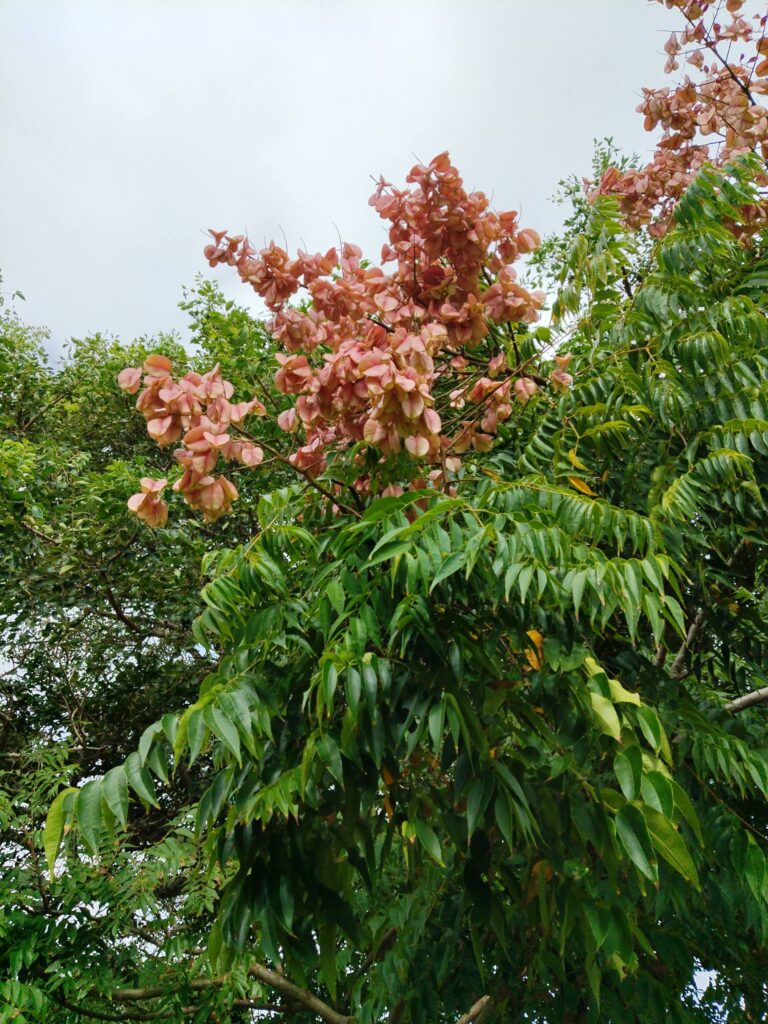
It produces golden flower clusters in late summer, followed by stunning papery seed pods that blush pink, red, and salmon in autumn.
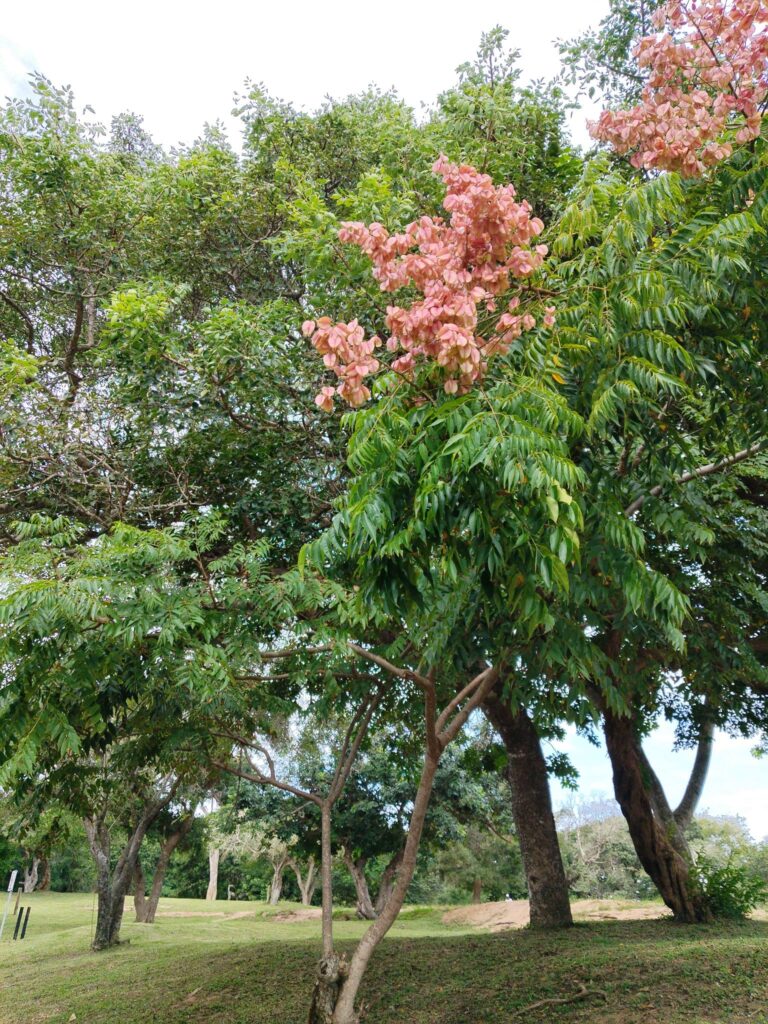
The name “Flame Tree” is well-deserved. When the seed pods emerge in great numbers, the entire canopy appears to glow with warm colour, almost as if lit from within. It is a sight that genuinely stops people in their tracks.
This tree belongs to the Sapindaceae family, the same botanical family as lychee and maple. It is closely related to Koelreuteria paniculata (the Golden Rain Tree), which blooms earlier in summer and is more cold-hardy.
The two are sometimes confused, but K. bipinnata is larger, more tropical in appearance, and blooms later in the season.
The Chinese Flame Tree has been widely planted as a street tree, park specimen, and garden focal point across warm-climate regions in the United States, Australia, Europe, and parts of Africa.
Origin and Natural Habitat
Koelreuteria bipinnata is native to Yunnan, Sichuan, Guizhou, and Guangxi provinces in south-central China. In its native range, it grows in mixed forests on hillsides and along river valleys, typically at elevations between 500 and 2,500 metres.
The climate in these regions is humid and subtropical, with warm summers, mild winters, and moderate rainfall. This background explains the tree’s strong heat tolerance and its preference for full sun. It evolved to compete in open, well-lit environments, which is why it performs so poorly in deep shade.
The species was introduced to Western horticulture during the 19th century, largely through the efforts of European plant explorers who travelled extensively through China.
By the early 20th century, it had gained significant popularity in California, the American Southeast, and the Mediterranean coast of Europe.
How to Identify the Chinese Flame Tree
Identifying Koelreuteria bipinnata is not difficult once you know what to look for. The tree has several distinctive features that set it apart from other ornamental trees.
Leaves
The leaves are bipinnately compound, meaning each leaf is divided not once but twice into smaller leaflets. A single leaf can be 45–70 centimetres (18–28 inches) long, giving the tree a lush, almost tropical appearance.
Each leaflet is ovate, with serrated or lobed margins. The overall foliage canopy is feathery and open.
In autumn, the leaves turn yellow before dropping, adding another layer of seasonal interest.
Flowers
The tree produces large, upright panicles of small yellow flowers at the tips of branches in late summer — typically August through September.
Each individual flower is small and four-petalled, but collectively the panicles can be 30–45 centimetres (12–18 inches) long, creating a spectacular golden crown across the entire canopy.
The flowers are mildly fragrant and highly attractive to bees, butterflies, and other pollinators.
Seed Pods
The most distinctive feature of this tree is undoubtedly its inflated, papery seed capsules. These three-lobed pods start green, then transform to shades of pink, salmon, rose, and red as they mature in autumn. Each pod contains one to three hard, round black seeds inside.
The pods remain on the tree for an extended period, which is why the autumn display can last for several weeks. Eventually they dry out and turn brown, releasing their seeds to the wind.
Bark and Branch Structure
Young bark is smooth and light grey-brown. With age, it develops shallow furrows and a slightly ridged texture. The branching structure is irregular and somewhat open, forming a broadly rounded to spreading canopy with a slightly arching habit.
Chinese Flame Tree vs. Golden Rain Tree: Key Differences
Many gardeners wonder about the difference between Koelreuteria bipinnata (Chinese Flame Tree) and Koelreuteria paniculata (Golden Rain Tree). Here is a simple comparison:
| Feature | Chinese Flame Tree (K. bipinnata) | Golden Rain Tree (K. paniculata) |
| Leaf type | Bipinnate (twice-divided) | Pinnate (once-divided) |
| Bloom time | Late summer to early autumn | Early to midsummer |
| Seed pod colour | Pink, red, salmon | Green to tan/brown |
| Cold hardiness | Zones 7–10 | Zones 5–9 |
| Mature height | Up to 40 feet | Up to 30 feet |
| Invasive concern | Higher (especially SE USA) | Lower |
If you are choosing between the two, the Chinese Flame Tree offers a longer and more colourful seed pod display, while the Golden Rain Tree is better suited to cooler climates.
Growing Conditions and Requirements
One of the reasons the Chinese Flame Tree is so popular is its adaptability to a wide range of growing conditions. It is not a demanding tree, but understanding its preferences will help you get the best performance.
Sunlight
This tree requires full sun — at least six to eight hours of direct sunlight per day. It will not thrive in shady conditions. A sunny, open position gives the best flower and seed pod production.
Soil
The Chinese Flame Tree is remarkably tolerant of poor soils. It grows well in clay, sandy loam, rocky, or alkaline soils. Good drainage is the most important factor; it does not tolerate waterlogged conditions for extended periods.
It adjusts to a wide soil pH range, from slightly acidic to moderately alkaline (pH 6.0–8.0), making it suitable for urban environments where soils are often compacted and alkaline.
Watering
Once established, the Chinese Flame Tree is quite drought-tolerant. During the first two years after planting, regular watering helps the tree develop a strong root system. After that, it generally needs only supplemental watering during prolonged dry spells.
Overwatering is more likely to cause problems than underwatering. Root rot can occur in poorly drained, constantly wet soils.
Temperature and Hardiness
The tree performs best in USDA Hardiness Zones 7 through 10, corresponding to minimum winter temperatures of 0°F to 40°F (-18°C to 4°C).
It is not reliably cold-hardy in Zone 6 or colder, though established specimens sometimes survive brief cold snaps if the rest of the growing season is warm and long.
This tree handles urban heat extremely well, making it a logical choice for street plantings in warm cities.
Fertilisation
In most situations, the Chinese Flame Tree does not need regular fertilisation. In poor or sandy soils, a balanced slow-release fertiliser applied in spring can improve growth and vigour. Avoid excessive nitrogen, which encourages leaf growth at the expense of flowering.
How to Plant a Chinese Flame Tree
Planting this tree correctly gives it the best start. Here are the key steps.
- Choose the right location. This tree needs space to grow. Plant it at least 15–20 feet away from buildings, power lines, and other large trees. The canopy can spread up to 35 feet wide at maturity.
- Prepare the planting hole. Dig a hole that is two to three times the width of the root ball, but no deeper than the root ball itself. Planting too deeply is one of the most common mistakes people make with any tree.
- Place the tree. Set the root ball so the root flare (where the trunk widens at the base) sits at or slightly above ground level. Backfill with the original soil. Do not amend the soil heavily, as this can discourage the roots from spreading into the surrounding ground.
- Water thoroughly after planting. Apply a 2–3 inch layer of mulch around the base, keeping it away from direct contact with the trunk.
- Stake only if necessary — in windy sites, a single stake for the first year can help. Remove it after 12 months to allow the trunk to develop natural strength.
Pruning and Maintenance
The Chinese Flame Tree is a low-maintenance tree once established. Routine care is minimal.
Prune in late winter or early spring, before new growth begins. Remove dead, diseased, or crossing branches to improve air circulation and structure. Avoid heavy pruning during the growing season, as this can reduce flowering.
Young trees benefit from formative pruning in the first few years to develop a strong central leader and balanced branching structure. This investment in early training pays off with a healthier, more attractive tree in the long run.
The tree is largely self-sufficient in terms of pest and disease management when planted in appropriate conditions.
Pests and Diseases
The Chinese Flame Tree has good overall resistance to pests and diseases. However, a few issues can occasionally arise.
- Root rot is the most serious concern, particularly in poorly drained soils. Ensure good drainage at the planting site.
- Coral spot fungus (Nectria spp.) can occasionally affect stressed or damaged wood. Proper pruning hygiene and avoiding unnecessary wounding of the tree minimise this risk.
- Aphids sometimes colonise new shoot growth in spring, but natural predators usually keep populations in check without intervention. A strong jet of water is sufficient to dislodge them if infestations are light.
- Scale insects can occasionally infest the bark. Horticultural oil applied in late winter is an effective management option.
Overall, this tree is considered resilient and rarely requires intervention for pest or disease problems under normal growing conditions.
Invasive Potential: An Important Caution
It would be irresponsible to write about the Chinese Flame Tree without addressing its invasive potential. This is particularly relevant in the southeastern United States, especially Florida.
The tree’s prolific seed production and the wide dispersal of its light, papery pods have allowed it to naturalise and spread aggressively in warm, humid climates.
In Florida, Koelreuteria bipinnata is listed as an invasive species by the Florida Exotic Pest Plant Council (FLEPPC). It colonises roadsides, disturbed areas, and natural forest margins, competing with native vegetation.
Before planting this tree, check the invasive plant regulations in your local area or state. In parts of Florida and possibly other Gulf Coast states, planting it may be restricted or discouraged.
In contrast, in drier regions of California, Arizona, Texas (western areas), and the Mediterranean climate zones of the world, invasive spread is much less of a concern because the climate limits seedling establishment.
If you live in an area where invasiveness is a concern, consider planting Koelreuteria paniculata (Golden Rain Tree) instead, which is generally considered less invasive.
Landscape Uses and Design Value
When planted in an appropriate climate and with due consideration for its invasive potential, the Chinese Flame Tree offers exceptional landscape value.
It serves beautifully as a specimen tree — a single tree planted where it can be fully appreciated from multiple angles. Its three-season interest (summer flowers, autumn pods, yellow fall foliage) means there is always something to look at.
It is also widely used as a street tree in warm-climate cities, valued for its tolerance of urban conditions — heat, compacted soil, drought, and air pollution. Its moderate size makes it suitable for planting beneath utility lines in some jurisdictions.
In the garden, it works well near patios, driveways, and open lawns, where its dappled shade and seasonal colour displays can be fully enjoyed.
The seed pods are also popular in dried flower arrangements, where their papery structure holds well and retains colour for several weeks after cutting.
Chinese Flame Tree in Chinese Culture and History
The genus name Koelreuteria honours Josef Gottlieb Kölreuter (1733–1806), a German botanist who conducted pioneering experiments in plant hybridisation. The species epithet bipinnata simply describes the twice-divided leaves.
In China, the tree has a long cultural presence. It was historically associated with scholars and literati, and was often planted near the graves of distinguished officials or scholars as a mark of respect.
The Chinese name 复羽叶栾树 (fù yǔ yè luán shù) reflects its distinctive feathery, twice-pinnate leaves.
The tree was introduced to European gardens in the late 18th and early 19th centuries, initially as a botanical curiosity and later as an ornamental tree prized for its unique autumn display.
Ecological Value
Despite concerns about invasiveness in some regions, the Chinese Flame Tree offers genuine ecological benefits where it is planted responsibly.
Its late-season flowers provide a valuable nectar source for bees, butterflies, and other pollinators at a time when many other flowering trees have finished blooming. This makes it a useful addition to pollinator-supportive landscapes in appropriate regions.
The seeds are eaten by some bird species. The dense canopy provides nesting and roosting habitat for small birds in urban environments where large trees are scarce.
Frequently Asked Questions
How fast does a Chinese Flame Tree grow? It grows at a moderate to fast rate — typically 30–60 centimetres (1–2 feet) per year under good conditions. Young trees establish quickly and often begin flowering within 5–7 years of planting.
Is the Chinese Flame Tree toxic to pets or people? The seeds and other parts of the tree contain saponins, which can cause mild gastrointestinal upset if ingested in quantity. It is generally considered mildly toxic to dogs, cats, and horses.
How long do the seed pods last on the tree? The pods typically appear in September and remain on the tree through November and sometimes into December. They gradually dry out and release their seeds to the wind.
Can the Chinese Flame Tree grow in containers? It is not ideally suited to container growing due to its vigorous root system and ultimate size. Small, young specimens can be container-grown temporarily, but they will eventually need to be planted in the ground.
Does the Chinese Flame Tree need much water once established? No. It is quite drought-tolerant once its root system is established — usually after 2–3 years. In most climates, natural rainfall is sufficient except during periods of extreme drought.
Final Thoughts
The Chinese Flame Tree (Koelreuteria bipinnata) is one of the world’s most visually compelling ornamental trees. Its combination of golden summer flowers, vivid autumn seed pods, and undemanding growing requirements makes it a compelling choice for warm-climate gardens and urban landscapes.
However, responsible planting is essential. Its invasive potential in humid, subtropical regions — particularly Florida — means that prospective planters should always check local guidance before introducing this tree to their landscape.
When planted in the right place, in the right climate, and with the right space to grow, the Chinese Flame Tree more than earns its dramatic name. It is a tree that rewards patience with one of the most spectacular seasonal displays in the ornamental tree world.
References
- University of Florida IFAS Extension — Koelreuteria elegans Species Profile https://edis.ifas.ufl.edu/publication/ST352
- North Carolina State University Extension — Koelreuteria bipinnata Plant Profile https://plants.ces.ncsu.edu/plants/koelreuteria-bipinnata/
- USDA Forest Service — Invasive Species Resources https://www.fs.usda.gov/managing-land/invasive-species

Tim M Dave is a gardening expert with a passion for houseplants, particularly cacti and succulents. With a degree in plant biology from the University of California, Berkeley, he has vast experience in gardening. Over the years, he has cultivated a vast collection of desert plants and learned a great deal about how to grow and care for these unique companions.