Weigela Bush: History, Cultivation and Care Details
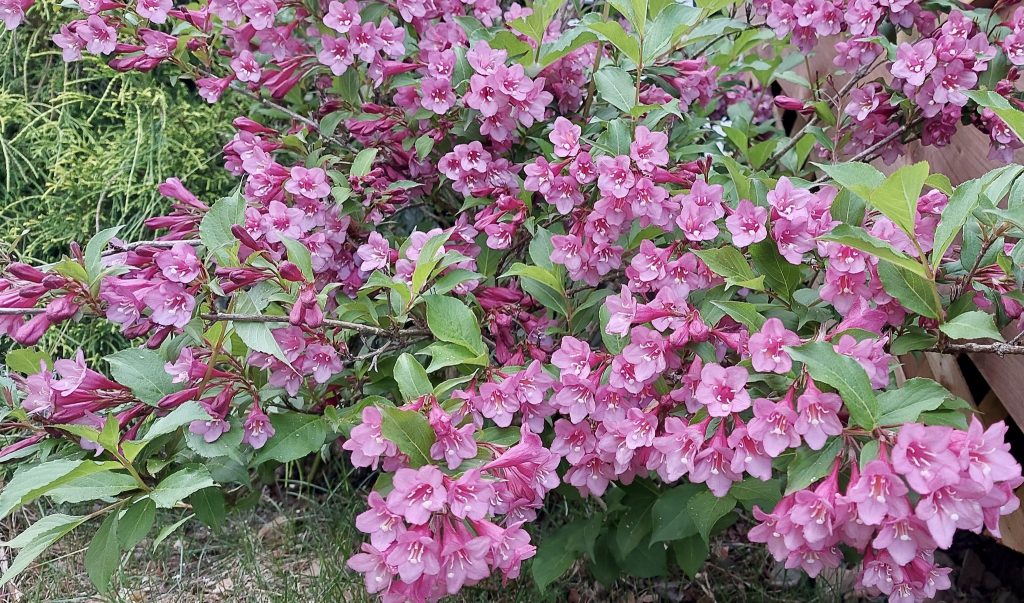
Weigela is one of the most beloved flowering shrubs in gardens worldwide. With its arching branches covered in trumpet-shaped flowers that attract hummingbirds and butterflies, it offers weeks of vibrant color from late spring into early summer. Many modern cultivars rebloom until frost.
This plant belongs to the honeysuckle family (Caprifoliaceae). It’s a deciduous flowering shrub native to eastern Asia — mostly China, Korea, and Japan. There are only about 10–12 true species, but plant breeders have created an explosion of hybrids.
The most common parent is Weigela florida, which is why you’ll sometimes still see older books refer to the plant as “Weigela florida” even when they’re talking about a modern cultivar. Let’s explore more about this beautiful shrub and how to grow it in your garden.
A Quick Look at Weigela’s Past – History
The story starts in the 1770s in Japan. A Swedish botanist named Carl Peter Thunberg was traveling through Asia collecting plants when he came across a pretty flowering shrub. He named the genus after his friend, a German physician named Christian Ehrenfried von Weigel — hence the name Weigela (pronounced why-GEE-lah).
For decades, the plant stayed in Asia. It wasn’t until 1845 that the Scottish plant hunter Robert Fortune smuggled the first Weigela florida out of a Shanghai garden and sent it back to England. From there, it slowly spread across Europe and eventually reached North America.
The real magic happened in the late 20th and early 21st centuries. Breeders in France, the Netherlands, Canada, and the United States started crossing species and selecting for darker foliage, better rebloom, and smaller sizes.
Suddenly, weigela went from “nice old-fashioned shrub” to “must-have garden superstar.” Today, there are hundreds of named cultivars, and new ones appear almost every year.
Key Features at a Glance
| Feature | Details |
| Scientific name | Weigela Thunb. (most popular species: Weigela florida) |
| Common names | Weigela, Old-fashioned weigela |
| USDA Hardiness Zones | 4–8 (some cultivars hardy to zone 3, others only to zone 9) |
| Flower colors | Pink, red, white, coral, magenta, wine, yellow (rare) |
| Bloom time | Heavy spring bloom (May–June); many cultivars rebloom summer to frost |
| Sun exposure | Full sun (6+ hours); tolerates very light shade |
| Mature height | 1–10 ft (30 cm – 3 m) depending on cultivar |
| Mature width | 2–12 ft (60 cm – 3.6 m) |
| Growth rate | Medium to fast (12–36 inches per year) |
| Lifespan | 30–50 years with good care |
| Toxicity | Non-toxic to humans, dogs, and cats |
| Pollinator friendly | Excellent — hummingbirds, bumblebees, butterflies |
| Deer resistance | Moderate (young shoots may be browsed) |
What Does a Weigela Actually Look Like?
Picture a graceful, arching shrub that looks like a waterfall of flowers in May and June. The leaves are opposite, oval, and usually have lightly serrated edges.
Older varieties have plain green leaves, but many of today’s best cultivars have dramatic burgundy, purple, bronze, lime, or variegated foliage that looks great even when the plant isn’t blooming.
The flowers are tubular or trumpet-shaped, about an inch long, and grow in small clusters along last year’s branches. Some smell lightly sweet; others have almost no scent. After blooming, tiny woody capsules form, but you’ll hardly notice them.
The overall shape is fountain-like. Branches arch outward and downward, giving the shrub a soft, romantic look that’s perfect for cottage gardens or mixed borders.

Popular Weigela Varieties
I’ve grown dozens over the years. These are the ones I plant again and again (and the ones my clients ask for by name).
- Wine & Roses — The one that started the dark-leaf craze. Rosy-pink flowers against nearly black-purple foliage. Still one of the best.
- Spilled Wine — A shorter, wider version of Wine & Roses. Perfect for the front of the border or as a low hedge.
- Sonic Bloom series — If you want flowers from May until frost, this is it. Pink, red, and pearl versions all rebloom like crazy.
- My Monet — Tiny (18–24 inches) with green-white-pink variegated leaves and soft pink flowers. I use it in containers every single year.
- Czechmark Trilogy — Flowers open white, turn pink, then red — all on the same plant at the same time. Unreal color show.
- Tuxedo — Black foliage with pure white flowers. The contrast stops people in their tracks.
- Midnight Wine — Super low and spreading with metallic purple leaves. Looks amazing spilling over a wall.
How to Plant a Weigela (Step by Step)
Planting day is exciting. Here’s exactly what I do.
- Choose the right time. Spring or early fall is ideal. I’ve planted in summer too, but you have to baby them with water.
- Pick the perfect spot. Full sun — at least six hours — is non-negotiable for maximum flowers and best foliage color. A little afternoon shade is okay in the hottest zones.
- Prepare the soil. Weigela isn’t fussy, but it hates wet feet. If you have heavy clay, dig in plenty of compost. Aim for a pH between 5.5 and 7.5.
- Dig the hole twice as wide as the pot, but no deeper. I mix the backfill soil 60/40 with compost or aged manure.
- Set the shrub so the top of the root ball is level with the ground. Water deeply. Mulch with 2–3 inches of shredded bark or wood chips, keeping it away from the stems.
- Space properly. Dwarfs: 2–3 feet apart. Medium cultivars: 5–6 feet. Old-fashioned giants: 8–10 feet (or more if you want a screen).
Caring for Your Weigela — What It Really Needs
Once established, weigela is one of the lowest-maintenance shrubs I know.
Watering
New plants need about an inch per week in the first season. After that, they’re fairly drought-tolerant, but they bloom better if you don’t let them go bone-dry in summer.
Fertilizing
One dose of balanced slow-release fertilizer (like 10-10-10) in early spring is plenty. Skip late-summer feeding — it pushes soft growth that can winter-burn.
Mulching
Two to three inches of organic mulch keeps roots cool and moist and cuts down on weeds.
Pruning
This is the part most people get wrong. Weigela blooms on old wood, but many modern cultivars also bloom on new wood.
Right after the big spring flush finishes (usually mid-June here in zone 6), take pruners and remove about one-third of the oldest, thickest stems all the way to the ground. Then lightly shape the rest of the plant. That’s it.
Every five to seven years, if a shrub starts looking tired or leggy, cut it back to 6–12 inches in late winter. It bounces back bushier than ever.
Winter care
In zones 4 and 5, pile extra mulch over the root zone after the ground freezes. That’s usually all the protection they need.
Common Problems (and How I Fix Them)
Nothing’s perfect. Here are the issues I see most often (and what actually works)
1. Powdery mildew
There is often a white dusty coating on leaves late in summer. This problem is caused by poor air circulation.
Fix: plant in full sun, space properly, and prune for openness.
2. No flowers
Almost always, too much shade or too much nitrogen costs weigela flowers. The solution is to move it to a place with sunlight or cut back on fertilizer.
3. Leggy, bare-bottomed shrubs
If you haven’t pruned in years, you will notice your plant becoming leggy, sometimes less on no leaves at the bottom of the shrubs. You can rejuvenate the plant by cutting hard in late winter. Additionally, make sure it is receiving at least 6 hours of direct sunlight each day.
4. Aphids or scale
Pests are rare, but they happen. Aphids or scale suck sap, causing damages and poor growth. A strong blast of water or insecticidal soap takes care of aphids. For scale, apply neem oil in late winter.
5. Deer browsing
Young plants can get nipped in winter. To keep deer away, I spray repellent or surround new shrubs with chicken wire for the first couple of years.
Great Companion Plants for Weigela
Weigela plays nicely with almost everything. Some of my favorite combinations:
- Gold or lime spirea in front for contrast
- Blue salvia or catmint for a classic pink-and-blue look
- Dwarf evergreens behind for winter structure
- Ornamental grasses that turn red in fall (they echo the purple-leaf weigelas perfectly)
Frequently Asked Questions
Q: Is weigela toxic to pets or children?
A: No. Weigela is completely non-toxic to humans, dogs, cats, and horses.
Q: Will deer eat my weigela?
A: Deer usually leave mature plants alone, but may nibble new growth in winter. Plant near the house or use repellent on young shrubs.
Q: Can I grow weigela in a container?
A: Yes! Dwarf cultivars such as My Monet, Midnight Wine, or Snippit series do beautifully in 15–20 gallon pots for 3–5 years.
Q: Why is my weigela not reblooming?
A: Most likely too much shade, excessive nitrogen fertilizer, or you pruned at the wrong time. Full sun + post-spring-bloom pruning = reliable rebloom on modern cultivars.
Q: How fast does weigela grow?
A: In good conditions, 18–36 inches per year for the first 5–7 years, then slows down.
Q: Can I root weigela cuttings myself?
A: Absolutely. Take softwood cuttings in early summer, dip in rooting hormone, and keep under mist or in high humidity — 80–90% success rate.
Q: What is the coldest zone for weigela?
A: Proven Winners reports some Sonic Bloom and Czechmark varieties surviving -40 °F (-40 °C) in zone 3 with snow cover.
Final Thoughts
I still remember buying my first weigela on impulse at a garden center in 2008. Seventeen years later, it’s eight feet tall, healthy as ever, and the hummingbirds treat it like their personal diner every spring.
If you want a shrub that gives you armloads of color, attracts wildlife, needs almost no fuss, and lives for decades, plant a weigela. You won’t regret it.
References
- Dirr, Michael A. Manual of Woody Landscape Plants, 6th Edition. Stipes Publishing, 2009.
- Royal Horticultural Society – Weigela plant profile.
- Missouri Botanical Garden Plant Finder – Weigela florida.
- Proven Winners ColorChoice Flowering Shrubs – Official cultivar database (2025).
- Armitage, Allan M. Armitage’s Native Plants for North American Gardens. Timber Press, 2006.
- University of Arkansas Division of Agriculture – FSA6135: Growing Weigela.

Tim M Dave is a gardening expert with a passion for houseplants, particularly cacti and succulents. With a degree in plant biology from the University of California, Berkeley, he has vast experience in gardening. Over the years, he has cultivated a vast collection of desert plants and learned a great deal about how to grow and care for these unique companions.