Understanding The Weeping Cherry Tree: History, Care Details, and Common Problems
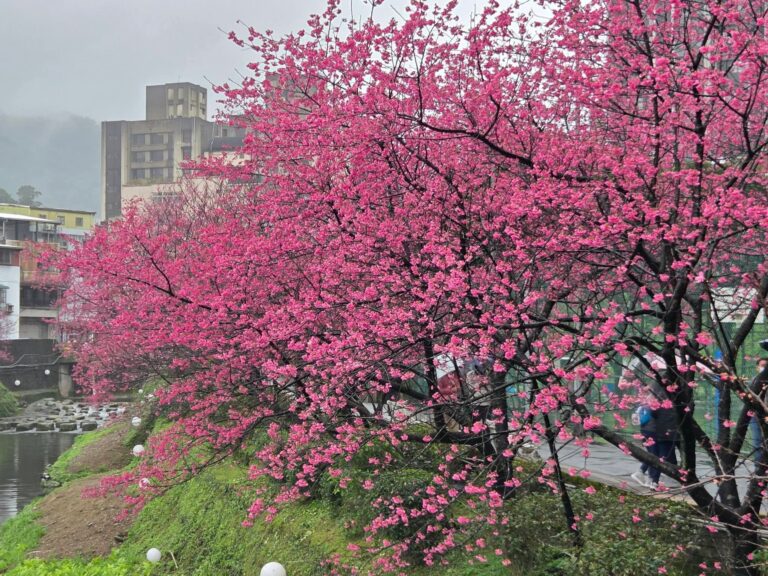
The Weeping Cherry Tree (Prunus × subhirtella ‘Pendula’) is a breathtaking ornamental that transforms any landscape into a serene, elegant haven. Its pendulous branches, draped in vibrant spring blooms, create a natural focal point that’s hard to ignore.
I planted one in my backyard six years ago, and it’s become the heart of my garden – a living sculpture that changes with the seasons. Whether you’re captivated by its cultural significance or its aesthetic charm, this guide will equip you with everything you need to grow a thriving Weeping Cherry.
From its ancient Japanese roots to detailed care and pest management, we’ll cover it all. Let’s dive in!
A Brief History and Classification
The Weeping Cherry Tree’s story begins in ancient Japan, where it’s called shidare-zakura (weeping cherry). Historical records from the Heian Period (794-1185 AD) describe these trees gracing imperial gardens in Kyoto, symbolizing the transient beauty of life – a cornerstone of Japanese philosophy.
By the Edo Period (1603-1868), horticulturists were breeding cultivars like Prunus itosakura ‘Pendula’, creating diverse forms for temples and riverbanks. These trees were central to hanami, the cherry blossom viewing tradition, where people gathered to celebrate spring under blooming canopies.
The tree’s journey westward began in the 19th century. British collector Collingwood Ingram introduced Japanese cherries to Europe, including weeping varieties. In 1912, Japan gifted 3,000 cherry trees to the U.S., including Weeping Cherries, as a gesture of peace.
Today, they’re iconic in places like Washington D.C.’s Tidal Basin and Portland’s Japanese Garden. Their global appeal lies in their ability to evoke awe, whether in a Zen garden or a suburban yard.
Botanical Classification
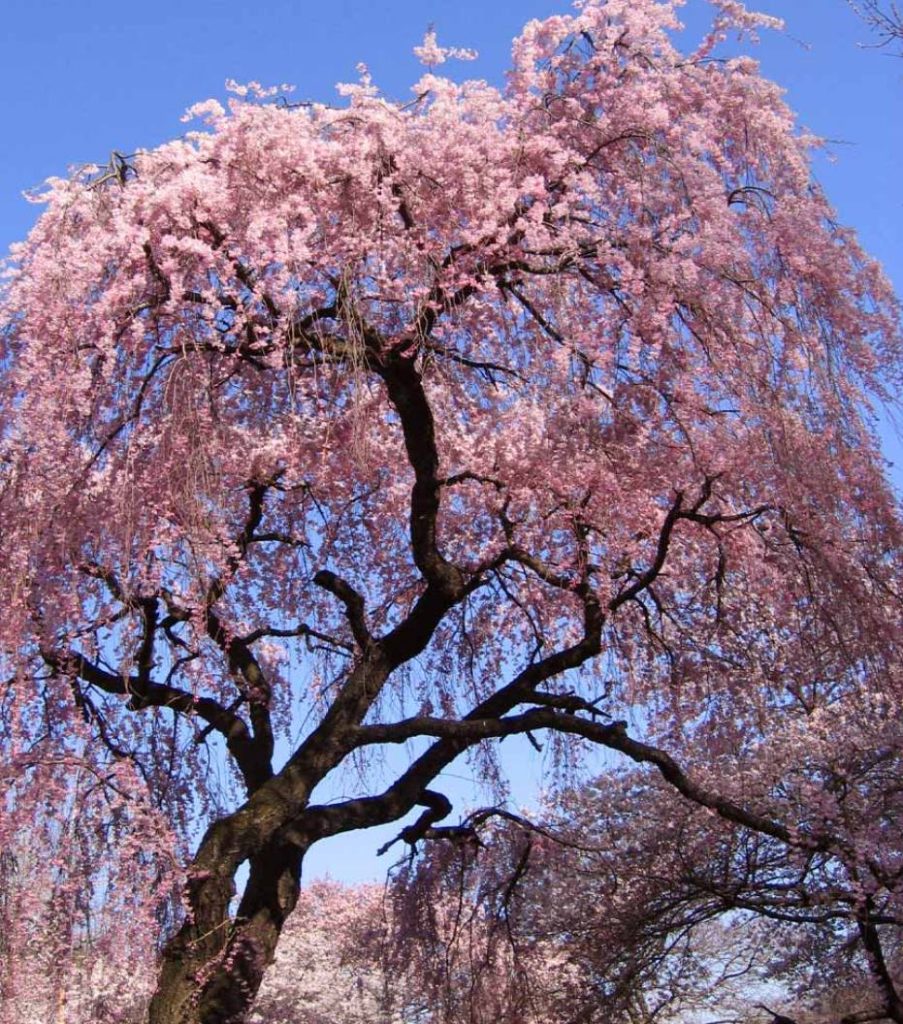
The Weeping Cherry belongs to the Prunus genus in the Rosaceae family, alongside roses, peaches, and almonds. It’s typically classified as Prunus × subhirtella ‘Pendula’, a hybrid of Prunus itosakura (thread cherry) and Prunus incisa (Fuji cherry).
Since 2018, the USDA has recognized some weeping forms as Prunus itosakura, a wild species native to Japan. These are deciduous, ornamental trees, not fruit producers. Cultivars like ‘Pendula Plena Rosea’ (double pink flowers) and ‘Snow Fountains’ (white blooms) offer diverse options.
In Japan, they’re grouped as shidare-zakura for their drooping habit, distinct from upright cherries like yae-zakura. This classification helps gardeners choose cultivars suited to their climate. I once struggled to identify my tree’s exact type due to hybrid variability, but understanding its roots guided my care approach.
Key Features of the Weeping Cherry Tree
Here’s what makes the Weeping Cherry a garden standout:
- Scientific Name: Prunus × subhirtella ‘Pendula’ or Prunus itosakura.
- Common names: Weeping Higan Cherry, Weeping Japanese Cherry, Shidare-Zakura, or Thread Cherry.
- USDA Hardiness Zones: Thrives in zones 5-8 (-20°F to 20°F). My zone 6 tree loves the moderate climate.
- Color Variations: Flowers range from pale pink to deep pink or white, fading as they age. Leaves shift from bronze-green (spring) to lush green (summer) to yellow-orange or red (fall). Bark is shiny coppery-red, adding winter appeal.
- Sun Exposure: Needs full sun (6-8 hours daily) for prolific blooms. Partial shade reduces flowering.
- Mature Size and: Standard trees reach 20-40 feet tall and wide; dwarfs like ‘Snow Fountains’ hit 8-15 feet.
- Growth Rate: Growth is moderate to slow (1-2 feet/year), maturing in 10-15 years.
- Lifespan: Typically 20-30 years, but well-cared-for trees in Japan can live centuries.
- Toxicity: Leaves, stems, and seeds contain cyanogenic compounds, toxic to pets and humans if ingested. Fruits are safe but inedible.
These features make the Weeping Cherry versatile. Its compact cultivars fit small yards, and its vibrant colors ensure year-round beauty. Typically, it’s one of the best small flowering trees for front yard gardens.
Characteristics
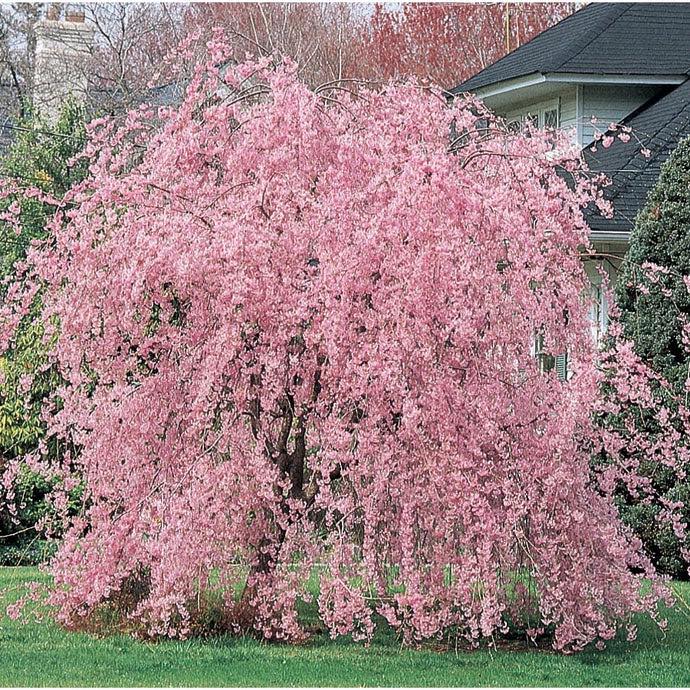
The Weeping Cherry’s charm lies in its unique characteristics. Its pendulous branches form a broad, umbrella-like crown, creating a dramatic focal point. Flowers – small (1/2 inch), five-petaled, in clusters of 2-5, bloom in early spring before leaves.
Lasting 2-3 weeks, the beautiful, showy flowers, with a subtle almond-like scent, attract bees and butterflies. Leaves are lance-shaped, glossy, and vibrant, turning fiery in fall. The smooth, reddish bark shines in winter, and small, red-to-black fruits feed birds but aren’t for humans.
Its weeping habit is perfect for patios, lawns, or near water features, offering shade and elegance. I’ve underplanted mine with hostas, which complement its cascade. The tree’s shallow roots need space, and while heat-tolerant, it thrives with consistent moisture. These traits make it a four-season wonder, blending form and function.
Comprehensive Care Guide for Weeping Cherry Trees
Caring for a Weeping Cherry is rewarding but requires attention to detail. I’ve learned through mistakes – like overwatering that led to yellow leaves – and successes that keep my tree thriving. Below is an in-depth guide to every care aspect, with practical tips to ensure your tree flourishes.
1. Choosing the Right Location
The right spot sets the foundation for a healthy tree. Poor location leads to weak growth, fewer blooms, or disease susceptibility. When choosing the location for your weeping cherry, here are important requirements to consider:
- Sunlight: Full sun (6-8 hours daily) ensures vibrant blooms and strong growth. Morning sun with afternoon dappled shade is ideal in hot climates to prevent leaf scorch. I placed my tree where it gets morning sun and partial afternoon shade, maximizing blooms without stress.
- Soil: Well-drained, loamy soil with a pH of 6.0-7.0 is best. Avoid heavy clay or waterlogged areas, as roots rot easily. Test drainage by digging a 12-inch hole, filling it with water, and ensuring it drains within 24 hours.
- Space: Allow 15-20 feet from buildings, fences, or other trees to accommodate mature spread. Shallow roots compete with nearby plants, so plan accordingly.
- Shelter: Choose a spot protected from strong winds, which can snap delicate branches. Near a fence or house corner works well.
My Tip: I tested my soil’s pH (it was 6.5) and drainage before planting. If drainage is poor, consider raised beds or amending with sand and compost.
2. Planting Your Weeping Cherry
Proper planting establishes strong roots, critical for long-term health. Incorrect planting can stunt growth or cause rot. I buried my first tree’s graft too deeply, causing rot. Now, I double-check the graft’s position and use a level to ensure it’s upright.
Here are key aspects of planting:
- Timing: Plant in fall (6-8 weeks before frost) or early spring to allow root establishment before extreme weather. Fall planting is my preference – cooler temps reduce stress.
- Preparation: Dig a hole twice the root ball’s width and the same depth. Loosen soil to encourage root spread. If the soil is poor, mix in 20% compost.
- Planting process: Place the tree so the graft union (swollen area where the weeping scion meets rootstock) is 2-3 inches above ground. Backfill with native soil, tamp gently to remove air pockets, and water deeply (1-2 gallons). Stake young trees for 1-2 years to stabilize against wind.
- Post-planting: Mulch with 2-3 inches of organic material (bark or wood chips), keeping it 2 inches from the trunk to prevent rot.
3. Watering Needs
Consistent moisture supports root development and bloom production. Over- or under-watering can lead to stress, disease, or reduced flowers. I use a moisture meter to avoid overwatering. During a hot summer, I increased watering to twice weekly, saving my tree from drought stress.
Here is my go-to watering schedule:
- First year: Water deeply (1-2 inches weekly) to establish roots. In dry climates, water twice weekly, ensuring soil stays moist but not soggy. Use a soaker hose or drip irrigation for even distribution.
- Established trees: Water during prolonged dry spells or if leaves droop. Mature trees need 1 inch weekly in summer. Check soil 2 inches down – if dry, water.
- Avoid overwatering: Soggy soil drowns the roots, which can result in root rot, especially in clay. Ensure proper drainage.
- Seasonal adjustments: Reduce watering in fall; minimal in winter unless unusually dry.
4. Fertilizing for Optimal Growth
Nutrients like Nitrogen, Potassium, and Phosphorus fuel growth, blooms, and resilience. This explains why fertilizing matters. Lack of these key nutrients can cause stunted growth, lack of blooms, and a weak plant. Over-fertilizing, however, promotes leafy growth at the expense of flowers.
Requirements:
- Timing: Apply fertilizer in early spring before bud break to support bloom development. Avoid late-season feeding (after July) to prevent weak growth.
- Type: Use a balanced 10-10-10 granular or slow-release tree fertilizer. For dwarfs, use half the recommended dose. Organic options like composted manure work too.
- Application: Spread granules evenly from 6 inches beyond the trunk to the drip line (outer edge of canopy). Water thoroughly to activate. For a 15-foot tree, use 1-2 pounds of fertilizer.
- Soil testing: Test soil every 2 years for pH and nutrient levels. If deficient in iron or magnesium, apply chelated supplements.
My Tip: I fertilize once yearly with a slow-release 10-10-10, and my tree’s blooms are spectacular. A soil test revealed low potassium once, so I adjusted with a targeted supplement.

5. Pruning and Shaping
Pruning maintains the weeping form, removes diseased wood, and improves air circulation to prevent pests and diseases. It is an easy process as long as you know about timing and the right techniques. Use sharp, sterilized (with 70% alcohol) bypass pruners or loppers to avoid spreading disease.
- Timing: Prune lightly after flowering (late spring) to shape and remove dead wood. Major structural pruning is best in late winter when dormant.
- Techniques: Remove dead, diseased, or crossing branches. Trim branch tips to maintain the cascading shape. Cut suckers (upright shoots below the graft) immediately – they steal energy. Never remove more than 25% of the canopy to avoid stress.
- Shaping: Enhance the umbrella form by thinning crowded branches, ensuring light reaches inner foliage.
My Tip: I over-pruned once, reducing blooms the next year. Now, I prune lightly post-bloom and check for suckers monthly. A clean cut at a 45-degree angle promotes healing.
6. Mulching and Soil Management
Mulch is critical as it conserves moisture, regulates soil temperature, and suppresses weeds. My mulch layer keeps roots cool and cuts watering needs. I aerate every two years to prevent compaction from foot traffic. Healthy soil supports root vigor.
- Mulch type: Use organic mulch (bark, wood chips, or shredded leaves) for breathability. Apply 2-3 inches thick, extending to the drip line.
- Placement: Keep mulch 2 inches from the trunk to prevent rot. Refresh annually in spring.
- Soil health: Maintain slightly acidic soil (pH 6.0-7.0). Test yearly; add sulfur if too alkaline or lime if too acidic. Aerate compacted soil with a garden fork.
- Weed control: Hand-pull weeds or use mulch to prevent competition for nutrients.
7. Overwintering in Colder Climates
Cold winters can damage young trees or buds, especially in zones 5-6. Proper prep ensures survival. My zone 6 tree survived a -10°F snap with a thick mulch layer and burlap wrap. I check for rabbit nibbling in winter, as they love young bark.
Requirements:
- Mulching: Apply 4-6 inches of mulch over roots in late fall to insulate against freezes. Remove excess in the spring to avoid rot.
- Trunk protection: Wrap young trunks with burlap or tree guards to prevent sunscald (cracking from freeze-thaw cycles) and rabbit damage.
- Bud protection: Cover small trees with breathable fabric during late frosts to protect buds.
- Avoid late feeding: Stop fertilizing after July to harden wood for winter.
8. Propagation Techniques
Propagating allows you to expand your garden or share trees, but it’s challenging with Weeping Cherries due to their grafted nature. I tried cuttings with little success – only one rooted after weeks. Nurseries graft professionally, so I recommend buying established trees.
Requirements:
- Cuttings: Take 6-8-inch softwood cuttings in early spring from healthy branches. Dip in rooting hormone, plant in a perlite-peat mix, and keep moist in indirect light. Success rate is low (20-30%).
- Grafting: Most reliable method. Graft weeping scions onto Prunus avium rootstock at 4-5 feet to maintain the drooping habit. Requires skill and sterile tools.
- Timing: Cuttings in spring; grafting in late winter.
- Care: Keep cuttings humid (use a mist system) and grafted trees staked until established.
9. Companion Planting
Companions enhance aesthetics and support tree health by deterring pests or improving soil. My hostas and daffodils under the tree create a lush spring display. I avoid dense groundcovers that compete with shallow roots.
Requirements:
- Underplanting: Use shade-tolerant plants like hostas, ferns, or spring bulbs (daffodils, tulips) to complement the weeping canopy without root competition.
- Nearby plants: Pair with azaleas, Japanese maples, or low shrubs for color contrast. Avoid aggressive plants like bamboo or mint.
- Pollinator support: Native perennials (e.g., coneflowers) attract bees, boosting pollination.
- Spacing: Keep companions 2-3 feet from the trunk to avoid root disturbance.
10. Seasonal Care Calendar
A schedule ensures consistent care, preventing issues before they start. I keep a garden journal to track tasks. Spring inspections catch pests early, saving me headaches. Here is my go-to seasonal care calendar:
- Spring: Fertilize, prune post-bloom, inspect for aphids, water regularly.
- Summer: Monitor for pests (beetles, mites), water during drought, and check for mildew.
- Fall: Mulch roots, clean fallen leaves to prevent fungal spread, and reduce watering.
- Winter: Wrap young trunks, inspect for storm damage, and minimal watering unless dry.
11. Advanced Care Tips
Fine-tuning care maximizes beauty and longevity, especially for challenging climates or soils. One of my latest discoveries is installing a drip system during a dry summer. This was a game-changer as far as watering is concerned. Sticky traps near my tree caught aphids early, preventing an outbreak.
Here are my tips:
- Soil amendments: Add organic matter (compost, leaf mold) every 2-3 years to enrich poor soils. For sandy soils, mix in clay to retain moisture.
- Drought management: Install drip irrigation for consistent moisture in arid regions. Use rain barrels for eco-friendly watering.
- Pest monitoring: Set up sticky traps for early pest detection. Introduce beneficial insects like ladybugs for aphid control.
- Branch support: Stake or tie heavy branches to prevent splitting in storms, especially for young trees.
- Long-term health: Rotate mulch types (e.g., bark to compost) to diversify nutrients. Inspect the graft union annually for cracks or rot.
Common Problems and Their Solutions
Weeping Cherries are resilient but face challenges. I’ve battled aphids and mildew on mine, learning that early detection is key. Below is a detailed look at common issues and how to address them comprehensively.
1. Pests: Identification and Control
Pests weaken trees by sucking sap. This reduces blooms and invites secondary issues like mold. Regular monitoring prevents infestations. Aphids hit my tree’s new shoots one spring. Daily water sprays and soap cleared them in two weeks. Common pests include the following:
Aphids (Black Cherry Aphids)
These are tiny black or green insects on new growth, causing curled leaves and sticky honeydew, which leads to sooty mold. These pests can stunt growth, reduce blooms, and spread viruses.
To control aphids, blast with a strong water jet (repeat every 3 days). Apply insecticidal soap (1 tbsp/gallon water) weekly for heavy infestations. Encourage predators (ladybugs, lacewings) with native plants. Avoid over-fertilizing, which attracts aphids.
Borers (Peach Tree Borers)
Larvae tunnel into trunks, leaving sap, sawdust, or gummy holes at the base. Weakened branches may die. Borers disrupt nutrient flow, potentially killing young trees. I caught borers early by spotting sap; pruning and wrapping saved the tree.
To control, prune infested branches, cutting 6 inches below the damage. Apply systemic insecticides (imidacloprid) in early summer for severe cases. Wrap trunks with burlap to deter egg-laying. Keeping mulch away from the trunk base is one of the ways to prevent. Inspect monthly for entry holes.
Japanese Beetles
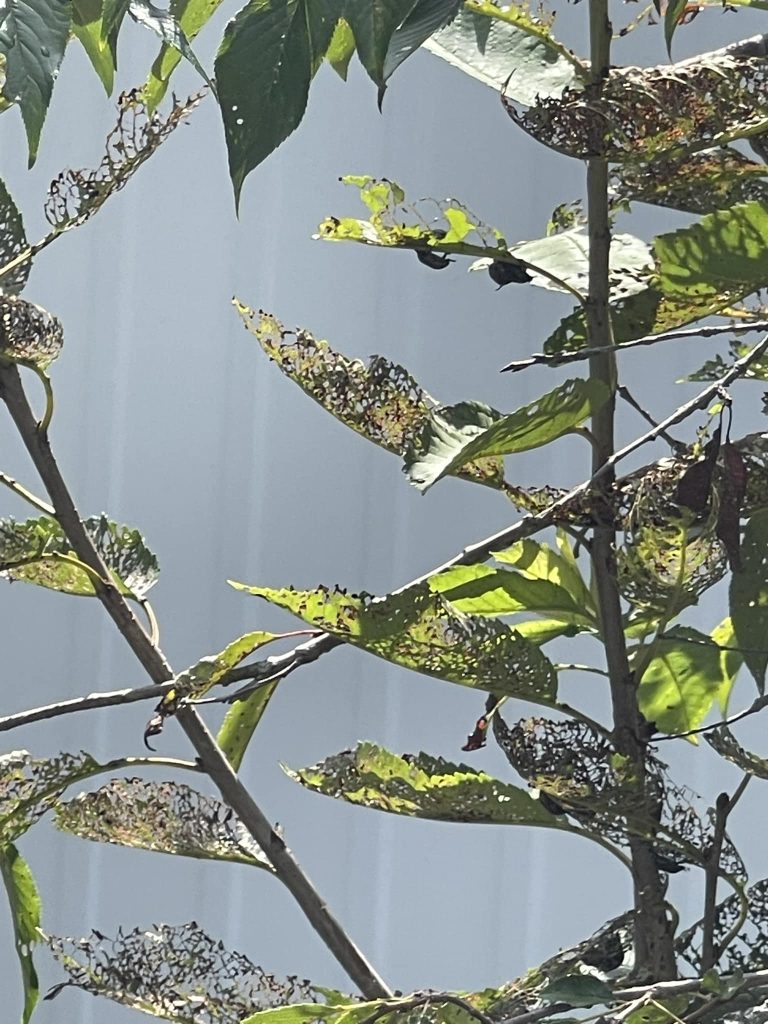
These are metallic green beetles that skeletonize leaves, leaving the veins. They are highly active in summer, defoliating trees and weakening growth. Handpick them daily (drop into soapy water). For severe infestations, apply neem oil (2 tbsp/gallon) weekly. Use traps 30 feet away to avoid attracting more.
Maintain healthy trees; stressed ones are targets. Plant beetle-repellent companions like garlic.
Scale Insects
These are small, armored bumps on bark or leaves, often brown or gray. They constantly suck sap, causing yellowing. The damage can also weaken branches or invite mold. Apply horticultural oil (1% solution) in early spring before bud break. Scrape heavy infestations with a soft brush.
Spider Mites
These are tiny red or yellow pests causing stippled, bronzed leaves. Look for fine webbing on the undersides. Spider mites can contribute to reduced photosynthesis, weakening trees. To control them, spray with water to dislodge or use miticide (abamectin) for severe cases.
General Tip: Integrated pest management (IPM) works best – combine cultural (healthy practices), mechanical (handpicking), and chemical controls sparingly.
2. Diseases: Prevention and Treatment
Why It Matters: Diseases can devastate blooms, foliage, or entire trees. Good cultural practices prevent most issues. Here are common diseases on Weeping cherry trees and Solutions:
Powdery Mildew
This is a white, powdery coating on leaves, often in shaded, humid areas. Leaves may yellow or drop. In severe cases, this fungal disease can reduce photosynthesis, weakening growth. Treat by applying sulfur-based fungicide (1 tbsp/gallon) every 10 days. For mild cases, mix 1 tsp of baking soda with 1 gallon of water and spray.
Powdery mildew can be prevented by pruning crowded branches for air circulation. Plant in full sun, space for airflow, and avoid overhead watering. Mildew hit my tree in a shady spot. Thinning branches and fungicide cleared it in two weeks.
Brown Rot (Monilinia fructicola)
Brown rot is a fungal condition that causes brown, wilted blossoms or fruit in wet springs, often with grayish mold. It easily spreads to branches, and twigs may die back. To control, remove infected parts immediately, cutting 6 inches below the damage. Apply copper-based fungicide post-bloom.
Cytospora Canker
This condition causes sunken, gummy lesions on bark, often near wounds. Branches often die back. Prune affected areas to healthy wood, sterilizing tools. No chemical cure; focus on tree vigor. Avoid wounding the trunk, and maintain health with proper care.
Shot-Hole Disease (Wilsonomyces carpophilus)
This condition is caused by a fungal infection post-rain. Small, round holes form in leaves, like buckshot. Apply captan fungicide after petal fall. Ensure good drainage, avoid wet foliage, and rake debris to reduce spores. Doing this religiously prevents recurrence after an outbreak.
Verticillium Wilt
This is a fatal condition that has no cure once established. Symptoms include one-sided yellowing or wilting, often sudden. The only treatment is to remove and destroy infected trees. Avoid replanting cherries in the same spot. Plant in well-drained soil, avoiding areas with prior wilt history.
General Tip: Sanitation (raking debris, sterilizing tools) and proper care reduce disease risk. Consult an arborist for severe cases.
3. Environmental Stressors
External factors like weather or soil conditions can mimic pest/disease symptoms, stressing the tree. Common Stressors include drought (drooping leaves, sparse blooms, premature leaf drop), frost damage (browned buds or young leaves after late frosts), and poor soil (stunted growth, poor drainage, weak roots)..
Regular soil tests and weather monitoring prevent most stressors. Healthy trees resist environmental challenges better. Cover small trees with breathable fabric during frost warnings. And water the soil before it freezes to retain heat. Aerate soil with a garden fork. Limit foot traffic near roots.
My Tip: I keep a log of symptoms and fixes. When my tree stopped blooming, I realized I’d over-fertilized with nitrogen – switching to 10-10-10 fixed it. Local extension services are great for tough cases.
Suggested For You:
20 Low Maintenance Garden Trees for Beginners: A Complete Guide
20 Best Flowering Trees for Garden UK: A Complete Guide
15 Fast Growing Shade Trees for Garden: A Complete Guide
15 Common Types of Jacaranda Trees: A Comprehensive Guide
15 Stunning Trees with Blue Flowers: A Complete Guide
FAQs
Based on chats with fellow gardeners, here are answers to common questions:
- Q: How fast does a Weeping Cherry grow?
A: 1-2 feet/year, maturing in 10-15 years. - Q: Can I grow it in a pot?
A: Yes, dwarfs like ‘Snow Fountains’ in large, well-drained pots. - Q: Why are leaves yellowing?
A: Overwatering, nutrient deficiency, or chlorosis. Test soil, adjust watering. - Q: Is it deer-resistant?
A: Moderately; deer avoid it, but rabbits nibble bark. Use fencing. - Q: When to prune?
A: Post-bloom or late winter. Avoid summer to prevent stress. - Q: Are fruits edible?
A: No, small and bitter – ornamental only. - Q: How to propagate?
A: Softwood cuttings or grafting. Grafting ensures weeping form. - Q: Best location?
A: Full sun, well-drained soil, wind-sheltered. - Q: Powdery mildew fix?
A: Prune for airflow, use sulfur fungicide or baking soda spray. - Q: Lifespan in poor soil?
A: 15-20 years; amend the soil for a longer life. - Q: Attract pollinators?
A: Yes, bees and butterflies love blooms. - Q: Winter care in zone 5?
A: Mulch roots, wrap trunk, cover during frosts.
Final thoughts
The Weeping Cherry Tree is a timeless addition to any landscape, blending history, beauty, and resilience. My tree’s spring blooms, summer shade, and fall colors never fail to impress, and with the detailed care and problem-solving tips in this guide, yours can thrive too. From planting to pest control, you’re now equipped to nurture this elegant tree.
References
- Wikipedia. “Prunus itosakura.” https://en.wikipedia.org/wiki/Prunus_itosakura
- North Carolina Extension Gardener Plant Toolbox. “Prunus x subhirtella ‘Pendula’.” https://plants.ces.ncsu.edu/plants/prunus-x-subhirtella-pendula/
- The Spruce. “How to Grow and Care for Weeping Cherry Tree.” https://www.thespruce.com/weeping-cherry-trees-the-best-cascading-faves-4767407
- U.S. National Park Service. “Types of Trees – Cherry Blossom Festival.” https://www.nps.gov/subjects/cherryblossom/types-of-trees.htm

Tim M Dave is a gardening expert with a passion for houseplants, particularly cacti and succulents. With a degree in plant biology from the University of California, Berkeley, he has vast experience in gardening. Over the years, he has cultivated a vast collection of desert plants and learned a great deal about how to grow and care for these unique companions.