25 Best Rain Garden Plants: Native Perennials, Shrubs, and Grasses
If your yard has a low spot that stays wet after every storm, you are not alone — and you are not out of options. A well-planted rain garden turns that soggy problem area into one of the most productive and visually striking features on your property.
The key is choosing the right plants: ones that tolerate standing water during a downpour but can also survive dry spells between rains.
This guide covers the 25 best rain garden plants — categorized by type, explained in detail, and selected for real-world performance. Whether you are a seasoned gardener or just getting started, these plants will help you build a garden that works with nature rather than against it.
What Is a Rain Garden and Why Does Plant Selection Matter?
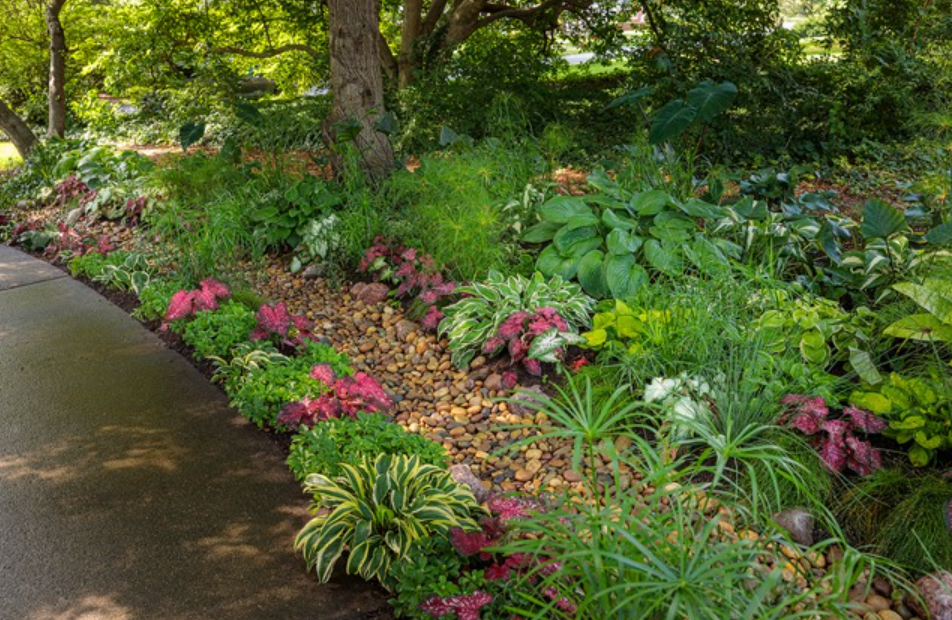
A rain garden is a shallow, planted depression designed to capture and absorb stormwater runoff from roofs, driveways, and lawns. It is not a pond. Water should drain from the basin within 24 to 48 hours after a rainfall event. This means the plants you choose must handle two distinct conditions: temporary flooding and extended dry periods.
The right plant palette does more than look beautiful. It filters pollutants, recharges groundwater, reduces erosion, and supports pollinators. Choose poorly, and plants drown or wilt — and the garden fails at its ecological purpose. Choose well, and you get a near-maintenance-free landscape feature that performs season after season.
Zone Placement in a Rain Garden
Before diving into the plant list, it helps to understand the three planting zones:
- Zone 1 (Center/Basin): The wettest area; tolerates prolonged inundation.
- Zone 2 (Middle Slope): Occasionally wet; needs plants that handle both moisture and moderate drainage.
- Zone 3 (Outer Edge): Rarely wet; suited to plants that prefer drier, well-drained conditions.
The plants below are organized by type, and each entry notes its ideal zone placement.
Native Perennials: The Backbone of Any Rain Garden
Native perennials are the most reliable choice for rain gardens. They have adapted to local precipitation patterns over thousands of years, making them naturally equipped for wet-dry cycles.
1. Blue Flag Iris (Iris virginica)
Best Zone: 1 and 2
Few plants make a rain garden more dramatic than the Blue Flag Iris. Its tall, sword-like leaves and violet-blue blooms in late spring command attention. It thrives in saturated soils and can grow directly at the water’s edge. Beyond aesthetics, it provides excellent bank stabilization and shelter for beneficial insects. Plant it in full sun to partial shade and expect it to spread reliably over time.
2. Cardinal Flower (Lobelia cardinalis)
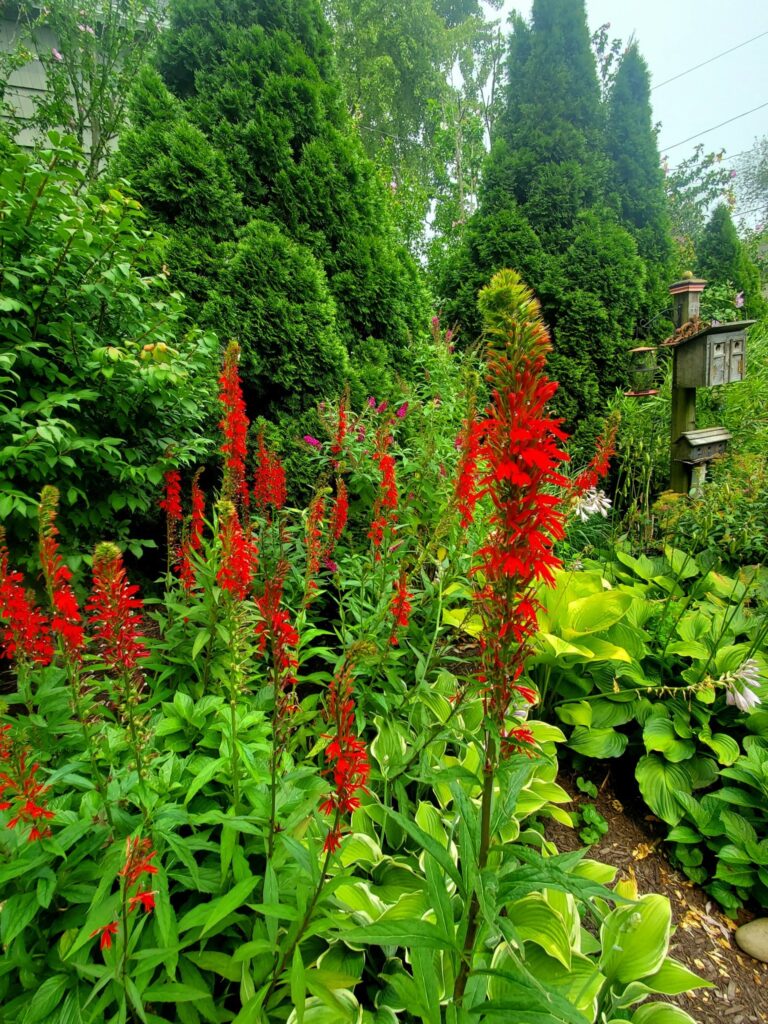
Best Zone: 1 and 2
The Cardinal Flower is one of the most eye-catching native perennials available. Its brilliant red spikes bloom in mid-to-late summer and are irresistible to hummingbirds and swallowtail butterflies. It performs best in consistently moist to wet soils, making the rain garden basin its ideal home. While it can be short-lived as an individual plant, it self-seeds readily and establishes colonies with ease.
3. Joe-Pye Weed (Eutrochium purpureum)
Best Zone: 2 and 3
Standing up to seven feet tall, Joe-Pye Weed brings height and ecological value to the outer zones of a rain garden. Its dusty-pink flower clusters bloom in late summer and are magnets for monarch butterflies and native bees. It adapts well to moist or average soils, making it an excellent transition plant between the wet basin and the drier garden edge. Divide clumps every few years to maintain vigor.
4. Swamp Milkweed (Asclepias incarnata)
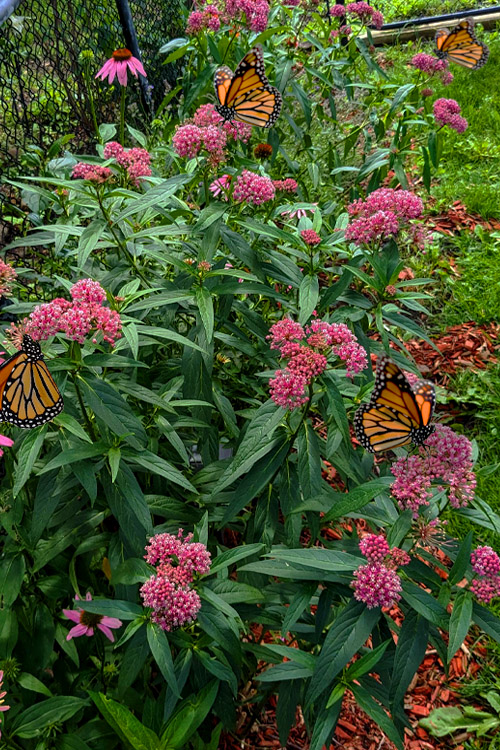
Best Zone: 1 and 2
Swamp Milkweed is arguably the most ecologically important plant on this list. It is a critical host plant for monarch butterfly larvae, and its pink flower clusters also attract a wide range of native pollinators. Unlike common milkweed, this species genuinely thrives in wet conditions — soggy clay soils included. It grows three to four feet tall and blooms reliably from midsummer onward.
5. Wild Bergamot (Monarda fistulosa)
Best Zone: 3
Wild Bergamot anchors the outer, drier edge of a rain garden beautifully. Its lavender-pink blooms appear in midsummer and attract bumblebees, hummingbirds, and hawk moths. It tolerates drought between rain events, making it ideal where standing water is rare. The aromatic foliage also deters deer, which is a practical bonus in suburban gardens.
6. New England Aster (Symphyotrichum novae-angliae)
Best Zone: 2 and 3
No fall garden is complete without asters, and the New England Aster is among the best. Its purple, daisy-like blooms from September through November provide critical late-season nectar for migrating monarch butterflies and native bees preparing for winter. It tolerates moist to well-drained soils and grows up to four feet in height.
7. Marsh Marigold (Caltha palustris)
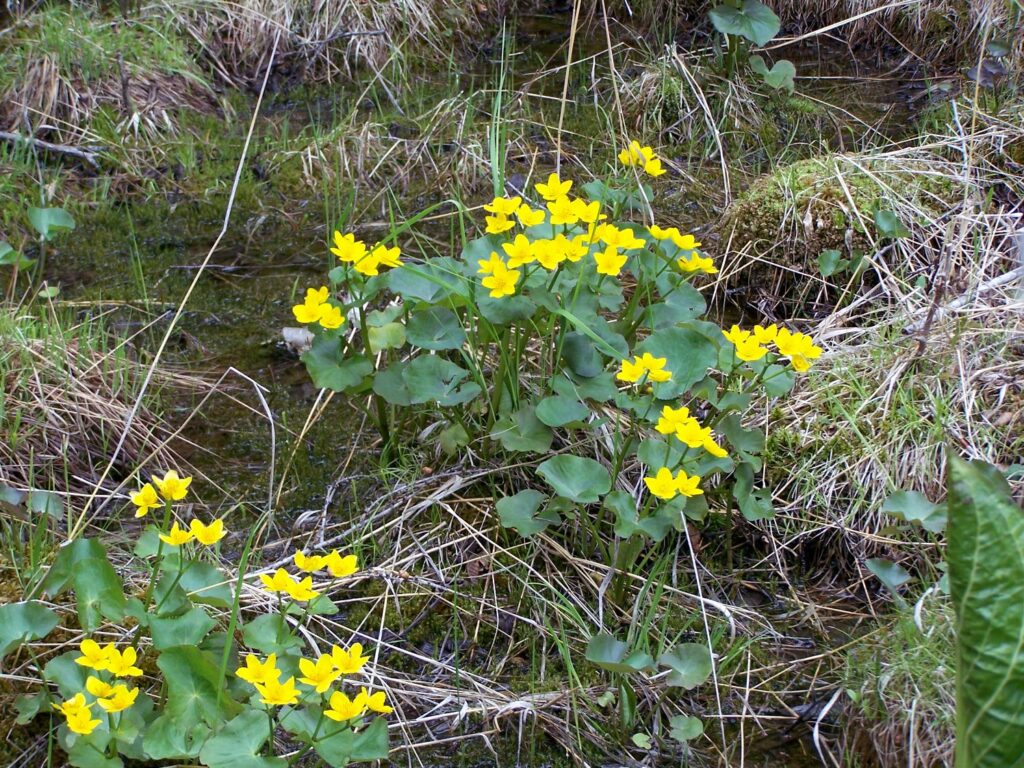
Best Zone: 1
Marsh Marigold is a wonderful early-season bloomer, offering bright golden-yellow flowers in early spring when little else is in flower. It is one of the few plants that genuinely prefers to sit in standing water and is perfect for the deepest part of the rain garden basin. After flowering, it dies back in summer — plan accordingly by surrounding it with later-emerging species.
8. Black-Eyed Susan (Rudbeckia hirta)
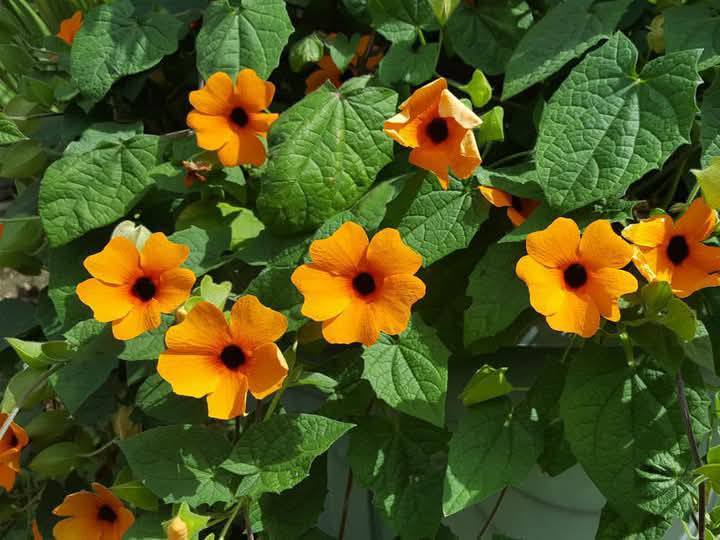
Best Zone: 3
Black-Eyed Susan is a classic native wildflower that brings cheerful yellow blooms to the drier garden edge from midsummer through fall. It is remarkably tolerant of both drought and occasional wetness, making it one of the most forgiving plants on this list. It self-seeds prolifically, which helps establish a natural, meadow-like appearance over time.
9. Great Blue Lobelia (Lobelia siphilitica)
Best Zone: 1 and 2
A close relative of Cardinal Flower, Great Blue Lobelia offers stunning blue-to-violet blooms in late summer. It is particularly valuable in shaded rain gardens where other moisture-loving plants struggle. It performs best in rich, consistently moist soil and pairs beautifully with Cardinal Flower for a classic red-and-blue color contrast in the basin zone.
10. Ironweed (Vernonia noveboracensis)
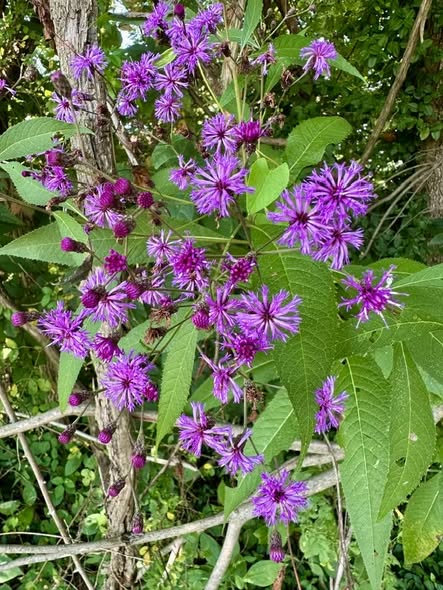
Best Zone: 2
Ironweed earns its name not just from its sturdy stems but from its persistence in difficult growing conditions. Its vivid purple blooms in late summer are among the most intensely colored of any native plant, and they attract an enormous range of native pollinators. It tolerates both wet and moderately dry soils, making it an excellent mid-zone performer.
Native Grasses and Sedges: The Structural Foundation
Grasses and sedges do much of the heavy lifting in a rain garden. Their extensive root systems improve infiltration, reduce erosion, and stabilize slopes.
11. Soft Rush (Juncus effusus)
Best Zone: 1
Soft Rush is one of the most functional plants you can add to a rain garden. Its dense root mass dramatically improves water infiltration rates. The cylindrical, dark-green stems remain evergreen in mild climates, providing year-round structure. It is not showy, but it is hard-working — a valued utility player in any well-designed rain garden.
12. Tussock Sedge (Carex stricta)
Best Zone: 1 and 2
Tussock Sedge forms dramatic raised mounds of fine, arching foliage that bring a naturalistic texture to the basin and mid-slope. It is exceptionally tolerant of seasonal flooding and can even grow in shallow standing water. It provides nesting cover for birds and supports specialist sedge-feeding insects. A tough, attractive plant that asks for very little once established.
13. Blue Wild Indigo (Baptisia australis)
Best Zone: 3
While technically a perennial rather than a grass, Blue Wild Indigo earns its place here as a structural anchor. Its deep taproot makes it extremely drought-tolerant once established, and its blue-violet flower spires in spring are stunning. It is slow to establish but virtually indestructible once mature — a long-term investment that pays dividends for decades.
14. Switch Grass (Panicum virgatum)
Best Zone: 2 and 3
Switch Grass is one of the most versatile rain garden plants available. It tolerates wet to dry conditions, provides four-season interest (green in summer, gold in fall, straw-colored seedheads through winter), and supports dozens of bird species that feed on its seeds. Cultivars like ‘Shenandoah’ and ‘Heavy Metal’ offer controlled, upright forms ideal for residential gardens.
15. Prairie Dropseed (Sporobolus heterolepis)
Best Zone: 3
Prairie Dropseed is a refined, fine-textured grass that works beautifully at the outer garden edge. It forms neat, arching mounds and produces delicate, fragrant seedheads in late summer. It is exceptionally drought-tolerant between rain events and requires almost no maintenance once established. Few grasses look as elegant or perform as reliably over time.
Shrubs: Height, Structure, and Wildlife Value
Shrubs add vertical structure, define garden boundaries, and provide critical wildlife habitat — berries for birds, flowers for pollinators, and dense cover for nesting.
16. Buttonbush (Cephalanthus occidentalis)
Best Zone: 1 and 2
Buttonbush is one of the most ecologically productive shrubs for wet conditions. Its round, white, pin-cushion flowers in midsummer are extraordinary nectar sources for bees, butterflies, and hummingbirds. It grows up to 10 feet tall and can be pruned to manage size. Few shrubs tolerate standing water as well, making it a top-tier choice for the rain garden basin.
17. Swamp Rose (Rosa palustris)
Best Zone: 2
The Swamp Rose brings classic beauty to the mid-zone. Its fragrant pink flowers appear in early summer, followed by bright red hips that persist through winter. It is genuinely adapted to wet soils, unlike most garden roses which demand excellent drainage. It spreads by suckers to form a naturalistic thicket, providing dense cover for birds and small mammals.
18. Inkberry (Ilex glabra)
Best Zone: 2 and 3
Inkberry is a native holly that performs reliably in both wet and average soils. It produces glossy black berries in fall that persist through winter and feed dozens of bird species, including cedar waxwings and robins. It is evergreen, deer-resistant, and grows four to eight feet tall. A workhorse shrub that adds year-round structure and wildlife value.
19. Silky Dogwood (Cornus amomum)
Best Zone: 1 and 2
Silky Dogwood is a multi-stemmed native shrub with exceptional ecological value. Its white spring flowers, blue-white berries, and attractive bark make it a four-season performer. It spreads by layering to form dense thickets that stabilize stream banks and rain garden slopes alike. Birds rely heavily on its fruit in late summer, and its flowers support a wide range of native bees.
20. Virginia Sweetspire (Itea virginica)
Best Zone: 2 and 3
Virginia Sweetspire is underused and underappreciated. Its arching white flower racemes in early summer are fragrant and attractive. Its fall foliage — deep crimson to burgundy — rivals any ornamental shrub on the market. It tolerates wet soil beautifully and is a refined, manageable choice for residential rain gardens where a more polished look is desired.
Ferns and Groundcovers: The Finishing Layer
Ferns and groundcovers complete the planting palette by filling gaps, suppressing weeds, and protecting the soil surface from erosion.
21. Royal Fern (Osmunda regalis)
Best Zone: 1 and 2
The Royal Fern is one of the largest and most magnificent native ferns. Its lush, upright fronds can reach five feet in height, and the fertile, rust-colored tips add unique textural interest in summer. It thrives in wet to moist soils and tolerates partial to full shade. Few plants create a lusher, more tropical feel in a wet garden.
22. Cinnamon Fern (Osmundastrum cinnamomeum)
Best Zone: 2
The Cinnamon Fern is named for its cinnamon-colored fertile fronds that emerge in spring. It forms bold, vase-shaped clumps up to five feet tall and performs well in consistently moist conditions. It is one of the most deer-resistant ferns available and provides excellent nesting material for hummingbirds, which pluck its woolly fiber for their nests.
23. Wild Ginger (Asarum canadense)
Best Zone: 3
Wild Ginger is one of the best native groundcovers for the dry outer edge of a rain garden, particularly in shaded areas. Its large, heart-shaped leaves form a dense, weed-suppressing carpet that holds soil on slopes effectively. It spreads slowly but reliably and requires almost no maintenance. A subtle, elegant groundcover that improves with age.
24. Golden Groundsel (Packera aurea)
Best Zone: 1 and 2
Golden Groundsel is a native groundcover that blooms brilliantly in early spring with clusters of golden-yellow flowers. It is one of the few groundcovers that thrives in wet, shaded conditions, making it invaluable for rain gardens under tree canopy. It spreads by stolons to cover large areas quickly, making it an excellent weed suppressor in the mid-slope and basin zones.
25. Blue Mistflower (Conoclinium coelestinum)
Best Zone: 2 and 3
Blue Mistflower rounds out this list with soft, fuzzy, cornflower-blue blooms in late summer and early fall. It is one of the most important late-season nectar sources for migrating butterflies, including monarchs and painted ladies. It spreads vigorously in moist soils, which makes it an effective groundcover but one to monitor in smaller gardens. Its blue tones offer a cool contrast to the warm golds and reds of fall.
Tips for Planting Success
1. Start with a soil test. Most rain garden soils benefit from amendments that improve drainage. Sandy loam is ideal. Heavy clay may need compost or biochar worked in before planting.
2. Plant in fall or early spring. Both seasons allow root systems to establish before the stress of summer. Fall planting is particularly effective for woody shrubs and native grasses.
3. Water during the first growing season. Even drought-tolerant species need irrigation in their first year. Once established, most rain garden plants require no supplemental watering.
4. Avoid pesticides. Rain gardens are ecological features. Pesticides undermine their purpose by harming the pollinators and beneficial insects that make the garden function.
5. Allow natural self-seeding. Many of the plants on this list — Cardinal Flower, Black-Eyed Susan, and Blue Mistflower — self-seed freely. Resist the urge to deadhead everything. Allow some natural reseeding to fill gaps and reduce long-term maintenance.
6. Group plants by zone. Planting the right plant in the right zone is far more important than aesthetics alone. A Cardinal Flower planted in Zone 3 will struggle just as surely as a Prairie Dropseed planted in Zone 1.
Frequently Asked Questions
How deep should a rain garden be?
Most rain gardens are six to twelve inches deep. Depth depends on soil infiltration rates and the size of the drainage area feeding into the garden.
Can I grow vegetables in a rain garden?
It is generally not recommended. Stormwater runoff can carry pollutants, heavy metals, and pathogens that make edible crops unsafe. Use native ornamental plants instead.
How long does water stay in a rain garden?
Properly designed rain gardens drain completely within 24 to 48 hours. Water sitting longer than that indicates poor infiltration and may require soil amendment or design adjustment.
Do rain gardens attract mosquitoes?
Only if water sits for more than 48 hours. A properly functioning rain garden drains too quickly to support mosquito breeding cycles.
Final Thoughts
Building a rain garden is one of the most impactful things a homeowner can do for their local watershed. When planted with the right species — particularly the native perennials, shrubs, and grasses on this list — it becomes a living filtration system, a wildlife sanctuary, and a visually stunning garden feature all at once.
The 25 plants covered here represent a full planting palette: from the dramatic Cardinal Flower at the water’s edge to the refined Prairie Dropseed at the dry outer rim. Together, they can support pollinators, filter runoff, and bring genuine beauty to a space that might otherwise be written off as a landscaping problem.
The best rain garden is not the most elaborate one — it is the one planted with the right plants in the right places, left to flourish as nature intended.
References
- University of Wisconsin-Madison Extension — Rain Gardens: A How-To Manual for Homeowners https://extension.wisc.edu/publications/rain-gardens-a-how-to-manual-for-homeowners/
- Penn State Extension — Rain Gardens: Reduce Runoff and Improve Water Quality https://extension.psu.edu/rain-gardens-reduce-runoff-and-improve-water-quality
- University of Minnesota Extension — Rain Gardens https://extension.umn.edu/landscape-design/rain-gardens
- Rutgers Cooperative Extension (Rutgers University) — Rain Gardens for New Jersey https://njaes.rutgers.edu/pubs/publication.asp?pid=E324
- Iowa State University Extension and Outreach — Rain Garden Design and Installation https://store.extension.iastate.edu/product/14077

Tim M Dave is a gardening expert with a passion for houseplants, particularly cacti and succulents. With a degree in plant biology from the University of California, Berkeley, he has vast experience in gardening. Over the years, he has cultivated a vast collection of desert plants and learned a great deal about how to grow and care for these unique companions.