Epsom Salt for Christmas Cactus – When and How to Use
Magnesium is a key nutrient in chlorophyll production. This is what helps your cactus stay green. This nutrient also supports enzyme activity for growth and blooming. My Christmas cactus looked a bit dull last year. Its stems were pale, and it barely flowered.
A quick soil test showed low magnesium levels. After adding Epsom salt to its care routine, the transformation was incredible. The stems turned lush green, and by December, it was covered in buds.
Epsom salt (Magnesium Sulfate) isn’t a cure-all, but it’s a powerful supplement. When used right, it promotes healthy foliage, faster growth, and more blooming. It is one of the best DIY cactus fertilizers I have ever used.
For best results, mix 1 teaspoon of Epsom salt per gallon of water and use the solution to fertilize the Christmas cactus monthly throughout spring and summer, but not in the same week you apply your regular fertilizer.
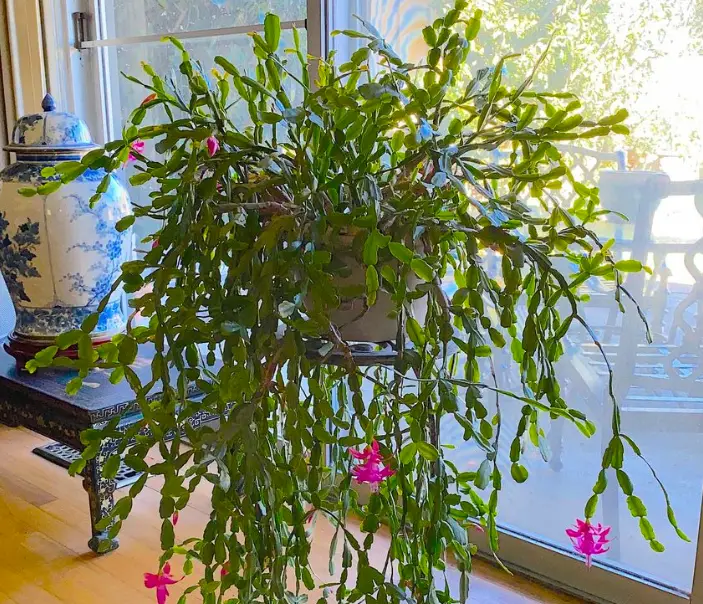
Epsom Salt for Christmas Cactus – Benefits
Every plant needs nutrients to thrive. Nitrogen, potassium, and phosphorus are the primary nutrients needed in large quantities. Plants also need moderate quantities of magnesium, Sulfur, and calcium, hence classified as secondary nutrients.
Epsom salt has Magnesium, which is a key element of the chlorophyll molecule. Chlorophyll gives plants a green color and helps them absorb sunlight to make food through photosynthesis.
Unlike many plants, the Christmas cactus has a higher affinity for magnesium. If you haven’t used Epsom salt, yellow spots on your Christmas cactus might be a telltale sign of declining magnesium levels.
Epsom salt is a great source of magnesium, and it comes with the following benefits for a Christmas cactus:
- It enhances the appearance of a Christmas cactus by making it greener.
- It helps the plant trap more light for maximum food production, thus, healthy growth.
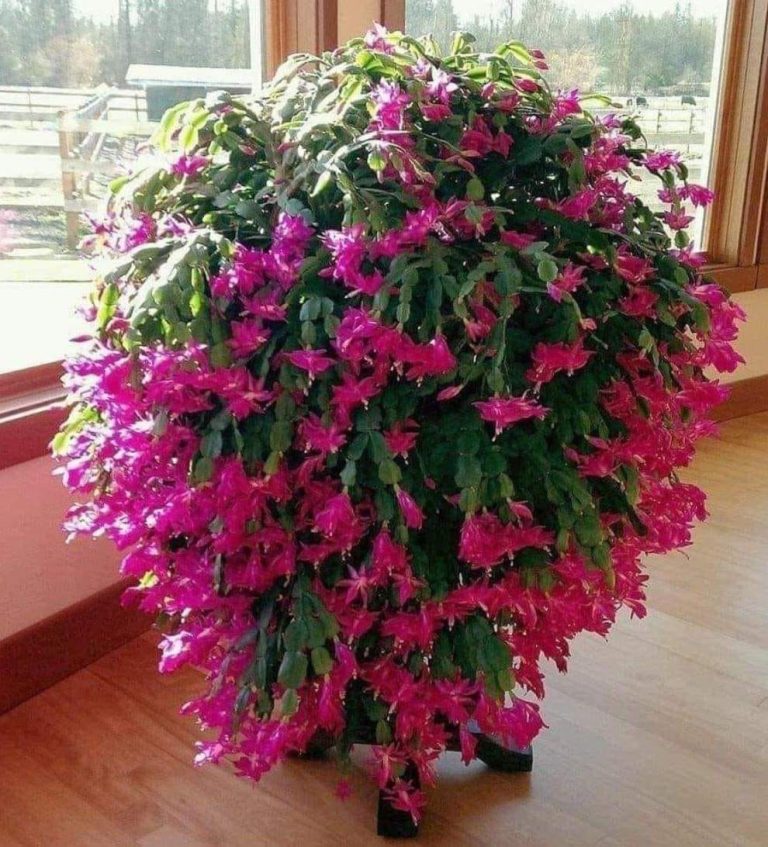
- Healthy foliage translates to generous blooming, thus more flowers during the winter holidays.
- Magnesium makes a plant hardy and tolerant to diseases and pests.
Over time, magnesium leaches out of soils from watering or rainfall. Deficiency is common in old potting soils, acidic soil conditions, and soils with excessively high potassium levels. It’s, therefore, very important to keep replenishing your soil.
When and How to Use Epsom Salt on Christmas Cactus
Using Epsom salt is simple, but timing and dosage are key. Here’s my step-by-step guide based on personal experience and expert advice.
1. Choose the right Epsom salt
Always use pure, unscented Epsom salt, available on Amazon. Avoid bath salts with added fragrances—they can harm your plant. You can also grab a good one from a local garden center.
2. Mix the solution
Dissolve 1 teaspoon of Epsom salt in 1 gallon of water. I use a large watering can to mix it thoroughly. Warm water helps it dissolve faster, but let it cool to room temperature before using it to avoid shocking the roots.
3. Apply monthly during the growing season
Apply the Epsom salt solution once a month from late winter (around March) to late summer (August). This is when your Christmas cactus is actively growing. Water the cactus with the solution, ensuring it reaches the roots without soaking the stems.
Tip: Don’t apply Epsom salt the same week as regular fertilizer. Alternate them to prevent nutrient overload. I learned this the hard way when I overdid it and noticed salt buildup in the soil.
4. Pause in fall and winter
Stop using Epsom salt in late summer to encourage flower bud formation. Fertilizing during fall or winter can disrupt the bloom cycle, causing buds to drop. I made this mistake once, and my cactus barely flowered that year. Timing is everything
My Application Routine
I fertilize my Christmas cactus with a half-strength 20-20-20 liquid fertilizer (like this one from Amazon) once a month during spring and summer. Two weeks later, I apply the Epsom salt solution. This alternating schedule keeps my plant thriving without overwhelming it.
Many Gardeners also incorporate homemade fertilizers like compost or coffee grounds. Using them in small quantities isn’t bad, as they improve soil tilth and structure. A tablespoon or two, well spread into a thin layer, should be enough for a month.
The Christmas cactus doesn’t need any fertilizer while it is blooming. Fertilizing when buds have formed can result in flowers or buds falling off. Also, excess nitrogen fertilizer makes the plant weak to bear blooms.
For a Christmas cactus to bloom, it needs a period of rest. When fall arrives, do not feed the plant; cut back on watering and place it in uninterrupted darkness for 12 to 14 hours daily for six to eight weeks.
Cool temperatures and short daylight episodes will make the Christmas cactus bloom profusely.
Additional care requirements for your holiday cactus
The Christmas cactus prefers bright, indirect sunlight; therefore, place it on a north or east-facing window except when you are forcing the formation of flower buds in mid-October to December.
Growth increases when daytime temperatures are between 70 and 80 degrees Fahrenheit and night temperatures are between 55 and 65 degrees.
Unlike other desert cacti that are tolerant of drought, the Christmas cactus needs constant moisture to thrive, but not waterlogged soil. Christmas cactus root rot is a fatal condition caused by overwatering.
Water the cactus only when the top inch of the soil feels dry to the touch. Additionally, place the plant on a pebble tray half-filled with water to boost humidity levels in dry air environments.
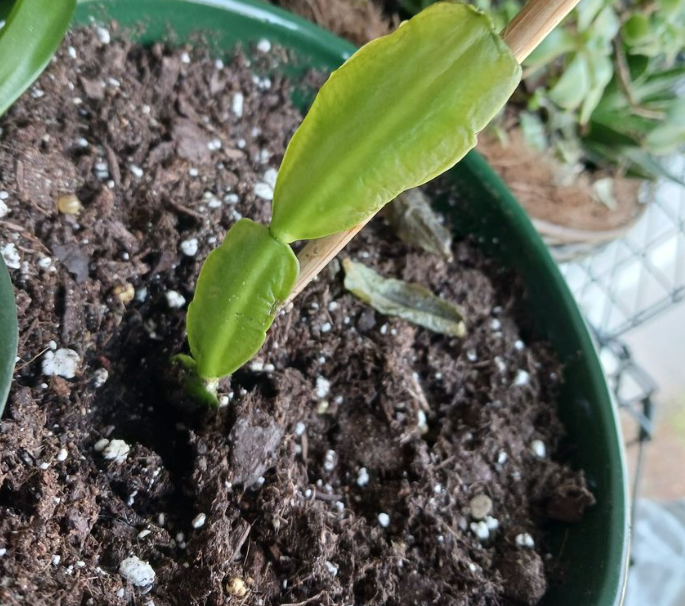
When the flowers have completely faded, prune your Christmas cactus. Removing a few stem sections encourages branching and growth. You may root the cut segments to produce more plants, which you can gift to your friends and family.
Although Christmas cacti like to be root-bound, the rootball may eventually outgrow the pot. It forces the roots to entangle and stop taking up water and nutrients as needed. You’ll have to repot the Christmas cactus in a slightly bigger pot every two years to avoid this problem.
Final Thought
Last year, my Christmas cactus was a sad sight—dull, droopy, and flowerless. I felt like I’d failed it. After researching, I started using Epsom salt monthly from March to August, paired with a half-strength 20-20-20 fertilizer.
I also moved it to a spot with bright, indirect light and gave it 14 hours of darkness starting in October. By December, it was covered in vibrant red blooms that stole the show at my holiday party.
My guests couldn’t stop asking how I did it! Epsom salt, proper fertilization, and a little patience made all the difference.
References:
- University of Minnesota Extension: Magnesium for crop production
- The Royal Horticultural Society: Nutrient Deficiencies
- North Carolina Cooperative Extension: Christmas Cactus Care

Tim M Dave is a gardening expert with a passion for houseplants, particularly cacti and succulents. With a degree in plant biology from the University of California, Berkeley, he has vast experience in gardening. Over the years, he has cultivated a vast collection of desert plants and learned a great deal about how to grow and care for these unique companions.

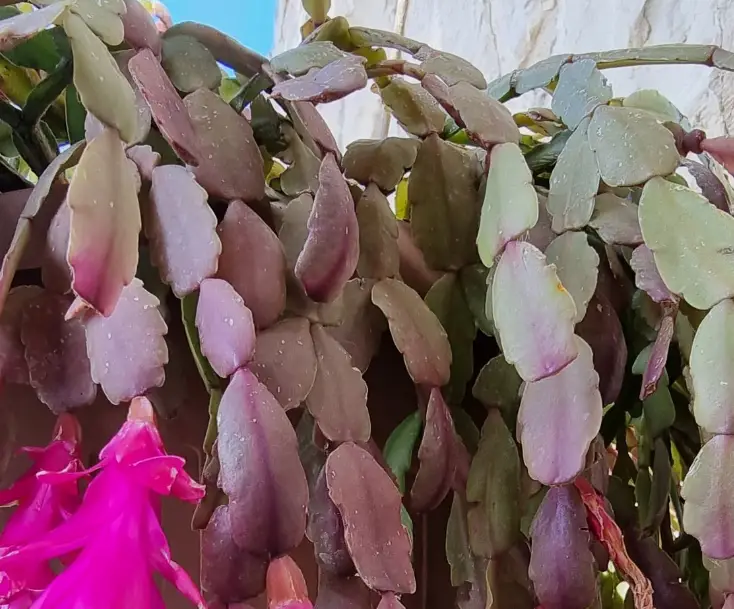
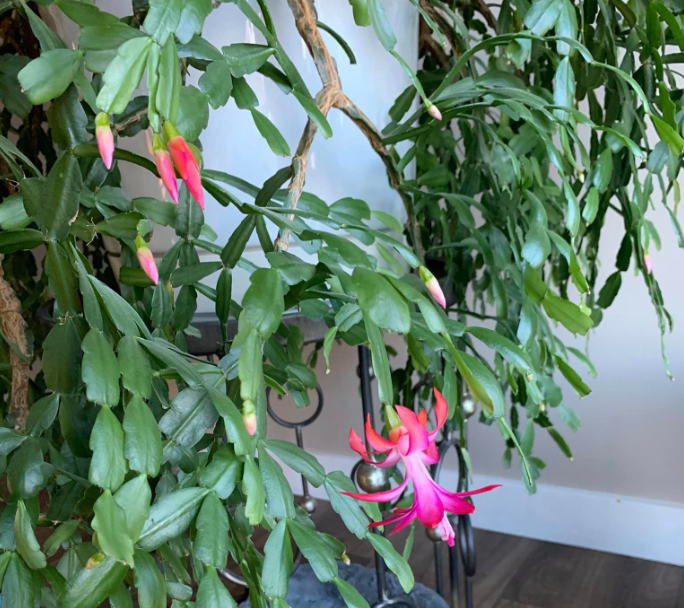
My Christmas cactus had black on the stem. I’ve tried the coffee grounds and the emseptum salt and the plant is dying, no matter I do to it , wont hold the moisture in the leaves or whatever they’re called!
I’m sorry about that Cathrin. If your Christmas cactus had a black on the stem its likely a rot, a problem of overwatering. The best thing to do now is to transplant it into fresh potting soil mixed with some sand and pumice. Further, ensure to are not watering too often but only when the soil feels dry to the touch.
I have tried coffee grounds by sprinkling into the soil , also the salts
I inherited my mom’s cactus. Only recently did I learn it had different watering requirements than other cacti. It blooms well for me. I think it’s pretty old. It actually does very well with not much care at all!
Thank you for your help. I will fertilize once monthly as you said, but my question is whenever I water, should I give it the Epsom salt water each time, or once monthly?
Hello, fertilize once every month particularly during the growing season (spring and summer). Thank you