15 Types of Dogwood Trees and Shrubs: Identification and Pictures
Dogwood trees, belonging to the genus Cornus, are cherished across the United States for their stunning spring blooms, vibrant fall foliage, and graceful forms. These beautiful plants range from small shrubs to medium-sized trees, making them ideal for gardens, woodlands, and urban landscapes.
Native to North America, Europe, and Asia, many dogwood varieties thrive in the U.S., offering year-round interest with colorful bracts (modified leaves that resemble petals), attractive berries, and textured bark.
Dogwoods generally prefer moist, well-drained, slightly acidic soils (pH 5.5–6.5) and benefit from mulch to retain moisture. They support pollinators such as butterflies and bees, and their berries attract birds, enhancing biodiversity.
However, some species are prone to anthracnose or borers, so choose disease-resistant cultivars when possible. With proper care, these trees can become enduring landscape treasures. Let’s explore some of the popular types of Dogwood trees and shrubs.
1. Flowering Dogwood (Cornus florida)
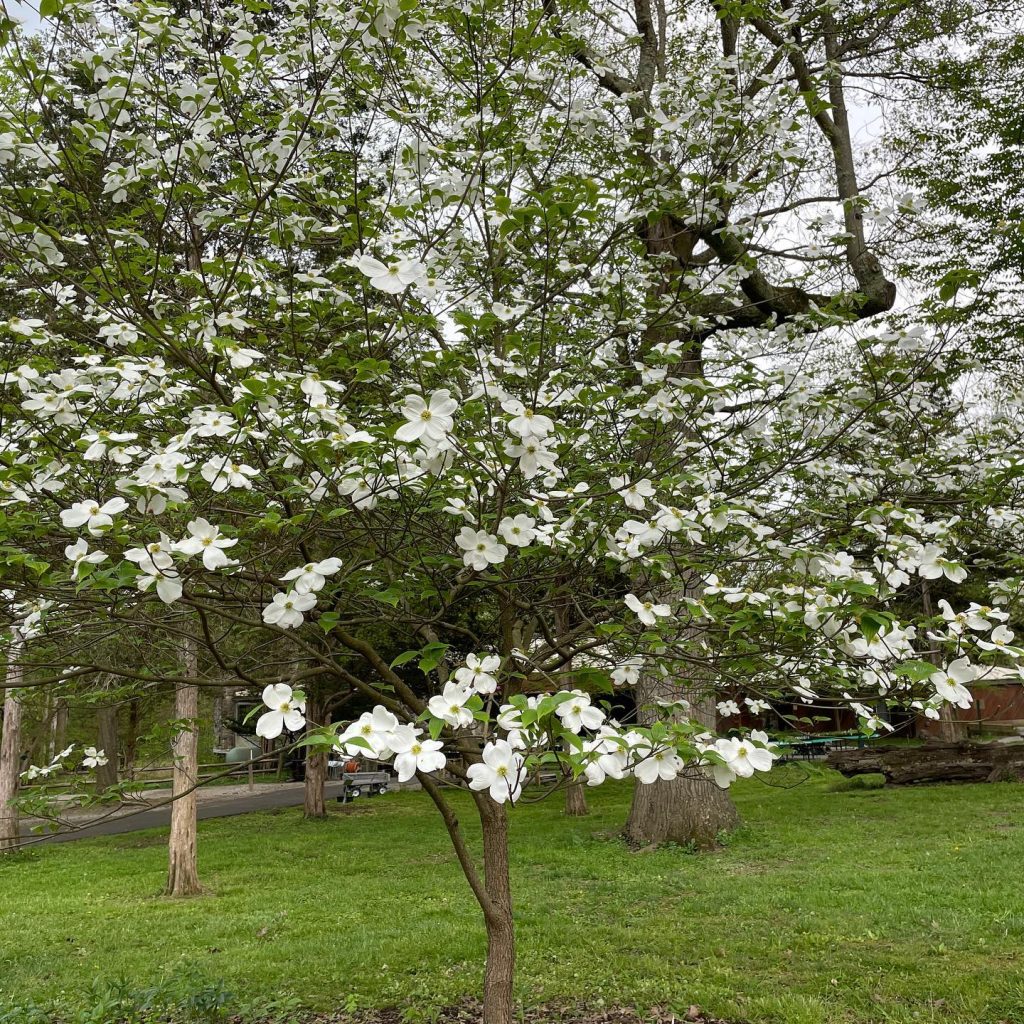
The Flowering Dogwood, often called the Eastern Flowering Dogwood, is an iconic native tree celebrated for its showy spring display. It is the state tree of Virginia and North Carolina. This understory tree features horizontal branching that creates a layered, umbrella-like canopy, perfect for shaded gardens.
- Scientific Name: Cornus florida
- USDA Zones: 5–9
- Color Variation: Classic white bracts in spring (resembling four petals), though pink or red cultivars like ‘Rubra’ exist; leaves turn scarlet, purple, or orange in fall.
- Sun Exposure: Partial shade to full sun; afternoon shade is crucial in warmer zones to prevent leaf scorch.
- Mature Size: 15–30 feet tall and wide, with a flat-topped crown.
- Lifespan: 30–80 years, though urban stress can shorten it to 20–30 years.
- Toxicity: Berries are mildly toxic to humans, causing nausea if eaten; non-toxic to dogs and cats per ASPCA, but avoid ingestion.
In brief, this tree blooms in early spring before leaves emerge, followed by glossy green foliage and red berries in summer. It’s a magnet for wildlife, hosting azure butterflies and providing bird food. Plant it in woodland edges for natural appeal, and prune lightly in late winter to maintain shape.
2. Kousa Dogwood (Cornus kousa)
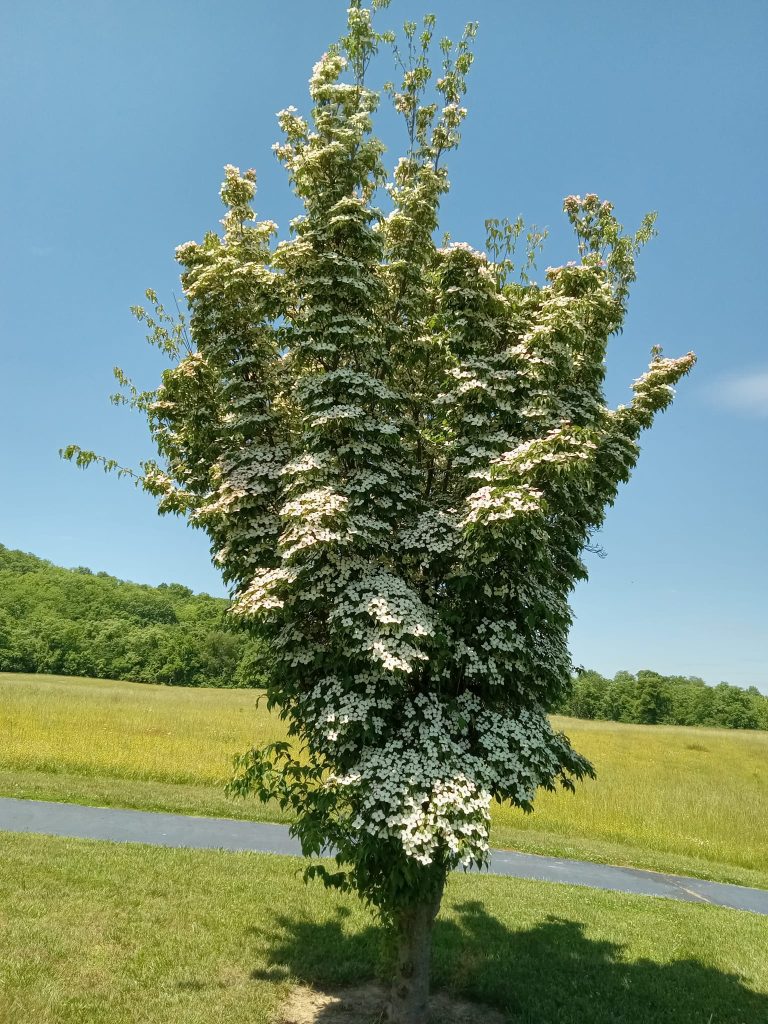
The Kousa Dogwood, originating from East Asia but widely naturalized in the U.S., is prized for its disease resistance and raspberry-like fruits. It blooms later than native varieties, extending the season’s floral interest.
- Scientific Name: Cornus kousa
- USDA Zones: 5–8
- Color Variation: White or pink pointed bracts in late spring/early summer; foliage shifts to burgundy-red in autumn.
- Sun Exposure: Full sun to partial shade; tolerates more sun than C. florida.
- Mature Size: 15–25 feet tall, 15–20 feet wide, with a vase-shaped form.
- Lifespan: 50+ years, often outliving native dogwoods due to anthracnose resistance.
- Toxicity: Fruits are edible for humans (tart, like kiwi) but mildly toxic in large amounts; safe for pets in moderation.
This variety’s exfoliating bark adds winter texture, mottled in tan and gray. The star-shaped bracts point upward, creating a whimsical look. It’s excellent for smaller yards or as a specimen near patios, where its edible fruits can delight gardeners.
3. Pacific Dogwood (Cornus nuttallii)
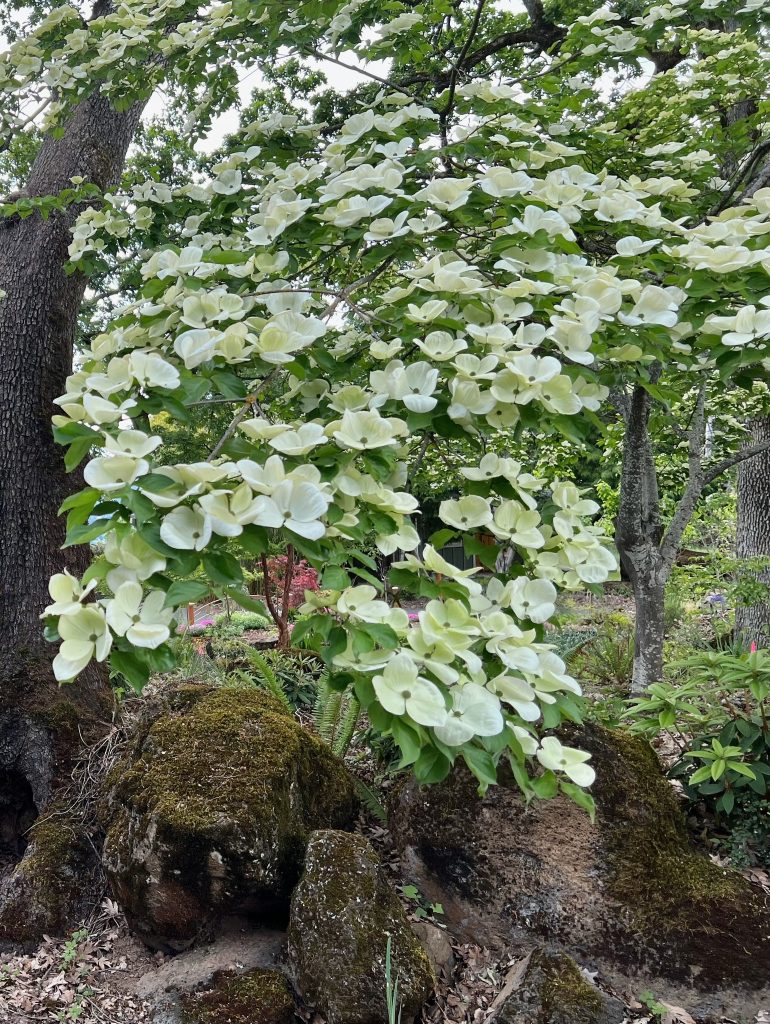
Native to the West Coast, the Pacific Dogwood is California’s state flower and a highlight of coastal forests. Its large bracts make it a standout in naturalistic plantings.
- Scientific Name: Cornus nuttallii
- USDA Zones: 7–9
- Color Variation: Creamy white bracts, sometimes pink-tinged; leaves yellow to red in fall.
- Sun Exposure: Partial shade; full sun in cooler climates but protect from intense afternoon rays.
- Mature Size: 20–40 feet tall, 15–25 feet wide, multi-stemmed.
- Lifespan: 40–60 years in ideal moist conditions.
- Toxicity: Berries are toxic to humans (gastrointestinal upset); avoid pet access.
Blooming in mid-spring, this tree’s bracts can span 4–6 inches, rivaling magnolias. It thrives in foggy Pacific Northwest gardens, supporting local pollinators. However, it’s susceptible to anthracnose, so ensure good air circulation.
4. Cornelian Cherry Dogwood (Cornus mas)
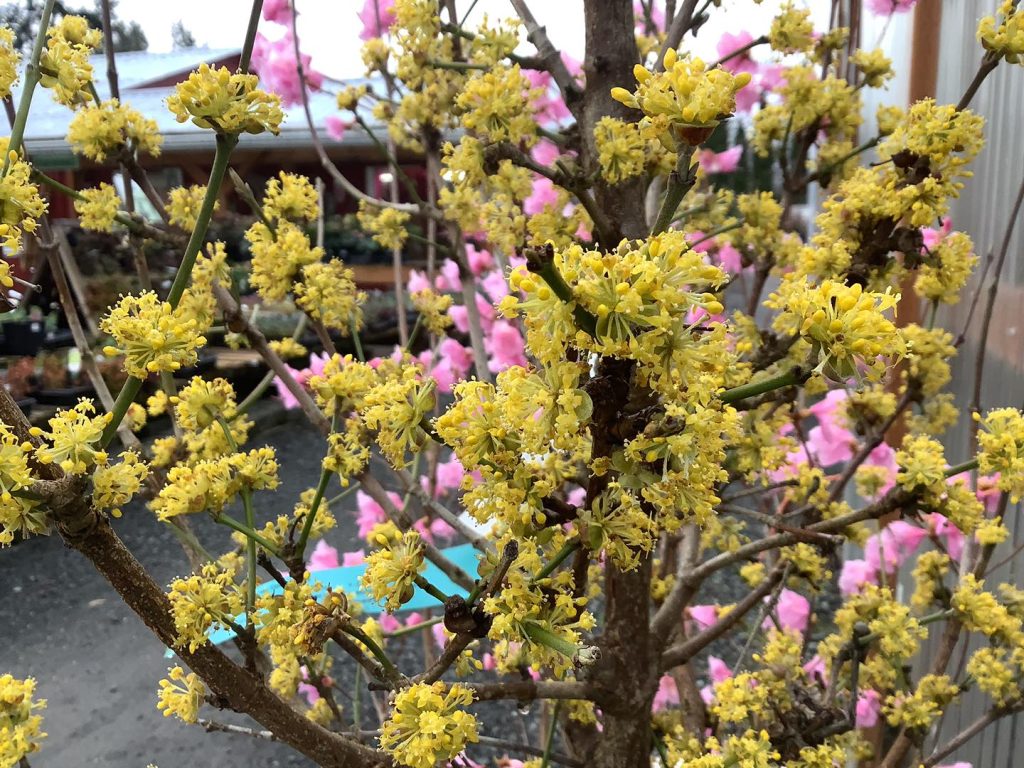
This early-blooming European import is a hardy shrub or small tree, valued for its cherry-like fruits used in jams and liqueurs. It’s one of the first trees to flower in late winter.
- Scientific Name: Cornus mas
- USDA Zones: 4–8
- Color Variation: Clusters of small yellow flowers; dark green leaves turn purple in fall; red fruits.
- Sun Exposure: Full sun for best fruit production; tolerates partial shade.
- Mature Size: 15–25 feet tall and wide, multi-stemmed.
- Lifespan: 100+ years, remarkably long-lived.
- Toxicity: Fruits are edible and nutritious (rich in vitamin C); bark and leaves are mildly toxic if ingested.
The fruits ripen in midsummer, providing an early food source for birds. Its rough, textured bark adds year-round interest. Ideal for hedges or edible landscapes in colder regions.
5. Red Osier Dogwood (Cornus sericea)
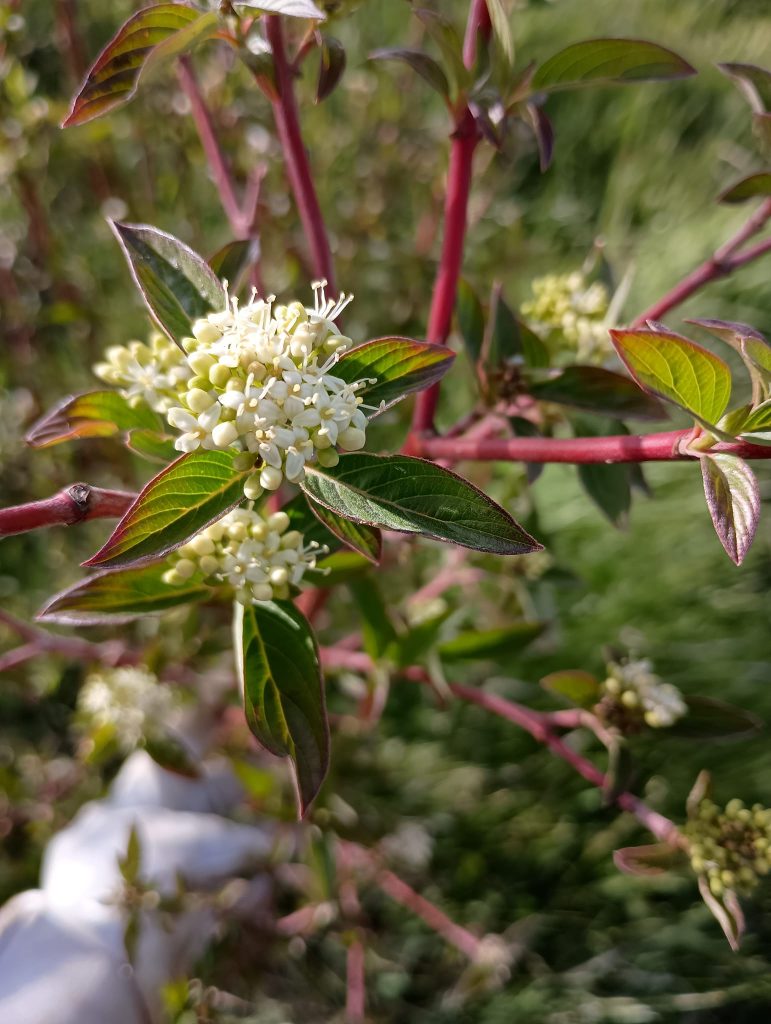
A vigorous native shrub, Red Osier Dogwood lights up winter landscapes with brilliant red stems. It’s commonly used for erosion control along streams.
- Scientific Name: Cornus sericea (syn. C. stolonifera)
- USDA Zones: 3–8
- Color Variation: White flower clusters in spring; white berries; red twigs; fall leaves yellow to red.
- Sun Exposure: Full sun to partial shade; brighter stems in sun.
- Mature Size: 6–15 feet tall and wide, suckering habit.
- Lifespan: 20–50 years; renew by coppicing every few years.
- Toxicity: Mildly toxic berries cause stomach upset; stems are non-toxic.
This invasive shrub spreads via rhizomes, forming thickets that outcompete other plants. Cultivars like ‘Kelseyi’ are compact for borders. It’s a wildlife haven, hosting over 100 insect species.
6. Pagoda Dogwood (Cornus alternifolia)
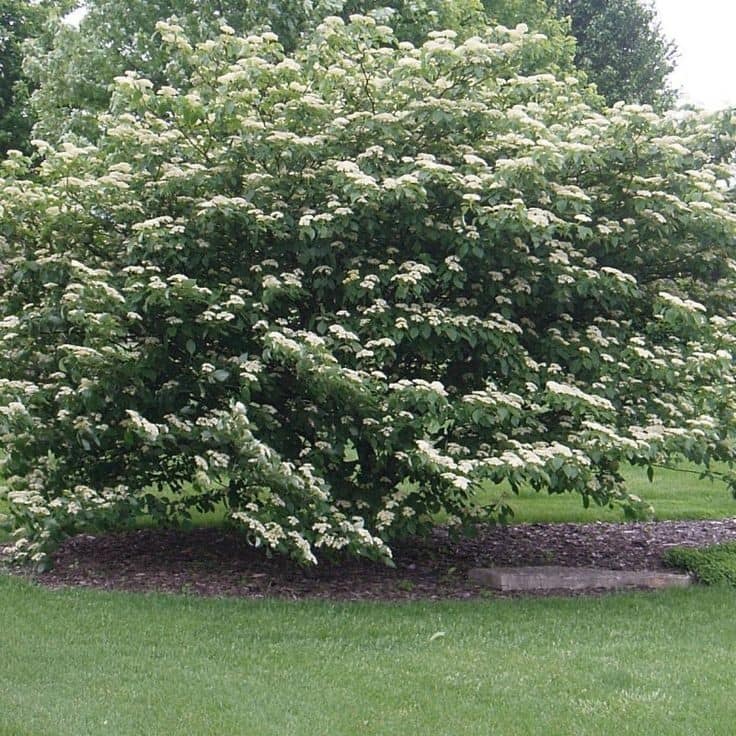
The Pagoda Dogwood, a native to eastern North America, stands out for its striking, tiered branching pattern that resembles the layered roofs of an Asian pagoda. In late spring, it produces flat-topped clusters of creamy white flowers that attract pollinators like bees and butterflies.
These are followed by blue-black berries in summer, a favorite of songbirds such as robins and cedar waxwings. The leaves, arranged alternately along the stems (a rarity among dogwoods), turn a vibrant purple-red in fall, adding seasonal drama.
- Scientific Name: Cornus alternifolia
- USDA Zones: 3–7
- Color Variation: White flat-topped flower clusters; blue-black berries; purple-red fall color.
- Sun Exposure: Partial shade; full sun may scorch leaves.
- Mature Size: 15–25 feet tall, 20–30 feet wide, layered tiers.
- Lifespan: 50–100 years.
- Toxicity: Berries are mildly toxic to humans; safe for birds.
This understory tree thrives in shaded woodland gardens or as a specimen in small yards, where its horizontal branching creates a sculptural effect.
7. Gray Dogwood (Cornus racemosa)
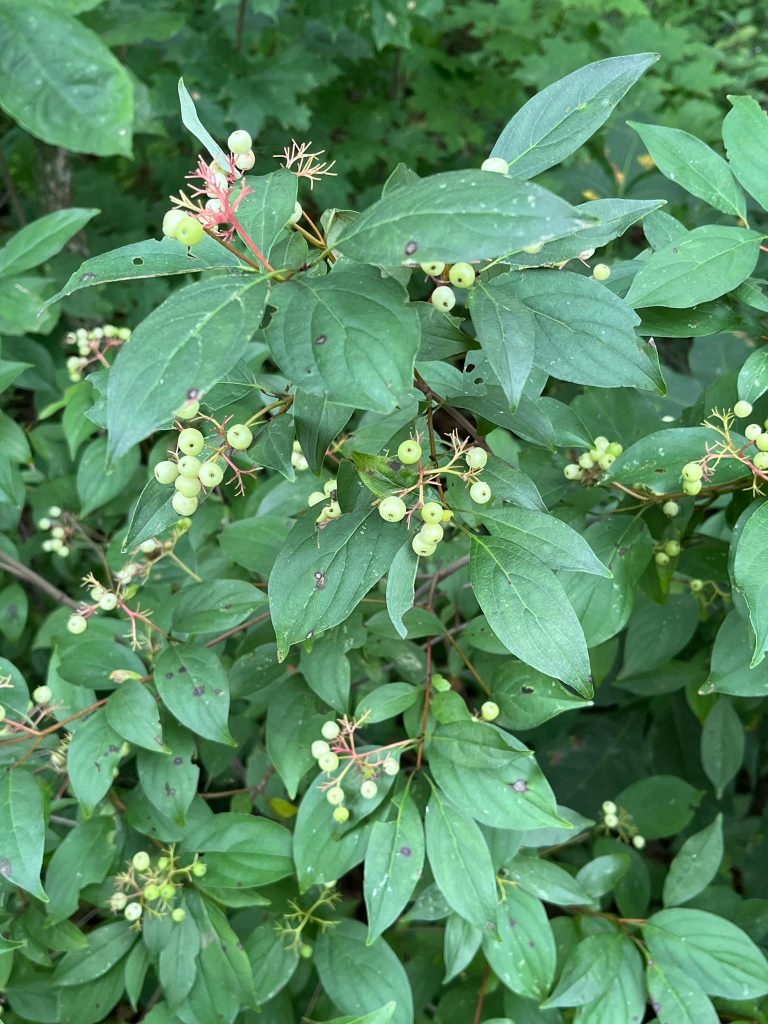
The Gray Dogwood is a tough, adaptable native shrub found across the eastern and central U.S. It’s often thriving in challenging sites like roadsides, forest edges, or disturbed areas. Its small, creamy white flowers bloom in late spring in loose panicles, giving way to white berries on red stalks that persist into winter, providing a vital food source for birds like sparrows and finches.
The foliage turns purplish in fall, complementing the shrub’s understated grayish bark, which adds subtle winter interest. This suckering shrub forms dense thickets, making it ideal for erosion control or naturalized landscapes.
- Scientific Name: Cornus racemosa
- USDA Zones: 4–8
- Color Variation: White flowers in panicles; white berries; purplish fall leaves; gray bark.
- Sun Exposure: Full sun to partial shade.
- Mature Size: 10–15 feet tall and wide, suckering.
- Lifespan: 30–50 years.
- Toxicity: Berries are toxic if eaten in quantity.
This Dogwood variety tolerates wet or dry soils, making it a low-maintenance choice for naturalized areas. Berries persist into winter, feeding birds.
8. Roughleaf Dogwood (Cornus drummondii)
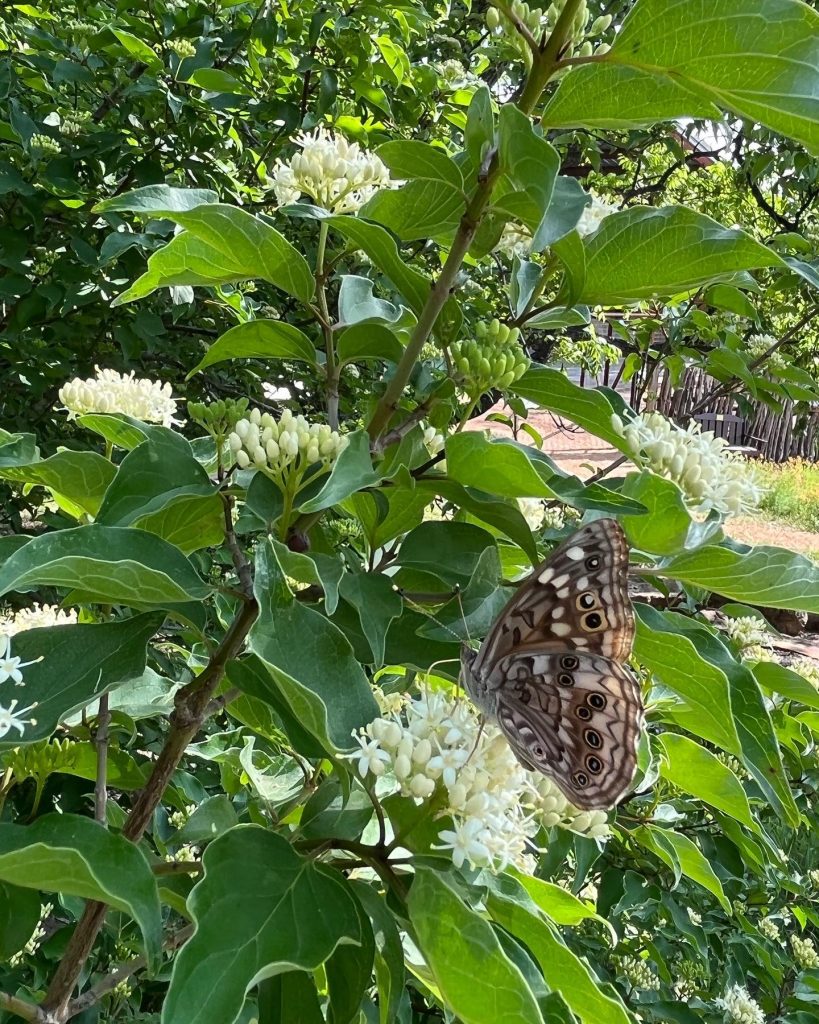
Native to the Midwest and Great Plains, the Roughleaf Dogwood earns its name from its distinctive, coarse-textured leaves, which have a sandpapery feel due to prominent veins. In late spring, it produces clusters of small white flowers that attract pollinators, followed by white berries that are a boon for wildlife, particularly birds.
The foliage transforms into a rich red-purple in autumn, creating a bold contrast in mixed borders or prairie-style gardens. This shrubby dogwood spreads via suckers, forming colonies that stabilize soil along riverbanks or slopes.
- Scientific Name: Cornus drummondii
- USDA Zones: 3–8
- Color Variation: White flower clusters; white berries; red-purple fall color.
- Sun Exposure: Full sun to partial shade.
- Mature Size: 10–15 feet tall and wide.
- Lifespan: 40–60 years.
- Toxicity: Mildly toxic berries.
This Midwestern native thrives in prairies and along rivers, known for its textured leaves and wildlife value. Rough, veined leaves distinguish it. It’s drought-tolerant once established, ideal for xeriscapes.
9. Swamp Dogwood (Cornus foemina)
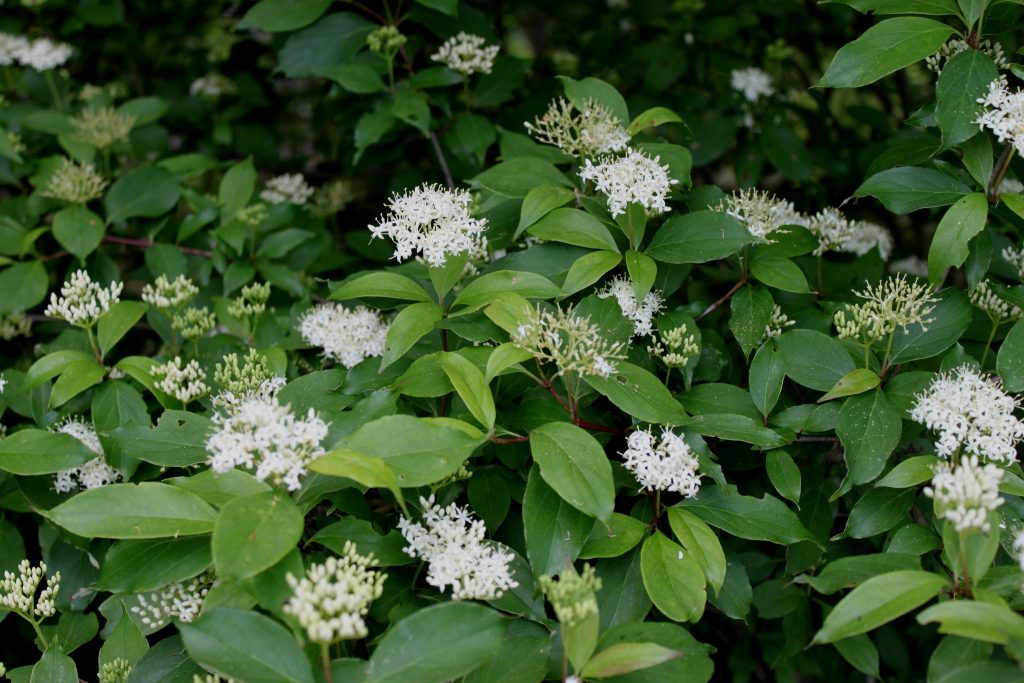
Also known as Stiff Dogwood, the Swamp Dogwood is a southeastern U.S. native that excels in wet, poorly drained soils, making it a standout for rain gardens or boggy landscapes. In spring, it bears clusters of small white flowers surrounded by delicate bracts, which develop into blue-white berries by late summer, attracting waterfowl and other birds.
The leaves turn a vivid red in fall, adding seasonal vibrancy to low-lying areas. This multi-stemmed shrub forms dense thickets, offering habitat for amphibians and small mammals in wetland ecosystems. Its upright, stiff branches give it a formal appearance, suitable for naturalized borders or near ponds.
- Scientific Name: Cornus foemina
- USDA Zones: 6–9
- Color Variation: White bracts; blue-white berries; red fall foliage.
- Sun Exposure: Full sun to partial shade.
- Mature Size: 6–15 feet tall and wide.
- Lifespan: 30–50 years.
- Toxicity: Berries cause mild GI distress.
This dogwood variety forms colonies in swamps, supporting amphibians and birds. Great for rain gardens.
10. Bloodtwig Dogwood (Cornus sanguinea)
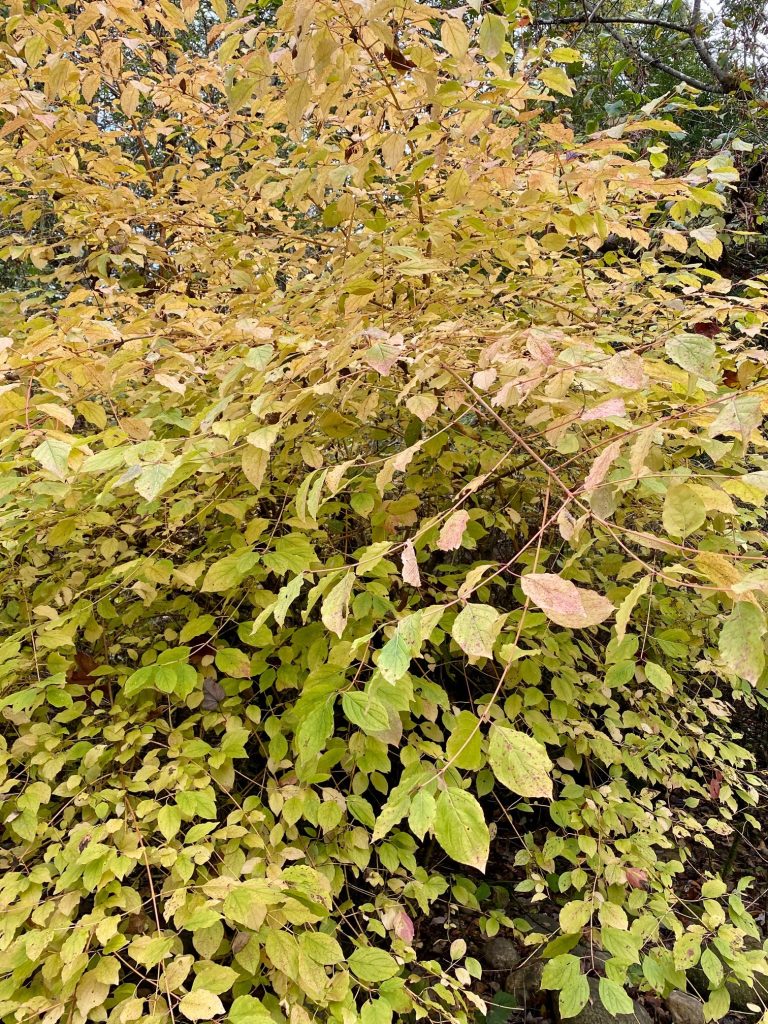
Hailing from Europe but popular in the northeastern U.S., the Bloodtwig Dogwood is prized for its vibrant red twigs that ignite winter landscapes, especially against snow. In late spring, it produces flat clusters of white flowers that draw pollinators.
This is followed by small black berries that are a food source for birds, but should be kept away from pets and children due to mild toxicity. The dark green leaves turn a deep red in fall, enhancing its multi-season appeal.
- Scientific Name: Cornus sanguinea
- USDA Zones: 4–7
- Color Variation: White flowers; black berries; blood-red twigs; fall red leaves.
- Sun Exposure: Full sun for stem color.
- Mature Size: 6–10 feet tall and wide.
- Lifespan: 20–40 years; prune for vigor.
- Toxicity: Berries are toxic.
This compact shrub is perfect for mixed borders, hedges, or mass plantings, where its colorful stems create a striking focal point in colder months. For the brightest twig color, plant in full sun and prune older stems annually to encourage new growth, which displays the most vivid hues.
11. Tatarian Dogwood (Cornus alba)
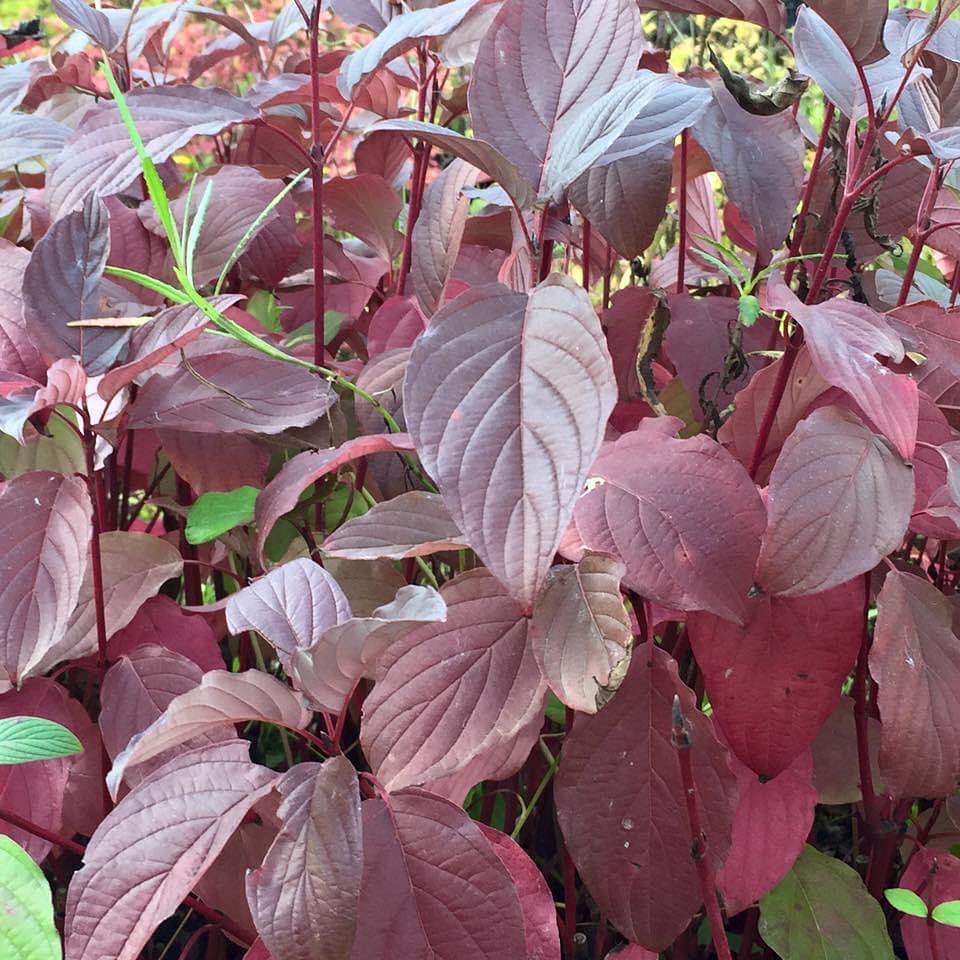
Originating from Siberia, the Tatarian Dogwood is a cold-hardy shrub renowned for its fiery red stems that provide stunning winter contrast, particularly in snowy northern climates. Its clusters of tiny white flowers in spring attract bees, while the white berries that follow are a treat for birds.
The leaves, which turn yellow or reddish in fall, add seasonal warmth to gardens. Cultivars like ‘Elegantissima’ offer variegated foliage for extra visual interest.
- Scientific Name: Cornus alba
- USDA Zones: 2–7
- Color Variation: White flowers; white berries; red stems; yellow fall leaves.
- Sun Exposure: Full sun to partial shade.
- Mature Size: 6–8 feet tall and wide.
- Lifespan: 20–30 years.
- Toxicity: Mildly toxic.
This dogwood’s suckering habit makes it ideal for erosion control or as a low hedge in urban settings. It thrives in a range of soils and tolerates heavy pruning, which rejuvenates stem color. Plant in full sun to maximize the brilliance of its twigs, and water regularly during establishment.
12. Bunchberry (Cornus canadensis)
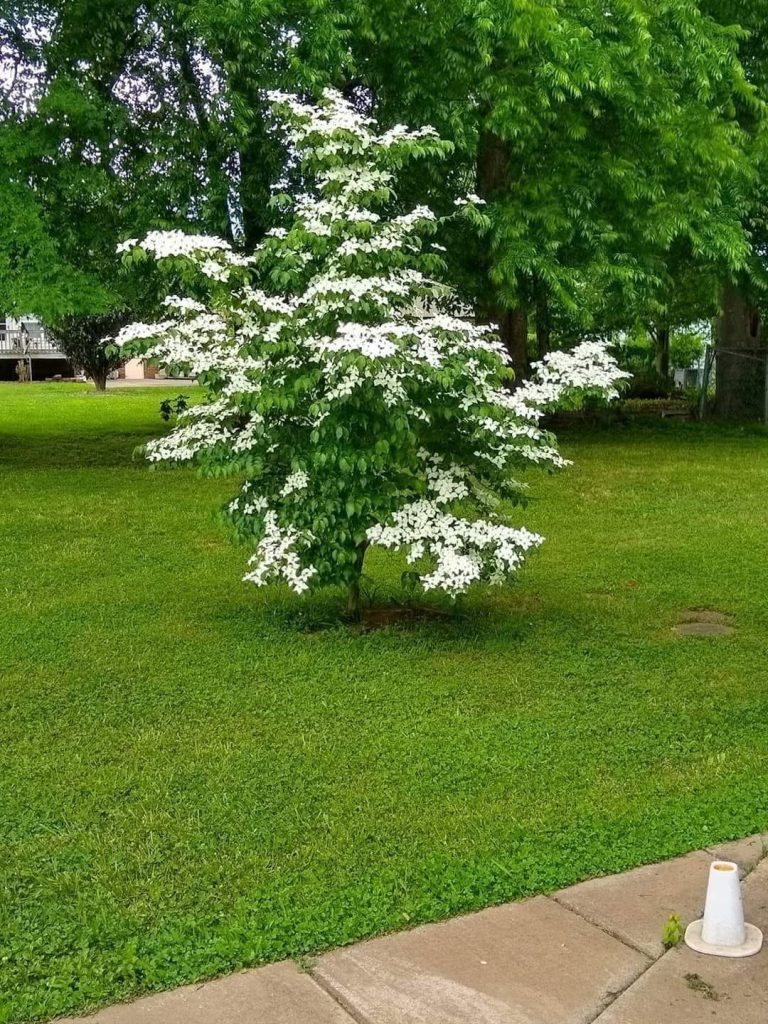
The Bunchberry, or Dwarf Dogwood, is a charming herbaceous perennial native to northern North America, functioning as a groundcover rather than a traditional tree or shrub. Its petite, white bracts mimic the classic dogwood flower in miniature, blooming in late spring to early summer and attracting bumblebees and other small pollinators.
These give way to bright red berries, which are edible but tart, often used by wildlife like grouse. The foliage, arranged in whorls, turns red in fall, creating a carpet of color in shaded areas.
- Scientific Name: Cornus canadensis
- USDA Zones: 2–6
- Color Variation: White bracts; red berries; red fall foliage.
- Sun Exposure: Partial to full shade.
- Mature Size: 4–9 inches tall, spreading.
- Lifespan: 10–20 years per plant; colonies indefinite.
- Toxicity: Berries are edible but astringent; low toxicity.
Perfect for rock gardens or under conifers, Bunchberry thrives in cool, moist, acidic soils and is a low-maintenance choice for woodland settings. Avoid foot traffic to protect its delicate structure, and mulch to retain soil moisture.
13. Giant Dogwood (Cornus controversa)
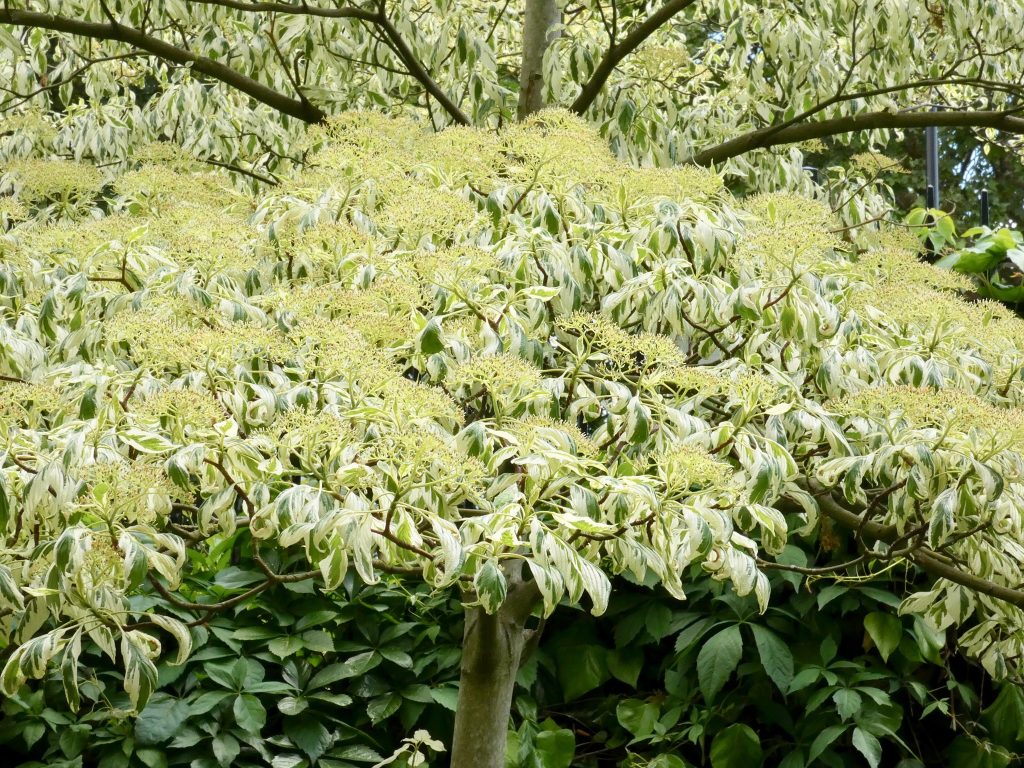
The Giant Dogwood, native to Asia but increasingly popular in the U.S., is a majestic tree with a tiered, pagoda-like structure that commands attention in large landscapes. Its creamy white flower clusters bloom in early summer, followed by small black berries that attract birds but are toxic to humans.
- Scientific Name: Cornus controversa
- USDA Zones: 5–7
- Color Variation: White flower clusters; black berries; red-purple fall color.
- Sun Exposure: Partial shade.
- Mature Size: 30–50 feet tall, 25–40 feet wide.
- Lifespan: 50–100 years.
- Toxicity: Berries are toxic.
The broad, dark green leaves turn a rich red-purple in fall, making it a standout specimen tree. The horizontal branching pattern, similar to Pagoda Dogwood but on a grander scale, creates a dramatic silhouette year-round. ‘Variegata’ adds cream-edged leaves for extra elegance.
14. Japanese Dogwood (Cornus officinalis)
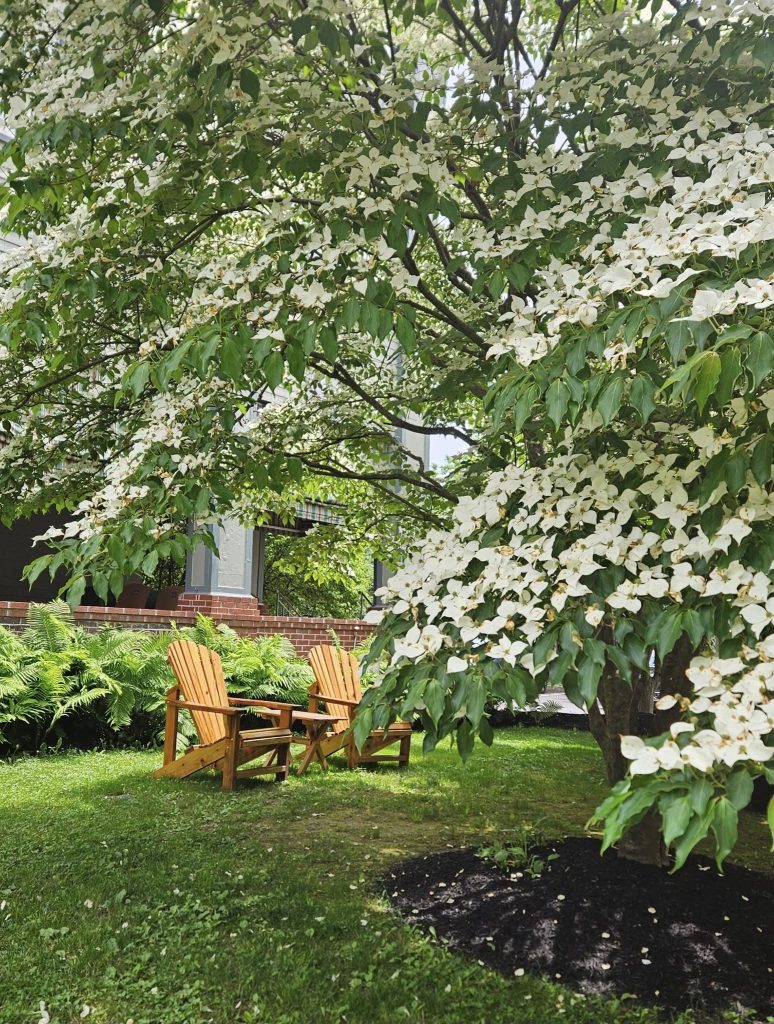
Closely related to the Cornelian Cherry, the Japanese Dogwood is a small tree or large shrub from Asia, valued for its very early yellow blooms that herald spring, often appearing in late winter before leaves emerge.
These are followed by glossy red drupes, used in traditional medicine and culinary applications like syrups, though raw fruits can cause mild stomach upset. The foliage turns reddish in fall, and the exfoliating bark, peeling in shades of gray and tan, adds winter texture.
- Scientific Name: Cornus officinalis
- USDA Zones: 4–8
- Color Variation: Yellow flowers; red drupes; reddish fall leaves.
- Sun Exposure: Full sun to partial shade.
- Mature Size: 15–25 feet tall.
- Lifespan: 50+ years.
- Toxicity: Fruits used in herbal medicine; mildly toxic raw.
This dogwood’s compact size and ornamental bark make it ideal for Asian-inspired gardens or small urban yards. Plant in a sunny spot for maximum flowering, and pair with early bulbs like crocuses for a vibrant spring display. Ensure good drainage to prevent root rot.
15. Blue-Stemmed Dogwood (Cornus alternifolia ‘Blue Cloud’)
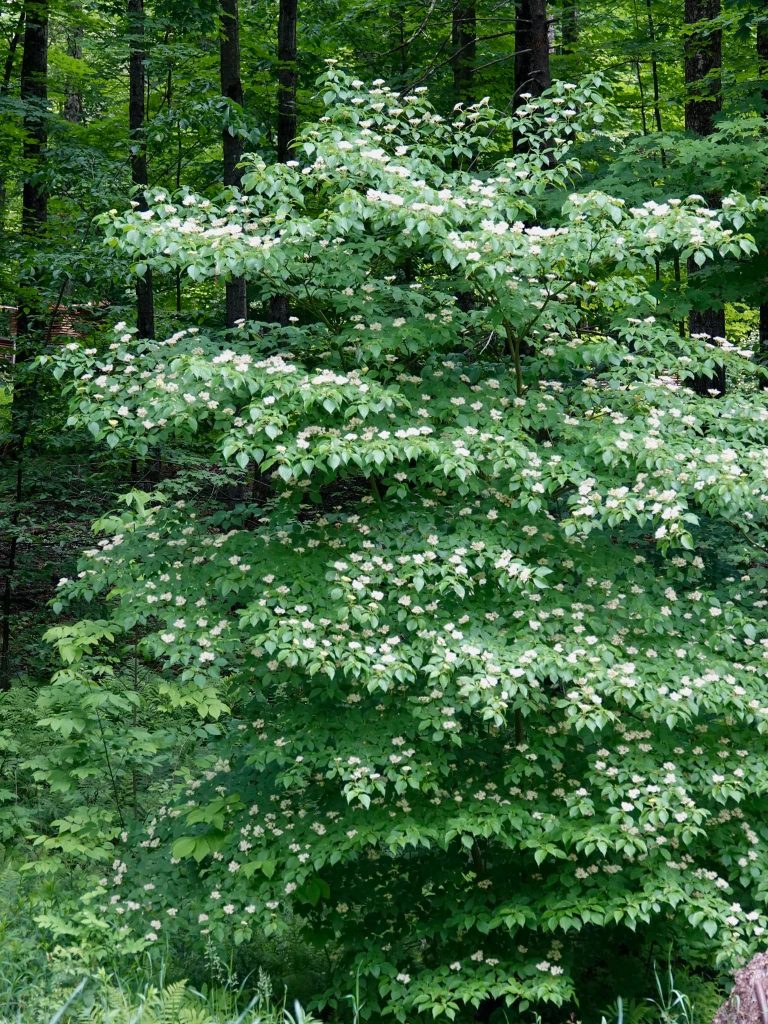
A cultivar of the Pagoda Dogwood, ‘Blue Cloud’ is celebrated for its powdery blue stems that create a soft, ethereal glow in winter shade, making it a unique addition to modern landscapes.
Its small white flower clusters in late spring attract pollinators, while the blue-black berries that follow are a bird magnet. The foliage, like its parent species, turns a vivid purple in fall, complementing the blue twigs.
- Scientific Name: Cornus alternifolia ‘Blue Cloud’
- USDA Zones: 3–7
- Color Variation: White flowers; blue stems; purple fall foliage.
- Sun Exposure: Partial shade.
- Mature Size: 15–20 feet tall, 12–15 feet wide.
- Lifespan: 40–60 years.
- Toxicity: Similar to species; low.
This compact tree is perfect for urban patios, small gardens, or as an understory accent in larger woodland settings. Its tiered branching mirrors the Pagoda Dogwood but in a more restrained form, ideal for tight spaces.
Selecting and Planting Dogwood Trees
Choosing the right dogwood starts with your USDA zone and site conditions. Natives like C. florida suit eastern woodlands, while C. kousa fits hotter southern yards. Assess soil drainage—dogwoods hate “wet feet”—and test pH; amend with peat if too alkaline.
Plant in early spring or fall, digging a hole twice as wide as the root ball but no deeper. Space trees 15–20 feet apart for air flow, reducing disease risk. Water deeply weekly for the first year, then mulch to conserve moisture. Fertilize sparingly with acid-loving formulas in spring.
Common challenges include anthracnose (treat with fungicides) and borers (inspect bark). Prune in late winter, removing crossing branches.
Maintenance and Care
Routine care ensures longevity. Water during dry spells, aiming for 1 inch weekly. Mulch 2–3 inches deep, keeping it from the trunk to prevent rot. Monitor for pests like scale; insecticidal soap works well.
In the fall, rake leaves to compost, enriching soil naturally. Winter interest from stems or bark means minimal intervention. For colder zones, wrap young trunks against sunscald. Pests and diseases vary by variety—C. sericea resists well, but watch for canker.
Supporting wildlife? Leave berries for birds, but net if deer browse. Sustainable practices like rain barrels aid these moisture-lovers.
Suggested For You:
Understanding The Yoshino Cherry: History, Care Details and Common Problems
Understanding The Winter Flowering Cherry: History, Care Details and Common Problems
Understanding The Weeping Cherry Tree: History, Care Details, and Common Problems
Understanding Money Tree: History, Care Details and Common Problems
Understanding The Eastern Redbud Tree: History, Care Details and Common Problems
Final thoughts
Dogwoods symbolize rebirth in Native American lore, with wood used for tools. In the U.S., they’re planted in historic sites like Monticello. Ecologically, they host 50+ Lepidoptera species, boosting butterfly populations.
From Appalachian trails to California coasts, dogwoods define regional beauty. Pair with ferns or azaleas for layered understories. As climate shifts, heat-tolerant hybrids gain popularity. Whether enhancing curb appeal or fostering wildlife, dogwoods prove their worth as American favorites.

Tim M Dave is a gardening expert with a passion for houseplants, particularly cacti and succulents. With a degree in plant biology from the University of California, Berkeley, he has vast experience in gardening. Over the years, he has cultivated a vast collection of desert plants and learned a great deal about how to grow and care for these unique companions.