Understanding Cherry Blossom Tree: Types, History and Full Growing Details
Few sights on earth match the moment a cherry blossom tree erupts into full flower. The delicate pink and white petals seem almost too beautiful to be real — and every year, millions of people travel across continents just to witness it.
But there is far more to the cherry blossom tree than a pretty display. It carries centuries of cultural meaning, remarkable botanical complexity, and practical value for home gardeners and urban planners alike.
This guide covers everything: what cherry blossom trees are, where they thrive, how to grow and care for them, their cultural significance, the best places in the world to see them, and what science tells us about their blooming behavior.
What Is a Cherry Blossom Tree?
A cherry blossom tree is any tree within the genus Prunus that produces ornamental flowers, particularly those cultivated for their showy spring blooms rather than their fruit. The most celebrated species is Prunus serrulata, commonly called the Japanese flowering cherry or Sakura.
However, the broader category includes dozens of species and hundreds of cultivars, including Prunus avium (wild cherry), Prunus subhirtella (Higan cherry), Prunus × yedoensis (Yoshino cherry), and Prunus sargentii (Sargent cherry).
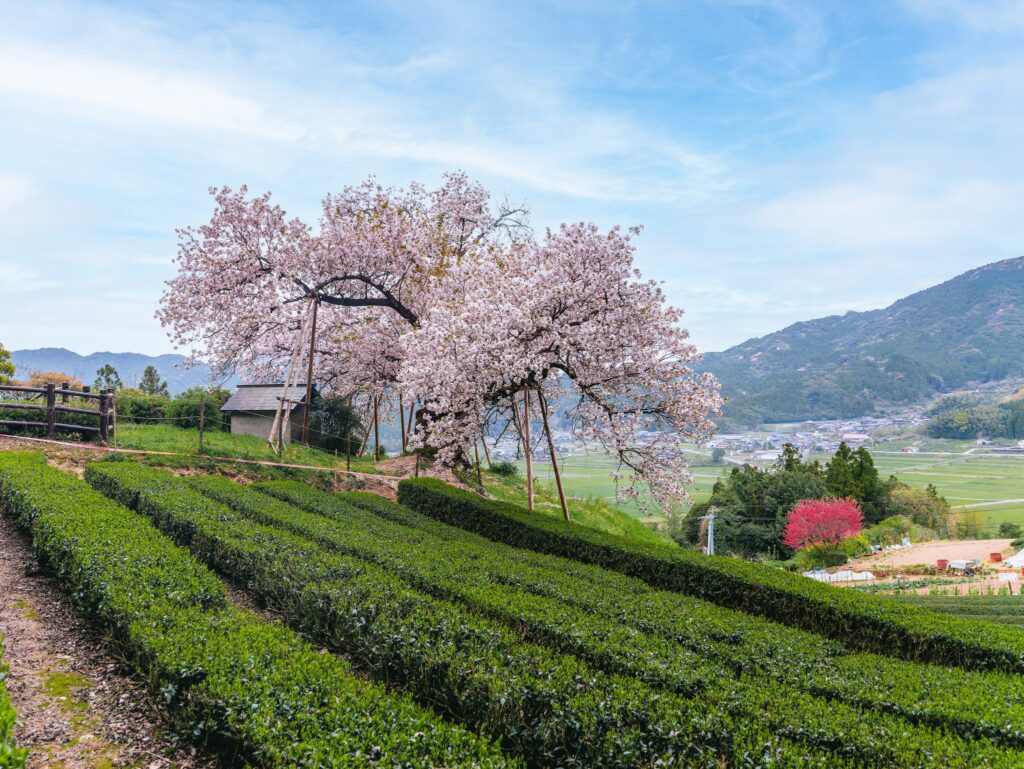
These trees belong to the Rosaceae (rose) family, which also includes apples, pears, and plums. They are deciduous, meaning they shed their leaves in autumn. In spring, often before the leaves fully emerge, they produce an explosion of blooms that range from pure white to deep magenta.
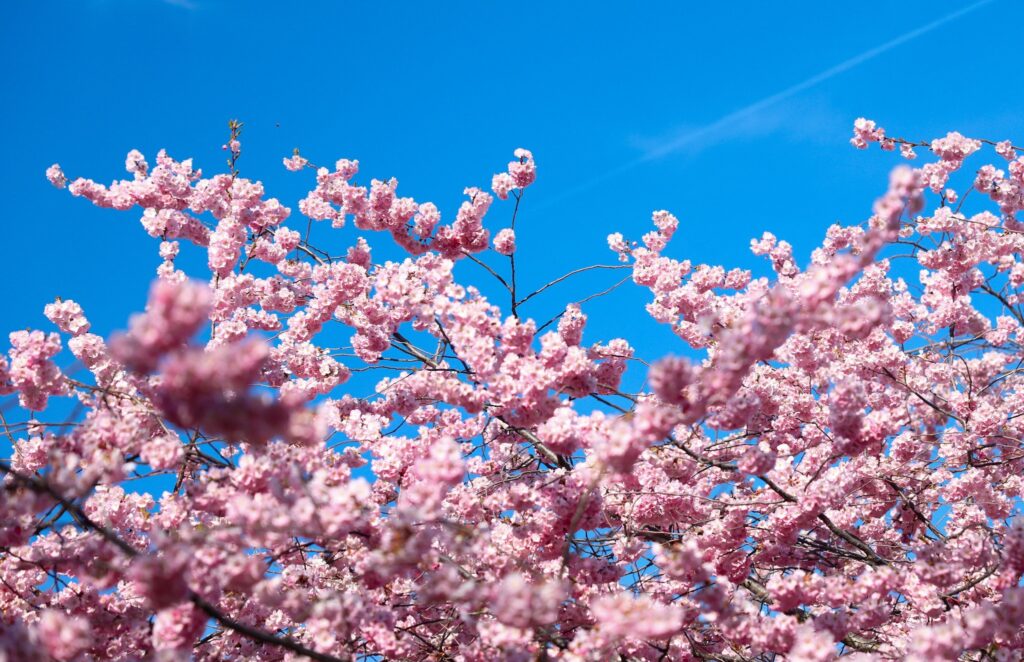
The blossoms themselves are typically five-petaled in wild species, while cultivated varieties (known as sato-zakura) often produce double flowers with as many as 50 petals per bloom.
The Science Behind the Bloom
One of the most fascinating aspects of the cherry blossom tree is its chilling requirement — a biological mechanism called vernalization. The tree needs a period of cold winter temperatures (typically between 32°F and 50°F / 0°C and 10°C) to “reset” its flowering cycle. Without sufficient cold, blooming is delayed or irregular.
After the chilling requirement is met, the tree then needs accumulated warmth in early spring to trigger bud burst. Scientists measure this warmth in growing degree days — a calculation based on daily temperature averages above a baseline threshold.
This dual-trigger system explains why cherry blossoms are so sensitive to climate change. As winters become milder in some regions, trees accumulate less cold, and blooms arrive earlier — sometimes by weeks compared to historical averages.
In Kyoto, Japan, researchers have documented a shift of more than two weeks earlier in peak bloom dates over the past century.
The blooming window is also extraordinarily brief. Most cherry blossom trees remain in peak bloom for only 7 to 14 days. Wind, rain, or warm temperatures can shorten this window further. This fleeting nature is central to why the blossom carries such deep cultural meaning.
15 Types of Cherry Blossom Trees
There are more than 400 cultivated varieties of cherry blossom trees. Here are the most widely grown and celebrated:
1. Yoshino Cherry (Prunus × yedoensis)
The most planted ornamental cherry tree in the world.
The Yoshino cherry is the tree that most people picture when they hear “cherry blossom.” Its single, five-petaled flowers open in a soft blush pink and fade to near-white as they mature, creating a two-toned canopy effect that is genuinely breathtaking at scale.
It is a fast-growing, vigorous hybrid — likely a cross between Prunus subhirtella and Prunus speciosa — and reaches 20 to 30 feet in height with an equal spread. The flowers carry a faint, pleasant almond scent and appear just before or alongside the emerging leaves.
- Bloom time: Late March to early April (Northern Hemisphere)
- Hardiness: USDA Zones 5–8
- Best known for: The Tidal Basin, Washington, D.C.; Ueno Park, Tokyo
- Growing tip: Prefers full sun and well-drained soil; avoid waterlogged ground
It is the dominant tree at the National Cherry Blossom Festival in Washington, D.C., where more than 3,000 specimens line the Tidal Basin — many descended from the original 1912 gift from Japan.
2. Kwanzan Cherry (Prunus serrulata ‘Kwanzan’)
The showiest double-flowered cherry in cultivation.
If the Yoshino is elegant, the Kwanzan is extravagant. Its fully double flowers — each containing 28 to 30 petals — are a deep, vivid rose-pink that commands attention. The clusters hang in drooping bunches, giving the tree a lush, almost theatrical appearance in full bloom.
Kwanzan blooms approximately two weeks later than the Yoshino, extending the cherry blossom season for cities that plant both. Because the flowers are so densely packed, they also last longer than single-flowered varieties.
- Bloom time: Mid to late April
- Hardiness: USDA Zones 5–9
- Height: 15 to 25 feet, vase-shaped canopy
- Growing tip: Excellent urban tolerance; one of the most disease-resistant ornamental cherries
It is one of the most widely planted street trees across North America and is a signature tree along New York City’s Brooklyn Botanic Garden’s famous Cherry Esplanade.
3. Weeping Higan Cherry (Prunus subhirtella ‘Pendula’)
The most graceful silhouette in the cherry blossom family.
Few garden trees create the immediate visual drama of a mature weeping cherry in full bloom. The long, arching branches cascade to the ground, forming a dome-shaped curtain of pale pink flowers that moves gently in the breeze.
‘Pendula’ is one of the earliest-blooming cherries, often flowering in late winter or very early spring — sometimes weeks before most other ornamental trees. This makes it particularly valuable in gardens where early-season color is a priority.
- Bloom time: Late February to mid-March
- Hardiness: USDA Zones 4–8
- Height: 20 to 30 feet tall; equally wide spreading canopy
- Growing tip: Stake young trees to establish the central leader; the weeping form develops best with early support
The Higan cherry also has a semi-double autumn-blooming form (‘Autumnalis’) — see Type 9 below — making the species one of the most seasonally versatile in the genus.
4. Sargent Cherry (Prunus sargentii)
The hardiest large cherry blossom tree, with exceptional autumn color.
Named after the American botanist Charles Sargent who first described it, the Sargent cherry is native to Japan, Korea, and Sakhalin Island. It is one of the largest ornamental cherries, capable of reaching 40 to 50 feet in height, and one of the longest-lived — specimens over 100 years old are documented.
Its clear, single pink flowers appear in mid-spring, and the foliage that follows has a beautiful bronze tint when young before maturing to dark green. In autumn, the Sargent cherry is among the first trees to change color — producing brilliant oranges and deep reds before most other trees have begun to turn.
- Bloom time: Mid-April
- Hardiness: USDA Zones 4–7 (excellent cold hardiness)
- Height: 40 to 50 feet
- Growing tip: Ideal for large parks, estates, and naturalistic landscapes; give it room
For gardeners in colder northern regions who feel cherry blossoms are beyond their climate, the Sargent cherry is often the answer.
5. Okame Cherry (Prunus incisa × campanulata)
The best cherry blossom tree for warm-winter climates.
Developed by the British horticulturist Collingwood Ingram in the early 20th century, Okame is a deliberate hybrid designed to thrive in regions too warm for many traditional cherries. It has a lower chilling requirement than most varieties, making it the go-to choice for gardeners in the American South, the UK lowlands, and similar mild-winter regions.
The flowers are a vivid carmine-pink — deeper and more saturated than the Yoshino — and appear very early in the season. The tree itself is compact and upright, making it suitable for smaller gardens.
- Bloom time: Late February to mid-March
- Hardiness: USDA Zones 5–9
- Height: 15 to 25 feet, upright oval form
- Growing tip: One of the best choices for urban heat island environments; tolerates warmer winters better than most
The autumn foliage is also noteworthy — turning orange and red reliably, which gives the tree three seasons of interest: early spring flowers, summer green canopy, and autumn color.
6. Taiwan Cherry (Prunus campanulata)
The tropical cherry — vibrant, early, and underused in Western gardens.
The Taiwan cherry, also called the Formosan cherry or bellflower cherry, is native to Taiwan and southern China. It is one of the few cherry species adapted to subtropical conditions, requiring very little winter chill and thriving in climates where other cherries simply will not bloom.
Its flowers are a rich, deep fuchsia-red — more vivid than almost any other cherry species — and hang in drooping clusters of three to five blooms. They appear very early in the year, often in January or February in mild climates.
- Bloom time: January to February (in mild climates)
- Hardiness: USDA Zones 7b–9
- Height: 20 to 30 feet
- Growing tip: The ideal cherry for Hawaii, Southern California, the Gulf Coast, and similar climates; requires fewer than 200 chilling hours
In the UK, it succeeds in the warmest gardens of Cornwall, Devon, and the west coast of Scotland. It is also one of the parents of the Okame hybrid, passing on its heat tolerance and early bloom habit.
7. Snow Fountains Weeping Cherry (Prunus ‘Snow Fountains’)
The best compact weeping cherry for small gardens.
Where space is limited, ‘Snow Fountains’ is a revelation. This refined cultivar grows to only 8 to 12 feet — a fraction of the size of the standard weeping Higan cherry — with branches that cascade almost to ground level, creating a white waterfall of single blooms in mid-spring.
The pure white flowers cover the weeping branches so completely that the wood beneath is nearly invisible at peak bloom. This is one of the finest small garden specimens available.
- Bloom time: Mid-April
- Hardiness: USDA Zones 4–8
- Height: 8 to 12 feet, pendulous form
- Growing tip: Perfect for containers, patios, and small courtyard gardens; stake the central leader in early years
After the flowers drop, the autumn foliage turns orange and bronze, providing a second season of ornamental value.
8. Amanogawa Cherry (Prunus serrulata ‘Amanogawa’)
The narrow columnar cherry — ideal for tight spaces and formal planting.
The name Amanogawa means “Milky Way” in Japanese — a poetic description that captures the effect of its upright flower clusters against a spring sky. This variety grows in a tight, fastigiate (columnar) form, rarely more than 4 to 6 feet wide but reaching 15 to 25 feet in height.
The semi-double flowers are pale pink, lightly fragrant, and produced in abundance along the upright branches. Because of its narrow profile, Amanogawa can be planted where almost no other tree would fit — flanking a doorway, lining a narrow path, or adding vertical interest in a small urban garden.
- Bloom time: Mid to late April
- Hardiness: USDA Zones 5–8
- Height: 15 to 25 feet tall, 4 to 6 feet wide
- Growing tip: Superb for avenue planting in narrow streets or driveways; good wind tolerance due to its upright habit
This is a Japanese cultivar with centuries of garden use, and it remains one of the most architecturally distinctive cherries in cultivation.
9. Autumnalis Cherry (Prunus subhirtella ‘Autumnalis’)
The only cherry blossom tree that flowers in winter.
The Autumnalis is genuinely unique: it is the only widely grown ornamental cherry that reliably produces flowers during winter. In mild spells between November and March, it opens its small, semi-double white to pale pink flowers — making it extraordinarily valuable in climates where winter garden color is hard to achieve.
The flowers are produced intermittently over several months rather than in one explosive burst. A mild winter day will trigger a flush of bloom; a cold snap pauses it. Come spring, a final, more generous flush marks the end of the season.
- Bloom time: November to March (intermittent); April (final flush)
- Hardiness: USDA Zones 4–8
- Height: 20 to 25 feet
- Growing tip: Plant where it can be seen from indoors during winter; cut branches for indoor forcing
It is particularly prized in the United Kingdom, where its winter flowering aligns with the longest, darkest months of the year. Branches cut in November and placed in warm water indoors will open within days.
10. Kanzan Cherry (Prunus serrulata ‘Kanzan’)
The classic double-flowered cherry of European avenues.
Often used interchangeably with ‘Kwanzan’ (they are closely related cultivars and sometimes considered identical), ‘Kanzan’ is the dominant ornamental cherry planted across the United Kingdom and mainland Europe. Streets lined with Kanzan trees in full bloom — their branches angled upward like a vase, smothered in deep pink double flowers — are one of the defining images of the British spring.
The flowers are a bold, saturated pink and appear in drooping clusters of up to five blooms. Young leaves emerge a bronzy-copper color simultaneously with the flowers, creating a rich color contrast.
- Bloom time: Mid to late April
- Hardiness: USDA Zones 5–8
- Height: 25 to 35 feet, distinctive inverted vase shape
- Growing tip: Allow adequate space; crowded Kanzan trees lose their characteristic open form
It is important to note that Kanzan has a shorter lifespan than many cherries — typically 25 to 35 years in urban conditions. Planning for eventual replacement is wise when planting for the long term.
11. Kojo-no-mai (Prunus incisa ‘Kojo-no-mai’)
The finest dwarf cherry blossom tree for containers and tiny gardens.
Translated as “dance of the butterflies,” ‘Kojo-no-mai’ is a slow-growing, shrubby dwarf form of the Fuji cherry (Prunus incisa). It reaches only 5 to 8 feet in height, with a naturally irregular, twisted branching structure that gives it year-round visual interest even without flowers.
In early spring, the bare, zigzagging branches are covered with small, pale pink flowers that open from deep pink buds. The effect is delicate and refined — closer in feeling to Japanese wabi-sabi aesthetics than the bold displays of the larger cultivars.
- Bloom time: Late March to early April
- Hardiness: USDA Zones 5–8
- Height: 5 to 8 feet
- Growing tip: Well-suited to large containers; excellent on patios, in Japanese-style gardens, and in rock gardens; outstanding autumn color in orange and red
Few plants offer more year-round interest in a small footprint. This is the cherry blossom tree for gardeners who think they have no space.
12. Shirotae Cherry (Prunus serrulata ‘Mount Fuji’ / ‘Shirotae’)
The most spectacular white-flowered cherry in cultivation.
‘Shirotae’ — also sold as ‘Mount Fuji’ — produces the largest and most impressive white flowers of any cherry cultivar. The semi-double to double blooms can reach 2 inches across and hang in long, drooping clusters that give the tree a distinctly elegant, almost chandelier-like appearance.
The tree has a broad, spreading, almost flat-topped habit, with horizontal branching that creates a layered silhouette reminiscent of a Japanese print. The flowers are pure white, sometimes with the faintest blush of pink at the center, and are lightly fragrant.
- Bloom time: Mid-April
- Hardiness: USDA Zones 5–8
- Height: 15 to 20 feet tall, 20 to 25 feet wide
- Growing tip: Give this tree width, not just height; its horizontal branching form needs space to be displayed properly
It is particularly beautiful planted beside water, where its spreading canopy and pendant flower clusters reflect in the surface below.
13. Shogetsu Cherry (Prunus serrulata ‘Shogetsu’)
A refined Japanese cultivar with exquisite fringed flowers.
‘Shogetsu’ — sometimes sold under the name ‘Shimidsu Sakura’ — is one of the most admired cherries among connoisseurs. It blooms later than most Japanese cultivars, which has two advantages: it misses most spring frosts, and it extends the cherry blossom season into late April and early May.
The flowers are large, fully double, and white — flushed pink in bud — and hang in long, pendulous clusters that can reach 3 to 4 inches in length. The petals have a distinctive fringed edge, giving each bloom a soft, lacy appearance.
- Bloom time: Late April to early May
- Hardiness: USDA Zones 5–8
- Height: 15 to 20 feet, with a broad, spreading crown wider than it is tall
- Growing tip: One of the best late-season cherries; ideal for pairing with Yoshino to extend the blossom season in a single garden
This tree rewards patience — it takes several years to establish its characteristic spreading habit, but the mature specimen is one of the most beautiful flowering trees in the temperate garden.
14. Umineko Cherry (Prunus ‘Umineko’)
A vigorous, disease-resistant cherry for challenging sites.
‘Umineko’ — meaning “seagull” in Japanese — is a hybrid cherry developed at the Royal Horticultural Society’s Wisley garden in the UK. It was bred specifically for disease resistance and vigor, making it a reliable choice for gardeners who have struggled with bacterial canker or other problems common in ornamental cherries.
The tree has a strongly upright, narrow form (similar to ‘Amanogawa’ but taller) and produces single white flowers in mid-spring. What it lacks in the flamboyance of double-flowered varieties, it compensates for in health, longevity, and ease of care.
- Bloom time: Mid-April
- Hardiness: USDA Zones 5–8
- Height: Up to 30 feet, columnar to broadly upright
- Growing tip: An excellent low-maintenance choice for parks, large gardens, and challenging urban sites
It is one of the recommended cherries for gardeners who prioritize tree health and longevity over maximum flower impact.
15. Wild Cherry (Prunus avium)
The native cherry — the ancestor of all edible sweet cherries.
The wild cherry, also known as gean or mazzard, is the only cherry blossom tree native to the British Isles and much of Europe. It is the ancestral species from which all cultivated sweet cherry fruit varieties have been developed over centuries.
In woodland and hedgerow, it reaches 40 to 60 feet — a true forest tree. Its single white flowers appear in mid-spring and are followed by small red or black cherries that are an important food source for birds. In autumn, the foliage turns a rich golden-orange that rivals any ornamental cultivar.
- Bloom time: Mid-April
- Hardiness: USDA Zones 3–8 (very cold-hardy)
- Height: 40 to 60 feet in the wild; smaller in cultivation
- Growing tip: Superb for wildlife gardens, woodland edges, and naturalistic landscapes; excellent bee forage plant
The wild cherry is increasingly planted in urban biodiversity schemes across Europe because of its value to pollinators, birds, and other wildlife. It bridges the gap between the ornamental and the ecological — beautiful, useful, and native.
Comparison Table: 15 Types of Cherry Blossom Trees at a Glance
| Type | Flower Color | Bloom Time | Height | USDA Zones |
| Yoshino | White/pale pink | Late March–April | 20–30 ft | 5–8 |
| Kwanzan | Deep rose-pink (double) | Mid–late April | 15–25 ft | 5–9 |
| Weeping Higan | Pale pink | Late Feb–March | 20–30 ft | 4–8 |
| Sargent | Clear pink | Mid-April | 40–50 ft | 4–7 |
| Okame | Carmine pink | Late Feb–March | 15–25 ft | 5–9 |
| Taiwan Cherry | Deep fuchsia-red | Jan–Feb | 20–30 ft | 7b–9 |
| Snow Fountains | White | Mid-April | 8–12 ft | 4–8 |
| Amanogawa | Pale pink (semi-double) | Mid–late April | 15–25 ft | 5–8 |
| Autumnalis | White/pale pink | Nov–March | 20–25 ft | 4–8 |
| Kanzan | Deep pink (double) | Mid–late April | 25–35 ft | 5–8 |
| Kojo-no-mai | Pale pink | Late March–April | 5–8 ft | 5–8 |
| Shirotae | White (semi-double) | Mid-April | 15–20 ft | 5–8 |
| Shogetsu | White (double, fringed) | Late April–May | 15–20 ft | 5–8 |
| Umineko | White | Mid-April | Up to 30 ft | 5–8 |
| Wild Cherry | White | Mid-April | 40–60 ft | 3–8 |
How to Choose the Right Cherry Blossom Tree
With 15 types in front of you, the choice can feel daunting. Here is a simple decision framework:
- For small gardens or containers: Kojo-no-mai, Snow Fountains, Amanogawa
- For warm-winter climates (mild UK, US South, California): Okame, Taiwan Cherry, Autumnalis
- For cold northern climates: Sargent Cherry, Wild Cherry, Weeping Higan
- For maximum flower drama: Kwanzan, Kanzan, Shirotae
- For an extended blooming season: Plant Autumnalis (winter), Yoshino (early spring), Kwanzan (late spring), and Shogetsu (very late spring) together to enjoy blossoms from November through early May.
- For wildlife and ecology: Wild Cherry — by far the most valuable native species for pollinators and birds.
- For year-round interest: Sargent Cherry (spring flowers + autumn color), Kojo-no-mai (spring flowers + twisted winter form + autumn color), Okame (flowers + autumn color)
Where Do Cherry Blossom Trees Grow Best?
Cherry blossom trees are native to the temperate regions of the Northern Hemisphere, including China, Japan, Korea, and parts of South Asia. Today, they are cultivated across much of the temperate world — from Canada and Europe to New Zealand and Chile.
Climate Requirements
- Hardiness: Most cherry blossom trees grow well in USDA Hardiness Zones 5 through 8 (approximately −20°F to 20°F / −29°C to −7°C minimum winter temperature). Some cultivars extend this range — Sargent cherry tolerates Zone 4, while Okame cherry thrives in Zone 7b to 9.
- Chilling hours: Most varieties require 800 to 1,400 hours of temperatures below 45°F (7°C) during winter. Gardeners in warm-winter climates should select low-chill varieties such as Okame or Taiwan cherry (Prunus campanulata).
- Sunlight: Cherry blossom trees require full sun — a minimum of six hours of direct sunlight daily. Shaded specimens produce fewer flowers and are more vulnerable to disease.
- Soil: Well-drained, moderately fertile soil with a pH between 6.0 and 7.0 is ideal. Heavy clay soils are the primary enemy of cherry trees — waterlogged roots lead quickly to root rot and crown gall disease.
How to Plant a Cherry Blossom Tree
Choosing the Right Location
Before purchasing a tree, assess your site carefully. Cherry blossom trees can grow to 15 to 40 feet tall and equally wide, depending on the cultivar. Allow generous space — planting too close to buildings, fences, or other trees is the most common mistake home gardeners make.
Choose a spot with full sun, good air circulation (which reduces fungal disease), and soil that drains well. Avoid low-lying areas where water pools after rain.
Planting Steps
- Timing: Plant in early spring (before bud break) or in autumn, at least six weeks before the ground freezes. Container-grown trees can be planted throughout the growing season with careful attention to watering.
- Dig the hole: Make it two to three times as wide as the root ball but only as deep as the root ball itself. Planting too deeply is a common and serious error — the root flare (where the trunk widens at ground level) must remain visible above soil.
- Amend sparingly: In very poor soils, mix organic compost into the backfill. In average garden soil, no amendment is necessary — it can actually prevent roots from expanding outward.
- Water thoroughly immediately after planting to settle the soil and eliminate air pockets.
- Mulch: Apply a 2- to 3-inch layer of organic mulch (wood chips or shredded bark) in a ring around the tree, keeping mulch at least 6 inches away from the trunk. Mulch conserves moisture, moderates soil temperature, and suppresses weeds.
Caring for a Cherry Blossom Tree
Watering
Young trees (in the first three years) need consistent moisture. Water deeply once or twice a week during dry spells, ensuring water penetrates at least 12 to 18 inches into the soil. Mature trees are more drought-tolerant but still benefit from supplemental irrigation during prolonged dry periods, particularly in summer.
Avoid overhead watering, which promotes fungal leaf diseases.
Fertilizing
Cherry blossom trees do not require heavy feeding. Over-fertilization, especially with high-nitrogen fertilizers, promotes leafy growth at the expense of flowers and makes the tree more susceptible to pests.
Apply a balanced, slow-release fertilizer (such as 10-10-10) once in early spring, before new growth begins. If the tree is growing vigorously (more than 12 inches of new growth per year), skip fertilizing entirely.
Pruning
Cherry trees require relatively little pruning compared to fruit-bearing trees. The general rule is: prune as little as possible, and only when necessary. The best time to prune is immediately after flowering, while the tree is still actively growing — this timing minimizes the entry of disease through pruning cuts.
Remove dead, damaged, or crossing branches. Avoid heavy structural pruning, which creates large wounds that heal slowly and invite disease. Never prune in autumn or winter, as dormant wounds are highly susceptible to silver leaf fungus (Chondrostereum purpureum) and other pathogens.
Always use clean, sharp tools and disinfect blades between trees to prevent spreading bacterial canker.
Common Pests and Diseases
- Black cherry aphid (Myzus cerasi): These small, dark insects cluster on new growth and leaf undersides. Light infestations cause minimal harm. Heavy infestations can be treated with insecticidal soap or by encouraging natural predators such as ladybirds.
- Cherry slug (pear and cherry sawfly): The larvae skeletonize leaves, leaving a characteristic lacy appearance. They can be dislodged with a strong spray of water or treated with organic pyrethrin sprays.
- Bacterial canker (Pseudomonas syringae): This is the most serious disease of ornamental cherries. It causes sunken, dead patches on bark (cankers) and dieback of branches, sometimes exuding a gummy, amber-colored sap. Prune out infected wood and apply a copper-based bactericide in autumn.
- Silver leaf disease (Chondrostereum purpureum): A fungal infection that causes leaves to take on a silvery sheen and branches to die back. There is no chemical treatment — remove and destroy infected branches immediately.
- Cherry blossom moth (Argyresthia pruniella): Larvae feed inside flower buds, preventing blooming. This pest is more common in the UK and parts of Europe.
Cherry Blossom Trees in Urban Landscapes
Cherry blossom trees are among the most widely planted urban trees globally, and with good reason. They provide significant seasonal amenity value, drawing visitors and supporting local economies through tourism. In Washington, D.C., the annual Cherry Blossom Festival contributes an estimated $100 million to the local economy.
Beyond aesthetics, cherry blossom trees provide shade, improve air quality, and support urban biodiversity. Their early spring flowers are an important food source for pollinators, including bees that emerge before most other trees and shrubs have flowered.
However, urban planting must be done thoughtfully. Cherry trees generally do not tolerate compacted soils, salt spray from road treatments, or severe air pollution. Cultivar selection matters enormously in urban settings — choose disease-resistant, site-adapted varieties rather than simply the most ornamental.
The Yoshino cherry and Kwanzan cherry remain the most commonly planted urban varieties in North America and Europe, though horticulturalists increasingly advocate for a greater diversity of species to reduce the risk of widespread losses from a single pest or disease.
The Best Places in the World to See Cherry Blossoms
Maruyama Park, Kyoto, Japan
Kyoto has more than 1,000 cherry blossom sites, but Maruyama Park’s weeping cherry tree — a massive, illuminated specimen that has stood for over 200 years — is perhaps the most iconic single tree in Japan. The park is open 24 hours during blossom season and is equally beautiful by day and by lantern-lit night.
Tidal Basin, Washington, D.C., USA
The Tidal Basin offers one of the world’s great urban cherry blossom experiences. The reflection of the blossoms in the water, with the Jefferson Memorial as a backdrop, creates an image that has become synonymous with spring in America. Peak bloom typically falls between late March and mid-April.
High Park, Toronto, Canada
Toronto’s High Park contains approximately 1,500 Yoshino cherry trees donated by Japan. The park hosts an annual Hanami festival, and in peak bloom, the trails beneath the trees become tunnels of pink and white blossoms. Peak bloom in Toronto usually occurs in early to mid-May.
Jinhae, South Korea
The Jinhae Gunhangje Festival, held each April, transforms the city of Changwon into one of the world’s most spectacular cherry blossom settings. The Yeojwacheon Stream walkway, lined with hundreds of cherry trees whose canopies meet overhead, is one of the most photographed spring scenes in Asia.
Hisatsu Line, Kagoshima, Japan
This lesser-known site offers one of Japan’s most romantic cherry blossom experiences. A local railway line runs through a 14-kilometer tunnel of cherry trees, and the sight of the train emerging from the pink canopy is extraordinary.
Bonn, Germany (Cherry Blossom Avenue)
The Heerstraße in Bonn’s Altstadt neighborhood becomes a pink archway during April, when more than 300 Japanese cherry trees planted after World War II simultaneously flower. The avenue has become one of Germany’s most photographed seasonal spectacles and attracts visitors from across Europe.
Shinjuku Gyoen National Garden, Tokyo, Japan
Home to more than 1,000 cherry trees representing 65 varieties, Shinjuku Gyoen offers the longest blossom season of any single site in Japan — from mid-February (cold-hardy early varieties) through late April (late-blooming cultivars). It is one of the few major blossom sites that remains genuinely tranquil.
Cherry Blossoms and Climate Change
The relationship between cherry blossoms and climate is increasingly important to scientists. Cherry bloom dates serve as one of the world’s oldest and most detailed phenological records — Japan’s imperial court tracked Kyoto’s bloom dates as far back as 812 CE.
Analysis of these records reveals a clear trend: Kyoto’s cherry blossoms are now peaking earlier than at any point in the past 1,200 years. The 2021 peak bloom on March 26 was the earliest recorded in that entire span. Scientists at Osaka Prefecture University and other institutions have used these records to document the acceleration of spring warming in Japan.
Similar trends are observed worldwide. In Washington, D.C., peak bloom has shifted earlier by about five days compared to the mid-20th century average. In Germany and the UK, cherry trees are blooming two to three weeks earlier than they did 50 years ago.
The implications go beyond aesthetics. Earlier blooms increase the risk of frost damage — a late frost after bloom has broken can destroy an entire season’s display. Mismatches between bloom timing and pollinator emergence are also a concern for fruit-producing cherry varieties.
This makes the humble cherry blossom tree not just a beautiful seasonal spectacle, but a living scientific instrument — recording the pace of planetary change with quiet precision.
Cherry Blossom Trees for Small Gardens
Many gardeners assume cherry blossom trees are too large for small spaces. This is a common misconception. Several compact cultivars are specifically suited to small gardens, patios, and even large containers:
- ‘Kojo-no-mai’ (Prunus incisa): A naturally dwarf shrubby tree reaching only 6 to 10 feet, with twisted branching and small pale pink flowers. Outstanding autumn color as a bonus.
- ‘Amanogawa’: A strongly columnar form growing 15 to 20 feet tall but only 4 to 6 feet wide — ideal for narrow gardens or to flank a path or doorway. It bears fragrant, semi-double pale pink flowers.
- ‘Snow Fountains’ (Weeping): A compact weeping cherry reaching only 8 to 12 feet, with cascading branches covered in pure white blooms. One of the finest choices for a small feature tree.
- ‘Shogetsu’ (Shimidsu): A spreading tree with beautiful pendulous flower clusters of white, double flowers flushed pink. Reaches around 15 feet in height but spreads wider, making it a graceful specimen for a larger bed.
Frequently Asked Questions
How fast do cherry blossom trees grow? Most ornamental cherry trees are moderate growers, adding 1 to 2 feet of height per year under good conditions. Yoshino cherry is one of the faster-growing varieties. Proper planting, watering, and fertilization in the early years accelerate establishment.
How long do cherry blossom trees live? Most cultivated ornamental cherry trees have a relatively short lifespan compared to other tree species — typically 15 to 30 years for the most popular cultivars like Yoshino. Some species, particularly Sargent cherry and wild cherry (Prunus avium), can live for 100 years or more.
Do cherry blossom trees produce fruit? Many ornamental cherry cultivars produce little or no fruit. Those that do fruit produce small, often bitter cherries that are not commercially valuable but are sometimes eaten by birds. If you want both ornamental blossoms and edible fruit, consider a dual-purpose variety such as the Morello cherry (Prunus cerasus ‘Morello’) or a sweet cherry grown in a trained form.
When is the best time to plant a cherry blossom tree? Early spring (before bud break) or autumn (at least six weeks before the first expected frost) are the best times to plant. Container-grown trees can be planted throughout the growing season with attentive watering.
Are cherry blossom trees toxic to pets? Yes — all parts of the cherry tree except the ripe fruit flesh are toxic to dogs, cats, and horses. The bark, leaves, twigs, and seeds contain cyanogenic glycosides, which release hydrogen cyanide when chewed or digested. Contact your veterinarian immediately if you suspect your pet has ingested any part of a cherry tree.
Suggested For You:
Weeping Cherry Blossom Tree: Varieties, and Care Tips for a Stunning Landscape Feature
Understanding Majesty Palm: History, Size, Problems, Growing, and Maintenance (Indoors and Outdoors)
Understanding Moonglow Sweetbay Magnolia: History, Features and Full Care Details
8 Major Yoshino Cherry Tree Problems and How to Fix Them
20 Common Magnolia Tree Problems: Brown Leaves, Diseases, Pests, and What to Do About Them
Final Thoughts
Cherry blossom trees span an extraordinary range — from towering woodland giants to tabletop dwarf shrubs, from the pure white of Shirotae to the deep fuchsia of the Taiwan Cherry, from the winter flowers of Autumnalis to the late May display of Shogetsu. There is a cherry blossom tree for every garden, every climate, and every season.
The key is to move beyond the generic and consider what you actually need: your space, your climate, your aesthetic, and how long you are willing to wait. Every one of the 15 types listed here is genuinely garden-worthy.
Choose well, plant correctly, and you will have one of the most rewarding trees in the temperate world.
References
- NC State University Extension — Plants Database: Prunus serrulata (Japanese Flowering Cherry) https://plants.ces.ncsu.edu/plants/prunus-serrulata/
- Clemson University Cooperative Extension — Home & Garden Information Center: Flowering Cherry https://hgic.clemson.edu/factsheet/cherries-ornamental/
- Harvard University Arnold Arboretum — Living Collections: Genus Prunus https://arboretum.harvard.edu/plants/featured-plants/cherries-of-the-arnold-arboretum/
- University of Florida IFAS Extension — Prunus serrulata: Japanese Flowering Cherry https://edis.ifas.ufl.edu/publication/ST499
- Penn State Extension — Ornamental Trees: Selection and Care https://extension.psu.edu/ornamental-trees

Tim M Dave is a gardening expert with a passion for houseplants, particularly cacti and succulents. With a degree in plant biology from the University of California, Berkeley, he has vast experience in gardening. Over the years, he has cultivated a vast collection of desert plants and learned a great deal about how to grow and care for these unique companions.