15 Best Fast-Growing Trees for Firewood: Best Species for Heat on Demand
There is something deeply practical about growing your own firewood. You plant a tree. You tend it. And years later — sooner than most people expect — you are feeding a woodstove with wood you grew yourself, on your own land.
The challenge most people run into is patience. Nobody wants to plant a tree and wait three decades to harvest anything useful. The good news is that you genuinely do not have to. Some of the best firewood trees in the world are also fast growers.
This guide covers fifteen trees that grow fast enough to be practical and burn well enough to be worth the effort. For each one, you will find honest notes on heat output, growth speed, climate suitability, and any important caveats.
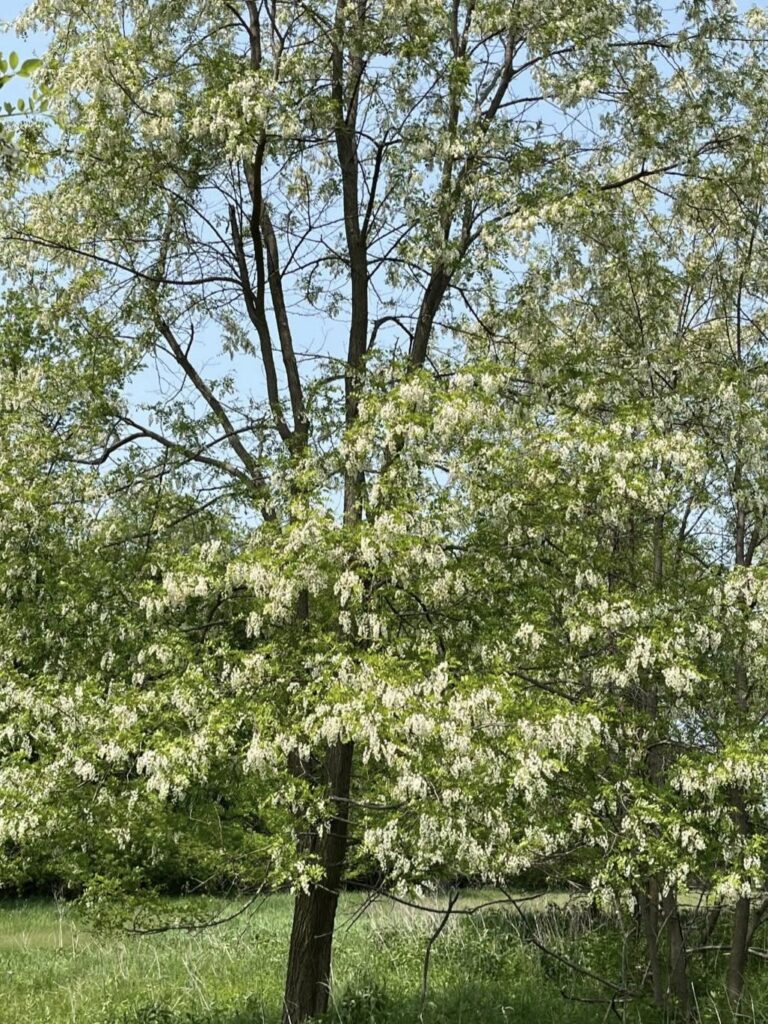
1. Black Locust (Robinia pseudoacacia)
Black locust is the undisputed champion of fast-growing firewood trees. It combines a growth rate of two to four feet per year with one of the highest BTU outputs of any North American species — approximately 26.8 million BTUs per cord. That places it in the same league as white oak, despite growing far faster.
The wood is extremely dense, naturally rot-resistant, and produces long-lasting coals. It coppices vigorously — cut it down and new shoots emerge from the stump with impressive speed, often reaching harvestable size again in six to eight years.
Black locust also fixes nitrogen, enriching the soil it grows in. The main drawback is its thorns, which make handling brush uncomfortable. Gloves and protective clothing are a must.
Climate fit: Eastern and central United States. Tolerates poor, dry, and rocky soils exceptionally well.
2. Hybrid Poplar (Populus hybrids)
If speed is your primary concern, nothing beats hybrid poplar. Certain cultivars grow five to eight feet per year — a rate that genuinely seems improbable until you witness it. A tree planted in spring can be chest-high by autumn.
Heat output is modest at 15–18 million BTUs per cord. Hybrid poplar burns fast and light, making it better suited to shoulder-season fires, kindling, and supplemental burning than to carrying the full heat load of a cold winter.
Its greatest strength is volume. In the time it takes an oak plantation to become useful, a hybrid poplar stand can be harvested two or three times. It also seasons quickly — often in six months or less — which is a meaningful practical advantage.
Climate fit: Northern and central United States, southern Canada. Performs best with adequate soil moisture.
3. Paulownia (Paulownia tomentosa and related species)
Paulownia may be the fastest-growing hardwood on Earth. Under ideal conditions, it can put on ten to fifteen feet of height in a single growing season. It coppices exceptionally well, and a cut stump can yield harvestable poles in as few as three to four years.
For firewood, paulownia delivers roughly 13–16 million BTUs per cord. That is on the lower end, but the speed of production compensates considerably in high-volume situations.
One important note: paulownia is considered invasive in parts of the eastern United States due to its prolific seeding. Always check local regulations before planting, and favor sterile cultivars where available.
Climate fit: USDA zones 5–9, best performance in the mid-Atlantic and southeastern United States.
4. Osage Orange (Maclura pomifera)
Few trees in North America match osage orange for raw heat output. It produces an astonishing 32.9 million BTUs per cord — the highest figure of any commonly available North American firewood species — and it grows at a respectable two to three feet per year.
The wood is extraordinarily dense and hard, producing coals that last for hours. It is often described as burning “like coal” — a genuine compliment in firewood terms.
The caution with osage orange is that it burns very hot. In a wood stove, it needs to be mixed with lighter woods to prevent overheating the firebox. It also grows thorns and produces large, inedible fruits that can be a nuisance. Historically used as a hedgerow tree across the American Midwest, it thrives on minimal care.
Climate fit: Central United States, Great Plains, zones 5–9.
5. Green Ash (Fraxinus pennsylvanica)
Ash has been prized as firewood for generations, and green ash is one of the most widely available and fastest-growing species in the family. It grows two to three feet per year and produces approximately 20 million BTUs per cord.
What makes ash particularly useful is that it burns reasonably well even when slightly under-seasoned — more forgiving than most firewood species. It splits cleanly, produces steady heat, and leaves a good coal bed.
The critical warning: the Emerald Ash Borer (EAB) has devastated ash populations across much of North America. Before planting green ash, research whether EAB is active in your region. In heavily affected areas, new plantings face significant risk. Resistant cultivars are under development but not yet widely accessible.
Climate fit: Eastern and central United States. Tolerates drought, cold, and a range of soil types.
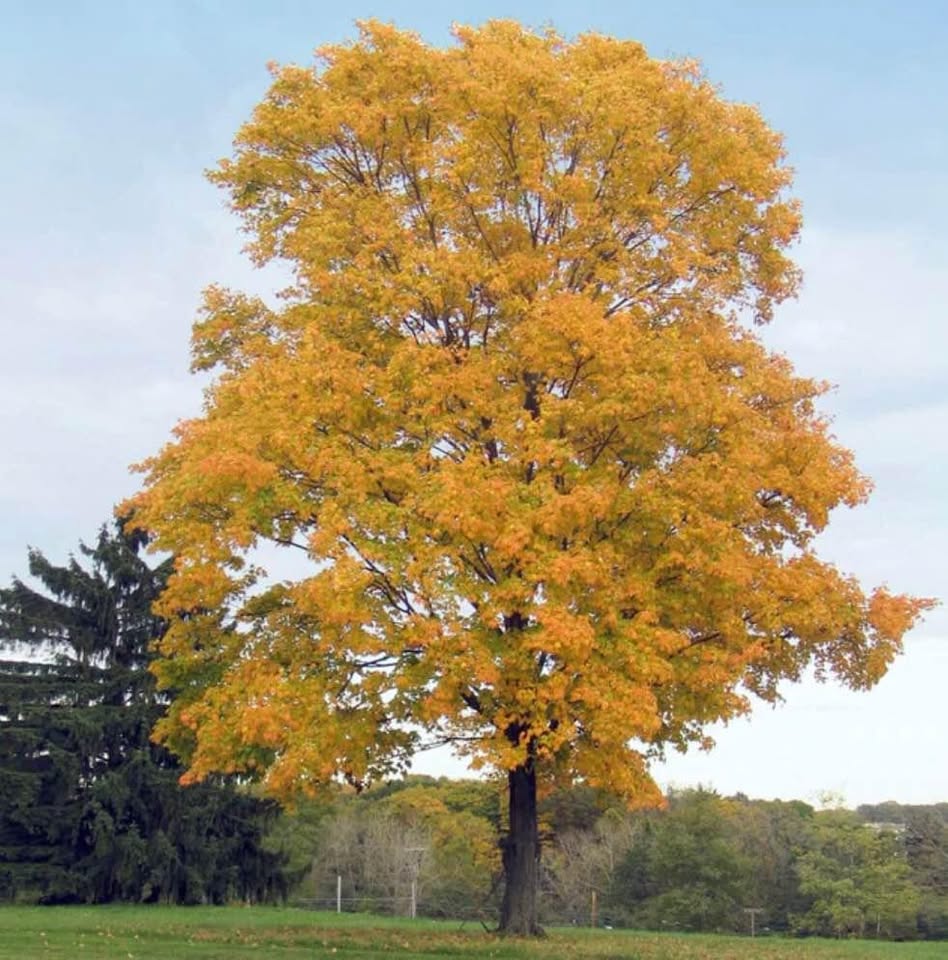
6. Silver Maple (Acer saccharinum)
Silver maple does not get the respect it deserves as a firewood tree. It grows three to five feet per year in moist soils, making it one of the faster-growing maples. Heat output comes in at around 19 million BTUs per cord — a solid, respectable performance.
It is one of the easiest native trees to establish. It tolerates wet soils, urban conditions, compacted ground, and a wide range of climate zones. A stand of silver maple planted today can yield useful firewood in eight to twelve years without demanding much in the way of soil preparation or ongoing care.
While it will never outperform sugar maple or hickory for heat, it significantly outgrows them — and in firewood planning, that matters.
Climate fit: Eastern United States and southern Canada. Especially suited to moist and riparian soils.
7. Red Alder (Alnus rubra)
Red alder is the go-to firewood tree for the Pacific Northwest — and for good reason. It grows two to three feet per year, fixes nitrogen like black locust, and produces wood at approximately 17.5 million BTUs per cord.
It thrives in moist, coastal conditions where many other firewood species would struggle. It coppices well and is well-suited to wet, riparian land that is difficult to use for other crops.
Beyond firewood, red alder is widely used for smoking fish and meat, giving it genuine dual-purpose value on any homestead or rural property near the coast.
Climate fit: Pacific Northwest — Washington, Oregon, British Columbia. Prefers cool, moist conditions.
8. Cottonwood (Populus deltoides)
Cottonwood is native to river valleys and bottomlands across North America and grows at three to five feet per year — one of the fastest rates of any large native tree on the continent. In the right location, a cottonwood stand grows almost faster than you can manage it.
Firewood value is modest at around 15.8 million BTUs per cord, and green cottonwood is notoriously smoky. Thorough seasoning — at least twelve months — is non-negotiable before burning cottonwood indoors.
When well-dried, it burns acceptably and is often freely available in areas near rivers and floodplains. For landowners with moist bottomland, cottonwood offers a fast-growing wood supply that requires minimal establishment effort.
Climate fit: River valleys and moist lowlands throughout the United States and southern Canada.
9. Tulip Poplar (Liriodendron tulipifera)
Despite its name, tulip poplar is not a true poplar. It belongs to the magnolia family and is one of the tallest native trees in eastern North America. It grows two to three feet per year and produces a large volume of wood relatively quickly.
Firewood quality sits in the 16–18 million BTU range — decent supplemental burning performance. The wood is straight-grained and splits easily once seasoned, which makes it a pleasure to work with.
Tulip poplar also happens to be a beautiful tree. Its distinctive yellow-green flowers make it a landscape asset as well as a firewood producer — a combination worth considering if aesthetics matter on your property.
Climate fit: Eastern United States, zones 4–9. Prefers moist, well-drained soils.
10. Hackberry (Celtis occidentalis)
Hackberry is one of the most underrated firewood trees in North America. It grows one and a half to two and a half feet per year and delivers approximately 20 million BTUs per cord — comparable to green ash in heat output.
What makes hackberry remarkable is its adaptability. It tolerates clay soils, drought, alkaline pH, poor fertility, and urban heat — conditions that defeat most firewood species. It is genuinely one of the toughest native trees on the continent.
It burns cleanly, splits reasonably well, and seasons without difficulty. For landowners on challenging soil in the Great Plains or Midwest, hackberry may be the single most practical firewood tree available.
Climate fit: Central and eastern North America, zones 3–9. Exceptionally wide range.
11. Willow (Salix spp.)
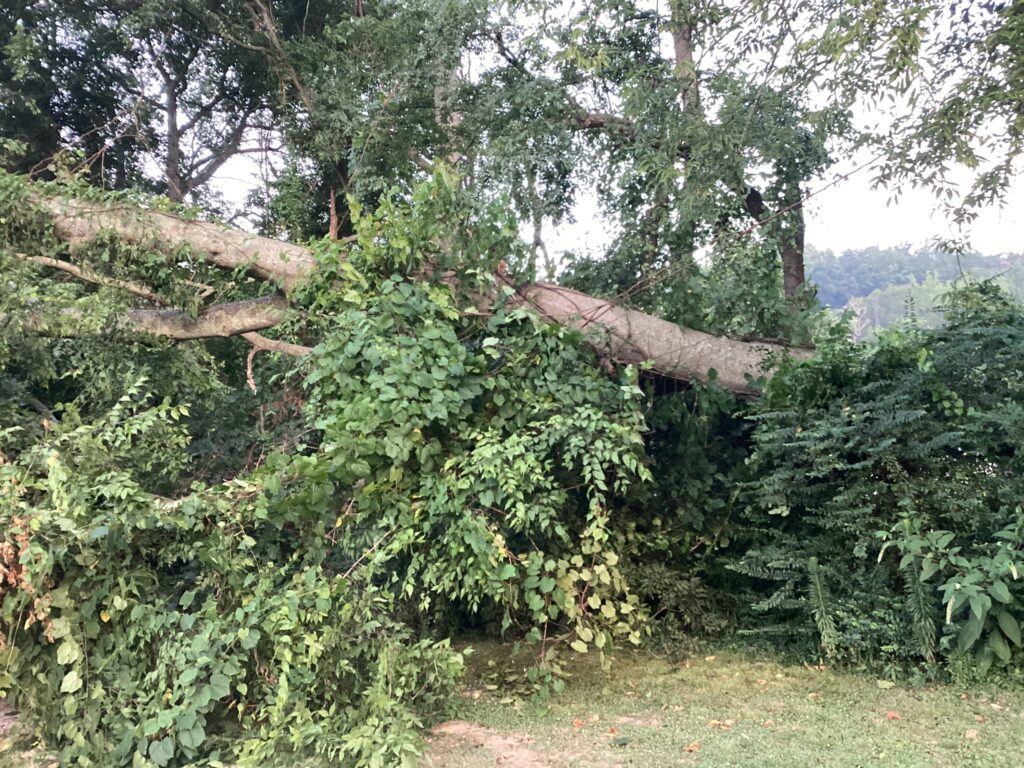
Willow has an unfair reputation as poor firewood. Yes, its heat output is modest — roughly 17 million BTUs per cord depending on species. But willow grows at three to eight feet per year and coppices better than almost any other tree on this list.
On a two-to-four-year coppice rotation, willow can produce remarkable quantities of biomass from a small area. For high-volume firewood situations, or for supplementing a larger firewood supply, the sheer productivity of a managed willow coppice is difficult to match.
Willow also tolerates — indeed thrives in — wet and waterlogged soils where most trees struggle. It provides important habitat for birds and insects, adding ecological value beyond heat production.
Climate fit: Moist to wet soils across most of North America and northern Europe.
12. Box Elder / Manitoba Maple (Acer negundo)
Box elder is frequently dismissed as a weed tree, but that characterization is unfair when you consider it as a firewood resource. It grows two to three feet per year, tolerates nearly any soil condition, and produces wood at around 18 million BTUs per cord.
It establishes easily, coppices readily, and asks almost nothing in return. For shoulder-season burning — autumn fires, early spring chill — it works perfectly well.
I find box elder particularly interesting because it thrives on exactly the kind of land that is difficult to plant anything else on: compacted roadsides, floodplain edges, degraded pasture corners. It converts difficult land into a firewood resource with minimal intervention. That is quietly impressive.
Climate fit: Central and eastern North America. Highly adaptable across a wide range of soils and climates.
13. Sycamore (Platanus occidentalis)
Sycamore is a large, fast-growing native tree that can add two to four feet of height per year in suitable conditions. It produces around 19.5 million BTUs per cord — respectable mid-range firewood performance.
The challenge with sycamore is its splitting character. The wood grain is interlocked and irregular, which makes hand-splitting genuinely difficult. A hydraulic log splitter handles it without much trouble, but anyone planning to split by hand should be forewarned. Sycamore rewards those with the right equipment and punishes those without it.
It tends to grow near water and prefers moist bottomland. If those conditions exist on your property, and you have access to a mechanical splitter, sycamore is a productive firewood tree.
Climate fit: Eastern United States, moist lowlands and riverbanks. Zones 4–9.
14. Black Walnut (Juglans nigra)
Black walnut grows at approximately two feet per year under good conditions and produces wood with around 22.2 million BTUs per cord — excellent heat output that outperforms ash, silver maple, and most poplars.
The complication is value. Mature black walnut timber is worth considerable money, and burning a well-formed tree as firewood is often a poor financial decision. The practical approach is to use cull trees, storm-damaged wood, limb material, and land-clearing waste as firewood while allowing quality timber trees to grow toward their full market value.
Also note that black walnut produces juglone — a natural chemical that inhibits the growth of some nearby plants. Careful placement away from vegetable gardens and sensitive ornamentals is advisable.
Climate fit: Eastern and central United States, zones 4–9. Prefers deep, fertile, well-drained soils.
15. American Hornbeam / Ironwood (Carpinus caroliniana)
American hornbeam is a slower member of this list at one to two feet per year, but it earns its place through exceptional wood quality. It produces approximately 26.8 million BTUs per cord — matching black locust — in a tree that grows in shaded understory conditions where most high-BTU species would not survive.
The wood is extraordinarily dense and hard — the name “ironwood” is well-earned. It burns slowly and steadily, produces outstanding coals, and is excellent for overnight burns.
For woodland owners with shaded areas, stream margins, or understory conditions, hornbeam offers premium firewood from land that cannot support most of the other species on this list. It is a niche choice, but a genuinely valuable one.
Climate fit: Eastern North America, zones 3–9. Thrives in shaded, moist understory conditions.
What Makes a Firewood Tree Worth Planting
Speed matters, but it is not the only thing.
A tree that grows six feet a year but burns with all the intensity of cardboard is not much of an investment. Equally, a tree that burns phenomenally but takes thirty years to reach harvestable size defeats the purpose of planning ahead.
The ideal fast-growing firewood tree strikes a balance across several qualities:
Heat output (BTUs per cord) is the most objective measure of firewood quality. BTU stands for British Thermal Unit. A higher number means more heat per cord. Premium hardwoods like hickory reach 26–28 million BTUs per cord. Lighter, faster-growing species often fall in the 15–20 million range — still very usable, especially when volume is high.
Coppicing ability is a trait many people overlook. Coppicing means cutting a tree to its stump and allowing it to regrow from the base. Trees that coppice well can produce a second harvest far faster than the first, since the established root system drives rapid regrowth. For a firewood woodlot, coppice-friendly species are tremendously efficient.
Seasoning time matters for practical use. Dense wood takes longer to dry. Many fast-growing species have lower density, which actually works in your favor here — they dry faster and can be ready to burn in one season rather than two.
Regional adaptability is critical. A tree that thrives in Georgia may struggle in Minnesota. This guide notes the best-fit regions for each species so you can make informed choices for your specific climate and soil.
At-a-Glance Comparison Table
| Tree Species | Growth Rate (ft/yr) | BTU/Cord (millions) | Coppices? | Key Strength |
| Black Locust | 2–4 | 26.8 | Excellent | Best overall firewood tree |
| Hybrid Poplar | 5–8 | 15–18 | Good | Fastest volume producer |
| Paulownia | 8–15 | 13–16 | Excellent | Unmatched speed |
| Osage Orange | 2–3 | 32.9 | Moderate | Highest BTU of any species |
| Green Ash | 2–3 | 20.0 | Moderate | Classic premium firewood |
| Silver Maple | 3–5 | 19.0 | Moderate | Fast, adaptable, reliable |
| Red Alder | 2–3 | 17.5 | Good | Best for wet Pacific NW soils |
| Cottonwood | 3–5 | 15.8 | Good | Fast riparian grower |
| Tulip Poplar | 2–3 | 16–18 | Poor | Easy splitting, good volume |
| Hackberry | 1.5–2.5 | 20.0 | Moderate | Toughest soil tolerance |
| Willow | 3–8 | 17.0 | Excellent | Best short-rotation coppice |
| Box Elder | 2–3 | 18.0 | Good | Thrives on difficult land |
| Sycamore | 2–4 | 19.5 | Moderate | High volume, needs splitter |
| Black Walnut | ~2 | 22.2 | Poor | High BTU + timber value |
| American Hornbeam | 1–2 | 26.8 | Poor | Premium fuel in shaded sites |
Building a Smart Firewood Woodlot: Planting Advice
Knowing which trees to plant is the first step. Planting them effectively is what turns potential into results.
Mix fast and slow species
Plant fast-growing species like hybrid poplar or paulownia for early harvests, and slower but denser species like black locust, osage orange, or hornbeam for long-term high-quality fuel. This “staggered harvest” strategy gives you firewood at multiple points in the future rather than one large harvest followed by a long wait.
Match the tree to your soil
Hackberry thrives in clay. Cottonwood wants moisture. Black locust tolerates drought and poor fertility. Matching species to your actual conditions — rather than ideal conditions — dramatically improves survival and growth rates.
Learn coppice management
For species that coppice well (black locust, willow, alder, hybrid poplar), cutting at the right height and season makes a major difference. Most coppice species are best cut in late winter or early spring, close to the ground, with a clean cut that sheds water.
Plan for access
A firewood woodlot that you cannot reach with a truck or tractor becomes difficult to harvest efficiently. Leave access lanes between planting rows from the start.
Thin strategically
As trees grow, crowding reduces individual growth rates and wood quality. Thinning — removing some trees to give others more space — increases the productivity of those that remain and gives you a useful early harvest in the process.
Frequently Asked Questions
Which fast-growing tree gives the most heat per cord? Osage orange leads with 32.9 million BTUs per cord, followed by black locust and American hornbeam at approximately 26.8 million. For a combination of fast growth and high heat output, black locust is the most practical choice for most landowners.
How long before a fast-growing firewood tree can be harvested? Paulownia and hybrid poplar can yield coppice material in three to five years from planting. Black locust typically reaches useful firewood size in eight to twelve years. Slower, denser species take fifteen to twenty-five years.
What is the easiest fast-growing firewood tree to grow? Box elder and hackberry are among the least demanding. Both tolerate poor soils, wide temperature ranges, and minimal care. Black locust is also highly self-sufficient once established.
Can I grow firewood trees on wet or flooded land? Yes. Willow, cottonwood, red alder, and silver maple all tolerate wet to seasonally flooded soils. These species turn marginal wetland into productive firewood ground.
Is it worth mixing firewood species in a woodlot? Strongly yes. Different species mature at different rates, suit different microclimates on your property, and offer different burn characteristics. A mixed woodlot is more resilient, more productive over time, and gives you better flexibility in how you use your fuel supply.
Suggested For You:
White Oak vs Red Oak Tree: Comparison + Which One To Choose
Willow Trees Growth Rate: How Fast Do They Really Grow (And What Affects It)?
20 Stunning Types of Cypress Trees: Visual Identification and Growing Guide
20 Different Types of Palm Trees: Identification, Features, and Care
8 Popular Types of Maple Trees: Identification, Features, and Growth Rate
Final Thoughts
The best time to plant a firewood tree was ten years ago. The second-best time is today.
That sounds like a cliché, but it reflects something genuinely true about firewood planning: the work you do now pays dividends for years and decades ahead. A modest investment in the right trees — planted thoughtfully, matched to your soil and climate — can reduce or eliminate your firewood costs for the rest of your life.
Start with one or two species that suit your land. Black locust is almost always a safe first choice. Add hybrid poplar if you need volume quickly. Layer in hackberry, green ash, or osage orange for long-term fuel quality. And give serious thought to coppice management if your land and species allow it.
The woodpile you are stacking in ten years will reflect the decisions you make this planting season. That is a thought worth sitting with.
References
- University of Minnesota Extension — Firewood for Home Heating https://extension.umn.edu/trees-and-overwintering/firewood
- Penn State Extension — Selecting and Burning Firewoodhttps://extension.psu.edu/selecting-and-burning-firewood
- Purdue University Extension — Black Locust: A Multi-Purpose Tree Resource https://www.extension.purdue.edu/extmedia/FNR/FNR-FAQ-10.pdf
- Oregon State University Extension — Firewood Facts for Western Oregon https://extension.oregonstate.edu/forests/health-managment/firewood-facts
- University of Georgia Extension — Agroforestry Practices: Establishing Woody Biomass Plantings https://extension.uga.edu/publications/detail.html?number=B1447

Tim M Dave is a gardening expert with a passion for houseplants, particularly cacti and succulents. With a degree in plant biology from the University of California, Berkeley, he has vast experience in gardening. Over the years, he has cultivated a vast collection of desert plants and learned a great deal about how to grow and care for these unique companions.