Understanding The Winter Flowering Cherry: History, Care Details and Common Problems
The winter flowering cherry (Prunus × subhirtella) is a stunning addition to any garden, offering delicate pink or white blooms when most plants are dormant. I planted my ‘Autumnalis Rosea’ five years ago, and its winter blooms never fail to lift my spirits on gray days.
Growing this tree is rewarding if you get the basics right, but like any plant, it can face challenges. Below, I’ve combined detailed care, weaving in personal experiences to help you nurture a thriving tree. Let’s dive into everything you need to know about planting, maintaining, and solving common problems.
Brief History of the Winter Flowering Cherry
The winter flowering cherry has roots that go deep into Japanese culture. It’s not just a plant; it’s a symbol of resilience and beauty. Native to Japan, this tree has been cherished for centuries. I once read about ancient Japanese gardens where these cherries were planted near temples.
They say the blooms represent the fleeting nature of life—beautiful but short-lived. Scientifically, it’s a hybrid. It comes from crossing Prunus itosakura, also known as edohigan, with Prunus incisa, or mamezakura. This mix happened naturally, but humans refined it over time.
By the 19th century, it caught the eye of Western botanists. In 1901, it was introduced to Europe, and soon after, to the U.S. I planted mine after hearing about the famous cherry blossoms in Washington, D.C., but this variety blooms even in winter. It’s like the underdog of the cherry family, surprising everyone with its off-season show.
Historians note that Japanese cultivars date back over a thousand years. The weeping forms, for instance, have been around since the Edo period. DNA studies in 2014 confirmed many popular varieties trace back to edohigan. It’s fascinating how something so delicate has such a strong heritage.
Today, it’s grown worldwide for its ornamental value, not fruit. If you’re into history, planting one feels like connecting to ancient traditions. But let’s not forget the modern twist. In the U.S., the USDA reclassified some species in 2018, emphasizing Prunus itosakura’s role.
This tree isn’t found in the wild much, but cultivated ones thrive in gardens. I love how it bridges old and new—perfect for a backyard storyteller like me.
Classification
The Winter flowering cherry belongs to the genus Prunus, in the family Rosaceae—the rose family. That’s right, it’s related to roses, apples, and almonds. The species is Prunus × subhirtella, where the “×” means it’s a hybrid.
Within Prunus, it’s under the subgenus Cerasus, which includes all cherries. The name “subhirtella” means “slightly hairy,” referring to the young twigs. It’s a deciduous tree, meaning it loses its leaves in winter. But unlike many, it flowers before the leaves return.
Taxonomically, it’s divided into varieties like var. autumnalis for the winter-blooming types. Cultivars add variety—more on those later. It’s not invasive, which is a plus for eco-conscious gardeners. In botanical terms, it’s a small tree, often grafted for better form.
I remember confusing it with Yoshino cherry at first. But subhirtella is distinct for its winter habit. Classification helps when buying—look for the scientific name to avoid mix-ups. It’s classified as hardy in many zones, making it versatile.
Key Features
Let’s talk about key features of the winter flowering cherry. These trees are all about surprise and elegance. I’ll break it down simply.
Scientific Name and Common Names
The scientific name is Prunus × subhirtella. Easy to remember once you say it a few times. Common names include winter-flowering cherry, spring cherry, rosebud cherry, and Higan cherry. In Japan, it’s linked to “fuji cherry” or “weeping cherry” for some forms. I call mine the “winter warrior” because it defies the cold.
USDA Zones
This beauty thrives in USDA zones 5 to 8. That’s from chilly New England to milder California spots. In zone 5, it handles down to -10°F. I live in zone 6, and mine has survived a few harsh winters. If you’re in zone 4, it might need extra protection, but generally, it’s tough.
Color Variations
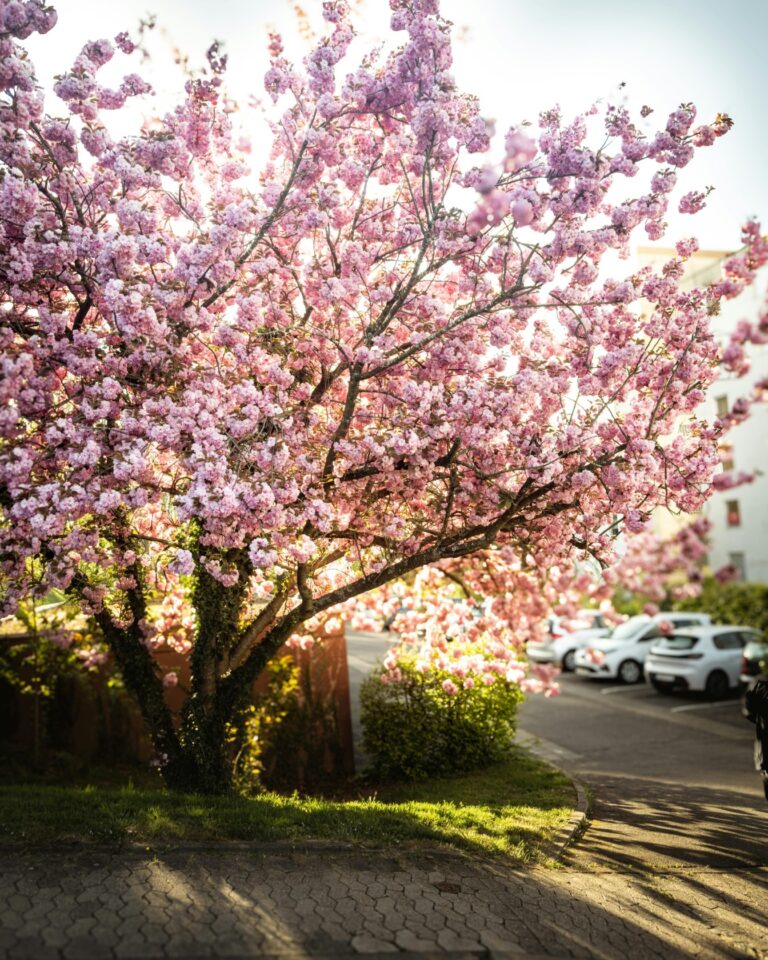
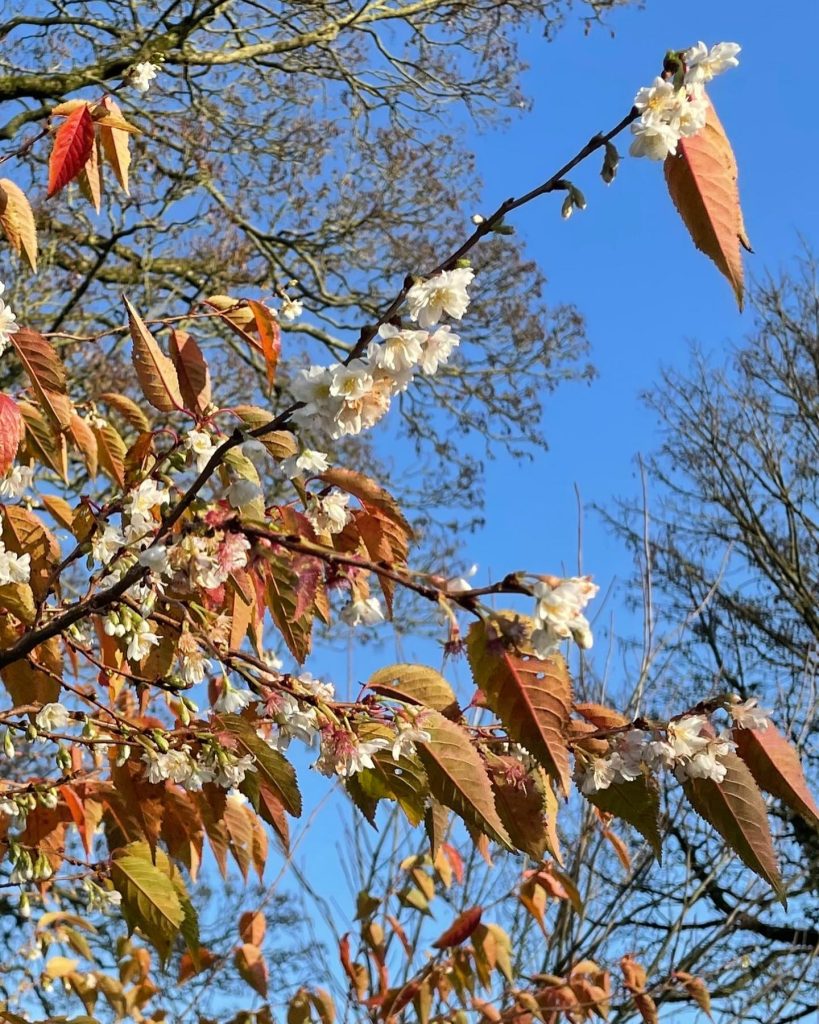
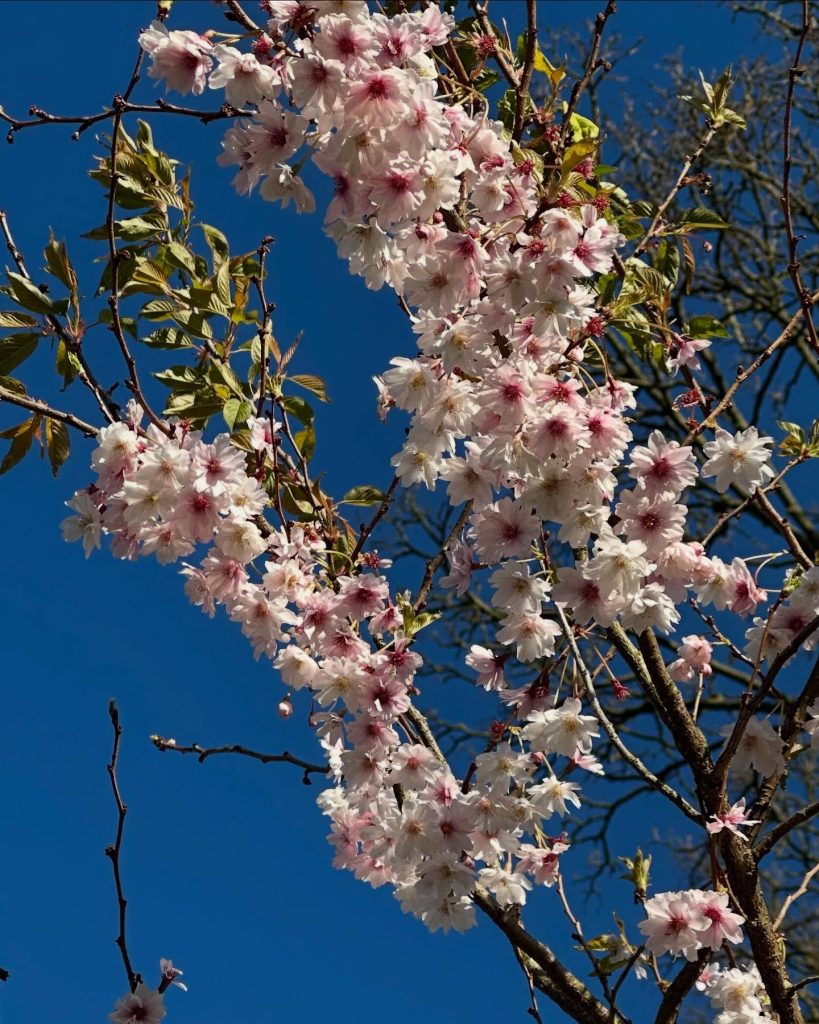
Flowers start as rose-pink buds, fading to pale pink or white. Some cultivars are deeper pink, like ‘Autumnalis Rosea.’ Leaves emerge bronze-green, turning yellow or orange in fall. Bark is shiny reddish-brown. In winter, the bare branches with blooms create a pink-white contrast against snow. I’ve seen variations where blooms look almost shell-pink—stunning!
Sun Exposure
Full sun is best—six hours or more daily. It promotes the best blooms. Partial shade works, but flowers might be sparser. I planted mine in full sun, and it rewards me with more color. Avoid deep shade; it weakens the tree.
Mature Size
Most reach 20-30 feet tall and wide. Weeping forms are shorter, around 20 feet high but spread wider. The parent tree can hit 40-50 feet, but cultivars stay compact. Perfect for small yards. Mine is about 15 feet now, after five years—manageable.
Growth Rate
It’s moderate to fast. Expect 1-2 feet per year once established. Young trees grow quicker. Grafted ones start strong. I fertilized mine lightly, and it shot up. Patience pays off; full size in 10-15 years.
Lifespan
Longer than many cherries—up to 50 years with care. Some last decades. It’s more resilient to stress. My neighbor’s is 30 years old and still blooming. Proper maintenance extends life.
Toxicity
All parts are toxic if ingested—leaves, bark, pits contain cyanogenic compounds. Keep away from pets and kids. Fruits are small, black, and inedible. Birds love them, though. I fence mine off from my dog just in case.
These features make it a standout. Now, onto characteristics.
Characteristics of the Winter Flowering Cherry
What makes this tree special? It’s the blooms, for starters. Flowers are small, 1-1.5 cm wide, in clusters of 2-5. Semi-double or single, they appear on bare branches from late fall to early spring. In mild weather, they pop open; frost pauses them.
Leaves are ovate, 2-4 inches long, serrated edges. Dark green in summer, they turn yellow-orange in fall. Bark is smooth, mahogany-red, peeling slightly. Fruits are tiny black drupes, bird magnets.
The habit varies: upright-spreading for ‘Autumnalis,’ weeping for ‘Pendula.’ It’s deciduous, so winter shows off the structure. Fragrance? Mild, almond-like. Pollinators adore it—bees buzz early.
In my garden, the fall color rivals maples. And those winter blooms? They lift spirits on gray days. It’s low-maintenance yet high-impact.
Popular Varieties and Cultivars
Here’s a closer look at some standout cultivars:
- ‘Autumnalis’: White to pale pink semi-double flowers, 25 feet tall, blooms sporadically from October to April. Great for borders.
- ‘Autumnalis Rosea’: Deeper pink flowers, similar size and bloom time. Mine’s this one, and the pink pops against snow.
- ‘Pendula’: Weeping, with single pink flowers, 20–30 feet wide. Perfect as a focal point. I saw one in a park, and it was breathtaking.
- ‘Alba Plena’: Double white flowers, compact form. Elegant and rare.
- ‘Ujou-shidare’: Weeping, pink blooms, named after a poet’s garden.
- ‘Jugatsu-zakura’: October cherry, blooming fall to spring, ideal for long seasons.
Each suits different spaces—upright for borders, weeping for lawns. Check local nurseries for availability, as some are harder to find.
Growing and Caring for Your Winter Flowering Cherry
Growing the winter flowering cherry is rewarding if you get the basics right. Here’s a step-by-step guide, with extra details to ensure success.
1. Planting Your Tree
Planting the winter flowering cherry correctly sets it up for a lifetime of beauty. I planted mine in October, and it settled in perfectly before winter. Timing is key—aim for fall or early spring when the tree is dormant to minimize stress.
Choose a site with full sun (6+ hours daily) to maximize blooms, though partial shade works if needed. Well-drained soil is critical; loam is ideal, but sandy or clay soils can be amended. I had clay-heavy soil, so I mixed in a bucket of compost to improve drainage and fertility. Avoid low spots where water pools, as this invites root rot.
Before planting, test your soil’s pH, aiming for 6.0–7.0 (neutral to slightly acidic). If it’s off, amend with lime (to raise pH) or sulfur (to lower it). Dig a hole twice as wide and as deep as the root ball—about 2–3 feet wide for a standard tree.
Place the tree so the root flare (where roots meet trunk) is at ground level, backfill with soil, and tamp gently to remove air pockets. Water deeply to settle the soil, and space trees 15–20 feet apart to ensure air circulation, which helps prevent diseases like brown rot or leaf spot.
Finish with 2–3 inches of organic mulch, like wood chips or pine straw, keeping it 2 inches from the trunk to avoid rot. I use pine straw—it retains moisture and looks tidy.
If you’re in a windy area, stake young trees for the first 1–2 years to keep the trunk straight, especially for weeping cultivars like ‘Pendula.’ I used two stakes for mine, removing them once it was established.
Proper planting reduces future issues, like weak growth or pest susceptibility, and gives your tree a strong start.
2. Watering Needs
Watering and fertilizing are crucial for a healthy winter flowering cherry. For the first year, water deeply—about 1 inch per week—to establish roots. I used a soaker hose for even distribution, watering twice weekly during dry spells.
Once established, water only during droughts or prolonged dry periods. Overwatering can lead to root rot, so check soil moisture 2 inches down; if it’s damp, skip watering. In zones 5–6, water monthly during dry winters if the ground isn’t frozen.
I learned this the hard way when my tree’s leaves drooped one winter from dehydration.
3. Fertilizing
Fertilize in early spring with a balanced, slow-release fertilizer (10-10-10) before new growth starts. Use about 1 pound per inch of trunk diameter, spread under the canopy, and water it in. I sprinkle mine lightly to avoid overfeeding, which can cause excessive leaf growth at the expense of blooms.
Avoid late-season fertilizing—it promotes weak growth vulnerable to frost. For an organic approach, top-dress with compost or aged manure every other year. I add compost biennially, and my tree responds with vibrant blooms.
Proper fertilizing keeps your tree vigorous, reducing risks of pests like aphids or diseases like bacterial canker.
4. Pruning and Training
Pruning keeps your winter flowering cherry healthy and attractive. Time it for late winter or post-bloom (March–April) to avoid disease spread. I prune mine in February before buds swell, using sharp, sterilized pruners (wiped with alcohol) to prevent infections like bacterial canker.
Remove dead, damaged, or crossing branches, and thin the canopy to improve air circulation, which deters fungal issues like powdery mildew or leaf spot. For weeping types like ‘Pendula,’ trim low branches if they touch the ground to prevent pest entry. I shape mine to keep it open and airy, enhancing its winter silhouette.
For young trees, training is essential. Stake them for 1–2 years to ensure a straight trunk, especially for weeping forms. I staked mine the first year to withstand wind, and it paid off with a sturdy form.
Pruning and training not only maintain aesthetics but also prevent structural issues that could invite borers or black knot. Regular maintenance, like weed control around the base, further reduces competition and pest habitats. I hand-pull weeds to protect shallow roots, ensuring my tree stays stress-free.
5. Winter Protection
In colder zones (5–6), winter protection is vital. Mulch roots with 4–6 inches of organic material, like wood chips or pine straw, to insulate against freezes. I pile extra mulch around mine in December, which has kept it thriving through -10°F winters.
To prevent sunscald—cracked bark from winter sun warming and freezing—wrap young trunks with burlap or tree wrap. My tree suffered sunscald its first year until I started wrapping it annually. If late frosts threaten buds, cover the tree with a frost cloth. I saved blooms one March with an old bedsheet during an unexpected freeze.
Choose a sheltered planting site to minimize wind and frost damage. These steps protect your tree from environmental stress, which can weaken it and attract pests like scale or diseases like fireblight. A little preparation goes a long way in ensuring winter blooms.
6. Propagation
Propagating the winter flowering cherries is challenging but possible. Take 6-inch softwood cuttings in summer or hardwood cuttings in winter, dip them in rooting hormone, and plant in a sand-peat mix. Success rates are low, so I recommend buying grafted trees from nurseries for reliability.
Most commercial trees, especially ‘Pendula,’ are grafted onto straight rootstock for vigor and consistent weeping form. I tried cuttings once, but none took, so I stick to nursery stock. Propagation is more for enthusiasts, but proper care of purchased trees is straightforward and rewarding.
Common Problems and Solutions
Even with the best care, issues can arise. Here’s a detailed look at common problems, their causes, and how to fix them.
1. Pests
Pests can stress your tree, but early action keeps them in check. Here are some of the common pests on winter flowering cherries and how to treat them.
Aphids
These small, sap-sucking insects cause curling leaves, sticky honeydew, and black sooty mold, especially in spring. Spray with a strong water jet or insecticidal soap, and introduce ladybugs as natural predators. I hosed mine off last spring, and it worked wonders. Prevent by planting companion plants like marigolds to attract beneficial insects.
Scale insects
Look for small, waxy bumps on bark or leaves, leading to yellowing foliage. Prune heavily infested branches and apply horticultural oil like neem in early spring. I caught scale early and removed the affected twigs, saving my tree. Regular bark checks and tree vigor prevent infestations.
Borers
Larvae tunnel into wood, leaving holes, sawdust-like frass, and wilting branches. Cut out infested areas or use a wire to remove larvae, sealing pruning cuts. I haven’t faced borers, but sealing cuts is crucial. Avoid trunk injuries to keep them at bay.
Japanese beetles
These metallic green beetles skeletonize leaves in summer. Hand-pick them or use neem oil; place traps far from the tree to avoid attracting more. I used neem oil last July with success. Monitor in summer to catch them early.
2. Diseases
Fungal and bacterial diseases are common but manageable with prompt action.
Brown Rot
Caused by Monilinia spp., this fungus browns and wilts blooms, often with grayish growth, especially in wet springs. Remove and destroy affected flowers and apply a cherry-labeled fungicide. I prune infected parts immediately to stop spread. Improve air circulation through pruning and avoid overhead watering to prevent it.
Bacterial Canker
Pseudomonas spp. bacteria cause sunken, oozing lesions and dieback, entering through wounds. Prune 6 inches below affected areas with sterilized tools and apply copper-based bactericide in the fall. I avoid this by keeping tools clean and pruning in dry weather.
Leaf Spot (Shot-Hole Disease)
Blumeriella jaapii fungus creates purple spots that drop out, leaving holes, in humid conditions. Rake and destroy fallen leaves and apply fungicide in spring. I reduced this by improving airflow around my tree. Proper spacing and pruning prevent recurrence.
Powdery Mildew
Podosphaera spp. fungus forms a white, powdery coating on leaves in warm, dry conditions. Apply sulfur-based fungicide; I used a homemade baking soda spray as a quick fix. Good air circulation prevents it.
Fireblight
Erwinia amylovora bacteria cause blackened, wilted shoots with a “shepherd’s crook” look. Prune 12 inches below affected areas, sterilizing tools between cuts, and apply streptomycin during bloom season. I haven’t faced this but check regularly. Avoid excess nitrogen to prevent it.
Black Knot
Apiosporina morbosa fungus forms hard, black galls on branches. Prune 4 inches below galls in winter and destroy cuttings. I inspect mine in late winter to catch it early. Regular monitoring and pruning are key.
3. Environmental and Cultural Issues
Environmental stress can weaken your tree, making it prone to pests and diseases.
Root Rot
Overwatering or poor drainage causes wilting, yellowing leaves, and soft roots. Improve drainage with sand or compost and reduce watering. I fixed a soggy spot with amendments. Plant in well-drained sites to prevent it.
Frost Damage
Late frosts brown or drop buds during bloom. Cover with a frost cloth during cold forecasts. I saved buds last March with a bedsheet. Choose sheltered sites to minimize risk.
Sunscald
Winter sun warms bark, followed by freezing, causing cracks on south-facing trunks. Wrap trunks with burlap or tree wrap. I use burlap every winter after early sunscald. Plant in wind-protected areas.
Deer Browsing
Deer chew leaves or bark on young trees, especially in winter. Install fencing or use repellents. I used a wire cage for two years. Companion plants like lavender deter deer.
Prevention Strategies
Preventing problems is easier than fixing them. Test and amend soil annually to maintain pH (6.0–7.0) and nutrients. Space trees 15–20 feet apart for air circulation to reduce fungal diseases. Monitor weekly for pests or disease, especially in spring and summer.
Use integrated pest management (IPM), combining cultural practices (pruning, proper watering), biological controls (ladybugs), and chemical treatments as a last resort. Remove fallen leaves and debris to reduce fungal spores—I rake under mine every fall.
Healthy trees resist issues better, so prioritize care. My tree had aphids once, but quick action with soap spray saved it.
Winter Flowering Cherry vs. Weeping Cherry
As a gardener who’s grown both, let me break down the key differences between the winter flowering cherry (Prunus × subhirtella) and the weeping cherry, which can sometimes cause confusion since some winter flowering cherries have weeping forms.
| Feature | Winter Flowering Cherry | Weeping Cherry |
| Scientific Name | Prunus × subhirtella (hybrid of P. itosakura and P. incisa) | Often Prunus × subhirtella ‘Pendula’ or other Prunus spp. (e.g., P. pendula, P. serrulata) |
| Bloom Time | Late fall to early spring (November–March) | Spring (March–April) |
| Flower Color | Pale pink to white, pink buds; deeper pink in some cultivars | Pink or white, single or double, depending on cultivar |
| Growth Habit | Upright-spreading (e.g., ‘Autumnalis’) or weeping (e.g., ‘Pendula’) | Always weeping, with cascading, umbrella-like branches |
| Mature Size | 20–30 ft tall and wide; weeping forms spread wider | 15–25 ft tall, wider spread |
| Key Feature | Winter blooms for off-season color | Graceful, drooping form for dramatic spring display |
| USDA Zones | 5–8, handles -10°F | 5–8, similar cold tolerance |
| Example Cultivars | ‘Autumnalis,’ ‘Autumnalis Rosea,’ ‘Pendula,’ ‘Jugatsu-zakura’ | ‘Pendula,’ ‘Snow Fountains,’ ‘Yae-shidare’ |
My personal Note: My winter flowering cherry (‘Autumnalis Rosea’) lights up my garden in December, while my weeping cherry (‘Pendula’) is a spring stunner with its cascading branches. Choose winter flowering for cold-season magic, weeping for spring drama.
Why I Love My Winter Flowering Cherry
My Prunus × subhirtella is the heart of my garden. Last December, it bloomed on Christmas Eve, and my family couldn’t stop staring. It was like a holiday miracle. The first year, I was nervous—few blooms, slow growth. But with patience, it’s now a showstopper.
I tried growing a ‘Pendula’ in a pot once, thinking it’d look cute on my patio. Big mistake—pots restrict roots, and it struggled. Ground planting is the way to go. Another time, a storm snapped a branch. I pruned it cleanly, and the tree bounced back stronger. It’s taught me resilience.
Friends always ask about the vibrant fall color. It outshines my maples some years. If you’re on the fence, trust me: this tree delivers joy with minimal fuss.
Suggested For You:
15 Low-Maintenance Maple Tree Varieties for Small Yards (Names and Pictures)
15 Fast Growing Trees for Backyard Privacy: Living Screen to Block Neighbours View
20 Flowering Trees with White Flowers in Spring
15 Stunning Trees with Yellow Flowers: Perfect Picks to Brighten Your Landscape
15 Stunning Flowering Trees with Purple Blooms: Spring Through Summer
FAQs
Here are quick answers to the frequently asked questions about the Winter flowering cherry tree.
Q. What colors do the flowers come in?
Pale pink to white, with pink buds. Some cultivars are deeper pink.
Q. How much sun does the winter flowering cherry need?
Full sun for maximum blooms; partial shade is okay but less vibrant.
Q. What’s the mature size of the winter flowering cherry?
20–30 feet tall and wide; weeping forms spread wider.
Q. How fast does a winter flowering cherry grow?
Moderate to fast, 1–2 feet per year.
Q. How long does it live?
Up to 50 years with good care.
Q. Is winter flowering cherry toxic?
Yes, leaves, bark, and pits are toxic to humans and pets.
Q. When does a winter flowering cherry bloom?
Late fall to early spring, especially in mild weather.
Q. How do I prune it?
In late winter or after blooming, remove dead or crossing branches.
Q. What’s the best soil for winter flowering cherry?
Well-drained, neutral to slightly acidic (pH 6.0–7.0).
Q. How do I protect my flowering cherry from pests?
Monitor for aphids, scale, and beetles. Use soap, oil, or pruning as needed.
Final thoughts
The winter flowering cherry is more than a tree—it’s a statement. Its blooms brighten the gloomiest days, and its care is straightforward if you follow these tips. From planting to troubleshooting, I’ve shared what’s worked for me and what science backs up. Plant one, nurture it, and watch it transform your garden into a winter wonderland.
References
- Wikipedia. (2025). Prunus × subhirtella. Retrieved from https://en.wikipedia.org/wiki/Prunus_%C3%97_subhirtella
- Royal Horticultural Society. (n.d.). Prunus × subhirtella. Retrieved from https://www.rhs.org.uk/plants/94841/prunus-subhirtella/details
- Missouri Botanical Garden. (n.d.). Prunus subhirtella ‘Autumnalis’. Retrieved from https://www.missouribotanicalgarden.org/PlantFinder/PlantFinderDetails.aspx?taxonid=252712
- North Carolina Extension Gardener Plant Toolbox. (n.d.). Prunus x subhirtella ‘Autumnalis Rosea’. Retrieved from https://plants.ces.ncsu.edu/plants/prunus-x-subhirtella-autumnalis-rosea/
- University of Maryland Extension. (n.d.). Ornamental Cherry Trees: Identify and Manage Problems. Retrieved from https://extension.umd.edu/resource/ornamental-cherry-trees-identify-and-manage-problems

Tim M Dave is a gardening expert with a passion for houseplants, particularly cacti and succulents. With a degree in plant biology from the University of California, Berkeley, he has vast experience in gardening. Over the years, he has cultivated a vast collection of desert plants and learned a great deal about how to grow and care for these unique companions.