Wilma Goldcrest Monterey Cypress: Size, Growth Rate, Problems, and Cultivation Details
The Wilma Goldcrest is a cultivated variety (cultivar) of the Monterey Cypress, Cupressus macrocarpa, a species native to a small coastal strip of California near the Monterey Peninsula. The parent species is one of the most recognisable trees on the American West Coast.
‘Wilma Goldcrest’ is a selected cultivar bred specifically for its compact, columnar shape and vivid golden foliage. It is sometimes sold simply as ‘Goldcrest’ or ‘Goldcrest Wilma.’
What makes this tree special? It delivers year-round golden colour, a naturally tidy shape that requires minimal pruning, and a refreshing lemon scent. For gardeners who want structure and beauty without high maintenance, it is a near-perfect choice.
This guide covers everything — from its botanical origins and physical characteristics to planting, care, pests, and landscape uses.
| Common Name | Wilma Goldcrest Monterey Cypress |
| Scientific Name | Cupressus macrocarpa ‘Wilma Goldcrest’ |
| Plant Family | Cupressaceae |
| Plant Type | Evergreen conifer (columnar cultivar) |
| Mature Height | 2–3 metres (6–10 ft) in containers; up to 5 m (16 ft) in ground |
| Mature Spread | 0.5–1 metre (1.5–3 ft) |
| Growth Rate | Moderate — approximately 20–30 cm per year |
| Foliage Colour | Bright golden-yellow; lime-green in low light |
| Fragrance | Strong lemon scent when foliage is brushed or crushed |
| Hardiness (USDA) | Zones 7–11 |
| Hardiness (UK/RHS) | H3 (generally hardy to −5°C / 23°F) |
| Sun Requirement | Full sun (best colour); tolerates partial shade |
| Soil Preference | Well-drained; tolerates sandy or loamy soils |
| Watering Needs | Moderate; drought-tolerant once established |
| Ideal Uses | Topiary, hedging, containers, specimen planting, coastal gardens |
| Native Range | California, USA (parent species) |
| Toxicity | Mildly toxic to cats and dogs if ingested |
Botanical Background and Classification
Understanding where this tree comes from helps explain why it behaves the way it does.
Family: Cupressaceae (the cypress family) Genus: Cupressus Species: macrocarpa (meaning “large-fruited” in Latin) Cultivar: ‘Wilma Goldcrest’
The Monterey Cypress in its wild form grows only in two small natural groves in California — at Point Lobos State Natural Reserve and on the Monterey Peninsula. Despite this tiny native range, it has been planted across the world because of its remarkable adaptability, especially in coastal conditions.
It tolerates salt spray, strong winds, and sandy soils that would stress many other trees.
The golden cultivars like Wilma Goldcrest were developed through selective propagation. The bright yellow foliage is due to reduced chlorophyll expression in the outer foliage, which allows yellow pigments (carotenoids) to dominate. This is not a sign of disease — it is a stable genetic trait.
Physical Characteristics and Appearance
Foliage
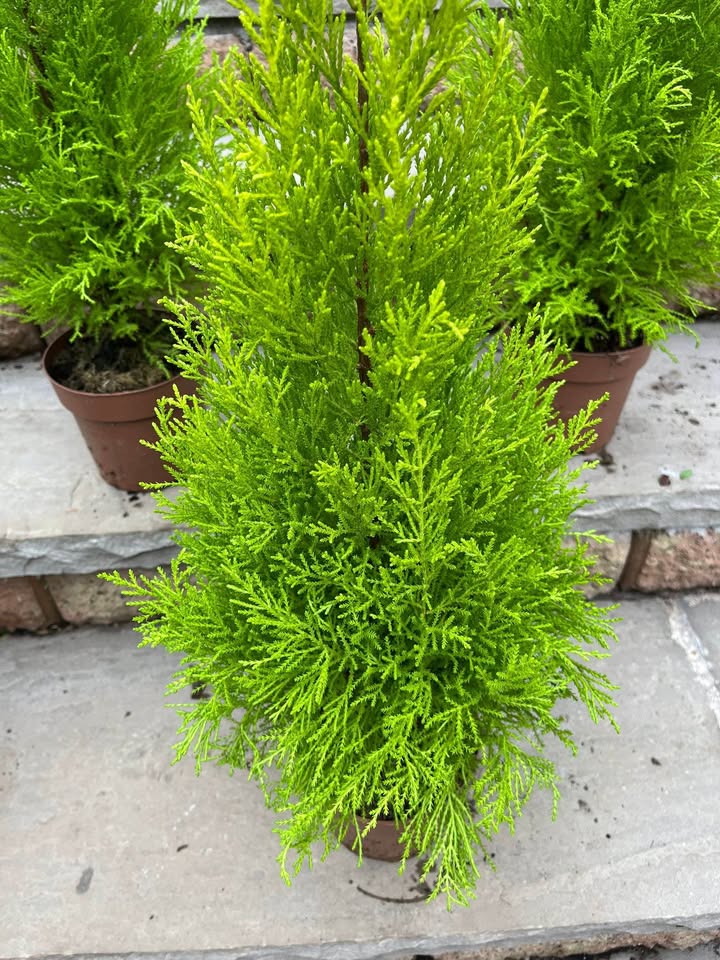
The most striking feature of the Wilma Goldcrest is its feathery, soft, scale-like golden foliage. The leaves are tiny and arranged in compressed, fan-like sprays that give the tree a fluffy, textured appearance. When young, the foliage is particularly bright and vibrant.
The colour is at its most intense in full sun. In partial shade, the tree takes on a softer lime-green hue, which is still attractive but less dramatic. Cold winter temperatures can sometimes deepen the colour slightly, adding warm amber tones that many gardeners find appealing.
One of the tree’s most loved qualities is its strong lemon fragrance. Brushing a branch or working near the tree releases a citrusy, clean scent that is genuinely pleasant. I have spoken to gardeners who chose this tree for their patios purely because of this quality — and honestly, it is hard to argue with them.
Form and Structure
The tree grows in a narrow, conical to columnar shape — tall and slender, like a golden exclamation mark in the garden. This makes it excellent for vertical accent planting, narrow borders, or lining pathways without taking up excessive horizontal space.
Growth is moderate, making it manageable for long-term container planting. In the ground, it will grow more vigorously, potentially reaching 4–5 metres over many years. In a container, expect 2–3 metres over a similar timeframe, depending on pot size and care.
Cones
The Wilma Goldcrest produces small, rounded cones typical of cypress species. These are generally 2–4 cm in diameter, green when young, and turning brown with age. They are not a dominant visual feature and do not create significant litter problems, unlike many other conifers.
Hardiness and Climate Tolerance
The Wilma Goldcrest is broadly hardy in USDA Zones 7–11, making it suitable for most temperate and mild Mediterranean-type climates. In the United Kingdom, the Royal Horticultural Society classifies it as H3, meaning it can tolerate temperatures down to approximately −5°C (23°F) with some protection.
This tree thrives in:
- Coastal climates — it inherits excellent salt-spray and wind tolerance from its wild parent
- Mediterranean climates — dry summers with mild winters suit it extremely well
- Urban gardens — it tolerates pollution and reflected heat better than many conifers
It is less suited to areas with prolonged hard frosts, waterlogged soils, or heavy clay. In colder regions, growing it in a container that can be moved indoors during winter is a sound strategy.
Sunlight Requirements
Full sun is where this tree truly excels. Six or more hours of direct sunlight per day will produce the richest, most vivid golden colour. The more light it receives, the brighter the foliage.
In partial shade (3–6 hours of sun), the tree remains healthy but the foliage becomes greener. This can actually be desirable if you prefer a softer, less bold appearance in a shaded courtyard or woodland garden edge.
Avoid deep shade. Like most conifers, the Wilma Goldcrest will become sparse and weak in low-light conditions. Poor air circulation in shaded spots also increases the risk of fungal problems.
Soil and Drainage
This cypress is not fussy about soil chemistry, but it has a firm requirement: the soil must drain freely. Waterlogged roots are the most common cause of failure with this tree.
It performs well in:
- Sandy or gritty soils
- Loamy soils with good structure
- Neutral to slightly alkaline pH (6.0–7.5)
- Coastal soils, including those with moderate salinity
For container growing, use a high-quality, loam-based compost mixed with grit or perlite to ensure free drainage. Avoid peat-heavy mixes that retain too much moisture. A ratio of roughly 70% John Innes No. 3 (or equivalent loam-based mix) to 30% horticultural grit works well in practice.
If planting in clay-heavy soil, always improve drainage before planting by incorporating sharp sand and organic matter, and consider planting on a slight mound to further reduce the risk of waterlogging.
Watering: How Much Does It Need?
During the first one to two years after planting, regular watering is essential while the root system establishes. Water deeply once or twice per week in dry periods, allowing the soil to partially dry out between waterings.
Once established, the Wilma Goldcrest is moderately drought-tolerant. It will not need irrigation during normal rainfall periods in temperate climates. During extended dry spells or in containers, however, supplemental watering remains important.
Signs of underwatering:
- Foliage turning brown from the tips inward
- Overall dull, lacklustre colour
Signs of overwatering:
- Yellowing or browning from the inside out (interior foliage first)
- Soft, mushy base at soil level
- Sudden dieback without an obvious cause
Container-grown plants need more careful monitoring because they dry out faster and cannot access moisture reserves in surrounding soil.
Fertilising the Wilma Goldcrest
This tree does not require heavy feeding, but it will benefit from regular, balanced nutrition — particularly in containers where nutrients are depleted over time.
Recommended approach:
- Apply a slow-release granular fertiliser for conifers or ericaceous plants in early spring
- Supplement with a liquid feed every 4–6 weeks during the growing season (spring to early autumn)
- Do not fertilise in late autumn or winter — this encourages soft new growth that is vulnerable to frost
Avoid high-nitrogen fertilisers, which encourage excessive green growth at the expense of the golden colour. Fertilisers containing magnesium and trace elements help maintain the vibrant foliage colour.
Pruning and Shaping
One of the practical advantages of the Wilma Goldcrest is that it requires minimal pruning to maintain its natural shape. The columnar form is inherent and does not need to be forced.
However, it responds excellently to light trimming and is widely used as a topiary subject. Its dense, fine-textured foliage holds cut shapes well, making it suitable for spiral topiary, cone shapes, and formal hedging.
When to prune:
- Late spring to early summer — after the main flush of new growth
- Late summer — a second light trim if needed for topiary
- Avoid heavy pruning in late autumn, as cuts may not heal before cold weather sets in
Key pruning rules:
- Never cut back into bare, brown wood — the Wilma Goldcrest does not regenerate from old wood
- Always use sharp, clean secateurs or shears to avoid tearing tissue
- Step back frequently when shaping to assess the overall form
Repotting Container-Grown Trees
For patio and container-grown specimens, repotting every 2–3 years is generally sufficient. Signs that repotting is needed include roots emerging from drainage holes, rapid drying-out after watering, or noticeably slower growth.
Move up by one pot size at a time — too large a pot leads to excess damp compost around the roots. Refresh the compost even if you return the tree to the same pot, and trim away any circling or damaged roots.
Landscape and Garden Uses
The Wilma Goldcrest Monterey Cypress is one of the most versatile conifers in ornamental horticulture. Its uses are wide and varied.
1. Topiary and Formal Gardens
The tree’s dense foliage and tolerance for clipping make it ideal for formal topiary. Spiral and cone shapes are particularly popular. It is commonly seen in pairs flanking doorways or entrances, where its golden columns create an elegant symmetrical welcome.
2. Container and Patio Planting
This is perhaps its most popular domestic use. Planted in a quality container, the Wilma Goldcrest becomes a year-round feature plant for patios, balconies, and terraces. Its modest size and slow growth mean it remains in containers for many years without becoming unmanageable.
3. Specimen Tree
As a standalone specimen in a lawn or border, the tree’s golden colour provides a dramatic focal point — especially effective against a dark backdrop such as a yew hedge or stone wall.
4. Hedging and Screening
Where space allows, multiple plants can be used to create a narrow golden hedge that provides privacy without excessive width. This is particularly useful in small gardens where a wide hedge is impractical.
5. Coastal Gardens
The inherited salt tolerance of the Monterey Cypress makes ‘Wilma Goldcrest’ an excellent choice for exposed coastal gardens where many other plants struggle.
6. Wildlife Gardens
Although not a prolific wildlife plant, the dense foliage provides nesting and shelter opportunities for small birds, particularly sparrows and wrens, which appreciate dense evergreen cover during winter.
Common Pests and Problems
Cypress Aphid (Cinara cupressivora)
This is the most serious pest of the Wilma Goldcrest. Aphids colonise the inner stems and cause brown patches in the foliage that can quickly spread. The damage often appears suddenly and can be severe by the time it is noticed.
Management: Inspect the interior of the tree regularly. Treat with a systemic insecticide or neem oil-based spray at the first sign of infestation. Encourage natural predators like ladybirds.
Root Rot (Phytophthora spp.)
This water mould thrives in waterlogged conditions and causes sudden, irreversible wilting and death. Prevention is far more effective than treatment.
Prevention: Always ensure excellent drainage. Avoid overhead watering. Do not mulch directly against the trunk.
Canker and Dieback
Fungal cankers can enter through wounds or stressed tissue, causing branch dieback. Keep the tree healthy and well-watered during dry periods to maintain its natural resistance.
Wind Rock
In exposed positions, strong winds can rock container-grown plants, damaging the root ball. Stake young plants or position containers in a sheltered spot.
Propagation
The Wilma Goldcrest is propagated from semi-hardwood cuttings taken in late summer or early autumn. This is not a straightforward process for beginners, but it is achievable with patience.
Basic process:
- Take cuttings of 10–12 cm from current-year growth
- Remove lower foliage and dip in rooting hormone
- Insert into a gritty, free-draining propagation mix
- Maintain in a cold frame or unheated greenhouse over winter
- Expect rooting in 3–6 months
Propagation from seed is possible using collected cones, but seedlings will not reliably reproduce the golden foliage of the parent cultivar. Cuttings are the only reliable way to maintain the cultivar’s characteristics.
Buying Guide: What to Look For
When purchasing a Wilma Goldcrest, quality matters more than size. A smaller, healthy plant will outperform a larger, stressed specimen in the long run.
Look for:
- Vivid, consistent golden colour throughout — dull or patchy foliage may indicate stress
- A firmly rooted plant that does not rock loosely in its pot
- No signs of brown patches, which could indicate aphid damage or root rot
- A balanced, symmetrical shape that suggests regular, careful cultivation
Avoid any plant where the soil is waterlogged or bone dry — both indicate poor growing conditions at the nursery.
Frequently Asked Questions
Q: Is the Wilma Goldcrest the same as Goldcrest? They are closely related but not identical. ‘Wilma Goldcrest’ is a more compact selection, slightly smaller and better suited to container growing. Both are cultivars of Cupressus macrocarpa.
Q: Why is my Wilma Goldcrest turning brown? Browning can result from cypress aphid infestation, root rot, drought stress, wind damage, or frost damage. Diagnose carefully before treating — the cause determines the solution.
Q: Can the Wilma Goldcrest be grown indoors? It is not an ideal indoor plant as it needs good air circulation and direct sunlight. However, it can spend limited time indoors as a seasonal display plant, provided it is returned to outdoor conditions regularly.
Q: How fast does it grow? Expect approximately 20–30 cm of growth per year under good conditions, though this varies with climate, soil, and care.
Q: Is it toxic to pets? Yes — like many conifers, Cupressus macrocarpa is mildly toxic to cats and dogs if ingested. Position it accordingly if you have free-roaming pets.
Suggested For You:
Understanding Blue Ice Arizona Cypress: Size, Growth Rate, Problems, and Cultivation Details
Understanding Montezuma Cypress (Taxodium mucronatum): Identification, Uses, and Cultivation Details
11 Common Hinoki Cypress Problems: What Causes Them and How to Fix
20 Stunning Types of Cypress Trees: Visual Identification and Growing Guide
Final Thoughts
The Wilma Goldcrest Monterey Cypress is one of the finest golden conifers available to gardeners today. It combines year-round colour, a naturally tidy form, salt and coastal tolerance, and a genuinely delightful lemon fragrance into a compact, manageable package.
Whether you grow it in a terracotta pot on a seaside patio, train it into an elegant spiral topiary, or plant it as a slim golden hedge, this tree reliably delivers. It is not entirely care-free — it needs good drainage, some attention to pests, and occasional feeding — but the reward is a plant that remains beautiful through every season.
For anyone building or refreshing a garden and looking for a reliable, eye-catching, low-effort structural plant, the Wilma Goldcrest deserves serious consideration. Few trees offer this much visual impact in so little space.
References
- University of Florida IFAS Extension – Cupressus macrocarpa Plant Profile Institute of Food and Agricultural Sciences, University of Florida https://hort.ifas.ufl.edu/database/documents/pdf/shrub_fact_sheets/cupmaca.pdf
- University of California, Davis – Arboretum and Public Garden: Conifer Collections UC Davis Arboretum and Public Garden https://arboretum.ucdavis.edu/plant/monterey-cypress

Tim M Dave is a gardening expert with a passion for houseplants, particularly cacti and succulents. With a degree in plant biology from the University of California, Berkeley, he has vast experience in gardening. Over the years, he has cultivated a vast collection of desert plants and learned a great deal about how to grow and care for these unique companions.