White Spots on Your Jade Plant? Here’s What to Do
Jade plants (Crassula ovata), often called “money plants” or “lucky plants,” are a favorite among many households. Their low-maintenance nature and Feng Shui vibes make them perfect for busy folks like me. But those white spots speckling on their leaves can be a real buzzkill.
They could be harmless mineral deposits, pesky pests, or even a fungal issue. Let’s dive into why these spots appear, how to treat them, and how to keep your jade plant thriving in your home.

Why Are There White Spots on My Jade Plant?
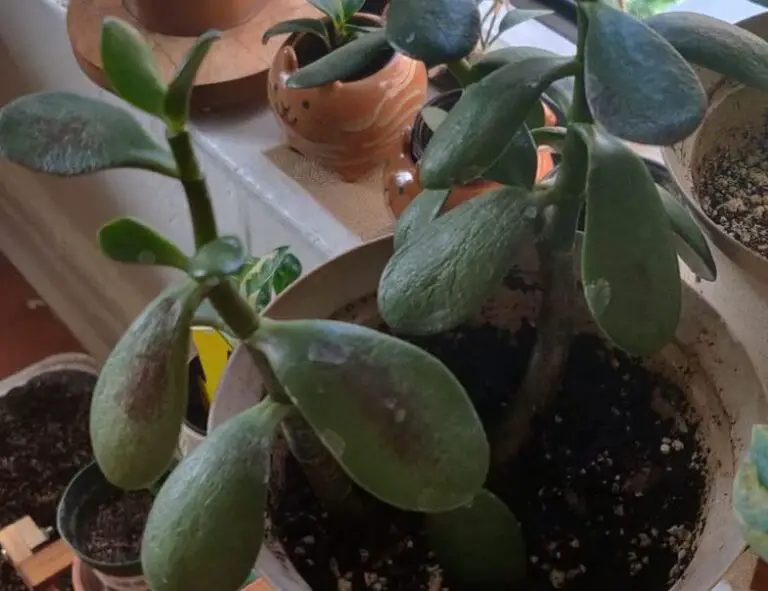
When I first saw those white dots on my jade plant, I was stumped. Were they dust? Bugs? Something worse? After some research and a bit of trial and error, I learned there are four main culprits behind them: mineral deposits, powdery mildew, pests, and sunburn.
Each has distinct signs and fixes, so let’s break them down.
1. Mineral deposits – The harmless culprit
Sometimes, the white spots are just salt or mineral buildup from tap water. When you water your jade plants with hard tap water, the excess salts can be left behind on the leaves after the water evaporates. They can also get pushed out through the leaves during transpiration.
These spots look like tiny, crystalline specks and are easy to wipe off with a damp cloth. I live in an area with hard water, and my jade plant had these chalky spots. A quick wipe with a damp cloth made the leaves look brand new. I switched to filtered water, and the problem hasn’t returned since.
Fix
- Wipe the leaves gently with a damp cloth.
- Use filtered, distilled, or rainwater for watering to prevent future buildup. EPA’s guide on water quality can help you understand your local water hardness.
- Check your soil for salt buildup. If it’s crusty, flush the soil with water or repot with fresh, well-draining succulent mix.
2. Powdery mildew – The fungal foe
Powdery mildew is a common fungal issue, especially in humid homes and during winter. It shows up as white, powdery patches on leaves, often in low-light or poorly ventilated areas. If your jade plant is near a drafty window or in a damp bathroom, this could be the issue.
Last winter, I noticed fuzzy white patches on my jade plant. It was sitting in a corner with low airflow. I caught it early, so a homemade remedy worked wonders.
Fix
- Mix 1 tablespoon of baking soda, ½ teaspoon of liquid soap, and 1 gallon of water. Spray this on affected leaves every 7 days until the mildew disappears.
- Prune affected leaves with clean scissors to prevent spreading.
- Move the plant to a spot with better air circulation and bright, indirect light.
- Avoid overhead watering. Water directly at the soil level.
3. Pests – Mealybugs and more
If your white spots move or look like tiny cotton balls, you’ve got pests. Mealybugs, scale, or spider mites are common culprits. These sap-sucking insects love jade plants and can weaken them if not treated quickly.
I once found fluffy white spots under my jade’s leaves. A closer look with a magnifying glass revealed mealybugs. Yuck! I isolated the plant and got to work.
Fix
- Isolate the plant to protect your other houseplants.
- Wipe pests off with a cotton swab dipped in 70% rubbing alcohol. University of California’s IPM offers excellent pest control advice.
- Treat the plant with neem oil or insecticidal soap for stubborn infestations.
- Check regularly for pests, especially if you move your jade plant outdoors in summer.
4. Sunburn – Too much of a good thing
Jade plants love bright light, but too much direct sun can cause white or yellowish spots that turn crispy and brown. This is common in most homes in the U.S. with south-facing windows where summer sun is intense.
I moved my jade to a sunny patio one summer, thinking it would thrive. Instead, it got sunburned! The white spots turned reddish-brown, and I learned my lesson.
Fix
- Move the plant to a spot with bright, indirect light, like a few feet from a south- or west-facing window.
- Gradually acclimate your jade to brighter light to avoid shock.
- Trim damaged leaves if they don’t recover.
How to Prevent White Spots on Jade Plants
Prevention is easier than treatment, trust me. After dealing with white spots a few times, I’ve fine-tuned my jade plant care routine to keep those leaves glossy and spot-free. Here’s how you can do the same in your home.
Water wisely
Jade plants are succulents, so they don’t need frequent watering. Overwatering can lead to root rot and other fungal issues like powdery mildew. I water mine every 2-3 weeks when the top 1-2 inches of soil feel dry. In winter, I cut back to once a month.
- Use a well-draining succulent potting mix. Better Homes & Gardens recommends a mix of sand, potting soil, and perlite.
- Choose a terracotta or clay pot with drainage holes to prevent moisture buildup.
- Water at the soil level, not overhead, to keep leaves dry.
Optimize light and temperature
Jade plants thrive in bright, indirect light for at least 6 hours daily. Kitchens or offices with south- or west-facing windows are ideal. They prefer room temperatures between 65°F and 75°F, which is common in most homes in the U.S. Avoid drafty spots or cold windows in winter.
- If your plant’s leaves turn brown, it’s getting too much sun. Move it back from the window or use a sheer curtain.
- Keep temperatures above 50°F. If you live in a colder region, bring outdoor jades inside during fall. The USDA Plant Hardiness Zone Map can help you check your climate.
Maintain low humidity
Jade plants hail from arid South Africa, so they prefer low humidity. Many American homes, especially in humid states like Florida or Louisiana, can get muggy. Use a fan or dehumidifier near your plant to improve air circulation.
- Avoid placing jade in bathrooms or near humidifiers.
- Ensure good ventilation, especially in winter when indoor air can get stale.
Fertilize sparingly
Over-fertilizing can cause salt buildup, leading to white spots. I feed my jade plant once in spring with a diluted 20-20-20 fertilizer at quarter strength. Less is more with succulents.
- Use a fertilizer designed for cacti and succulents.
- Flush the soil with water every few months to remove excess salts.
Regular inspections
I check my jade plant weekly for pests or unusual spots. Catching issues early saves a lot of hassle. Look under leaves and along stems, where pests like to hide.
- Use a magnifying glass for a closer look.
- Quarantine new plants before adding them to your collection to avoid pest spread.
Jade Plant Care Tips
Jade plants adapt well to our warm, dry indoor conditions. Here are some extra care tips to keep your jade thriving:
- Repot every few years. Young jade plants need repotting every 2-3 years, while mature ones can go 4-5 years. I repotted mine last year, and it’s never looked better.
- Trim leggy growth to keep your jade compact and bushy. I shape mine like a mini tree for that bonsai look.
- Place your jade in the southeast corner of your home to attract prosperity, per Feng Shui principles. It’s a fun tradition I’ve embraced!
- Propagate with ease to share with friends or family. Snip a healthy leaf or stem, let it scab over, and plant it in soil. It’s a fun way to grow more jades for friends. Cornell University’s guide has detailed propagation steps.
My Journey with White Spots – Lessons Learned
I’ve always loved my jade plant’s plump, glossy leaves. It sits proudly on my windowsill, soaking up the sun and adding a touch of green to my living room. But one day, I noticed something alarming—tiny white spots speckling its leaves.
Lots of questions ran through my mind. Was my beloved plant sick? Was I doing something wrong?
So, dealing with white spots on my jade plant has been a learning curve. At first, I panicked, thinking I’d lose my plant. But with some research and a few tweaks to my care routine, I got it back to its glossy glory.
The key was identifying the cause—mineral deposits in my case—and acting fast. Now, I’m more confident in spotting issues early and keeping my jade happy.
If you’re seeing white spots, take a deep breath and inspect your plant closely. Is it powdery? Fuzzy? Crystalline? Each clue points to a specific fix.
Most importantly, don’t overcomplicate things. Jade plants are forgiving, and with the right care, they’ll thrive in your home for years. Mine’s been with me for a decade, and I’m hoping it’ll be around for decades more.
FAQs
Here are frequently asked questions about white spots on jade plants
Q: Are white spots on my jade plant harmful?
A: It depends. Mineral deposits are harmless and easy to wipe off. Powdery mildew and pests can weaken the plant if untreated. Sunburn spots may cause leaf drop, but won’t kill the plant. Identify the cause and treat it promptly.
Q: Can I use tap water for my jade plant?
A: Tap water is fine if it’s not too hard. If you see white spots, switch to filtered or distilled water. Check your local water quality on the EPA website.
Q: How do I know if my jade plant has pests?
A: Look for moving or fuzzy white spots, especially under leaves. Use a magnifying glass to confirm. Mealybugs look like cotton balls, while scale might appear as flat, waxy dots.
Q: Can powdery mildew spread to other plants?
A: Yes, it can. Isolate your jade plant and treat it with a baking soda spray. Improve air circulation to prevent further spread.
Q: How much light does my jade plant need?
A: At least 6 hours of bright, indirect light daily. South- or west-facing windows are ideal in American homes. Too much direct sun can cause white or red spots.
Conclusion
White spots on your jade plant don’t have to spell disaster. Whether it’s mineral buildup, powdery mildew, pests, or sunburn, you now have the tools to diagnose and treat the issue. By watering wisely, optimizing light, and checking your plant regularly, you can prevent those pesky spots from returning.
Got questions or tips of your own? Please share them in the comments below or reach out to a local plant community. For more plant care advice, check out trusted resources like Penn State Extension. Here’s to happy, healthy jade plants in every home!

Tim M Dave is a gardening expert with a passion for houseplants, particularly cacti and succulents. With a degree in plant biology from the University of California, Berkeley, he has vast experience in gardening. Over the years, he has cultivated a vast collection of desert plants and learned a great deal about how to grow and care for these unique companions.