Understanding Weeping Cherry Blossom Tree: Varieties, and Care Tips for a Stunning Landscape Feature
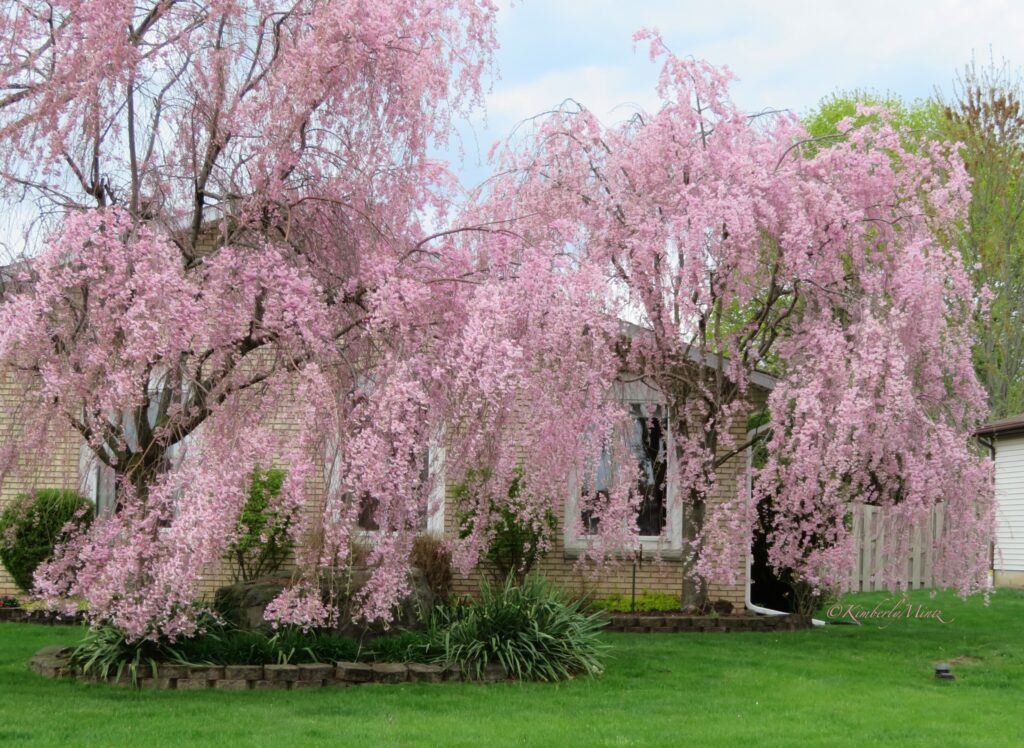
There is a particular kind of stillness that comes from standing near a weeping cherry blossom tree in full bloom. The long, arching branches cascade to the ground like a waterfall frozen in pink and white. It does not shout for attention the way some flowering trees do. It draws you in quietly, almost like an invitation.
Few ornamental trees combine architectural elegance with seasonal spectacle the way the weeping cherry does. In spring, the flowering display is extraordinary. In summer, the canopy provides dappled shade. In winter, the bare, drooping branch structure has a sculptural beauty of its own.
But growing a weeping cherry blossom tree well requires more than simply planting it and stepping back. It has specific needs — for site, soil, pruning, and cultivar selection — and getting those right is the difference between a tree that thrives for decades and one that struggles from year one.
This guide covers everything you need to know: what weeping cherry trees are, the main varieties, where they grow best globally, how to plant and care for them, common problems, and how to use them most effectively in landscape design.
What Is a Weeping Cherry Blossom Tree?
A weeping cherry blossom tree is any ornamental cherry (Prunus species or cultivar) with a strongly pendulous, cascading branch structure. The weeping habit can arise naturally — as in some wild forms — or through grafting, which is how most weeping cherries in cultivation are produced.
The most widely grown weeping cherry is Prunus subhirtella ‘Pendula’, the weeping Higan cherry. However, several other species and cultivars also display a weeping or semi-weeping form, including ‘Snow Fountains’, ‘Cheal’s Weeping’ (Prunus serrulata ‘Kiku-shidare-zakura’), and the Double Weeping Rosebud Cherry.
The word subhirtella means “somewhat hairy” in Latin, referring to the slightly hairy young stems and leaf undersides — a small botanical detail that most admirers of this tree never notice.
Weeping cherries are grafted trees. A weeping Prunus scion (the desired weeping cultivar) is grafted onto the top of an upright rootstock. The height at which the graft is made determines the ultimate shape of the tree — a high graft produces a tall, umbrella-like canopy, while a lower graft creates a more mounded form.
This is why buying from a reputable nursery matters: graft quality directly affects the tree’s long-term structure and health.
The Science of the Weeping Form
The pendulous growth habit in weeping cherries is caused by reduced upward gravitropism — the tree’s shoots respond less strongly to the gravitational signal that normally pulls growth upward. Instead, the branches grow outward and then droop downward under their own weight.
In grafted weeping trees, the rootstock grows upright while the grafted crown exhibits the pendulous habit. Over time, the cascading branches lengthen, and in mature specimens they may sweep across the ground — creating the characteristic dome or fountain shape that makes these trees so visually striking.
Understanding the grafted nature of weeping cherries has one practical implication every owner should know: any shoot that emerges from below the graft union (known as a sucker or rootstock shoot) will grow upright and must be removed immediately.
Left unchecked, a rootstock shoot will outcompete and eventually overtake the weeping crown, destroying the ornamental form entirely.
Top Weeping Cherry Blossom Tree Varieties
1. Prunus subhirtella ‘Pendula’ (Weeping Higan Cherry)
This is the classic. ‘Pendula’ is the most widely planted weeping cherry in the world and the standard against which others are measured. It produces single, pale pink flowers — opening from darker pink buds — in late winter or very early spring, often before any leaf emerges. The flowering display is generous and airy, covering every inch of the cascading branches.
At maturity, this tree reaches 20 to 30 feet in height with an equal spread — large enough to be a true specimen tree in a garden of any size. It is one of the earliest ornamental trees to flower each year, often blooming weeks before most other cherries.
- Bloom time: Late February to mid-March
- Hardiness: USDA Zones 4–8
- Flower color: Pale pink, single
- Best for: Large specimen planting, parks, broad lawns
2. Prunus subhirtella ‘Pendula Rubra’ (Weeping Higan Cherry — Pink Form)
A deeper-colored form of ‘Pendula’, ‘Pendula Rubra’ produces rose-pink to carmine flowers that are noticeably more vivid than the standard pale form. It has the same early bloom time and arching habit, but with greater color impact. For gardeners who find the standard ‘Pendula’ a little too soft, this is the answer.
- Bloom time: Late February to mid-March
- Hardiness: USDA Zones 4–8
- Flower color: Deep rose-pink to carmine
3. Prunus ‘Snow Fountains’ (White Weeping Cherry)
The finest compact weeping cherry for small gardens. ‘Snow Fountains’ grows to only 8 to 12 feet in height — a fraction of the standard weeping Higan — with branches that cascade almost to ground level. Its flowers are pure white, single, and produced in such abundance that the branches are nearly invisible beneath the bloom.
The autumn foliage turns orange to bronze, providing a second season of interest. ‘Snow Fountains’ is the top recommendation for courtyard gardens, small urban plots, and container growing.
- Bloom time: Mid-April
- Hardiness: USDA Zones 4–8
- Flower color: Pure white
- Height: 8 to 12 feet
4. Prunus serrulata ‘Kiku-shidare-zakura’ (Cheal’s Weeping Cherry)
Sometimes sold as ‘Cheal’s Weeping’, this is one of the most spectacular weeping cherries for flower impact. It produces fully double, deep pink flowers — pompon-like in their density — that hang in pendant clusters along every branch. The effect at peak bloom is almost overwhelmingly ornate.
It blooms in mid-spring, a few weeks later than ‘Pendula’, and grows to a moderate 10 to 15 feet. The flowers persist longer than single-flowered varieties because the dense petals take more time to shed.
- Bloom time: Mid-April
- Hardiness: USDA Zones 5–8
- Flower color: Deep pink, fully double
- Height: 10 to 15 feet
5. Prunus subhirtella ‘Pendula Plena Rosea’ (Double Weeping Rosebud Cherry)
A refined, semi-double form with soft pink flowers that open from deep rose buds, giving the tree a two-toned appearance before full bloom. The semi-double flowers last slightly longer than single forms, extending the display. This variety has a slightly more upright structure than standard ‘Pendula’ before the branches cascade outward, giving it a more defined umbrella silhouette.
- Bloom time: Early to mid-April
- Hardiness: USDA Zones 4–8
- Flower color: Pale pink, semi-double
6. Prunus subhirtella ‘Autumnalis Rosea’ (Weeping Autumn Cherry — Pink)
A weeping form with the extraordinary characteristic of blooming in winter as well as spring. In mild spells between November and March, the semi-double pale pink flowers open intermittently — making this tree one of the most valuable for winter garden interest. A final, more generous flowering follows in spring.
This is the weeping cherry for gardeners who want year-round ornamental value, particularly in the UK and Pacific Northwest climates where winter gardens matter most.
- Bloom time: November to March (intermittent); April (final flush)
- Hardiness: USDA Zones 4–8
- Flower color: Pale pink, semi-double
Where Do Weeping Cherry Trees Grow Best? (Global Climate Guide)
Weeping cherry trees are temperate climate plants that perform best where they experience cold winters followed by a clearly defined spring. Here is how they perform across different regions:
United States
Weeping cherries thrive across much of the continental United States. USDA Zones 5–8 are optimal for the most popular varieties. This covers roughly the Mid-Atlantic, Midwest, Pacific Northwest, New England (milder areas), the Upper South, and much of the West Coast.
- Pacific Northwest (Oregon, Washington): Near-ideal. The mild, wet winters and cool springs produce outstanding displays. Portland and Seattle are among the best cities in the world for weeping cherry flowering.
- Mid-Atlantic (Virginia, Maryland, D.C.): Excellent. Washington’s famous cherry blossom season includes numerous weeping specimens.
- Northeast (New York, Pennsylvania, New England): Good for cold-hardy varieties such as ‘Snow Fountains’ and ‘Pendula’ (Zone 4 tolerance). Late spring frosts are the primary risk.
- South (Georgia, Texas, Florida): Challenging. Most weeping cherries require more winter chilling than the Deep South provides. The Okame and Taiwan cherry are better options for Zone 8b and warmer.
- Mountain West (Colorado, Utah): Variable. Urban heat islands in Denver and Salt Lake City can support Zone 5–6 varieties, but late frosts at elevation are a significant risk.
United Kingdom and Ireland
The UK is excellent weeping cherry territory. The maritime climate — mild winters, cool springs, reliable moisture — suits Prunus subhirtella cultivars particularly well. The ‘Pendula’ and ‘Autumnalis Rosea’ forms are widely grown throughout England, Wales, and lowland Scotland.
The ‘Autumnalis’ forms are especially valued here because they begin flowering during the grey months of November and December — a genuine morale boost in a climate where winter can feel very long.
Japan
The weeping cherry — called shidare-zakura (垂れ桜) in Japanese — holds a special place in Japanese horticultural tradition. The most famous weeping cherry in Japan is the Miharu Takizakura in Fukushima Prefecture — a Prunus itosakura tree estimated to be over 1,000 years old. Weeping cherries in Japan are frequently planted in temple and shrine gardens, where their arching form complements traditional architecture.
Europe (Germany, France, Netherlands)
Western and Central Europe’s temperate climate is broadly suitable. Germany’s Rhine Valley, France’s Loire Valley, and the Netherlands’ bulb fields are all home to significant weeping cherry plantings in parks and private gardens. The trees perform reliably in USDA equivalent Zones 6–8.
Australia and New Zealand
In Australia, the Southern Highland towns of New South Wales — particularly Bowral, home to the famous Tulip Time festival — have embraced weeping cherries as key landscape trees. New Zealand’s South Island and the cooler parts of Victoria and Tasmania are also suitable. Northern and tropical Australia is not appropriate for most varieties due to insufficient winter chilling.
How to Plant a Weeping Cherry Blossom Tree
Getting the planting right is the most important single step in the life of a weeping cherry. Poor planting causes problems that persist for the entire life of the tree.
Choosing the Right Site
Weeping cherries need full sun — at least six hours of direct sunlight daily. Shaded trees produce fewer flowers, grow weakly, and are far more susceptible to fungal diseases. Choose the sunniest available spot.
Soil drainage is non-negotiable. These trees will not tolerate waterlogged conditions. Roots sitting in saturated soil develop rot quickly, often fatally. If your soil is heavy clay, either choose a raised planting position, improve drainage with grit, or select a different tree.
Allow enough space for the mature canopy. Even compact varieties like ‘Snow Fountains’ need an 8 to 10-foot radius of clear space. Full-sized ‘Pendula’ trees need 25 to 30 feet of clearance.
Step-by-Step Planting Guide
Step 1 — Timing. Plant in early spring (before bud break) or in autumn at least six weeks before the first expected frost. Container-grown trees can be planted throughout the growing season with attentive watering.
Step 2 — Prepare the hole. Dig a hole two to three times as wide as the root ball but no deeper than the root ball itself. Depth is critical: the graft union must sit above soil level. Burying the graft encourages disease and may cause the rootstock to dominate.
Step 3 — Check the root ball. Gently tease out any circling or kinked roots before placing the tree. Circling roots left uncorrected will eventually girdle (strangle) the tree.
Step 4 — Backfill. Use the excavated soil to refill the hole. In average garden soil, no amendment is needed. In very poor, sandy soil, mixing in a small amount of compost is acceptable. Do not add fertilizer to the planting hole.
Step 5 — Stake correctly. Weeping cherries benefit from staking for the first one to two years — not to hold the trunk rigidly upright, but to prevent the root ball from rocking in wind. Use a low, angled stake and a flexible tree tie. Remove the stake once the roots have anchored.
Step 6 — Water thoroughly. Water deeply immediately after planting to settle the soil and eliminate air pockets. Apply a 2 to 3-inch layer of organic mulch in a ring around the tree, keeping mulch well clear of the trunk — touching bark promotes rot.
Caring for a Weeping Cherry Blossom Tree
Watering
Young weeping cherries (first three years) need consistent moisture. Water deeply once or twice weekly during dry spells, ensuring water penetrates at least 12 to 18 inches into the soil. A slow trickle from a garden hose for 20 to 30 minutes is more effective than a brief, shallow watering.
Mature trees are more drought-tolerant but will show stress — leaf scorch, premature leaf drop — during extended dry summers. Supplemental watering in July and August is beneficial in hot climates.
Avoid overhead watering. Water directed onto the foliage promotes fungal leaf diseases, particularly cherry leaf spot and powdery mildew. Water at the base of the tree.
Fertilizing
Weeping cherries do not need heavy feeding. Over-fertilization — especially with high-nitrogen fertilizers — produces lush, fast-growing shoots that are highly attractive to aphids and more susceptible to bacterial diseases.
Apply a balanced granular fertilizer (10-10-10 or similar) once in early spring, before new growth begins. If the tree is growing vigorously — more than 12 inches of new growth per year — skip the fertilizer entirely that season. These trees feed themselves effectively in most reasonable garden soils.
Pruning Weeping Cherry Trees
Pruning is the most misunderstood aspect of weeping cherry care. Many owners prune too heavily or at the wrong time of year, causing serious harm.
The golden rule: prune immediately after flowering, while the tree is in active growth. This is typically late April to early May for most Northern Hemisphere locations. Pruning during the dormant season — particularly in autumn and early winter — creates large, slow-healing wounds that are highly vulnerable to silver leaf disease (Chondrostereum purpureum) and bacterial canker.
What to prune:
- Dead, damaged, or diseased branches — remove these promptly whenever discovered
- Branches that touch or cross each other (select the weaker and remove it)
- Any shoots growing upward from within the weeping canopy (these disrupt the form)
- Rootstock suckers — the most important task of all. Any upright shoot emerging from below the graft union must be traced to its origin and removed flush with the rootstock. Never simply cut it at ground level — this stimulates regrowth. Tear or cut it off at the point where it emerges from the rootstock or root.
What NOT to prune:
Do not cut back the cascading branch tips to shorten the tree or tidy its silhouette. This destroys the natural weeping form, creates hundreds of blunt cut points vulnerable to disease, and results in a misshapen tree that never fully recovers.
If branches are touching the ground and this bothers you, raise them slightly by removing the very lowest lateral branches — do not cut the weeping tips themselves.
Always use clean, sharp tools. Disinfect pruning tools with a 10% bleach solution or rubbing alcohol between trees to prevent transmitting bacterial canker or other pathogens.
Common Problems with Weeping Cherry Trees
Bacterial Canker (Pseudomonas syringae)
This is the most serious disease of weeping ornamental cherries. Bacterial canker causes sunken, dead patches (cankers) on branches and the main trunk, often with a sticky, amber-colored gum oozing from infected tissue. Affected branches die back, sometimes suddenly.
The bacteria enter through pruning wounds, leaf scars, and other openings — which is why autumn pruning is so dangerous. Treatment involves cutting out infected wood to healthy tissue, disinfecting tools between cuts, and applying a copper-based bactericide in autumn. In severe cases, the tree may need to be removed to prevent spread to other cherries.
Silver Leaf Disease (Chondrostereum purpureum)
A fungal disease that enters through wounds. The first sign is a silvery sheen on the foliage of affected branches. There is no chemical cure — the only management is to cut out affected branches immediately, making the cut at least 6 inches below any visible staining in the wood. Remove and destroy all prunings.
Cherry Leaf Spot (Blumeriella jaapii)
This fungal disease causes small purple spots on leaves that expand and eventually cause premature defoliation. It is more unsightly than fatal but weakens the tree over successive years if untreated. Improve air circulation through light pruning, avoid overhead watering, and apply an appropriate fungicide at first signs of infection.
Aphids
The black cherry aphid (Myzus cerasi) is common on new growth in spring, causing leaf curling and sticky honeydew deposits. Light infestations cause minimal long-term harm. Treat heavy infestations with insecticidal soap or neem oil. Encouraging natural predators — ladybirds, lacewings, and parasitic wasps — is more effective long-term than repeated chemical applications.
Rootstock Regrowth
As noted earlier, rootstock suckers are the most common non-disease problem with weeping cherries. Check the base of the tree and graft union in spring and summer and remove any upright shoots promptly. This is not an emergency, but neglecting it for multiple seasons can result in the rootstock dominating and overwhelming the ornamental weeping crown.
Weeping Cherry Trees in Landscape Design
As a Standalone Specimen
A mature weeping cherry is most powerful as a solitary specimen, given adequate space to develop its full cascading canopy without competition. Placed on an open lawn — where the whole canopy is visible — it becomes a focal point that anchors the entire garden design.
Position it where it can be viewed from the house — from a kitchen window, a sitting room, or a terrace. The early spring flowering display will be one of the first signs of the changing season, visible every morning while the kettle boils.
Beside Water
Weeping cherries are supremely effective near water. The drooping canopy reflecting in a pond or stream creates one of the most iconic images in ornamental horticulture. In Japanese garden design, this pairing is centuries old — the shidare-zakura leaning over still water is a classical composition.
Even a modest garden pond or rill creates enough reflective surface to justify this pairing.
In Formal and Japanese Gardens
The sculptural, architectural quality of a weeping cherry suits both formal and Japanese-style designs. In formal gardens, a pair of matching weeping cherries flanking an entrance or axial path creates a strong, symmetrical statement. In Japanese-style gardens, a single weeping cherry combined with moss, raked gravel, stone lanterns, and bamboo creates an unmistakably serene composition.
In Container Planting
Compact weeping cherries — particularly ‘Snow Fountains’ and ‘Kojo-no-mai’ — can be grown in large containers for several years. Use a well-draining, fertile compost; repot every two to three years; and water regularly because container-grown trees dry out quickly.
Container-grown weeping cherries are excellent on patios and terraces where ground planting is not possible. Move them to a prominent position in late winter or early spring as the buds swell, then return them to a less prominent spot after the flowers drop.
Underplanting Ideas
The area beneath a weeping cherry’s canopy — sheltered by the cascading branches — is a natural planting opportunity. Spring bulbs work beautifully: blue grape hyacinth (Muscari), pale yellow narcissus, or white wood anemones all complement pink or white cherry flowers without competing for attention.
Avoid dense underplanting with large shrubs that will compete with the tree’s roots or obscure the base of the cascading canopy.
Weeping Cherry Tree Lifespan
One of the most common questions about weeping cherries is how long they live. The honest answer is: not as long as most garden owners hope.
Most grafted ornamental weeping cherries have a lifespan of 20 to 40 years, with some cultivars — particularly heavily double-flowered forms like ‘Kiku-shidare-zakura’ — declining after 20 to 25 years in less-than-ideal conditions.
By contrast, species cherries like the wild cherry (Prunus avium) and Sargent cherry can live 80 to 100 years.
The relatively short lifespan is partly inherent to the genetics of these highly bred cultivars, and partly a result of their vulnerability to bacterial and fungal diseases. Good siting, correct planting, timely pruning, and attentive care maximize longevity.
A well-grown ‘Pendula’ in good soil, full sun, and with regular monitoring can easily reach 40 years.
Frequently Asked Questions
How fast does a weeping cherry blossom tree grow? Most weeping cherries grow at a moderate rate — 10 to 15 inches per year under good conditions. Growth slows as the tree matures. Full-sized ‘Pendula’ trees reach their mature height in 10 to 15 years.
Can weeping cherry trees be kept small? The mature size of a grafted weeping cherry is largely determined by the graft height and the rootstock used. You cannot prune a weeping cherry significantly smaller without destroying its natural form. If you want a permanently compact specimen, choose a naturally small cultivar such as ‘Snow Fountains’ from the outset.
When does a weeping cherry tree bloom? Bloom time varies by variety and climate. Early varieties (Prunus subhirtella ‘Pendula’) bloom in late February to mid-March in moderate climates. Mid-spring varieties (Kwanzan, ‘Snow Fountains’) bloom in mid to late April. Warmer climates bloom earlier; colder climates, later. Climate change is shifting bloom dates earlier in many regions.
Are weeping cherry trees poisonous to dogs and cats? Yes — all parts of cherry trees except the ripe fruit flesh contain cyanogenic glycosides, which are toxic to dogs, cats, and horses. Bark, leaves, twigs, and seeds are all dangerous. Contact a veterinarian immediately if you suspect your pet has ingested any part of a cherry tree.
Why is my weeping cherry not blooming? The most common causes are: insufficient sunlight (less than six hours daily), planting too deeply (graft union buried), over-fertilization with nitrogen, late spring frost damage to buds, or a rootstock sucker having overtaken the weeping crown. Check these factors in sequence.
Suggested For You:
Understanding Dracaena Cinnabari: The Dragon Blood Tree — History, Significance, and More
Understanding Cherry Blossom Tree: Types, History and Full Growing Details
Kwanzan Cherry Tree (Prunus serrulata ‘Kwanzan): Size, Common Problems, and Full Care Guide
Jane vs Ann Magnolia Tree: Comparisons + Which One to Choose for Your Garden?
Final Thoughts
The weeping cherry blossom tree is, without question, one of the finest ornamental trees available to temperate climate gardeners. It delivers a flowering display that stops people in their tracks each spring.
It provides shade, structure, and year-round garden interest. And when grown well — sited correctly, planted with care, pruned at the right time, and monitored for pests and disease — it repays every ounce of attention given to it.
The key is to start with the right variety for your space and climate, plant it correctly from day one, and resist the temptation to neglect the graft union and the pruning calendar. Do those things, and you will have a tree that becomes the defining feature of your garden for a generation.
There are few better investments in beauty you can make.
References
- NC State University Extension — Prunus subhirtella ‘Pendula’ Plant Profile https://plants.ces.ncsu.edu/plants/prunus-subhirtella/
- Clemson University Cooperative Extension — Ornamental Cherries Factsheet https://hgic.clemson.edu/factsheet/cherries-ornamental/
- University of Florida IFAS Extension — Prunus serrulata: Ornamental Cherry in the Landscape https://edis.ifas.ufl.edu/publication/ST499
- Harvard University Arnold Arboretum — Cherries of the Arnold Arboretum https://arboretum.harvard.edu/plants/featured-plants/cherries-of-the-arnold-arboretum/
- Penn State Extension — Tree Diseases: Bacterial Canker and Silver Leaf https://extension.psu.edu/bacterial-canker-of-stone-fruits

Tim M Dave is a gardening expert with a passion for houseplants, particularly cacti and succulents. With a degree in plant biology from the University of California, Berkeley, he has vast experience in gardening. Over the years, he has cultivated a vast collection of desert plants and learned a great deal about how to grow and care for these unique companions.