15 Common Types of Jacaranda Trees: A Comprehensive Guide
The sight of a Jacaranda tree in full bloom ranks among nature’s most spectacular displays. These ornamental trees, draped in cascades of purple-blue flowers, transform entire streets and neighborhoods into breathtaking corridors of color each spring.
Native to tropical and subtropical regions of Central and South America, Jacarandas have become beloved landscape features in warm climates around the world.
While many people assume all Jacarandas look identical, the genus actually encompasses numerous species and cultivars, each with distinct characteristics. Understanding these differences helps gardeners and landscapers select the right tree for their specific needs and growing conditions.
1. Jacaranda mimosifolia (Blue Jacaranda)
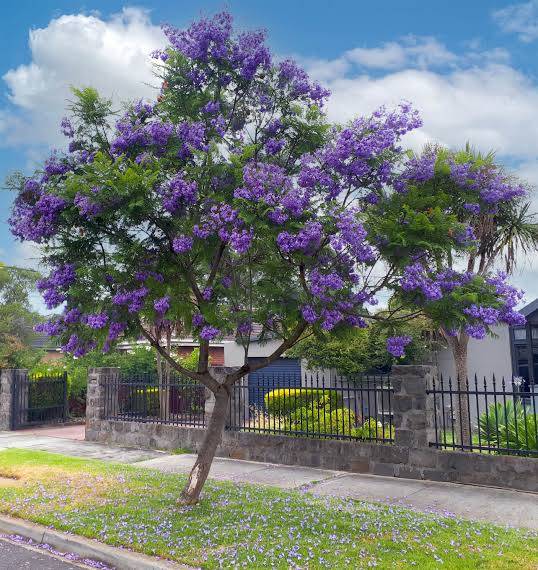
Scientific Name: Jacaranda mimosifolia
USDA Zones: 9-11
Flower Color: Vibrant violet-blue
Sun Exposure: Full sun
Mature Size: 25-50 feet tall, 15-30 feet wide
Lifespan: 50-75 years
Toxicity: Non-toxic to humans; mildly toxic to pets if ingested in large quantities
The Blue Jacaranda stands as the most widely planted species worldwide. This deciduous tree produces fern-like, pinnately compound leaves that create an elegant, airy canopy. The spectacular flowering period occurs in late spring to early summer, when thousands of tubular blooms cover the branches before the leaves fully emerge.
Gardeners prize this species for its relatively fast growth rate and tolerance of various soil types, provided drainage remains adequate. The tree performs best in Mediterranean and subtropical climates where winters stay mild.
2. Jacaranda mimosifolia ‘White Christmas’
Scientific Name: Jacaranda mimosifolia ‘White Christmas’
USDA Zones: 9-11
Flower Color: Pure white
Sun Exposure: Full sun
Mature Size: 25-40 feet tall, 15-25 feet wide
Lifespan: 50-70 years
Toxicity: Non-toxic to humans; mildly toxic to pets
This striking cultivar offers a refreshing alternative to the traditional purple blooms. The White Christmas Jacaranda produces pristine white flowers that create a stunning contrast against the bright green foliage.
Breeders developed this variety specifically for gardeners seeking the classic Jacaranda form without the purple color. The tree shares the same ferny foliage and graceful structure as its parent species, making it an excellent choice for formal gardens or locations where a lighter palette works better with the surrounding landscape.
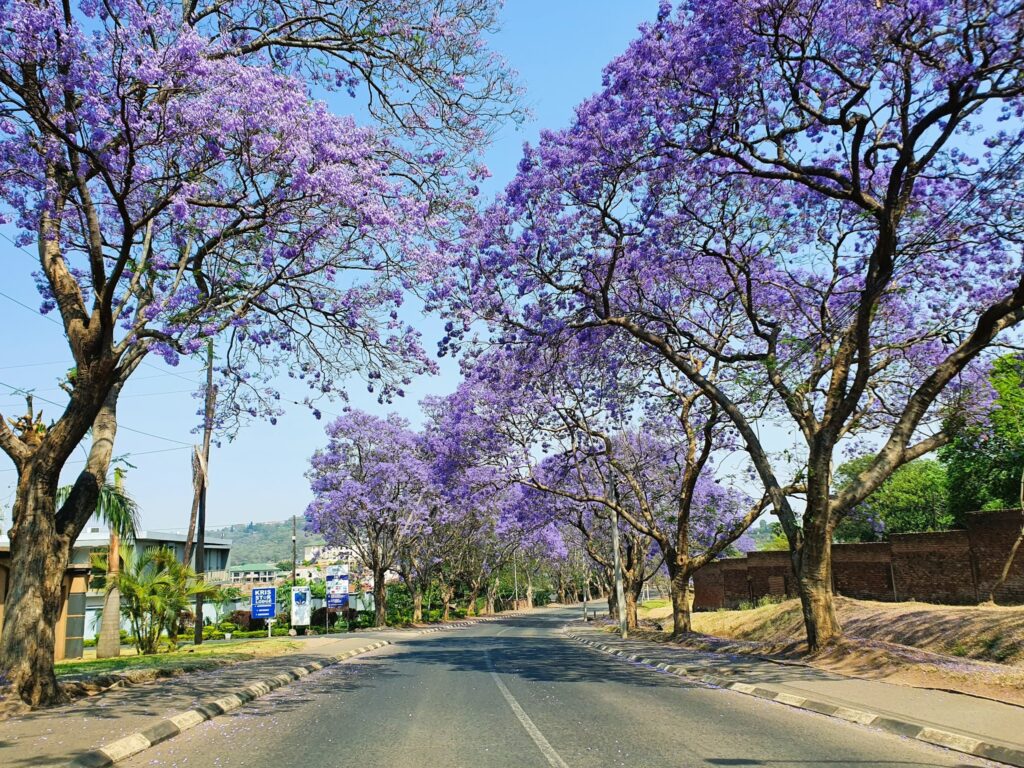
3. Jacaranda cuspidifolia
Scientific Name: Jacaranda cuspidifolia
USDA Zones: 9-11
Flower Color: Deep violet-blue
Sun Exposure: Full sun to partial shade
Mature Size: 20-35 feet tall, 15-25 feet wide
Lifespan: 40-60 years
Toxicity: Non-toxic to humans and pets
Native to Brazil and Bolivia, this species distinguishes itself through its slightly smaller stature and more compact growth habit. The flowers emerge in dense clusters, creating a fuller appearance than some other species. The leaves feature more pointed leaflets, which inspired the species name “cuspidifolia,” meaning pointed leaves.
This Jacaranda adapts well to slightly shadier conditions than its relatives, making it suitable for gardens with afternoon shade or filtered light. The tree also shows greater tolerance for humidity.
4. Jacaranda caroba
Scientific Name: Jacaranda caroba
USDA Zones: 10-11
Flower Color: Purple with white throat
Sun Exposure: Full sun
Mature Size: 15-25 feet tall, 10-20 feet wide
Lifespan: 30-50 years
Toxicity: Non-toxic
This smaller species works wonderfully in residential gardens where space limitations prevent planting larger varieties. Native to Brazil, Jacaranda caroba produces bicolored flowers that add visual interest with their distinctive white throats. The growth rate proceeds moderately, and the tree naturally forms a rounded crown that requires minimal pruning.
Traditional medicine practitioners in South America have used this species for various purposes, though modern gardeners grow it purely for ornamental value. The compact size makes it ideal for courtyard gardens or as a specimen tree in smaller yards.
5. Jacaranda obtusifolia
Scientific Name: Jacaranda obtusifolia
USDA Zones: 10-12
Flower Color: Blue-purple
Sun Exposure: Full sun
Mature Size: 30-50 feet tall, 20-35 feet wide
Lifespan: 60-80 years
Toxicity: Non-toxic
The rounded leaflets of this species inspired its botanical name, with “obtusifolia” referring to the blunt leaf tips. Native to Central America and the Caribbean, this tree develops a broad, spreading canopy that provides excellent shade. The flowers appear in generous panicles, creating a profuse display during the blooming season.
This species demonstrates remarkable drought tolerance once established, making it suitable for xeriscaping projects in appropriate climates. The wood shows greater density than some other Jacarandas, contributing to better wind resistance.
6. Jacaranda acutifolia
Scientific Name: Jacaranda acutifolia
USDA Zones: 9-11
Flower Color: Lavender-blue
Sun Exposure: Full sun
Mature Size: 25-45 feet tall, 15-30 feet wide
Lifespan: 50-75 years
Toxicity: Non-toxic
Often confused with Jacaranda mimosifolia, this species features more sharply pointed leaflets and slightly paler flowers. The blooming period may extend longer than other varieties, sometimes producing sporadic flowers throughout summer in addition to the main spring flush.
Native to Peru and Ecuador, this tree adapts well to coastal conditions and tolerates salt spray better than most other species. The branching pattern tends to be more upright in youth, gradually spreading with age.
7. Jacaranda mimosifolia ‘Bonsai Blue’
Scientific Name: Jacaranda mimosifolia ‘Bonsai Blue’
USDA Zones: 9-11
Flower Color: Deep purple-blue
Sun Exposure: Full sun
Mature Size: 8-12 feet tall, 6-10 feet wide
Lifespan: 30-40 years
Toxicity: Non-toxic to humans; mildly toxic to pets
This dwarf cultivar revolutionizes Jacaranda cultivation by bringing the beloved blooms to small gardens and container growing. Bonsai Blue maintains the characteristic ferny foliage and vibrant flowers while staying remarkably compact. The smaller size makes it manageable for patios, balconies, or tight urban spaces.
Despite its diminutive stature, the tree produces a proportional flower display that captures the essence of full-sized specimens. This variety requires the same growing conditions as standard Jacarandas but needs more frequent watering due to its restricted root system when container-grown.
8. Jacaranda brasiliana
Scientific Name: Jacaranda brasiliana
USDA Zones: 10-11
Flower Color: Medium purple
Sun Exposure: Full sun to partial shade
Mature Size: 20-30 feet tall, 15-25 feet wide
Lifespan: 40-60 years
Toxicity: Non-toxic
Endemic to the Brazilian Atlantic Forest, this species exhibits a more shrubby growth habit when young, eventually developing into a small to medium tree. The flowers appear in shorter clusters compared to mimosifolia, but the display remains impressive.
This Jacaranda shows particular resistance to fungal diseases and adapts to higher humidity levels better than many relatives. The foliage stays semi-evergreen in tropical climates, dropping leaves only briefly before new growth emerges.
9. Jacaranda jasminoides
Scientific Name: Jacaranda jasminoides
USDA Zones: 10-12
Flower Color: White to pale lavender
Sun Exposure: Full sun
Mature Size: 15-20 feet tall, 10-15 feet wide
Lifespan: 30-45 years
Toxicity: Non-toxic
This unusual species produces flowers that pale in comparison to most Jacarandas, ranging from white to very light lavender. The blooms carry a subtle fragrance, which distinguishes this species from most other Jacarandas that produce little to no scent.
Native to certain regions of Brazil, this tree remains less common in cultivation but offers unique appeal for collectors seeking something different. The growth rate proceeds slowly, and the tree often maintains a multi-trunked form unless pruned to a single leader.
10. Jacaranda semiserrata
Scientific Name: Jacaranda semiserrata
USDA Zones: 9-11
Flower Color: Violet-blue
Sun Exposure: Full sun
Mature Size: 20-35 feet tall, 15-25 feet wide
Lifespan: 45-65 years
Toxicity: Non-toxic
The partially serrated leaf margins give this species its scientific name. Native to Brazil, this tree develops a moderately dense canopy that provides better shade than some of the airier species. The flowering occurs reliably each spring, with blooms lasting several weeks under favorable conditions.
This species demonstrates good tolerance for clay soils, provided they drain reasonably well. The bark develops an attractive texture with age, adding winter interest after the leaves drop.
11. Jacaranda caucana
Scientific Name: Jacaranda caucana
USDA Zones: 10-12
Flower Color: Deep purple
Sun Exposure: Full sun
Mature Size: 30-45 feet tall, 20-30 feet wide
Lifespan: 55-75 years
Toxicity: Non-toxic
This Colombian native produces some of the darkest purple flowers in the genus. The blooms appear in particularly dense clusters, creating an intensely colored display. The tree develops a symmetrical, rounded crown that makes it attractive for use as a street tree or focal point in large gardens.
Growth proceeds at a moderate pace, and the tree shows good resistance to wind damage once established. The wood has found use in carpentry in its native range, though cultivated specimens serve purely ornamental purposes.
12. Jacaranda copaia
Scientific Name: Jacaranda copaia
USDA Zones: 11-12
Flower Color: Purple-blue
Sun Exposure: Full sun
Mature Size: 50-80 feet tall, 30-50 feet wide
Lifespan: 70-100 years
Toxicity: Non-toxic
This giant among Jacarandas grows naturally throughout the Amazon basin and Central America. The massive size limits its use to parks, large estates, or rural properties where space permits unrestricted growth. The trunk can reach several feet in diameter, and the spreading canopy provides extensive shade.
Indigenous peoples have historically used the lightweight wood for various purposes. The flowering remains spectacular but occurs high in the canopy, making the display more visible from a distance than up close.
13. Jacaranda filicifolia
Scientific Name: Jacaranda filicifolia
USDA Zones: 9-11
Flower Color: Blue-violet
Sun Exposure: Full sun
Mature Size: 25-40 feet tall, 20-30 feet wide
Lifespan: 50-70 years
Toxicity: Non-toxic
The exceptionally fine, fern-like foliage gives this species its name, with “filicifolia” meaning fern-leaved. The delicate texture of the leaves creates an almost feathery appearance that adds to the tree’s ornamental value even when not in bloom.
Native to Argentina, this species tolerates slightly cooler temperatures than some tropical relatives. The flowers emerge in graceful panicles, and the tree often produces a lighter second bloom in autumn under ideal conditions.
14. Jacaranda decurrens
Scientific Name: Jacaranda decurrens
USDA Zones: 10-11
Flower Color: Purple
Sun Exposure: Full sun
Mature Size: 15-25 feet tall, 12-20 feet wide
Lifespan: 35-55 years
Toxicity: Non-toxic
This smaller species features leaf bases that extend down the stem, the characteristic that inspired its botanical name. Native to Brazil, this tree suits smaller landscapes where the classic Jacaranda look fits a more modest scale.
The growth habit tends toward multi-trunked unless trained to a single stem in youth. The flowering occurs reliably, though perhaps less profusely than larger species. This Jacaranda adapts to container culture better than most, making it suitable for patios or courtyards.
15. Jacaranda puberula
Scientific Name: Jacaranda puberula
USDA Zones: 10-11
Flower Color: Violet
Sun Exposure: Full sun to partial shade
Mature Size: 20-30 feet tall, 15-25 feet wide
Lifespan: 40-60 years
Toxicity: Non-toxic
The fine hairs covering the young branches and leaf stems give this species its name, with “puberula” referring to this downy texture. Native to southeastern Brazil, this tree develops an attractive, irregular crown that lends character to the landscape.
The flowering period may begin slightly earlier than other species in the same climate. This Jacaranda shows good tolerance for partial shade, making it suitable for gardens with filtered light or morning sun only.
Growing Considerations for Jacaranda Trees
Regardless of species, all Jacarandas share certain cultural requirements. These trees demand excellent drainage and will quickly succumb to root rot in soggy conditions. They thrive in full sun, which promotes the best flowering, though some species tolerate light shade. Young trees benefit from regular watering during establishment, but mature specimens show considerable drought tolerance.
The root systems can potentially damage hardscapes, so plant Jacarandas at least 15 feet from driveways, patios, and foundations. The falling flowers create litter during the blooming season, which some gardeners find objectionable near pools or entertainment areas. However, most enthusiasts consider the spectacular floral display well worth the brief cleanup period.
Jacarandas generally require minimal pruning beyond removing dead wood and maintaining structure. The trees naturally develop an attractive form without heavy intervention. Fertilization needs remain modest, with an annual application of balanced fertilizer sufficient for healthy growth in most soils.
Suggested For You
20 Flowering Trees with White Flowers in Spring
15 Stunning Trees with Yellow Flowers
15 Stunning Flowering Trees with Purple Blooms
15 Stunning Trees with Red Leaves Year-Round
20 Stunning Types of Cypress Trees: Visual Identification and Growing Guide
Conclusion
The diversity within the Jacaranda genus offers options for almost any warm-climate landscape. From towering specimens suitable for parks and boulevards to compact varieties perfect for residential gardens, these trees bring unmatched floral beauty to appropriate growing zones.
Understanding the specific characteristics of each type allows gardeners to select the ideal Jacaranda for their particular situation, ensuring years of spectacular spring displays and elegant form throughout the seasons.

Tim M Dave is a gardening expert with a passion for houseplants, particularly cacti and succulents. With a degree in plant biology from the University of California, Berkeley, he has vast experience in gardening. Over the years, he has cultivated a vast collection of desert plants and learned a great deal about how to grow and care for these unique companions.