15 Stunning Flowering Trees with Purple Blooms: Spring Through Summer
Purple-flowering trees bring a touch of magic to any landscape. Their blooms, ranging from soft lavender to deep violet, often turn ordinary gardens into vibrant, eye-catching spaces. They also attract pollinators like bees and butterflies while providing seasonal shade and structure.
Below, we explore 15 popular varieties, detailing their unique features to help you choose the right one for your yard.
1. Jacaranda (Jacaranda mimosifolia)
Scientific Name: Jacaranda mimosifolia
USDA Zones: 9b–11 (tolerates brief dips to around 20–25°F but prefers frost-free areas)
Color Variation: Primarily lavender-blue to violet; rare white-flowered cultivars exist
Sun Exposure: Full sun for best flowering
Mature Size: 25–50 feet tall, 15–30 feet wide (fast-growing in youth)
Lifespan: 50–150 years or more in ideal conditions
Toxicity: Generally non-toxic to humans, dogs, cats, and horses
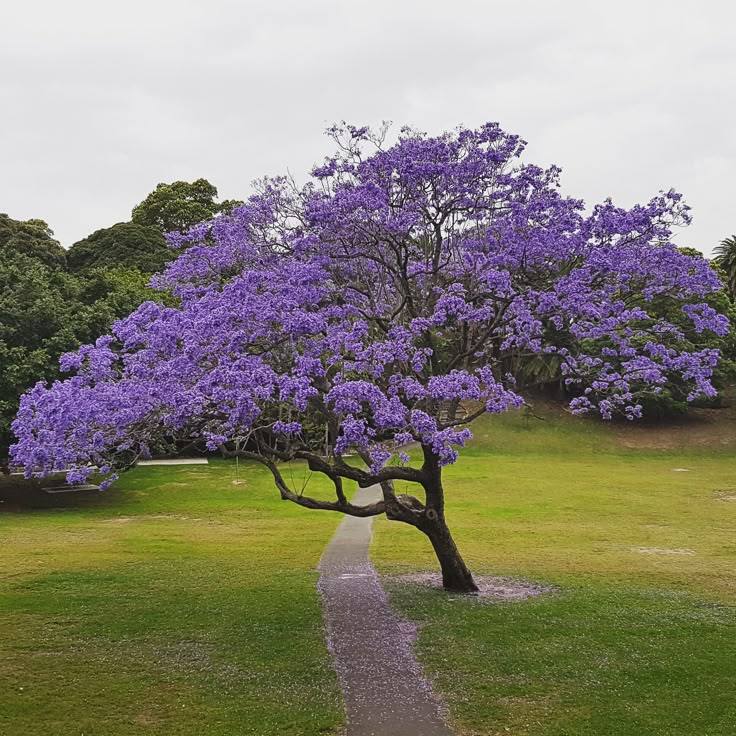
Native to South America, this subtropical beauty is famous for carpeting streets and gardens in purple when the blooms fall, in spring and early summer. The trumpet-shaped flowers clustered in large panicles release a mild, pleasant fragrance that attracts pollinators.
Jacarandas thrive in warm climates like southern California, Florida, or Hawaii, where they become iconic street trees. Their fern-like, bipinnate leaves provide dappled shade, making them perfect for patios or large lawns.
However, the fallen flowers and seed pods can be messy. That’s why I avoid planting them near pools or walkways. Pruning young trees encourages a strong structure, as mature ones develop a graceful, spreading canopy.
In cooler zones, they can be grown in containers and overwintered indoors, though flowering may be reduced. Overall, this tree rewards patient gardeners with one of the most spectacular floral displays in the plant world.
2. Eastern Redbud (Cercis canadensis)
Scientific Name: Cercis canadensis (cultivars like ‘Forest Pansy’ offer deeper purple tones)
USDA Zones: 4–9
Color Variation: Pink to reddish-purple; some cultivars lean more lavender or magenta
Sun Exposure: Full sun to partial shade
Mature Size: 20–30 feet tall, 25–35 feet wide
Lifespan: 50–75 years (relatively short-lived compared to larger trees)
Toxicity: Non-toxic to humans and pets; mild stomach upset possible if ingested in large quantities
The eastern redbud announces spring’s arrival like no other tree. It burst into bloom before its leaves emerge, covering bare branches in a profusion of pinkish-purple flowers.
This native North American gem is beloved for its heart-shaped foliage and compact habit. It’s one of the best small trees for the front yard and smaller gardens. The flowers, which appear directly on the trunk and branches, attract early pollinators and even offer edible petals for salads.
Redbuds adapt well to a range of soils, including clay, and tolerate urban conditions. That explains why they’re often planted along streets or in parks. Fall brings another show as the heart-shaped leaves turn golden-yellow.
Varieties like ‘Forest Pansy’ add extra appeal with deep purple foliage that holds color through summer. These trees support wildlife, providing nectar for bees and habitat for birds. Prune lightly after flowering to maintain shape, and avoid heavy wet soils to prevent root issues.
3. Crape Myrtle (Lagerstroemia indica/faurea, purple cultivars)
Scientific Name: Lagerstroemia indica (dwarf to medium) or Lagerstroemia fauriei hybrids for larger forms; popular purple cultivars include ‘Twilight’ (deep purple) and ‘Catawba’ (violet-purple)
USDA Zones: 7–10 (some cultivars hardy to zone 6 with protection)
Color Variation: Lavender, violet, deep purple; some fade to lighter tones
Sun Exposure: Full sun (at least 6 hours daily for optimal blooming)
Mature Size: 6–30 feet tall and 6–20 feet wide, depending on cultivar (dwarf varieties stay under 10 feet)
Lifespan: 50+ years with proper care
Toxicity: Non-toxic to humans, dogs, cats, and horses
Crape myrtles stand out as one of the most cherished flowering trees in warmer regions. It delivers a long-lasting summer spectacle of crinkled, crepe-paper-like blooms in vibrant shades.
Purple-flowered varieties, such as ‘Muskogee’ or ‘Purple Magic’, create a bold statement with their rich lavender to deep purple panicles that can last for months. These trees also boast attractive exfoliating bark in shades of gray and cinnamon, adding winter interest long after the flowers fade.
Crape myrtles thrive in hot, humid climates like the southern U.S., where they resist heat and drought once established. They’re versatile—use dwarfs in containers or borders, mediums as accents, and taller ones for shade or street planting.
The smooth, peeling bark reveals mottled patterns, while fall foliage often turns orange-red. Pruning in late winter encourages more blooms, but avoid “crape murder” (severe topping) to maintain natural shape. In cooler zones, grow in pots and shelter indoors during winter.
4. Chaste Tree (Vitex agnus-castus)
Scientific Name: Vitex agnus-castus (cultivars like ‘Shoal Creek’ for deeper purple)
USDA Zones: 6–9 (dies back in colder areas but regrows from roots)
Color Variation: Lavender-blue to deep violet-purple
Sun Exposure: Full sun
Mature Size: 10–20 feet tall and wide (can be pruned as a shrub or a tree)
Lifespan: 30–50 years
Toxicity: Non-toxic, though berries may cause mild upset if ingested
Blooming generously from midsummer into fall, the chaste tree rewards with fragrant purple flowers that arise like lavender candles above aromatic gray-green foliage. It provides nectar for bees, butterflies, and hummingbirds when many other plants have finished.
Adaptable to poor soils and drought, chaste trees suit xeriscapes or coastal areas with salt tolerance. Train young plants to a single trunk for a tree form, or let them grow multi-stemmed. Deadhead spent blooms to extend flowering, and cut back hard in spring for denser growth.
The seeds (once used medicinally) add ornamental appeal in fall. This deer-resistant tree brings long-season color to patios, borders, or as a specimen in hot, dry spots where few others thrive.
5. Royal Purple Smoke Tree (Cotinus coggygria ‘Royal Purple’)
Scientific Name: Cotinus coggygria ‘Royal Purple’
USDA Zones: 4–9
Color Variation: Plumes pinkish-purple; foliage deep maroon-purple
Sun Exposure: Full sun for the richest leaf color
Mature Size: 10–15 feet tall and wide
Lifespan: 20–40 years
Toxicity: Mildly toxic if ingested (sap can irritate skin)
Known for its ethereal “smoke” effect from billowy pinkish-purple flower plumes, the Royal Purple smoke tree earns its name with dramatic, deep burgundy foliage that holds color all season. This makes it a perfect focal point in mixed borders or modern gardens.
This hardy tree (or large shrub) tolerates a range of soils and needs little care once established. Fall brings scarlet tones to the leaves for added drama. Prune lightly to shape, or coppice hard for larger, bolder foliage. Deer tend to avoid it, and it attracts pollinators during bloom.
6. Texas Mountain Laurel (Sophora secundiflora)
With clusters of intensely fragrant, grape-scented purple flowers dangling like wisteria in early spring, the Texas mountain laurel delivers a sensory delight. The evergreen glossy leaves provide year-round structure, while bright red seeds in pods add fall interest (though toxic).
Scientific Name: Sophora secundiflora (also Dermoneuron secundiflorum)
USDA Zones: 7b–10
Color Variation: Deep violet-purple (resembling grape Kool-Aid in scent and look)
Sun Exposure: Full sun to partial shade
Mature Size: 15–25 feet tall, 8–12 feet wide (slow-growing)
Lifespan: 50–100+ years
Toxicity: Highly toxic seeds (do not ingest); safe otherwise
Also known as mescal bean, Texas Mountain Laurel is a slow-growing evergreen shrub or small tree native to the southwestern United States and Mexico. It typically reaches 10–20 feet tall and wide, with glossy, dark green compound leaves that provide year-round interest.
In early spring, it produces stunning drooping clusters of intensely fragrant, violet-blue to purple flowers that resemble wisteria and emit a sweet grape-like scent that attracts bees and butterflies. After blooming, it develops woody pods containing bright red seeds—these are highly toxic if ingested, so caution is advised around children and animals.
Drought-tolerant and hardy in USDA zones 7b–11, it thrives in full sun, well-drained alkaline soils, and requires minimal water once established. This tree is ideal for xeriscapes, patios, or as a specimen tree in hot, arid regions.
7. Purple Leaf Plum (Prunus cerasifera)
Scientific Name: Prunus cerasifera (cultivars like ‘Thundercloud’ or ‘Krauter Vesuvius’)
USDA Zones: 5–8
Color Variation: Pinkish-purple flowers; foliage reddish-purple
Sun Exposure: Full sun
Mature Size: 15–25 feet tall and wide
Lifespan: 20–30 years (short-lived)
Toxicity: Leaves, pits toxic (cyanide); fruit edible for wildlife
Also known as cherry plum, the Purple Leaf Plum (Prunus cerasifera), also is a popular ornamental tree prized for its striking year-round color. In early spring, it bursts into pink to light purple flowers that cover bare branches before the leaves emerge.
Emerging foliage starts reddish-purple and matures to deep burgundy or bronze. This even provides a bold contrast in landscapes throughout the summer. Popular cultivars like ‘Thundercloud’ and ‘Krauter Vesuvius’ offer reliable purple tones and rounded forms.
This tree is fast-growing and adaptable to various soils, thriving in USDA zones 5–8 with full sun. Small edible plums may appear, attracting birds, but pits and wilted leaves contain compounds that are toxic if ingested by humans or pets.
8. Judas Tree (Cercis siliquastrum)
Scientific Name: Cercis siliquastrum
USDA Zones: 6–9
Color Variation: Rosy-purple to magenta
Sun Exposure: Full sun to light shade
Mature Size: 20–30 feet tall and wide
Lifespan: 50–100 years
Toxicity: Non-toxic
Also known as the European redbud or love tree, the Judas Tree is a charming deciduous small tree native to southern Europe and western Asia.
In early spring, it puts on a breathtaking display with clusters of deep rosy-pink to magenta-purple flowers blooming directly on bare branches and even the trunk before the heart-shaped, blue-green leaves appear.
Its glossy leaves turn yellow in fall, followed by flat, purple-tinged seed pods that persist into winter. This plant prefers full sun to light shade and well-drained soil, showing good drought tolerance once established.
9. Purple Orchid Tree (Bauhinia purpurea)
Exotic orchid-like purple flowers with five petals bloom profusely in fall and winter in warm climates, resembling butterflies on branches. Bifid leaves add unique texture.
Scientific Name: Bauhinia purpurea
USDA Zones: 9–11
Color Variation: Pinkish-purple to orchid-purple
Sun Exposure: Full sun
Mature Size: 20–35 feet tall and wide
Lifespan: 50+ years
Toxicity: Non-toxic
Also called the butterfly tree or camel’s foot, the Purple Orchid Tree is a stunning semi-evergreen to deciduous tropical tree native to South Asia. It delights with clusters of exotic, orchid-like flowers in shades of pinkish-purple to deep magenta in fall through winter in warm climates.
Its five overlapping petals and prominent stamens resemble butterflies or orchids. In addition, the distinctive twin-lobed leaves, shaped like hoof prints, add unique texture year-round. It attracts butterflies and hummingbirds, making it a favorite for tropical gardens and around patios.
Growing 20–35 feet tall and wide with a spreading canopy, it’s fast-growing in USDA zones 9–11. Purple orchid trees prefer full sun, well-drained soil, and moderate water, though tolerant of drought once established. In cooler areas, it may drop leaves but rebounds vigorously.
10. Rose of Sharon (Hibiscus syriacus)
Scientific Name: Hibiscus syriacus (purple cultivars)
USDA Zones: 5–9
Color Variation: Violet, lavender-purple
Sun Exposure: Full sun
Mature Size: 8–12 feet tall (tree form)
Lifespan: 20–40 years
Toxicity: Non-toxic
Known for its late-summer to fall blooms when many other plants have faded, the Rose of Sharon produces large, showy hibiscus-like flowers in a range of colors, including white, pink, red, blue, and purple. It has an upright, vase-shaped habit with lobed green leaves.
Popular cultivars like ‘Blue Chiffon’, ‘Purple Pillar’, or ‘Azurri Blue Satin’ offer stunning violet or lavender hues with ruffled petals and prominent centers. Rose of Sharon thrives in full sun, tolerates a variety of soils, and is drought-resistant once established.
11. Purple Robe Locust (Robinia pseudoacacia ‘Purple Robe’)
Scientific Name: Robinia pseudoacacia ‘Purple Robe’
USDA Zones: 4–8
Color Variation: Rosy-purple
Sun Exposure: Full sun
Mature Size: 30–40 feet tall, 20–30 feet wide
Lifespan: 50–80 years
Toxicity: Bark, leaves are toxic
The Purple Robe Locust is a striking deciduous tree prized for its abundant, pendulous clusters of fragrant, rosy-purple to pinkish pea-like flowers in late spring. Dangling like wisteria, they attract bees and butterflies. New foliage emerges bronze-red before maturing to blue-green, adding seasonal contrast.
This fast-growing cultivar typically reaches 30–40 feet tall and 20–30 feet wide with an open, rounded canopy. Hardy in USDA zones 4–8, it thrives in full sun and well-drained soil, tolerating poor conditions, drought, and urban pollution once established.
However, it has thorns, brittle branches prone to storm damage, and can spread aggressively. Parts of the plant—especially bark, seeds, and leaves—are toxic if ingested by humans, pets, or livestock.
12. Desert Willow (Chilopsis linearis, purple cultivars)
Scientific Name: Chilopsis linearis (e.g., ‘Bubba Jones’ purple)
USDA Zones: 7–11
Color Variation: Lavender to deep purple
Sun Exposure: Full sun
Mature Size: 15–25 feet tall
Lifespan: 40–50 years
Toxicity: Non-toxic
The Desert Willow is a deciduous small tree native to the southwestern U.S. and Mexico. Despite its name, it’s not a true willow but related to catalpas. From late spring through fall, it produces abundant clusters of showy, trumpet-shaped flowers in shades of lavender, pink, or purple.
Cultivars like ‘Bubba Jones’ or ‘Lucretia Hamilton’ offer deeper hues. The showy, frilly-edged flowers attract hummingbirds, bees, and butterflies. Its narrow, willow-like leaves provide light, airy shade, and long seed pods add winter interest.
This tree is extremely drought-tolerant once established, thriving in USDA zones 7–11 with full sun and poor, well-drained soils. Non-toxic to humans and pets, it’s a low-maintenance favorite for xeriscapes, patios, or natural landscapes in hot, arid regions.
13. Princess Tree (Paulownia tomentosa)
Scientific Name: Paulownia tomentosa
USDA Zones: 5–9
Color Variation: Lavender-purple
Sun Exposure: Full sun
Mature Size: 30–50 feet tall (fast)
Lifespan: 70+ years
Toxicity: Non-toxic
Also known as empress tree or foxglove tree, the Princess Tree is a fast-growing deciduous tree native to China. It is particularly valued for its spectacular spring display of large, upright panicles of fragrant, pale lavender-purple flowers resembling foxgloves.
Its enormous heart-shaped leaves (up to 12 inches wide) appear after the blooms. Reaching 30–50 feet tall and wide quickly, it’s hardy in USDA zones 5–9, preferring full sun and well-drained soil.
Non-toxic to humans and pets, Princess Tree attracts pollinators but is considered invasive in many U.S. regions due to prolific seeding and root sprouting. So, control seedlings rigorously if planting. Best for large spaces needing rapid shade or timber.
14. Lilac Tree Form (Syringa reticulata)
Scientific Name: Syringa reticulata or vulgaris tree form
USDA Zones: 3–7
Color Variation: Lilac-purple
Sun Exposure: Full sun
Mature Size: 15–25 feet tall
Lifespan: 50+ years
Toxicity: Non-toxic
Often grown in tree form, the Japanese Tree Lilac is a hardy deciduous small tree prized for its stunning early summer blooms when common lilacs have finished. Large, creamy-white to pale purple-tinged panicles of fragrant flowers cover the branches in June, attracting bees and butterflies with a subtle, pleasant scent.
Unlike shrubby lilacs, it develops a single trunk with cherry-like reddish-brown bark that exfoliates attractively with age. Dark green leaves turn yellow in fall, and the rounded form provides light shade. Popular cultivars like ‘Ivory Silk’ offer compact growth habits.
Hardy in USDA zones 3–7, Lilac Tree Form thrives in full sun and well-drained soil while tolerating urban conditions and drought. It’s non-toxic to humans and pets. It’s an ideal specimen for streets, lawns, or patios in cooler climates.
15. Wisteria Tree Form (Wisteria sinensis or floribunda)
Scientific Name: Wisteria sinensis (tree form)
USDA Zones: 5–9
Color Variation: Violet-purple
Sun Exposure: Full sun
Mature Size: 20–30 feet (trained)
Lifespan: 100+ years
Toxicity: Seeds and pods are highly toxic
The Wisteria Tree Form is a specially trained standard version of vigorous climbing wisteria vines (Wisteria sinensis or Wisteria floribunda). It’s often grafted or pruned to develop a single clear trunk with a rounded, weeping canopy.
In mid to late spring, it produces spectacular, long, cascading racemes (up to 18 inches) of fragrant, pea-like violet-purple flowers that hang like grape clusters. This typically creates a breathtaking waterfall effect, and it also fills the air with sweet perfume.
Its pinnate green leaves provide light shade in summer, turning yellow in fall. Reaching 20–30 feet tall (with canopy spread controlled by pruning), it’s hardy in USDA zones 5–9, needing full sun, sturdy support, and regular pruning twice a year to maintain shape and encourage blooming.
All parts, especially seeds and pods, are highly toxic if ingested. Perfect as a dramatic patio or lawn specimen.
Final thought
Purple is a significant color that symbolizes royalty, luxury, and nobility. Trees with purple blooms offer diverse options for adding purple elegance to landscapes across different zones. Choose based on your climate and space for years of beautiful hues.

Tim M Dave is a gardening expert with a passion for houseplants, particularly cacti and succulents. With a degree in plant biology from the University of California, Berkeley, he has vast experience in gardening. Over the years, he has cultivated a vast collection of desert plants and learned a great deal about how to grow and care for these unique companions.