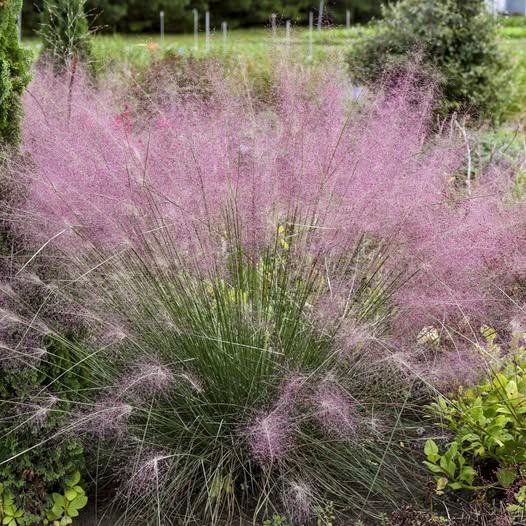
15 Tall Ornamental Grasses for Privacy: A Complete Screening Guide
Privacy is something most homeowners want and few achieve as elegantly as they would like. Solid fences block views effectively but create harsh, static boundaries that shrink a garden visually and offer nothing to wildlife or the broader landscape. Dense evergreen hedges take years to establish and require regular clipping to stay within bounds. And walls, while permanent, can make an outdoor space feel enclosed rather than protected.
Tall ornamental grasses offer a genuinely different approach to privacy screening — one that is softer, more natural, more dynamic, and in many ways more satisfying than any hard structure. A well-planted screen of tall grasses filters views rather than blocking them completely, moves with the wind in a way that feels alive rather than static, and provides habitat, seasonal color, and year-round architectural presence that a fence or wall simply cannot replicate.
They also establish relatively quickly. Most tall ornamental grasses reach their full screening height within two to three growing seasons — a timeline that compares favorably with the five or more years typically required to grow a substantial hedge from bare-root planting.
This guide covers 15 of the best tall ornamental grasses for privacy screening, with detailed growing information, planting guidance, and design advice to help you create an effective, beautiful, and genuinely low-maintenance privacy solution for any outdoor space.
Why Tall Ornamental Grasses Work for Privacy Screening
Before exploring specific plants, it is worth understanding why tall grasses are so effective in this role — and where their genuine limitations lie.
They establish quickly. Unlike woody hedging plants, which invest their early energy in root development before producing significant top growth, ornamental grasses grow rapidly from their first season. Warm-season species like miscanthus and pampas grass can add two to four feet of growth in a single season under favorable conditions.
They are visually dynamic. A screen of tall grasses moves with the wind, creating a flowing, shifting visual barrier that is far more interesting than a static fence or wall. The sound of wind through tall grass stems — a soft, whispering rustle — adds an auditory dimension to the garden that has genuine psychological benefits, masking background noise from traffic, neighbors, and urban activity.
They are ecologically valuable. Dense clumps of tall grasses provide nesting and shelter habitat for birds and beneficial insects, and many species produce abundant seed that feeds wildlife through winter. A grass privacy screen is a functioning ecological habitat as well as a functional garden feature.
They are seasonal. This is both an advantage and a limitation. Most tall ornamental grasses are deciduous — they die back in winter and re-emerge in spring. During the dormant period, a grass privacy screen provides less visual coverage than an evergreen hedge or fence. For those who require year-round screening from ground level to the full height, combining tall deciduous grasses with shorter evergreen shrubs or grasses at the base can resolve this limitation effectively.
They are proportionate. In a garden setting, a screen of tall grasses sits comfortably within the scale of the landscape in a way that a six-foot fence or a dense hedge does not. It creates privacy without the sense of enclosure that hard structures can impose.
Planning Your Grass Privacy Screen
Effective privacy screening requires more than simply choosing a tall grass and planting it. A few planning considerations make the difference between a screen that works beautifully and one that disappoints.
Assess the required height. Consider what you are screening from — a neighbor’s window at a specific height, a road at ground level, a raised terrace overlooking your space. The screening height you need determines which grasses are appropriate. Grasses ranging from six to fifteen feet provide very different levels of coverage, and matching the plant to the specific screening requirement avoids both under-planting (too short) and over-planting (too tall for the space).
Consider the viewing angle. Privacy screening is most effective when it is positioned between the viewer and the area you wish to screen. Even a relatively narrow row of tall grasses can be very effective when correctly placed in the sightline. Conversely, a wide planting placed at the wrong angle may provide less coverage than expected.
Plan for winter gaps. For deciduous tall grasses, consider what the screen will look like in winter. The dried foliage and seed heads provide some visual continuity and considerable architectural interest, but they will not provide the same solid screening as the summer growth. Adding evergreen shrubs or fencing behind the grass planting can provide year-round screening continuity if this is essential.
Allow adequate spacing. Tall grasses planted too closely together compete for resources and may develop poorly. Most tall grasses for screening should be spaced three to five feet apart, depending on their mature spread. This allows each plant to develop its full, natural form while still creating a continuous visual screen within two to three seasons.
Check local regulations. In some jurisdictions, tall plantings along property boundaries are subject to height restrictions or neighbor notification requirements similar to those applying to solid fences. Verify any applicable local rules before planting along a boundary.
15 Best Tall Ornamental Grasses for Privacy
1. Maiden Grass (Miscanthus sinensis ‘Gracillimus’)
Maiden grass is one of the most widely used and most reliable tall ornamental grasses for privacy screening in temperate climates. Its graceful, arching clumps of narrow, dark green leaves with silver midribs reach five to seven feet at maturity, providing a substantial and genuinely beautiful screen that moves with elegance in the slightest breeze.
‘Gracillimus’ is among the most refined Miscanthus cultivars — its narrow leaf blades give it a finer texture than many of its relatives, and its naturally vase-shaped form creates a dense visual mass at the top of the plant while maintaining an open, airy quality at the base. In late summer, silvery-white flower plumes emerge and age to warm, tawny gold through autumn and winter, sustaining the ornamental contribution of the screen well beyond the growing season.
It is clump-forming and non-invasive, drought-tolerant once established, and adaptable to a range of soil types. Plant three to four feet apart for a continuous screen within two growing seasons. It is deciduous, so consider supplementing with evergreen plants at the base for year-round screening continuity.
Hardiness: USDA Zones 5–9 | Height: 5–7 feet | Spread: 3–5 feet | Light: Full sun | Soil: Moist, well-drained; adaptable | Screen Establishment: 2–3 seasons
2. ‘Morning Light’ Japanese Silver Grass (Miscanthus sinensis ‘Morning Light’)
‘Morning Light’ brings a luminous, refined quality to the privacy screen that few other tall grasses can match. Its very narrow leaves carry a fine white margin and a silver midrib that gives the entire clump a frosted, glowing appearance — particularly beautiful in early morning and late afternoon light, when it appears to shine with an inner quality that makes it deeply attractive from every vantage point.
At five to six feet in height, it provides effective screening for most residential situations. Its late-season flower plumes — delicate, copper-red, emerging in mid to late autumn — extend the visual interest of the screen into the quietest part of the year. The combination of fine texture, luminous foliage color, and graceful movement makes ‘Morning Light’ one of the most ornamentally distinguished privacy screen grasses available.
It is best sited in full sun where its silvery marginal variegation is most vivid. It is clump-forming, long-lived, and requires only the annual spring cutback to maintain its performance. Plant four feet apart for effective screening density.
Hardiness: USDA Zones 5–9 | Height: 5–6 feet | Spread: 3–4 feet | Light: Full sun | Soil: Moist, well-drained; adaptable | Screen Establishment: 2–3 seasons
3. Giant Miscanthus (Miscanthus x giganteus)
For situations requiring maximum screening height with minimum establishment time, giant miscanthus is one of the most effective plants available. It is genuinely large — reaching ten to fifteen feet in a single growing season under ideal conditions — and its dense, upright clumps provide a substantial visual barrier from an early stage of establishment.
Its broad, arching, dark green leaves with white midribs are impressive in scale, and its late-summer flower plumes add a further ornamental dimension to what is primarily a functional screening plant. In autumn, the foliage turns a warm golden-orange before the plant dies back for winter.
Giant miscanthus spreads by rhizomes — more vigorously than clump-forming species — and requires adequate space and occasional management to prevent it from spreading beyond its designated area. Install a root barrier if planting near pathways, structures, or other planted areas. In suitable conditions it is one of the fastest and most effective tall grass screens available, though its size is best suited to larger gardens and open landscapes rather than constrained urban spaces.
Hardiness: USDA Zones 4–9 | Height: 10–15 feet | Spread: 3–5 feet per clump | Light: Full sun | Soil: Moist, well-drained; adaptable | Screen Establishment: 1–2 seasons
4. Pampas Grass (Cortaderia selloana)
Pampas grass is perhaps the most recognizable tall ornamental grass in cultivation, and in suitable climates it remains one of the most spectacular choices for a dramatic privacy screen. Its broad, arching clumps of sharp-edged, blue-green foliage reach six to ten feet, and its enormous, creamy-white or pink flower plumes — rising to twelve feet or more — create a visual statement of considerable power and presence that can be seen and appreciated from a considerable distance.
It establishes quickly in warm climates and is highly drought-tolerant once its root system develops. For large gardens, rural properties, and open landscapes where a bold, statement-making screen is the goal, mature pampas grass delivers an impact that few other plants match.
One critical consideration: pampas grass is listed as invasive in California, New Zealand, and Australia, where it self-seeds prolifically in mild, moist conditions. Always verify local invasive species status before planting. In regions where it can be grown responsibly, it is a magnificent privacy grass of the highest order. Pink cultivars like ‘Rosea’ and compact forms like ‘Pumila’ offer useful variations on the standard species.
Hardiness: USDA Zones 7–11 | Height: 6–10 feet (12 feet in flower) | Spread: 6–8 feet | Light: Full sun | Soil: Well-drained; drought-tolerant | Screen Establishment: 2–3 seasons
5. Switchgrass ‘Northwind’ (Panicum virgatum ‘Northwind’)
‘Northwind’ is a switchgrass cultivar bred specifically for its exceptional wind tolerance, upright habit, and tall stature — qualities that make it one of the finest native grasses for privacy screening in exposed, open, or coastal positions where many other tall grasses would lean, flop, or suffer wind damage.
Its steel-blue, upright foliage reaches five to six feet and remains stiffly vertical even in strong wind — an unusual quality among tall grasses, which generally have arching or partially arching habits. Its enormous, airy flower panicles in late summer create a cloud-like effect above the foliage that is both beautiful and functionally effective, extending the visual height of the screen by an additional foot or two.
It is a North American native grass with outstanding adaptability — tolerating wet soils, dry soils, clay, sand, and coastal salt spray with equal equanimity. Its ecological value as a native species, supporting insects, birds, and other wildlife, adds a meaningful dimension to its practical screening role.
Hardiness: USDA Zones 4–9 | Height: 5–6 feet | Spread: 2–3 feet | Light: Full sun to partial shade | Soil: Adaptable; wet to dry | Screen Establishment: 2 seasons
6. Big Bluestem (Andropogon gerardii)
Big bluestem is the dominant grass of the North American tallgrass prairie — a plant of historical and ecological significance as well as outstanding ornamental quality. In the privacy screen context, its tall, upright form, reaching four to seven feet in full sun, creates a naturalistic, flowing barrier that feels genuinely at home in the landscape rather than imposed upon it.
Through summer, its blue-green foliage has a clean, distinctive character. In autumn, it transforms into one of the most richly colored of all native grasses — vivid copper, orange, and burgundy tones that glow warmly in low autumn light. Its distinctive turkey-foot seed heads persist through winter, maintaining the structural presence of the screen through the dormant season.
For naturalistic landscapes, prairie-style gardens, and rural or semi-rural properties where ecological authenticity is as important as functional screening, big bluestem is one of the most meaningful and beautiful tall grass choices available.
Hardiness: USDA Zones 3–9 | Height: 4–7 feet | Spread: 2–3 feet | Light: Full sun | Soil: Dry to medium; tolerates poor soil | Screen Establishment: 2–3 seasons
7. Ravenna Grass (Saccharum ravennae)
Ravenna grass — sometimes called hardy pampas grass — is one of the most impressively large ornamental grasses for privacy screening in climates where true pampas grass is not reliably hardy. It is a genuinely big plant: its bold, arching foliage clumps reach six to eight feet, and its enormous, silvery-white flower plumes rise to ten to fourteen feet above the ground — a scale of presence that makes it one of the most dramatic tall grasses for large-scale screening applications.
Its broad, arching leaves have a silver midrib that catches light effectively, and its early autumn flowering — earlier than most large grasses — extends the display into the season just as many summer-flowering plants are finishing. The dried plumes persist through winter with considerable architectural presence.
Unlike pampas grass, Ravenna grass is not listed as invasive in North America or Europe, which makes it a responsible choice for gardeners in colder climates who want the scale and drama of pampas grass without the ecological concerns. It is drought-tolerant once established and performs best in full sun with well-drained soil.
Hardiness: USDA Zones 5–9 | Height: 6–8 feet (10–14 feet in flower) | Spread: 4–6 feet | Light: Full sun | Soil: Well-drained; tolerates poor soil and drought | Screen Establishment: 2–3 seasons
8. Indian Grass (Sorghastrum nutans)
Indian grass is a tall, elegant native prairie grass that combines functional screening height with outstanding ornamental refinement. Its upright, blue-green foliage through the growing season provides a clean, distinctive visual barrier. In late summer, its beautiful golden-orange flower panicles — among the most ornamentally refined of any native tall grass — create a warm, glowing display that extends the privacy screen’s visual contribution into the second half of the growing year.
In autumn, the foliage turns deep orange-yellow, creating a sustained warm glow that is particularly valuable in naturalistic privacy plantings where the end-of-season color display is an important design objective. The dried seed heads persist through winter and are an important food source for birds.
It is a clump-forming grass that spreads gradually but does not become invasive. It is drought-tolerant, long-lived, and highly adaptable to a range of soil conditions including clay and poor, infertile soils. For full-sun privacy screens with an emphasis on native planting and ecological value, Indian grass is one of the finest choices available.
Hardiness: USDA Zones 4–9 | Height: 4–7 feet | Spread: 2–3 feet | Light: Full sun | Soil: Well-drained; tolerates dry and clay | Screen Establishment: 2–3 seasons
9. Zebra Grass (Miscanthus sinensis ‘Zebrinus’)
Zebra grass brings a uniquely distinctive visual quality to the privacy screen. Its wide, arching, dark green leaves are banded horizontally with golden-yellow markings — a variegation pattern that is genuinely unusual and makes the screening planting itself an ornamental feature rather than simply a functional backdrop. At six to eight feet in height, it provides substantial screening while remaining one of the most visually interesting tall grasses in cultivation.
The horizontal banding intensifies as summer temperatures warm and is at its most vivid by midsummer. In late summer, coppery-pink flower plumes emerge above the banded foliage, adding a further seasonal dimension to the screen’s visual impact. The dried plumes and foliage persist through winter with considerable presence.
It is best given adequate space to develop its natural, arching, wide-spreading form — confining it to a narrow planting strip prevents it from reaching its full ornamental potential. Plant four to five feet apart in full sun for an effective screen that develops its decorative banding most intensely.
Hardiness: USDA Zones 5–9 | Height: 6–8 feet | Spread: 4–6 feet | Light: Full sun | Soil: Moist, well-drained; adaptable | Screen Establishment: 2–3 seasons
10. ‘Karl Foerster’ Feather Reed Grass (Calamagrostis x acutiflora ‘Karl Foerster’)
Karl Foerster is a somewhat different kind of privacy screen grass from most others in this guide. Where many tall grasses create broad, arching, wide-spreading screens, Karl Foerster creates a narrow, strictly upright, columnar screen — more like a living fence than a naturalistic planting. In some situations, that precision and compactness is exactly what is needed.
Planted two to three feet apart, a row of Karl Foerster creates a dense, upright screen of dark green foliage topped with feathery flower spikes that reach five to six feet. Its narrow spread — typically two to three feet — means it takes up significantly less horizontal space than broader screening grasses, making it valuable in constrained gardens, along narrow side passages, and in formal landscapes where a precise, linear screen is more appropriate than a naturalistic planting.
It is exceptionally reliable, adaptable to clay soils, and non-invasive. Its flower spikes emerge earlier than those of most screening grasses — late spring — and the dried seed heads provide a clean, architectural winter presence that is distinctive and attractive.
Hardiness: USDA Zones 4–9 | Height: 5–6 feet in flower | Spread: 2–3 feet | Light: Full sun to partial shade | Soil: Adaptable; tolerates clay | Screen Establishment: 2 seasons
11. Arundo Reed (Arundo donax)
Giant reed — Arundo donax — is one of the largest and fastest-growing ornamental grasses available, capable of reaching fifteen to twenty feet in a single growing season in warm climates. Its thick, bamboo-like canes and broad, corn-like leaves create a bold, tropical-feeling screen with extraordinary speed and height. For situations requiring maximum screening in minimum time, few plants come close to matching its pace of establishment.
It is also genuinely impressive in the landscape — a mature stand of Arundo donax has a scale and presence that is impossible to ignore, and the cream-variegated cultivar ‘Variegata’ adds a further ornamental dimension with striking white-striped foliage.
However, Arundo donax is listed as invasive in many states across the southern and western United States, in parts of Europe, and in several other regions worldwide. It spreads aggressively by rhizomes and is extremely difficult to remove once established. Always check local invasive species status before planting. In regions where it can be grown with appropriate containment — using root barriers and regular management — it is a spectacularly effective screening plant. Where it is invasive, it should not be planted under any circumstances.
Hardiness: USDA Zones 7–11 | Height: 12–20 feet | Spread: 3–6 feet | Light: Full sun | Soil: Moist, well-drained; tolerates wet conditions | Screen Establishment: 1 season
12. Elephant Grass (Pennisetum purpureum)
Elephant grass is a tropical ornamental grass of extraordinary size and visual impact, capable of reaching six to fifteen feet in warm, humid climates where conditions suit its vigorous growth habit. Its broad, arching, dark green leaves — sometimes with a purple or bronze tint in full-sun positions — create a lush, tropical-feeling screen that establishes with impressive speed.
The cultivar ‘Prince’ has particularly attractive dark, bronze-purple foliage that brings a dramatic, contemporary quality to privacy screening in warm-climate gardens. ‘Princess’ is more compact, reaching six to eight feet, which makes it more manageable in moderate-sized gardens.
It is a warm-season grass that thrives in heat and humidity and performs as a tender perennial in USDA Zone 9 and warmer, or as a fast-growing annual in cooler zones where it is cut back by frost and regrows vigorously the following season. It is considered invasive in parts of Florida, Hawaii, and other warm, moist regions, so always verify local status before planting.
Hardiness: USDA Zones 9–11 (annual in Zones 6–8) | Height: 6–15 feet | Spread: 3–6 feet | Light: Full sun | Soil: Moist, fertile; tolerates wet conditions | Screen Establishment: 1 season (annual) or 2 seasons (perennial)
13. Clumping Bamboo (Fargesia robusta ‘Campbell’)
Clumping bamboo occupies a unique position in the tall grass privacy screen category. While technically not a grass in the ornamental sense, bamboos belong to the grass family Poaceae and function identically to tall ornamental grasses in the screening context — but with one critical additional quality: they are fully evergreen, providing year-round screening continuity that no deciduous grass can match.
Fargesia robusta ‘Campbell’ is a clump-forming bamboo — crucially important, as running bamboos spread invasively and are inappropriate for garden use in most situations. It forms dense, upright clumps of slender canes reaching ten to fifteen feet, with attractive small, bright green leaves that persist through winter without significant damage in most temperate climates.
For gardeners who need year-round privacy coverage at substantial height, clumping bamboo is the grass-family plant that most directly addresses this requirement. It grows in full sun to partial shade and tolerates a range of soil conditions. Its dense, cane-like structure creates a wind-filtering screen with excellent acoustic properties.
Hardiness: USDA Zones 5–9 | Height: 10–15 feet | Spread: 3–5 feet (clump-forming; non-invasive) | Light: Full sun to partial shade | Soil: Moist, well-drained | Screen Establishment: 3–5 seasons (slower than deciduous grasses)
14. ‘Shenandoah’ and ‘Heavy Metal’ Switchgrass (Panicum virgatum)
Two switchgrass cultivars deserve specific mention for their privacy screen qualities: ‘Heavy Metal’ and ‘Shenandoah’. Each brings a distinct quality to the screening planting that makes them valuable in different design contexts.
‘Heavy Metal’ is a strictly upright cultivar with steel-blue foliage that reaches five to six feet and maintains its vertical discipline through rain and wind — a characteristic that makes it particularly effective for formal or linear privacy screens where a tidy, architectural quality is important. Its late-summer flower panicles and yellow autumn foliage add seasonal interest to what is otherwise a very clean, structural plant.
‘Shenandoah’ is more relaxed in habit, reaching three to four feet, but its exceptional autumn color — suffusing from green through deep, vivid red from midsummer onward — makes it one of the most ornamentally rewarding switchgrasses for residential screening. Used in combination, ‘Heavy Metal’ provides the height and structure while ‘Shenandoah’ provides the color interest and a lower front layer that completes the screen from ground level upward.
Hardiness: USDA Zones 3–9 | Height: 3–6 feet (varies by cultivar) | Spread: 2–3 feet | Light: Full sun | Soil: Adaptable; wet to dry | Screen Establishment: 2 seasons
15. Chinese Silver Grass (Miscanthus sinensis ‘Malepartus’)
‘Malepartus’ is a large, vigorous Miscanthus cultivar that flowers earlier than most of its relatives — in late summer rather than early autumn — and produces particularly striking, burgundy-red flower plumes that age gracefully to silver through the season. Its early flowering means the screen reaches its ornamental peak earlier in the year, and the transition from deep red plumes through silver seed heads through winter persistence provides an unusually extended visual narrative.
It reaches six to eight feet at maturity — tall enough to provide effective privacy screening for most residential situations while remaining manageable and proportionate in scale. Its broad, arching habit creates a flowing, naturalistic screen with a loose, generous character that feels at home in informal garden settings.
It is clump-forming, non-invasive, long-lived, and requires only the annual spring cutback to maintain its performance. Its adaptability to a range of soil types, including moderately heavy soils, makes it a practical choice for gardens where soil conditions are less than ideal.
Hardiness: USDA Zones 4–9 | Height: 6–8 feet | Spread: 4–5 feet | Light: Full sun | Soil: Moist, well-drained; adaptable to moderately heavy soils | Screen Establishment: 2–3 seasons
Designing an Effective Grass Privacy Screen
A planting of tall grasses for privacy is most effective — both functionally and aesthetically — when it is designed thoughtfully rather than simply planted in a straight row. Several design principles make a significant difference.
Create depth with multiple layers. A single row of tall grasses provides a functional screen, but a planting with two or three layers of depth is far more effective visually and functionally. Place the tallest grasses at the back — miscanthus, Ravenna grass, or giant miscanthus — with mid-height grasses like switchgrass or Karl Foerster in the middle, and compact evergreen plants or shorter ornamental grasses at the front. This layered approach creates a screen that is effective from ground level to its full height and remains interesting from every angle.
Address the winter gap. For deciduous tall grasses, the winter dormant period is the most significant functional limitation. Addressing it proactively — by including evergreen shrubs, clumping bamboo, or evergreen sedges within or behind the grass planting — maintains screening continuity through the months when tall deciduous grasses are at their least effective.
Use irregular spacing for a natural appearance. Planting tall grasses in perfectly straight, evenly spaced rows creates a rigid, artificial appearance that can look uncomfortable in garden settings. Slightly varying the spacing and positioning of plants — planting in a gentle curve rather than a straight line, for example, or offsetting rows — creates a more natural, relaxed effect that settles into the landscape more convincingly.
Choose grasses that suit the scale of the space. Giant miscanthus and Ravenna grass are genuinely spectacular, but in a small urban garden they can be overwhelming, casting heavy shade and dominating the space beyond their functional screening role. Matching the mature height and spread of the screening grass to the scale of the garden is essential for a result that is proportionate and harmonious rather than overbearing.
Consider acoustic screening. One of the most valuable and underappreciated qualities of tall grass screens is their ability to reduce noise. The dense foliage and multiple layers of stems deflect and absorb sound waves more effectively than a solid fence, which simply reflects noise. For gardens near busy roads, adjacent properties with active outdoor use, or other noise sources, a substantial planting of tall grasses provides measurable acoustic attenuation alongside its visual screening function.
Planting and Establishment for Privacy Screens
The way a grass privacy screen is planted significantly affects how quickly it establishes and how effectively it performs over the long term.
Timing. Plant warm-season grasses — miscanthus, switchgrass, fountain grass — in spring after the last frost date, when warming soil temperatures immediately stimulate root and shoot development. Plant cool-season species in early autumn when temperatures are moderate and establishment is less stressful.
Soil preparation. Prepare a generous planting bed rather than individual planting holes for each grass. A continuous bed of well-prepared, weed-free soil allows roots to develop freely between plants and encourages faster establishment of a continuous screen. Remove all perennial weeds thoroughly before planting.
Spacing. Most tall screening grasses should be planted three to five feet apart, depending on their mature spread. Closer spacing produces a faster screen but may lead to overcrowding as plants mature. Further spacing allows each plant to develop its natural form more fully but delays effective screening. For most residential privacy situations, four feet apart is a good general starting point.
Mulch generously. Apply a three-inch layer of organic mulch along the entire planting bed after planting. This suppresses weeds, conserves moisture, and moderates soil temperature — all of which support faster establishment. Refresh the mulch layer annually for the first few years.
Water through the first season. Even drought-tolerant species require consistent moisture during the first growing season before their root systems are fully established. Water deeply and infrequently — once or twice per week in dry weather — to encourage deep root development that will support long-term drought tolerance.
Annual Maintenance
The annual maintenance requirement for a tall grass privacy screen is genuinely modest — one of its most appealing practical qualities.
Late winter cutback. Cut deciduous grasses back to within six to twelve inches of the ground in late winter or early spring before new growth begins. For tall grasses, a string trimmer or powered hedge shears makes this task quick and efficient. Tie the clump loosely with twine before cutting to contain the debris. The dried foliage can be composted or used as mulch.
Clump management. Clump-forming grasses expand gradually over the years. If a clump begins to die out in the center — a common occurrence after five to ten years — divide it in spring by lifting and splitting the root mass with a sharp spade, replanting the vigorous outer sections and discarding the exhausted center. This simple operation rejuvenates the planting and provides additional plants for expanding the screen.
Weed control. Keep the planting bed weed-free, particularly in the first two to three years. Annual weeds are manageable, but perennial weeds that establish within grass clumps are extremely difficult to remove without disturbing the plants themselves.
Suggested For You:
20 Ornamental Grasses for Full Sun: The Complete Growing and Design Guide
15 Ornamental Grasses for Winter Interest: Identification and Features
Kentucky Bluegrass vs Tall Fescue: Which Grass Is Right for Your Lawn?
Bermuda Grass vs St. Augustine Grass: Which Warm-Season Grass Is Right for Your Lawn?
Centipede Grass vs Bermuda Grass: A Complete Comparison for Southern Lawn Owners
Final Thoughts
There is something deeply appealing about the idea of a living privacy screen — a boundary that breathes, moves, changes with the seasons, and contributes to the ecological health of the garden rather than simply dividing it from the outside world. Tall ornamental grasses offer exactly that, and they do it with a beauty, a naturalness, and a reliability that makes them one of the most rewarding investments a gardener can make in their outdoor space.
Choose the right grass for your climate and your specific screening need, plant it well, and tend to it simply. Within a few seasons, what began as a privacy solution will have become something more — a living, seasonal, wind-moved element of the garden that you would not want to be without, even if the neighbor who prompted it had never existed at all.
References
- Penn State Extension – Using Ornamental Grasses for Screening and Privacy https://extension.psu.edu/ornamental-grasses
- University of Minnesota Extension – Tall Ornamental Grasses for the Landscape https://extension.umn.edu/planting-and-growing-guides/ornamental-grasses
- North Carolina State University Extension – Ornamental Grasses: Screening and Landscape Applications https://content.ces.ncsu.edu/ornamental-grasses
- University of Illinois Extension – Privacy Plantings and Ornamental Grasses https://extension.illinois.edu/global/ornamental-grasses-landscape
- USDA Plant Hardiness Zone Map – Official Cold Hardiness Reference https://planthardiness.ars.usda.gov

Tim M Dave is a gardening expert with a passion for houseplants, particularly cacti and succulents. With a degree in plant biology from the University of California, Berkeley, he has vast experience in gardening. Over the years, he has cultivated a vast collection of desert plants and learned a great deal about how to grow and care for these unique companions.