15 Stunning Succulents with White Flowers: (Pictures, Features and Care Tips)
Succulents are my go-to plants for adding beauty to my home and garden. Their plump leaves and unique shapes are charming, but when they bloom with delicate white flowers, they’re simply magical! White-flowered succulents bring a sense of purity and elegance.
Before we dive into the world of succulents with white flowers, let’s talk about why they steal my heart. Their blooms symbolize hope and new beginnings – my opinion. They’re also incredibly versatile, fitting into rock gardens, hanging baskets, or even as ground cover.
Best of all, most succulents are low-maintenance, thriving with minimal problems. They are a lifesaver for busy folks like me who sometimes forget to water! The white flowers add a crisp, clean contrast to their often vibrant foliage, making them stand out in any arrangement.
Ready to meet these beauties? Here are 15 succulents with white flowers that I’ve come to adore.
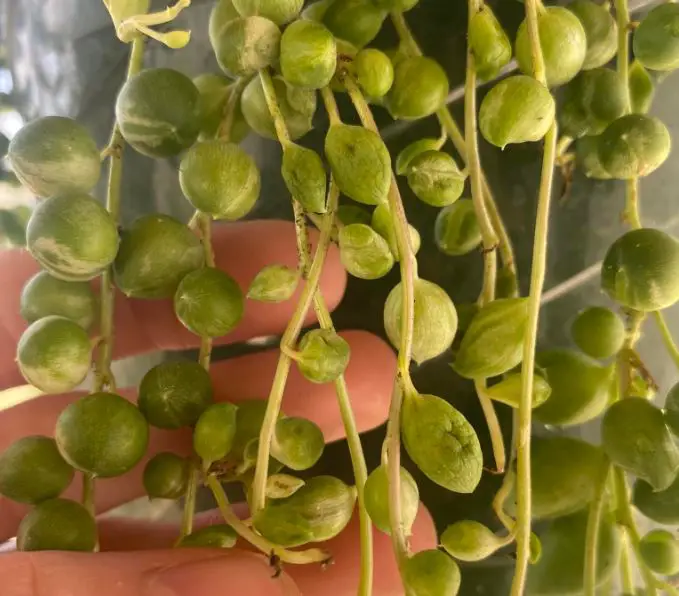
1. String of Pearls (Senecio rowleyanus)
I can’t get enough of the String of Pearls’ quirky, bead-like leaves that dangle like a necklace. In summer, it produces small, fuzzy white flowers with a cinnamon-like scent—such a delightful surprise! The trailing stems make it perfect for hanging baskets.
The string of pearls, scientifically known as Curio rowleyanus (formerly Senecio rowleyanus), is native to South Africa, where it thrives on rocky slopes in arid regions. It is part of the Asteraceae family, known for its daisy-like flowers.
Care requirements
- Light: Bright, indirect light. I keep mine near a south-facing window, but it tolerates partial shade.
- Water: Water sparingly, about once every two weeks when the soil is dry. Overwatering is a big no-no!
- Soil: Use well-draining cactus or succulent soil. I mix in some perlite for extra drainage.
- Temperature: Prefers 60–80°F (15–27°C). Bring it indoors if it dips below 50°F (10°C).
I’ve learned to avoid watering the foliage to prevent it from rotting. Also, propagate those broken stems—they root easily!
2. Crassula perforata (String of Buttons)
The String of Buttons plant, scientifically known as Crassula perforata, is part of the Crassulaceae family, known for its fleshy, water-storing leaves. The genus Crassula includes diverse succulents with stacked or rosette-forming leaves.
Native to South Africa, its stacked, triangular leaves look like they’re threaded on a string. In spring, it blooms with clusters of tiny white flowers, sometimes tinged with pink or yellow. I love how it adds texture to my rock garden.
Care Requirements
- Light: Full sun to partial shade. I place mine where it gets morning sun.
- Water: Water when the soil is completely dry, about every 2–3 weeks. I check the soil with my finger to be sure.
- Soil: Well-draining soil is key. A cactus mix works great.
- Temperature: Thrives in 60–75°F (15–24°C). Protect from frost.
- Tips: Prune after blooming to keep it tidy. I once neglected mine, and it still bounced back!
3. Calandiva White Kalanchoe (Kalanchoe blossfeldiana ‘Calandiva’)
The Calandiva White Kalanchoe, scientifically Kalanchoe blossfeldiana ‘Calandiva’, is native to East Africa, particularly Madagascar. As part of the Crassulaceae family, it’s known for thick, water-storing leaves. It loves plateaus and rocky terrains.
The genus Kalanchoe includes many ornamental succulents. Kalanchoe blossfeldiana ‘Calandiva’ is a cultivated variety distinguished by its double-petaled, white, rose-like flowers and glossy, dark green leaves. It blooms from mid-winter to early spring.
Care Requirements
- Light: Bright, indirect light indoors or partial shade outdoors. I keep mine on a sunny windowsill.
- Water: Water every 10–14 days when the soil is dry. Avoid soggy soil.
- Soil: Use a well-draining succulent mix.
- Temperature: Prefers 65–85°F (18–29°C). Keep away from cold drafts.
- Tips: I’ve found that giving it 12–14 hours of darkness daily encourages blooming.
Warning: Calandiva White Kalanchoe is toxic to pets; keep it out of reach.
4. Blue Chalksticks (Senecio serpens)
I adore the cylindrical, powdery blue-green leaves of Blue Chalksticks, which give it a frosty look. In summer, it produces small white flowers that attract bees, adding life to my garden. Native to South Africa, it thrives on rocky sandstone slopes.
Senecio serpens is part of the Asteraceae family, known for its daisy-like flowers. Characterized by its low-growing, spreading habit and cylindrical form, this succulent is adapted to arid environments, with leaves storing water to survive drought.
Care Requirements
- Light: Full sun for the best color. I’ve noticed it gets leggy in low light.
- Water: Water every 2–3 weeks when the soil is dry. Less in winter.
- Soil: Gritty, well-draining soil. I use a mix with coarse sand.
- Temperature: Ideal at 60–80°F (15–27°C). Protect from frost.
This succulent is great as ground cover. You can trim it to maintain its shape.
5. Crassula congesta
Native to South Africa, this succulent is part of the Crassulaceae family, known for its fleshy, water-storing leaves. Crassula congesta is characterized by its compact, densely packed, gray-green leaves that form tight rosettes or short, stacked columns
This monocarpic succulent produces small, star-shaped, creamy, sweet-scented flowers in winter. It’s a bit of a diva, dying after blooming, but the flowers are worth it!
Care Requirements
- Light: Full sun to partial shade. I give mine plenty of morning light.
- Water: Water sparingly, every 2–3 weeks. It hates wet feet.
- Soil: Well-draining cactus soil is best.
- Temperature: Thrives at 60–75°F (15–24°C). Avoid freezing temperatures.
Tips: Since it’s monocarpic, propagate its offsets to keep it going.
6. Haworthia ‘White Christmas’
Haworthia ‘White Christmas’ is a cultivar of Haworthia truncata, from South Africa. This small succulent is distinguished by its compact, truncated, dark green leaves with white, translucent markings, resembling a festive pattern.
It produces small white flowers in late spring. They are truly delicate and charming. I love its compact size for my desk!
Care Requirements
- Light: Bright, indirect light. Direct sun can scorch it.
- Water: Water every 2 weeks when the soil is dry. I reduce watering in winter.
- Soil: Use a well-draining mix with perlite or pumice.
- Temperature: Prefers 65–80°F (18–27°C). Keep indoors in cold climates.
- Tips: Handle gently—its leaves are sensitive. I mist mine occasionally for humidity.
7. Echeveria ‘Lola’
Echeveria ‘Lola’ is a stunner with its powdery white rosettes and bell-shaped flowers that can be white or pale pink in spring. It’s one of my favorite centerpieces.It is a hybrid from Mexico, a cross between Echeveria lilacina and Echeveria deresina.
Care Requirements
- Light: Partial sun with good airflow. I use filtered light to prevent leaf burn.
- Water: Water when the soil is dry, about every 2 weeks. Avoid overwatering.
- Soil: Cactus soil with good drainage is ideal.
- Temperature: Hardy to 20°F (-6°C), but I bring mine indoors in winter.
- Tips: Dust off the farina gently to maintain its snowy look.
Learn More: How to get your Echeveria lola to bloom
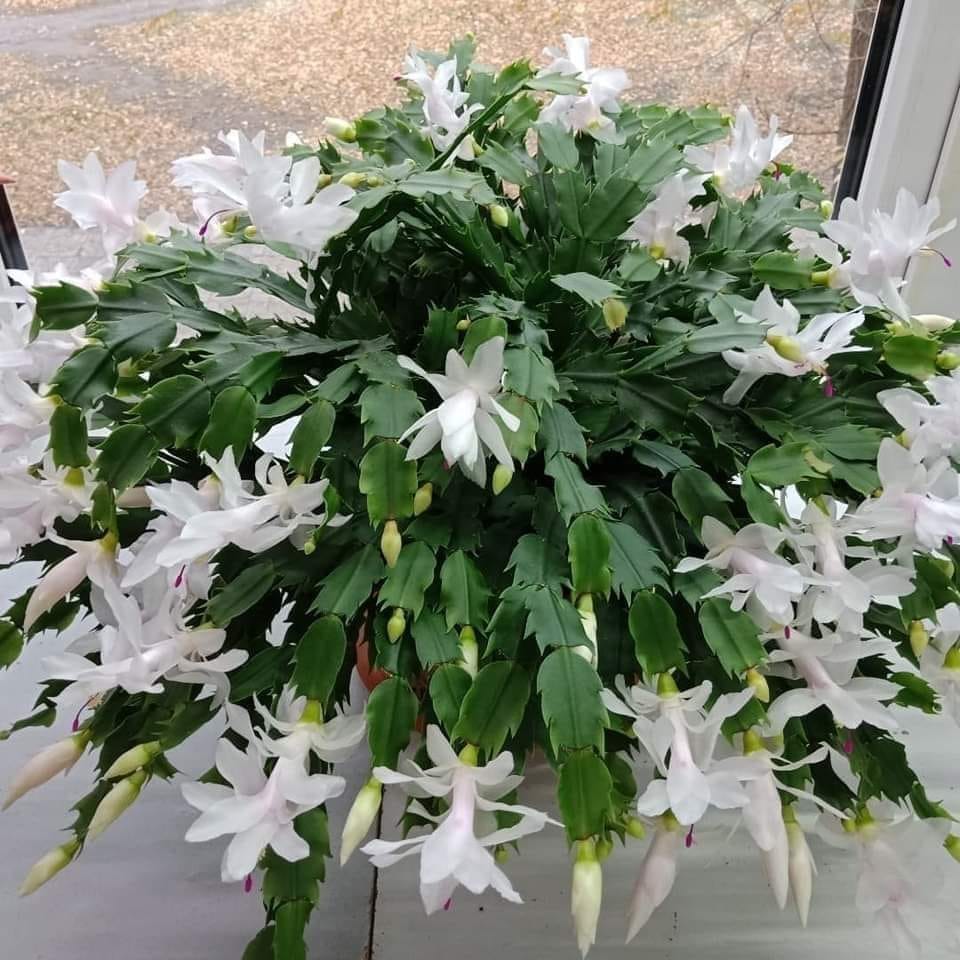
8. Schlumbergera (Christmas Cactus)
Native to Brazil’s coastal mountains, this epiphytic cactus blooms with white, tubular flowers in late fall to winter. Its segmented stems add a unique vibe to my indoor collection. Unlike desert cacti, Schlumbergera is adapted to humid, shaded forest environments.
Care Requirements
- Light: Bright, indirect light. I keep mine near an east-facing window.
- Water: Water when the top inch of soil is dry, about weekly. It loves humidity.
- Soil: Well-draining potting mix with some peat moss.
- Temperature: Prefers 60–70°F (15–21°C). Avoid extreme heat.
Tips: Mist occasionally to mimic its humid native habitat. I’ve had mine rebloom with proper care!
Learn more about how to grow and care for a Christmas cactus in your home.
9. Delosperma ‘Jewel of Desert Moonstone’ (Ice Plant)
Bred for ornamental appeal and hardiness, this succulent is part of the Aizoaceae family, known for its low-growing and drought-tolerant abilities. This succulent blooms in spring and summer, producing a mat of bright, daisy-like white flowers with golden centers.
Care Requirements
- Light: Full sun for vibrant blooms. It thrives in my sunny backyard.
- Water: Water every 2–3 weeks when the soil is dry. It’s drought-tolerant.
- Soil: Sandy, well-draining soil is best.
- Temperature: Hardy to 20°F (-6°C). I mulch around it in winter.
- Tips: It spreads quickly, so give it space to grow.
This plant is perfect for ground cover in sunny gardens and xeriscapes.
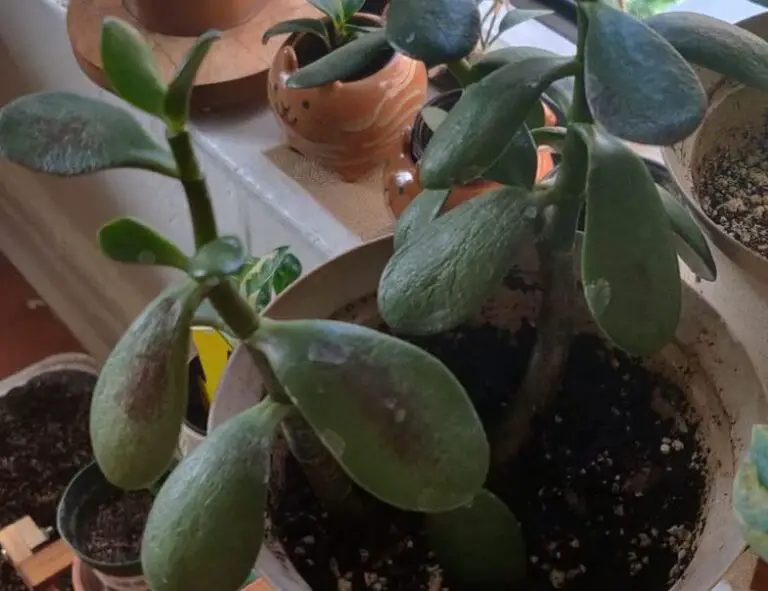
10. Crassula ovata (Jade Plant)
Native to South Africa and Mozambique, mature Jade Plants (3+ years) can produce star-shaped white or pink blooms in fall under cool conditions. This plant has thick, glossy, water-strong leaves and woody stems, often resembling a miniature tree.
Care Requirements
- Light: Full sun to partial shade. I give mine plenty of sunlight for blooming.
- Water: Water every 2–3 weeks when the soil is dry. Less in winter.
- Soil: Well-draining cactus mix works great.
- Temperature: Prefers 65–75°F (18–24°C). Protect from frost.
- Tips: It’s toxic to pets, so I keep mine high up.
Learn More: Jade plant indoor care
11. Senecio radicans (String of Bananas)
Often confused with Curio rowleyanus (String of Pearls), this succulent has a distinct leaf shape. Senecio radicans is characterized by its trailing stems adorned with small, elongated, banana-shaped, fleshy green leaves that store water.
The plant produces small, white, cinnamon-scented flowers, typically blooming in late summer or fall. It’s a fun addition to my hanging baskets. In its native South African home, it thrives in arid conditions. This reflects its adaptations for drought tolerance, with leaves reducing water loss.
Care Requirements
- Light: Bright, indirect light. I avoid direct afternoon sun.
- Water: Water every 2 weeks when the soil is dry. Overwatering causes root rot.
- Soil: Use a gritty, well-draining mix.
- Temperature: Prefers 60–80°F (15–27°C). Bring indoors in cold weather.
- Tips: Propagate cuttings easily in water or soil.
Learn More: How to grow and care for the string of bananas plant
12. Euphorbia leucodendron
Commonly known as the Cat Tails Euphorbia, this succulent is often confused for a cactus. Euphorbia leucodendron is characterized by its slender, cylindrical, green to gray-green stems that resemble cat tails, growing in dense, upright clusters.
Native to Madagascar, this plant produces small, inconspicuous white flowers at the stem tips. Its unique structure adds drama to any collection. However, its milky sap is toxic and can irritate skin. So, handle with care, especially when pruning or repotting.
Care Requirements
- Light: Full sun or bright light. I keep mine in a sunny spot.
- Water: Water sparingly, every 2–3 weeks. It’s very drought-tolerant.
- Soil: Well-draining cactus soil is essential.
- Temperature: Prefers 65–85°F (18–29°C). Avoid frost.
13. Sedum album (White Stonecrop)
Native to Europe, North Africa, and Western Asia, this low-growing succulent forms a carpet of tiny, star-shaped white flowers in summer. Its small, fleshy leaves are perfect for ground cover. Its green to reddish leaves store water, adapting to arid conditions.
Care Requirements
- Light: Full sun for best blooms. I’ve seen it thrive in my sunny garden.
- Water: Water every 2–3 weeks when the soil is dry. It’s very drought-tolerant.
- Soil: Sandy, well-draining soil is ideal.
- Temperature: Hardy to -20°F (-29°C). It’s tough!
- Tips: Great for rock gardens or borders. I trim spent blooms to keep it neat.
14. Rhipsalis pilocarpa (Mistletoe Cactus)
Native to Brazil’s rainforests, this epiphytic cactus is distinct from desert cacti. Adapted to humid, shaded environments, Rhipsalis pilocarpa is characterized by its long, cylindrical, green stems covered in fine, white hairs, giving a fuzzy appearance.
The plant produces small, white, bell-shaped flowers along the stems in spring, followed by tiny, translucent berries. Popular as an ornamental houseplant, it is a unique addition to any indoor jungle.
Care Requirements
- Light: Bright, indirect light. I keep mine in a humid bathroom.
- Water: Water weekly when the top inch of soil is dry. It loves humidity.
- Soil: Well-draining mix with some organic matter.
- Temperature: Prefers 60–75°F (15–24°C). Avoid cold drafts.
Tips: Mist regularly to boost humidity. It’s pet-safe!
15. Crassula ‘Springtime’
This hybrid succulent is native to South Africa, a cultivator of Crassula species. It has thick, green leaves and forms clusters of star-shaped white flowers in spring. It’s a compact beauty characterized by rosette-like clusters of thick, triangular, green leaves that may blush pink under stress.
Care Requirements
- Light: Bright, indirect light or partial sun. I rotate mine for even growth.
- Water: Water every 2 weeks when the soil is dry. Reduce in winter.
- Soil: Use a well-draining cactus mix.
- Temperature: Prefers 60–75°F (15–24°C). Protect from frost.
Tips: Pinch back to encourage bushy growth. You can propagate cuttings easily.
Learn More: Balcony Garden Web for more on this hybrid.
General Care Tips for White-Flowered Succulents
From my experience, these succulents share some common care needs that make them easy to grow:
- Light: Most prefer bright, indirect light or full sun. I’ve learned that too little light makes them leggy, while too much can scorch delicate varieties.
- Watering: Water only when the soil is completely dry—usually every 2–3 weeks. I use the soak-and-dry method to mimic their natural drought cycles.
- Soil: Always use well-draining soil. I mix my own with 70% mineral grit (like perlite or pumice) and 30% potting soil.
- Temperature: Most thrive between 60–80°F (15–27°C). I bring mine indoors during cold snaps.
- Propagation: Many of these succulents propagate easily from cuttings or offsets. I’ve had great success rooting String of Pearls and Echeveria ‘Lola’ in soil.
- Pests: Watch for mealybugs or aphids. I use neem oil to keep pests at bay.
For a deeper dive into succulent care, check out Mountain Crest Gardens’ Care Guide.
Designing with White-Flowered Succulents
I love using these succulents to create stunning displays. Here are some ideas from my own garden:
- Rock gardens: Blue Chalksticks and Sedum album make excellent ground covers, adding texture and white blooms.
- Hanging baskets: String of Pearls and String of Bananas look amazing cascading over pots.
- Indoor displays: Echeveria ‘Lola’ and Haworthia ‘White Christmas’ are perfect for small spaces like desks or shelves.
- Mixed arrangements: Pair white-flowered succulents with darker varieties, like purple Echeveria, for contrast. I’ve created a gorgeous centerpiece this way!
FAQs
Here are quick answers to the frequently asked questions about succulents with white flowers.
Q: Why aren’t my succulents blooming?
A: Lack of blooms often comes from insufficient light or improper watering. I ensure mine get bright light and follow the soak-and-dry method. For some, like Jade Plants, cool temperatures (around 55°F) trigger blooming.
Q: Are white-flowered succulents pet-safe?
A: Some, like Rhipsalis pilocarpa, are pet-safe, but others, like Jade Plants and Crassula perforata, are toxic. I always check the ASPCA’s toxic plant list before buying.
Q: How often do these succulents bloom?
A: Most bloom annually with proper care, though some, like Crassula congesta, are monocarpic and die after flowering. I’ve had my Christmas Cactus bloom yearly with consistent care.
Q: Can I grow these succulents indoors?
A: Absolutely! I grow most of mine indoors near bright windows. Just ensure good airflow and avoid overwatering.
Q: How do I propagate these succulents?
A: I propagate by taking stem or leaf cuttings and letting them callus for a day before planting in well-draining soil. String of Pearls and Echeveria ‘Lola’ are super easy to propagate!
Final thoughts
White-flowered succulents have stolen my heart with their elegance and ease of care. From the trailing String of Pearls to the rosette-forming Echeveria ‘Lola,’ these 15 plants bring unique beauty to any space.
Their origins, mostly from arid regions like South Africa and Mexico, make them resilient and perfect for busy gardeners like me. By providing bright light, minimal water, and well-draining soil, you can enjoy their stunning white blooms year after year.
I hope this guide inspires you to add these beauties to your collection! Have a favorite succulent or a care tip to share? Let me know in the comments—I’d love to hear about your plant journey!

Tim M Dave is a gardening expert with a passion for houseplants, particularly cacti and succulents. With a degree in plant biology from the University of California, Berkeley, he has vast experience in gardening. Over the years, he has cultivated a vast collection of desert plants and learned a great deal about how to grow and care for these unique companions.