Understanding Sourwood (Oxydendrum arboreum): Identification, History, Uses, Problems, and Cultivation Details
There is a tree growing quietly in the hollows and hillsides of the Appalachian Mountains that most people walk past without a second glance — until autumn arrives. Then, suddenly, it becomes impossible to ignore.
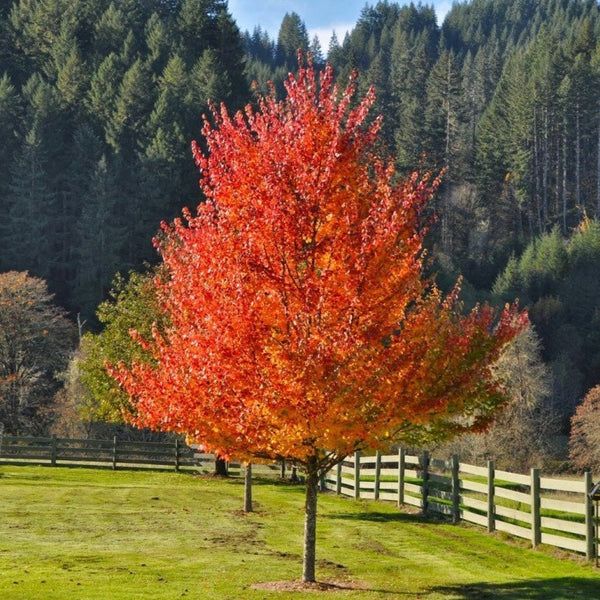
The Sourwood (Oxydendrum arboreum) transforms in autumn with a depth and purity of red that few trees in North America can match. Botanist Donald Wyman once described it as producing “perhaps the most brilliant scarlet of any native American tree.” That is a statement worth sitting with, given the competition.
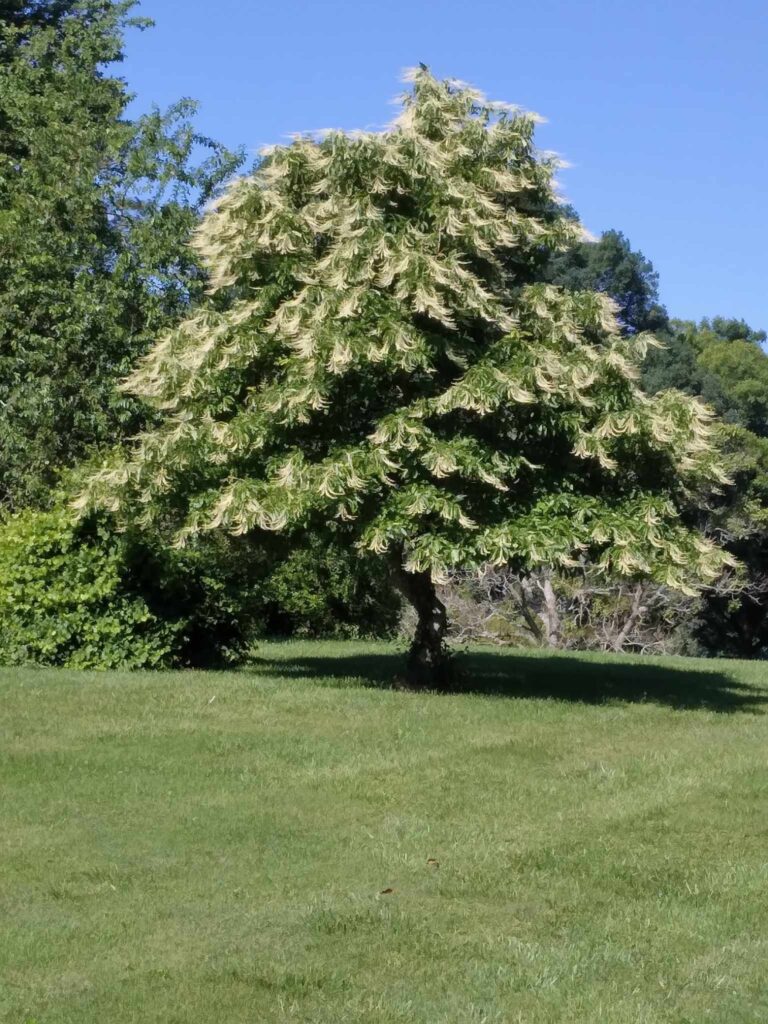
But the Sourwood does not save all its beauty for one season. In midsummer, it erupts in long, arching clusters of white flowers that hang from its branches like strings of tiny bells — the finest summer-flowering display of any native tree in the eastern United States.
Those flowers produce what beekeepers across Appalachia consider the finest honey in the world. And the glossy, dark green leaves, the graceful drooping branches, the clean pyramidal form — these give the tree genuine ornamental value in every month of the year.
This is one of the most underplanted native trees in American horticulture. That is a situation I’m aiming to help correct. Let’s dive in!
What Is the Sourwood?
The Sourwood belongs to the family Ericaceae, a group that includes blueberries, rhododendrons, mountain laurel, and azaleas. This family membership is ecologically and horticulturally significant.
Like its heath-family relatives, Sourwood requires acidic, well-drained soil and absolutely will not tolerate alkaline or waterlogged conditions.
Its scientific name is equally informative. Oxydendrum derives from the Greek oxys (sour or sharp) and dendron (tree) — “sour tree.” The species name arboreum simply means “tree-like,” distinguishing it from shrubby relatives.
The common name echoes the same story: the leaves, bark, and twigs taste distinctly sour when chewed — a sharpness caused by oxalic acid compounds in the plant’s tissues.
The Sourwood is the only species in its genus — there is no close relative, no comparable species. Oxydendrum arboreum stands alone, a singular representative of its lineage in North American flora.
Common names are few, each pointing to the same sour character:
- Sourwood — the universal standard
- Sorrel Tree — an older name referencing the sour taste of sorrel plants
- Lily-of-the-Valley Tree — used occasionally, referring to the flower clusters’ resemblance to lily of the valley blossoms
- Titi — an older regional name used in parts of the Carolinas, now rarely applied
| Scientific Name | Oxydendrum arboreum |
| Family | Ericaceae (Heath family) |
| Common Names | Sourwood, Sorrel Tree, Lily-of-the-Valley Tree |
| Native Range | Appalachian region and eastern U.S. (Zones 5–9) |
| Mature Height | 20–35 feet in landscape; up to 60 feet in forest |
| Crown Form | Pyramidal to oval; gracefully drooping branch tips |
| Bark | Gray-brown, deeply furrowed; alligator-hide texture |
| Leaf | Glossy, dark green, lance-shaped; tastes sour |
| Flower | White, urn-shaped clusters; July–August bloom |
| Fall Color | Deep, pure scarlet-red; September onset |
| Fruit | Persistent silvery capsule clusters; through winter |
| Soil Requirement | Acidic, well-drained (pH 4.5–6.0) — non-negotiable |
| Hardiness Zones | USDA Zones 5–9 |
| Honey Value | Exceptional — among North America’s finest varietal honeys |
| Wildlife Value | Pollinators, songbirds, Lepidoptera host |
Native Range and Natural Habitat
The Sourwood is native exclusively to eastern North America, with a range centered on the Appalachian Mountains and their foothills.
Its natural distribution extends from southern Pennsylvania and New Jersey south through the Blue Ridge, Cumberland, and Smoky Mountain ranges to northern Georgia, Alabama, and Mississippi, and west through the Cumberland Plateau to southern Indiana, Illinois, and Louisiana.
The heart of Sourwood country is the southern Appalachian region — western North Carolina, eastern Tennessee, northern Georgia, and southwestern Virginia — where it is common, sometimes abundant, on forested slopes, ridgelines, and stream banks.
Within forests, Sourwood occupies a wide ecological range. It grows on dry, rocky ridgetops and in rich, moist coves. It appears in the understory beneath towering oaks, maples, and tulip poplars, and in more open woodlands where it develops into a fuller, better-flowering tree.
This tree is particularly characteristic of acidic, sandy or rocky upland soils — the same conditions favored by blueberries, mountain laurel, and rhododendrons.
It is strongly calcifuge — meaning it actively avoids alkaline soils — a trait shared with all its heath family relatives and one of the most important practical considerations for gardeners.
Physical Characteristics
Size and Form
Sourwood is a small to medium-sized tree, typically reaching 20 to 35 feet (6–10 meters) in height in landscape settings, though some forest specimens in favorable Appalachian coves reach 50 to 60 feet.
The trunk is usually slender and straight, and the overall silhouette is narrow and somewhat pyramidal to oval — elegant and refined rather than massive.
One of Sourwood’s most appealing structural traits is the graceful drooping habit of its branches. The limbs arch outward and slightly downward at their tips, giving the tree a relaxed, flowing quality that feels at home in naturalistic and woodland garden settings.
Even in winter, the branch architecture is refined and visually pleasing.
In open settings, the tree develops a broader, fuller crown. In forest conditions, it grows narrower and taller, reaching for available light.
Bark
The bark of mature Sourwood is gray-brown, deeply furrowed, and broken into thick, blocky ridges — somewhat similar to the bark of Black Gum (Nyssa sylvatica) and Persimmon (Diospyros virginiana), both of which share the alligator-hide texture on older trunks.
On young trees, the bark is reddish-brown and smoother, developing its characteristic furrowed texture over time. The red-brown tones in young bark add to the tree’s ornamental interest in winter and are particularly noticeable after rainfall, when the bark darkens and the ridges become more pronounced.
Leaves — Glossy, Leathery, and Sour
The leaves are simple, alternate, and narrowly elliptical to lance-shaped, measuring 4 to 8 inches (10–20 cm) in length. They have finely toothed margins and are glossy, dark green on the upper surface with a leathery, slightly rubbery texture — a quality shared with many heath family relatives.
In summer, the glossy foliage creates a rich, deep green canopy that contrasts beautifully with the white flower clusters cascading above and among it.
The sour taste is present in fresh leaves, bark, and twigs — a reliable field identification clue. Chewing a fresh Sourwood leaf produces an immediate sharp, acidic sensation. Historically, this was used as a thirst-quencher by travelers and woodspeople in the Appalachian region.
The leaves were sometimes chewed to relieve mouth inflammation — a traditional use that likely reflects the astringent properties of the oxalic compounds involved.
The Flowers — Midsummer’s Finest Display
This is where the Sourwood makes its most remarkable statement, and it does so at a time when almost no other native tree is flowering.
In mid to late July across most of its range, Sourwood produces long, drooping, one-sided clusters of small, white, urn-shaped flowers — technically called racemes or panicles, arranged in showy, arching sprays.
Each individual flower is tiny — less than ¼ inch — but they are borne in such profuse numbers and such graceful formations that the effect is spectacular at the scale of the whole tree.
The flower clusters arch outward and downward from the branch tips, giving the tree during bloom the appearance of being draped in white lace or — as the “Lily-of-the-Valley Tree” common name suggests — like enormous sprays of lily of the valley blossoms.
The individual flowers are urn-shaped (urceolate) — the characteristic flower form of the heath family — with five small petals fused into a rounded, nodding bell. This floral form is virtually identical in structure to blueberry flowers, mountain laurel flowers, and the flowers of its close relative Leucothoe.
Sourwood blooms later than virtually every other native flowering tree — July into August — filling a critical gap in the landscape’s ornamental and ecological flowering calendar when most trees are simply green.
I have seen Sourwood in full bloom on a hot July afternoon in the Smoky Mountain foothills, the white flower clusters glowing against the dark green leaves, every branch tip trailing arches of white above a quiet mountain road. It is, genuinely, one of the most beautiful things the native American forest produces.
Fruit
Following flowering, Sourwood develops small, dry, five-valved capsules that ripen from green to silvery-gray by early autumn. These capsules cluster along the same arching racemes as the flowers, and they persist on the tree well into winter — sometimes through the entire cold season.
This persistent fruit display is one of Sourwood’s four-season virtues. In winter, the silvery-gray seed capsule clusters against bare branches create a delicate, almost frosted appearance — particularly striking when dusted with actual snow or ice.
The seeds are tiny and wind-dispersed. Natural regeneration from seed requires bare, acidic, moist mineral soil — conditions common in recently disturbed forest openings, which is why Sourwood often germinates prolifically after logging or fire.
Autumn Color — The Defining Season
Everything the Sourwood does well, it does most memorably in autumn.
The fall color of Sourwood is among the finest produced by any native tree in eastern North America — a saturated, deep scarlet-red that develops early in the season and burns with remarkable intensity.
The red is pure and unambiguous — not orange-red, not purple-red, but a clear, true crimson that landscape designers describe as one of the most reliable and richest reds in the native plant palette.
Color develops in September across most of the range — among the earlier trees to turn, alongside Black Gum — and holds for two to three weeks before the leaves drop.
On forested mountain slopes in the southern Appalachians, Sourwood’s autumn red stands out vividly against the surrounding yellows and oranges of maples, tulip poplars, and birches — a combination that makes these mountains one of the premier fall foliage destinations in the world.
Sourwood Honey: Liquid Gold from the Appalachians
No discussion of Sourwood is complete without addressing what may be its most celebrated product — Sourwood honey.
The Sourwood flower’s abundant nectar is the foundation of a honey so highly regarded that it commands some of the highest prices of any varietal honey produced in North America.
Beekeepers across western North Carolina, eastern Tennessee, and northern Georgia position their hives specifically to capture the Sourwood nectar flow, which typically runs for two to four weeks in July and August.
Pure Sourwood honey is characterized by:
- Light amber to water-white color — often strikingly pale
- Buttery, anise-like, spicy sweetness with a complexity unlike any other American honey
- Fine, creamy texture when granulated
- Exceptional aromatics — some tasters describe faint floral and caramel notes alongside the dominant sweet spice character
- Slow crystallization compared to many other varietals
The beekeeping culture around Sourwood honey in Appalachia is a living tradition passed down through generations.
Families in Madison County, North Carolina; Sevier County, Tennessee; and Gilmer County, Georgia have produced Sourwood honey for well over a century, and local Sourwood honey festivals celebrate the harvest every August.
Authentic, pure Sourwood honey is often adulterated or mislabeled in commercial markets — a problem the Appalachian beekeeping community actively works to address.
When purchasing, seek honey from small producers in western North Carolina, eastern Tennessee, or northern Georgia, where the tree’s range and density make authentic production possible.
The direct connection between this tree and one of the world’s finest honey varieties is a remarkable fact that elevates the Sourwood beyond its role as merely an ornamental tree. It is an ecological and agricultural resource of real regional and cultural significance.
Ecological Value and Wildlife Benefits
The Sourwood is an ecologically productive species whose contributions extend across pollinators, birds, insects, and forest structure.
Pollinators
Sourwood flowers are a premium nectar and pollen source for native bees and honeybees. The combination of timing — mid-July, when many spring-flowering trees are done — and abundance makes Sourwood one of the most ecologically significant midsummer pollinator plants in the eastern forest.
Native bumblebees, mason bees, and sweat bees work Sourwood flowers intensively. The tree’s bloom overlaps with the peak demand of many native bee colonies, providing a critical resource at precisely the right moment.
Birds
While Sourwood is not primarily a fruiting tree valued by wildlife in the way oaks, cherries, or dogwoods are, various songbirds consume the small seeds from the persistent capsules through winter and early spring.
Birds including Carolina Chickadee, Black-capped Chickadee, and various sparrows forage in the seed clusters when other small-seed sources are depleted.
The tree’s dense branching structure provides nesting cover for small songbirds, including warblers, vireos, and thrushes in the Appalachian breeding community.
Lepidoptera and Insects
Sourwood supports numerous moth and butterfly species as a larval host plant. Notable species include the Striped Hairstreak butterfly (Satyrium liparops), whose caterpillars feed on Sourwood leaves, and various native moth species in the heath plant community.
The flowers support an unusually broad spectrum of pollinating insects — not just bees, but also various flies, small wasps, and beetles that access the open-mouthed urn flowers.
Landscape and Garden Uses
The Sourwood is one of the most four-seasonally rewarding native trees available for gardens in its hardiness range — and it remains one of the most underutilized.
Ornamental Specimen Tree
For gardeners with acidic soil, Sourwood is a near-perfect small specimen tree. It offers:
- Summer flowering when almost no other native tree blooms
- Brilliant fall color — among the finest reds available
- Persistent winter fruit clusters — delicate and architecturally interesting
- Refined evergreen-like glossy foliage through the summer season
- Graceful, drooping branch tips and elegant pyramidal form
Few native trees deliver ornamental value across all four seasons as consistently as Sourwood.
Woodland and Native Plant Gardens
In naturalistic garden settings — particularly in the Appalachian region and the Upper South — Sourwood pairs beautifully with mountain laurel, rhododendron, native azaleas, blueberries, and sweetshrub (Calycanthus floridus) in the acidic understory layer.
All of these plants share soil preference and bloom at different times, creating a sequential flowering display from spring through midsummer.
Understory and Edge Planting
Sourwood tolerates partial shade and performs well as an understory tree beneath taller oaks, maples, and tulip poplars. In this role it fills the mid-story of a woodland garden with three-season interest without competing with the canopy trees above.
It is particularly effective when positioned at the edge of a woodland garden — where it receives some direct sun for best flowering and fall color while being sheltered from harsh western exposure.
Rain Gardens and Slope Stabilization
On moist but well-drained slopes and stream banks with acidic soils, Sourwood establishes well and contributes to erosion control. Its root system is not aggressive and does not present the management challenges of some other slope-stabilization species.
Hardiness Zones
Sourwood is hardy in USDA Zones 5 through 9 — covering the eastern United States from southern New England through the Deep South and across the Midwest.
It is most reliably ornamental in Zones 5 through 8, where summer heat is sufficient for good flowering and autumn temperatures produce the best fall color.
In Zone 9, summer heat and drought can stress the tree — reliable irrigation and some afternoon shade are recommended.
How to Plant and Grow Sourwood
The Most Important Rule: Soil pH
If one lesson should be taken from this entire guide, it is this: do not plant Sourwood in alkaline soil. It will not thrive. It will develop iron chlorosis, decline slowly, and ultimately die.
The ideal soil pH for Sourwood is 4.5 to 6.0 — clearly acidic. This is the same range required by rhododendrons, azaleas, and blueberries. Before planting, test your soil pH with an inexpensive kit or through a university cooperative extension soil testing service.
If the pH is above 6.5, either amend the soil with sulfur to lower pH over time, or choose a different site.
Sourcing Plants
Purchase from reputable native plant nurseries carrying container-grown stock from locally sourced seed. Sourwood transplants poorly from the wild — it develops a deep taproot system that does not survive disturbance well.
Container-grown nursery plants establish far more successfully than field-dug or wild-collected specimens.
Planting Instructions
- Select a full-sun to partial-shade site with acidic, well-drained soil.
- Test and correct soil pH before planting if needed.
- Dig the planting hole two to three times wider than the root ball and no deeper.
- Plant at the correct depth — root flare at or slightly above grade. Deep planting is a leading cause of long-term decline in all heath-family trees.
- Backfill with native acidic soil mixed with quality compost or pine bark fines to improve drainage and organic matter content.
- Mulch generously with pine bark, pine straw, or wood chips — 3 to 4 inches deep, extending well beyond the drip line. Pine straw mulch is particularly appropriate as it gradually acidifies the soil surface over time.
- Water consistently through the first two to three growing seasons. Sourwood is not drought-tolerant during establishment.
Ongoing Care
- Established Sourwood requires little maintenance. It does not need regular fertilization — if pH is correct and soil is organically rich, nutrient needs are met naturally.
- Water during extended drought periods, particularly in the first five years and in Zone 9 where summer heat stress is significant.
- Prune minimally and only in late winter to remove dead or crossing branches. Sourwood’s natural form is graceful and should not be aggressively shaped.
- An annual top-dressing of compost or pine bark mulch maintains soil organic matter and helps sustain the acidic soil conditions the tree requires.
Pests, Diseases, and Common Problems
Sourwood is generally a low-maintenance tree with few serious pest or disease problems when planted on appropriate acidic, well-drained sites.
Iron Chlorosis
As with all heath-family plants, iron chlorosis on alkaline soils is the most common and serious problem — yellowing between leaf veins while veins remain green. Correct soil pH as the primary long-term solution. Chelated iron foliar sprays provide temporary relief but do not address the underlying cause.
Root Rot
Phytophthora root rot and other water-mold diseases attack Sourwood in heavy, poorly drained, or waterlogged soils. Good drainage is the only effective prevention.
Sourwood Twig Borer
The Sourwood twig borer (Agrilus subcinctus) is a specific insect pest that mines within Sourwood twigs, causing dieback of individual branch tips. Infestations are typically minor on healthy trees and do not require treatment.
Maintaining tree vigor through proper planting and site selection is the best defense.
Scale Insects
Various scales may infest Sourwood, particularly on stressed trees. Horticultural oil applications in late winter or early spring control scale effectively.
Deer Browsing
White-tailed deer browse on Sourwood twigs and foliage, and deer pressure can severely damage young trees in rural and suburban areas with high deer populations. Protect young transplants with tree tubes or deer fencing until established above browse height.
Conservation and Regional Significance
The Sourwood holds a unique place in the cultural and ecological identity of the Appalachian region. It is not a threatened species — populations are stable and widespread throughout its native range — but several factors deserve attention:
- Habitat loss through development of forested mountain land continues to reduce Sourwood populations in parts of its range
- Deer overbrowsing suppresses natural regeneration in forests with high deer pressure
- Hemlock woolly adelgid — while not a direct threat to Sourwood — is altering the structure of Appalachian forests in ways that may affect Sourwood’s competitive position as forest composition shifts
- Climate change may gradually shift the tree’s viable range northward and upward in elevation
The Sourwood honey industry represents a direct economic connection between this native tree and Appalachian communities — a relationship that provides real incentive for landowners to preserve Sourwood-dominated forest stands rather than convert them to other uses.
Planting Sourwood in home landscapes, woodland gardens, and restoration sites throughout its native range actively supports the tree’s long-term presence in eastern North American forests.
Final Thoughts
The Sourwood is the kind of native tree that reveals itself fully only to those willing to pay close attention across an entire year. The white flower clusters of July. The glossy summer canopy. The scarlet blaze of September. The silver seed capsules of January.
Each season brings something worth noticing — and together, they make a complete case for Sourwood as one of the finest small native trees available to eastern American gardeners.
It asks only for the right conditions: acidic soil, good drainage, and enough sun to flower and color well. In return, it provides four seasons of beauty, a summer pollinator banquet, the finest honey in Appalachia, and a fall color performance that competes with anything the eastern forest can offer.
The Sourwood does not announce itself the way a large oak or a towering tulip poplar does. It works on a more intimate scale — the scale of a garden path, a woodland edge, a view from a kitchen window. But on that scale, few trees do more.
Plant one in the right soil, in the right light, and wait. By its third or fourth summer, it will begin to show you what it can do. By its first October in your garden — the leaves turning that pure, clear scarlet while the seed clusters hang silver above them — you will understand, completely and permanently, why the people who know this tree love it so deeply.
References
- Virginia Tech Department of Forest Resources and Environmental Conservation — Dendrology Fact Sheet: Oxydendrum arboreum https://dendro.cnre.vt.edu/dendrology/syllabus/factsheet.cfm?ID=65
- North Carolina State University Cooperative Extension — Oxydendrum arboreum Plant Profile https://plants.ces.ncsu.edu/plants/oxydendrum-arboreum/
- University of Florida IFAS Extension — EDIS — Oxydendrum arboreum: Sourwood https://edis.ifas.ufl.edu/publication/ST443
- USDA Forest Service — Silvics of North America — Oxydendrum arboreum (L.) DC. — Sourwood https://www.srs.fs.usda.gov/pubs/misc/ag_654/volume_2/oxydendrum/arboreum.htm
- University of Tennessee Extension — Sourwood: Tennessee’s Four-Season Native Tree https://extension.tennessee.edu/publications/Documents/SP702-E.pdf

Tim M Dave is a gardening expert with a passion for houseplants, particularly cacti and succulents. With a degree in plant biology from the University of California, Berkeley, he has vast experience in gardening. Over the years, he has cultivated a vast collection of desert plants and learned a great deal about how to grow and care for these unique companions.