10+ Common Soft Touch Holly Shrub Problems: Identification and How to Fix
Soft Touch holly (Ilex crenata ‘Soft Touch’) has become one of the most popular compact evergreen shrubs in residential landscaping. Its dense, rounded form, soft non-spiny leaves, and year-round dark green color make it a go-to choice for foundation plantings, borders, and low hedges.
Unlike traditional hollies with sharp-tipped leaves, this variety lives up to its name — the foliage is genuinely soft to the touch, making it safe around children and walkways.
Gardeners choose it for its neat appearance and supposed ease of care. And in the right conditions, it truly is a low-fuss shrub.
But here is the honest reality: Soft Touch holly is not problem-free. It has specific weaknesses — certain soil conditions it simply cannot tolerate, diseases that spread quickly through dense plantings, and pests that can turn a lush green hedge into a patchy, yellowing disappointment. When problems arise, they often spread before the homeowner notices.
This guide covers every significant Soft Touch holly problem you are likely to encounter. For each one, you will find clear identification guidance, the cause, and practical steps to treat or prevent it.
1. Root Rot: The Number One Killer of Soft Touch Holly
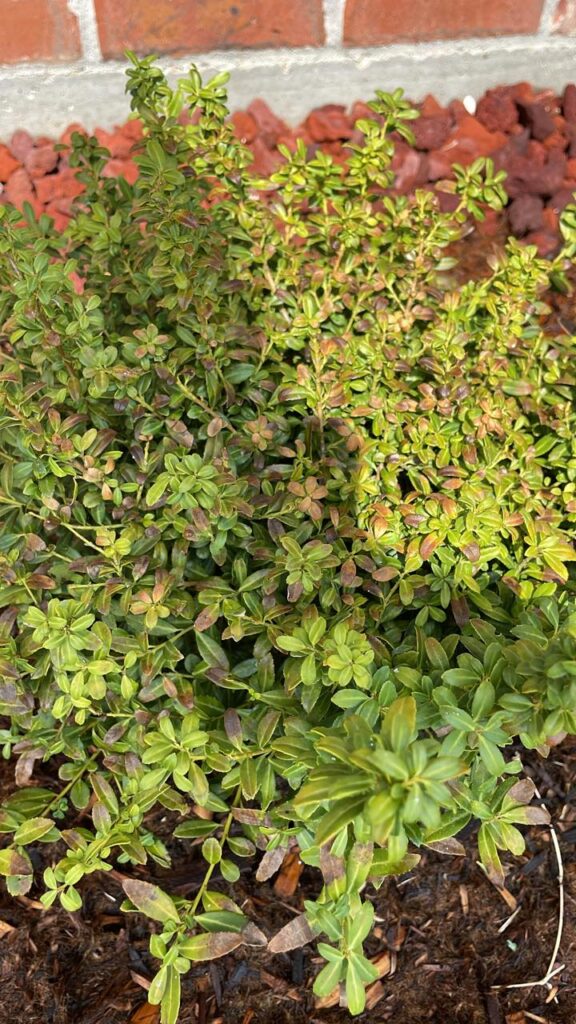
If there is one problem that claims more Soft Touch hollies than any other, it is root rot — and the main culprit is Phytophthora species, a water mold pathogen that thrives in poorly drained, waterlogged soils.
Soft Touch holly is highly sensitive to excessive soil moisture. When roots sit in saturated conditions for extended periods, they suffocate, decay, and become easy targets for Phytophthora and other soil pathogens. By the time symptoms appear above ground, significant root damage has already occurred.
What makes this so frustrating is that the above-ground symptoms — wilting, yellowing, and leaf drop — look almost identical to drought stress. Many well-meaning gardeners respond by watering more, which accelerates the decline.
Signs of root rot:
- Wilting despite moist soil
- Yellow or pale green leaves that fail to recover with watering
- Leaves dropping while still attached or turning black before falling
- Brown, mushy roots when the plant is lifted and inspected — healthy roots are white and firm
- A foul odor from the soil around the root zone
What causes it:
- Planting in heavy clay soil with poor drainage
- Overwatering or irrigation systems that run too frequently
- Low-lying planting sites where water collects after rain
- Planting too deep, which traps moisture around the crown
How to address it:
- If caught early, improve drainage immediately — pull back mulch, allow the soil to dry, and reduce irrigation
- Apply a fungicide containing phosphonate (phosphorous acid) or mefenoxam as a soil drench to help suppress Phytophthora
- For plants in heavy clay, amend the soil with coarse sand, pine bark, or perlite before replanting
- Never plant Soft Touch holly in a low spot or anywhere water stands after a heavy rain
- Severely affected plants with extensive root decay should be removed — they rarely recover
- When replanting in the same location, wait and improve drainage conditions before introducing new plants
2. Black Root Rot: A Different but Equally Dangerous Problem
Black root rot, caused by the fungus Thielaviopsis basicola (also known as Berkeleyomyces basicola), is distinct from Phytophthora root rot but causes similarly devastating damage. It is particularly prevalent in alkaline soils — which is one reason soil pH management is so critical for Soft Touch holly.
The fungus infects the feeder roots, turning them black and brittle. Infected plants show stunted growth, yellowing foliage, and gradual decline that can be easy to mistake for nutrient deficiency or general stress.
Key identifying features:
- Roots that appear black and decayed — not brown and mushy like Phytophthora, but distinctly dark and brittle
- Yellowing leaves starting at the tips or margins
- Very slow, stunted new growth even during the growing season
- Symptoms worsen in cool, wet weather
Management:
- Test and correct soil pH — Thielaviopsis thrives in soils with a pH above 6.0; Soft Touch holly prefers a pH of 4.5 to 6.0
- Improve drainage and avoid overwatering
- Fungicide drenches containing thiophanate-methyl can suppress infection when applied early
- Remove severely infected plants and do not replant in the same soil without thorough amendment or fumigation
- Source plants from reputable nurseries, as the fungus can be introduced through infected plant material
3. Yellowing Leaves: Iron Chlorosis and pH Problems
Yellowing leaves are one of the most common complaints from Soft Touch holly owners, and the most frequent underlying cause is iron chlorosis — a condition resulting from iron deficiency in the plant tissue.
But here is the important nuance: the soil usually contains enough iron. The problem is that the iron is chemically unavailable to the plant because the soil pH is too high. Soft Touch holly requires acidic soil — ideally pH 4.5 to 6.0. When pH drifts into neutral or alkaline territory, iron becomes locked up in the soil and unavailable for root uptake.
The result is interveinal chlorosis: the leaf tissue between the veins turns yellow or lime green while the veins themselves remain darker green. It typically appears first on the newest, youngest leaves at the shoot tips.
What causes high soil pH in practice:
- Naturally alkaline or limestone-rich soils
- Nearby concrete foundations, sidewalks, or driveways leaching lime into the soil
- Repeated applications of lime-based lawn fertilizers in the surrounding area
- Alkaline irrigation water used over a long period
How to fix it:
- Test your soil pH first — this is essential before applying any amendment
- Acidify the soil gradually using elemental sulfur — apply according to label rates and retest after 6 to 8 weeks
- Use acid-forming fertilizers such as those formulated for azaleas, camellias, or hollies
- Apply chelated iron as a foliar spray for a quick visual improvement while soil pH correction is underway
- Mulch with pine needles, pine bark, or composted oak leaves, which naturally acidify the soil over time
- Avoid using alkaline mulch materials such as wood ash or mushroom compost near Soft Touch hollies
4. Spider Mites: Tiny Pests with Big Consequences
Spider mites are among the most damaging insect pests of Soft Touch holly, and they are easy to miss until the damage is already extensive. These microscopic arachnids — they are not true insects — feed on leaf tissue by piercing cells and extracting their contents, leaving behind a characteristic stippled or bronzed appearance on the foliage.
Southern red mite (Oligonychus ilicis) is the species most commonly associated with hollies in the southeastern United States. It is active primarily in cool weather — spring and fall — which is the opposite of many other mite species. This means damage often appears at times of year when gardeners least expect an infestation.
Signs of spider mite damage:
- Fine, pale stippling on leaf surfaces — the leaves look dusty, washed out, or bronzed
- Leaf edges and tips turning reddish-brown or bronzed before dropping
- Fine webbing visible on stems and leaf undersides in heavy infestations
- Rapid leaf drop, starting with lower or inner branches
How to confirm the diagnosis: Hold a white sheet of paper under a branch and tap firmly. If mites are present, tiny moving dots — often reddish or orange — will fall onto the paper.
Control options:
- For light infestations, a strong spray of water directed at the undersides of leaves physically removes mites
- Apply horticultural oil or insecticidal soap — these are effective and have low impact on beneficial insects
- Miticide sprays containing bifenazate, abamectin, or spiromesifen work well for heavy infestations
- Avoid broad-spectrum pyrethroid insecticides for mite control — they kill natural mite predators and can trigger population explosions
- Repeat treatment every 7 to 10 days for two to three applications, as eggs are not always killed in the first round
5. Scale Insects: Hard and Soft Scales on Holly
Several scale insect species attack Soft Touch holly, including tea scale (Fiorinia theae), euonymus scale (Unaspis euonymi), and various soft scale species. Scale insects live under protective waxy or shell-like coverings that make them resistant to many contact pesticides.
They feed by inserting their mouthparts into plant tissue and extracting sap continuously. Heavy infestations weaken the shrub significantly, causing yellowing, branch dieback, and — in the case of soft scales — the production of sticky honeydew that leads to sooty mold.
How to identify scale:
- Small, flat or dome-shaped bumps on stems and the undersides of leaves — ranging from white to brown to gray depending on species
- Sticky residue on leaves and stems below an infestation
- Black sooty mold developing on leaf surfaces
- Yellowing foliage and tip dieback on affected branches
Management strategies:
- Apply dormant oil spray in late winter before new growth begins — this smothers overwintering eggs and adults under the waxy coating
- Target the mobile crawler stage in late spring or summer with insecticidal soap or neem oil for the most effective contact control
- For severe infestations, systemic insecticides (imidacloprid or dinotefuran) applied as a soil drench offer season-long control
- Prune and dispose of heavily encrusted branches to reduce the pest population quickly
- Monitor regularly — catching scale early, before populations explode, makes control far easier
6. Sooty Mold: The Black Coating That Blocks Sunlight
Sooty mold is not a primary disease — it does not attack Soft Touch holly directly. Instead, it grows on the sticky honeydew secreted by sap-sucking insects like scale, aphids, and whiteflies. The mold itself appears as a black, soot-like coating on leaf surfaces and stems.
While the mold is technically superficial, it blocks light from reaching the leaf surface and interferes with photosynthesis. In heavy cases, affected plants appear almost entirely black and are significantly weakened.
The key point: washing off the sooty mold without treating the underlying pest is a temporary fix. The mold will return as long as insects continue producing honeydew.
What to do:
- Identify and control the insect causing the honeydew (see scale and aphid sections)
- Once pest populations are reduced, wash the sooty mold off with a gentle spray of water or wipe it from leaves with a damp cloth
- Horticultural oil sprays help remove mold and suppress insects simultaneously
- Healthy, pest-free plants rarely develop sooty mold — good preventive care is the best long-term solution
7. Aphids: Soft-Bodied Pests on New Growth
Aphids are soft-bodied insects that cluster on new growth and the undersides of young leaves. Several species attack hollies, feeding by piercing leaf tissue and sucking sap. They reproduce rapidly, so a small infestation can become a serious problem within just a week or two during warm weather.
Beyond direct feeding damage — which causes distorted, curled, and yellowed new leaves — aphids produce the honeydew that leads to sooty mold.
Signs of aphid infestation:
- Soft, pear-shaped insects (often green, yellow, or black) clustered on shoot tips and leaf undersides
- Distorted or cupped new leaves
- Sticky residue on leaves and stems
- Ants moving actively up and down the stems — they tend aphids for their honeydew
Control:
- A strong spray of water knocks aphids off effectively for light infestations
- Insecticidal soap or neem oil works well for moderate infestations — repeat every 5 to 7 days
- Encourage natural predators: ladybugs, lacewings, and parasitic wasps are highly effective
- For severe or recurring infestations, apply a systemic insecticide as a soil drench
- Avoid over-fertilizing with nitrogen, which stimulates the soft, succulent new growth that aphids favor
8. Leaf Miner: Tunneling Damage Inside the Leaves
Holly leaf miners (Phytomyza ilicicola and related species) are the larvae of small flies that lay their eggs in holly leaves. The larvae tunnel through the leaf tissue between the upper and lower surfaces, creating characteristic winding, yellowish or brown trails visible when leaves are held up to light.
Damaged leaves may yellow and drop prematurely. While a single season of leaf miner damage is rarely fatal to an established shrub, repeated annual infestations weaken the plant and reduce its ornamental appeal significantly.
Identification:
- Meandering, blister-like mines visible in the leaf — yellowish or brown trails with a darker central line
- Leaves yellowing or browning from the inside outward
- Small, dark specks (frass) visible inside the mine when leaves are examined closely
Management:
- Remove and destroy heavily mined leaves to reduce the population producing next year’s adults
- Apply a systemic insecticide (imidacloprid) in early spring, timed to when adult flies are active — the systemic action kills larvae as they feed inside the leaf
- Contact insecticides are generally ineffective once larvae are inside the leaf tissue
- Natural parasitic wasps help control populations — minimize broad-spectrum pesticide use to protect these beneficials
9. Phomopsis Canker and Twig Blight
Phomopsis canker is a fungal disease caused by Phomopsis species that causes dieback of individual twigs and branches. It typically enters through wounds, pruning cuts, or areas weakened by winter stress, insect damage, or drought.
Infected twigs die back from the tips, turning brown and then gray. The dead wood may remain attached to the plant for an extended time, giving the shrub a patchy, unkempt appearance.
Signs of Phomopsis:
- Tip dieback on individual branches — brown turning gray
- Small, dark fruiting bodies (pycnidia) visible on the surface of dead wood under magnification
- Dieback progresses inward toward the main stem if unchecked
- Symptoms often worsen following winter damage or drought stress
What to do:
- Prune out infected twigs at least 2 inches below the visible die-back, using clean and sterilized tools
- Dispose of pruned material away from the planting area
- Avoid overhead irrigation and improve air circulation through selective pruning
- Apply a copper-based or other labeled fungicide preventively if the problem recurs annually
- Keep the shrub healthy — fungal canker pathogens are opportunists that target stressed plants
10. Winter Burn and Cold Damage
Soft Touch holly is generally hardy in USDA Zones 6 through 9, but it can suffer from winter burn — a type of desiccation injury that causes browning of leaf edges and tips, even on otherwise cold-tolerant plants.
Winter burn occurs when plants lose moisture through transpiration on bright, windy winter days while the ground is frozen and roots cannot replace that water. The result is visible browning — sometimes severe — on the outer and upper portions of the shrub.
In Zone 6 and the colder edges of Zone 7, hard winter freezes can also directly kill exposed branches or entire plants.
Signs of winter injury:
- Brown or tan leaf edges and tips, particularly on the south, west, or wind-exposed sides of the plant
- Browning that develops gradually through winter and is most visible in late February and March
- In severe cases, branches that fail to produce new growth in spring
Prevention and recovery:
- Apply a 3- to 4-inch layer of mulch around the base in late fall to insulate roots from freeze-thaw cycles
- Apply an anti-desiccant spray (such as Wilt-Pruf) to foliage in late fall before the ground freezes — this reduces water loss through the leaves during winter
- Plant Soft Touch holly in locations sheltered from prevailing winter winds — near a building, fence, or larger evergreen
- Water deeply in late autumn before the ground freezes to ensure adequate soil moisture going into winter
- In spring, wait until new growth emerges before pruning out winter-damaged branches — some branches that look dead in March will recover by May
11. Poor Planting Practices: Problems That Start Before the Shrub Goes In the Ground
A significant number of Soft Touch holly problems originate not from disease or pests, but from decisions made at planting time. Getting the fundamentals right from the start is the single most effective prevention strategy.
Common planting mistakes:
- Planting too deep — the root flare should sit at or just above grade; burying it traps moisture, invites crown rot, and stresses the plant
- Using alkaline backfill — refilling the planting hole with unammended alkaline soil in a region where Soft Touch holly needs acidic conditions guarantees future chlorosis
- Planting in shade — while Soft Touch holly tolerates partial shade, dense shade weakens growth and increases susceptibility to disease
- Spacing too closely — inadequate spacing reduces air circulation and creates conditions favorable for fungal disease
- Failing to water adequately after planting — newly planted shrubs need consistent moisture during their first one to two growing seasons while establishing roots, but not so much that the soil stays waterlogged
Best practices for planting:
- Choose a site with full sun to partial shade and well-drained, slightly acidic soil
- Amend planting soil with pine bark or peat moss if pH is too high or drainage is poor
- Space plants at least 2.5 to 3 feet apart for proper air circulation
- Water deeply immediately after planting and maintain consistent moisture — but allow the soil to partially dry between waterings
General Health Summary: How to Keep Soft Touch Holly Thriving
Most Soft Touch holly problems either originate from or are worsened by the same underlying conditions: wrong soil pH, poor drainage, compacted soil, or accumulated stress from planting and care mistakes. A well-sited, properly maintained shrub is naturally resistant to the majority of diseases and pests covered in this article.
Here is a concise prevention checklist:
- Soil pH 4.5 to 6.0 — test annually and correct as needed
- Well-drained soil — never plant in low spots or heavy clay without amendment
- Full sun to partial shade — at least 4 hours of direct sun daily
- Deep, infrequent watering — not shallow daily irrigation; allow soil to partially dry between sessions
- Organic mulch — 2 to 3 inches of pine bark or pine needles; keep clear of the stems
- Balanced, acid-forming fertilizer — applied lightly in spring; never over-fertilize with nitrogen
- Regular monitoring — inspect leaves, stems, and new growth monthly for early signs of pests or disease
- Clean pruning tools — sterilize between plants when disease is suspected
Suggested For You:
Understanding The Eastern Redbud Tree: History, Care Details and Common Problems
10 Small Flowering Trees for Your Front Yard: Perfect Picks for USA Homes
15 Stunning Trees with Red Flowers: Identification, History and Care Tips
15 Stunning Trees with White Flowers: Identification Features and Care Tips
10 Beautiful Trees That Attract Birds to Your Yard
Final Thoughts
Soft Touch holly is a genuinely rewarding shrub when it is healthy — compact, tidy, evergreen, and adaptable to a wide range of landscape uses. The problems described in this article are real, but most of them are either preventable with good planting and care decisions, or highly treatable when caught early.
In my experience, the shrubs that decline most dramatically are the ones planted in the wrong soil, over-irrigated, or left unmonitored until a minor issue became a major one. Soil pH is probably the most underestimated factor of all — I have seen entire hedges turn yellow and fail simply because no one tested the pH and corrected it.
Start with the right conditions, pay attention to what your plant is telling you, and act early when something looks off. That is the entirety of successful Soft Touch holly care.
References
- Clemson Cooperative Extension — Holly Diseases & Insect Pests https://hgic.clemson.edu/factsheet/holly-diseases-insect-pests/
- University of Florida IFAS Extension — Ilex crenata: Japanese Holly https://edis.ifas.ufl.edu/publication/ST285
- NC State Extension — Ilex crenata (Japanese Holly) — Diseases, Insects, and Other Plant Problems https://plants.ces.ncsu.edu/plants/ilex-crenata/problems/
- Penn State Extension — Holly Leaf Miner https://extension.psu.edu/holly-leaf-miner
- University of Maryland Extension — Holly Problems: Diagnosis and Management https://extension.umd.edu/resource/hollies-landscapes

Tim M Dave is a gardening expert with a passion for houseplants, particularly cacti and succulents. With a degree in plant biology from the University of California, Berkeley, he has vast experience in gardening. Over the years, he has cultivated a vast collection of desert plants and learned a great deal about how to grow and care for these unique companions.