Explained: Why Are My Snake Plant Leaves Curling?
Snake plants are my go-to houseplants. They’re tough, stylish, and practically thrive on neglect. But when I noticed my snake plant’s leaves curling, I panicked a bit. Those sleek, upright leaves were starting to look like they were auditioning for a spiral staircase!
If you’re in the same boat, don’t worry. In this article, I’ll dive into why snake plant leaves curl, how to fix it, and how to keep your plant thriving year-round in your home. Before we dive in, let’s understand a little more about snake plants.
What’s a Snake Plant, and Why Do I Love It?
Snake plants (Sansevieria, also called Mother-in-Law’s Tongue) are native to tropical West Africa but have become a staple in American homes. Their long, sword-like leaves add a modern vibe to any space.
They’re low-maintenance, air-purifying, and nearly impossible to kill. According to NASA’s Clean Air Study, snake plants can remove toxins like formaldehyde from the air, making them perfect for urban apartments or cozy suburban homes.
But even these tough plants can throw a tantrum. Leaves curling inwards or outwards is a common issue, and I’ve learned it’s usually a cry for help. Let’s explore the reasons and solutions.

Why Are My Snake Plant Leaves Curling?
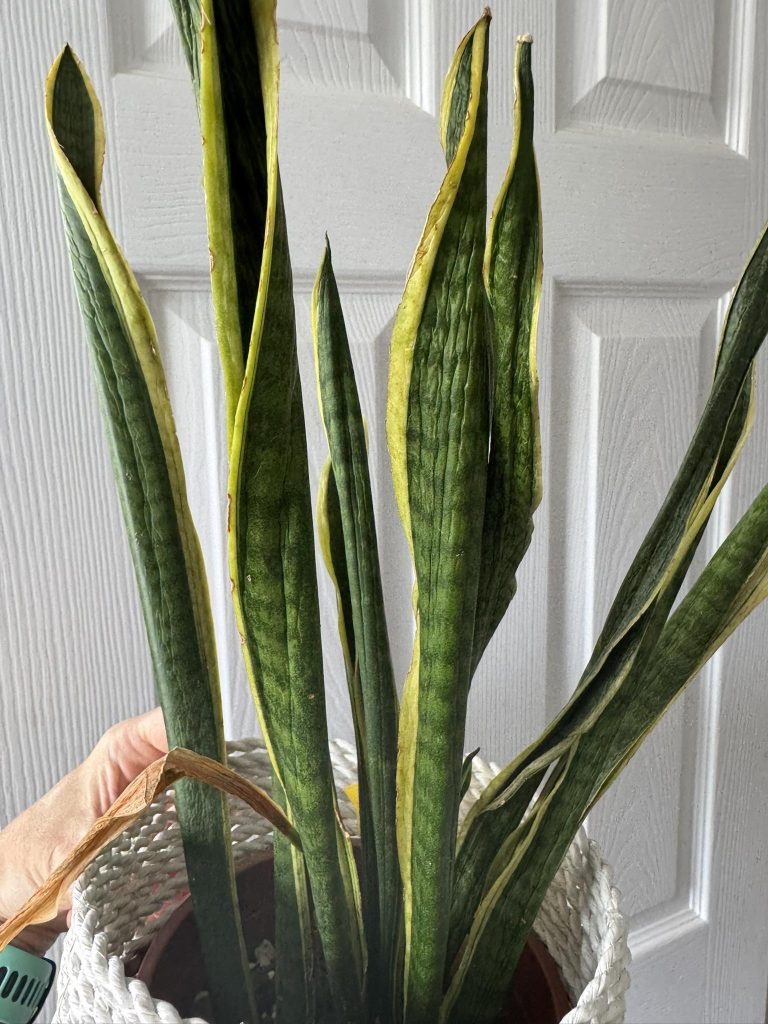
Curling leaves can make your snake plant look droopy or twisted. It’s not just aesthetics—curling signals something’s off. Here are the main culprits, based on my experience and expert insights:
1. Underwatering – The thirsty plant problem
Snake plants are drought-tolerant, but they’re not cacti. If you forget to water them for weeks, the leaves can curl inward to conserve moisture. I made this mistake when I left my plant unattended during a month-long trip. The soil was bone-dry, and the leaves looked like they were trying to hug themselves.
How to Fix
Check the soil. If it’s dry an inch down, water thoroughly until it drains out the pot’s holes. In most homes in the U.S, where indoor heating can dry out the air, water every 2–4 weeks, depending on the season. Use a pot with drainage holes to avoid soggy soil.
2. Overwatering – Too much love hurts
I’ve been guilty of overwatering, thinking my plant needed a drink every week. Big mistake! Overwatering causes root rot, which stresses the plant and makes leaves curl or soften. In humid regions like the Southeast, overwatering is a common issue.
How to Fix
Let the soil dry out completely between waterings. If the roots are mushy, trim the damaged parts and repot in fresh, well-draining soil. A mix of potting soil and perlite works wonders. The University of Florida’s gardening resources recommend well-draining soil for tropical plants like snake plants.
3. Low light – Starved for sunshine
Snake plants tolerate low light, but they thrive in bright, indirect light. In my dim apartment corner, my plant’s leaves started curling as they stretched for light. This is common in American homes during winter, especially in northern states like Michigan or Washington.
How to Fix
Move your plant to a spot with bright, indirect light, like near an east-facing window. Avoid direct sun, which can scorch the leaves. If natural light is scarce, consider a grow light. I use an LED grow light for my indoor jungle, and it’s a game-changer.
4. Temperature stress -Too hot or too cold
Snake plants prefer temperatures between 60–85°F. In my Chicago apartment, winter drafts near the window caused my plant’s leaves to curl. Extreme heat, like near a radiator, can also stress them out.
How to Fix
Keep your plant away from drafty windows or heating vents. If you’re in a cold climate, use a space heater to maintain a cozy 65°F. In hot areas like Arizona, keep it away from direct sunlight. The Missouri Botanical Garden has great tips on ideal conditions.
5. Pests – Unwanted guests
Spider mites and mealybugs love snake plants. I once found tiny webs on my plant, and the leaves started curling as the pests sucked out the sap. This is more common in dry, warm homes.
How to Fix
Inspect the leaves for tiny bugs or webbing. Wipe them down with a damp cloth and apply neem oil. I mix a teaspoon of neem oil with water in a spray bottle for easy application. For severe infestations, consult Purdue University’s pest control guide.
6. Root-bound stress – Cramped quarters
If your snake plant is packed in a too-small pot, the roots can’t spread, causing leaves to curl. My plant was bursting out of its pot after two years, and I didn’t realize it was begging for space. And that’s how it ended up with leaves curling.
How to Fix
Repot every 2–3 years in a pot 1–2 inches larger. Use a terracotta pot for breathability, which suits dry climates like California. The Royal Horticultural Society suggests repotting when roots peek out of drainage holes.
7. Nutrient deficiency – Hungry for food
Snake plants don’t need much fertilizer, but a lack of nutrients can cause curling. I noticed my plant’s growth slowed, and the leaves curled slightly when I skipped feeding for a year. Nutrients such as Nitrogen (N), Phosphorus (P), and Potassium (K) are essential for growth.
How to Fix
Feed with a diluted, balanced fertilizer (like 10-10-10) once a month during the growing season in spring and summer. Avoid over-fertilizing, which can burn the roots. Clemson University’s home gardening resources recommend light feeding for houseplants.
Step-by-Step Guide to Fix Curling Leaves
Here’s what I do when my snake plant’s leaves start curling:
- Stick your finger in the soil. Dry? Water it. Soggy? Let it dry out.
- Move it to a brighter spot if it’s too dim. Rotate the pot weekly for even growth.
- Look for bugs or webs. Wipe leaves and use neem oil if needed.
- If roots are crowded, repot in a slightly larger container.
- Keep it in a stable, warm spot away from drafts or heat sources.
- Use a diluted fertilizer monthly during the growing season.
Preventing Curling Leaves – Care Routines
Living in the U.S., our homes vary from humid Florida condos to dry Colorado apartments. Here’s how to keep your snake plant happy:
- In winter, reduce watering due to lower light and cooler temperatures. In summer, check the soil more often.
- In arid states like Nevada, mist the leaves occasionally to boost humidity. In humid areas like Louisiana, ensure good air circulation.
- Place near windows with filtered light. North-facing windows work in sunny states; east or west-facing windows are better in cloudy regions.
- Dust can block light. I wipe my plant’s leaves monthly with a damp cloth for optimal photosynthesis.
- Water every 3 weeks in winter, every 2 weeks in summer. I use a moisture meter to be sure.
- Check the pot every 2 years and repot if it’s cramped.
- Feed it with a diluted liquid fertilizer in spring and summer.
- Use a moisture meter to prevent over- or underwatering.
- Rotate the plant to keep growth even, especially in uneven light.
- Ensure your pot has holes. I prefer terracotta pots because they are great for airflow.
When to Seek Professional Help
If your snake plant’s leaves keep curling despite your efforts, it might be time to consult a local nursery or extension service. In the U.S., Cooperative Extension Services offer free plant diagnostics. I took my struggling plant to a nursery in Chicago, and they spotted a fungal issue I missed.
FAQs
Here are the frequently asked questions about snake plant leaves curling:
Q: Can curled snake plant leaves recover?
A: Yes, if you address the cause early. Fix watering, light, or pest issues, and new growth should be healthy. Severely damaged leaves may not uncurl but can be trimmed.
Q: How often should I water my snake plant?
A: Water every 2–4 weeks, letting the soil dry out completely. Adjust based on your home’s humidity and light.
Q: Why are my snake plant leaves curling inward?
A: Inward curling often means underwatering or low light. Check the soil and move to a brighter spot.
Q: Can too much sun cause curling?
A: Yes, direct sun can scorch leaves, causing them to curl or brown. Use filtered light instead.
Q: Should I cut off curled leaves?
A: If they’re damaged or unsightly, cut them at the base with clean scissors. New leaves will grow if the plant is healthy.
Suggested For You:
Explained: Why Are My Snake Plant Leaves Turning Yellow?
Why Is My Snake Plant Struggling? Common Problems and Fixes
Underwatered Sansevieria: How to Spot and Save a Thirsty Snake Plant
25 Snake Plant Varieties: Identification and Care Tips
Are Snake Plants Toxic to Dogs? What Dog Owners Need to Know
Final thoughts
Snake plants aren’t just plants—they’re part of our home decor culture. In urban areas like New York or San Francisco, they’re a favorite for small apartments due to their vertical growth. In suburban homes, they add elegance to living rooms.
Their air-purifying qualities make them a hit in eco-conscious households. I’ve seen them in trendy cafes and minimalist homes across the U.S., proving their versatility.
Curling snake plant leaves can be a bummer, but they’re fixable with a little TLC. Whether it’s tweaking your watering, boosting light, or evicting pests, you can get those leaves standing tall again.
My snake plant is now the star of my living room, and I’m confident yours can be too. Use the tips and resources here, and don’t hesitate to experiment. Have a snake plant story or tip? Share it in the comments—I’d love to hear it!

Tim M Dave is a gardening expert with a passion for houseplants, particularly cacti and succulents. With a degree in plant biology from the University of California, Berkeley, he has vast experience in gardening. Over the years, he has cultivated a vast collection of desert plants and learned a great deal about how to grow and care for these unique companions.